
Quick Take
- Sea monkeys can survive without water, and the biological trick they use to do it sounds like something out of science fiction. Discover the survival trick →
- The moment sea monkey eggs hatch, something remarkable happens that sets the stage for how they feed for the rest of their lives. See how hatchlings feed →
- Sea monkeys weren't always called sea monkeys, and the real reason the name stuck reveals something odd about their anatomy. Uncover the naming story →
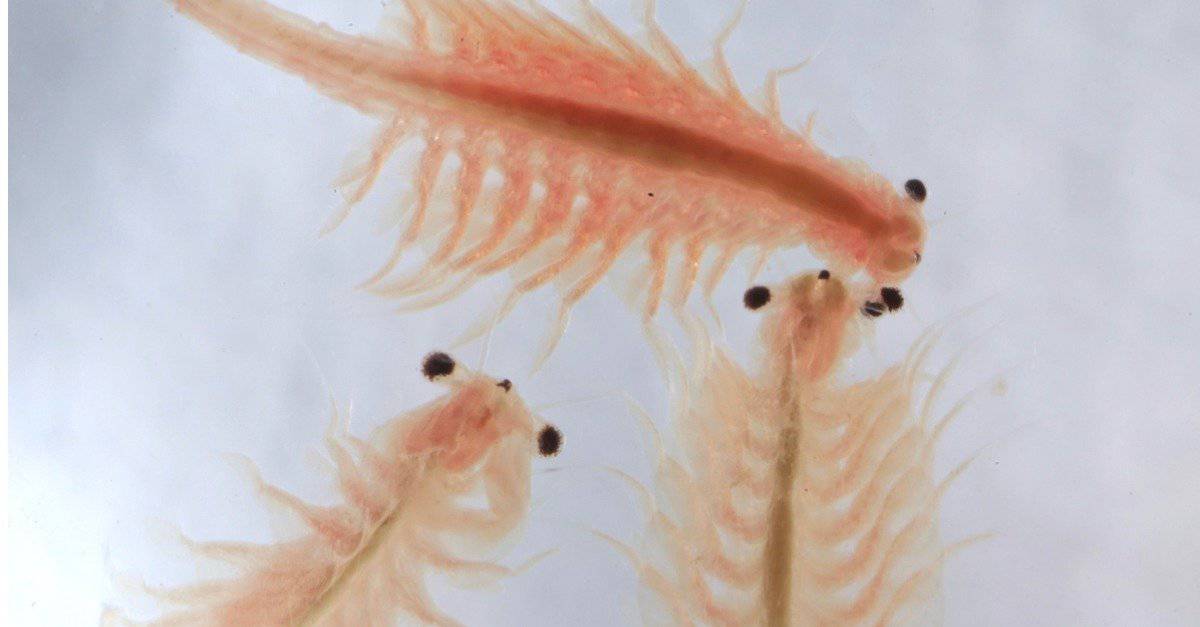
Sea monkeys, a hybrid breed of brine shrimp (Artemia NYOS), are a novelty product that was originally marketed by Harold von Braunhut as Instant Life in 1957. In 1962, von Braunhut rebranded his product Sea-Monkeys, a reference to the creatures’ long, monkey-like tails. By advertising in comic books and newspapers, von Braunhut made sea monkeys a must-have novelty pet for millions of children. Sea monkeys are omnivorous, passive filter feeders that constantly graze on suspended food particles within their highly saline environments. Continue reading to discover everything you need to know about what sea monkeys eat.
What do Sea Monkeys Eat?
Sea monkeys, which are commercially raised brine shrimp, eat plankton, algae, yeast, and wheat flour.
When sea monkeys are in their cyst (egg) stage, they feed on their own energy reserves. The cysts act as food stores for the shrimp in their first stage of development. When they hatch, nauplii (singular: nauplius) are 0.016 to 0.02-inch specks that are barely visible to the naked eye. Once they have hatched, sea monkeys immediately begin filter-feeding in their environment.
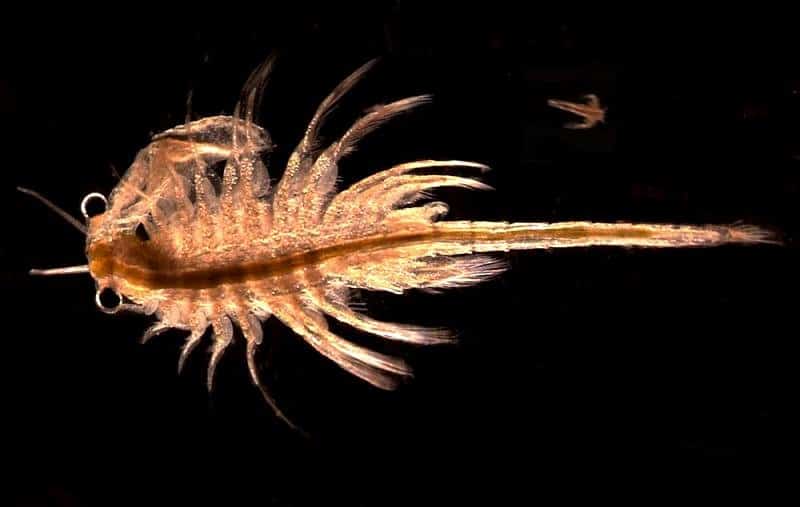
Sea monkeys (captive brine shrimp) eat planktonic algae, yeast, wheat flour, and spirulina.
©djpmapleferryman / Creative Commons – Original
Wild brine shrimp exclusively eat planktonic algae, microscopic plant matter suspended in the water. Planktonic algae form one of the foundational blocks of any aquatic ecosystem and also contribute to the chemistry of the water itself.
Captive brine shrimp (sea monkeys) eat a more varied diet. After being activated in salty water, they can be fed small particulate food, including yeast, wheat flour, soybean powder, and egg yolk. The small shrimp are able to break down these foods with ease.
Some of the foods sea monkeys eat include:
- planktonic algae
- spirulina
- soybean powder
- wheat flour
- egg yolk
- yeast
What are Sea Monkeys?
Sea-Monkeys are a selectively bred strain of brine shrimp developed to be more hardy and sometimes larger than typical wild brine shrimp
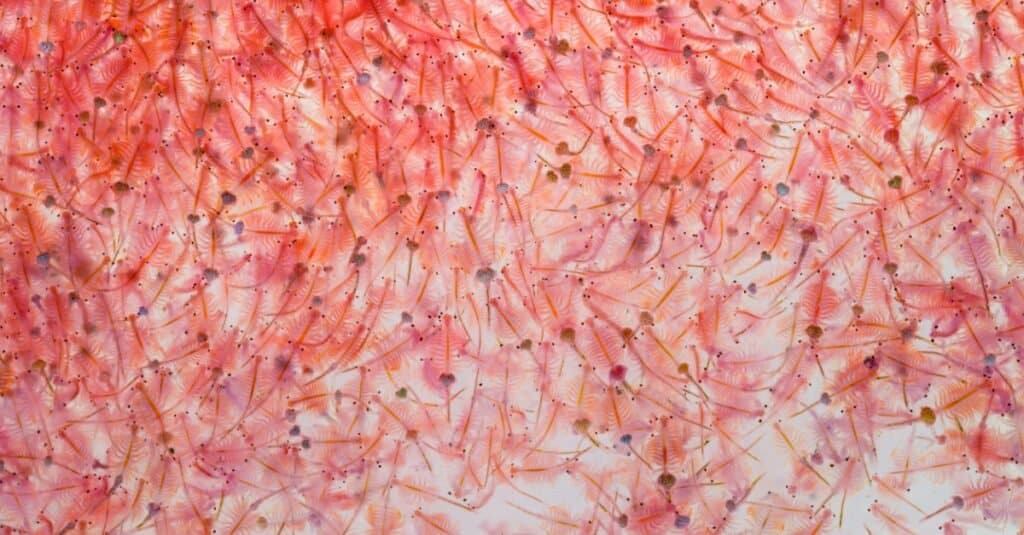
Sea monkeys are really just brine shrimp.
©iStock.com/antpkr
Brine shrimp first appeared approximately 5.5 million years ago. They are believed to have diverged from an ancestral form that lived in freshwater 80 million years ago, adapting to high salinity as a survival mechanism to escape predators.
Brine shrimp have evolved from being ancient inhabitants of desolate, salty lakes to becoming a vital, internationally traded resource that supports aquaculture industries.
How do Sea Monkeys Live Without Water?
Brine shrimp possess the amazing ability to undergo a process known as cryptobiosis. Cryptobiosis allows animals to survive extreme environmental conditions, such as severe dehydration, freezing, oxygen deprivation, and radiation, by entering a state of suspended animation, which stops nearly all metabolic activity, allowing them to exist until conditions improve and water is reintroduced.
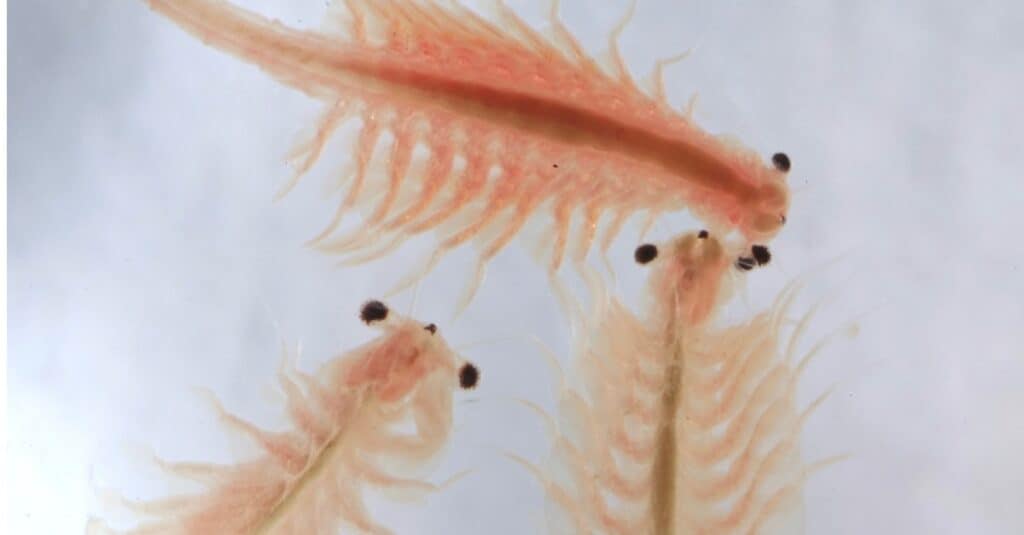
Sea monkeys are long-lived because brine shrimp can survive in severe conditions.
©iStock.com/Credit:S.Rohrlach