
Quick Take
- Wood ducks are omnivores with a flexible, seasonally driven diet of plants and animals.
- Acorns from water, laurel, and Shumard oaks are their favorite plant foods. They forage for acorns in shallow water and on land.
- In spring and summer, they may eat more animal-derived food to obtain fats and energy for breeding.
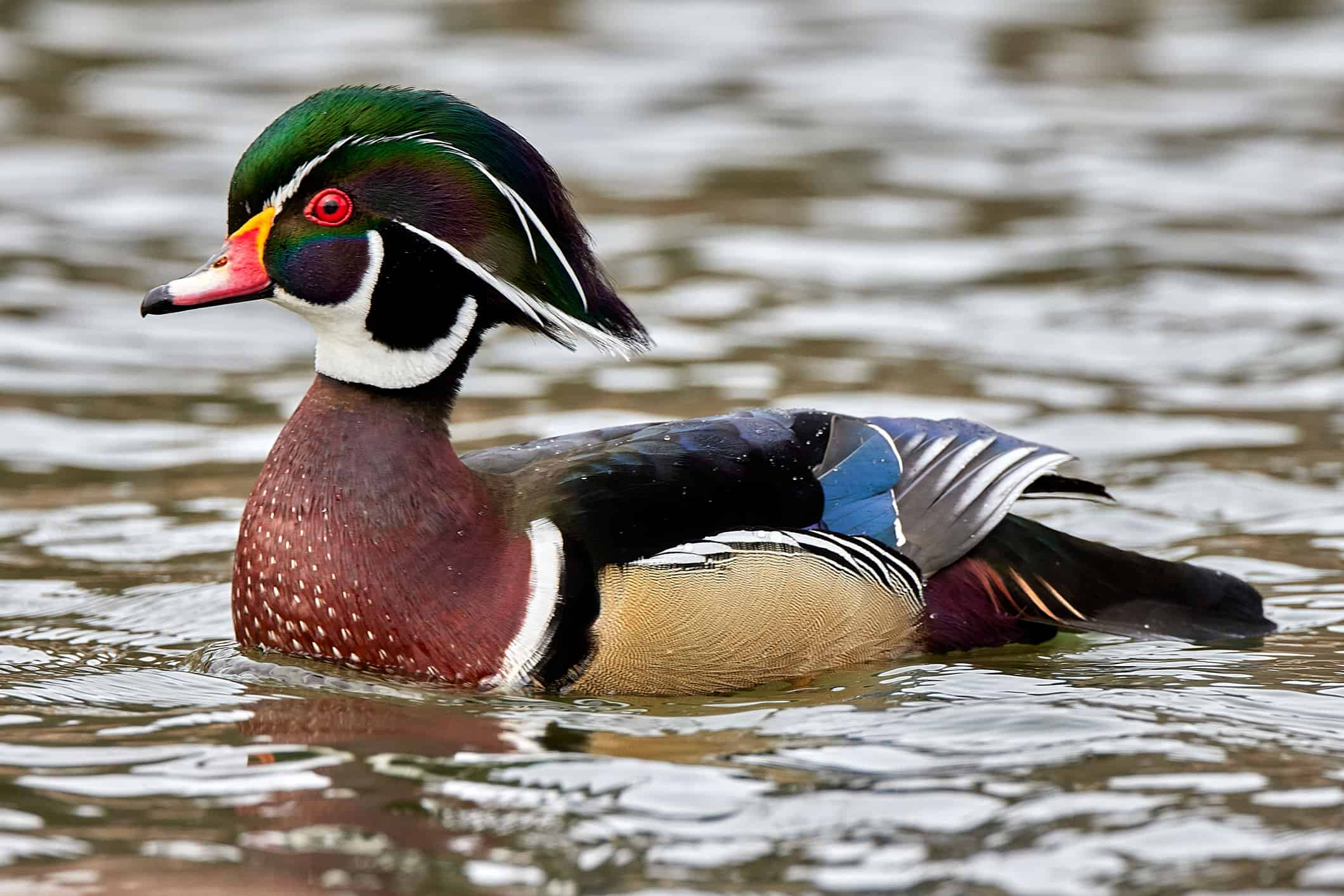
Male wood ducks are unmistakable with their red eyes, red bills, and multi-colored plumage, making them one of the most colorful of the North American waterfowl. Thankfully, they are once again a common sight, having suffered dramatic declines in the 19th century, caused by hunting. The Federal Migratory Bird Treaty Act of 1918 restricted the hunting of these birds. Thanks to this, together with yearly monitoring, hunting regulations, captive breeding, and the use of nest boxes, their numbers have recovered. They are now a common and widespread waterfowl species in North America, with stable or increasing populations. One of the reasons that they have managed to recover their numbers is the fact that they are not that fussy about what they eat! Here we will take a close look at the wood duck diet.
About Wood Ducks
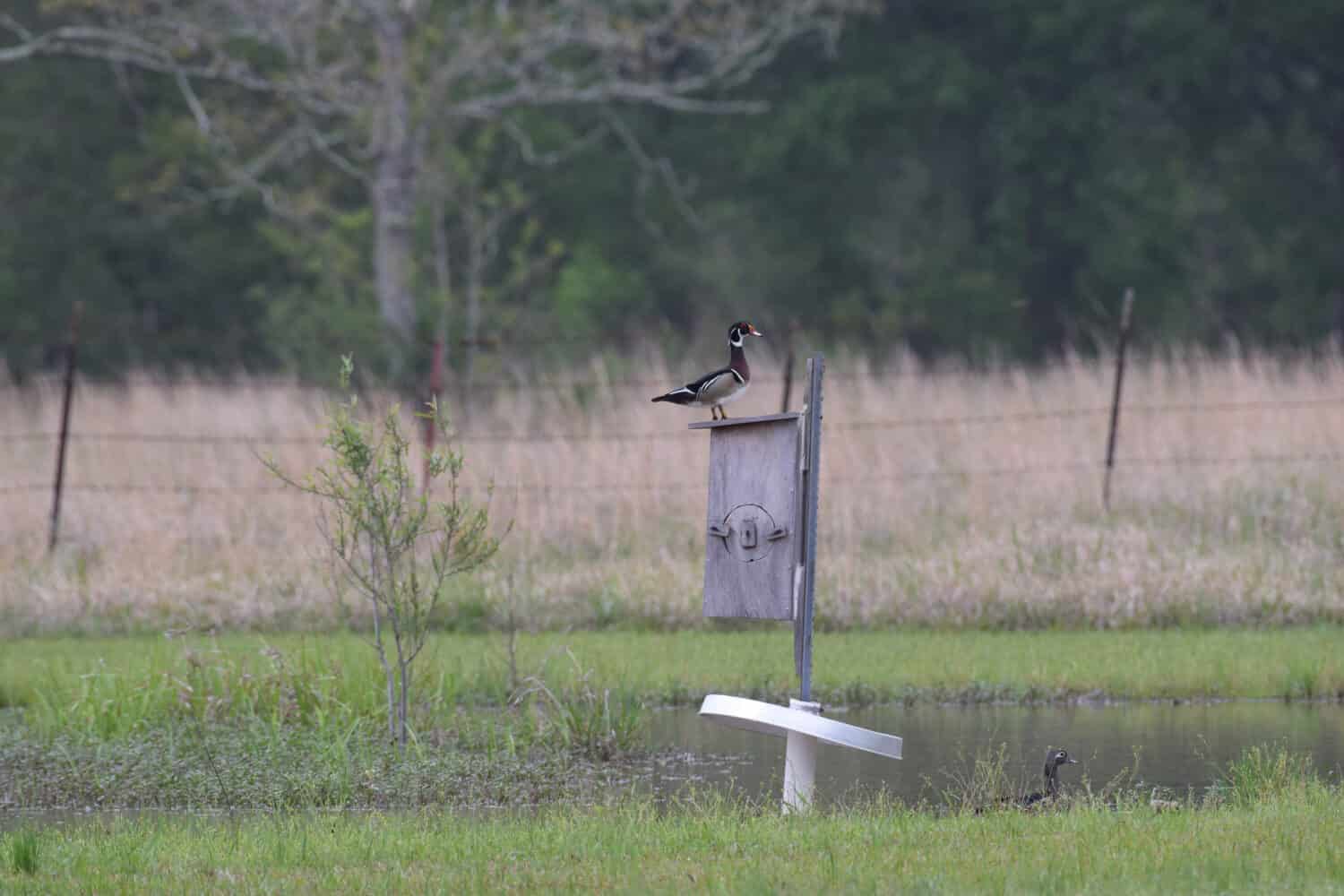
Wood ducks need water and trees to thrive.
©albhski/Shutterstock.com
Before we look at the wood duck diet, we need to consider the habitats where they find their food. The wood duck (Aix sponsa) is found on the east coast of North America from Nova Scotia in the north to Florida and the Gulf of Mexico in the south, and west to the center of the United States. They can also be seen from British Columbia to the Mexican border on the west coast.
These birds will thrive in a range of freshwater habitats and vegetated wetland areas. They are called the wood duck for a reason! The ducks do not just need water; they also need trees, which provide both a food source and a nesting site. Swamps or even upland forests within half a mile of a permanent freshwater body of water (such as lakes and creeks) are their preferred habitat. Ideally, the watery habitat would be made up of 30 percent diverse shrubs, 40 percent emergent herbaceous plants, 5 percent trees, and 25 percent open water. This would provide access to the ideal diet to keep the ducks healthy.
Being social animals, they often congregate in groups. Communication is conducted via several different types of calls, including a warning call to signal that a predator is near. Their most common predators are the great horned owl, raccoons, minks, foxes, and alligators. They are also preyed on by black rat snakes.
Wood Ducks Are Omnivores
The best way to describe the wood duck diet is flexible omnivorous – they are not particularly fussy about what they eat. They consume what is seasonally available, and that could be plant or animal material. Food can also be obtained from the water or from dry land. In some areas of the Mississippi Valley, they even feed on waste food crops such as wheat and corn.
Wood Duck Diet – Plants
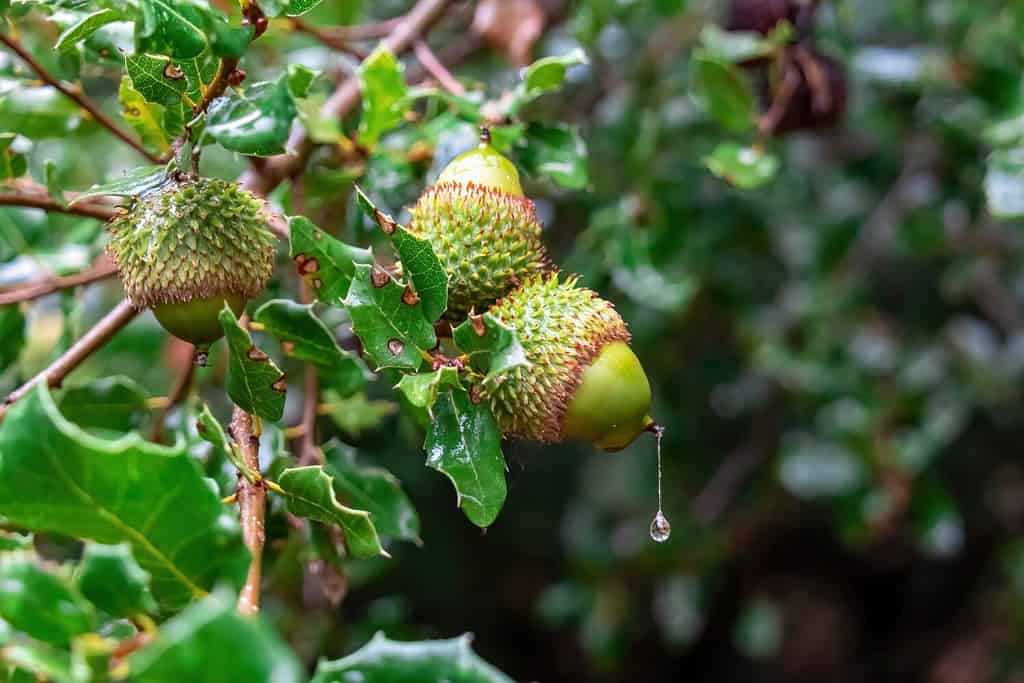
Acorns are the wood duck’s favorite food.
©Christopher Moswitzer/Shutterstock.com
Wood ducks eat a wide range of seasonally available plant foods. Often, plant material will make up 80 percent of their diet. Their absolute favorite is acorns from water oak, laurel oak, and Shumard oak that have fallen into shallow water. They are even called the ‘acorn duck’ in Florida. But they will also forage for them on the ground. Other plants that they are fond of include the following:
- Smartweed
- Water Primrose
- Panic Grass
- Waterlily
- Duckweed
- Blackberries
- Wild cherries
- Algae
- Cypress cone scales and galls
- Grasses
- Beech
- Tupelo
- Blackgum
- Hickories
Also, they are perfectly happy to eat agricultural crops if they come across them. These include:
- Browntop millet
- Buckwheat
- Corn
- Dove proso
- Foxtail millet
- Grain sorghum
- Japanese millet
- Pearl millet
- Soybeans
Wood Duck Diet – Animals
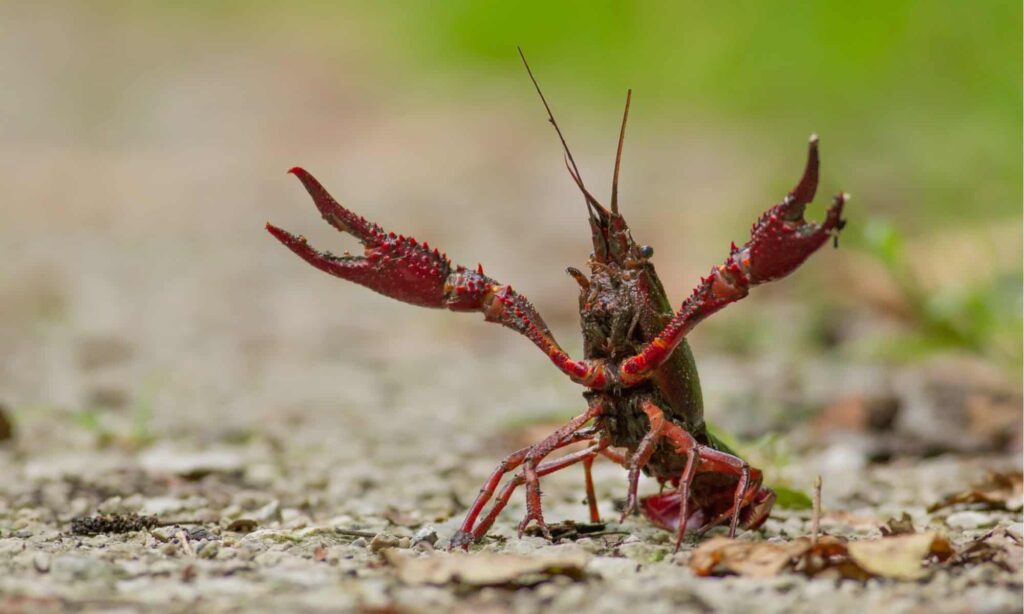
Crawfish are eaten by wood ducks.
©rugco/Shutterstock.com
These ducks eat more animal-derived food in the spring and summer. Also, females, ducklings, and breeding males tend to eat more animal-derived food because it is generally higher in fats and energy, which are needed for breeding. Their diet includes:
- True flies
- Butterflies
- Moths
- True bugs (Hemiptera)
- Beetles
- Pillbugs
- Sowbugs
- Shrimps
- Crawfish
- Caddisflies
- Wasps
- Bees
- Ants
- Dragonflies
- Damselflies
- Slugs
- Snails
- Spiders
How Do Wood Ducks Feed?
The wood duck is one of the dabbling duck species. This means that they get their food by bending forward and putting their head into shallow water so that their tail sticks upright. However, they also obtain a lot of food from foraging on the ground in woody swamps and hardwood forests. They spend most of their day looking for and eating food.
Habitat Management for Wood Duck Food
Even though wood ducks are very easy to please when it comes to diet, there are still things that can be done to help maximize their feeding opportunities! The obvious approach is to plant and maintain the vegetation listed above. If bottomland hardwoods and fields with agricultural crops are occasionally flooded, this also enhances the availability of many of their foods. It can also help to thin the bottomland hardwoods. This boosts the production of ‘mast’, which are the acorns and seeds that these ducks love to feed on.