

Quick Take
- Gas-X doesn't actually do what most dog owners assume, and that gap in understanding changes how you should use it. See how it actually works →
- Some dogs are biologically wired to be gassier than others, and your dog's face shape may be part of the reason why. Explore breed predispositions →
- There's a bloating symptom that looks minor but means Gas-X is the wrong tool, and confusing the two conditions could cost your dog its life. Learn about the dangerous mix-up →
- The dose that's safe for a large dog can cause real problems in a small one, and the math matters more than most owners realize. Check the weight-based dosing →
Simethicone is an over-the-counter medication for bloating, burping, flatulence, and pain caused by intestinal gas in dogs or cats. It can be a safe and effective treatment for these common problems. Before treating your animal with any medication, knowing the risks, side effects, proper dosage, and other essential factors is important. This article provides basic information to help you speak knowledgeably with your veterinarian about your dog’s condition and medication.
Why Do Dogs Get Gas?
Before discussing how to treat gas in dogs, it’s helpful to know what causes it so you can help prevent it. Some breeds are more prone to gas than others. Dogs with flat faces, like Pekingese, tend to ingest more air as they eat, which forms gastrointestinal gas bubbles. Gas can form from eating too quickly and ingesting gulps of air along with food. Dogs can get gassy with sudden changes to their diet, eating table scraps or garbage, or because something in their diet doesn’t agree with them.
One of the natural ways to prevent gas is to use a higher-quality dog food. One with probiotics or prebiotics will aid digestion. Pumpkin is a natural food that can help settle your dog’s digestion and balance the acidity in the stomach. Pumpkin should not comprise more than 10% of the animal’s diet. Training your dog to eat more slowly can also help.
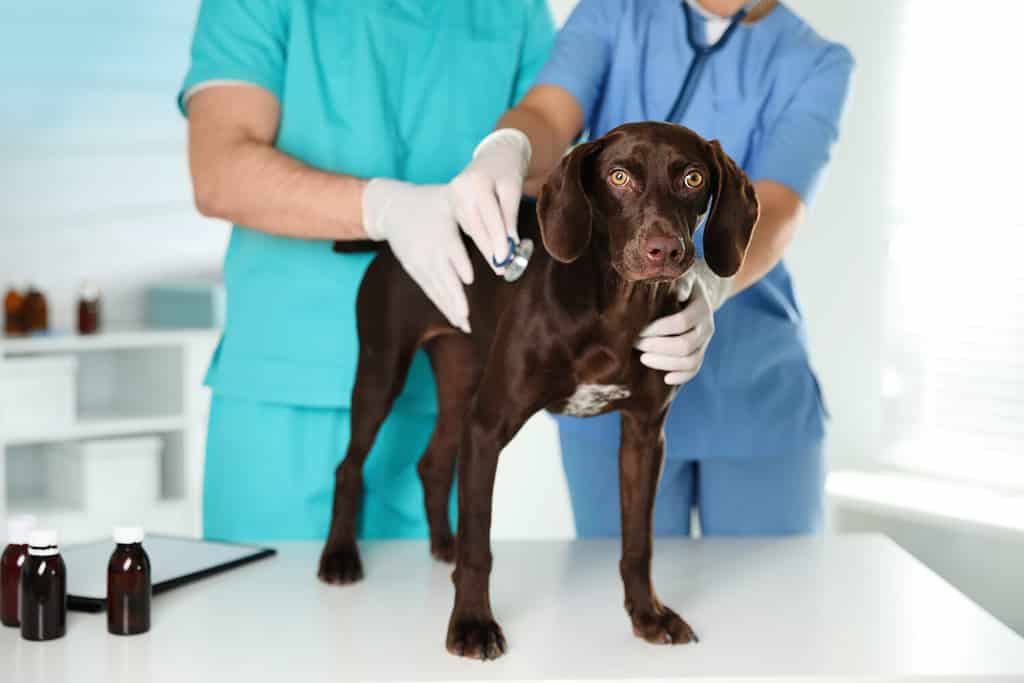
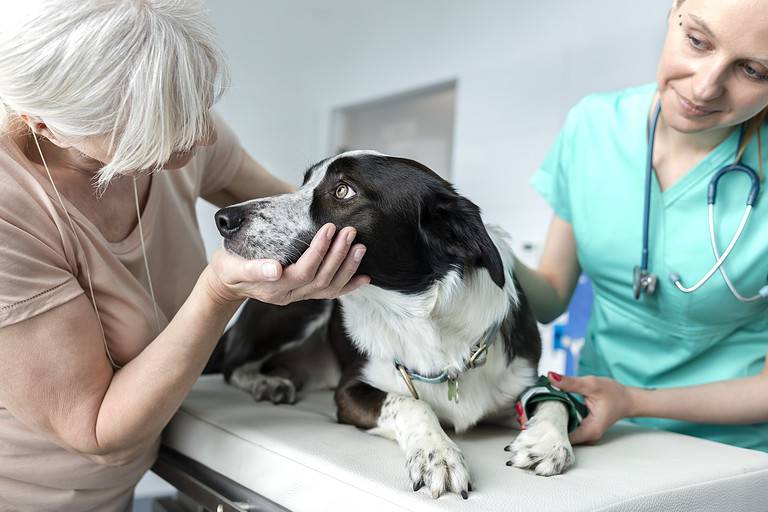
Even though simethicone is available over the counter, it’s best to consult your veterinarian first.
©New Africa/Shutterstock.com
What Is Simethicone?
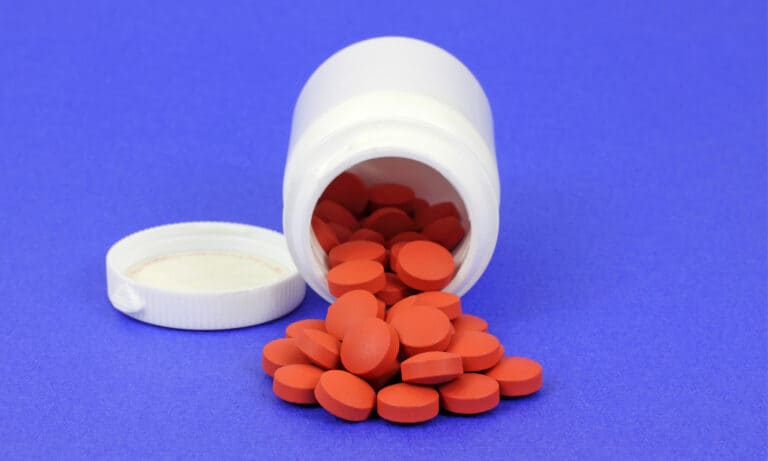
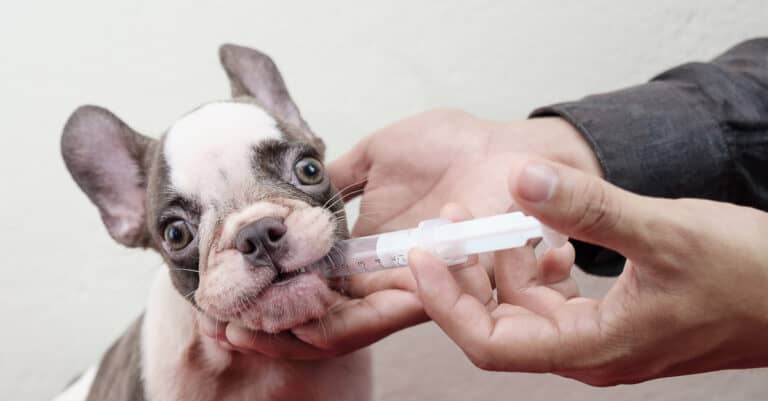
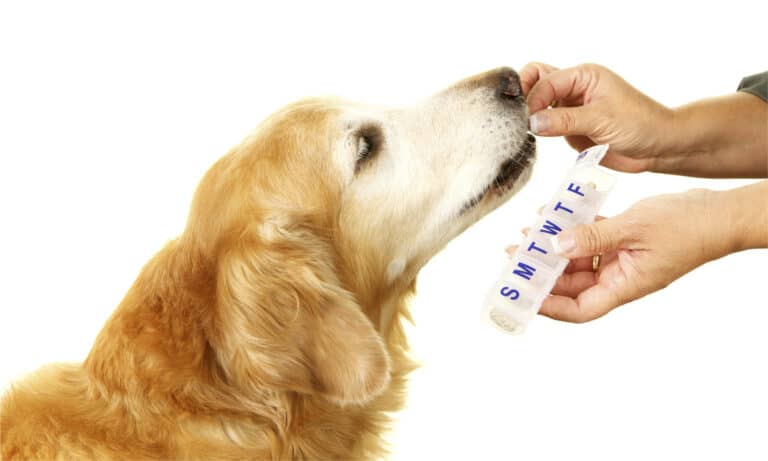
You might be familiar with simethicone under brand names like Gas-X, Maalox Anti-Gas, or Alka-Seltzer Anti-Gas. These are marketed for humans suffering from intestinal gas. In both humans and animals, this medication doesn’t decrease gas production; instead, it reduces the surface tension of gas bubbles, causing small bubbles to coalesce into larger ones that are more easily expelled from the gastrointestinal tract. The drug may be administered in tablets, chewables, liquids, or capsules.
Why Give Simethicone to a Dog?
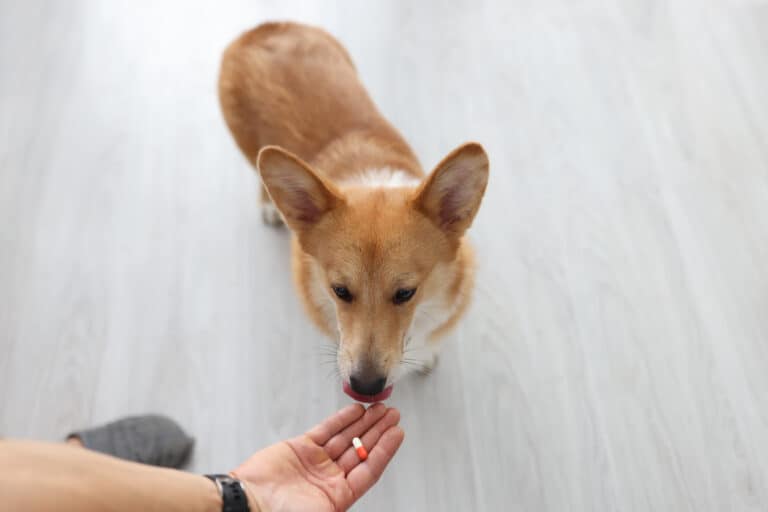
A veterinarian might recommend simethicone to treat bloating, flatulence, and burping together with dietary changes. Another reason a dog might take simethicone is to clear out bloating before getting an x-ray or gastrointestinal endoscopy to help the vet see the organs without distortion.
Risks and Side Effects of Simethicone
It is not absorbed through the digestive system, so it is generally safe, has few side effects, and rarely results in overdoses. However, some dogs have drug allergies or hypersensitivities. Dogs can react to simethicone with diarrhea, lethargy, nausea, and vomiting. Simethicone is often administered alongside antibiotics but may interact with other drugs your dog is taking. Many vets consider this drug safe for a pregnant or lactating dog, but its safety has not been definitively established. Giving a dog unusually large dosages of simethicone can produce loose stools.
Simethicone will not be enough for a dog suffering from a severe form of bloat called gastric dilatation-volvulus. Symptoms can include unproductive retching that brings nothing up or just foam or mucus. The dog may be anxious and restless, pacing, hunched, panting, breathing shallowly, and foaming at the mouth. The abdomen may or may not be visibly bloated, but if you put your ear to it, you will not hear normal digestion sounds. If you suspect your dog has bloat, give two doses of simethicone if your dog can swallow, and go to your vet immediately.
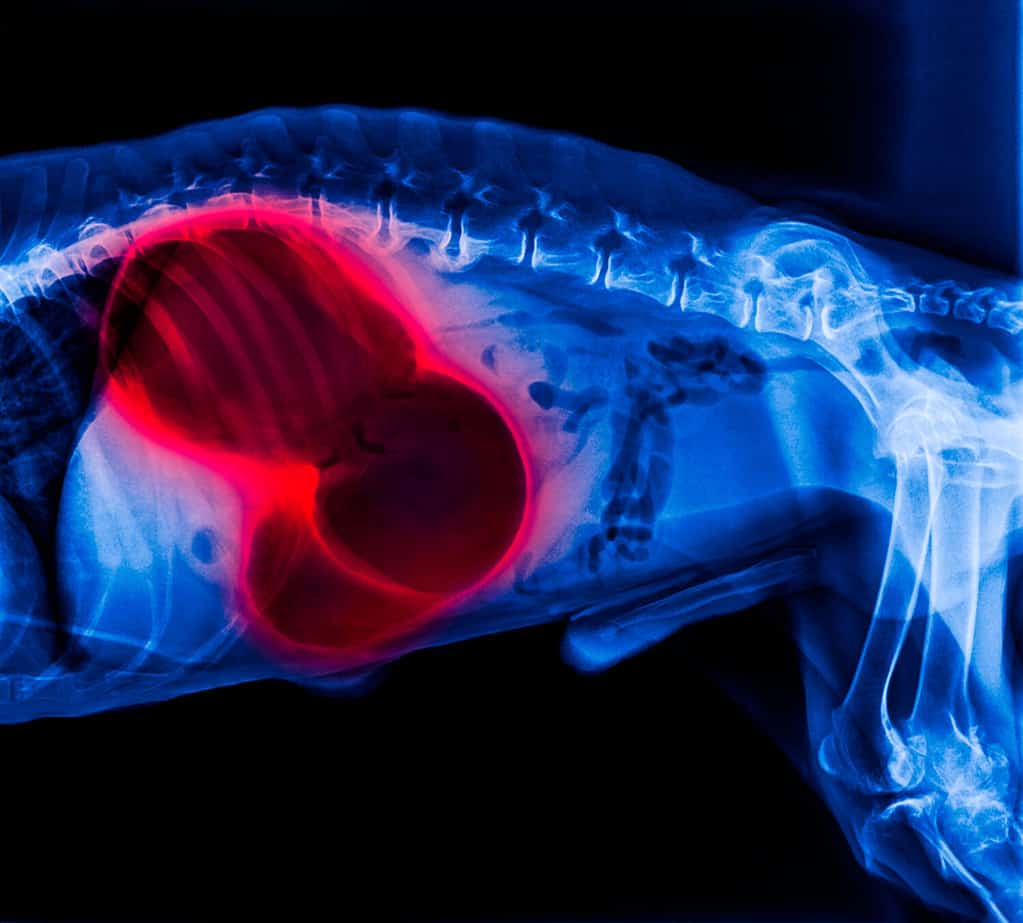
The red highlight in this x-ray indicates gastric dilatation volvulus and severe bloating twisting of the stomach.
©Intarapong/Shutterstock.com
Dosage for Simethicone for Dogs
Always consult your veterinarian for expert guidance on the correct medication dosage for your dog. As a general guideline, if you use a liquid that can be precisely measured, administer 1-2 mg per pound of body weight every six to 12 hours as needed. The chart below shows what that could look like for dogs of different weights.
| Dog’s Weight (Pounds) | Simethicone Dosage |
|---|---|
| 0 – 5 | 5-10 mg |
| 5 – 10 | 10-20 mg |
| 10 – 20 | 20-40 mg |
| 20 – 30 | 40-60 mg |
| 30 – 40 | 60-80 mg |
| 40 – 50 | 80-100 mg |
| 50 – 60 | 100-120 mg |
| 60 – 70 | 120-140 mg |
| 70 – 80 | 140-160 mg |
| 80 – 90 | 160-180 mg |
| 90 – 100 + | 180-200 mg |
Monitor your dog closely while taking any medication. Watch for adverse side effects or a worsening of the animal’s condition. Complete the entire medical treatment plan your vet prescribes, even if the dog seems completely better.