

Just like people, dogs have aches and pains. Sometimes it’s from an injury or surgery, or just from growing older. If your dog starts limping, whining, or acting uncomfortable, you might be tempted to grab something from your medicine cabinet. It works for you, right? But stop yourself before you even consider popping an ibuprofen into a doggie treat, because it can be life-threatening. Veterinarians can explain not only why it’s a no-no, but some good pain relief options—chemical and non-chemical—as well.
How Do Dogs Tell Us They Are in Pain?

If your dog growls, cringes, or recoils when you pet them, they might be in pain.
©Bonsales/Shutterstock.com
Dogs can’t talk, but they do communicate discomfort in many subtle and not-so-subtle ways. Here are some signs of pain in dogs to look for:
- Change in behavior: A normally energetic dog may become withdrawn, lethargic, or less interested in play and interaction, preferring to hide, avoid being touched, or act out with aggression if a sore area is approached.
- Vocal cues: Whining, yelping, or growling when moving (acute pain) or constant low-grade agitation that never quite goes away (chronic discomfort).
- Physical signs: Limping, stiffness, or difficulty climbing stairs indicate joint or muscle issues.
- Self-soothing behavior: Licking or chewing a painful spot persistently, leading to redness, swelling, or hair loss.
- Appetite changes: Reduced or altered eating habits.
- Breathing changes: Shifts in breathing patterns, excessive panting, trembling, or restlessness.
- Eye changes: Squinting or a dull, glassy appearance signaling discomfort.
Common Reasons for Pain in Dogs

A toothache or something like a bone or stick fragment stuck in the gums might be the reason your dog is in pain.
©Ivan4es/Shutterstock.com
Dogs can experience pain for many reasons, ranging from sudden injuries to chronic health conditions. Injuries like sprains, fractures, or muscle strains can result from falls, rough play, or accidents. Bites from other animals or insects may cause sharp, localized pain, sometimes leading to infection. Allergies—whether to food, pollen, or fleas—can create persistent itching, skin irritation, and ear infections that are uncomfortable or even painful. Arthritis is common in older dogs, causing joint stiffness, swelling, and reduced mobility. Digestive issues such as bloating, constipation, or intestinal blockages can trigger abdominal pain and distress. In female dogs, pregnancy or complications during labor can bring discomfort, especially if there are underlying health concerns. Other causes include dental disease, ear infections, or tumors, all of which can create significant suffering if left untreated.
Is My Dog Just Faking?

Hmmm… Ralphie, are you sure you’re really too sick to go to obedience school today?
© smrm1977/Shutterstock.com
Dogs can “fake” or exaggerate pain-like behaviors if they’ve learned it gets them attention, treats, or other rewards. It’s a form of conditioned behavior. For example, if a dog limps once, gets fussed over, offered treats, or given a comfy spot on the couch, they may repeat that limp even after the injury has healed. Dogs are masters at associating actions with outcomes, so if whining, paw-lifting, or slow walking result in extra affection or perks, they can repeat them purely to get the same result.
Sometimes a dog also mimics the behavior of their owner. This can be a form of social bonding, in which it copies behavior to affirm it is part of the pack, or perhaps out of sympathy. Check out this video for a charming example. Dogs are closely attuned to human emotions and stress signals. When an owner is anxious, angry, or grieving, a dog can “catch” that emotional state through changes in tone of voice, facial expressions, body language, and even scent (stress hormones like cortisol are detectable to them). This emotional contagion can trigger stress responses in the dog — faster heartbeat, muscle tension, digestive upset, restlessness, or trembling. Prolonged exposure to an owner’s distress can contribute to stress-related conditions like reduced immunity, chronic muscle tightness, or gastrointestinal issues, which can genuinely cause pain.
However, it’s important not to dismiss pain signs without checking with a veterinarian first. A dog might still have an underlying issue even if the behavior seems exaggerated, so rule out medical problems before assuming it’s just attention-seeking.
Why Ibuprofen Is Dangerous for Dogs

Dr. Nita Vasudevan is a veterinarian working as a consultant for Embrace Pet Insurance.
If you see any of those symptoms in your dog, it can be tempting to medicate them with what you have at home, especially as we tend to think that over-the-counter painkillers are “safe” medicines. But veterinarian Nita Vasudevan doesn’t mince any words when it comes to giving dogs human pain relievers.
“No, it is not safe to give dogs human pain relievers like ibuprofen or acetaminophen,” Dr. Vasudevan says. “These medications can be extremely toxic to dogs and may cause serious issues such as stomach ulcers, kidney failure, liver damage, or even death. Even small doses can be dangerous, especially in smaller dogs.”
Ibuprofen, found in Advil and Motrin, belongs to a class of medications called NSAIDs (non-steroidal anti-inflammatory drugs). Dogs process medications differently from humans, and their bodies can’t break down ibuprofen safely. This can lead to severe internal damage, including gastrointestinal bleeding, kidney failure, and other life-threatening complications, often much faster than an owner might expect.
No over-the-counter painkillers for people are safe for dogs. This includes ibuprofen, acetaminophen (Tylenol), naproxen (Aleve), and aspirin. Even at low doses, these can cause stomach ulcers, kidney and liver damage, and in some cases, fatal reactions.
Dr. Nita Vasudevan
Symptoms of Ibuprofen Poisoning in Dogs
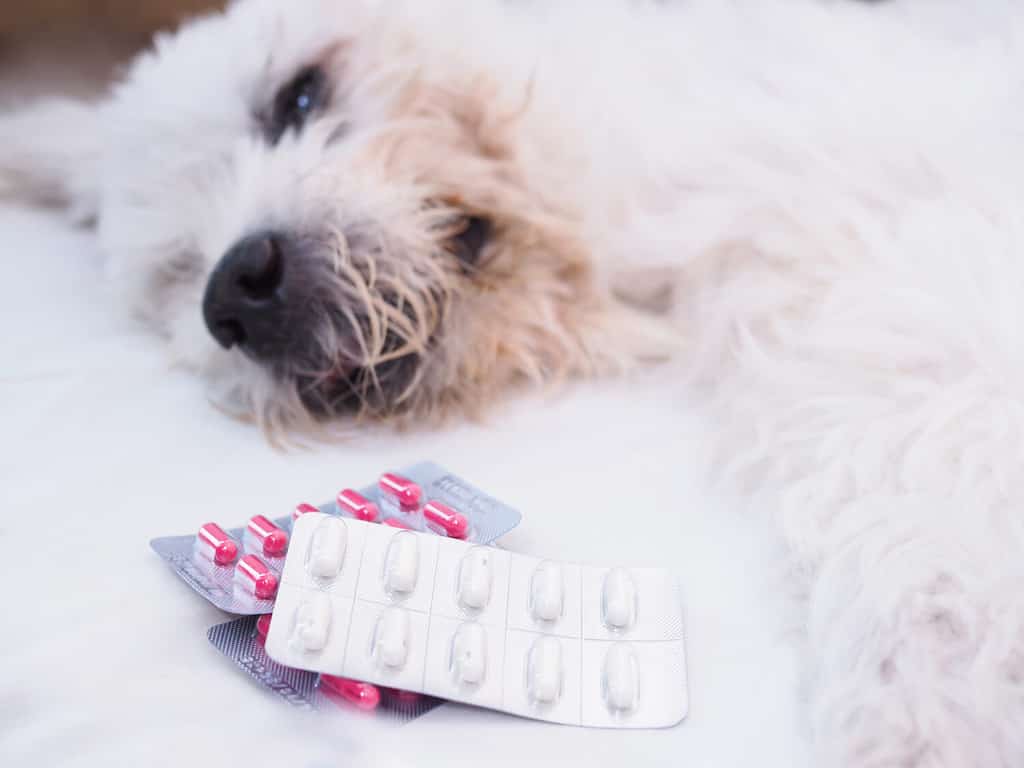
Ibuprofen is especially dangerous for small dogs or dogs with preexisting health problems.
©Kittima05/Shutterstock.com
If a dog accidentally swallows ibuprofen or if, say, a relative or dog-sitter gives it to your dog without realizing how dangerous it is, contact an emergency vet right away to prevent irreversible damage to internal organs or death. These are some of the symptoms of ibuprofen poisoning that can show up in the first 1-2 hours and can intensify rapidly:
- Vomiting, sometimes with blood
- Diarrhea or black, tarry stools
- Loss of appetite
- Lethargy or weakness
- Stomach pain
- Drooling or excessive thirst
- Seizures
What About Other Human Painkillers?
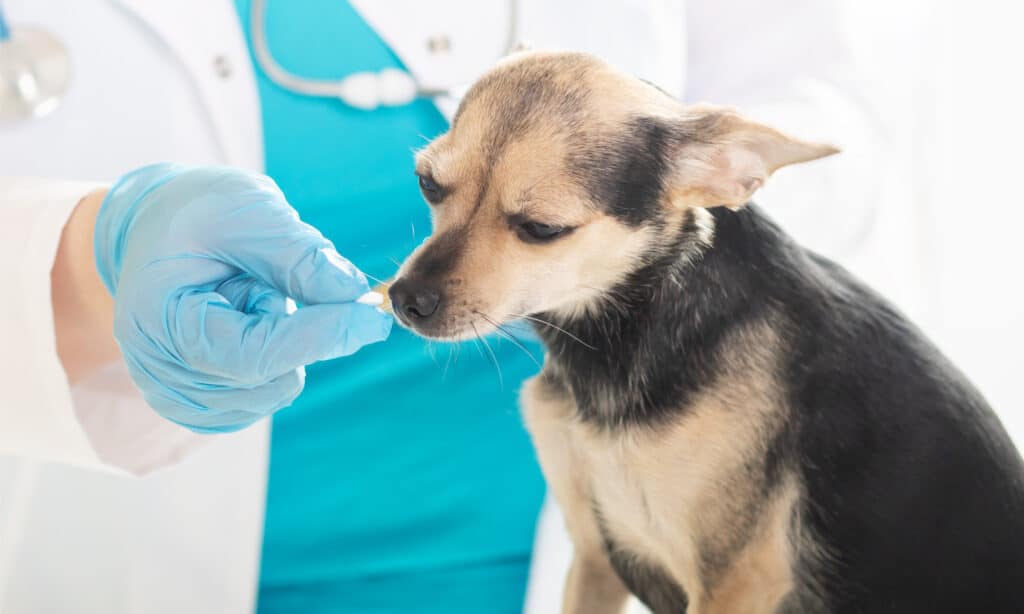
It’s important to consult with your vet before giving your dog any medication.
©iStock.com/Yana Tikhonova
“No over-the-counter painkillers for people are safe for dogs,” emphasizes Dr. Vasudevan. “This includes ibuprofen, acetaminophen (Tylenol), naproxen (Aleve), and aspirin. Even at low doses, these can cause stomach ulcers, kidney and liver damage, and in some cases, fatal reactions.”
Why is it, then, that a veterinarian sometimes prescribes certain types of aspirin for a dog? This is done only under strict supervision with carefully calculated doses, taking into account the dog’s size, breed, and overall health so that the risk is as low as possible. That doesn’t mean people should “wing it” and give aspirin to their dog without first consulting a vet, as doing so could be dangerous.
Vet-Approved Pain Relief Options for Dogs

A veterinarian will consider a lot of different factors before prescribing a safe painkiller for your dog.
©maxbelchenko/Shutterstock.com
If your dog is in pain, your veterinarian can recommend treatments that are tested, approved, and safe for canine use. Dr. Vasudevan says pain relief methods will depend upon your dog’s age and overall health status.
“Non-steroidal anti-inflammatory drugs (NSAIDs) like carprofen, meloxicam, or deracoxib are commonly prescribed and formulated for canine metabolism,” she says. “In some cases, depending on the type and severity of the pain, your veterinarian may also prescribe gabapentin, tramadol, or amantadine as part of a multimodal pain management plan.”
Note as well that your dog will need periodic bloodwork for most of these medications to make sure they are not damaging their liver or kidneys over time, especially if the medication will be used for weeks or months. Sometimes, for severe pain, a vet will prescribe an opioid. Obviously, these are controlled substances. Given the prevalence of opioid abuse, these need to be kept locked up in your house to prevent accidental ingestion or abuse by family members or guests.
Non-Drug Alternatives for Pain Relief

Acupuncture is not painful. Many dogs, after getting used to the unfamiliar handling, become quite relaxed during the procedure.
©Monika Wisniewska/Shutterstock.com
Your veterinarian may suggest a change of diet or dietary supplement to help pets with long-term pain issues.
“In terms of nutrition, omega-3 fatty acids (from fish oil) have proven anti-inflammatory benefits and are often recommended for dogs with arthritis or chronic inflammation,” Dr. Vasudevan says. “Joint supplements containing glucosamine, chondroitin, and MSM can also help maintain cartilage health.”
Alternative therapies can also be effective for pain management, especially when used alongside conventional treatments.
“Acupuncture has been shown to help with chronic pain and mobility issues, particularly arthritis. Massage therapy can improve circulation, reduce muscle tension, and promote relaxation,” Dr. Vasudevan says. “Laser therapy and physical rehabilitation (canine physical therapy/hydrotherapy) are also gaining traction for improving mobility and decreasing pain in both post-operative and aging pets.”
Doing Nothing Is Better Than Doing the Wrong Thing

If the pain is not serious, sometimes it’s best to observe and let the dog’s body heal itself.
©iStock.com/shotbychatty
When it comes to pain for dogs, doing nothing can sometimes be better than doing the wrong thing. We tend to personify them like children and don’t want them to suffer at all, but for situations that are not life-threatening, their bodies can often process the situation and heal themselves. Of course, any time you see signs of pain, you can and should consult with a veterinarian. But short of that, make your dog comfortable and don’t give it any pills that a vet has not approved. After all, we want to make the pain become less serious, not more so.