
Quick Take
- Size and Strength: The world’s largest dog breeds range from tall and lean Irish Wolfhounds to massive, heavy English Mastiffs.
- Temperament and Care: Despite their imposing appearance, these breeds are often gentle, loyal, and family-oriented, but require proper training, socialization, and exercise.
- Living with Giants: Owning a giant dog involves space, grooming, nutrition, and attention to joint and health needs for happy, balanced companions.
We love giant dogs. All of us. Have you ever not stopped to gawk at a Great Dane or Saint Bernard when you see one out in the world? The Marmaduke comic strip ran for 61 years. There are 91 books in the Clifford the Big Red Dog book series. There are eight Beethoven movies plus an animated series. We all love Scooby-Doo, though very few of us talk about—or even remember—the diminutive Scrappy-Doo. Even Tom Hanks had to get a giant-dog movie on his resume when he starred alongside a droopy-faced French Mastiff in Turner and Hooch. We love giant dogs! In this article we’ll count downthe top 10 largest dog breeds in the world and explore their average size, what it’s like to live with them, and how to care for these gentle giants.

10. Neapolitan Mastiff
Just how big are they? The Neapolitan Mastiff is instantly recognizable thanks to its loose, heavily wrinkled skin and massive head. Adults typically weigh 110 to 150 pounds and stand 27 to 29 inches tall at the shoulder. A dog this size weighs roughly as much as a fully loaded household refrigerator, and its presence fills a room just as completely.
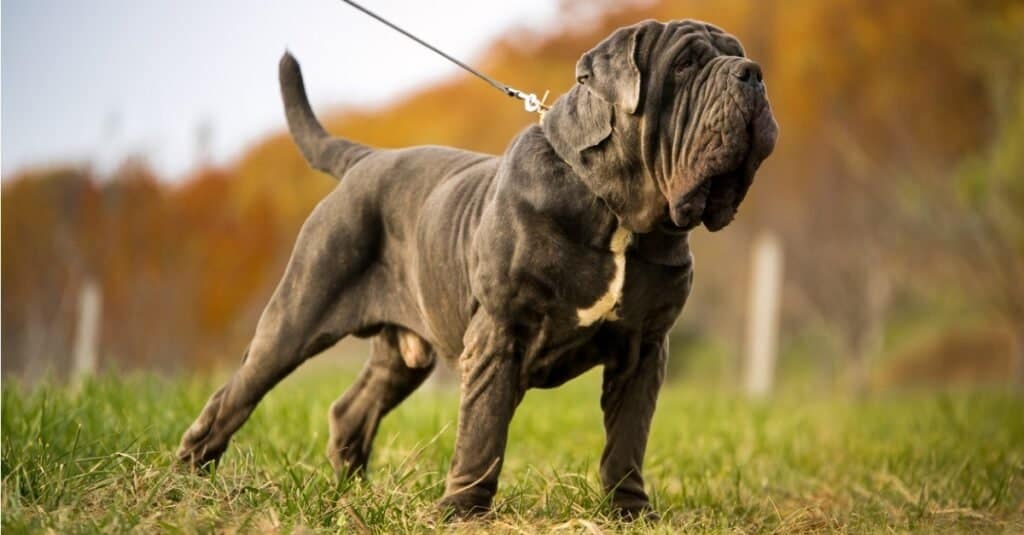
Massive, wrinkled, and loyal, the Neapolitan Mastiff is a calm, protective family guardian.
©Dioniya/Shutterstock.com
What are they like? Despite their intimidating appearance, Neapolitan Mastiffs tend to be calm, steady, and deeply loyal to their families. They are natural guardians with a tendency to position themselves between loved ones and perceived threats rather than react impulsively. Their short coat is easy to maintain, but the folds of skin around the face and neck require regular cleaning to prevent irritation or infection. Exercise needs are moderate—daily walks are sufficient—but early training is essential to ensure this powerful dog is manageable as an adult.
9. Irish Wolfhound
Just how big are they? Often cited as the tallest dog breed in the world, the Irish Wolfhound can reach close to 3 feet at the shoulder and weigh 120 to 180 pounds. Standing upright on their hind legs, they can be nearly as tall as an average adult human. Their weight is comparable to an electric stove, yet their build is lean rather than bulky.
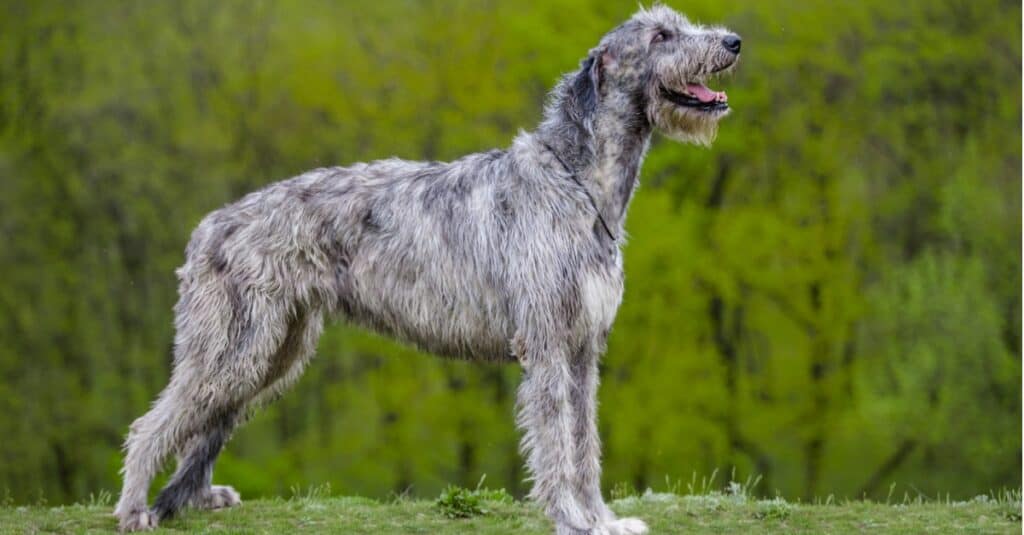
The tallest dog breed, built for endurance rather than bulk or speed.
©iStock.com/Ashva
What are they like? Irish Wolfhounds have a rough, wiry coat and long legs built for endurance rather than speed. Temperamentally, they are known for their gentle, dignified nature. Historically bred to hunt wolves and large game, modern Wolfhounds are typically quiet, affectionate companions. They’re not high-energy dogs, but they do benefit from long, unhurried walks. Because of their rapid growth, careful nutrition and joint monitoring during puppyhood are particularly important.
8. Leonberger
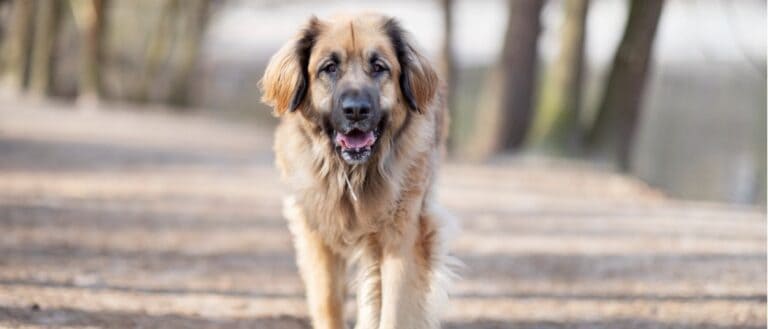
Just how big are they? The Leonberger was developed in Germany to resemble a lion, and the resemblance is unmistakable. With males weighing 120 to 170 pounds and standing up to 31 inches tall, these dogs carry a thick, water-resistant double coat and a mane-like ruff around the neck.
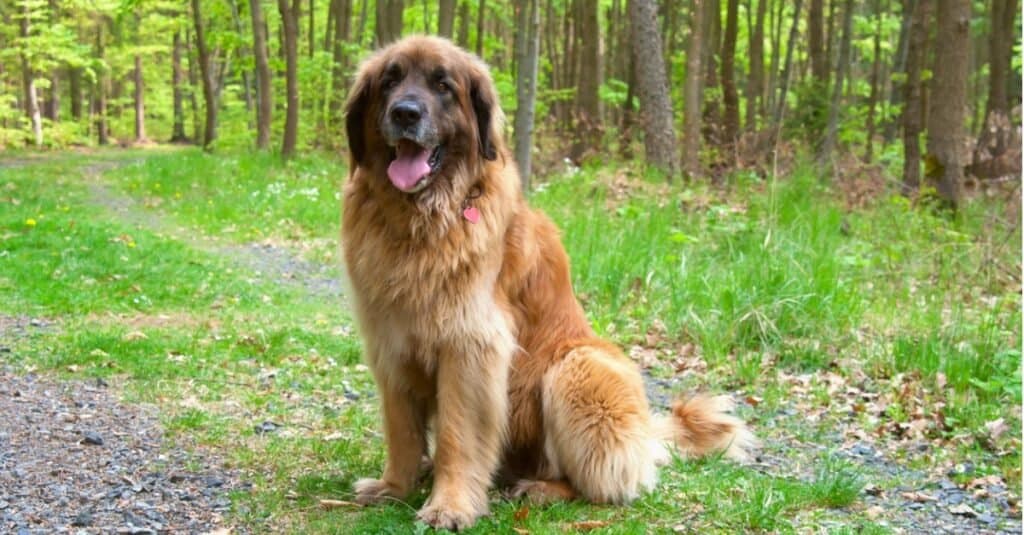
Friendly and lion-like, Leonbergers are patient family dogs.
©Kaca Skokanova/Shutterstock.com
What are they like? Fortunately, Leonbergers don’t resemble lions in temperament. They’re known for being friendly and family-oriented. They are typically patient with children, sociable with strangers, and eager to participate in family life. Their size, however, demands commitment to grooming. The heavy coat sheds year-round and requires frequent brushing to prevent matting. They enjoy moderate daily exercise and often excel at activities like swimming or cart pulling, reflecting their working-dog heritage.
7. Newfoundland
Just how big are they? Newfoundlands are powerful, broad-chested dogs originally bred to assist fishermen in icy North Atlantic waters. Adults generally weigh 100 to 150 pounds and stand 26 to 28 inches tall. Their broad chests, webbed feet, and water-resistant coats make them exceptionally buoyant, powerful swimmers.
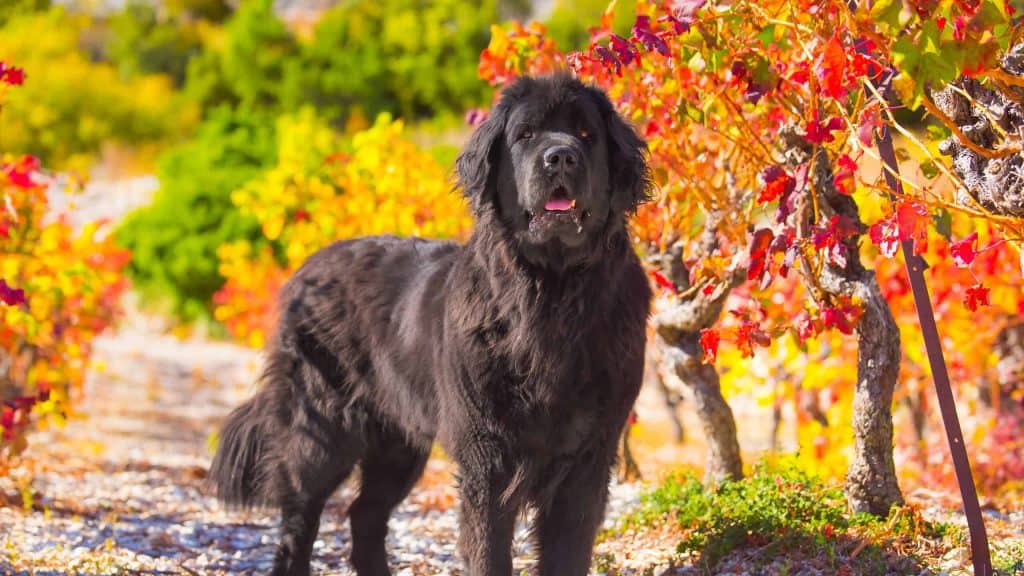
Powerful swimmers with webbed feet, Newfoundlands are calm, gentle, and patient with children.
©Pandas/Shutterstock.com
What are they like? Powerful appearance aside, Newfoundlands are renowned for their temperament. Calm, affectionate, and famously gentle, they are often described as “nanny dogs” because of their patience with children. Because of their size and joint stress, exercise should be consistent but not excessive, focusing on low-impact activities like swimming or long walks. If you’re a neat freak, this may not be the dog for you, as their coat requires regular brushing, and drooling is common.
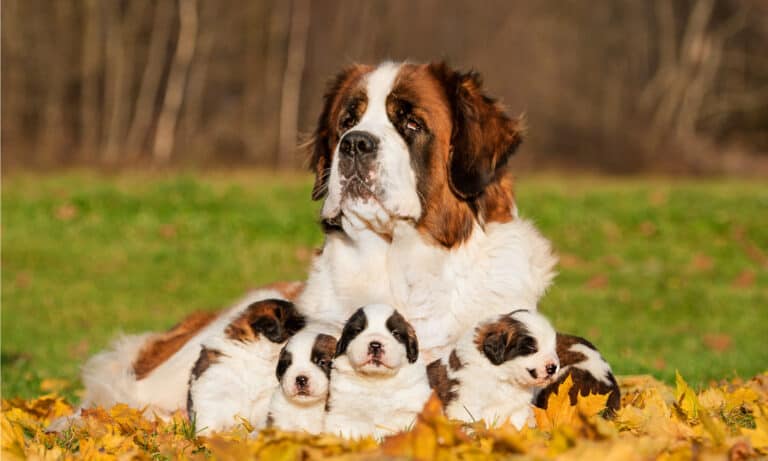
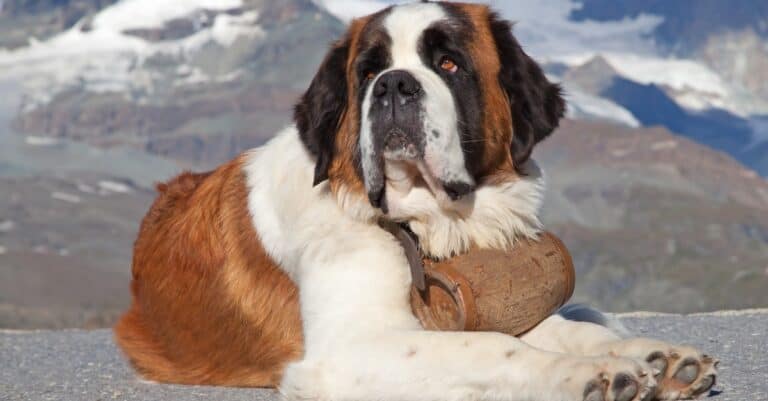
6. Saint Bernard
Just how big are they? Saint Bernards are iconic mountain rescue dogs, easily recognized by their massive heads, expressive eyes, and thick coats. They typically weigh 140 to 180 pounds and stand 26 to 30 inches tall, making them as heavy as an average adult human.
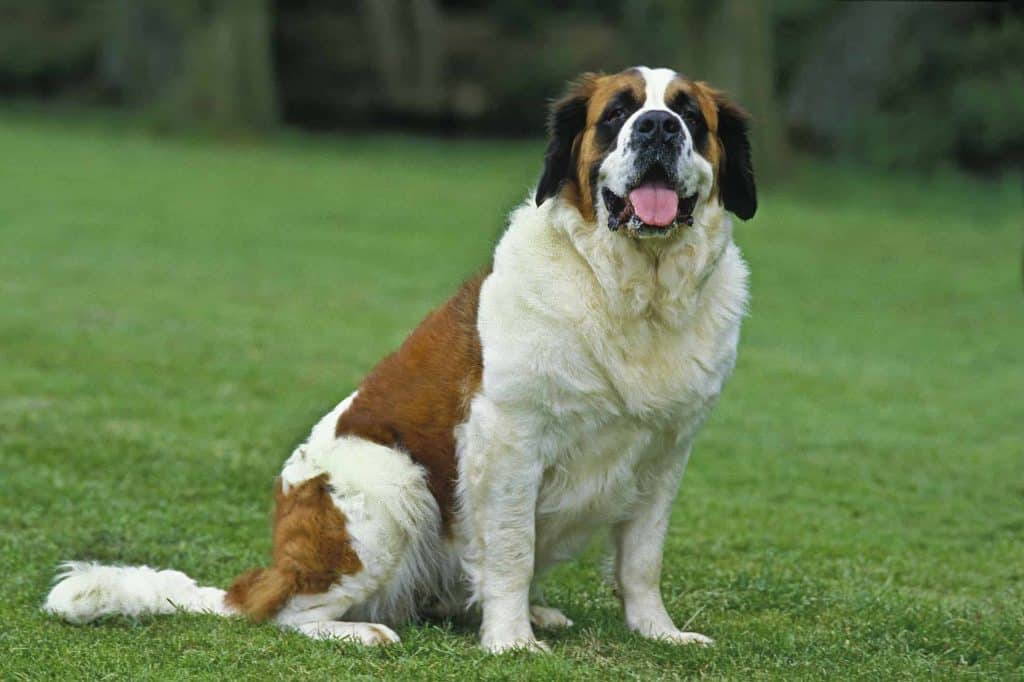
Saint Bernards are friendly, calm, and loyal–and need consistent grooming.
©iStock.com/slowmotiongli
What are they like? Despite Stephen King’s vicious canine antagonist in Cujo, Saint Bernards are calm, friendly, and tolerant dogs. They tend to form strong bonds with family members and are usually good with children. Their dense coat—whether short or long—requires frequent grooming, especially during seasonal shedding. Saint Bernards do best with moderate exercise and cooler climates, as their size and coat make them sensitive to heat.
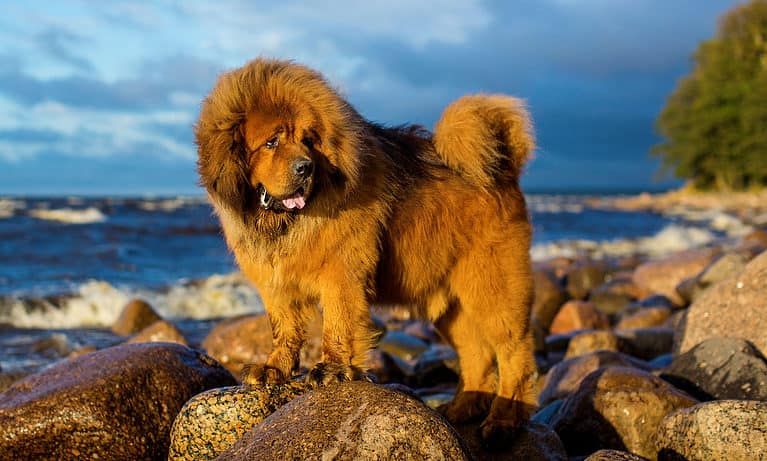
5. Tibetan Mastiff
Just how big are they? The Tibetan Mastiff is an ancient guardian breed developed to protect livestock and monasteries in the Himalayas. Adults typically weigh 150 to 180 pounds and stand 24 to 26 inches tall, but their thick mane and imposing frame can make them appear even larger.
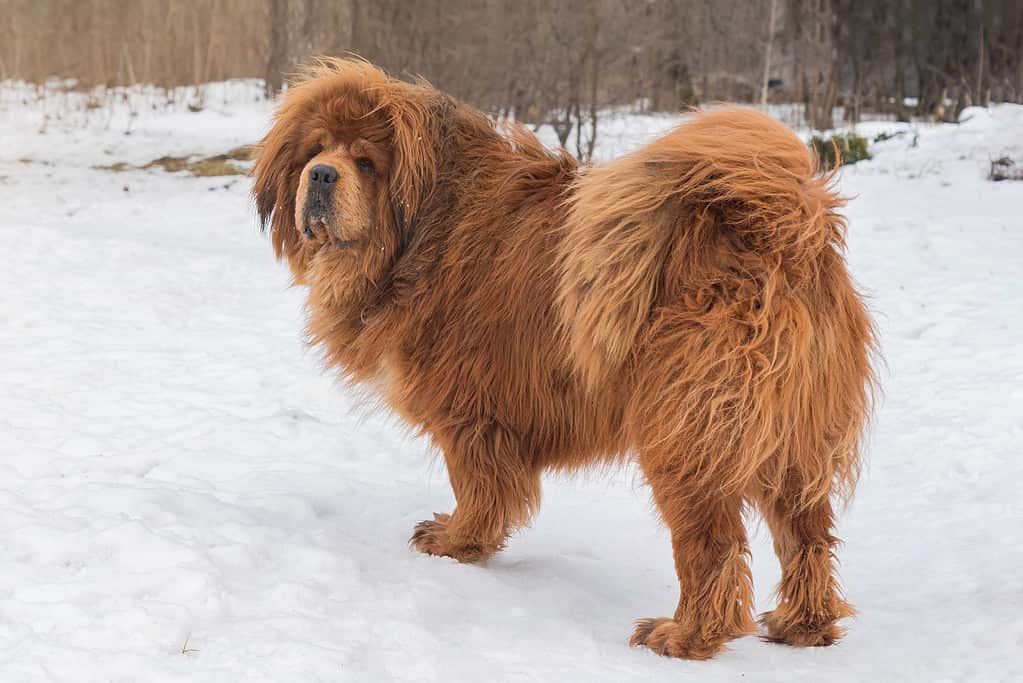
Tibetan Mastiffs are loyal guardians needing careful socialization and daily activity.
©Oleksandr Hryvul/iStock via Getty Images
What are they like? These dogs are independent, watchful, and intensely loyal to their families. Their temperament reflects centuries of guarding work; they are reserved with strangers and not particularly eager to please. The heavy double coat sheds dramatically once a year and needs regular brushing. Training requires patience and consistency, as Tibetan Mastiffs tend to be independents who think for themselves.
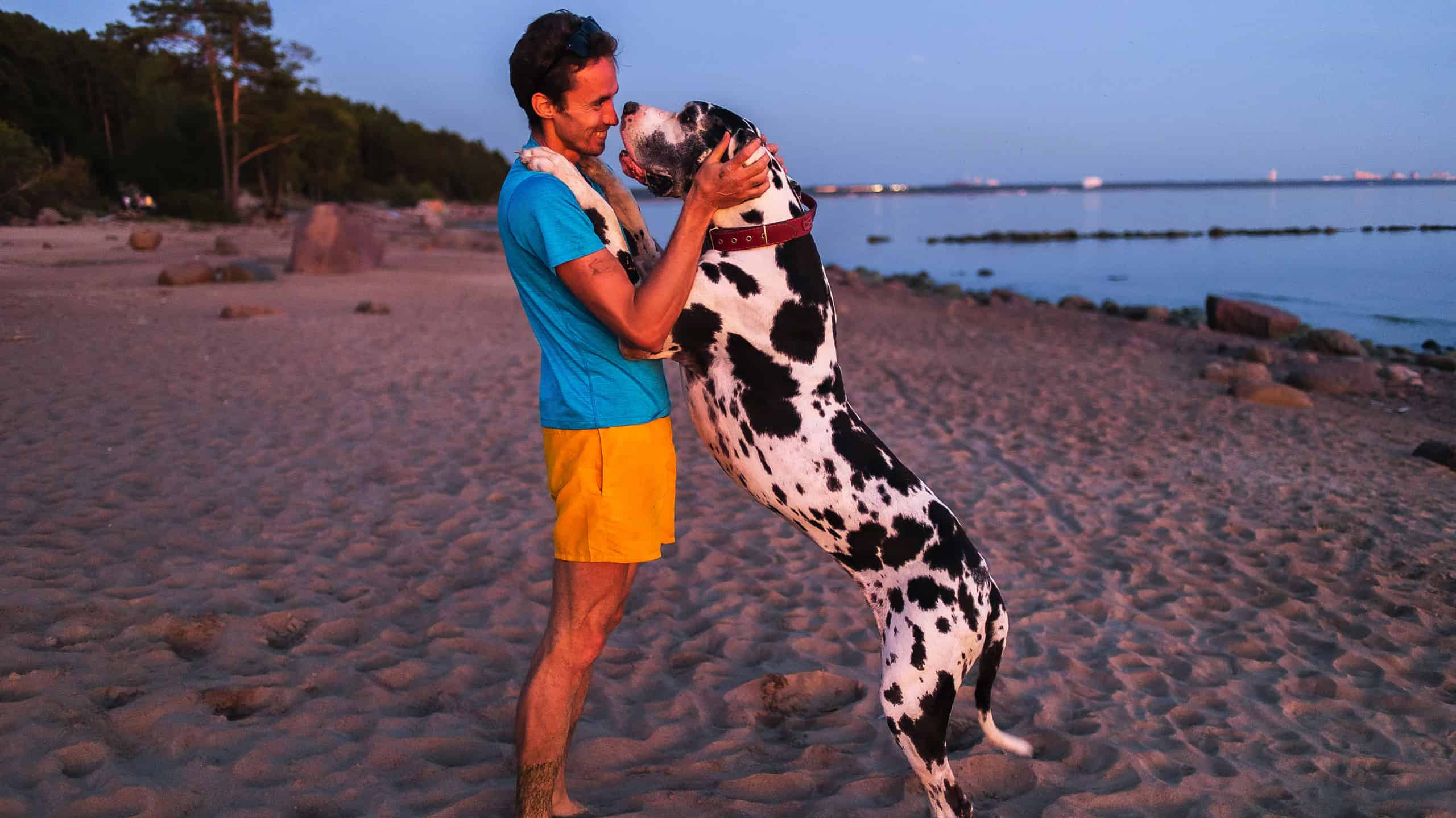
4. Great Dane
Just how big are they? Great Danes are often described as gentle giants, combining towering height with an affectionate nature. Males typically weigh 110 to 175 pounds and stand 28 to 32 inches or more at the shoulder. When standing on all fours, a Great Dane’s head can easily eat the food you left on your countertop.
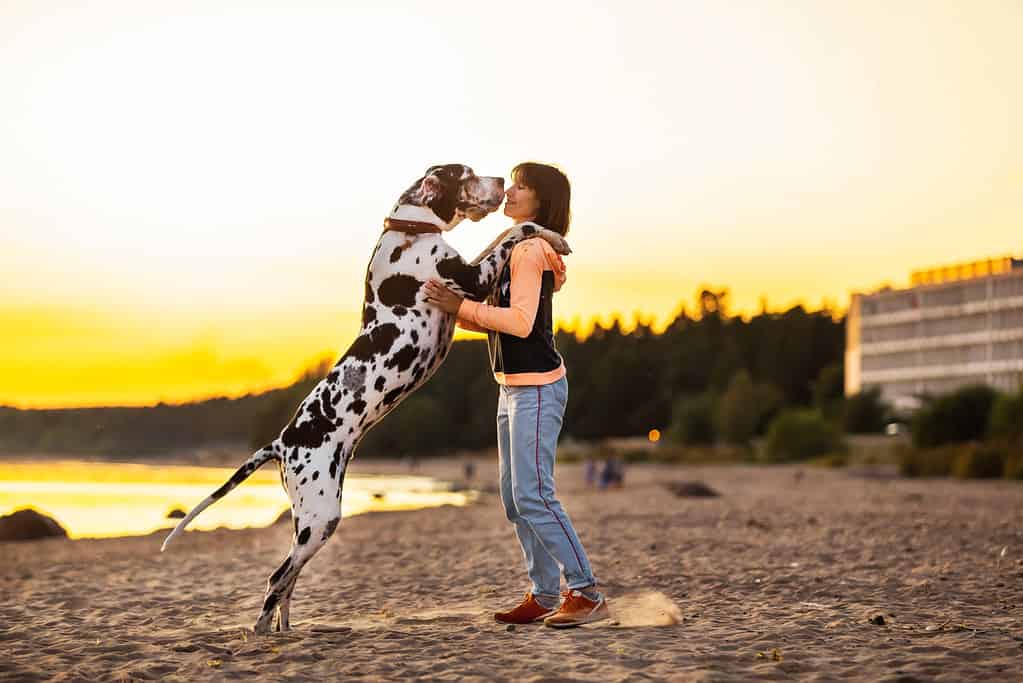
Great Danes are friendly, affectionate, and surprisingly lap-dog-like despite their height.
©Aleksandr Zotov/iStock via Getty Images
What are they like? Their sleek coat comes in a variety of colors and requires minimal grooming. Temperamentally, Great Danes are usually friendly, people-oriented dogs who enjoy being close to their families. Care focuses on protecting their joints during growth and managing the risk of bloat, a serious condition common in deep-chested breeds. Your mileage may vary with how adorable you find this trait, but despite their size, they often consider themselves lap dogs.
3. Kangal
Kangals are a massive Turkish livestock guardian breed, weighing 140–200 pounds and standing 28–32 inches tall. They are known for a powerful build and imposing protective presence.
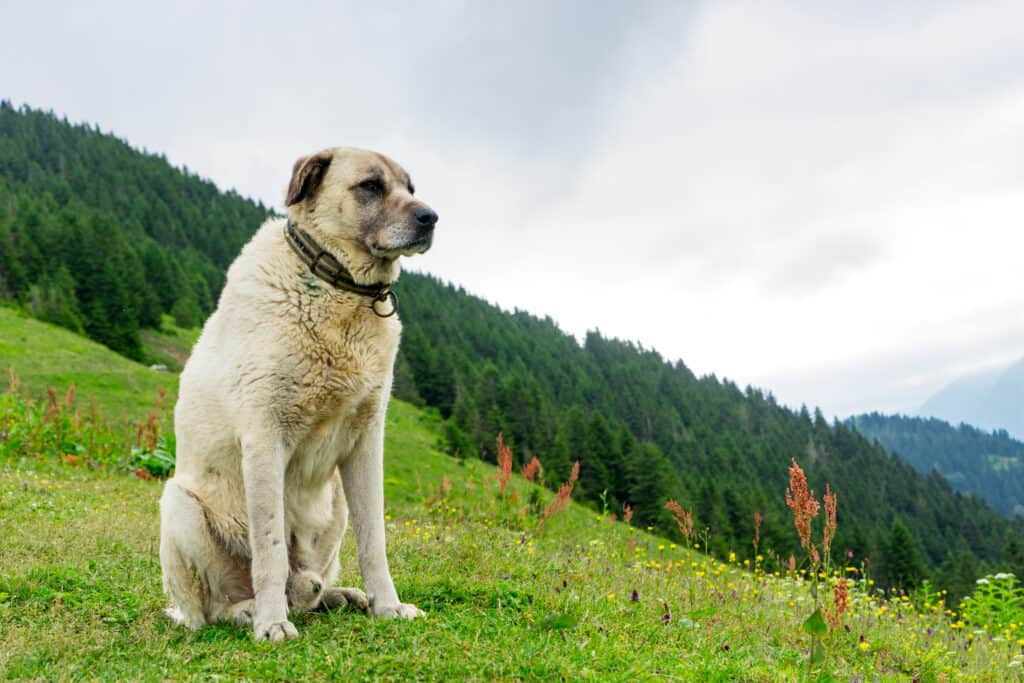
Kangals are strong, protective Turkish livestock guardians who require early training and daily exercise.
©iStock.com/klenger
Kangals are highly territorial and intelligent. Without early socialization and training, they can become overly protective, but with guidance, they are loyal and calm with family. Daily exercise and mental challenges help manage their energy. Their short coat requires minimal grooming, but responsible handling is essential given their strength.
2. Boerboel
Just how big are they? The Boerboel is a powerful South African working dog bred to guard farms and homesteads. Adults usually weigh 150 to 200 pounds and stand 24 to 27 inches tall, with a muscular, athletic build that reflects their protective role.
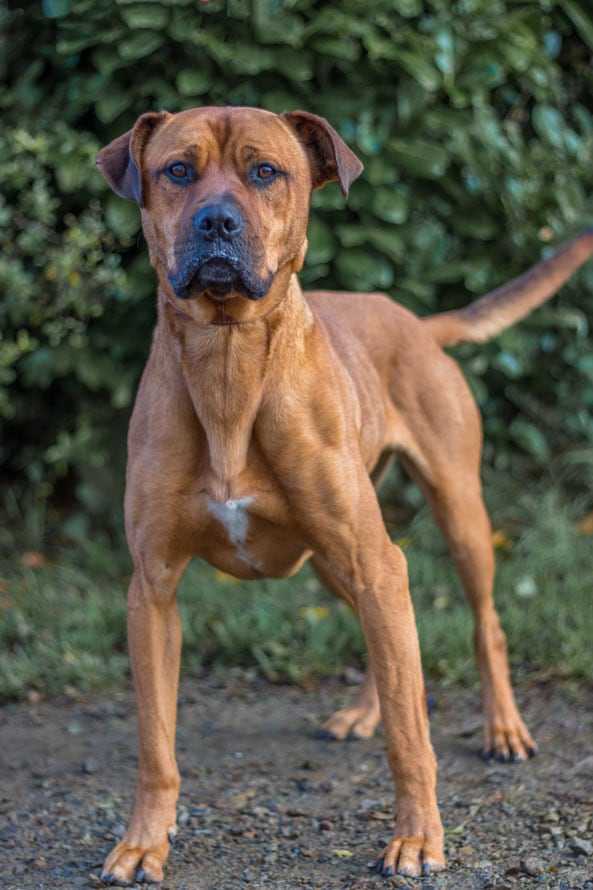
Boerboels need socialization, training, and daily mental engagement.
©Wirestock/ via Getty Images
What are they like? Boerboels are confident, intelligent, and deeply loyal to their families. Their appearance—broad head, strong jaw, and muscular frame—matches their serious temperament. Their short coat requires minimal grooming, but they need daily exercise and mental engagement to remain balanced companions. Boerboels are naturally territorial, so early training and socialization are essential or the dog could become difficult to manage.
1. English Mastiff
Just how big are they? The English Mastiff is one of the heaviest dog breeds in existence. Adults commonly weigh 160 to 230 pounds and stand 27 to 30 inches or more at the shoulder. A fully grown Mastiff can weigh more than an NHL hockey player in full pads and has a presence that’s just as impossible to ignore.
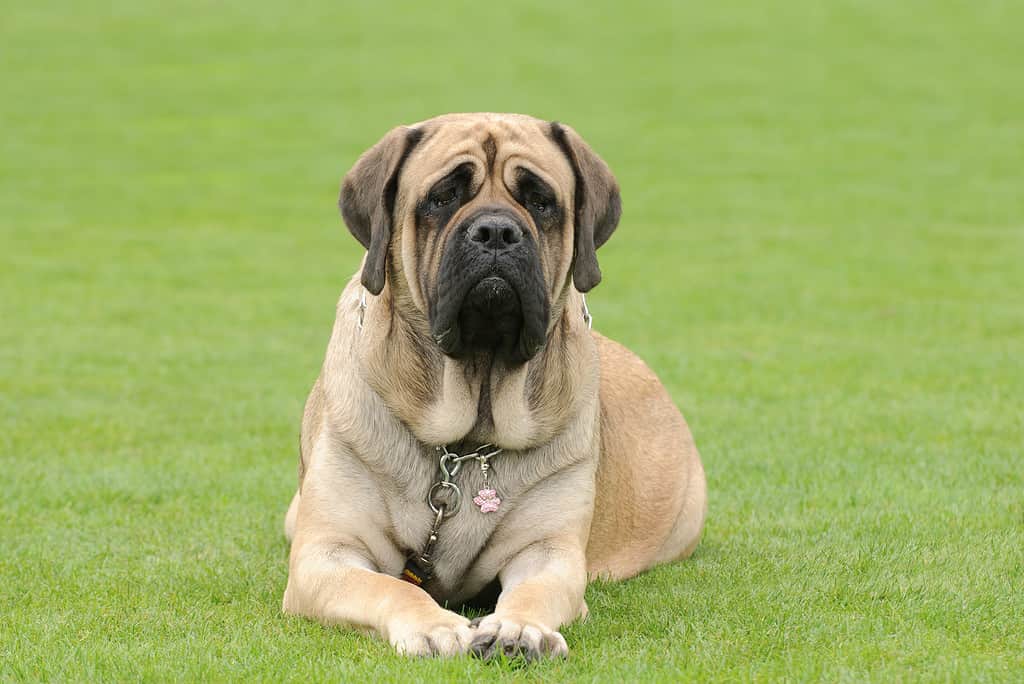
One of the heaviest breeds, English Mastiffs are gentle giants, loyal and devoted family companions.
©Waldemar Dabrowski/Shutterstock.com
What are they like? Mastiffs are loyal, affectionate, and surprisingly quiet for their size. Early training, moderate low-impact exercise, and careful diet management are crucial to protect joints and prevent obesity. With proper socialization, English Mastiffs are loving, devoted family companions — the ultimate “gentle giants.” Their short coat is easy to groom, but their sheer bulk demands space, so if you live a studio apartment… maybe look into a Chihuahua or something.
And speaking of Chihuahuas, just in case you were curious, the world’s smallest dog is…
The Chihuahua

In case you weren’t sure, the chihuahua is the dog on the left…
©Natallia Yaumenenka/Shutterstock.com