
Quick Take
- The blue whale can reach 109 feet in length and weigh 190 tons, the largest animal to ever live.
- Its appetite hinges on nutrient-rich krill swarms, so climate shifts that shrink krill threaten energy reserves and migration.
- The blue whale has a brain weighing 15 pounds; its longest 75-foot dorsal root ganglion axon carries signals from tail to brain.
- Read on to discover the 12-inch-thick throat muscles and a 90-second gulp that power its baleen-filter feeding.
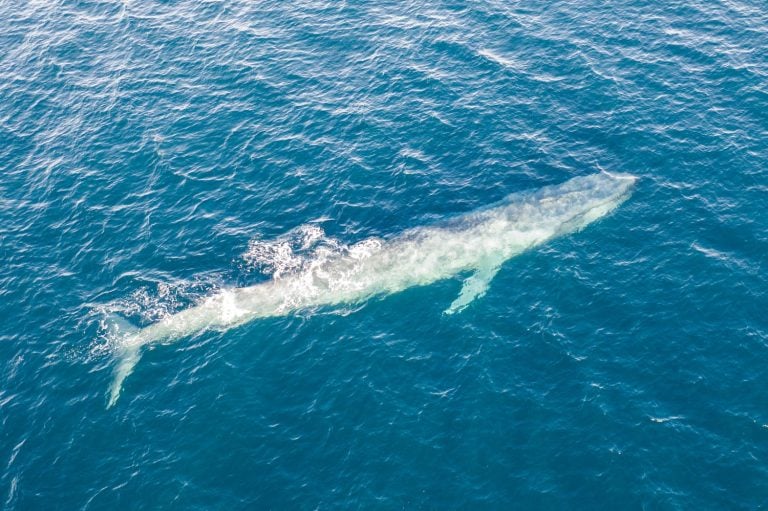
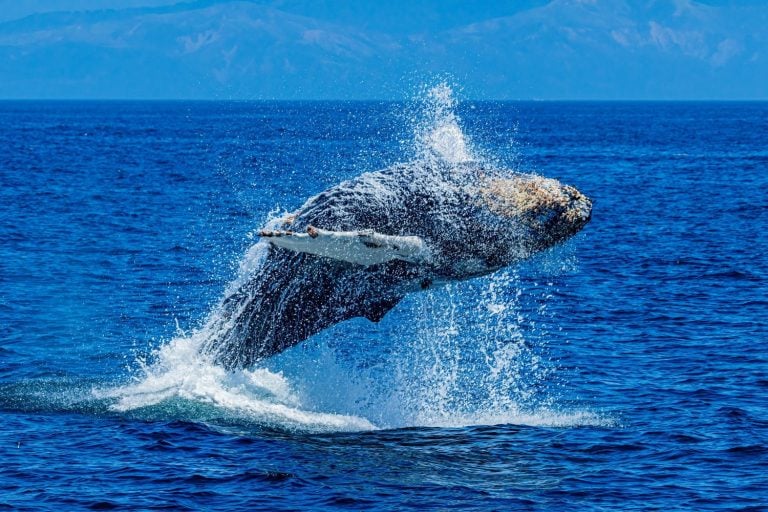
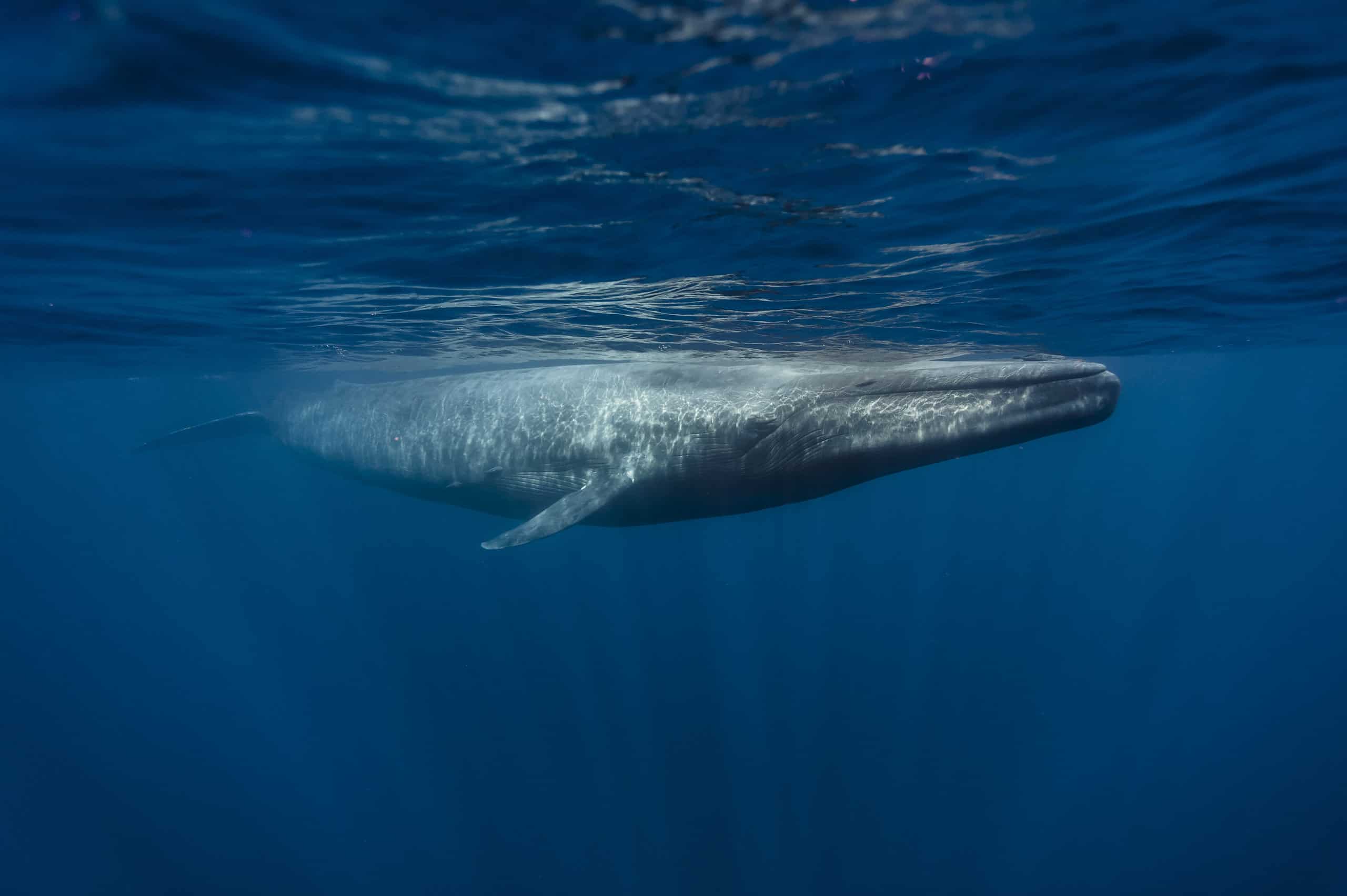
The biggest whale species on Earth is a monster! There are plenty of large creatures within the Cetacea order (which contains dolphins, porpoises, and whales), but one surpasses them all. Meet the blue whale (Balaenoptera musculus), a magnificent baleen whale with a heart the size of a Harley-Davidson and a body the size of a jumbo jet. They are found in the open ocean all over the world.

How Big Are Blue Whales?
Blue whales are not just the biggest creature alive on the planet today. They are the largest animals to have ever lived. It would take 30 Tyrannosaurus rex dinosaurs to reach the same size as an adult blue whale.
On average, males have a length of 82 feet, and females are slightly longer at 88 feet. However, the longest confirmed blue whale specimen was 109 feet long and weighed 190 tons!
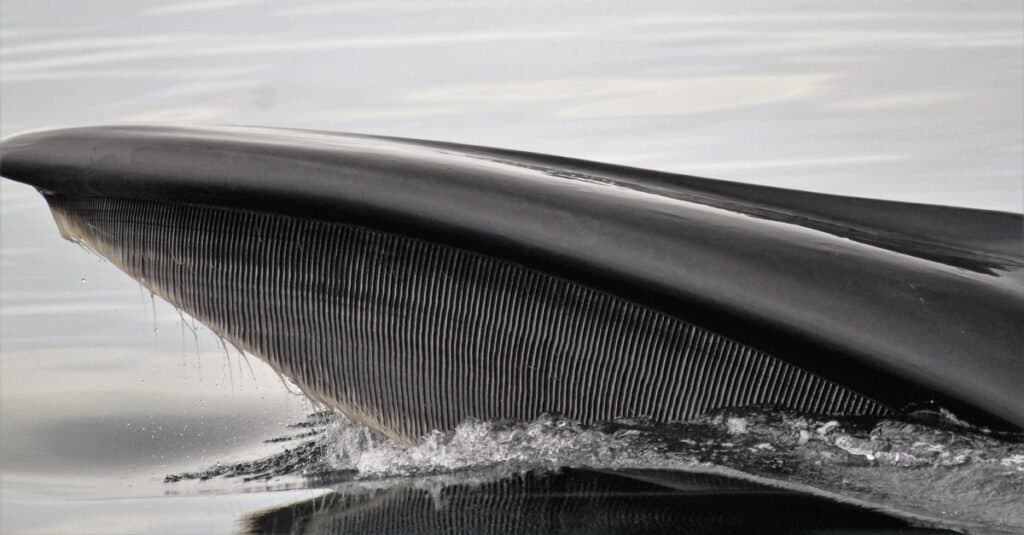
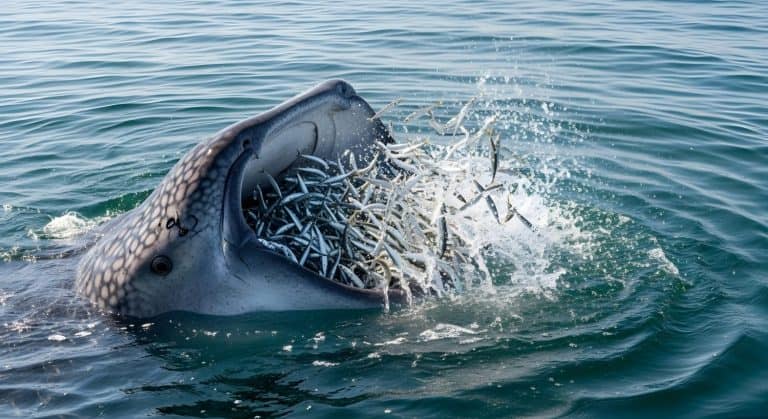
Blue whale baleens filter out food from seawater.
©Sharlyn/Shutterstock.com
A big whale has big body parts. These baleen whales have 3-foot-long fringed plates hanging from their upper jaw. A blue whale’s heart weighs around 400 pounds and is 5 feet long. It makes up just 1 percent of their body weight but is still the largest heart of any creature. A human could crawl through their aorta!
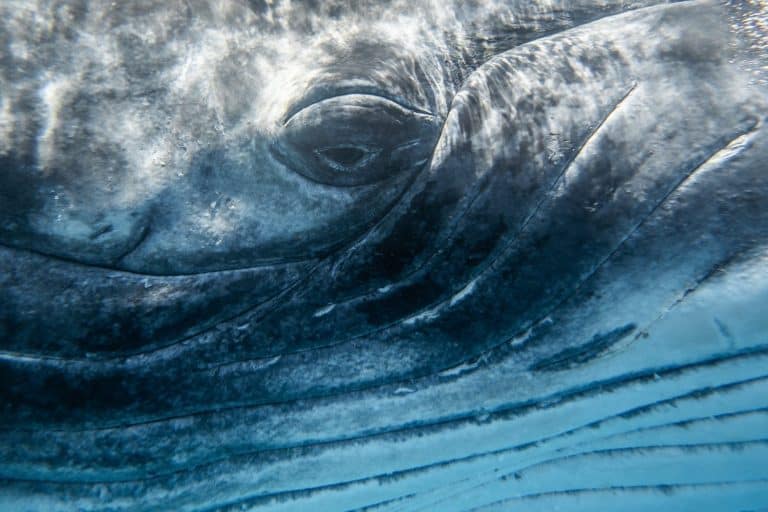
When it comes to brain size, however, blue whales are more modest. Their brains are actually smaller than those of a sperm whale and weigh in at around 15 pounds. However, what they lack in brain size, they make up for in neuron (nerve cell) length. Their longest dorsal root ganglion axon (a cluster of neurons) is around 75 feet long. It can take several seconds for information to pass from the furthest point of their body (their tail) to their brain!
Have Blue Whales Always Been This Big?
No, the early ancestors of blue whales were nowhere near as large and did not even live in the sea. Modern whales evolved from a creature called Pakicetus, which lived 50 million years ago and was the size of a goat. It lived around lakes and on river banks in the area that we now call India and Pakistan.
Gradually, the Pakicetus ventured into the water and developed the body shape and abilities it needed for an aquatic lifestyle. Between 3 and 5 million years ago, there were baleen whales living in the ocean, but they were not as large as the blue whales we see today.
Blue Whale Diet and Feeding
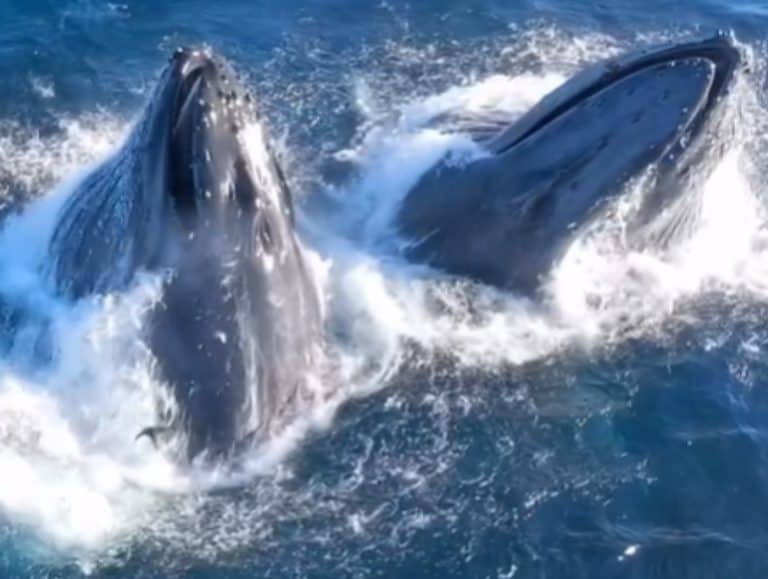
Remarkably, these huge animals have a diet that is made up almost entirely of tiny creatures, namely krill. Their tough and flexible baleen plates serve as filters and separate out food as the water passes over them. Blue whales belong to a group called rorquals that have a distinctive feeding technique. Their throats can expand, which allows them to take in a huge volume of water in a single gulp. They then use their 12-inch thick throat muscles to push the water over the baleen plates in less than 90 seconds. By taking in so much water at one time, the feeding process is highly efficient, and this allows them to maintain such a huge body. A single whale can eat 3 or 4 tons of krill in a day.
Why Did They Grow So Big?
Around 5 million years ago, there was a sharp increase in glaciation, leading to shifts in climate and ocean circulation. The resulting upwelling brought nutrient-rich water packed with nitrogen and phosphorus (from dead and decomposing animals) from the depths to the surface. This led to a phytoplankton bloom at the base of the marine food web. The phytoplankton were eaten by the krill, increasing their numbers, and that provided a lot of food for blue whales! Once they were able to access these super-dense patches of food, the whales began to grow.
Advantages of Being Huge
It’s all very well growing to a great size because you have plenty of food, but unless there is an evolutionary advantage in being this size, a species will not become a giant. One of the main advantages enjoyed by blue whales is their avoidance of predators. Apart from humans, adult blue whales have virtually no predators. Their large size also allows them to cover large distances to breed and access food. Blue whales can cruise at 4.5 mph using very little energy. Big animals also have more efficient metabolisms, and it takes less energy for them to keep warm. They can quickly build up fat stores and go for longer periods without eating compared to smaller creatures.
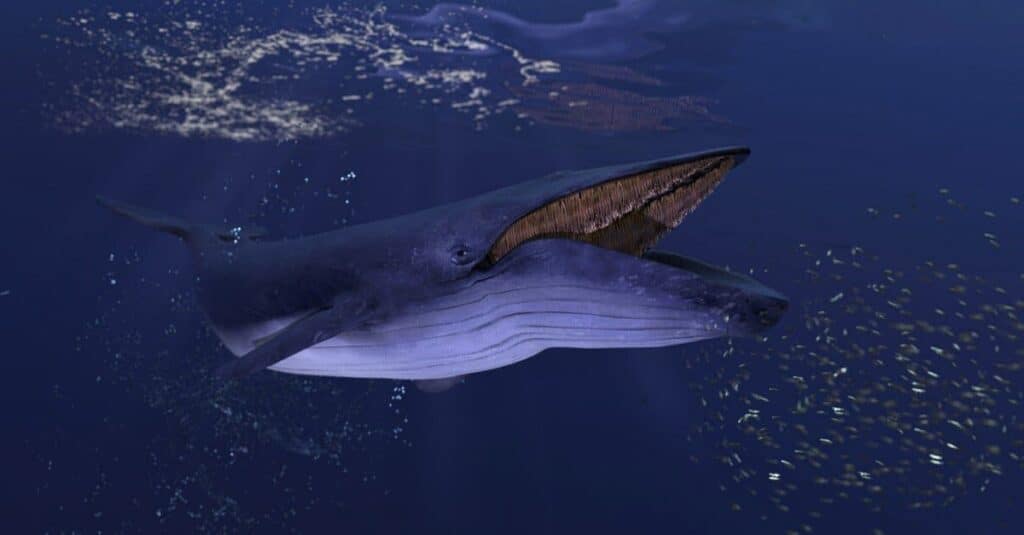
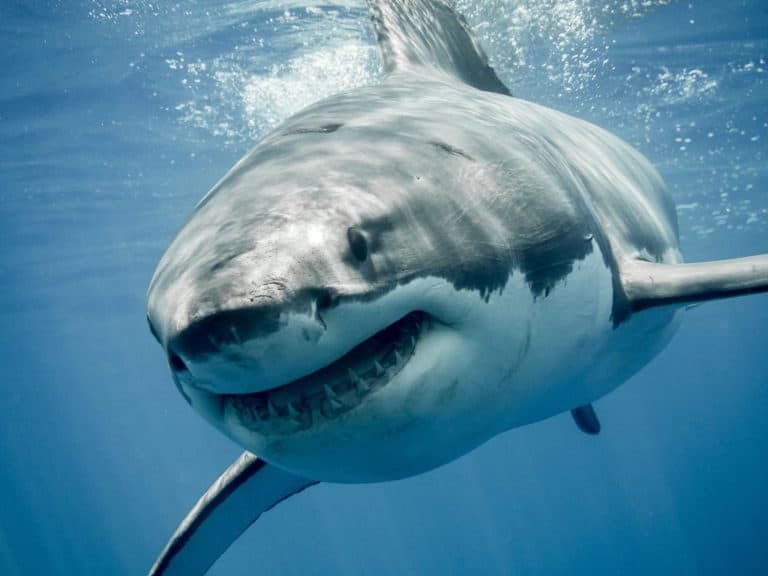
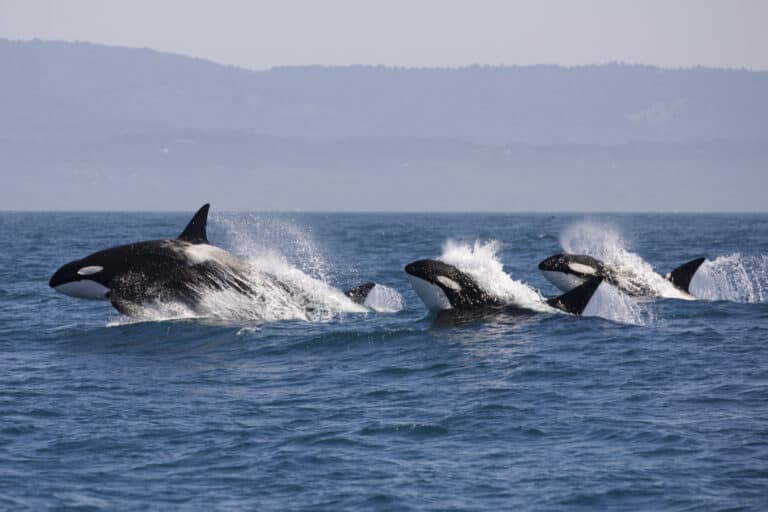
Blue whales have virtually no predators.
©bekirevren/Shutterstock.com
Crucially, only an aquatic creature could get this big. A land animal of this size would have to support its own weight against gravity. It simply could not have legs big enough to support it!
Blue Whale Reproduction and Longevity
There is much about blue whale reproduction that we do not know. However, we do know that they reach sexual maturity at around six to ten years of age. After that, they mate every two years and may or may not stick with the same partner. Blue whale pregnancies last for 11 or 12 months, and the females give birth in low latitude waters in the winter months after the adults return from their high latitude feeding grounds. Newborn blue whales (called calves) weigh around 4,000 pounds and are about half the size of an adult elephant. During the first six months of their life, they feed on their mother’s milk, which has a very high fat content. Calves drink up to 100 gallons of milk a day and can gain nine pounds in an hour! At just seven months old, a blue whale calf is 46,000 pounds and the length of a Mack truck. Typically, they live for 80 or 90 years.
How Do Blue Whales Behave and Communicate?
Not all blue whales are migratory, but those that are spend the winter in low latitude waters before moving towards the poles during the spring. They feed in these high latitude waters during the summer and head back toward the equator during the fall. Some lead a solitary life, but others gather in groups that can reach up to 60 individuals. These whales vocalize at 14 Hz at volumes up to 200 decibels. Their calls can travel for hundreds of miles in the deep ocean.
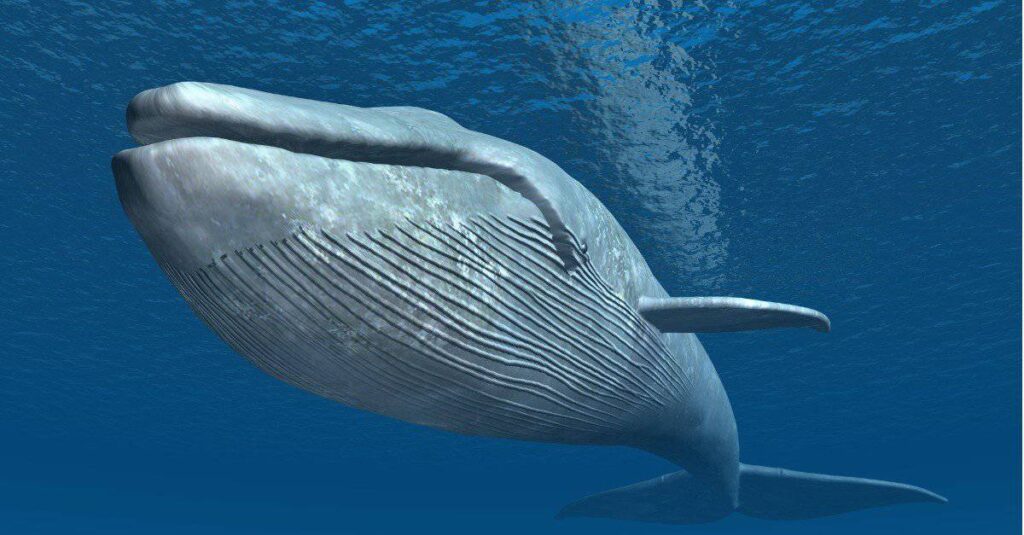
Some blue whales lead a solitary life, but others live in groups.
©iStock.com/MR1805
Blue whales are mammals and therefore must surface to breathe air. They do this through nostrils (called a blow hole) located on the top of their head, and do it consciously, not reflexively, as we do. These whales can close off their respiratory system completely to stop water from getting into their lungs and go without breathing for around 15 minutes. This gives them long enough to dive to more than 1,600 feet to feed on the dense areas of krill.
When the whale surfaces, it rapidly expels nearly all the air from its lungs in one powerful exhalation. In blue whales, the spout of air can reach almost 32 feet in height. The spout is made of condensed water vapor that looks like steam.
Blue Whale Conservation Status
The sheer size and speed of blue whales protected them from hunters for many centuries. However, from 1860, whalers developed the technology (deck-mounted harpoon cannons) to catch and kill them. An estimated 350,000 blue whales were killed in the 20th century. However, in 1965/66, when they were on the edge of extinction, they became protected, and they are currently classified as endangered on the International Union for Conservation of Nature and Natural Resources’ Red List. The number of mature individuals is estimated to be between 5,000 and 15,000, and their numbers are thought to be increasing or at least stable. However, these gentle giants of the oceans are still under threat from vessel strikes, habitat changes, and climate change.