
Quick Take
- In 10 years, the Prickly Pear East iguana population has surged to around 300 individuals.
- The Lesser Antillean iguanas play a critical ecological role by redistributing seeds and creating burrow habitats for up to nine other species.
- The population revival hinged on moving natives to a pest-free islet—dubbed the last chance saloon—instead of trying to evict all invasive iguanas from Anguilla.
For one native species of iguana, an uninhabited island near Anguilla has turned into their own personal matchmaking paradise. The rugged terrain, lush landscapes, and deserted beaches are exactly what the Lesser Antillean iguana needs to set the stage for romance.
But these critically endangered lizards didn’t do it on their own. Like many hopeful singles, they needed the helping hand of a matchmaker. That help came from a cross-collaboration effort between the Anguilla National Trust and the island of Dominica’s Forestry, Wildlife, and Parks Division. Together, these two conservation-focused groups helped a small group of lonely iguanas meet new mates and create a population surge.
How Anguilla Conservationists Took Action
In 2016, conservationists from the Anguilla National Trust noticed invasive green iguana populations surging on the island. They realized that to preserve the native Lesser Antillean iguana, the lizards required a habitat free from the invasive iguana species.
Conservationists identified Prickly Pear East, an uninhabited islet just five miles north of Anguilla, as a suitable place, as there were no green iguanas there. They hoped the native iguanas would breed in peace and replenish their population. Prickly Pear East became known among the group as the “last chance saloon” — an iguana version of matchmaking heaven. In total, 23 Lesser Antillean iguanas were moved to their new abode.
Without introducing genetically diverse Lesser Antillean iguanas from other populations, the Prickly Pear East group would suffer from inbreeding. Thanks to Dominica’s Forestry, Wildlife, and Parks Division, an additional ten healthy young Lesser Antillean iguanas were flown to Anguilla and released on Prickly Pear East. Dominica has the world’s largest population of Lesser Antillean iguanas.
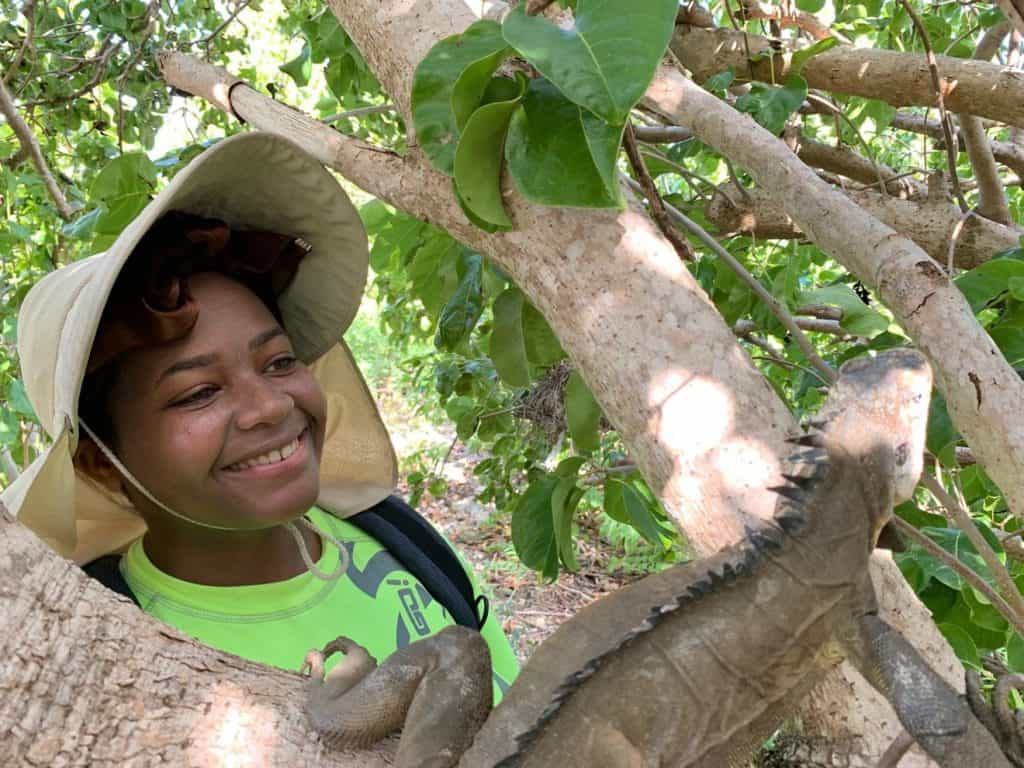
The Lesser Antillean iguana is considered critically endangered.
In the nearly ten years since the program started, the population of Lesser Antillean iguanas on Prickly Pear East has surged to around 300 individuals.
“Thanks to the kind assistance from our friends in Dominica, as well as funding from the UK Government through Darwin Plus, the Lesser Antillean iguana is making a comeback in Anguilla,” said Jenny Daltry, the Caribbean Alliance Director at Re: wild and Fauna & Flora, in a statement. “Prickly Pear East has become a beacon of hope for these gorgeous lizards—and proves that when we give native wildlife the chance, they know what to do!”
The success of the Prickly Pear East project inspired a second reintroduction project, this time on mainland Anguilla. Fountain Cavern National Park has been fully enclosed with a pest-resistant fence to keep invasive species, including the green iguana, out. The plan is to reintroduce Lesser Antillean iguanas, some from Prickly Pear East, to the park in 2026.
Discover the Lesser Antillean Iguana
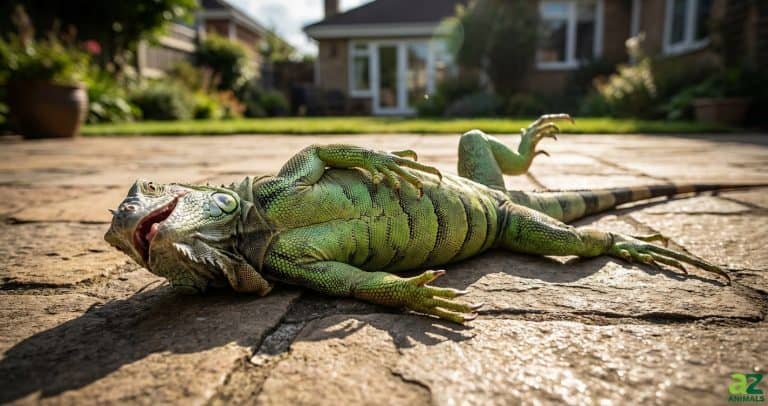
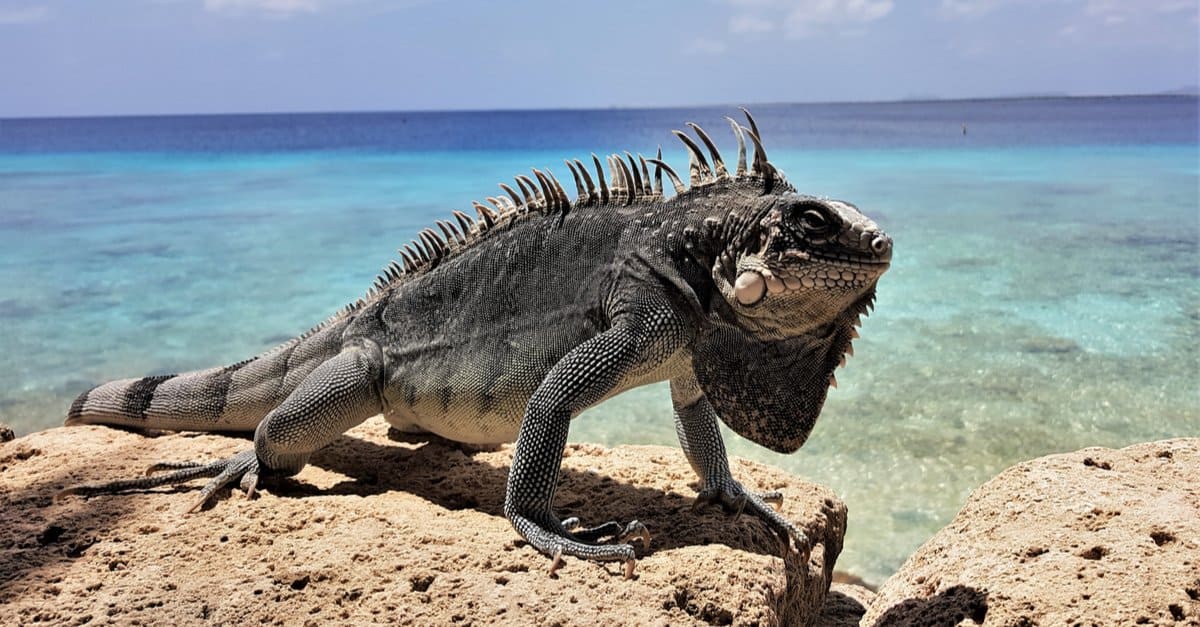
The Lesser Antillean iguana is a critically endangered species native to most of the Eastern Caribbean islands, from Anguilla to Martinique. Males grow up to 17 inches long and weigh around 7.7 pounds. Females are smaller, averaging 15 inches in length and 5.5 pounds.
Long, sharp claws help them climb trees and navigate rocky surfaces. Their long, muscular tails provide balance, allowing them to jump from trees and branches with ease. You’ll often spot them burrowing into rocky areas and basking on rocks during the daytime.
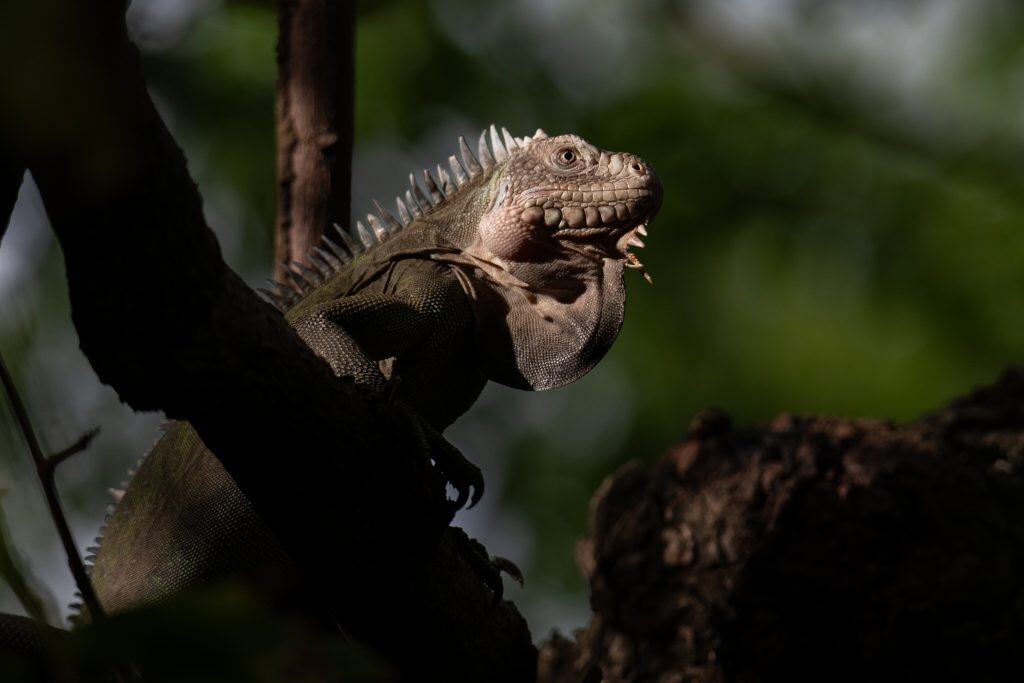
The Lesser Antillean iguana has strong, sharp claws to help it scale trees and burrow in rocks.
These iguanas inhabit dry tropical forests, mangroves, and scrub woodlands. However, as human populations have increased on the islands, it has become common to find these iguanas in residential areas.
When they are young, they boast an eye-catching emerald green color that helps them blend into tropical vegetation. As they mature, they turn varying shades of gray. One unique feature is the pop of pink color around their jowls. As males look for a mate, that pink color intensifies.
Why Are Lesser Antillean Iguanas Important?
Lesser Antillean iguanas play a vital ecological role in the islands. They contribute to plant diversity by redistributing seeds from native plants, and their burrowing around rocks helps improve soil quality for native plants. The burrows they dig are also reclaimed as homes for up to nine other animal species once the iguana moves on.
Why Are Lesser Antillean Iguana Populations Dropping?
Lesser Antillean iguana populations across the West Indies were once abundant. However, due to a number of factors, the total population has been reduced to between 13,000 and 20,000 today. The majority of these iguanas, between 10,000 and 15,000, are found on the island of Dominica. IUCN classifies these lizards as critically endangered.
There are several reasons for the plummeting population numbers, especially on Anguilla. One reason is the loss and destruction of habitat due to human expansion and tourism. Another factor is the increased presence of humans overall. Many iguanas are hit by cars, especially during breeding season when they cross roads in higher numbers. Others are hunted as a food source.
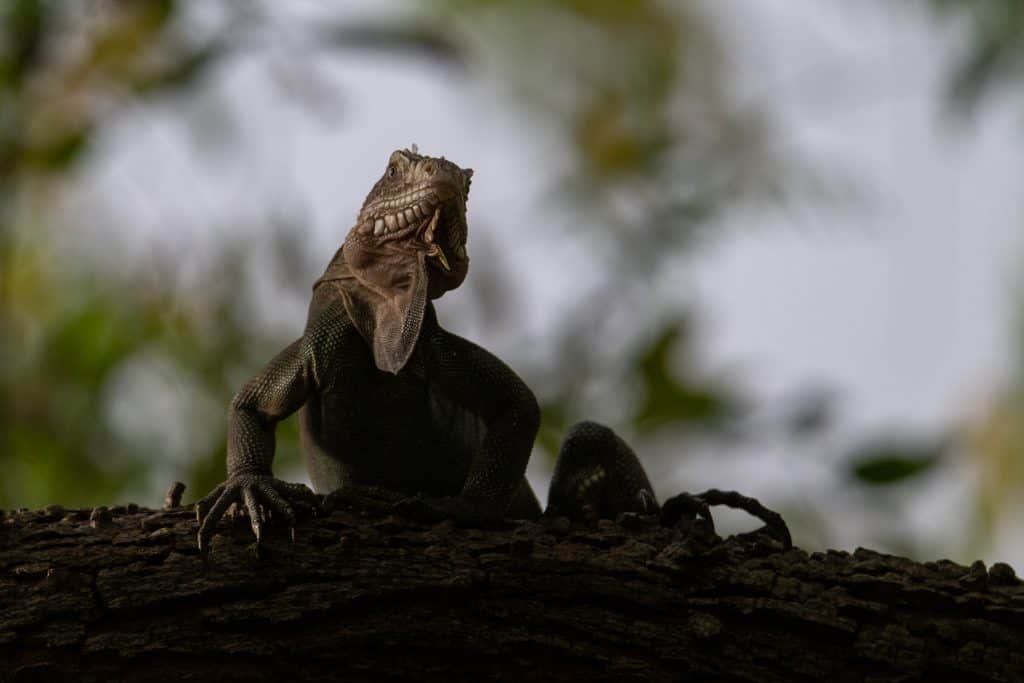
The Lesser Antillean iguana is under threat due to a number of factors.
However, the greatest threat to the Lesser Antillean iguana is the introduction of the non-native green iguana to Anguilla. Originally native to South America, green iguanas got a foothold in the Caribbean when they were imported to the island of Guadeloupe in the 1800s. It is believed the green iguanas arrived in Anguilla thanks to hurricane activity in 1995.
Two powerful storms, Luis and Marilyn, caused large chunks of vegetation to be torn from Guadeloupe’s coastline, creating floating mats that carried many green iguanas out to sea. Eventually, these floating mats washed ashore on Anguilla, just a few hundred miles south of Guadeloupe. The green iguana stowaways made their new home on Anguilla, where they quickly established themselves.
Unfortunately, green iguanas are much larger than the native Lesser Antilles iguanas. Green iguanas can grow up to six feet in length, and they use their size to their advantage. They outcompete the native iguanas for food and breeding resources. Researchers also discovered that green iguanas spread diseases that can kill the native reptile populations.
How Can This Project Help Other Species?
The success of the Prickly Pear East project offers a hopeful model for other animals threatened by habitat loss and invasive species. Strategies to create new habitats free from invasive threats have proven effective and may be adapted to meet the needs of other species classified as critically endangered.