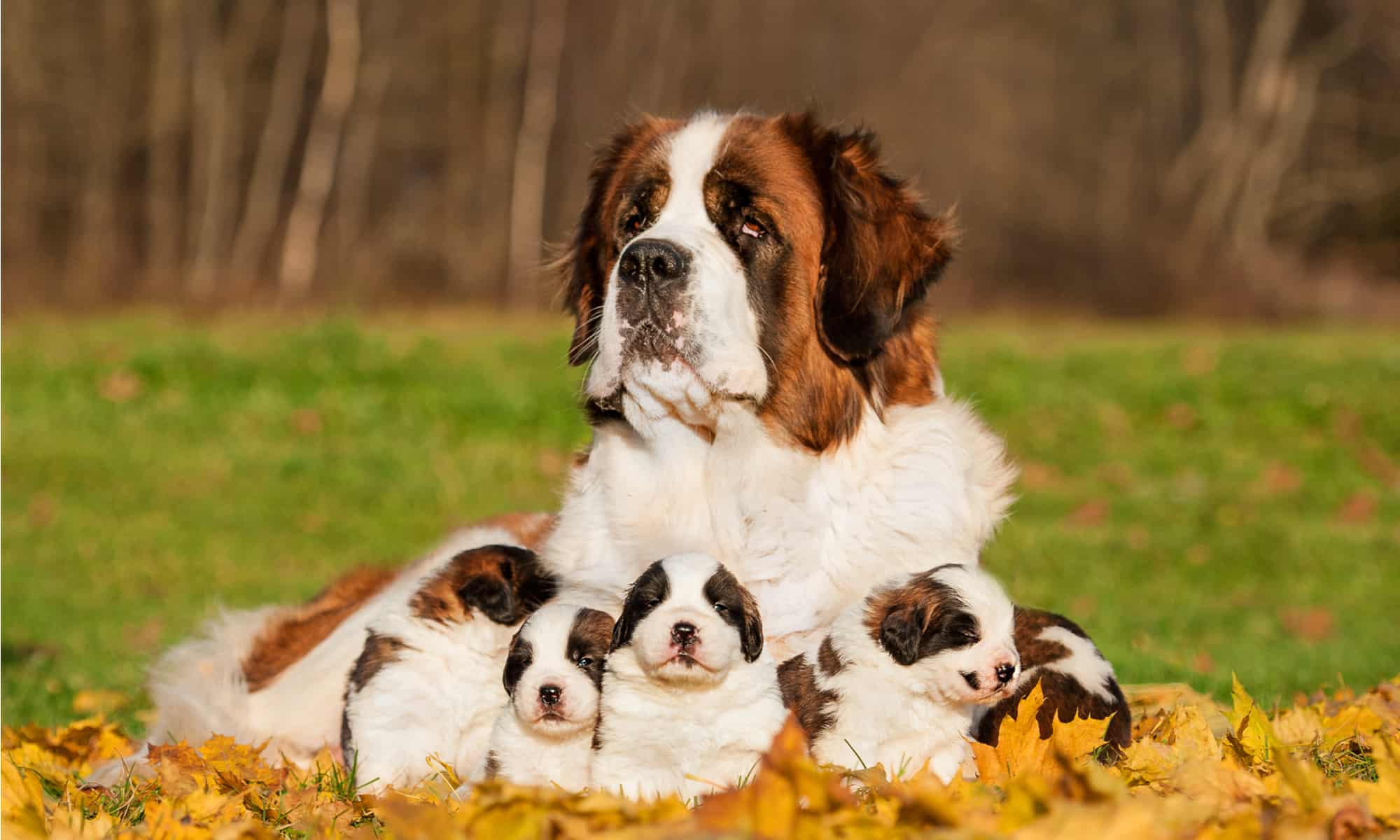

If you’re looking for a large, family dog that’s full of affection, you can’t go wrong with either a Saint Bernard or a Bernese Mountain Dog. Both breeds have much in common. They have similar appearances, are close in size, and both come from Switzerland. However, these are two unique dog breeds, each with its own characteristics.
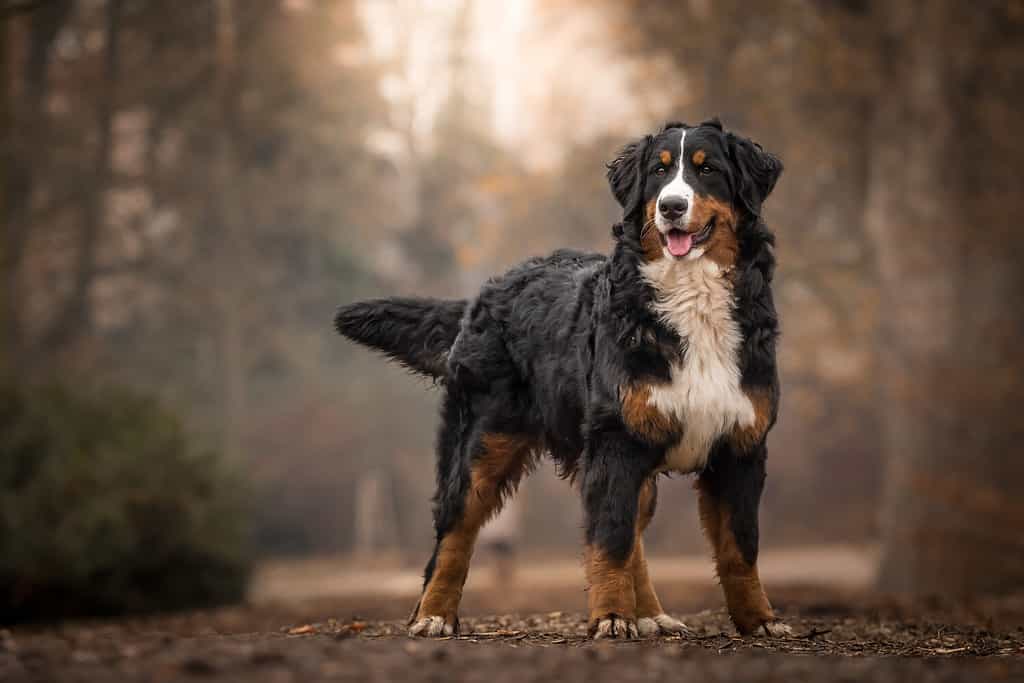
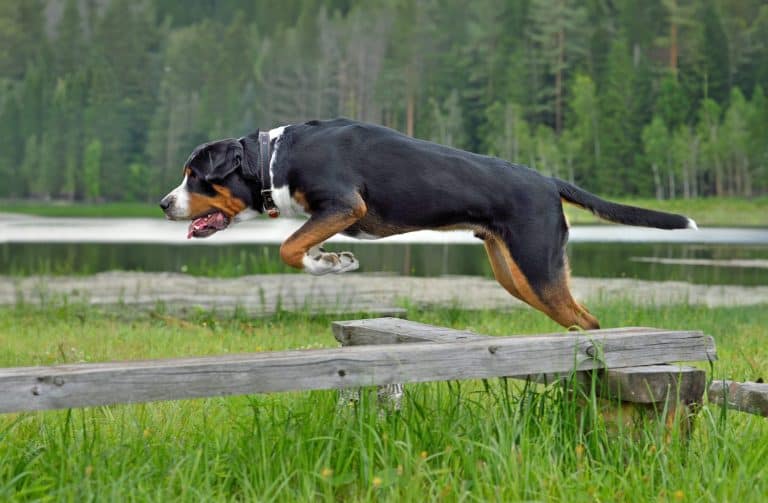
Bernese Mountain dogs are one of four mountain breeds from Switzerland known as Sennenhunde.
©xkunclova/Shutterstock.com
The Origin Story of the Saint Bernard
The Saint Bernard dog is an ancient breed. The first record of the breed dates back to sometime between 1660 and 1670. The dogs were bred at a monastery and hospice which had been founded by an Augustinian monk, Bernard de Menthon. Traveling to the monastery was treacherous, as it is located at the Great Saint Bernard Pass, which is about 8,000 feet above sea level.
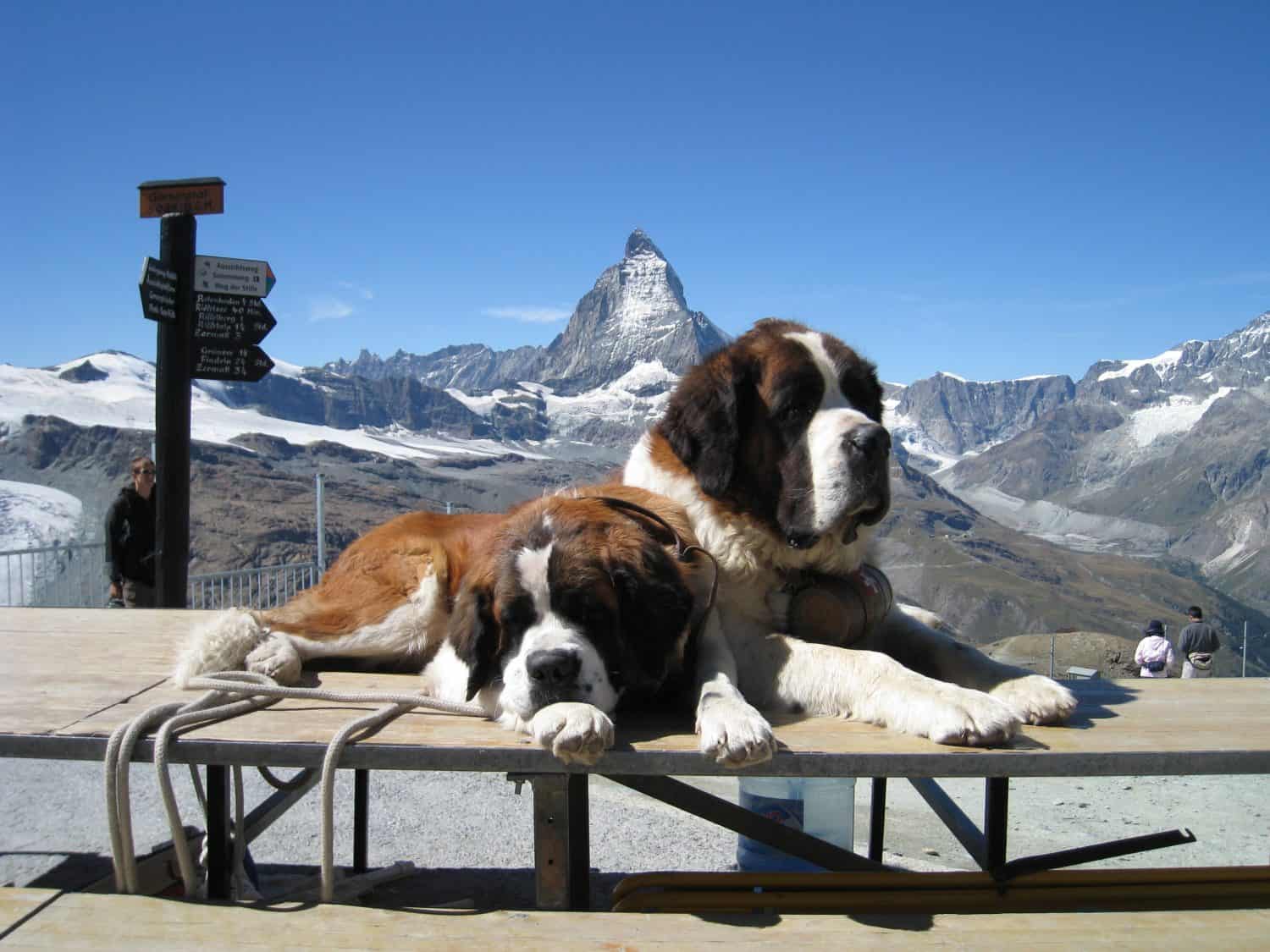
Saint Bernards are well adapted for snowy weather and mountainous terrain.
©Michael Kenney/Shutterstock.com
The monks’ dogs acted as watchdogs and companions to the monks living in the snowbound mountains. Although the Saint Bernards didn’t actually wear the iconic little casks of brandy around their necks that they are often pictured with, they did perform heroic rescues of trapped travelers in the snow. Today, modern Saint Bernards are working dogs known for their tolerance of cold weather and gentle dispositions.
The Origin Story of the Bernese Mountain Dog
Similar to Saint Bernards, Bernese Mountain Dogs originated in the Swiss Alps. They are thought to be descended from large Roman mastiffs that came to the area in the first century. From these dogs, four mountain dog breeds were born: Bernese, the Greater Swiss, the Entlebucher, and the Appenzeller. The Bernese Mountain Dog was named for the midland region of Switzerland near Bern.

Bernese Mountain Dogs originated as working dogs in the Swiss Alps.
©Hannah Dahl/Shutterstock.com
Before the Industrial Revolution, Bernese Mountain Dogs were working dogs in the mountains, acting as guard dogs, herding livestock, and pulling carts. These affectionate dogs also made great companions. In 1937, the American Kennel Club recognized the Bernese Mountain Dog as a member of the Working Group.
Comparing Saint Bernards and Bernese Mountain Dogs by Size
Saint Bernards and Bernese Mountain Dogs are nearly the same in height, but Saint Bernards are heavier. Saint Bernard males are slightly larger than the females. They are about 28 to 30 inches tall and can weigh 140 to 180 pounds. Male Bernese Mountain Dogs are 25 to 27.5 inches tall and weigh 80 to 115 pounds.
Other Physical Differences
Bernese Mountain Dogs are heavy shedders. According to the AKC, their shedding level is “hair everywhere.” Saint Bernards do shed, but much less than a Bernese Mountain Dog. The Saint Bernard coat comes in two varieties: smooth and rough, while the Bernese Mountain Dog has a medium-length double coat. Both dogs require regular grooming. Another difference is in their drooling. The AKC rates the Saint Bernard’s drooling level as “always have a towel.” Bernese Mountain Dogs may drool somewhat, but not to the same extent.
Both Make Great Family Dogs
Each of these breeds is known to be good with children and highly affectionate to people. Both breeds are often referred to as “gentle giants,” and both make great service dogs. However, like any dog, it’s important to socialize them at an early age.
What Are the Biggest Differences Between Bernese Mountain Dogs and Saint Bernards?
Saint Bernards are more likely to be vigilant guard dogs than Bernese Mountain Dogs. Bernese Mountain Dogs require more exercise and attention. They are highly energetic and are often referred to as “velcro dogs” because they tend to follow their owners closely, as if they are “stuck like velcro.”
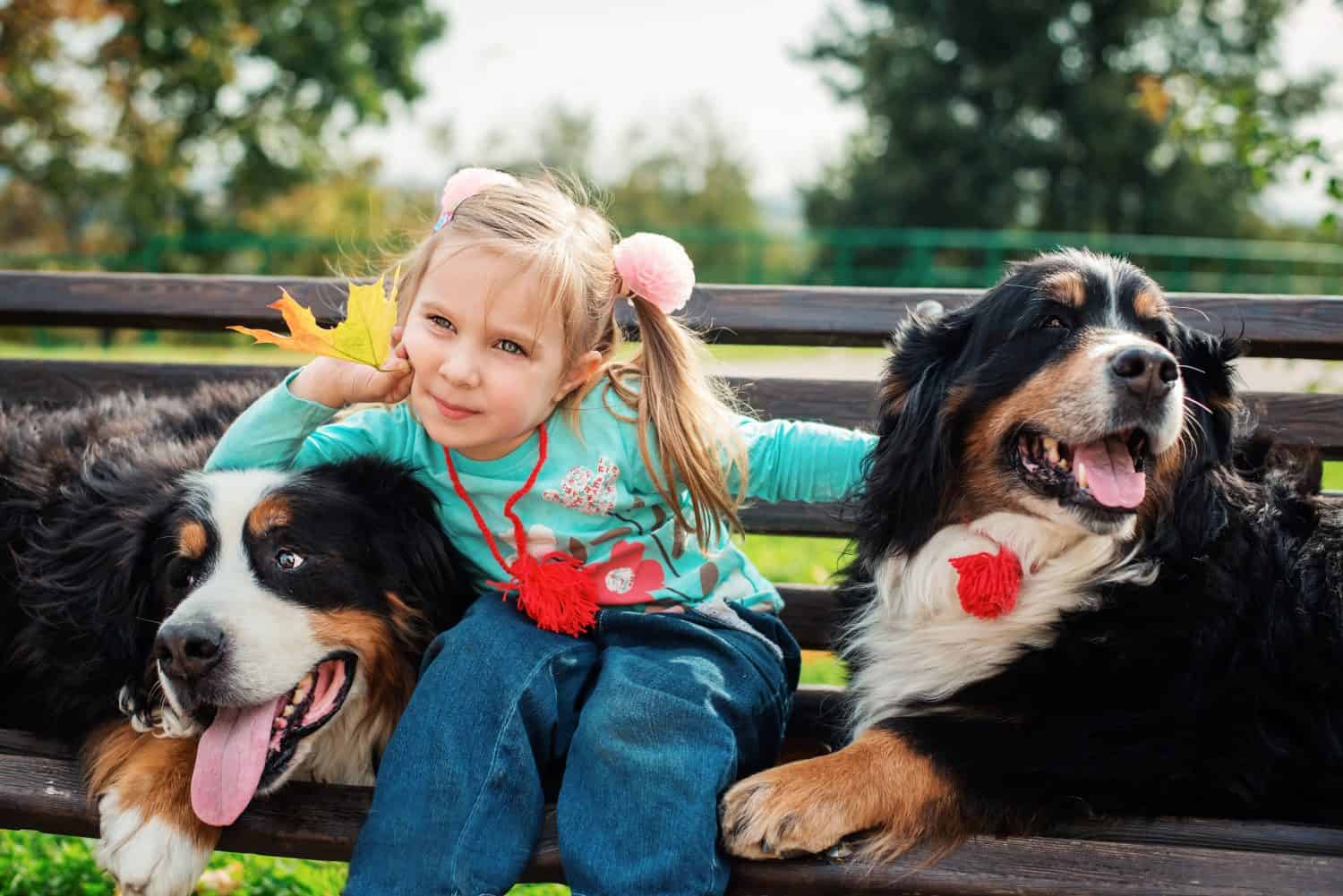
Bernese Mountain Dogs are loving and affectionate.
©Lebedeva Olga/Shutterstock.com
Saint Bernards show more independence than Bernese Mountain Dogs and can entertain themselves if left alone for short times. This temperament may also make Saint Bernards less eager to please than Bernese Mountain Dogs. Dogs that are eager to please are typically easier to train. Saint Bernards can be more stubborn during training, which may make them more challenging to train compared to Bernese Mountain Dogs. A dog that is eager to please is typically easier to train. Saint Bernards may show stubbornness during training and may be more of a challenge to train than Bernese Mountain Dogs.
How Much Exercise Does Each Breed Need?
Both dogs are large breeds and will need daily exercise. Surprisingly, Saint Bernards are lower energy than you might expect and should be fine with around 30 minutes of exercise per day. Bernese Mountain Dogs, on the other hand, have higher energy levels. Dog experts recommend giving them at least an hour of exercise per day, which should be split up into shorter sessions.
Does Breed Truly Affect a Dog’s Temperament?
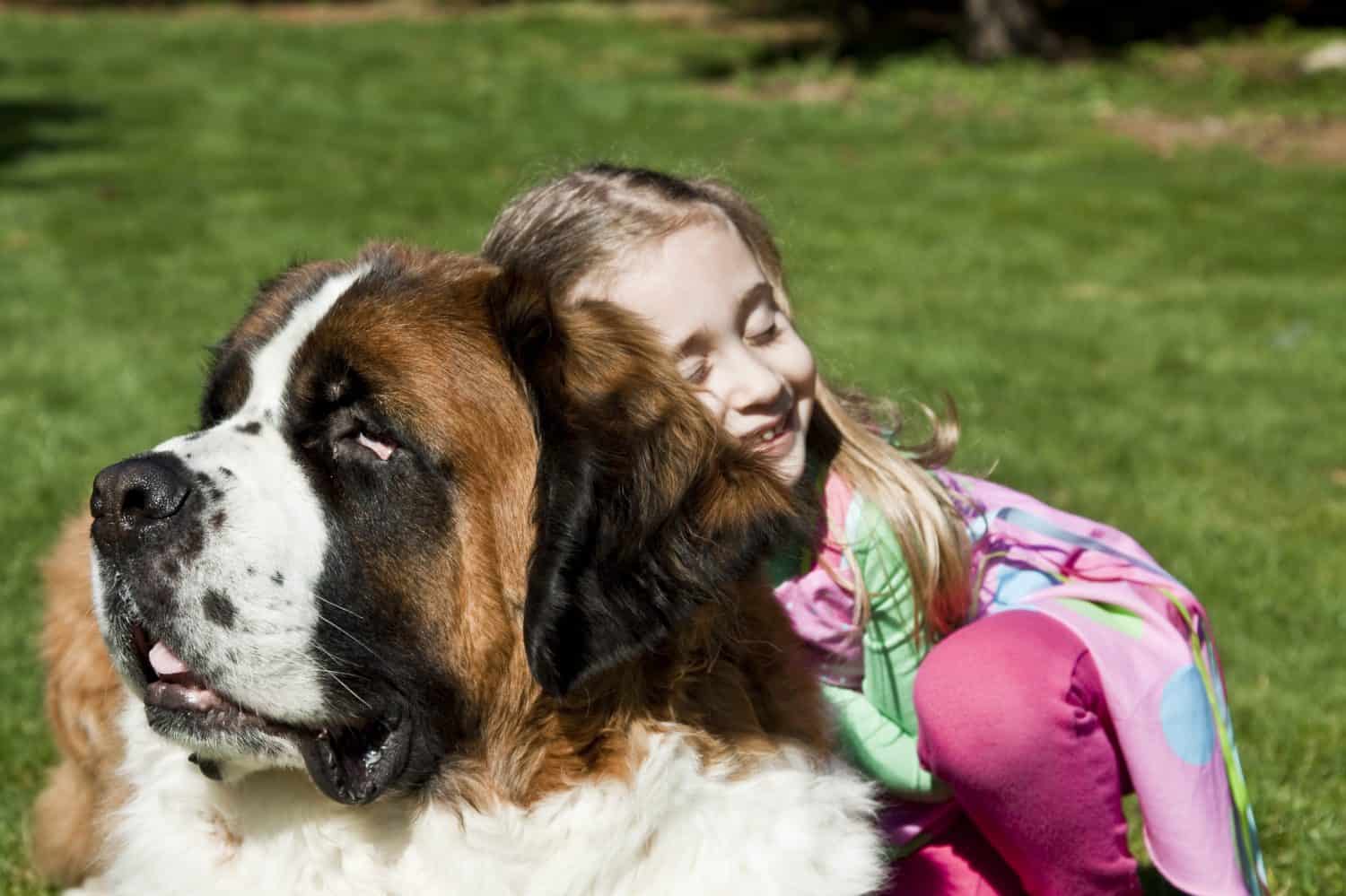
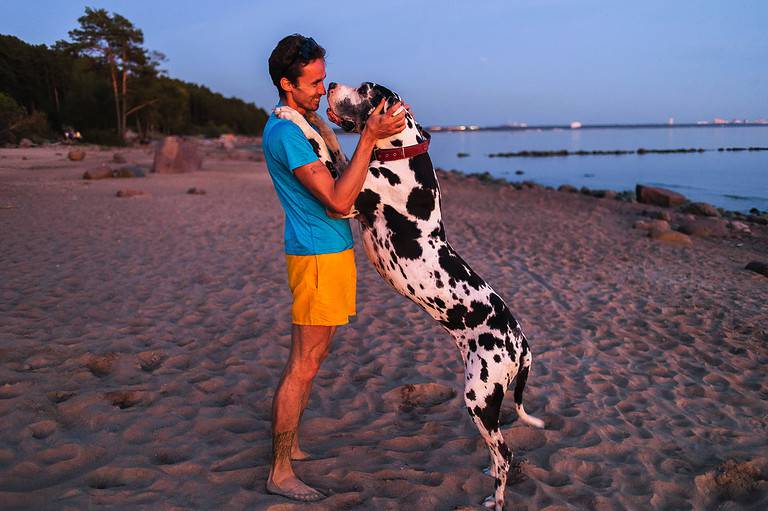
Saint Bernards are affectionately known as gentle giants.
©ItCameWithTheFrame/Shutterstock.com
Every dog is different, and there can be differences among breeds. We are discussing the general characteristics and traits of each dog breed, but this does not account for every individual dog. However, research has shown behavioral tendencies do run within breed families. That said, socialization and early positive experiences are important for a puppy to become a well-balanced adult. While genetics plays an important role, so does a positive environment.