
Ginkgo trees are among some of the oldest in the world. Fossils date these trees as appearing anywhere from 290 million to 170 million years ago. In those years, ginkgo trees have barely changed. Fossils from tens of millions of years ago look similar to young but established ginkgo trees growing today.
It is partly this ancient majesty that makes ginkgo trees perfect for Bonsai tree art. Read on to discover everything you need to know about growing a ginkgo Bonsai tree!
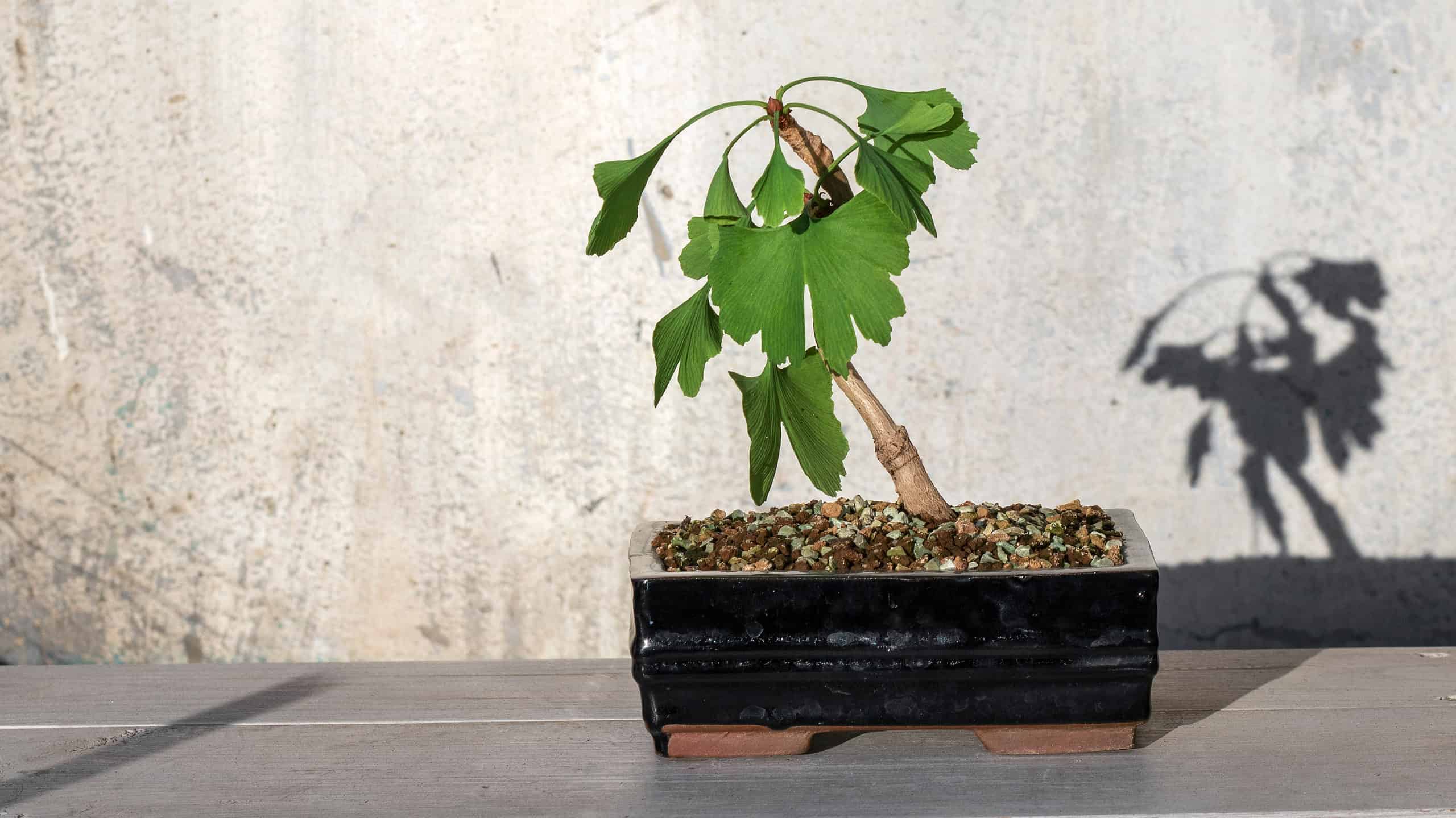
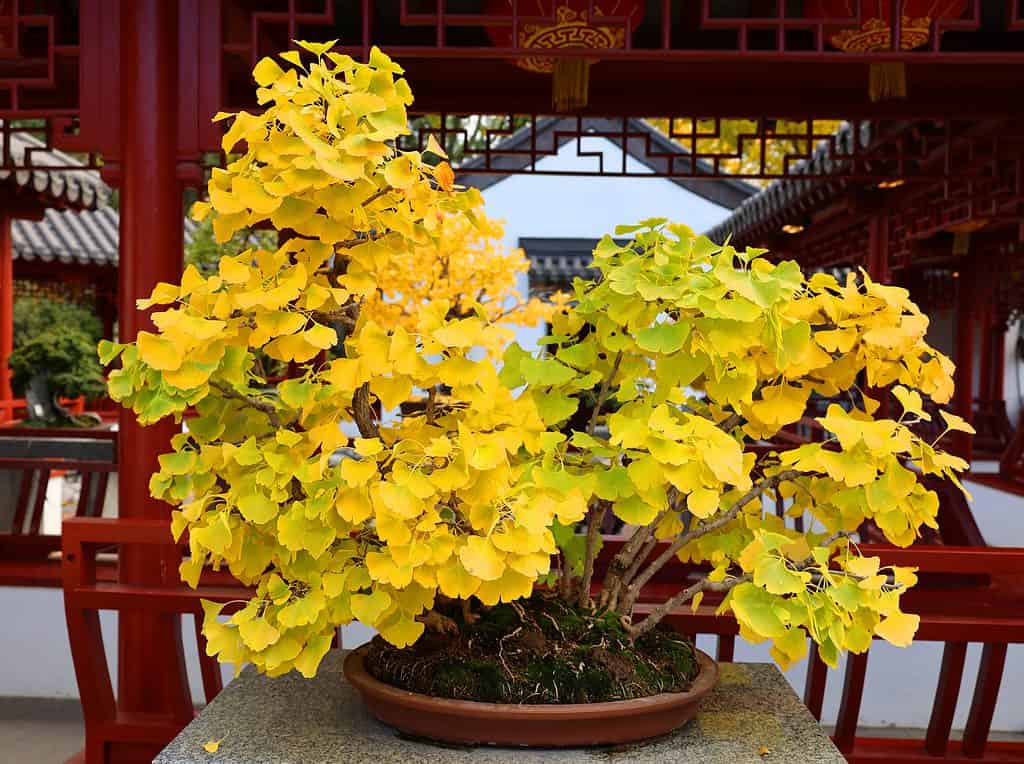
[Image here of ginkgo Bonsai tree | Caption: The ancient majesty of ginkgo trees makes them perfect for Bonsai tree art!]
| Botanical Name | Ginkgo biloba |
| Common Types | Autumn Gold Ginkgo, Golden Colonnade Ginkgo, Halka Ginkgo, Magyar Ginkgo, Presidential Gold Ginkgo, Princeton Sentry Ginkgo, Chase Manhattan Ginkgo |
| Sunlight | Full sun throughout the year. Young trees can be grown in semi-shade to protect them from harsh or hot sunlight. |
| Soil | Well-draining. Most ginkgo trees can adapt to different soil types. Specialty Bonsai soil mix will suit a ginkgo Bonsai tree well. |
| Water | Thorough watering when young and throughout spring, summer, and fall. Be mindful of overwatering. |
| For Beginners? | Yes, though it could be challenging. Ginkgo trees do not take well to pruning which can make them easy to style. They are also hardy trees which can be easy to grow. |
| Indoors or Outdoors? | Outdoors |
| Pairs Well With… | Rocks and moss, other natural ornamentation |
Common Types of Ginkgo Bonsai Trees
Ginkgo trees are native to China. When planted naturally or found in the wild, these trees are known to grow over 100 feet tall. In most cases, the spread of branches and leaves is almost as wide as the tree is tall! As they grow, ginkgo trees don’t have a lot of branches. The dense system of branches of ginkgo trees is known for appearing as they mature.
There are many cultivars available for ginkgo trees. Each of these cultivars works well for Bonsai tree art. Here are some of the most popular!
Autumn Gold Ginkgo
[Image here of Autumn Gold ginkgo tree | Caption: The Autumn Gold ginkgo tree is known for its golden-yellow fall foliage!]
When planted naturally, an Autumn Gold ginkgo tree can reach heights of around 45 feet. The spread of this tree is almost as wide at 35 feet! Like other ginkgo trees, when autumn gold ginkgo trees are young, they are narrow. As they grow and age, their shape broadens.
In the spring and summer, the foliage on these trees is a dark, vivid green. During the fall months, however, these greens turn to shades of gold and yellow. This is where the cultivar name, autumn gold, comes from!
These slow-growing trees need moist, well-draining soil and full sun.
Golden Colonnade Ginkgo
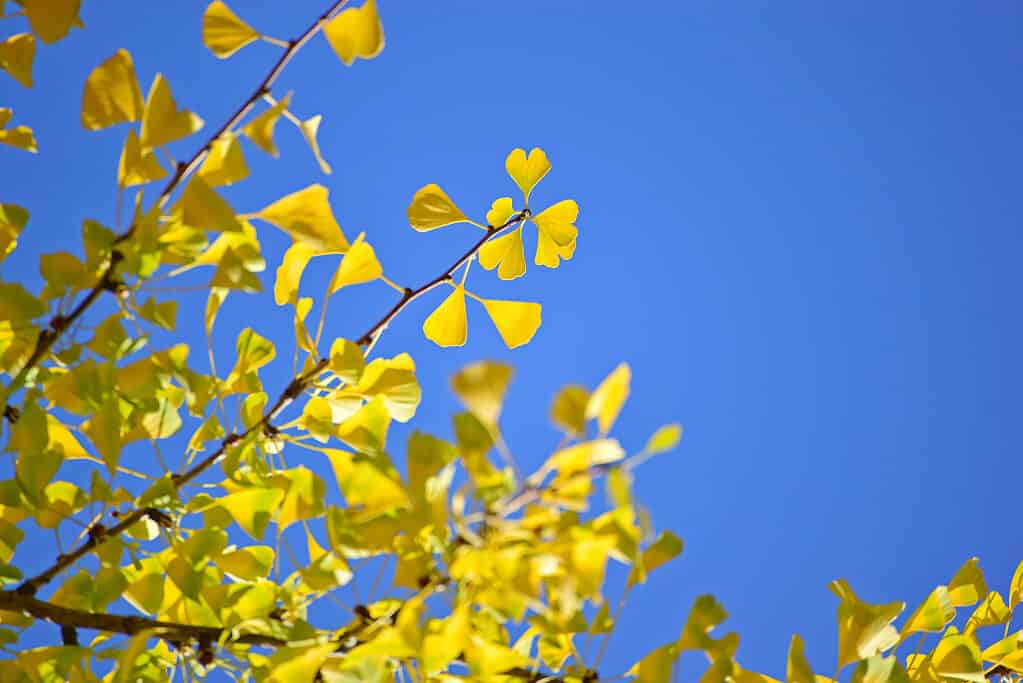
The Golden Colonnade Gingko Tree features vibrant yellow leaves in the fall.
©Pavinee Chareonpanich/Shutterstock.com
When planted naturally, Golden Colonnade ginkgo trees reach heights of around 45 feet. They are narrower than Autumn Gold ginkgo trees. The spread of a Golden Colonnade ginkgo is about 25 feet. These trees grow strong and upright on their own, taking on an oval shape.
During the spring and summer months, the leaves on a Golden Colonnade ginkgo are a vivid green. In the fall, however, the leaves turn golden! This is where the name of this tree comes from.
To ensure that a Golden Colonnade Ginkgo tree grows its best, make sure to plant it in moist, well-draining soil. These trees do well beneath full sun.
Halka Ginkgo
When a halka ginkgo tree is planted naturally, it can reach about 45 feet in height. The spread on this tree is almost as wide at 40 feet. As they grow, halka ginkgo trees take on a pyramidal shape.
Halka ginkgo trees are known for being hardy and resistant to diseases just as they are known for their bright, yellow-gold autumn foliage. The branches on these trees form a dense canopy that make for some dramatic Bonsai tree art.
Like other ginkgo trees, the halka ginkgo needs moist, well-draining soil. They thrive best beneath full sun.
Magyar Ginkgo
When planted naturally magyar ginkgo trees have been known to reach heights of 50 to 60 feet. The spread, however, is generally half or less of this height, making the magyar ginkgo very narrow. They grow upright quickly, with branches that reach upwards.
Like other ginkgo trees, the foliage on a magyar ginkgo is green during the spring and summer. In the autumn months, this foliage turns bright golden-yellow.
Magyar ginkgo trees need moist, well-draining soil and full sun to thrive.
Presidential Gold Ginkgo
When Presidential Gold ginkgo trees are planted naturally, they can reach heights of 50 feet. Their spread is almost as wide, reaching an average of 40 feet. Similarly to the magyar ginkgo, a ginkgo of the Presidential Gold cultivar grows upright. The ascending branches form a thick crown that gives the tree a circular, sometimes oval, shape.
Like other ginkgo trees, the foliage on a Presidential Gold ginkgo is bright green in the spring and summer. They change color in autumn, to a similarly bright golden-yellow.
Presidential Gold ginkgo trees thrive best beneath full sun when planted in moist, well-draining soil.
Princeton Sentry Ginkgo
Princeton Sentry ginkgo trees were bred to be free of pests and insects. In the spring and summer, the fan-shaped leaves on these trees are a bright golden-green color. In the fall, before they drop, these leaves turn fully yellow!
While Princeton Sentry ginkgo trees can adapt to most soil types, they thrive when planted in moist, well-draining soil. If a Princeton Sentry ginkgo tree is watered regularly and thoroughly when first growing, it will develop an extensive root system. Once the tree has been established, it can be watered much less!
These trees grow best beneath full sun.
Chase Manhattan Ginkgo
Out of all the ginkgo tree types, the Chase Manhattan variety is one of the slowest-growing. It is considered to be a dwarf variety, which makes it perfect for Bonsai tree art.
The branches on a Chase Manhattan ginkgo tree are often dense and close together. Leaves on these trees are small and colored a vivid dark green. In autumn months, these leaves brighten to a vibrant yellow.
Like other ginkgo tree varieties, the Chase Manhattan variety thrives beneath full sun. They like well-draining soil, too.
Caring for Your Ginkgo Bonsai Tree
Ginkgo trees are hardy trees, largely tolerable of extreme weather conditions.
©meunierd/Shutterstock.com
Ginkgo trees are known for being hardy. As a whole, they are largely tolerable of extreme weather conditions as well as pests, disease, and insects. However, since planting trees as Bonsai trees can weaken them, it is important to be aware of the conditions a ginkgo Bonsai tree needs to grow its best.
Read on to find out everything you need to know to care for your ginkgo Bonsai tree! From sunlight and placement to soil types and watering, we’ve got you covered!
Sunlight
For the most part, ginkgo trees love full sun. This means placing them somewhere where the sun can reach them for at least 6 hours a day. When ginkgo trees are young and still getting established, though, it can be a good idea to place them in areas that are somewhat shaded. This can help keep them safe, especially from harsh and hot sunlight that could cause potential damage to their leaves.
Soil Type
When planted in a garden or in the wild, ginkgo trees need well-draining soil. This is good news if you are looking to plant one as a Bonsai tree. Bonsai tree soil is made specially to be well-draining, as Bonsai trees tend to need a lot of water. For the most part, ginkgo trees can tolerate and even adapt to different types of soil as long as they are well-draining. This means that your ginkgo Bonsai tree should be able to grow in any type of Bonsai tree specialty soil.
Water
In the spring, summer, and fall, ginkgo trees need a lot of water. When they are young, it can be beneficial to water them often to establish an extensive root system. Once your ginkgo Bonsai tree has begun to establish itself, you can cut back a bit on the water.
In the winter, ginkgo Bonsai trees need less water. In these cold months, make sure to keep the roots moist.
The trick for most Bonsai trees, especially ginkgo Bonsai trees, is finding the line between thorough watering and overwatering. It can be difficult to achieve this but for the most part as long as the root ball is kept moist, your ginkgo Bonsai tree should be good to go.
Placement
Ginkgo trees are known for being able to withstand cold temperatures. Most cultivars are frost hardy or even frost resistant. This lessens a bit when they are planted as Bonsai trees. Planting trees as Bonsai trees weakens them a little, so extra precautions need to be taken to keep your ginkgo Bonsai tree safe from extreme weather!
Ginkgo Bonsai trees need the most protection from overnight frost and near-freezing or freezing temperatures. This is especially important once they have begun to produce leaves. If your ginkgo Bonsai tree is growing outdoors in the winter, you can bring it indoors overnight to protect it. If you wish to keep it indoors throughout the winter, day or night, make sure to put it where the sun can reach it for a few hours a day! You can also use cold frame greenhouses or keep it in a shed or garage overnight.
Pruning Your Ginkgo Bonsai Tree
[Image here of ginkgo Bonsai tree | Caption: Ginkgo Bonsai trees don’t take well to pruning or wiring, unfortunately. Pruning a ginkgo Bonsai tree must be done carefully!]
Pruning a ginkgo Bonsai tree can be difficult, as they don’t enjoy pruning or wiring. In fact, particularly deep or large wounds won’t heal correctly. Because of this, pruning a ginkgo Bonsai tree must be done very carefully!
Once a new shoot has produced five or six leaves, it can be pruned back to only one or two leaves. The best time to do this is in the spring. To maintain your desired shape and style, you can trim leaves throughout the year, too.
As a whole, ginkgo Bonsai trees are often larger than other species. This is due to the fact that their leaves do not reduce very well.
Ideal Ginkgo Bonsai Tree Styles
Since ginkgo Bonsai trees have trouble adapting to wiring and pruning, it is a good idea to style them in a way that mimics their natural growth. This can sound boring, but there are many upright Bonsai tree styles to choose from that are just as majestic and beautiful as the other, more challenging styles!
First and foremost is the style of Chokkan. This is known as the formal upright style. It involves a singular trunk that grows straight and branches, often dense, usually collected near the top of the tree.
Another style to consider is the Sokan style. This style is very similar to the Chokkan style. The only difference is that Sokan involves splitting your Bonsai tree into two distinct trunks.
Some ginkgo trees can take well to the style of Kabudachi. This style involves multiple trunks on a single Bonsai tree. If you are looking for a more challenging style for a ginkgo Bonsai tree, you can try the Kabudachi style!
Another challenging style is the Yose-ue style. Otherwise known as the forest style, this style also involves multiple trunks but they are styled to resemble a forest!
Propagating Your Ginkgo Bonsai Tree
Ginkgo Bonsai trees are easily propagated from cuttings and seeds. Since ginkgo seeds have a hard shell, they need to be scarified or stratified before being planted. It can take a long time for ginkgo Bonsai trees to grow from seeds. In some cases, it can take two or three years!
Common Problems with Ginkgo Bonsai Trees
Fortunately, ginkgo Bonsai trees are hardy. They are resistant to most insects, pests, and diseases so there usually is no worry about these trees becoming sick or being attacked.
Up Next:
- Discover the Oldest Gingko Tree in the World
- 8 Ancient Trees Native to Japan
- The 10 Best Bonsai Trees for Beginners