
Quick Take
- Achieving a 9-inch leg span is a growth milestone for some Pamphobeteus species in Central America.
- Davus spiders have a reddish-orange and black pattern of stripes across their abdomens, giving them the common name, “tiger rump.”
- The Reichlingia genus was recently reclassified as a tarantula, contradicting its previous status as a trapdoor spider.
- Examining dried Euthycaelus holotypes after preservation was necessary to discover the spider’s hidden silver iridescence.
Central America is the narrow land bridge, or isthmus, between North and South America. It is bordered by the Caribbean to the east and the Pacific to the west. The countries of Central America include Guatemala, Belize, El Salvador, Honduras, Nicaragua, Costa Rica, and Panama. Central America is considered a major biodiversity hotspot, supporting 7%-10% of all known life in its moist and dry forests, cloud forests, extensive mountain chains, wetlands, savannas, and coral reefs.
With such diverse geography, it is no surprise that there are over 75 tarantula species found here. The following list includes all currently recognized tarantula species in Central America based on the World Spider Catalog as of December 2025. An asterisk after the species name indicates that it is the type species. For a comprehensive reference of all tarantula species, see our complete list of tarantula species.
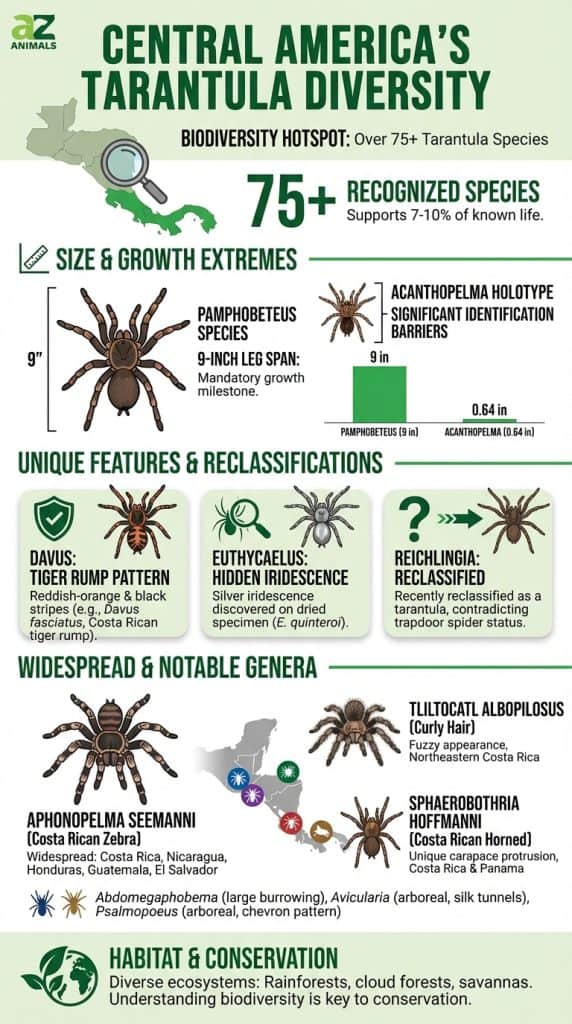
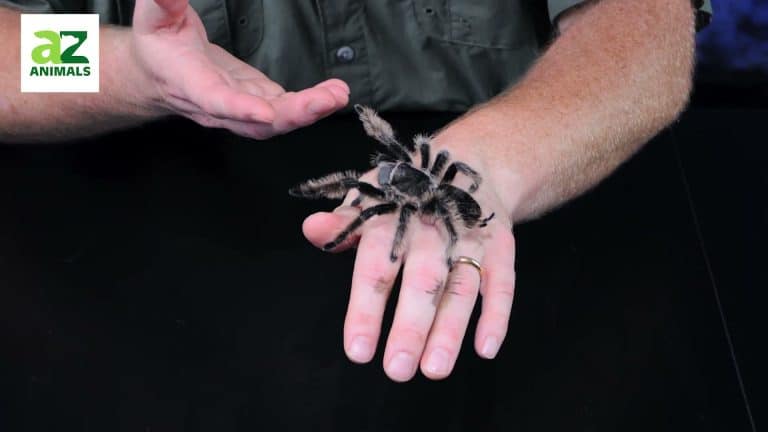
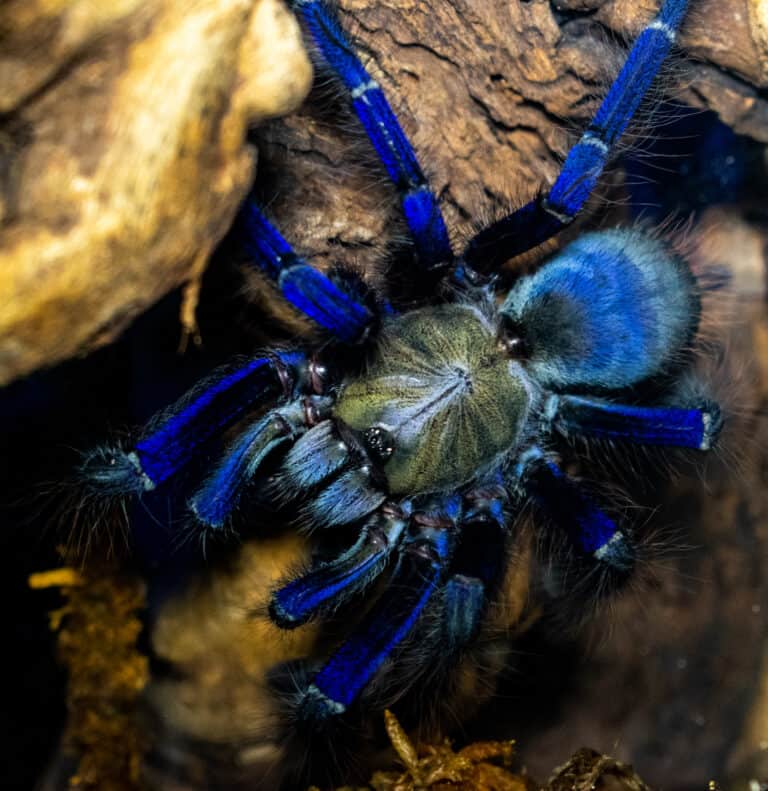
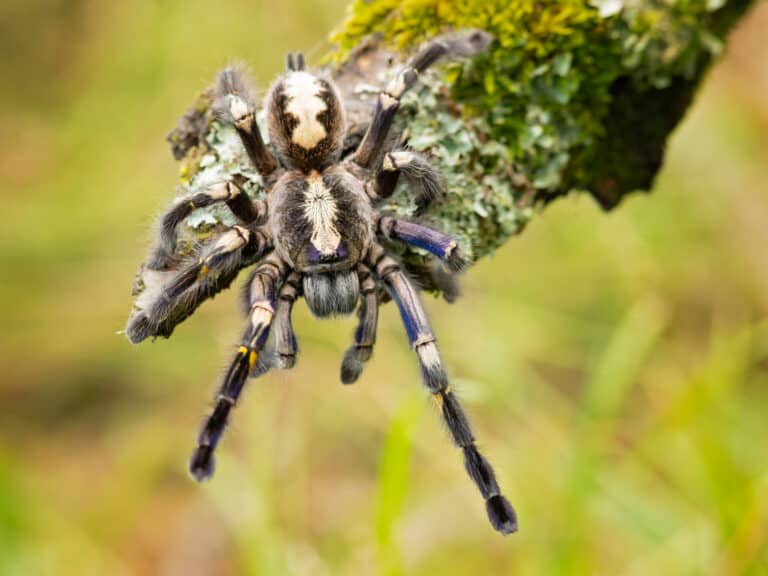
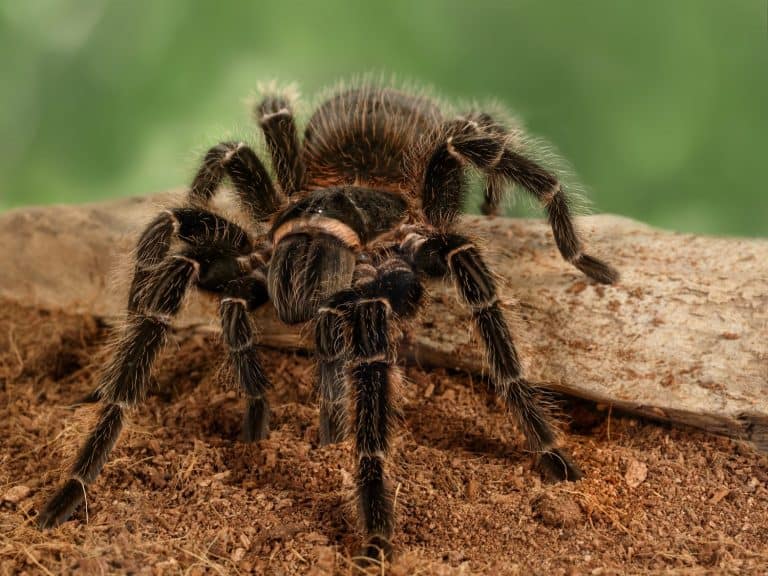
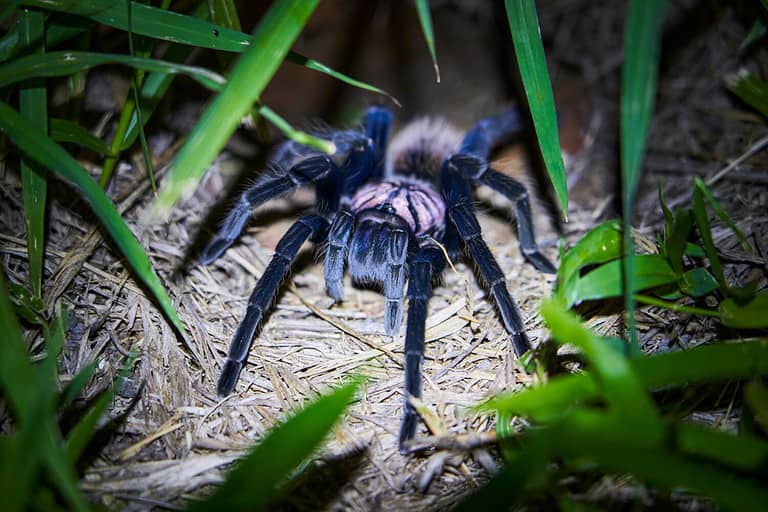
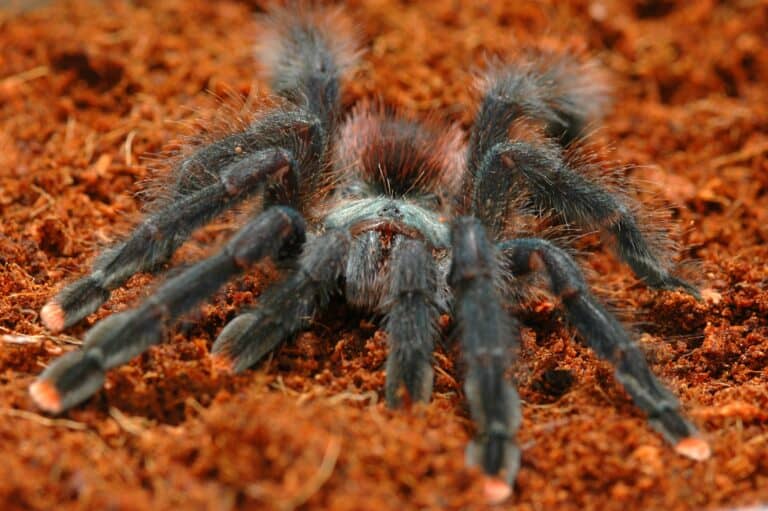
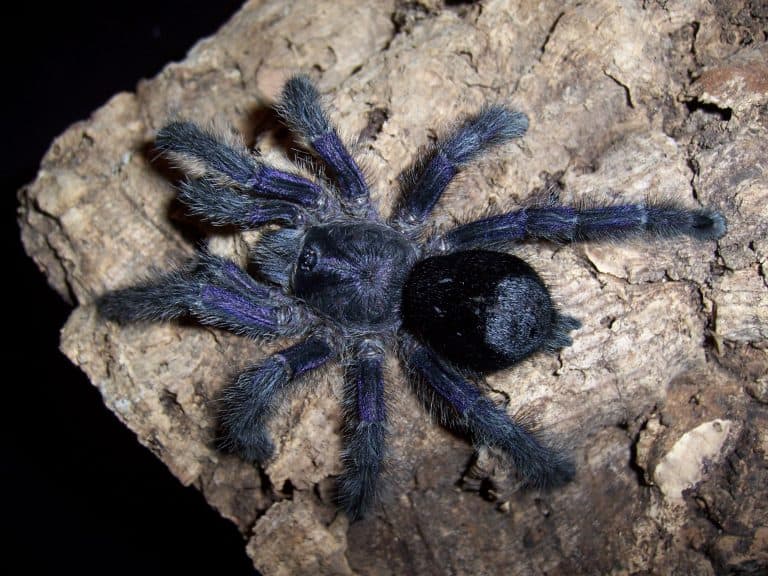
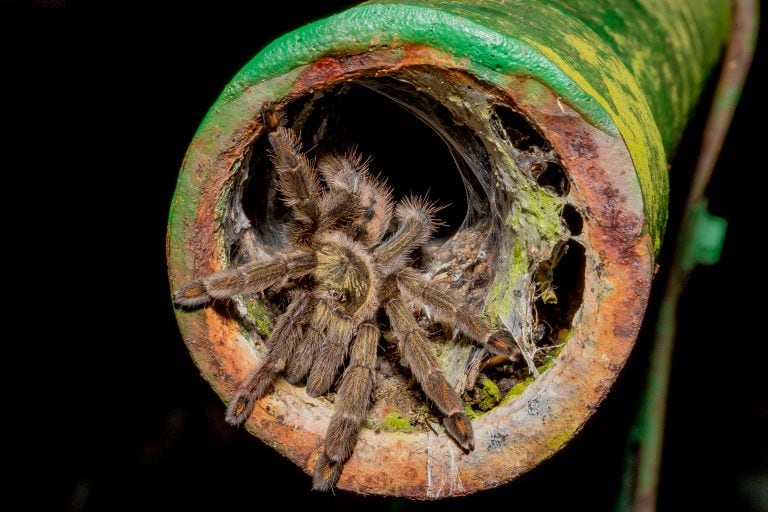
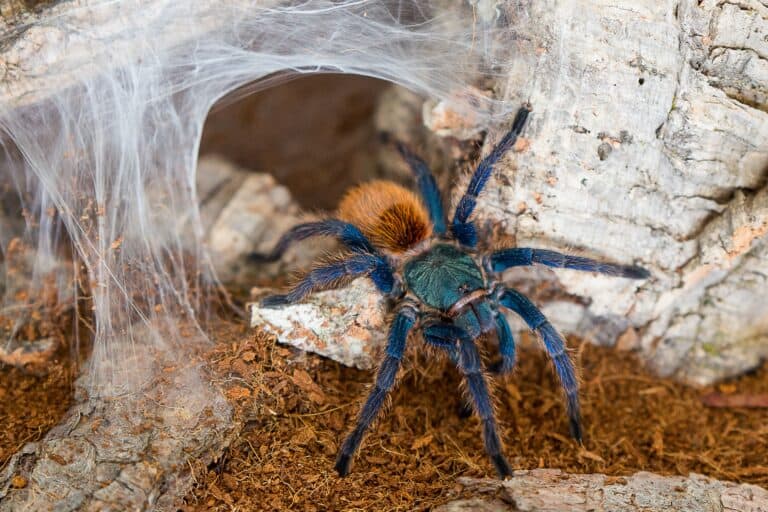
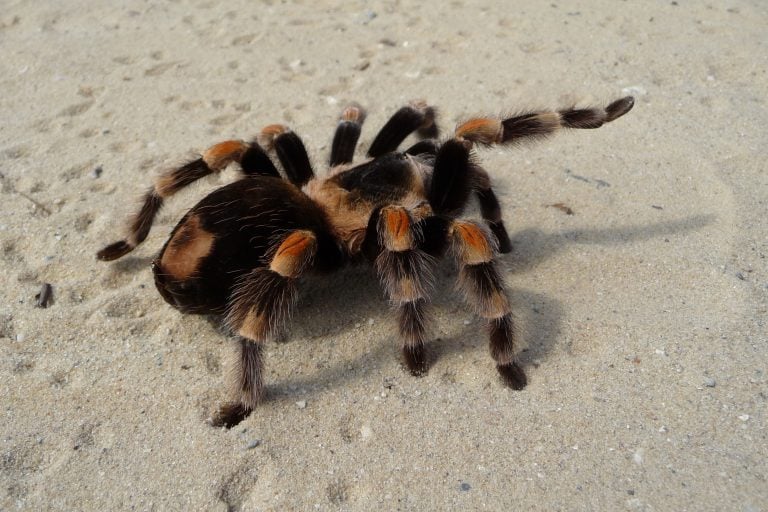
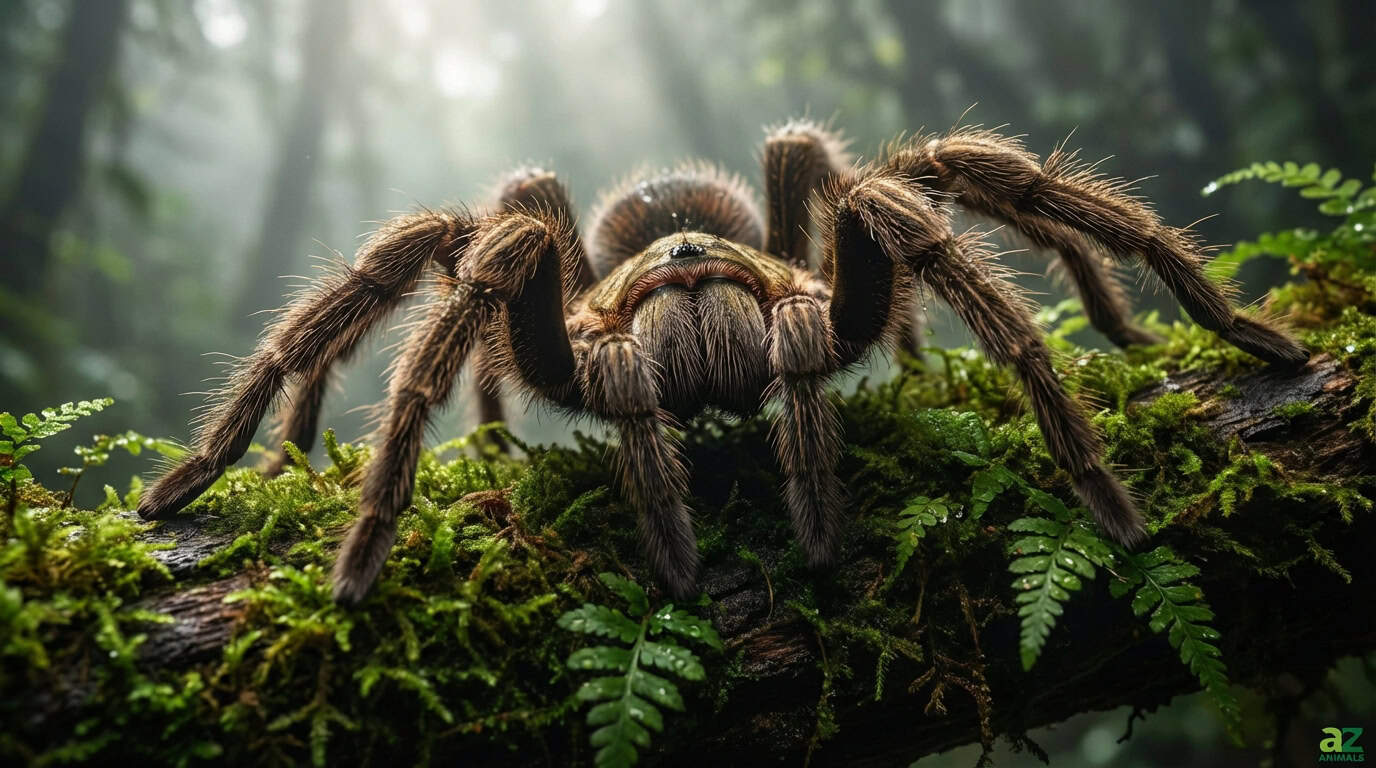
From 9-inch giants to hidden silver shimmer, Central America’s 75+ tarantula species are shattering old scientific labels and revealing the secrets of the jungle floor.
©A-Z Animals
Abdomegaphobema Sherwood, Gabriel, Peñaherrera-R., Léon-E., Cisneros-Heredia, Brescovit & Lucas, 2023
The genus Abdomegaphobema includes just two species, both from Costa Rica. Both species were transferred to this recently created genus from Megaphobema in 2023 on the basis of femoral, genital, and stridulation (noise-making) organ morphology. A. mesomelas is a large burrowing tarantula with a leg span of 6-7 inches. It can be found at higher levels of the cloud forest of San José, Alajuela, and Guanacaste provinces. It has a black carapace and abdomen with short, dark setae (hairs), giving it a velvety appearance. This spider has bright orange or orange and black legs with long, pale setae. A. peterklaasi is similar in size and habitat to A. mesomelas, but the holotype has completely black legs. Contemporary sightings suggest it may have orange bands at the joints and orange markings on its legs.
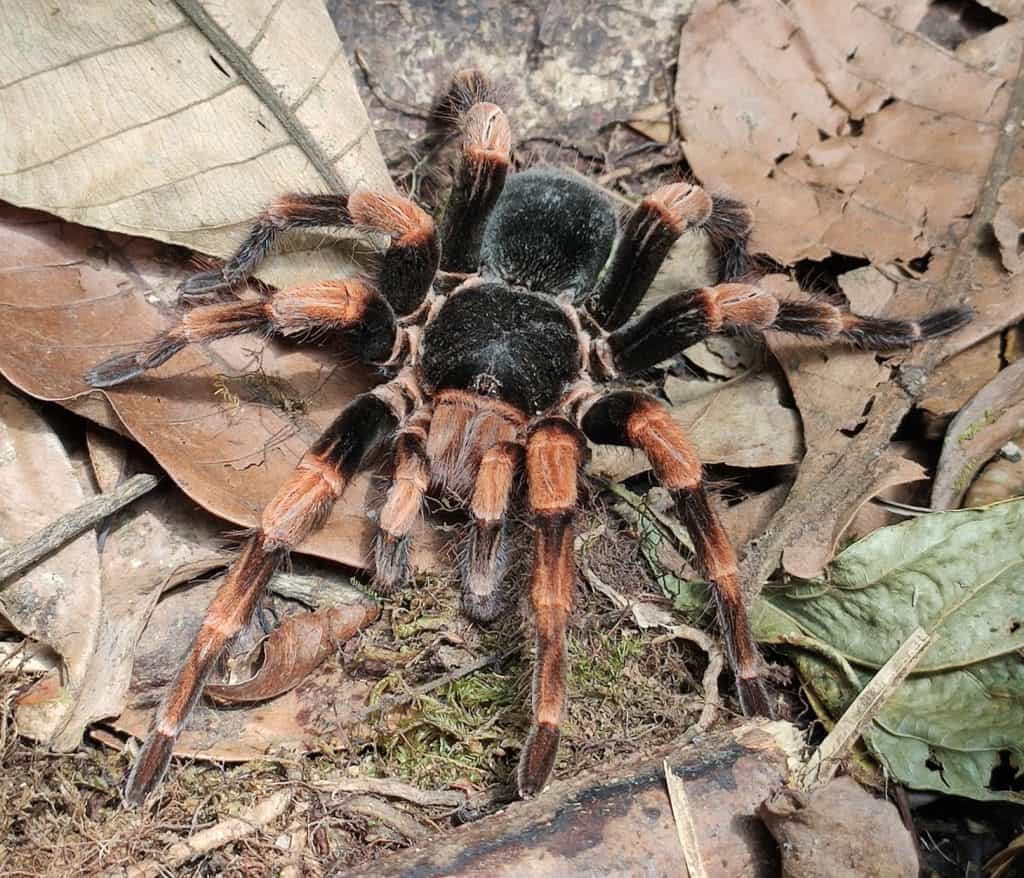
Abdomegaphobema mesomelas, the Costa Rican red leg, is a large tarantula with a leg span of up to 7 inches.
- Abdomegaphobema mesomelas* (O. Pickard-Cambridge, 1892)
- Common name: Costa Rican red leg
- Distribution: Costa Rica
- Abdomegaphobema peterklaasi (Schmidt, 1994)
- Common name: N/A
- Distribution: Costa Rica
Acanthopelma F. O. Pickard-Cambridge, 1897
Tarantulas in the genus Acanthopelma are small burrowing spiders with leg spans of 2-3 inches. They tend to favor tropical forest habitats. A. rufescens is known from a single male found in Guatemala. Its carapace is described as mahogany-purple and covered in short, reddish-brown setae. It has a purplish-brown abdomen with two series of orange stripes across the abdomen. Its legs are also covered in reddish-brown setae. The male holotype tarantula has a total length of 0.64 inches, and its longest legs (pair IV) measure 0.98 inches.
- Acanthopelma rufescens* F. O. Pickard-Cambridge, 1897
- Common name: N/A
- Distribution: Central America
Acentropelma Pocock, 1901
The small, burrowing spiders in genus Acentropelma are primarily differentiated from other genera by the morphology of the genital organs and the lack of tibial apophyses (protuberances) in the male. A. gutzkei is only known from the type locality, Indian Church Village, Orange Walk District near New River Lagoon, Belize. It was originally described as having bright red setae on an unpatterned abdomen. A. spinulosum is known from the lowlands of the Petexbatún region in the Guatemalan Petén rainforest, Petén Department. The male holotype has a total length including chelicerae of 1.15 inches. Its longest legs measure 1.88 inches. Due to preservation in alcohol, both specimens are uniformly brown. Both spiders also have type I urticating setae, which are short, fine, pointed hairs with reversed barbs.
- Acentropelma gutzkei (Reichling, 1997)
- Common name: N/A
- Distribution: Belize
- Acentropelma spinulosum (F. O. Pickard-Cambridge, 1897)
- Common name: N/A
- Distribution: Guatemala
Aenigmarachne Schmidt, 2005
The genus Aenigmarachne houses only two species: one newly described species from Colombia and one from Costa Rica. A. sinapophysis is a medium-sized burrowing spider. The male holotype has a total length of 1.43 inches, the longest legs (pair IV) measuring 2.37 inches. It has no stridulation organ and type I urticating setae are present. Its preserved color in alcohol is brown and there is no pattern on the abdomen. A. sinapophysis is only known from the type locality Isla del Coco, Costa Rica, but researchers believe the locality data may be incorrect.
- Aenigmarachne sinapophysis Schmidt, 2005
- Common name: N/A
- Distribution: Costa Rica
Aphonopelma Pocock, 1901
Tarantulas in the Aphonopelma genus can be found from the southern U.S. to Central America. These spiders range in size from small species with leg spans of just 2-3 inches to large tarantulas with leg spans of over 6 inches. Most Aphonopelma tarantulas dig deep, silk-lined burrows, but they are found in a variety of environments from mountains to grasslands to deserts. These tarantulas are generally shades of brown to black with short, dark setae and longer, lighter or reddish-tinted setae on the legs and abdomens. However, A. seemani has distinctive, light-colored stripes on its dark legs, while A. burica has blue iridescence on its chelicerae (mouthparts), front legs, and carapace.
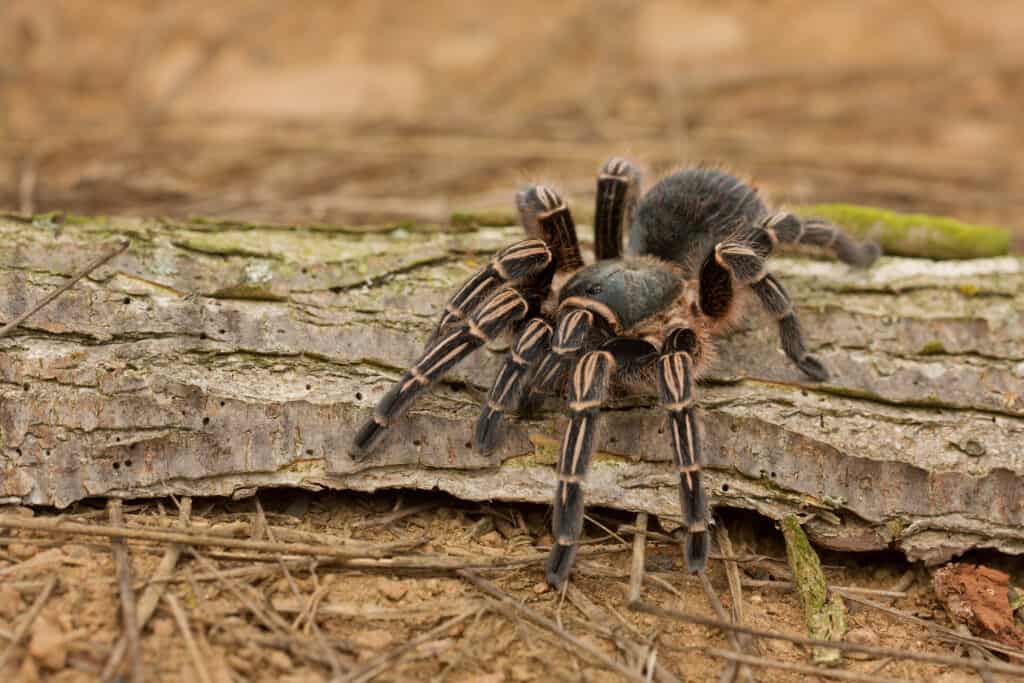
The Costa Rican zebra tarantula, Aphonopelma seemanni, is found in Costa Rica, Nicaragua, Honduras, and possibly Guatemala and El Salvador.
©Milan Zygmunt/Shutterstock.com
- Aphonopelma belindae Gabriel, 2011
- Common name: Panama gold
- Distribution: Panama
- Aphonopelma burica Valerio, 1980
- Common name: Costa Rican blue front
- Distribution: Costa Rica
- Aphonopelma crinirufum (Valerio, 1980)
- Common name: Also commonly called the Costa Rican blue front, leading to confusion in the commercial pet trade
- Distribution: Costa Rica
- Aphonopelma sclerothrix (Valerio, 1980)
- Common name: N/A
- Distribution: Costa Rica
- Aphonopelma seemanni* (F. O. Pickard-Cambridge, 1897)
- Common name: Costa Rican zebra, striped-knee tarantula
- Distribution: Central America
- Aphonopelma xanthochromum (Valerio, 1980)
- Common name: N/A
- Distribution: Costa Rica
Avicularia Lamarck, 1818
Tarantulas in the genus Avicularia are generally arboreal, making silk tunnels in the mid-to-upper canopies of the rainforests. They are small to medium-sized spiders with an average leg span between 4 and 6 inches. A. glauca is known only from the holotype female originally collected in Panama. It is described as a small specimen having a carapace and legs with a green sheen.
- Avicularia glauca Simon, 1891
- Common name: N/A
- Distribution: Panama
Citharacanthus Pocock, 1901
Citharacanthus species are generally small to medium-sized burrowing tarantulas that inhabit tropical lowland forests. C. livingstoni is known from the port town of Livingston in Izabal Department, Guatemala. It is black overall, with reddish setae on its legs and abdomen. C. longipes is known from Mexico and parts of Central America, including Guatemala, Nicaragua, and Costa Rica. Its cephalothorax and legs are brown to black, with reddish setae. The abdomen is slightly darker than the rest of its body, with longer red hairs that are lighter at the tips. C. meermani is known from the foothills of the Mountain Pine Ridge and the Vaca Plateau in Cayo District, Belize. Its dark cephalothorax has short, fuzzy, coppery setae. The coxae and trochanters (the first and second segments of the tarantula’s legs) are also coppery-colored, but the rest of its legs are brown. It has a dark abdomen with long, orange setae.
- Citharacanthus livingstoni Schmidt & Weinmann, 1996
- Common name: N/A
- Distribution: Guatemala
- Citharacanthus longipes (F. O. Pickard-Cambridge, 1897)
- Common name: N/A
- Distribution: Mexico, Central America
- Citharacanthus meermani* Reichling & West, 2000
- Common name: N/A
- Distribution: Belize, Mexico
Crassicrus Reichling & West, 1996
Crassicrus tarantulas can be distinguished from most other genera by urticating setae type I on their abdomens. They can be differentiated from other genera with only type I setae by the thorn-like setae on their front-facing coxae I-IV. These spiders have a total length of up to approximately 2 inches. C. lamanai is a tortoiseshell color with dark brown femora and a dark abdomen with reddish setae. These spiders are known from the tropical dry forests of north-central Belize, but their burrows are typically located in sunny, open clearings, frequently beneath stones.
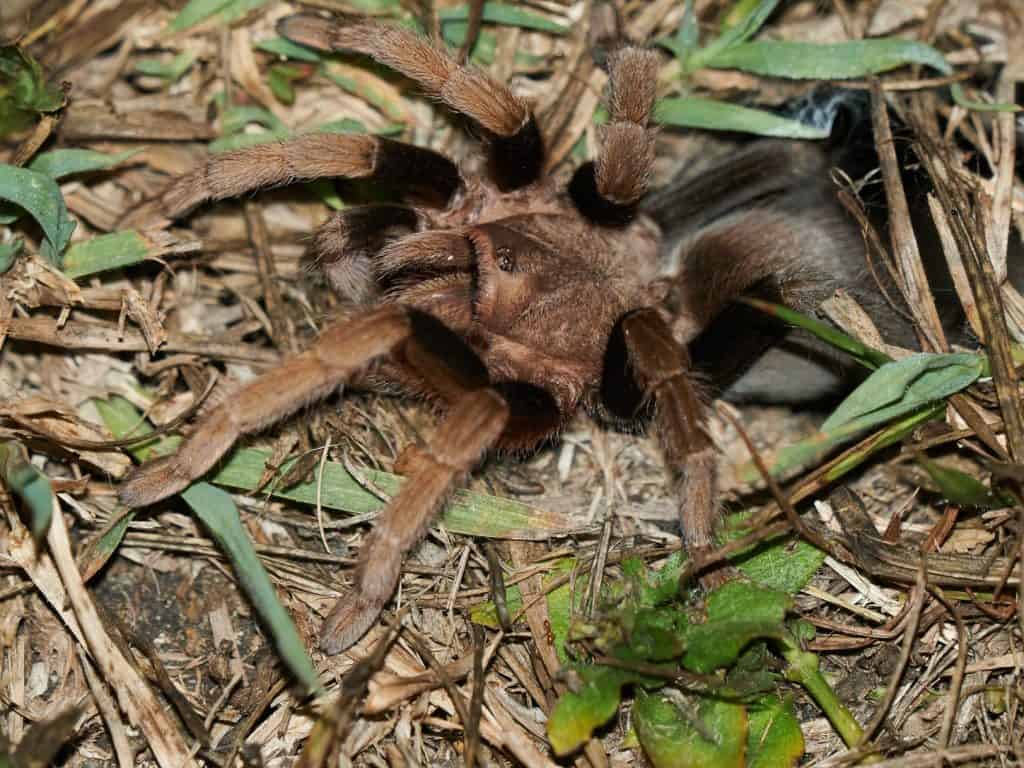
The common name of Crassicrus lamanai is the Belize cinnamon tarantula.
- Crassicrus lamanai* Reichling & West, 1996
- Common name: Cinnamon tarantula
- Distribution: Belize
Crypsidromus Ausserer, 1871
The genus Crypsidromus was removed from synonymy with Lasiodora in 2023 and the five species from Costa Rica were transferred back to Crypsidromus. This genus is distinguished by a dividing line of setae on tarsi IV and the absence of tibial spurs on mature males. These small burrowing tarantulas are generally shades of brown or grey with scattered reddish-orange setae on the legs and abdomen. Some species have abdominal patterns and/or a contrasting cephalothorax. These spiders are known to occur in the Puriscal area in the province of San José.
- Crypsidromus brevibulbus Valerio, 1980
- Common name: N/A
- Distribution: Costa Rica
- Crypsidromus carinatus Valerio, 1980
- Common name: N/A
- Distribution: Costa Rica
- Crypsidromus icecu Valerio, 1980
- Common name: N/A
- Distribution: Costa Rica
- Crypsidromus puriscal Valerio, 1980
- Common name: N/A
- Distribution: Costa Rica
- Crypsidromus rubitarsus Valerio, 1980
- Common name: N/A
- Distribution: Costa Rica
Cyclosternum Ausserer, 1871
Tarantulas in the genus Cyclosternum are small to medium terrestrial tarantulas that generally prefer forests and grasslands in humid, tropical regions. Little is known about the biology and ecology of Cyclosternum tarantulas, and species-level identification is often difficult. The genus is considered problematic due to historically inadequate descriptions, conflicting illustrations, insufficient associations between the sexes, inaccurate type locality data, and overlapping distributions among species. C. darienense is known from Rancho Frío, Darién National Park, Panama. C. viridimonte is listed only from Costa Rica, with no specific type locality given.
- Cyclosternum darienense Gabriel & Sherwood, 2022
- Common name: N/A
- Distribution: Panama
- Cyclosternum viridimonte Valerio, 1982
- Common name: N/A
- Distribution: Costa Rica
Davus O. Pickard-Cambridge, 1892
Tarantulas in the genus Davus are medium to large spiders distinguished by a reddish-orange and black pattern of stripes across their abdomens. This pattern led to the common name, “tiger rump.” Davus tarantulas can be found from southern Mexico as far south as Panama, although no Davus species have occurrences in Belize, El Salvador, or Honduras. These tarantulas tend to favor tropical forests, woodlands, and scrublands. They are often hidden in burrows of soil, leaf litter, or other debris covered by a thick layer of webbing. They can also be found hidden inside fallen logs.
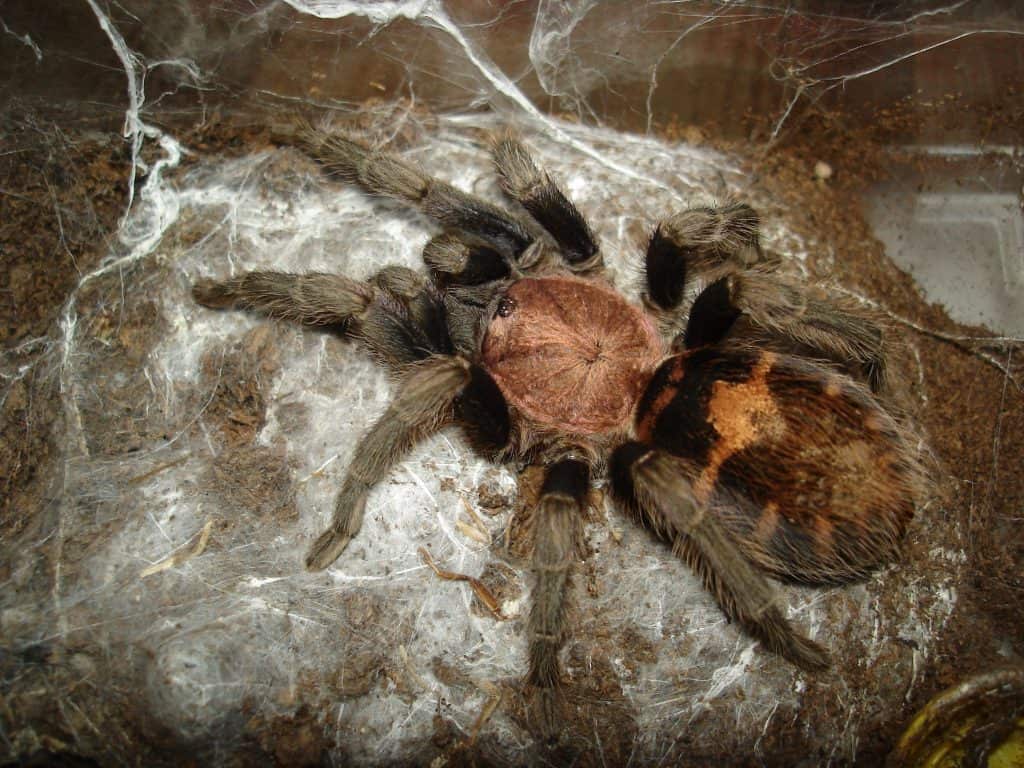
The Costa Rican tiger rump, Davus fasciatus, has coppery-orange tiger stripes on its abdomen.
- Davus fasciatus* O. Pickard-Cambridge, 1892
- Common name: Costa Rican tiger rump
- Distribution: Costa Rica, Panama
- Davus pentaloris (Simon, 1888)
- Common name: Guatemalan tiger rump
- Distribution: Mexico, Guatemala
- Davus ruficeps (Simon, 1891)
- Common name: Costa Rican suntiger
- Distribution: Costa Rica, Nicaragua
- Davus santos Gabriel, 2016
- Common name: N/A
- Distribution: Panama
Euthycaelus Simon, 1889
Euthycaelus quinteroi is currently the only known species of the genus Euthycaelus in Central America. These tarantulas are generally small to medium-sized spiders that inhabit humid forests. E. quinteroi is only known from the male holotype collected near Rancho Frio, Darién National Park, Panama. It is a smaller species with a total length of 0.84 inches. Its longest legs (pair IV) measure 0.95 inches. Its color is an alcohol preserved brown, but as the specimen dried during examination, researchers noted a silver iridescence in the setae on the carapace, legs, and pedipalp (short, leg-like appendages near the mouth).
- Euthycaelus quinteroi Gabriel & Sherwood, 2022
- Common name: N/A
- Distribution: Panama
Hapalopus Ausserer, 1875
Hapalopus tarantulas are characterized by a spotted pattern on the top, sides, and/or underside of the abdomen. The sides may also include speckling or stripes. These small spiders are known as “pumpkin patch tarantulas,” as the patterns are frequently orange and black. They are burrowing tarantulas found in tropical, dry forests and montane regions. H. coloratus has a bicolored carapace of black with a triangular orange patch close to its head. It has light brown legs with black femora, a black abdomen with nineteen distinct, bright orange or yellowish-orange spots on the top and sides, and its legs and abdomen are covered in long, pale setae. This tarantula is originally known from the Cupé River area near the community of Boca de Cupé in Darién Province, but it may also be found along the Caribbean coast.
- Hapalopus coloratus (Valerio, 1982)
- Common name: N/A
- Distribution: Panama
Longilyra Gabriel, 2014
Longilyra are medium-sized tarantulas known from Santa Ana, Laguna de Las Ninfas, El Salvador. It is a monotypic genus including only Longilyra johnlonghorni. These tarantulas are distinguished from other genera by the morphology of the genitalia and the long, club-like stridulatory setae on the forward-facing side of the palpal trochanter and the first leg.
- Longilyra johnlonghorni* Gabriel, 2014
- Common name: N/A
- Distribution: El Salvador
Mygalarachne Ausserer, 1871
The genus Mygalarachne is monotypic, containing a single species, Mygalarachne brevipes. It is currently only known from the holotype specimen from Honduras. This genus is partially distinguished from other genera by the lack of stridulatory organ, the presence of both type I and type III setae, and leg IV being less than three times the length of its carapace. The female holotype has a total length of 1.85 inches and its color is alcohol preserved brown and light tan.
- Mygalarachne brevipes* Ausserer, 1871
- Common name: N/A
- Distribution: Honduras
Neischnocolus Petrunkevitch, 1925
Neischnocolus tarantulas are small burrowing spiders. They can be distinguished from most genera by the presence of subtype Id urticating setae, which is unusually long. These spiders are generally reddish-brown with short, reddish brown or dark brown setae on their legs. Some species may also have cream-colored banding at the joints. Their abdomens are dark colored with long red setae on the top and sides and some species may also have slight patterns. N. panamanus was originally collected in Cerro Iglesia, Panama. It is reddish-brown with a brown abdomen in females and yellowish-brown in males. Both sexes have lighter brown legs with cream-colored banding. N. parvior is known from Barro Colorado Island, Colón Province, Panama. The original description notes that its color is entirely brown.
- Neischnocolus panamanus* Petrunkevitch, 1925
- Common name: N/A
- Distribution: Costa Rica, Panama
- Neischnocolus parvior (Chamberlin & Ivie, 1936)
- Common name: N/A
- Distribution: Panama
Pamphobeteus Pocock, 1901
Pamphobeteus tarantulas are medium to very large burrowing spiders with leg spans reaching upwards of 9 inches. They have a total body length ranging from 1.96 to 3.54 inches. Many Pamphobeteus species have colored patches on either side of the caput, (the front part of a tarantula’s cephalothorax), sometimes connected to pink or purple colored lines that radiate outwards. P. ornatus was originally collected near River Dagua, Colombia, and researchers believe its distribution record in Panama is not supported by the scientific evidence. It was originally described as having a pinkish-red bloom on its upper side. P. sucreorum is known from Darién Province, Panama. Its exact color pattern in life is unknown.
- Pamphobeteus ornatus Pocock, 1903
- Common name: Colombian pink bloom
- Distribution: Panama, Colombia
- Pamphobeteus sucreorum Gabriel & Sherwood, 2022
- Common name: N/A
- Distribution: Panama
Psalmopoeus Pocock, 1895
Tarantulas in the genus Psalmopoeus are arboreal. They are primarily distinguished from other genera by possessing a single row of stiff stridulatory setae on their chelicerae. Psalmopoeus tarantulas also lack urticating setae. They are medium to large spiders with leg spans of 5-7 inches, although some species may grow larger. Species in this genus often exhibit chevron-like abdominal patterning in shades of orange and black. However, species in Central America typically have no patterning. They generally build tube webs in tree cavities, under loose bark, and among dense vegetation in warm, humid forests and rainforests.

Psalmopoeus pulcher is known as the Panama blonde tarantula.
©Linn Currie/Shutterstock.com
- Psalmopoeus copanensis Gabriel & Sherwood, 2020
- Common name: N/A
- Distribution: Honduras
- Psalmopoeus drolshageni Sherwood, Gabriel, Peñaherrera-R., Guerrero-Campoverde, León-E., Falcón-Reibán, Fajardo-Torres, Picón-Rentería & Cisneros-Heredia, 2025
- Common name: N/A
- Distribution: Costa Rica
- Psalmopoeus intermedius Chamberlin, 1940
- Common name: N/A
- Distribution: Panama
- Psalmopoeus maya Witt, 1996
- Common name: N/A
- Distribution: Belize
- Psalmopoeus pulcher Petrunkevitch, 1925
- Common name: Panama blonde
- Distribution: Panama
- Psalmopoeus reduncus (Karsch, 1880)
- Common name: Costa Rican orange mouth
- Distribution: Nicaragua
- Psalmopoeus sandersoni Gabriel & Sherwood, 2020
- Common name: N/A
- Distribution: Belize
- Psalmopoeus wallacea Sherwood, Gabriel, Peñaherrera-R., Guerrero-Campoverde, León-E., Falcón-Reibán, Fajardo-Torres, Picón-Rentería & Cisneros-Heredia, 2025
- Common name: N/A
- Distribution: Honduras
- Psalmopoeus petenensis Gabriel & Sherwood, 2020
- Common name: N/A
- Distribution: Guatemala
Reichlingia Rudloff, 2001
Reichlingia is a monotypic genus consisting only of Reichlingia annae. It was originally a member of Barychelidae, the brushed trapdoor spider family, before being transferred to Theraphosidae in 2014. It was originally described as Acanthopelma before being moved to Reichlingia in 2001. R. annae has a dark carapace covered in short, black setae with copper setae at the edges. Its abdomen is covered in short, copper setae with traces of four black patches on the sides. It lacks urticating setae. The spider’s coxae and trochanters are covered in short, dense copper setae, while the other segments are black with long, scattered black setae. The total length of the female holotype is 0.65 inches, and its longest legs (pair IV) measure 0.66 inches. This tarantula is known from the area around New River Lagoon, Indian Church Village, Orange Walk District, Belize.
- Reichlingia annae* (Reichling, 1997)
- Common name: N/A
- Distribution: Belize
Sandinista Longhorn & Gabriel, 2019
Sandinista lanceolatum is the only species in the genus Sandinista. This spider inhabits the Pacific lowlands from northwestern Guanacaste Province in Costa Rica to the Departments of Granada, Managua and Carazo in western Nicaragua. S. lanceolatum favors tropical dry forests and thorn brush. These tarantulas modify existing burrows or excavate sloping burrows with a layer of silk around the entrance. Burrows may be found under large rocks, roots, or other debris. They have a total body length of 1.18 inches to 1.57 inches. Females have a grey carapace while males have a brown carapace. They have dark brown femora covered in light to dark grey setae. Their abdomens are covered in shorter brown setae scattered with longer reddish setae.
- Sandinista lanceolatum* (Simon, 1891)
- Common name: Costa Rican rustbrown
- Distribution: Nicaragua, Costa Rica
Schizopelma F. O. Pickard-Cambridge, 1897
There is little authoritative information about the tarantulas in the genus Schizopelma. S. bicarinatum is only known from Xantipa (now Chautipan), Guerrero State in Mexico. Although a Central American distribution is listed for this species, there is no contemporary evidence of its occurrence beyond the tropical dry forests and scrublands of Guerrero, Mexico.
- Schizopelma bicarinatum* F. O. Pickard-Cambridge, 1897
- Common name: N/A
- Distribution: Mexico, Central America
Sericopelma Ausserer, 1875
The genus Sericopelma is primarily characterized by a carapace longer than it is wide, scopulae (dense pads of feathery setae) on the inner face of femur IV, the absence of stridulatory setae on trochanter I, little scopula on metatarsus IV (the fourth segment of a tarantula’s hind leg), and the absence of apophyses on tibia I of males. Sericopelma species are generally large, with a body length of up to 3.93 inches and a leg span of up to 7 inches. They are found in Costa Rica and Panama, with records of S. panamense in Mexico considered doubtful. They generally have dark bodies and reddish abdominal hairs, as well as type I and III urticating setae. Some species may also have contrasting metatarsi or tarsi (the “foot” or last segment).
- Sericopelma angustum (Valerio, 1980)
- Common name: Costa Rican red tarantula
- Distribution: Costa Rica
- Sericopelma commune F. O. Pickard-Cambridge, 1897
- Common name: N/A
- Distribution: Panama
- Sericopelma dota Valerio, 1980
- Common name: N/A
- Distribution: Costa Rica
- Sericopelma embrithes (Chamberlin & Ivie, 1936)
- Common name: N/A
- Distribution: Panama
- Sericopelma ferrugineum Valerio, 1980
- Common name: N/A
- Distribution: Costa Rica
- Sericopelma generala Valerio, 1980
- Common name: N/A
- Distribution: Costa Rica
- Sericopelma immensum Valerio, 1980
- Common name: N/A
- Distribution: Costa Rica
- Sericopelma melanotarsum Valerio, 1980
- Common name: Costa Rican pink-footed, Costa Rican coffee tarantula
- Distribution: Costa Rica
- Sericopelma panamanum (Karsch, 1880)
- Common name: N/A
- Distribution: Panama
- Sericopelma panamense (Simon, 1891)
- Common name: N/A
- Distribution: Mexico, Panama
- Records from Mexico are considered doubtful
- Sericopelma rubronitens Ausserer, 1875 (type)
- Common name: Panama giant red rump
- Distribution: Panama
- Sericopelma silvicola Valerio, 1980 – Costa Rica
- Common name: N/A
- Distribution: Costa Rica
- Sericopelma upala Valerio, 1980 – Costa Rica
- Common name: N/A
- Distribution: Costa Rica
Sphaerobothria Karsch, 1879
Sphaerobothria is a monotypic genus consisting only of Sphaerobothria hoffmanni. It is a small, terrestrial tarantula with a leg span of 2-3 inches. S. hoffmanni has a noticeable protrusion, or “horn,” toward the back of its carapace, giving it the common name, the Costa Rican horned tarantula. Males are generally dark brown with lighter brown setae. Females have a grey carapace with grey and brown legs covered in yellowish-brown setae and a dark abdomen covered in pale, reddish-brown setae. These burrowing tarantulas can be found in both lowlands and highlands across central and northwestern Costa Rica and in Panama near the Costa Rican border.

The Costa Rican horned tarantula, Sphaerobothria hoffmanni, has a unique, horn-like bump on its carapace.
- Sphaerobothria hoffmanni* Karsch, 1879
- Common name: Costa Rican horned tarantula
- Distribution: Costa Rica, Panama
Spinosatibiapalpus Gabriel & Sherwood, 2020
The genus Spinosatibiapalpus is diagnosed based on the strong spination on the forward-facing side of the male palpal tibia and the morphology of the reproductive organs. The S. cambrai male holotype is 1.82 inches in total length and the longest legs (pair IV) measure 1.63 inches. This burrowing tarantula also has type I urticating setae, which are small, pointed hairs with reversed barbs. S. cambrai is only known from Rancho Frío Research Station, Darién National Park, Darién Province.
- Spinosatibiapalpus cambrai Gabriel & Sherwood, 2022
- Common name: N/A
- Distribution: Panama
Stichoplastoris Rudloff, 1997
The genus Stichoplastoris includes eight species of small to medium-sized burrowing tarantulas. Most of the members of this genus can be found in Limón, Puntaranas, and San José provinces in Costa Rica. Stichoplastoris is poorly studied, and there is little information about individual species aside from the type locality.
- Stichoplastoris angustatus (Kraus, 1955)
- Common name: N/A
- Distribution: El Salvador
- Stichoplastoris asterix (Valerio, 1980)
- Common name: Limón warrior
- Distribution: Costa Rica
- Stichoplastoris denticulatus (Valerio, 1980)
- Common name: N/A
- Distribution: Costa Rica
- Stichoplastoris elusinus (Valerio, 1980)
- Common name: N/A
- Distribution: Costa Rica
- Stichoplastoris longistylus (Kraus, 1955)
- Common name: El Salvador fawn birdeater
- Distribution: El Salvador
- Stichoplastoris obelix* (Valerio, 1980)
- Common name: N/A
- Distribution: Belize, Costa Rica
- Stichoplastoris schusterae (Kraus, 1955)
- Common name: N/A
- Distribution: El Salvador
- Stichoplastoris stylipus (Valerio, 1982)
- Common name: N/A
- Distribution: Costa Rica, Panama
Tapinauchenius Ausserer, 1871
Members of the genus Tapinauchenius are medium-sized arboreal tarantulas, with leg spans of 4-5 inches. They inhabit humid forests and tropical rainforests, and they are often found inside tree cavities and under loose bark. Tapinauchenius spiders frequently have iridescent colors and lack urticating setae and stridulatory organs. T. herrerai is currently only known from the female holotype collected near Rancho Frío Research Station near Cerro Pirre mountain in Darién National Park, Panama. It has a total length of 1.22 inches, and its longest legs (pair IV) measure 1.63 inches.
- Tapinauchenius herrerai Gabriel & Sherwood, 2022
- Common name: N/A
- Distribution: Panama
Tliltocatl Mendoza & Francke, 2020
A 2019 revision of Brachypelma led to the creation of the genus, Tliltocatl, differentiated by coloration and the morphology of male and female genitalia. Unlike Brachypelma, Tliltocatl have uniformly black legs. In fact, most Tliltocatl species are black overall with long, reddish-colored setae on the abdomen. Tliltocatl spiders usually dig their burrows on hillsides, under flat rocks, tree roots, and fallen logs. T. albopilosus is a large tarantula reaching a leg span of up to 6.5 inches. It has a dark body covered in long, golden, curly setae, giving it a very fuzzy appearance. It is found in moist tropical forests in northeastern Costa Rica. T. sabulosus is also large, with a body length of up to 2.75 inches. Its longest legs (pair IV) measure up to 2.9 inches. It was originally found in the rainforest near the ruins of the Mayan city of Tikal, located in northern Guatemala.
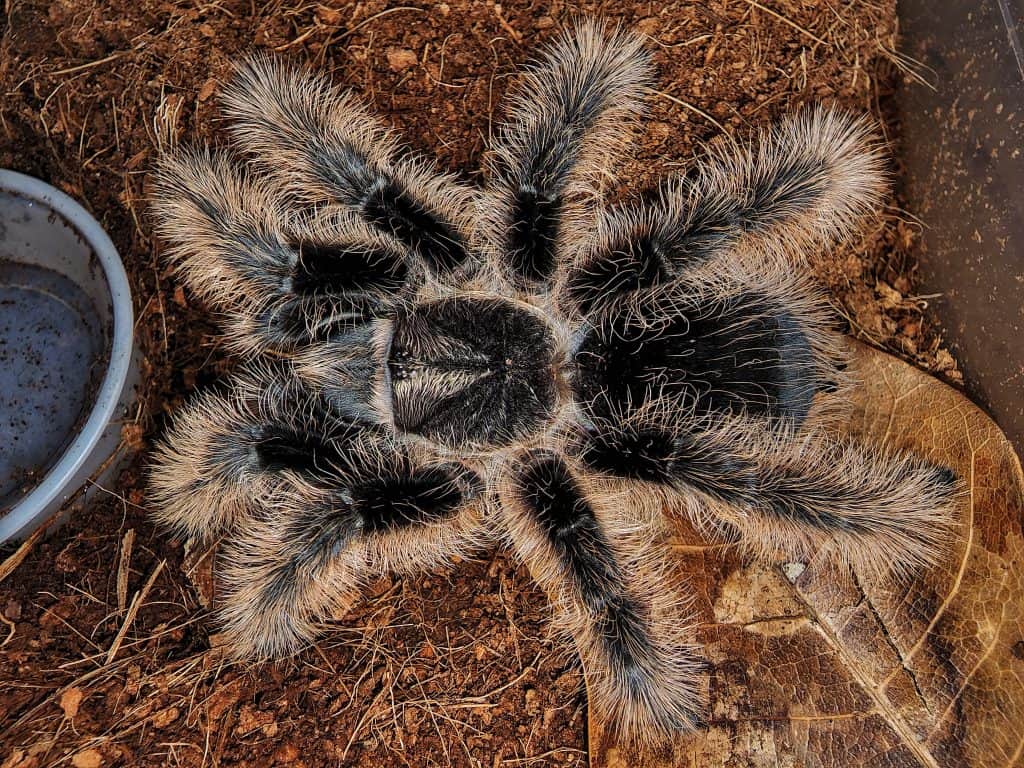
Tliltocatl albopilosus, known as the curly hair tarantula, is native to Costa Rica.
- Tliltocatl albopilosus Valerio, 1980
- Common name: Curly hair or curlyhair tarantula
- Distribution: Costa Rica
- Tliltocatl sabulosus (F. O. Pickard-Cambridge, 1897)
- Common name: Guatemalan red rump
- Distribution: Guatemala
Trichopelma Simon, 1888
Tarantulas in the genus Trichopelma are typically small, ground-dwelling spiders measuring less than 0.44 inches in body length. In Central America, these spiders tend to favor wet tropical forests, excavating trapdoor burrows in the ground. They are generally shades of brownish-grey to dark brown with a dot pattern on the abdomen. Information on specific spiders is limited. T. laselva and T. venadense are known from El venado, San Carlos, in Alajuela Province, Costa Rica. T. zebra is known from the Cerro Flores Mountain region in Tole, Chiriqui Province, Panama. It has a more purplish-brown abdomen, with both grey spots and grey stripes.
- Trichopelma laselva Valerio, 1986
- Common name: N/A
- Distribution: Costa Rica
- Trichopelma venadense (Valerio, 1986)
- Common name: N/A
- Distribution: Costa Rica
- Trichopelma zebra (Petrunkevitch, 1925)
- Common name: N/A
- Distribution: Panama