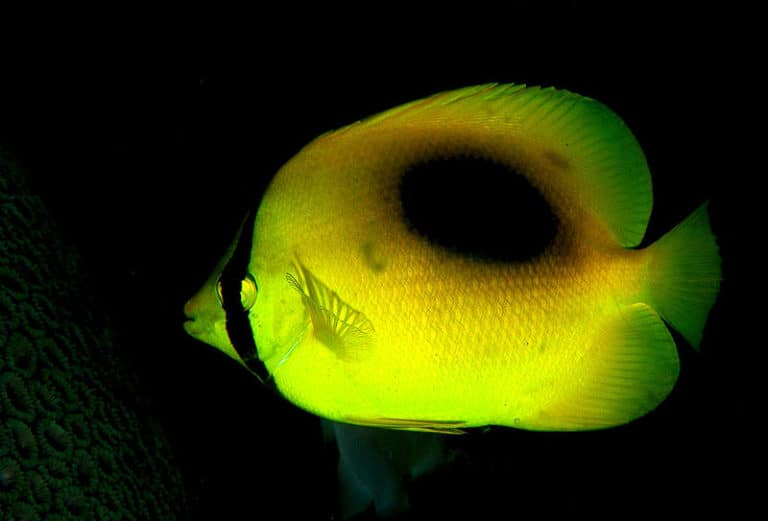




Quick Facts
- Scientific Family: Chaetodontidae
- Number of Species: ~115
- Habitat: Coral reefs, lagoons, seagrass beds
- Range: Atlantic, Indian, and Pacific Oceans
- Size: 4 to 12 inches long
- Diet: Coral polyps, algae, small invertebrates, plankton
- Lifespan: 5 to 10 years (wild)
- Behavior: Diurnal (active by day, rests at night), often in pairs or small schools
- Conservation Status: Mostly Least Concern, but reef decline poses risks
Few marine creatures capture the imagination quite like the butterfly fish. The seemingly endless permutations of beautiful colors and patterns give each species an entirely distinctive appearance, much like the famous insect for which it’s named. In fact, their vivid appearance and docile personality have made them a very popular type of aquarium fish.
Beyond their beauty, butterfly fish play a vital role in reef ecosystems, keeping coral and algae in balance. Let’s dive into the fascinating world of these little reef guardians.
Classification and Scientific Name
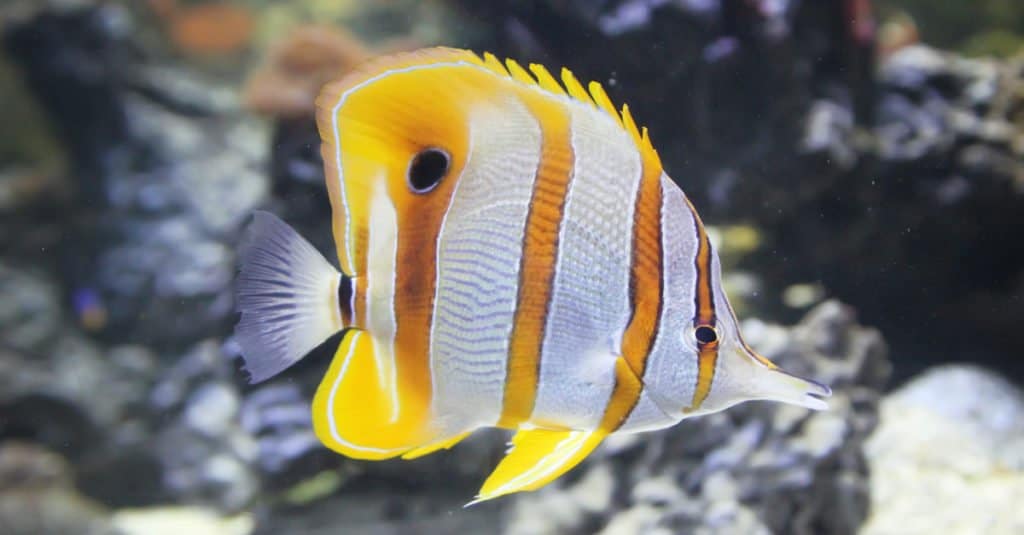
The butterfly fish is classified in the family Chaetodontidae.
©Vladislav Gajic/Shutterstock.com
Butterfly fish are a group of brightly colored, tropical fish that belong to the family Chaetodontidae. This includes around 115 recognized species across 12 genera. The one genus of Chaetodon contains some 90 species alone. The family name is a combination of two Ancient Greek words: chaite, meaning hair, and odontos, meaning tooth. This is probably a reference to the rows of brush-like teeth in the mouth. This family should not be confused with the freshwater butterflyfish (Pantodon buchholzi).
Endemic to the West African region, the freshwater butterflyfish belongs to an entirely different order (Osteoglossiformes). Given their different appearance, distribution, and behavior, they are not closely related at all.
Evolution and Origins
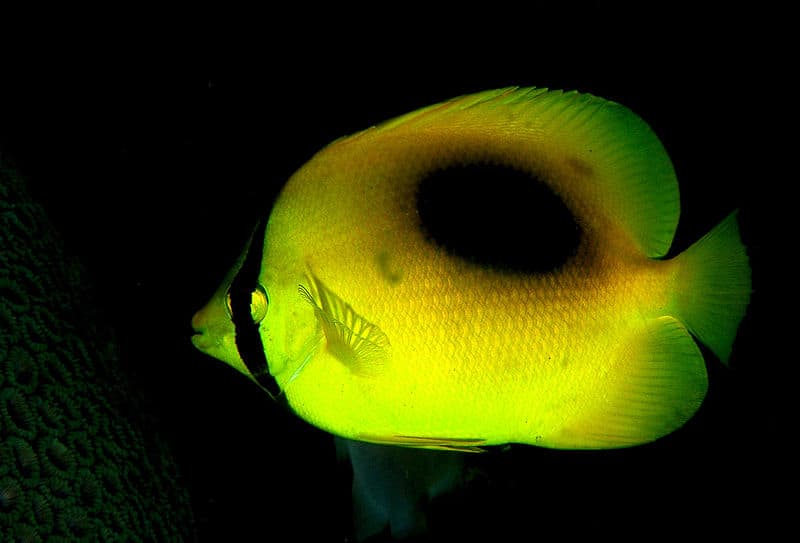
These fish are well known for their unique, flattened bodies and bright colors, which help them blend into the coral reefs they inhabit.
©JennyHuang / Creative Commons – Original
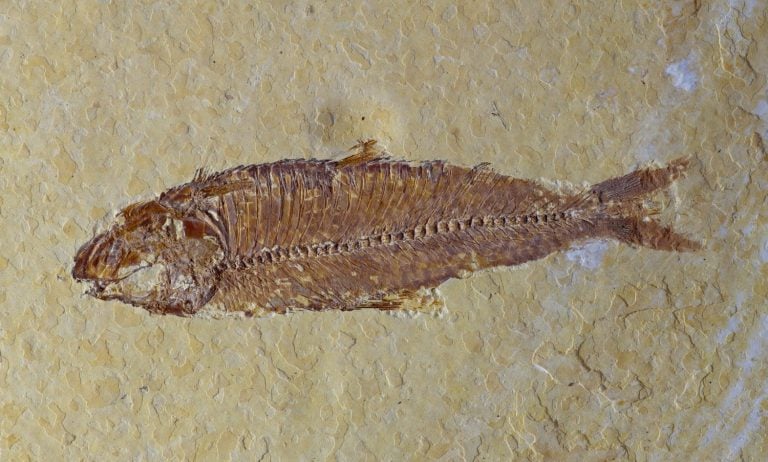
The origins of butterfly fish (family Chaetodontidae) can be traced back to at least the Eocene epoch, around 56–34 million years ago, based on fossil evidence. These early butterflyfish already showed some of the distinctive features seen in modern species, such as a laterally compressed body. Over time, these fish continued to evolve, adapting to their changing environments and developing new behaviors and physical adaptations to help them survive and thrive.
One of the most notable adaptations in butterflyfish is their brightly colored bodies. This coloring serves a dual purpose, helping the fish blend in with their surroundings and providing protection from predators. Many species of butterfly fish have bold patterns and eye spots that can confuse predators and help them blend into their surroundings.
In addition to their coloring, butterfly fish also have specialized adaptations that allow them to feed on small invertebrates and other prey. They have a narrow, pointed snout that they use to probe crevices in the reef and extract their food. They also have small, pointed teeth that are ideal for grabbing and crushing small prey.
Appearance
Butterfly fish are small to medium reef fish, usually between 4 and 8 inches long, though some species reach up to a foot.
The butterfly fish sometimes looks like the wings of a butterfly. It has a big, round but flat body with prominent fins around the back and pelvis. The dorsal fin on the back sometimes features sharp spines, which provide a defense against potential predators.
As mentioned previously, this family is named for the small rows of bristle-like teeth in the mouth. Some have long snouts and jaws (up to 25% of the body length) for grasping prey in small crevices.
The most common colors are blue, yellow, orange, and white with dark contrasting bands and large spots near the back. This spot may serve the purpose of confusing predators.
Species Highlights
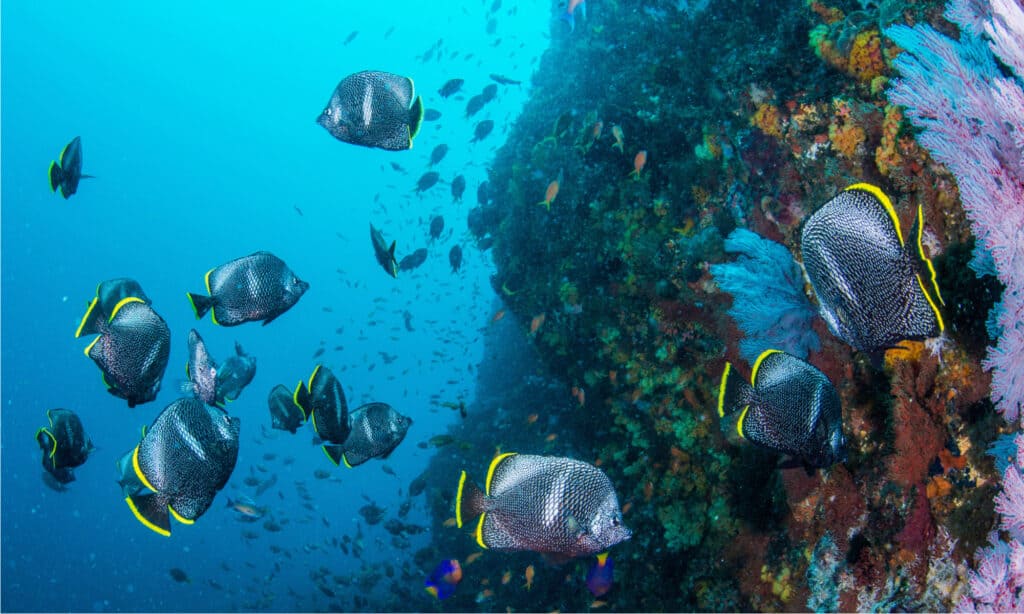
Wrought Iron Butterflyfish prefer to live in depths of at least 33 feet, and they are found in schools with at least 10 other individual fish.
©divedog/Shutterstock.com
There are over a hundred butterfly fish species, each with its own unique markings. Here are a few that stand out:
- Foureye Butterfly Fish (Chaetodon capistratus): Native to the Atlantic Ocean from Massachusetts to South America, this species has a very recognizable white and blue body with darker stripes emanating out from the center. The name probably derives from the very long and prominent black spot near the tail surrounded by a white ring.
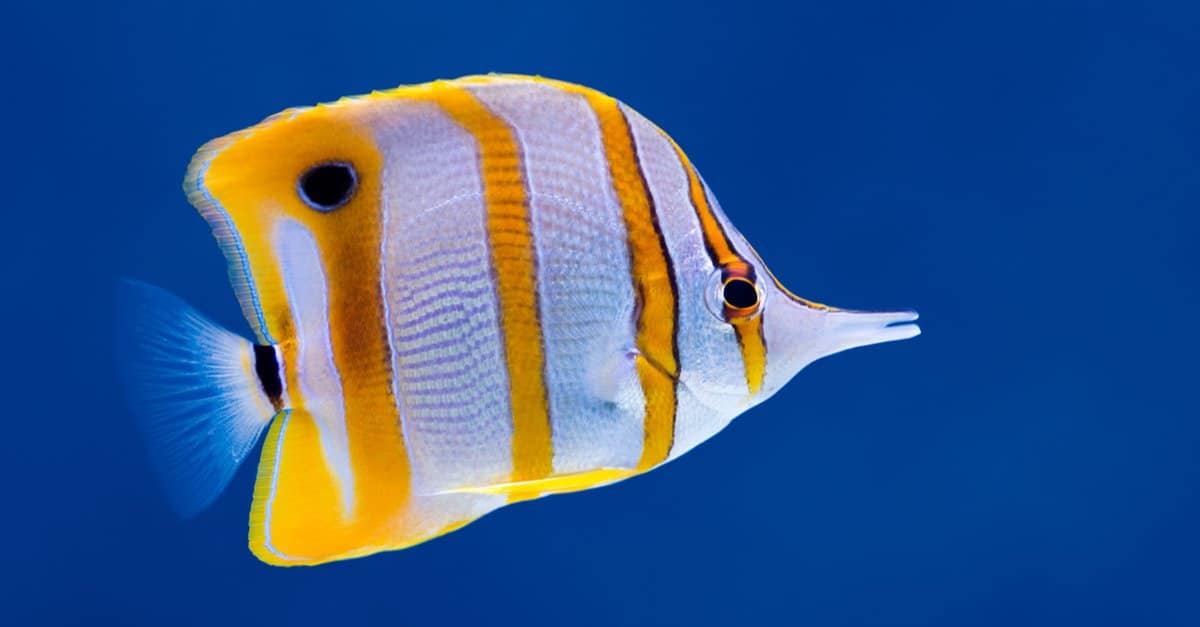
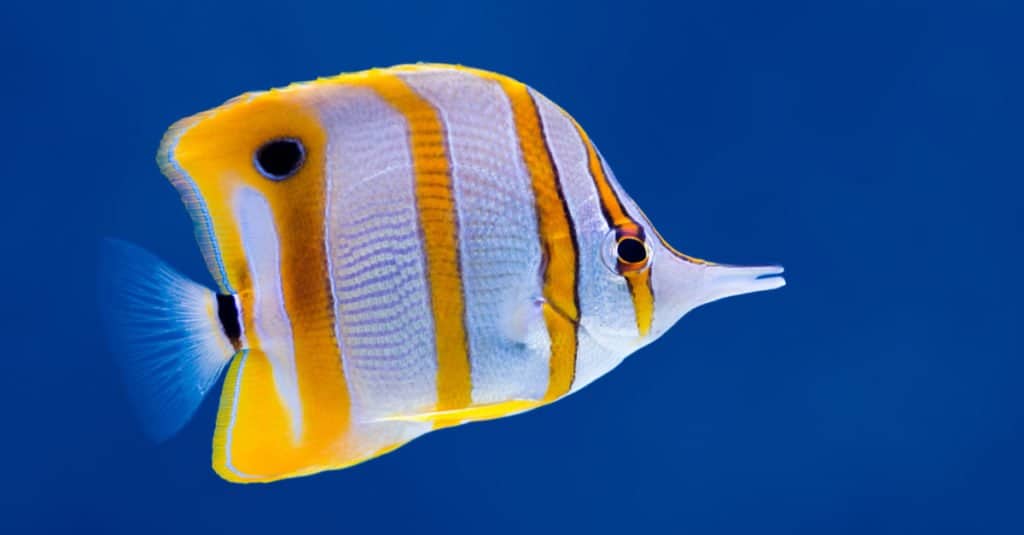
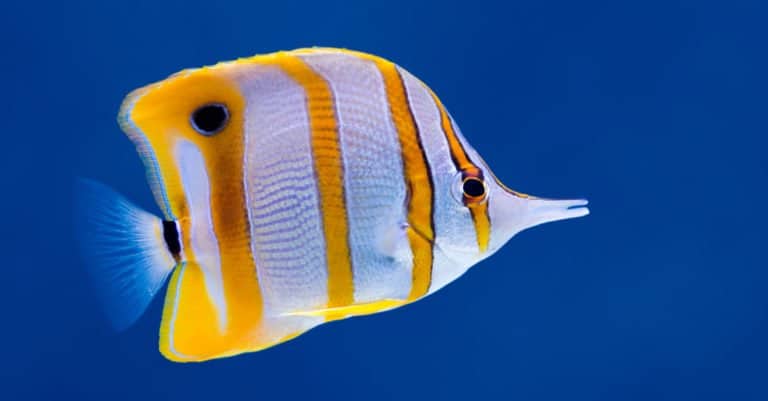
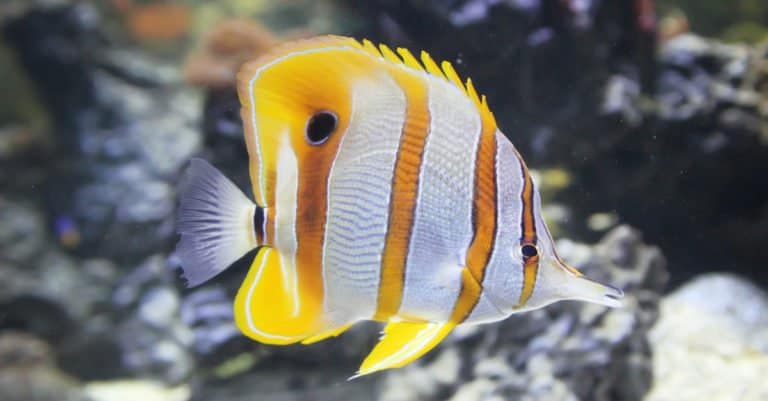
- Copperband Butterfly Fish (Chelmon rostratus): Endemic to the Pacific and Indian Oceans, this species has alternating stripes of white and orange around the body. It also has a particularly long snout. This is a popular aquarium species.
- Blacknosed Butterfly Fish (Johnrandallia nigrirostris): Also known as the barberfish, this East Pacific species (which congregates around the Galapagos Islands) has a yellow body, a white face, and black markings around the upper fin and parts of the face.
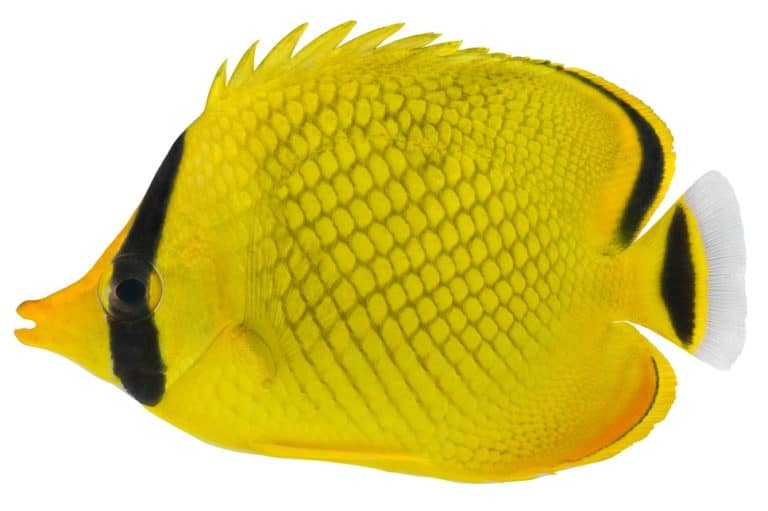
- Raccoon Butterfly Fish (Chaetodon lunula): Named for its dark “mask” across the eyes, it roams reefs from Hawaii to East Africa.
- Wrought Iron Butterfly Fish (Chaetodon daedalma): A rare Japanese species with a striking metallic black body.
Habitat and Distribution
The butterfly fish is one of the most common types of coral reef fish in the world. It is very well adapted to life in the narrow confines of vast coral reef systems, though a few species also inhabit seagrass beds, lagoons, and mudflats. The greatest concentration of species is found in a stretch of Pacific territory between Australia and Taiwan. Only four species occur in the Eastern Pacific and 13 in the Atlantic Ocean. Their preferred habitat is the shallow warm water, less than 65 feet deep, near shores or estuaries, but a few species reside in deep water habitats up to 650 feet.
The butterfly fish is so well adapted to its habitat that the die-off of coral reefs from climate change may threaten many species.
Diet and Feeding
Feeding at the bottom layer of the sea, the butterfly fish has evolved all kinds of jaw sizes and shapes to probe narrow cracks, like coral crevices, for food. They are opportunistic feeders, and their specific diet varies by species. Some species are corallivores, which specialize in eating coral polyps. Others are omnivores and feed on algae, worms, plankton, and small crustaceans. Planktivores will snatch drifting plankton from the water column.
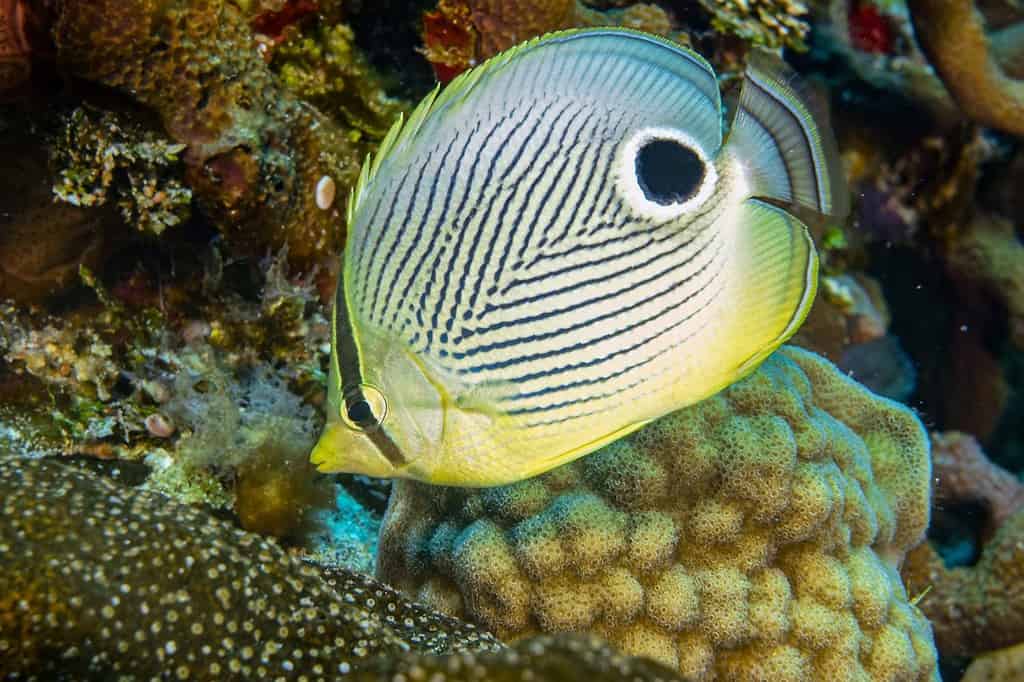
Foureye butterflyfish (Chaetodon capistratus) in the Caribbean.
©jwscuba/Shutterstock.com
Behavior
The butterfly fish is diurnal, meaning that they are active during the day and rests at night in reef crevices. Many species travel in pairs and are often monogamous for years. Other species swim in small schools for protection. The colors of these fish fade at night or when threatened, then brighten again when active or defending territory. If a pair is separated, one fish may swim upward as a visual signal to reunite with its partner.
Predators and Threats
The butterfly fish likes to hunt and sleep in a narrow range of territory around coral heads. These also provide it with protection.
The butterfly fish is preyed upon by sharks, eels, snappers, and other large fish. If danger appears, then this creature can hide in small crevices around coral reefs. Many species have evolved sharp dorsal spines to deter predators.
Reproduction and Lifespan
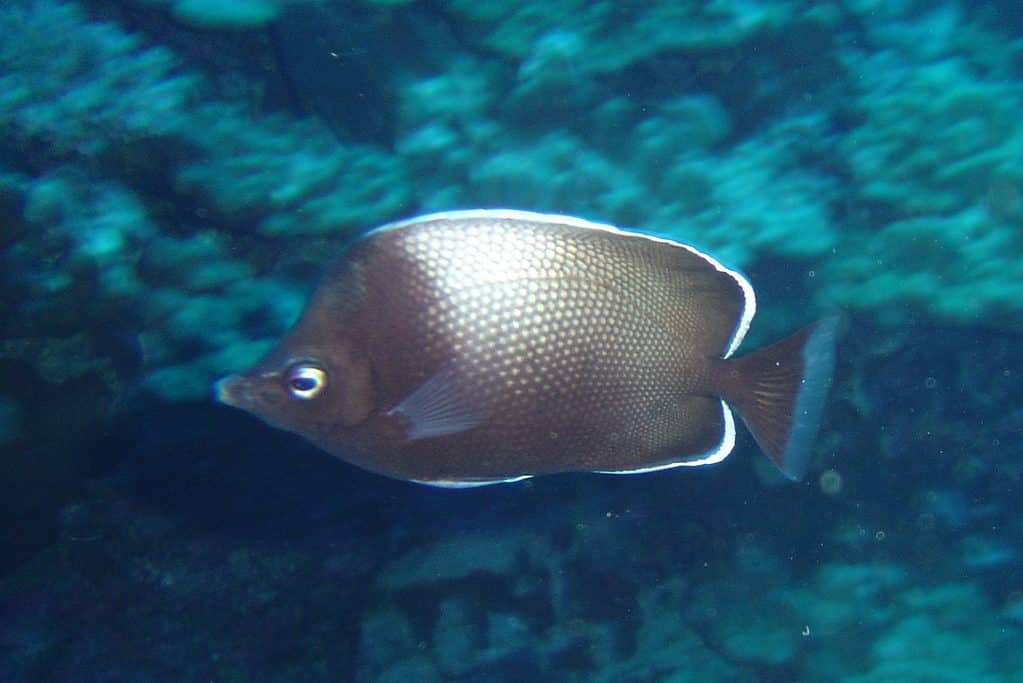
The butterfly fish mates at a very specific time of the year. In the tropics, the spawning season usually peaks in winter or early spring.
©Lieutenant Elizabeth Crapo, NOAA Corps, Public domain, via Wikimedia Commons – Original / License
The butterfly fish mates at a very specific time of the year. In the tropics, the spawning season usually peaks in winter or early spring. In temperate climates, the spawning season takes place in the summer. Most butterfly fish form stable monogamous pairs for at least three years and sometimes their entire lives.
When a female is ready to mate, her abdomen becomes swollen with eggs. The male will come up from behind and gently nudge her abdomen with its snout. They will release the eggs and sperm together, creating a white cloud in the water. Some enterprising males without a mate may swim in and quickly add their sperm to the cloud.
Once fertilized, the eggs hatch in a mere 28 to 30 hours. Parents likely play almost no role in raising and caring for the young, but in order to protect itself, the butterfly fish has a unique larval stage in which it develops a plate of bony armor over the head. This plate eventually extends outward along the back to form spines. These spines are eventually absorbed into the body.
After growing to about the size of a coin, the fish will soon enter into a juvenile stage and exhibit different color patterns from its adult form. It will usually find a temporary home within small tidal pools or shallow areas before moving out to the corals. After about one to two years, the butterfly fish can expect to begin breeding. It has a full life expectancy of five to 10 years in the wild.
Conservation Status
Most butterfly fish species are listed as Least Concern by the IUCN. These fish are considered indicators of reef health, as their populations often decline when reefs are stressed. Adverse factors for reefs include coral bleaching (climate change), pollution, overfishing and the aquarium trade, and habitat destruction. Protecting coral reefs is therefore key to their survival.
Relationship with Humans
While butterfly fish are rarely eaten, they are very popular in the ornamental aquarium trade because they are so beautiful. They can thrive in captivity, but some species (especially coral eaters) are difficult to care for and best left in the wild.
Divers and snorkelers usually consider spotting butterfly fish a highlight of any reef trip, as they are often one of the first fish noticed thanks to their vivid patterns.
Fun Facts About Butterfly Fish
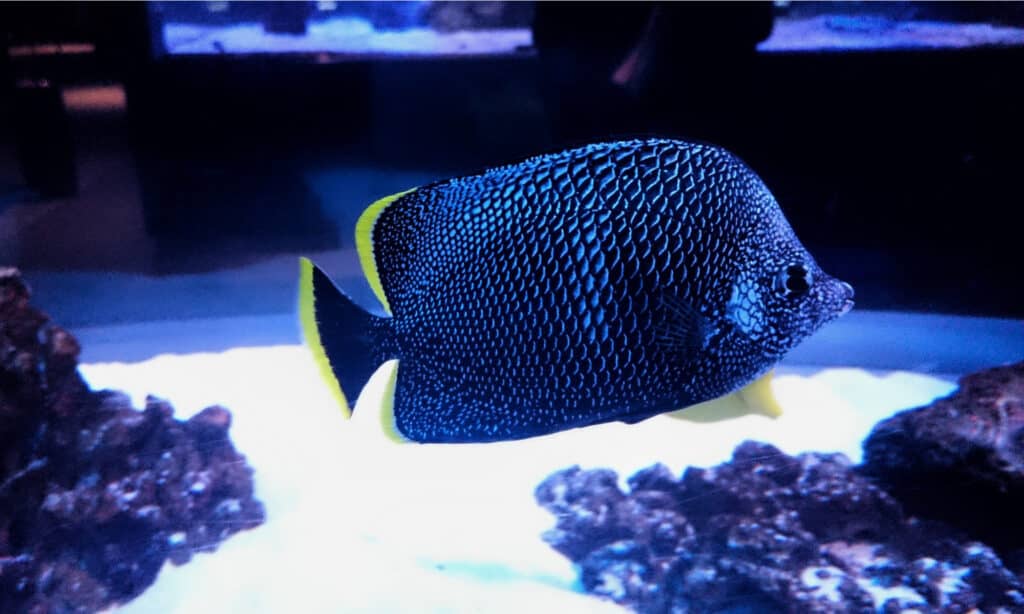
Wrought Iron Butterflyfish (Chaetodon daedalma) in a display tank, Tokyo, Japan. The reason this species of butterfly fish has its name is the metallic black color of its body.
©chonlasub woravichan/Shutterstock.com
- This fish is most active during the day and sleeps at night in crevices and hiding spots.
- This fish can change its colors automatically depending on the situation. The bright colors often fade during the nighttime to blend in with the coral reefs. But the colors become even brighter when the fish feels antagonized.
- Most of these fish travel around in schools or pairs for feeding and protection, but some are highly territorial.
- The butterfly fish relies on its sight to find prey and communicate with others. If two fish become separated, then one may swim upward to alert the other of its presence.
Butterfly Fish Pictures
View all of our Butterfly Fish pictures in the gallery.

Sergey Skleznev/Shutterstock.com
How to say Butterfly Fish in ...
Sources
- Brittanica / Accessed November 8, 2019
- Animal Diversity Web / Accessed November 8, 2019
- Fish Aroma / Accessed November 8, 2019