L
Species Profile

Leopard Cat

Prionailurus bengalensis

Asia's adaptable little spotted hunter
Kuribo / CC BY-SA 3.0

Leopard Cat Distribution

Click a location to explore more animals from that region

Loading map...

Size Comparison

Human 5'8"
Leopard Cat 1 ft 1 in

Leopard Cat stands at 19% of average human height.

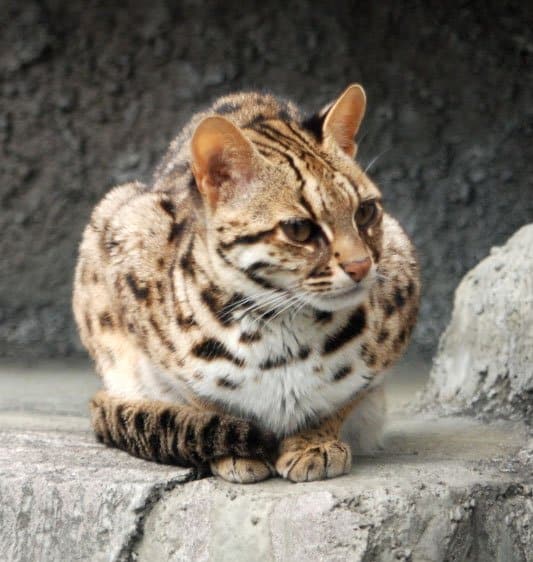
Leopard Cat resting on rock

At a Glance

Wild Species
Also Known As Asian leopard cat, Spotted cat
Diet Carnivore
Activity Nocturnal+
Lifespan 9 years
Weight 7 lbs
Status Least Concern
Did You Know?

Size: head-body length 45-75 cm; tail 23-35 cm (Sunquist & Sunquist, 2002).

Scientific Classification

The leopard cat is a small, spotted wild felid of Asia, typically cat-sized, highly adaptable, and widespread across a variety of forested and scrub habitats. It is mostly nocturnal/crepuscular and preys primarily on small vertebrates.

Kingdom
Animalia
Phylum
Chordata
Class
Mammalia
Order
Carnivora
Family
Felidae
Genus
Prionailurus
Species
Prionailurus bengalensis

Distinguishing Features

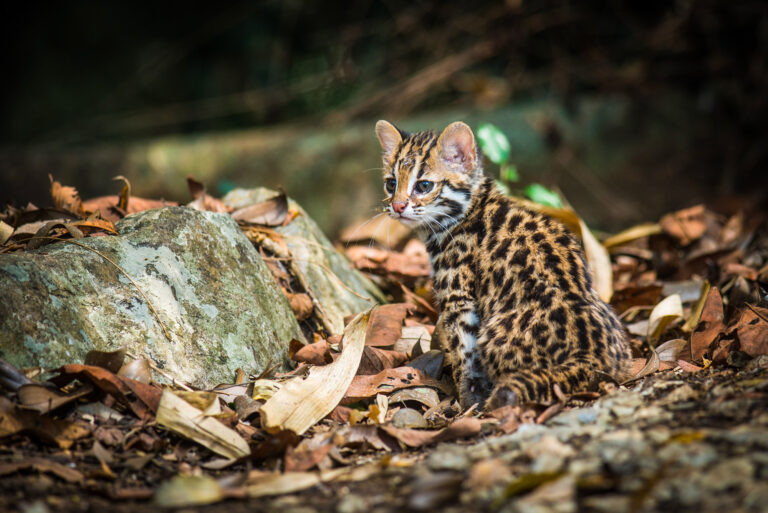
  • Small wild cat with leopard-like spots/rosettes (pattern varies widely by region)
  • Relatively slender build and long tail (often with dark rings/markings)
  • White underside with spotting; facial stripes common
  • Highly variable coat color from yellowish to gray-brown depending on habitat and geography

Physical Measurements

Height
1 ft 1 in (10 in – 1 ft 4 in)
Length
2 ft 11 in (2 ft 2 in – 3 ft 7 in)
Weight
10 lbs (7 lbs – 15 lbs)
Tail Length
11 in (8 in – 1 ft 2 in)
Top Speed
30 mph
running

Appearance

Primary Colors
Secondary Colors
Skin Type Short, dense fur with softer underfur; well-insulated in northern populations.
Distinctive Features
  • Small Asian wild felid (not a big cat): head-body length 38.7-66 cm; tail 17-33 cm (tail ~40-50% of body length).
  • Body mass highly variable across range: ~0.55-7.1 kg, with larger individuals in northern latitudes.
  • Coat shows numerous black spots (often solid, not true leopard rosettes) and a ringed tail with dark tip.
  • Two dark stripes typically run from eyes to ears; white muzzle and chin; pale eye-rings.
  • Back of ears commonly shows pale central patches (ocelli) bordered by darker fur, aiding in intraspecific signaling.
  • Ecologically adaptable across Asia: recorded from tropical forests to temperate woodland, scrub, and agricultural mosaics; sea level to high elevations (reported to ~3,000 m in parts of the range).
  • Primarily nocturnal/crepuscular and solitary; diet dominated by small vertebrates (rodents, birds, reptiles) with opportunistic prey use near human-modified habitats.
  • Often more arboreal than many small felids; capable climber and swimmer in some regions.
  • Distinguished from Panthera pardus by much smaller size and typically solid spotting; also distinct from the domestic Bengal cat breed (a domestic hybrid lineage, not this wild species).
  • Longevity: wild lifespan commonly ~8-10 years; captive records commonly reach ~13 years (reported in zoo/handbook sources).

Sexual Dimorphism

Males are generally larger and heavier than females across populations, but coat coloration and spotting patterns are broadly similar. Size dimorphism is most evident in body mass and skull/neck robustness rather than distinct color differences.

  • Typically higher body mass within local population range; more robust neck and skull.
  • Slightly larger head-body length on average when compared within the same region.
  • Typically lighter body mass within local population range; slightly more gracile build.
  • Otherwise similar coat color, spotting density, and facial striping to males.

Did You Know?

Size: head-body length 45-75 cm; tail 23-35 cm (Sunquist & Sunquist, 2002).

Typical mass 2.5-7.0 kg, with strong regional and sex-based variation (Nowell & Jackson, 1996; Sunquist & Sunquist, 2002).

Gestation about 56-70 days; litters usually 2-3 (range 1-4) kittens (Sunquist & Sunquist, 2002).

Range spans much of Asia-from the Russian Far East through China and Southeast Asia to parts of the Sundaic region-making it one of the most widespread wild felids (IUCN SSC Cat Specialist Group).

Primarily nocturnal/crepuscular and strongly rodent-focused, but it will also take birds, reptiles, amphibians, and insects (Sunquist & Sunquist, 2002).

Often mistaken for a 'true leopard,' but it is not Panthera pardus; it is a much smaller felid in genus Prionailurus.

The domestic 'Bengal cat' breed traces to hybrids between leopard cats and domestic cats-distinct from the wild species itself.

Unique Adaptations

  • Cryptic, variable coat: spot size/background color shift across regions (generally paler in cooler/northern areas and richer/darker in humid forests), aiding camouflage in diverse habitats.
  • Low-light vision typical of felids (tapetum lucidum) supports night hunting in forest understory and edge habitats.
  • Retractable claws and flexible ankles support both arboreal climbing and precise prey grappling on the ground.
  • Broad ecological tolerance: able to persist in fragmented landscapes by exploiting edge habitats and rodent-rich human-modified areas (notably plantations and farm mosaics) (IUCN SSC Cat Specialist Group).
  • Small-body energetics suited to frequent capture of small prey; dentition and jaw mechanics optimized for dispatching rodents and other small vertebrates (general felid functional morphology; Sunquist & Sunquist, 2002).

Interesting Behaviors

  • Mostly nocturnal or crepuscular activity, with day use increasing in low-disturbance areas (documented across multiple field studies summarized by IUCN/ Cat Specialist Group).
  • Solitary living outside breeding; individuals typically avoid one another and communicate via scent marking (urine spraying, scratching, feces) common to small felids (Sunquist & Sunquist, 2002).
  • Opportunistic hunting: stalk-and-pounce on small mammals (especially rodents), but also active searching along streams and forest edges for frogs, lizards, and ground birds (Sunquist & Sunquist, 2002).
  • Strong climbing ability and use of trees for resting or escape; will also hunt on the ground in grass, scrub, and agricultural margins.
  • Habitat-flexible space use: recorded from dense forests and mangroves to scrub, plantations, and rural mosaics where prey is abundant (IUCN SSC Cat Specialist Group).
  • Seasonality varies by latitude: breeding tends to be more seasonal in northern populations and less constrained in the tropics (Sunquist & Sunquist, 2002).

Cultural Significance

Across Asia, people call the leopard cat a 'small leopard' of forests and fields. It helped create the Bengal domestic cat (leopard cat × domestic cat), causing people to confuse the wild species (Prionailurus bengalensis), the true leopard (Panthera pardus), and the Bengal breed.

Myths & Legends

In Japan's Ryukyu Islands, especially Iriomote, the Iriomote wildcat (part of the Leopard Cat, Prionailurus bengalensis, complex) is called the "mountain cat" and is said to be a shy, rarely seen forest cat.

In Chinese stories and opera, the legend 'The civet cat swaps the crown prince' uses 'civet cat' as a stand-in; the term can mean small wild cats and may refer to the leopard cat.

The species name bengalensis, meaning 'of Bengal', makes many people think the leopard cat comes from Bengal, though it lives across much of Asia and shows how old names shape origin stories.

Modern stories about Bengal cat's origin (mid-1900s hybrid) often call it a 'wild leopard in the home,' mixing Leopard Cat (Prionailurus bengalensis) spots with being a pet while saying wild species are different.

Conservation Status

LC Least Concern

Widespread and abundant in the wild.

Population Decreasing

Protected Under

  • CITES Appendix II (international trade regulated)
  • Protected under national wildlife legislation in multiple range countries (e.g., India: Wildlife (Protection) Act, 1972; China: national wildlife protection framework)

Life Cycle

Birth 2 kittens
Lifespan 9 years

Lifespan

In the Wild
4–12 years
In Captivity
10–18 years

Reproduction

Mating System Promiscuity
Social Structure Solitary
Breeding Pattern Transient
Fertilization Internal Fertilization
Birth Type Internal_fertilization

Mostly solitary; males' ranges overlap several females and mating occurs during female estrus, likely with multiple partners. Internal fertilization; gestation ~60-70 days, litters typically 2-4. Females den and raise kittens alone.

Behavior & Ecology

Social Solitary Group: 1
Activity Nocturnal, Crepuscular, Cathemeral
Diet Carnivore Rodents (especially rats and mice; family Muridae)

Temperament

Elusive and wary; avoids humans, typically flees rather than confronts when disturbed (IUCN Prionailurus bengalensis assessment).
Strongly territorial; uses scent marks and scrapes to maintain spacing between adults (Sunquist & Sunquist 2002).
Behavioral flexibility (HUBS): across its wide Asian range, activity can shift from mainly nocturnal/crepuscular to more cathemeral with prey and human disturbance patterns (Nowell & Jackson 1996; IUCN).
Intraspecific encounters are usually brief and tense outside breeding; aggression includes hissing, growling, and chasing (felid ethology summaries: Sunquist & Sunquist 2002).
Life-history note (data availability): wild longevity is poorly quantified; captive longevity is reported as exceeding a decade in husbandry records, but precise maxima vary by source (Nowell & Jackson 1996; zoo husbandry compilations).

Communication

Meow-like contact calls between mothers and kittens Sunquist & Sunquist 2002
Growls and snarls during agonistic encounters Sunquist & Sunquist 2002
Hisses/spits as short-range threat signals Sunquist & Sunquist 2002
Mating calls Loud yowls/caterwauls) during estrus (Nowell & Jackson 1996
Urine spraying on vertical objects for territorial advertisement Sunquist & Sunquist 2002
Fecal marking/defecation at prominent sites as an olfactory signal Sunquist & Sunquist 2002
Scrape marking Hind-feet scraping, often with urine) along travel routes (Sunquist & Sunquist 2002
Claw scratching on trees/posts for visual and scent cues Felid marking behavior: Sunquist & Sunquist 2002
Facial rubbing and body scent transfer on objects General felid chemical communication: Sunquist & Sunquist 2002
Postural/visual signals: crouching, piloerection, tail position to signal fear or aggression Felid ethology: Sunquist & Sunquist 2002

Habitat

Biomes:
Tropical Rainforest Tropical Dry Forest Temperate Forest Temperate Rainforest Boreal Forest (Taiga) Alpine Freshwater Wetland +2
Terrain:
Mountainous Hilly Plateau Plains Valley Coastal Island Riverine Rocky +3
Elevation: Up to 14763 ft 9 in

Ecological Role

Widespread small-felid mesopredator that links small-vertebrate communities to higher trophic levels across Asian forest, scrub, and agro-ecosystems.

Regulates small-mammal (rodent) populations, potentially reducing crop damage in agricultural landscapes Helps structure local prey communities via predation on small birds, reptiles, and amphibians Transfers energy from abundant small vertebrates/invertebrates to larger predators (as occasional prey of larger carnivores) and supports trophic stability in heterogeneous habitats

Diet Details

Main Prey:
Rodents Shrews and other small insectivorous mammals Squirrels and other small mammals Small birds Reptiles Amphibians Invertebrates Fish and crustaceans +2

Human Interaction

Domestication Status

Wild

Leopard cat (Prionailurus bengalensis) is a wild species with no true domestication history. It was crossed with domestic cats to make the Bengal breed in the mid‑20th century; those hybrids differ from pure leopard cats and are treated differently by laws. Human contact includes pest control near farms, poultry loss, hunting, trade, rescue, and tourism.

Danger Level

Low
  • Defensive bites/scratches if cornered, handled, or trapped; risk increases during capture/rehabilitation or when kept in captivity.
  • Zoonotic disease exposure risks typical of wild carnivores when handled (e.g., rabies risk where present; parasites).
  • Rare conflict situations around poultry enclosures can prompt aggressive defensive behavior if people attempt to catch the animal.

As a Pet

Not Suitable as Pet

Legality: Leopard Cat (Prionailurus bengalensis) is generally illegal or highly regulated as pets. Trade is under CITES Appendix II; many places need permits or ban ownership. Where allowed, strict rules like cages, inspections, insurance, and bans on public contact or breeding

Care Level: Expert Only

Purchase Cost: $1,500 - $7,000
Lifetime Cost: $15,000 - $40,000

Economic Value

Uses:
Ecosystem services (rodent control) Ecotourism/wildlife viewing Research and conservation programs Illegal wildlife trade (live animals and pelts) Human-wildlife conflict mitigation (costs to farmers from poultry predation; prevention/compensation programs)
Products:
  • non-market pest-control value via predation on commensal rodents
  • tourism value in protected areas (sightings, camera-trap tourism in some regions)
  • historical/illegal fur and skin trade (pelts)
  • illegal live trade for private collections
  • Bengal cat breed origin (hybrid lineage; economic value largely accrues to domestic-cat breeding sector rather than the wild species)

Relationships

Related Species 7

Fishing cat
Fishing cat Prionailurus viverrinus Shared Genus
Rusty-spotted cat Prionailurus rubiginosus Shared Genus
Flat-headed cat Prionailurus planiceps Shared Genus
Jungle cat Felis chaus Shared Family
Marbled cat Pardofelis marmorata Shared Family
Asian golden cat Catopuma temminckii Shared Family
Domestic cat
Domestic cat Felis catus Shared Family

Ecological Equivalents 5

Animals that fill a similar ecological role in their ecosystem

Rusty-spotted cat Prionailurus rubiginosus Small, primarily nocturnal and crepuscular felid specializing in small vertebrates (especially rodents) and using cover-rich habitats; exhibits a similar hunting mode (stalk-pounce) and prey size spectrum, though the rusty-spotted cat is generally smaller and largely restricted to India and Sri Lanka.
Jungle cat Felis chaus Generalist small-vertebrate predator across many human-modified landscapes in Asia; there is strong overlap in a rodent-focused diet and use of scrub/edge habitats, though the jungle cat is typically larger, more associated with reedbeds and grasslands, and more often diurnal.
Feral cat Felis catus Comparable body size and a broadly similar predation niche centered on murid rodents, small birds, and reptiles in disturbed and edge habitats. There is strong ecological overlap where leopard cats occur near settlements and in agricultural mosaics.
Yellow-throated marten Martes flavigula Medium-sized, opportunistic Asian forest-edge predator that preys on small mammals, birds, and reptiles. Overlaps with the leopard cat in foraging areas and prey base, especially rodents, though martens are more diurnal and more cursorial and arboreal.
Small Indian civet Viverricula indica Nocturnal small-vertebrate predator/omnivore in Asian scrub, forest edges, and agricultural mosaics. It overlaps in activity period and use of ground-level cover and takes similar small prey (rodents, birds, reptiles), though civets eat more fruit and invertebrates.

“A small, but dominant, predator.”

The leopard cat is a small species of feline that is native to many different Asian and Indian regions. These cats are divided among almost a dozen different sub-species, although most share distinctive color markings and webbed toes that facilitate their aquatic adventures. These tiny hunters are only about the size of a normal domestic cat and typically survive by hunting rodents or other small creatures. Despite their diminutive stature, they are considered a dominant predator in many of the environments they inhabit.
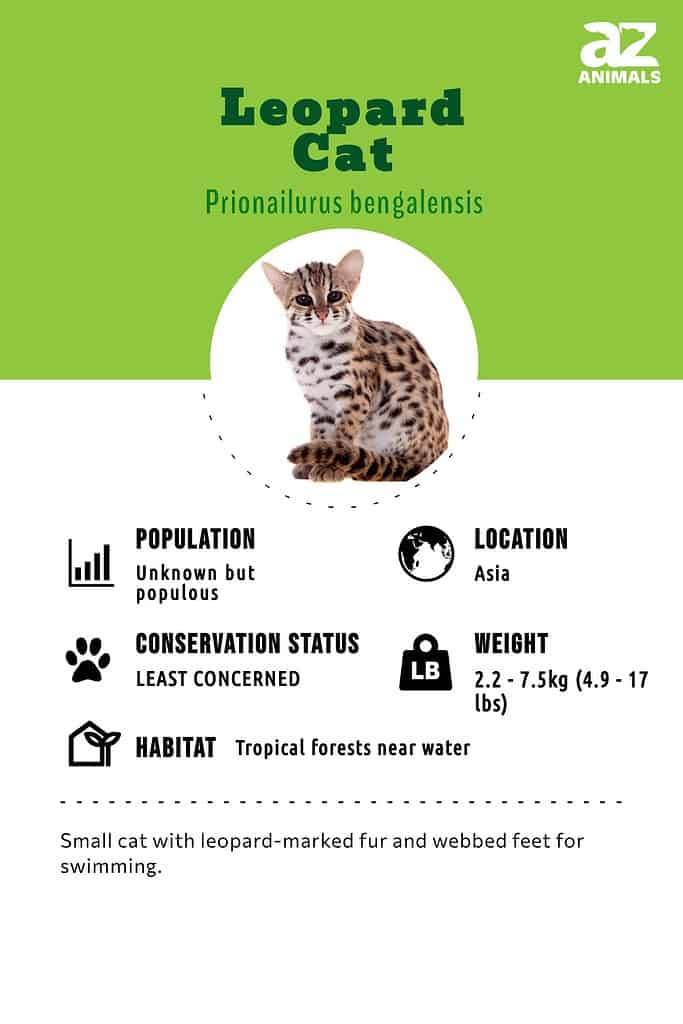
Incredible Leopard Cat Facts!

  • Markings include a white muzzle and facial stripes.
  • Their webbed paws make them powerful and adept swimmers.
  • Some leopard cats have a single stripe running down their spine.
  • Many island populations have developed into distinct sub-species.
  • They can live in forests or jungles and wet or dry climates.
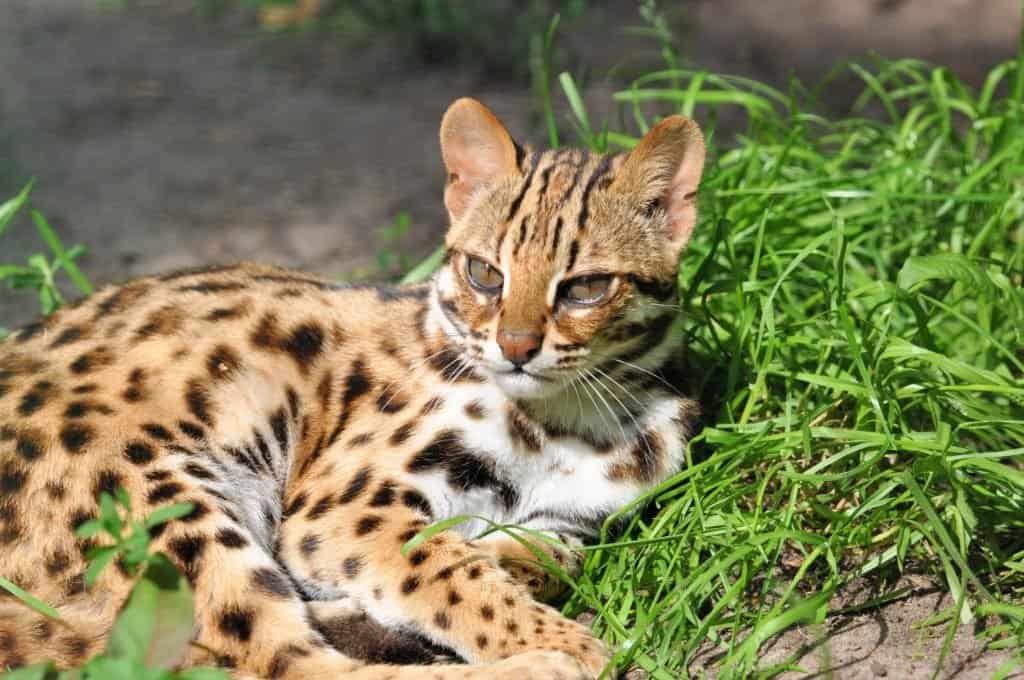
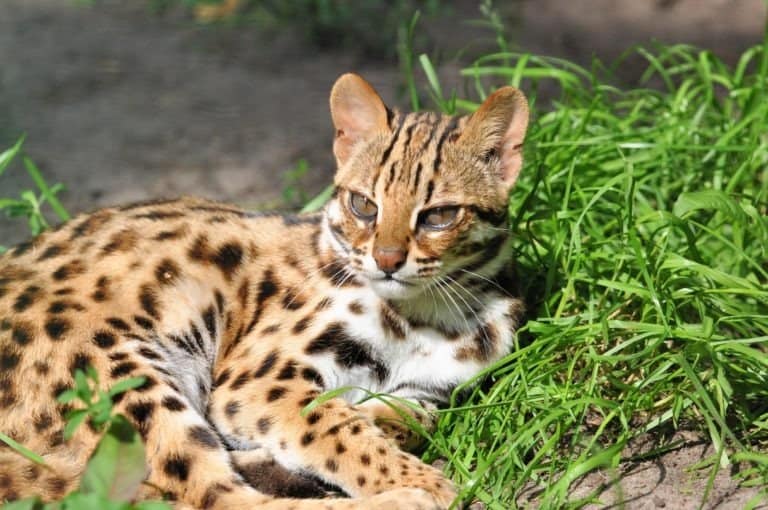
Resting Leopard cat

Leopard cats have webbed paws and are good swimmers.

Scientific Name

The leopard cat species is also known by the scientific name Prionailurus bengalensis and is classified as part of the Felidae family in the Mammalia class. The genus Prionailurus derives its name from the Greek word “prion,” which indicates a sawing tool, and “ailur,” which translates into the cat. The species name, bengalensis, indicates the Bengal region of Asia.

Evolution
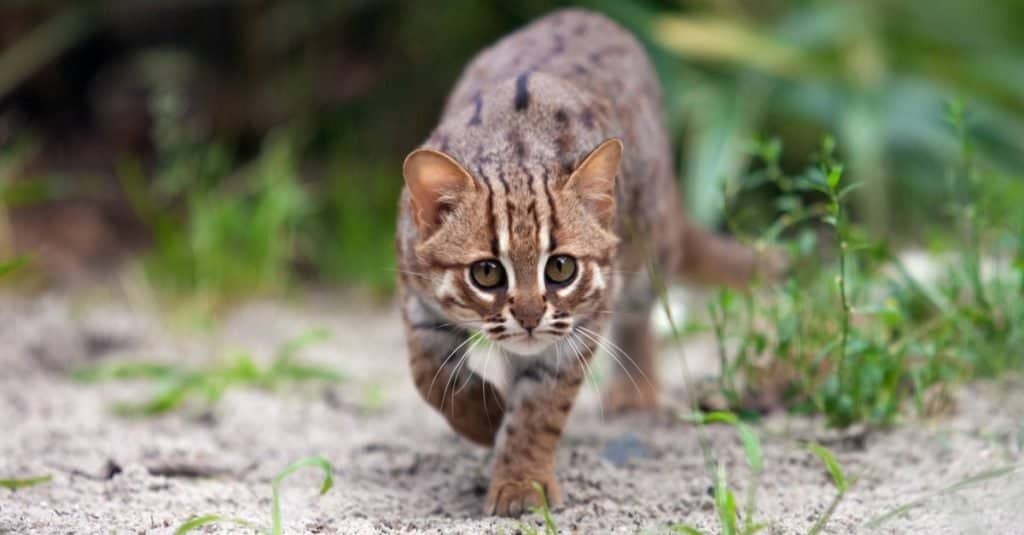
Smallest Cats: Rusty Spotted Cat

The Rusty-spotted cat is the smallest wild cat in Asia and is believed to be the first Prionailurus to diverge from a common ancestor.

Prionailurus diverged from a common ancestor between 8.76 to 4.53 million years ago. The rusty-spotted cat (P. rubininosus) was believed to be the first cat to genetically diverge, followed by the flat-headed cat (P. planiceps) and then the fishing cat (P. viverrinus). The fishing cat diverged together with the leopard cat between 4.25 to 0.02 million years ago.

Fossil remains indicate that leopard cats were domesticated in Neolithic China at least 5,000 years ago. The Bengal cat is a crossbreed between the leopard cat and the domestic cat.

Species

There are as many as 12 subspecies of leopard cat including:

  • The mainland leopard cat (P. bengalensis), is widely distributed in mainland Asia, from Pakistan to Southeast Asia, China, and the Russian Far East.
  • The Sunda leopard cat (P. javanensis), is native to Java, Bali, Borneo, Sumatra, Palawan, Negros, Cebu, Panay, and the Malay Peninsula.
  • P. bengalensis borneoensis, is found in Borneo
  • P. b. heaneyi, is found on Palawan
  • P. b. rabori, is found on the Philippine islands of Cebu, Negros, and Panay
  • P. b. sumatranus, is found on Sumatra and Tebingtinggi

Appearance and Behavior

Leopard cats are nearly identical in stature to the domesticated feline you might find in homes around the world. They typically weigh between 5 and 20 pounds, depending on gender and age, and generally range from 18 to 30 inches long. As their name suggests, these felines often have yellow or orange fur with distinct spots reminiscent of their much larger leopard cousins. However, there are plenty of colors and marking variations among the different sub-species, especially those local to specific islands.

Like many other felines, these tiny wildcats prefer an isolated lifestyle outside of mating season. While primarily nocturnal hunters, they sometimes venture forth during daylight hours. Despite frequently living and roaming in close proximity to human settlements, they are rarely sociable with people and often avoid direct contact or interaction.
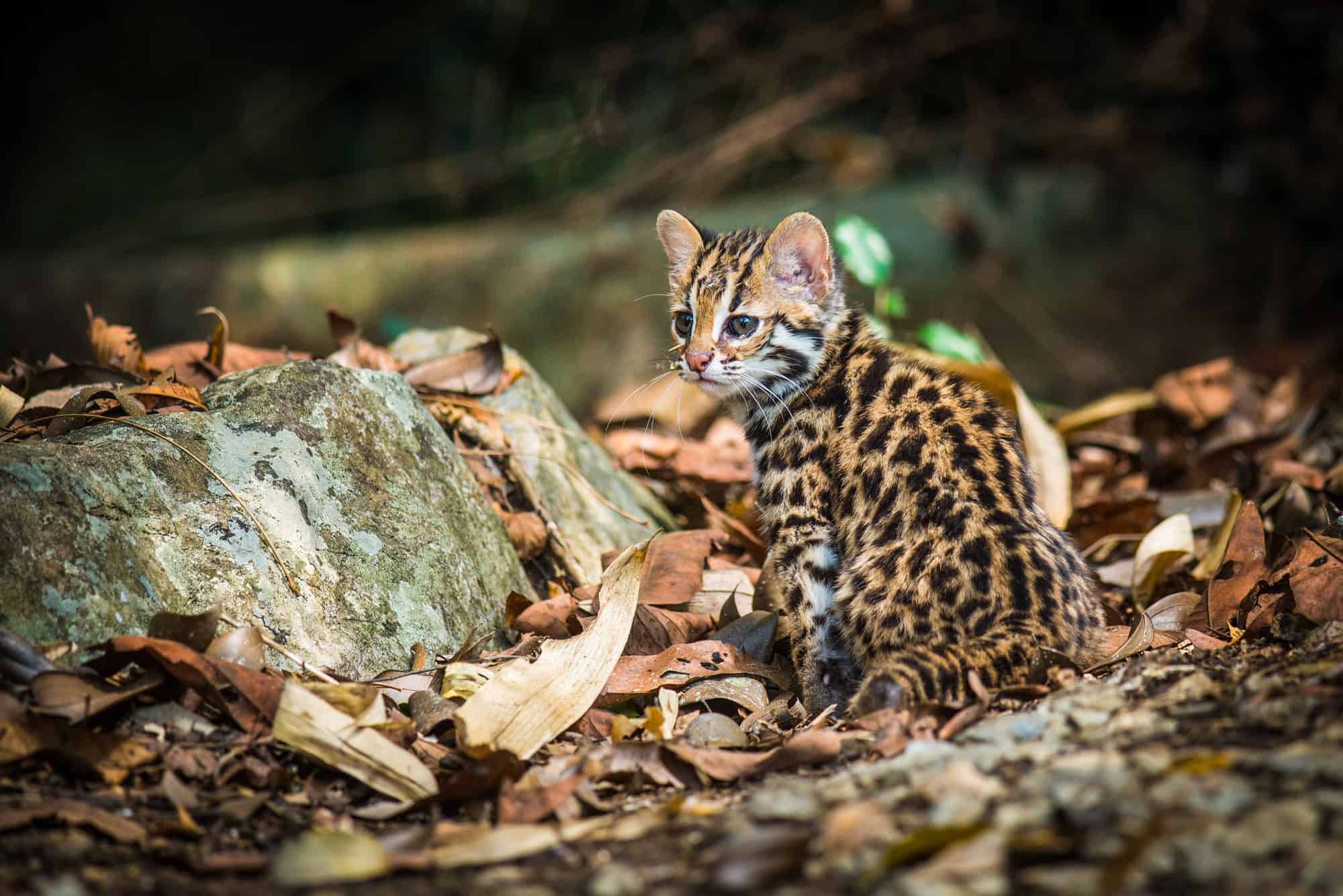
Leopard Cat

Leopard cats are found in tropical regions throughout Southeast Asia in forested areas near water.

Habitat

Found in tropical regions throughout Southeast Asia, India, and various islands, these cats have a strong preference for forested areas that are close to water. Their webbed paws make them proficient swimmers, so they don’t mind crossing bodies of water or even hunting in them for food. They also have strong climbing skills, which serve them well when hunting or seeking an escape route.

Diet
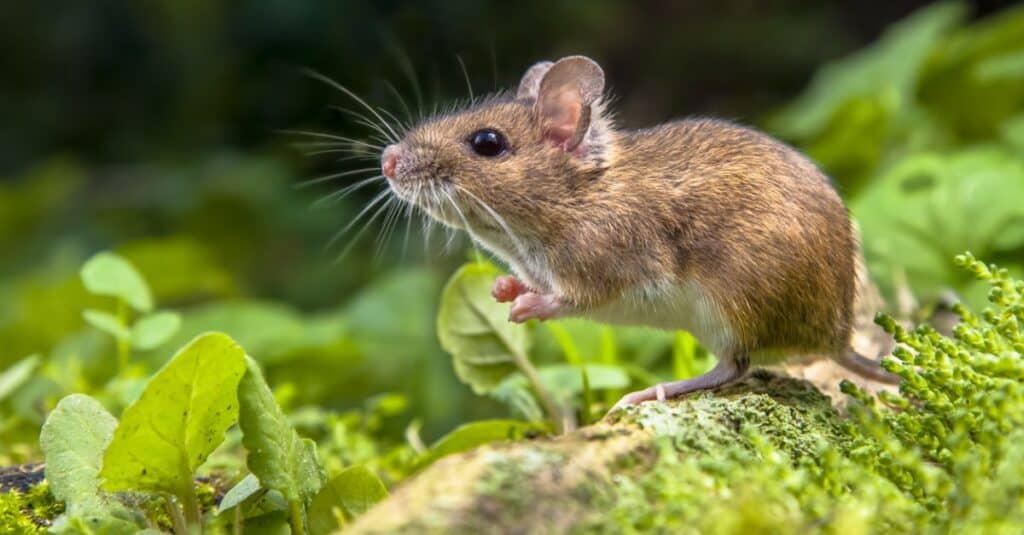
Mouse

Leopard cats prey on mice, birds, lizards, insects, and water-dwelling animals.

Thanks to their adaptation to both forested and aquatic environments, these small predators enjoy a diverse carnivorous diet. Rats, mice, and other rodents are often a primary food source, but they may also target birds, lizards, insects, and water-dwelling animals. Unlike many of their feline brethren, leopard cats aren’t known for playing with their food and tend to latch on firmly until the prey is dead. While they are technically carnivores, they may also eat plant matter independently or during the consumption of their prey.

Predators and Threats
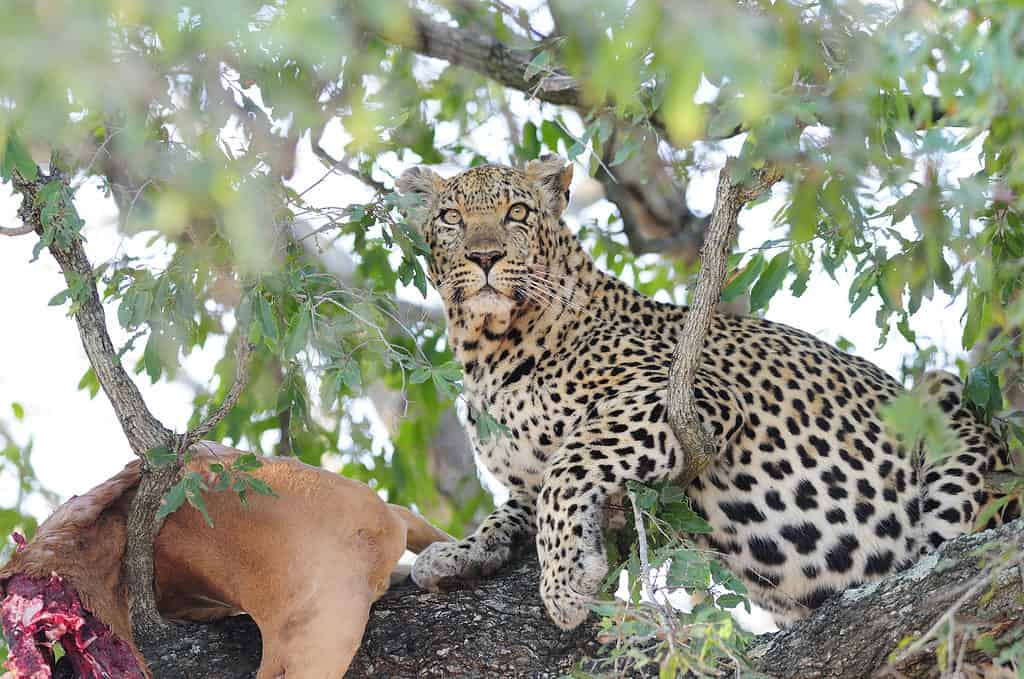
Leopard, Tree, Animal, Animal Wildlife, Animals Hunting

Leopards sometimes prey on leopard cats, but humans are their biggest threat.

Human hunting, house construction, and overall development are the primary threat to existing cat populations throughout their native regions. However, they are also vulnerable to larger carnivorous predators and rely on their stealth and cryptic fur pattern to escape danger. Larger feline species, like actual leopards and Bengal tigers, as well as large predatory birds, are among the potential threats.

Despite protective regulations in many countries, these felines are often trapped or hunted for their striking fur. Farmers kill them after they raid chicken coops. Natural leopard cat populations are declining in many areas, but are still considered of least concern in conservation status priority.

Reproduction, Babies, and Lifespan
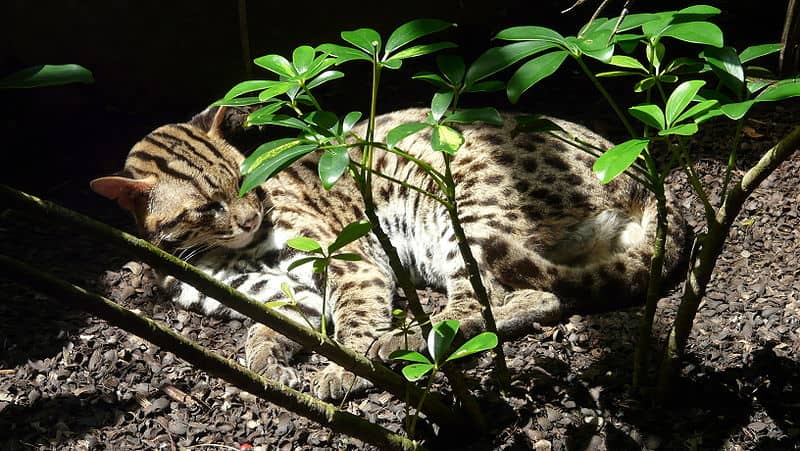
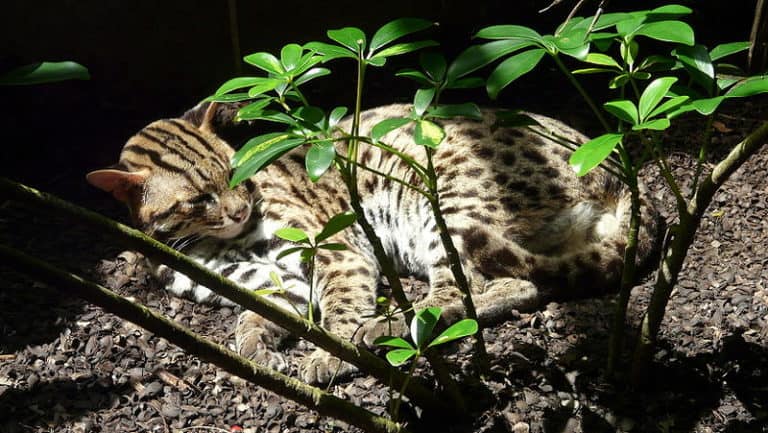
Leopard Cat resting under trees

Leopard cat kittens stay with their mothers for about a year.

Due to the sheer scope of native environments across Asian and Indian regions, there is plenty of variation in local breeding habits. Leopard cats typically mate from September to March, but this season can extend throughout the year in warmer areas. Males are territorial and competitive over females when mating, which is in stark contrast to their otherwise solitary nature.

Females give birth following a gestation period of 8 to 10 weeks with an average litter of 2 to 4 kittens. Pregnant cats usually seek out a protected den close to the ground, like a hollow log or rock formation. Kittens start opening their eyes within a week or two and can start hunting on their own at 3 to 4 months. However, mothers can raise and teach their young for almost a year, which is about when the babies start reaching sexual maturity.

The average lifespan for leopard cats ranges between 8 and 12 years, with pet or captive animals known to live for over 15 years. Survival rates typically decrease dramatically in areas with significant human disturbance compared to protected areas. Several feline viral diseases, including feline leukemia virus (FeLV) and feline immunodeficiency virus (FIV), can impact these cats and reduce their life expectancy.

Population

As the most widespread small felid species in Asia, these cats still have a relatively substantial and stable population across many different countries. They are currently found as far north as Korea and eastern Russia, as far south as Indonesia, and west throughout the Nepalese mountain region. Their native range includes virtually all countries between Korea and India.
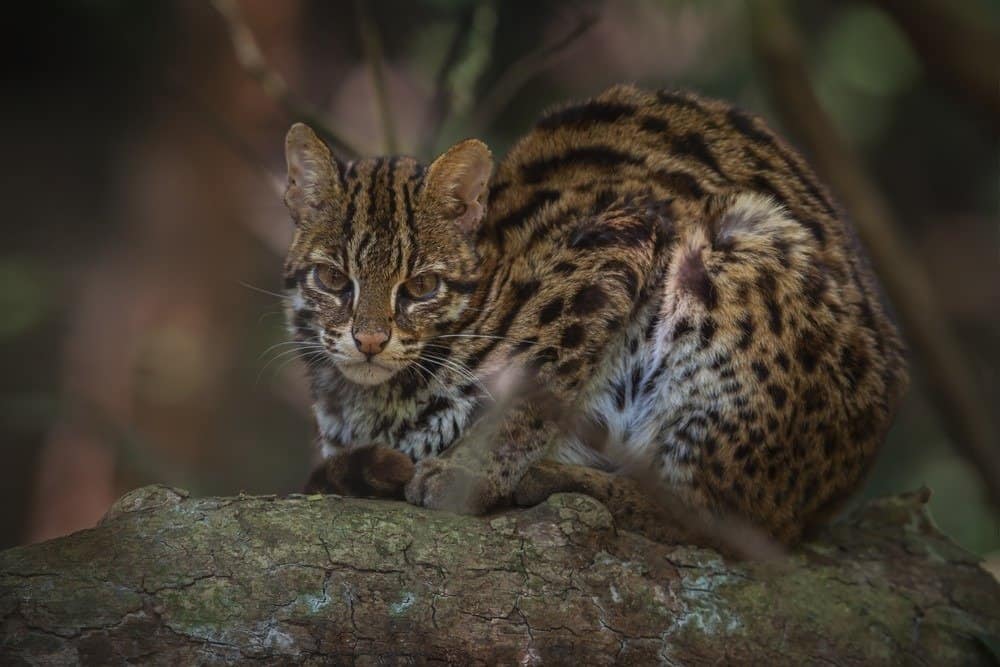
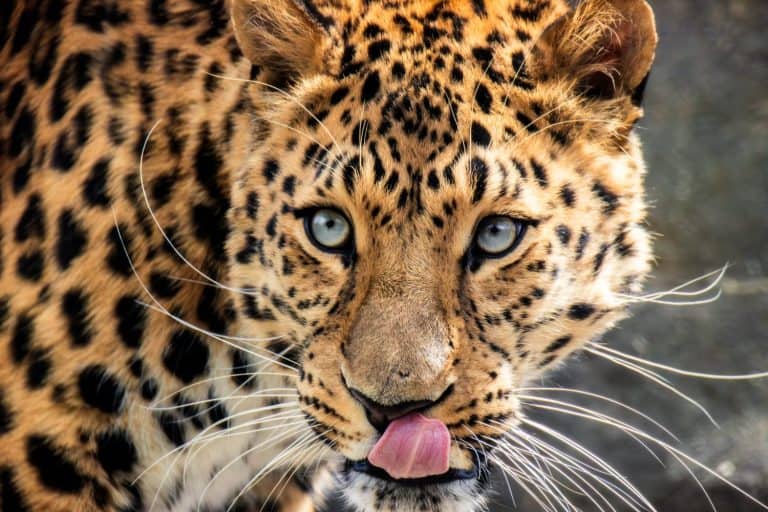
Leopard cat male close up in the nature

Leopard cats have a conservation status of least concerned.

In the Zoo

Leopard cats can be found in the following Zoos in the USA:

View all 131 animals that start with L

Sources

  1. David Burnie, Dorling Kindersley (2011) Animal, The Definitive Visual Guide To The World's Wildlife / Accessed July 12, 2010
  2. Tom Jackson, Lorenz Books (2007) The World Encyclopedia Of Animals / Accessed July 12, 2010
  3. David Burnie, Kingfisher (2011) The Kingfisher Animal Encyclopedia / Accessed July 12, 2010
  4. Richard Mackay, University of California Press (2009) The Atlas Of Endangered Species / Accessed July 12, 2010
  5. David Burnie, Dorling Kindersley (2008) Illustrated Encyclopedia Of Animals / Accessed July 12, 2010
  6. Dorling Kindersley (2006) Dorling Kindersley Encyclopedia Of Animals / Accessed July 12, 2010
  7. David W. Macdonald, Oxford University Press (2010) The Encyclopedia Of Mammals / Accessed July 12, 2010
Lisha Pace

About the Author

Lisha Pace

After a career of working to provide opportunities for local communities to experience and create art, I am enjoying having time to write about two of my favorite things - nature and animals. Half of my life is spent outdoors, usually with my husband and sweet little fourteen year old dog. We love to take walks by the lake and take photos of the animals we meet including: otters, ospreys, Canadian geese, ducks and nesting bald eagles. I also enjoy reading, discovering books to add to my library, collecting and playing vinyl, and listening to my son's music.

Thank you for reading! Have some feedback for us?


Leopard Cat FAQs (Frequently Asked Questions)

Leopard cats are small, wild felines that inhabit various climates and environments throughout Asia and India. They are very similar to house cats in shape and size but are distinguished by distinctly spotted or striped fur patterns. Despite their protected status in most jurisdictions, the species is frequently hunted by humans for their fur, as exotic pets, and sometimes for food.