






Quick Take
- This cat is called a "fishing" cat, yet its body is surprisingly ill-equipped for catching fish. So how does it actually pull it off? See the hunting techniques →
- Fishing Cats have a hunting trick so deceptively clever that it mimics another animal entirely, and it works every time. Discover the luring trick →
- Most wild cats go to great lengths to avoid water, and the one thing that makes the Fishing Cat different may also be what dooms it. Explore the wetland habitat →
- Fishing Cat kittens reach adulthood faster than almost any comparable wild cat, yet a particular catch makes their survival razor-thin. Learn about kitten development →
The Fishing Cat is a small to medium-sized feline that is natively found throughout a number of countries in Southeast Asia. Unlike other cat species found around the world (with the notable exception of the Jaguar), the Fishing Cat spends most of its life in areas of dense vegetation close to the water and is an excellent swimmer. However, despite its love of water, the Fishing Cat is not particularly well adapted to its semi-aquatic lifestyle. It has small teeth that are not well designed for holding onto slippery prey and only slight webbing between the toes on its front paws to help it negotiate the slippery banks.
Although the Fishing Cat is known to still be locally common in certain areas, the global population is severely under threat, as it is thought that nearly 50% of their specific wetland habitats are also under threat from increasing levels of human activity throughout much of its natural range.

Evolution
Prionailurus diverged from a common ancestor between 8.76 and 4.53 million years ago. The rusty-spotted cat (P. rubiginosus) was believed to be the first cat to genetically diverge, followed by the flat-headed cat (P. planiceps) and then the fishing cat (P. viverrinus). The fishing cat diverged together with the leopard cat between 4.25 and 0.02 million years ago.
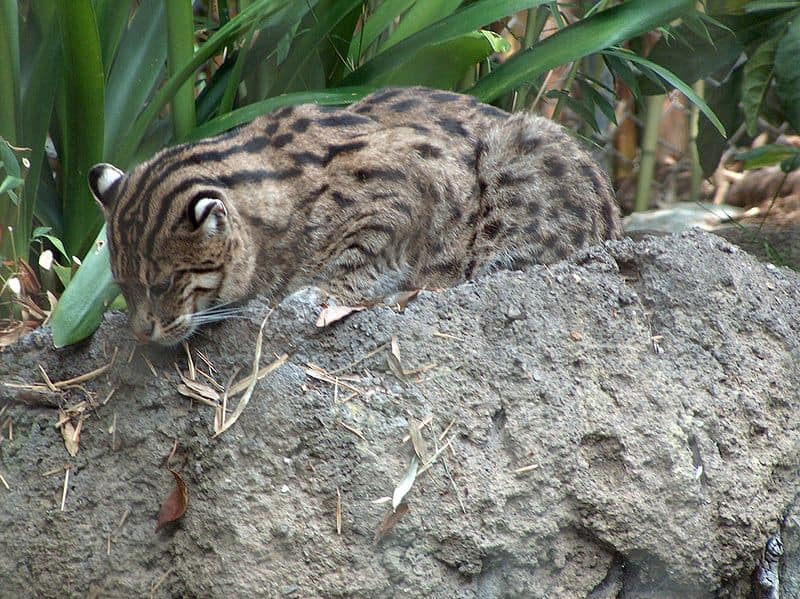
The fishing cat and the leopard cat diverged together from a common ancestor and are closely related.
©Mike R / Creative Commons – Original
The Fishing Cat was first described scientifically by Edward Turner Bennett in 1833 and was given its scientific name, with the last part meaning “civet-like”. Although they are not closely related at all, the Fishing Cat has a long, stocky body with short legs and a short tail, which makes it look remarkably similar to these small carnivores.
Although Fishing Cats tend to be most commonly found in a variety of watery lowland habitats, they are also known to inhabit areas at elevations of up to 5,000 ft, depending on the waterways in the area (a small population is actually found in parts of the Himalayas). The Fishing Cat is classed as part of the Leopard Cat lineage. Other members of this feline group include the Leopard Cat itself, the Pallas Cat, and the Flat-Headed Cat, to which the Fishing Cat is most closely related.
Species
There are two subspecies of the fishing cat with geographical differences:
- Prionailurus viverrinus viverrinus: can be found in India, Sri Lanka, Pakistan, Bangladesh, Indochina, Nepal, and Bhutan.
- Prionailurus viverrinus rhizophoreus: can be found in Java.
Anatomy and Appearance
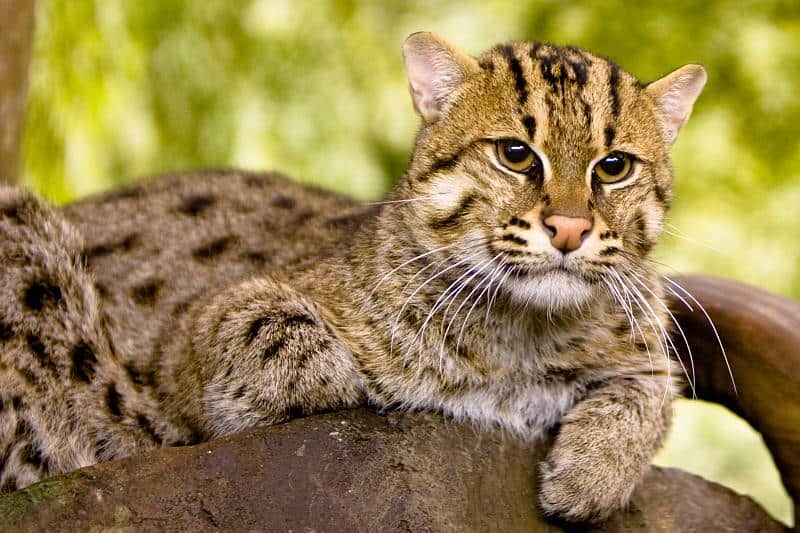
The fishing cat is a small to medium wild cat that has adapted to a semi-aquatic lifestyle.
©kellinahandbasket / Flickr – Original
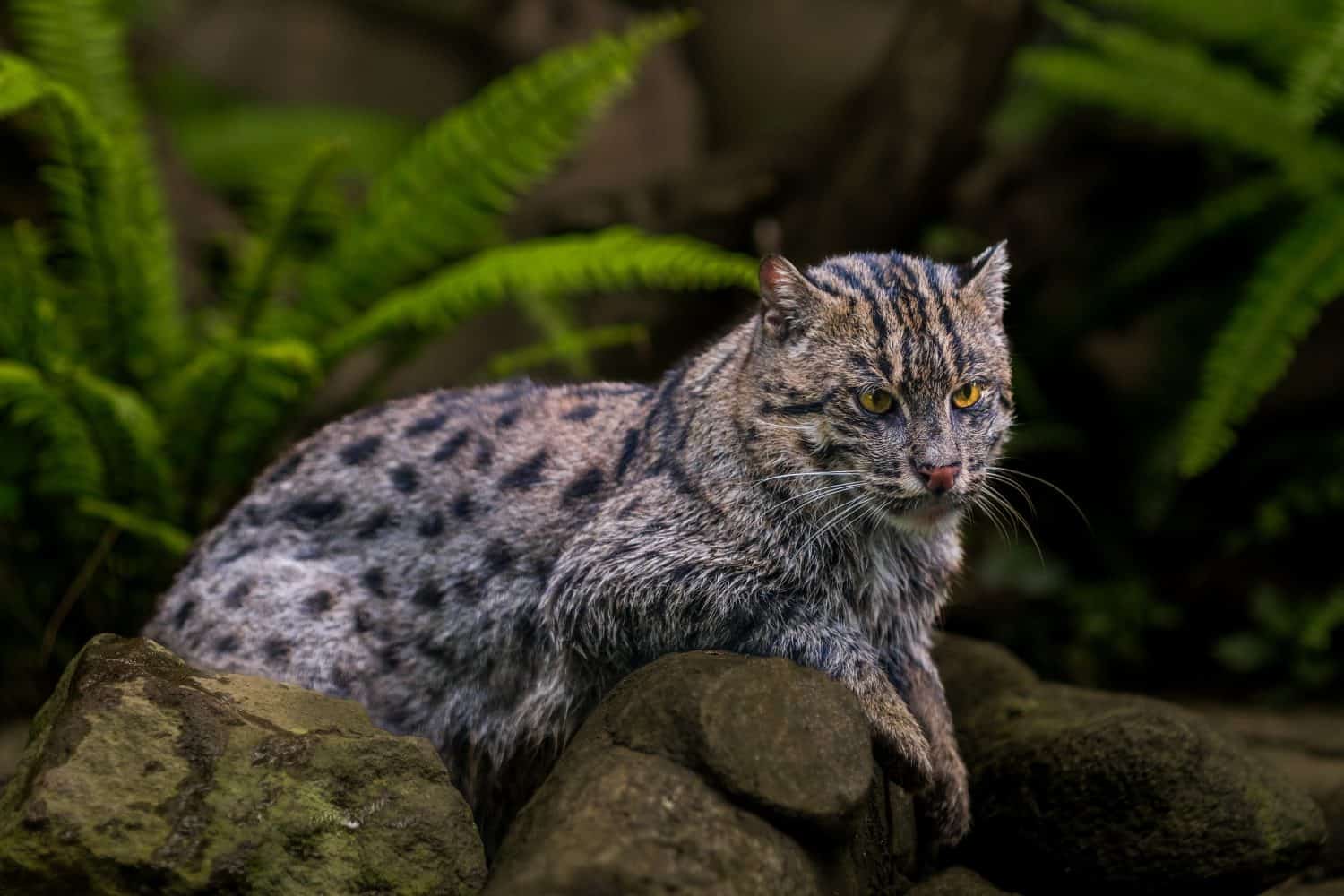
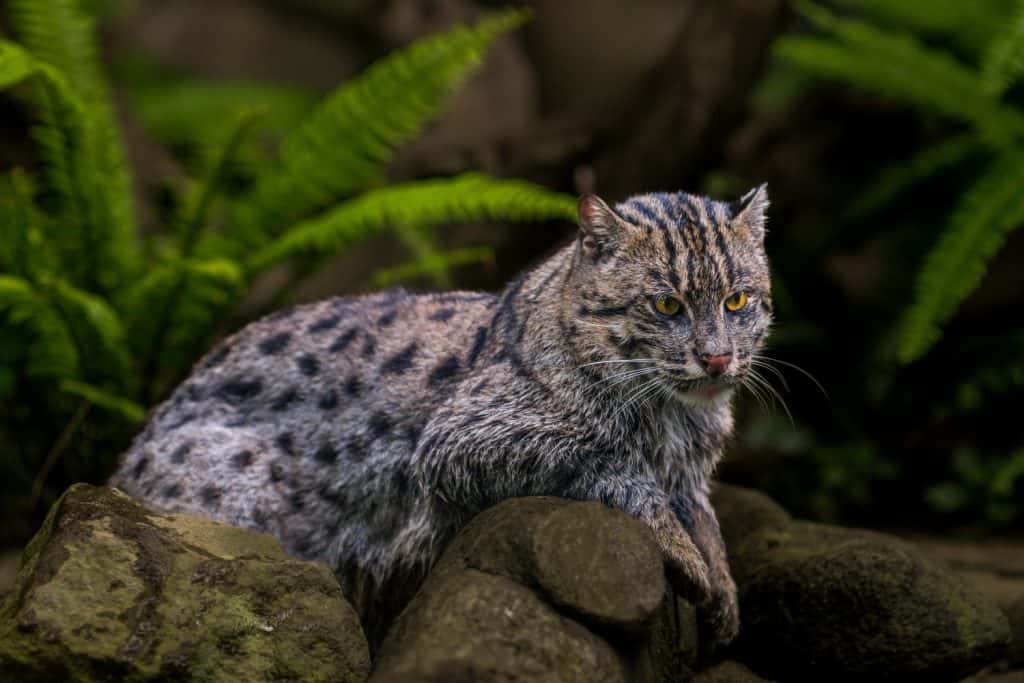
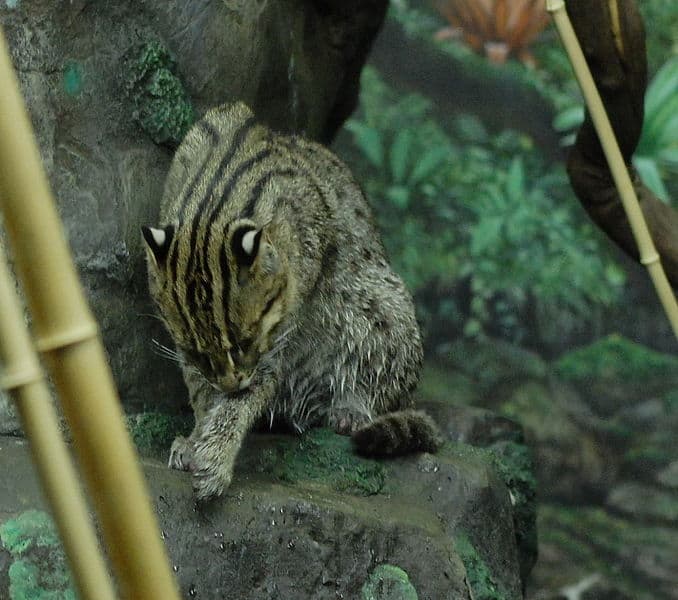
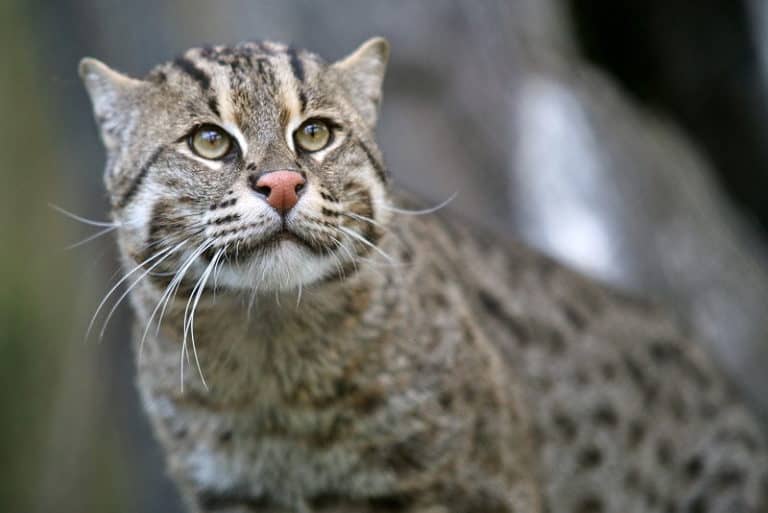
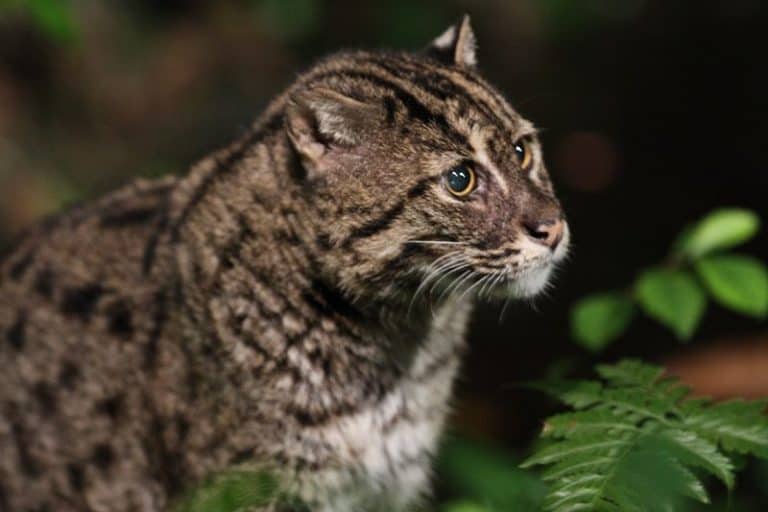
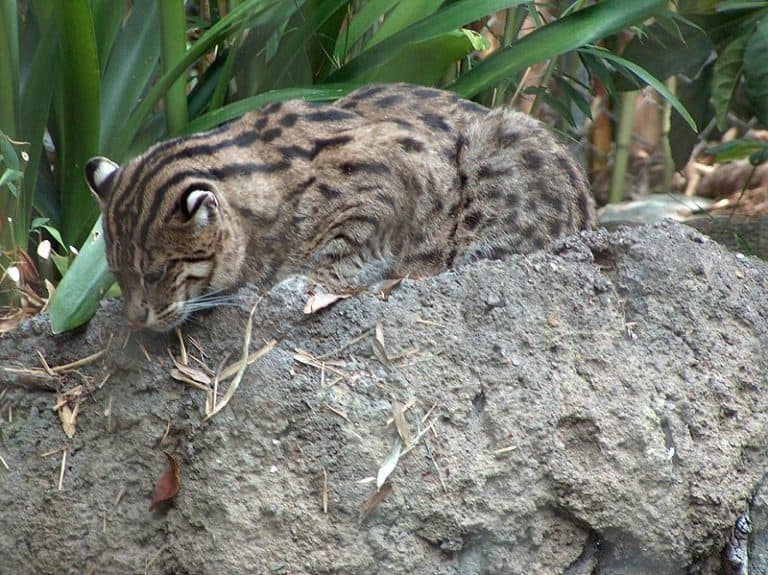
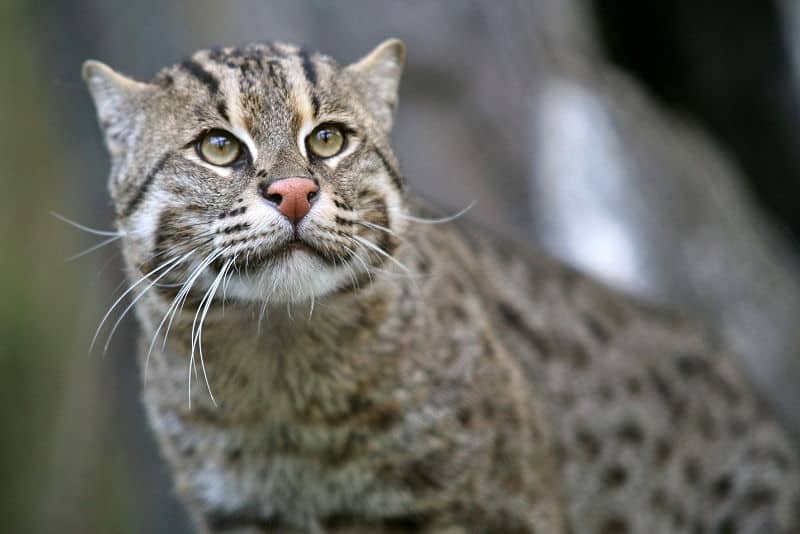
The Fishing Cat has a stocky and powerful body that is quite long in comparison to its short legs. Its short and coarse coat of fur is olive-gray in color and patterned with solid black spots that run the length of its body and often turn into black lines along the spine. The Fishing Cat has a short and flattened tail that is marked with black rings and can be used by the animal when swimming, as it works in a similar way to a rudder on a boat, steering the Fishing Cat in the right direction through the water.
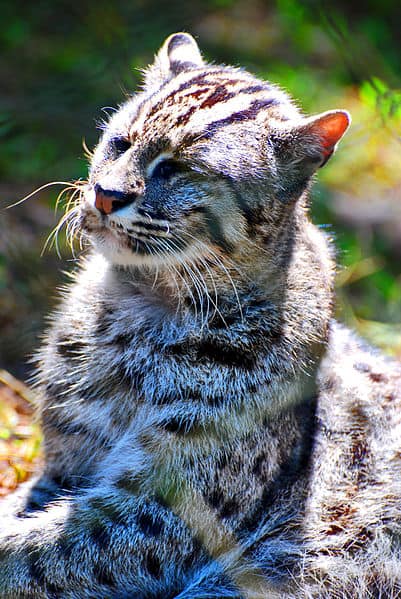
Their small feet are slightly webbed, though not more so than many other feline species. However, one of the biggest differences between the Fishing Cat and its relatives is that its claws are not fully retractable, with the tips still sticking out slightly from the protective sheath of skin on its toes (most felines are able to completely retract their claws to prevent them from becoming blunt when they are not in use). Fishing Cats have quite broad heads relative to their body, with small, rounded ears that are black on the back and have a distinctive white spot in the center.
Distribution and Habitat

The fishing cat is native to a number of countries in Southeast Asia, including Thailand.
©Thampapon/Shutterstock.com
The Fishing Cat is natively found throughout a number of countries in Southeast Asia, including Bangladesh, Bhutan, Brunei, Cambodia, China, India, Laos, Malaysia, Myanmar, Nepal, Pakistan, Sri Lanka, Thailand, and Vietnam, along with the Indonesian Islands of Java and Sumatra. Although the Fishing Cat appears to have a wide geographical range, because it prefers dense, wetland habitats, they are only found in certain regions throughout these countries.
Ideally, the Fishing Cat inhabits wetland areas where there is plenty of dense vegetation to provide cover both from predators and to hide from potential prey, and can be found in a variety of aquatic regions that include mangrove swamps, rivers, lakes, marshes, reed beds, and areas of the forest close to streams.
They are, however, severely threatened throughout much of their natural range as wetlands are drained for agriculture or often polluted by industry in the area. It is thought that 98% of the globally significant wetlands throughout Southeast Asia are under threat and could even disappear completely.
Behavior and Lifestyle
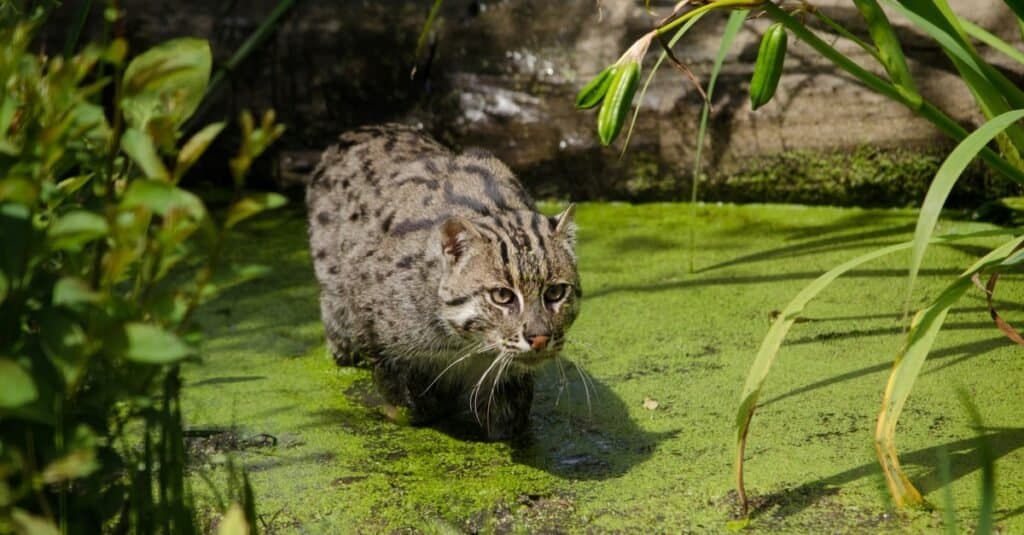
The fishing cat stands out among other types of wild cats because it is a strong, skilled swimmer.
©Gemma Simpson/Shutterstock.com
The Fishing Cat is a nocturnal and solitary hunter that rests amongst dense vegetation during the day before heading to the water at night to find food. They are incredibly strong and capable swimmers and have been known to swim vast distances, often in pursuit of a fish trying to get away. Fishing Cats are largely territorial animals, with female home ranges typically spanning 4–8 square kilometers and male home ranges averaging around 29 square kilometers or more, with a male’s territory overlapping the ranges occupied by several females in the area.
Fishing Cats are known to be relatively adaptable animals and in certain areas are even known to live around city suburbs with little vegetation, close to human settlements. Their incredibly elusive and nocturnal lifestyle means that they are often hard to spot but are susceptible to being trapped, poisoned, or accidentally caught in snares set to catch other forest animals, such as Deer.
Reproduction and Life Cycles
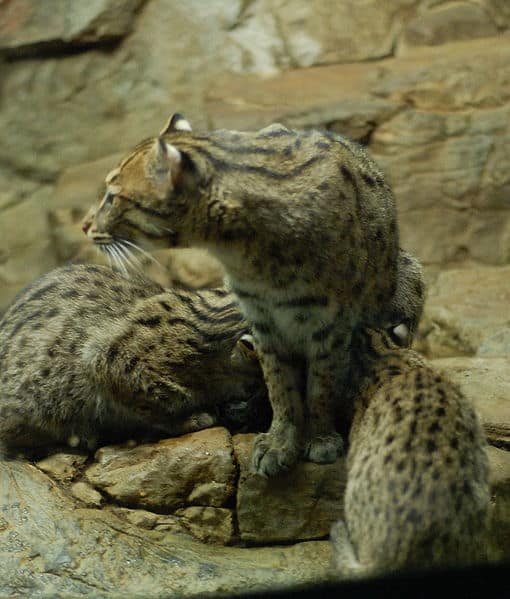
Fishing cat kittens are dependent on their mothers until they are nine months old.
©Charles Barilleaux / Creative Commons – Original
Although little is really known about their breeding or social behavior in the wild, mating is thought to take place in January and February when a female Fishing Cat will call to males in the area, indicating that she is ready to mate. After a gestation period that lasts for between 60 and 70 days, she gives birth to 1–4 kittens that weigh about 5.3 ounces (150 grams) and are born blind.
Fishing Cat kittens develop relatively slowly at first, putting on an average of 0.4 ounces (11 grams) in weight a day and don’t open their eyes until they are just over two weeks old. At around 50 days old, the kittens are able to start eating meat but are not weaned for at least another couple of months.
Fishing Cats reach their adult size by the time they are around eight and a half months old and are able to breed by fifteen months, becoming completely independent of their mother about a month later when they leave to establish a territory of their own. Although it is thought that it is just the female who rears her young in the wild, captive males have been observed helping her to raise their offspring.
Diet and Prey
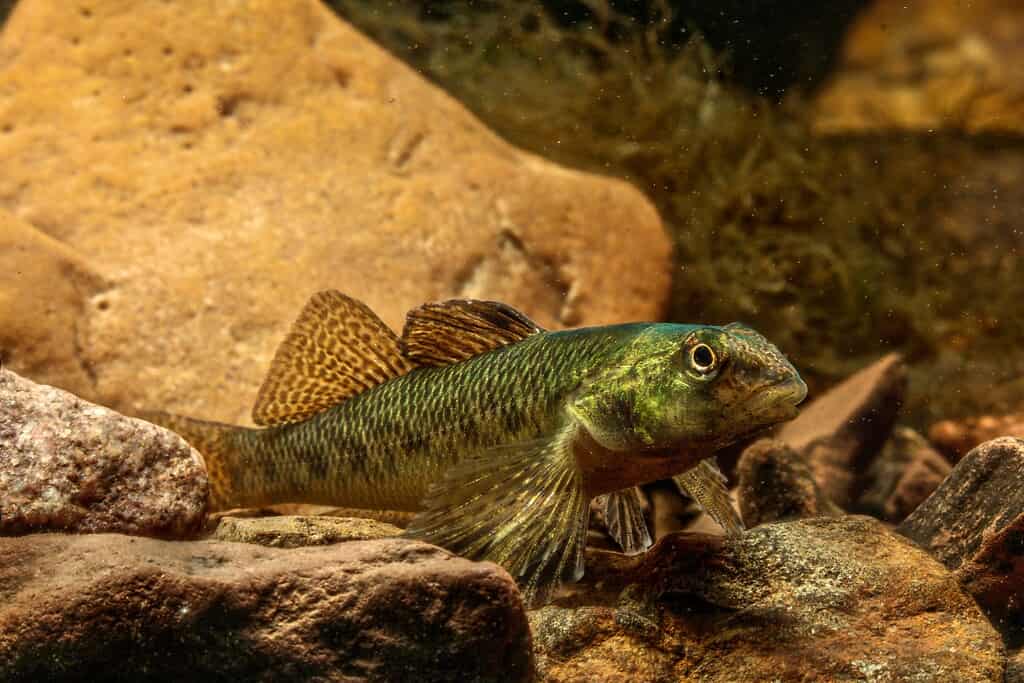
Freshwater fish make up 70% of the fishing cats’ diet, followed by frogs, mollusks, snails, and snakes.
©Sean McVey/Shutterstock.com
The Fishing Cat is a carnivorous animal that hunts and consumes other animals to acquire the nutrients it needs to survive. As its name suggests, aquatic animals make up the bulk of the Fishing Cat’s diet, with more than 70% of the food thought to be fish, followed by mollusks, frogs, snails, and snakes that are found in or close to the water.
Fishing Cats are also known to hunt small mammals such as mice on land and will even target larger prey like civets, dogs, and livestock in areas close to settlements. Fishing Cats catch their prey in a couple of different ways but tend to dive into the water once a fish has been spotted before catching it in its mouth (they are even known to dive into quite deep water and can surface under aquatic birds to catch them).
The other method they use involves them sitting at the water’s edge, either on the bank or a rock, and using their paw, lightly tapping the surface in a way that mimics an insect to attract fish. Once it is close enough, the Fishing Cat then scoops the fish out of the water using its paw and flicks it onto dry land before eating it.
Predators and Threats
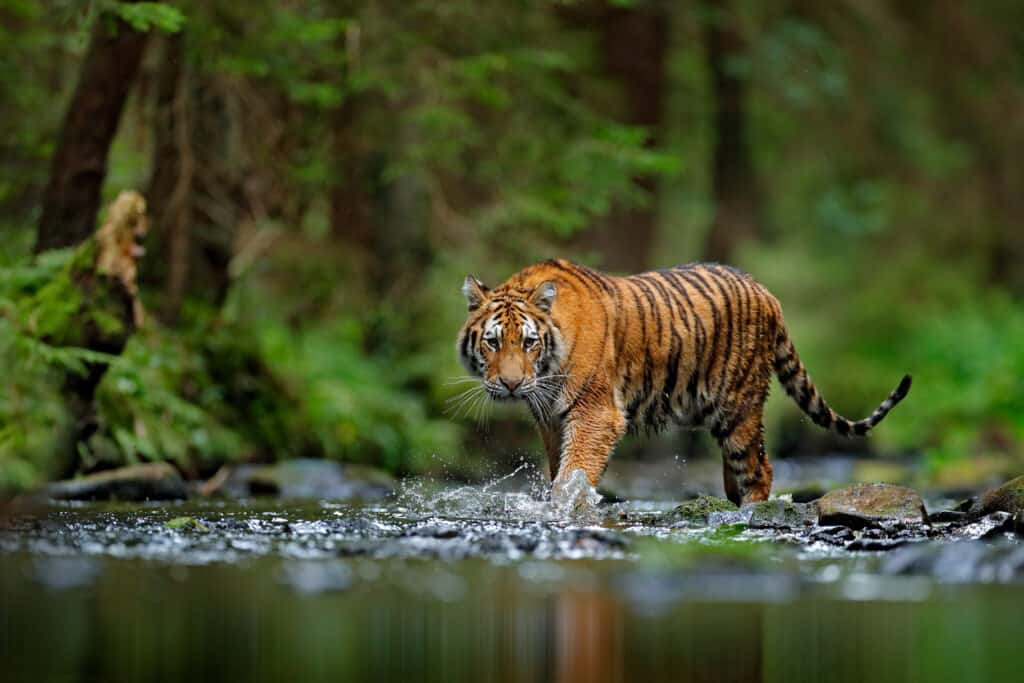
Tigers are a threat to the fishing cat in areas where they share habitats.
©iStock.com/Ondrej Prosicky
Due to the powerful build and aquatic nature of the Fishing Cat, they are thought to have very few (if any) real natural predators in the wild. However, the Fishing Cat is often found in areas where it shares its habitat with larger carnivorous mammals such as tigers and bears, which could be a threat to them. People are the biggest threat to the Fishing Cat as they have not only destroyed much of their unique wetland homes with increasing levels of industrial and commercial activity, but they have also been known to hunt Fishing Cats over the years for their meat and fur. Despite now being a protected animal species, large seizures of Fishing Cat skins at local markets still occur, which indicates that poachers are still decimating populations, particularly in certain areas. Another problem for Fishing Cats caused by Humans is the fact that in areas close to growing settlements, locals are often overfishing in the nearby lakes and rivers, which means that the food available for the Fishing Cats is also declining fast.
Relationship with Humans
Fishing cats are hunted for their fur, and their habitats are shrinking due to human activity.
©Cliff / Creative Commons – Original
Because the Fishing Cat is seldom seen in the wild — being nocturnal and preferring inaccessible habitats — they were locally common throughout much of their native range until the middle of the last century. However, hunting by people for their meat and fur has obliterated populations in many areas, and even today, they are still illegally killed in the hundreds to sell their skins on the black market.
The biggest problem facing the Fishing Cat, though, is the drastically increasing levels of Human activity in their natural environments that are severely affecting not just the Fishing Cats, but also the extraordinarily unique and biodiverse wetland habitats in which they live. Draining water for agriculture, road construction, growing human settlements, and industrial pollution have reduced their once-vast natural range by nearly 50%.
Conservation Status and Life Today
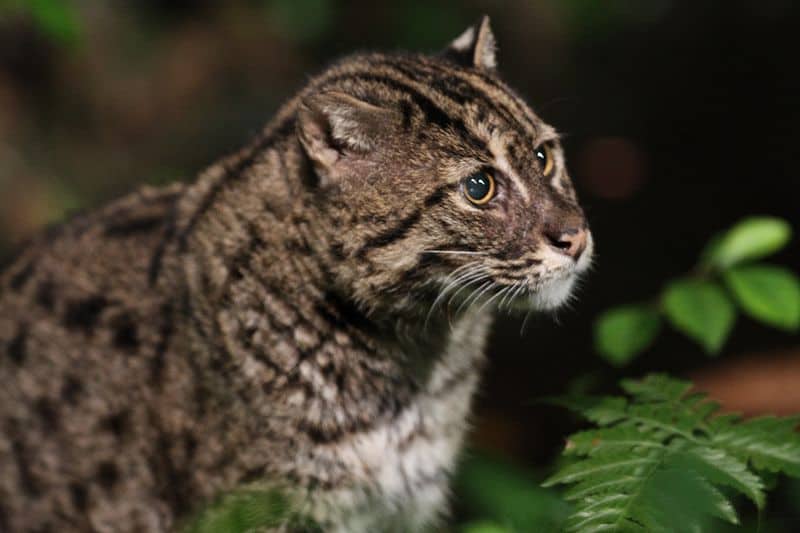
The fishing cat is now listed as an endangered species by the IUCN.
©Jacklee / Creative Commons – Original
Today, the Fishing Cat is listed by the IUCN as an animal species that is Endangered in its natural environment and could therefore be threatened with extinction in the near future. The biggest threat to the Fishing Cat is habitat loss, with many of their remaining pockets of wetland homes now considered to be protected areas (illegal activity in these areas, though, is still contributing to the loss of species in these regions). Conservation projects have been set up in a number of areas to protect both the Fishing Cats and their unique wetland habitats, and the hunting and trade of the species is now illegal. Poaching, however, still continues, with skins still being seized from markets in the Far East.
Fishing Cat Pictures
View all of our Fishing Cat pictures in the gallery.

How to say Fishing Cat in ...
Sources
- David Burnie, Dorling Kindersley (2011) Animal, The Definitive Visual Guide To The World's Wildlife / Accessed May 24, 2010
- Tom Jackson, Lorenz Books (2007) The World Encyclopedia Of Animals / Accessed May 24, 2010
- David Burnie, Kingfisher (2011) The Kingfisher Animal Encyclopedia / Accessed May 24, 2010
- Richard Mackay, University of California Press (2009) The Atlas Of Endangered Species / Accessed May 24, 2010
- David Burnie, Dorling Kindersley (2008) Illustrated Encyclopedia Of Animals / Accessed May 24, 2010
- Dorling Kindersley (2006) Dorling Kindersley Encyclopedia Of Animals / Accessed May 24, 2010
- David W. Macdonald, Oxford University Press (2010) The Encyclopedia Of Mammals / Accessed May 24, 2010
- Big Cat Rescue / Accessed May 24, 2010
- Fishing Cat Project / Accessed May 24, 2010
- IUCN Red List / Accessed May 24, 2010