M
Species Profile

Meerkat

Suricata suricatta

Kalahari's cooperative lookout
Olaf Leillinger / Creative Commons

Meerkat Distribution

Click a location to explore more animals from that region

Endemic Species
Loading map...

Size Comparison

Human 5'8"
Meerkat 11 in

Meerkat stands at 16% of average human height.

At a Glance

Wild Species
Also Known As Suricate, Suricato, Surikat, Erdmännchen
Activity Diurnal+
Lifespan 7 years
Weight 0.97 lbs
Status Least Concern
Did You Know?

Size: head-body length 24-35 cm; tail 17-25 cm; adult mass ~0.62-0.97 kg (Animal Diversity Web; Smithsonian/National Zoo).

Scientific Classification

The meerkat (Suricata suricatta) is a small, highly social carnivoran in the mongoose family, native to arid and semi-arid regions of southern Africa and known for cooperative breeding, sentinel behavior, and burrow living.

Kingdom
Animalia
Phylum
Chordata
Class
Mammalia
Order
Carnivora
Family
Herpestidae
Genus
Suricata
Species
Suricata suricatta

Distinguishing Features

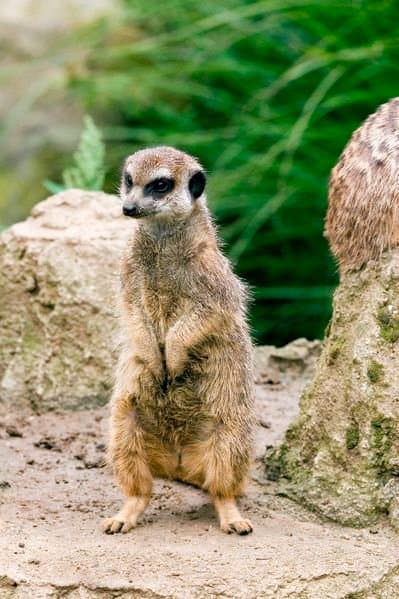
  • Small mongoose with a slender body and sandy-tan coat with darker back markings
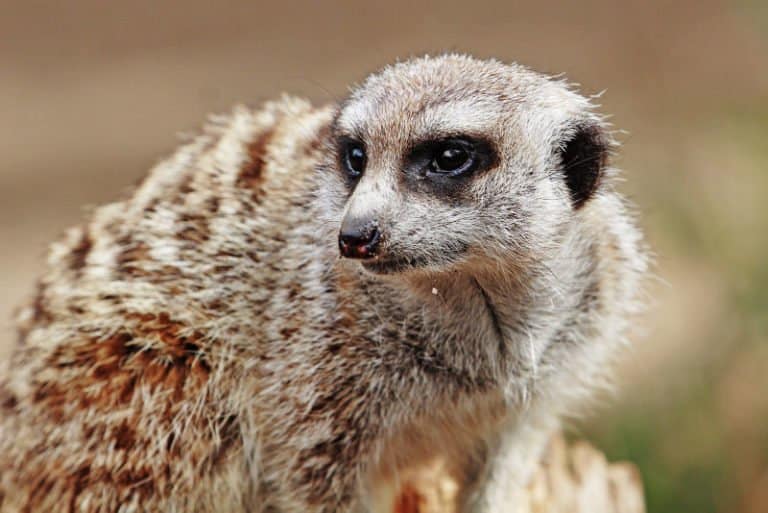
  • Dark eye patches and pointed muzzle
  • Often seen standing upright (“sentinel” posture)
  • Highly social: lives in groups (mobs) with cooperative care of young
  • Burrow-dwelling, adapted to arid environments

Physical Measurements

Height
11 in (10 in – 12 in)
Length
1 ft 7 in (1 ft 4 in – 1 ft 9 in)
Weight
2 lbs (1 lbs – 2 lbs)
Tail Length
8 in (7 in – 10 in)
Top Speed
20 mph
running

Appearance

Primary Colors
Secondary Colors
Skin Type Fur: short, dense guard hairs with lighter underfur; hairy tail; dark, sparsely furred paw pads with long digging claws.
Distinctive Features
  • Adult head-body length: 24-35 cm; tail length: 17-25 cm (species accounts: ADW/Kingdon).
  • Adult mass typically ~0.62-0.97 kg; seasonal and social-rank effects on body condition (field studies, Kalahari).
  • Dark eye patches reduce glare during diurnal, open-habitat foraging; large eyes adapted for daytime vigilance.
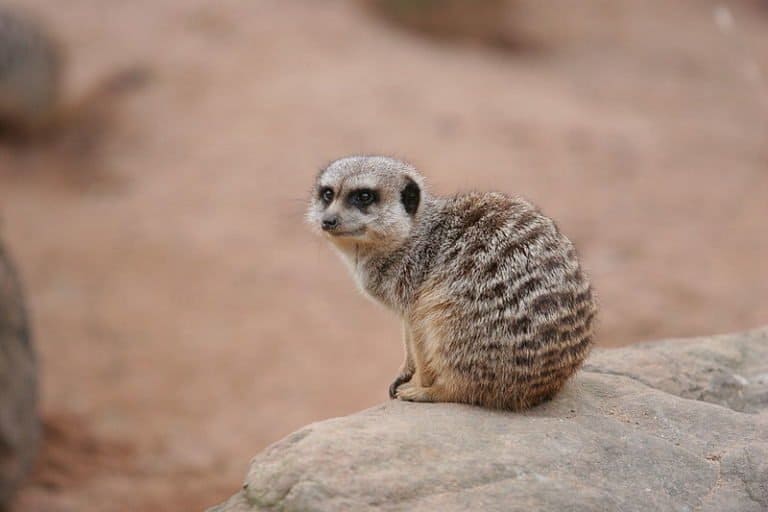
  • Back shows 6-8 darker transverse bands ('striping') aiding camouflage in arid grassland/scrub.
  • Long, non-prehensile tail used as counterbalance when standing sentinel; tail tip commonly black.
  • Forefeet with long, robust claws specialized for rapid excavation and maintaining extensive burrow systems.
  • Ears are small and can close against sand during digging; muzzle is narrow for probing prey in crevices.
  • Highly social 'mobs' with cooperative breeding; frequent upright sentinel posture near burrow entrances.
  • Diet primarily insects (notably beetles/larvae) plus other small prey (scorpions, small vertebrates) and occasional fruit/eggs; morphology supports active digging/foraging.
  • Longevity: commonly ~6-7 years in the wild; up to ~12-14 years in captivity (zoo and long-term study reports).

Sexual Dimorphism

Sexual dimorphism is weak. Adult males average only slightly larger/heavier than females, while dominant breeding females can equal or exceed males in mass; external differences are mostly reproductive anatomy rather than coloration.

  • Slightly higher average body mass and head size in many populations.
  • Visible scrotum; no distinctive sex-specific coat coloration.
  • Scent-marking prominent; anal scent gland present (as in both sexes).
  • Teats/mammae visible when lactating; abdomen may distend during pregnancy.
  • Dominant breeding females can be heavier than subordinate females and comparable to males.
  • No consistent sex-specific coat coloration; same dorsal banding and facial markings.

Did You Know?

Size: head-body length 24-35 cm; tail 17-25 cm; adult mass ~0.62-0.97 kg (Animal Diversity Web; Smithsonian/National Zoo).

They live in "mobs" (groups) often ~10-30 individuals, typically dominated by one breeding pair (Clutton-Brock et al., long-term Kalahari studies).

Meerkats take turns as sentinels; the guard often gives quiet "watchman's song" calls while scanning (Manser, behavioral call studies).

They are one of the clearest mammal examples of teaching: adults give pups progressively more challenging prey (e.g., live scorpions) (Thornton & McAuliffe 2006, Science).

Reproduction is fast for a carnivoran: gestation ~70 days; litters commonly 2-5 (reported range up to ~1-8) (species accounts; Kalahari field data).

Burrow systems can have many entrances and chambers and may extend roughly 1.5-2 m deep, buffering harsh desert heat and predators (field ecology descriptions).

Wild lifespan is often ~5-7 years; individuals in captivity can reach ~12-14 years (zoo and species-account records).

Unique Adaptations

  • Arid-habitat living via burrows: complex burrow systems provide stable microclimates (cooler by day, warmer by night) and refuge from predators and sandstorms-crucial in the Kalahari and other semi-deserts.
  • Specialized digging anatomy: long, curved foreclaws and strong forelimbs allow rapid excavation of prey and burrows; the tail aids balance when standing upright.
  • Dark periocular patches reduce glare: eye patches and facial patterning help cut sun glare and improve visual tracking in open habitats.
  • Flexible omnivorous carnivoran diet: primarily insects/other arthropods, but also small vertebrates, eggs, and plant matter-supporting survival in highly variable desert food conditions (diet studies and species accounts).
  • Advanced vocal communication: large repertoires of contact and alarm calls enable coordinated vigilance and group movement in open terrain (Manser and colleagues).
  • Risk-management hunting strategy for dangerous prey: adults often teach pups safe handling of venomous scorpions by progressively increasing difficulty (Thornton & McAuliffe 2006, Science).

Interesting Behaviors

  • Sentinel duty & coordinated alarms: one or more individuals stand upright on elevated posts, scanning and issuing graded alarm calls that vary with predator type/urgency (Manser, meerkat alarm-call research).
  • Cooperative breeding: a dominant pair produces most pups while helpers babysit, guard, and feed pups; helpers can increase pup survival and growth (Clutton-Brock and colleagues, Kalahari long-term studies).
  • Teaching pups to hunt: adults modify behavior (e.g., disabling prey, giving live prey) in response to pup begging/cues, guiding skill acquisition-especially with dangerous prey like scorpions (Thornton & McAuliffe 2006, Science).
  • Babysitting at the burrow: while most of the mob forages, one or more helpers stay behind to guard and care for pups, often fasting during the duty shift (documented in Kalahari field studies).
  • Foraging "spread" with constant contact calls: individuals dig for invertebrates and small vertebrates, keeping cohesion via vocalizations while moving across open ground (behavioral ecology observations).
  • Intense social grooming: frequent allogrooming reinforces bonds, reduces parasites, and helps maintain group cohesion in large mobs (general social-mammal and meerkat field descriptions).
  • Territoriality & intergroup conflict: neighboring mobs may engage in aggressive encounters and boundary patrols; dominance and access to breeding can be contested (Kalahari long-term behavioral observations).

Cultural Significance

Meerkats (Suricata suricatta) are a key species for southern African dryland conservation and Kalahari ecotourism. Long-term studies (Kalahari Meerkat Project) taught us about cooperative breeding, social dominance, communication, and teaching. They appear in films (Timon) and Meerkat Manor, shaping how people view African wildlife and social animals.

Myths & Legends

Name-origin lore: The word "meerkat" is sometimes said to mean "lake cat" in Afrikaans, a contrast often noted with its dry, desert habitats.

Mongoose-snake folklore (family-wide tradition): across Africa and South Asia, mongooses are celebrated in oral traditions as clever, fearless snake opponents; this reputation is often extended to meerkats in modern storytelling.

Ancient Indian fable tradition (mongoose moral tale): the story often translated as "The Brahmin and the Mongoose" (or "The Faithful Mongoose") uses a mongoose in a cautionary legend about acting in haste.

Modern media made the meerkat (Suricata suricatta) a "desert sentry" symbol of watching and group duty. This legend grew from real sentry behavior and stories of working together.

In parts of southern Africa, meerkats (Suricata suricatta) appear in local stories and folk tales as burrow-dwelling "little guards" of the plains, named for standing straight and always watching.

Conservation Status

LC Least Concern

Widespread and abundant in the wild.

Population Stable

Protected Under

  • Occurs in multiple protected areas across its range; conservation is primarily delivered through protected-area regulations and national/provincial wildlife laws in range states (varies by jurisdiction).
  • Not listed under CITES Appendices (international trade controls generally not applicable at the species level).

Life Cycle

Birth 3 pups
Lifespan 7 years

Lifespan

In the Wild
5–10 years
In Captivity
10–14 years

Reproduction

Mating System Polygynandry
Social Structure Cooperative Breeder
Breeding Pattern Long Term
Fertilization Internal Fertilization
Birth Type Internal_fertilization

Groups have a dominant breeding pair; the dominant female usually monopolizes reproduction, but dominant males and subordinates may obtain matings and extra-group paternity occurs. Nonbreeding relatives help babysit, guard, and feed pups.

Behavior & Ecology

Social Mob Group: 20
Activity Diurnal, Matutinal, Vespertine
Diet Insectivore Scorpions (notably Parabuthus spp.)

Temperament

Highly cooperative and vigilant; individuals vary from bold sentinels to cautious foragers (Clutton-Brock et al., 1999-2002).
Territorial toward neighboring mobs; intergroup encounters can escalate to coordinated aggression (Clutton-Brock et al., 1999, Proc. R. Soc. B).
Strong dominance hierarchy with reproductive skew: dominant female produces most litters; subordinates often suppressed/evicted (Clutton-Brock et al., 2001, Science).
High alloparental care and teaching-like provisioning: helpers adjust prey type/size to pup begging ability (Thornton & McAuliffe, 2006, Science).
Risk-sensitive: increased vigilance and tighter cohesion under predator pressure; bolder individuals more often initiate sentinel duty (Kalahari Meerkat Project literature).

Communication

Alarm calls with predator-type/urgency information; receivers adjust escape responses Manser, 2001, Behav. Ecol. Sociobiol.
Sentinel "watchman's song"/surveillance calls advertising guarding; reduce group vigilance costs Manser, 1999-2004 studies
Close contact calls during foraging to maintain cohesion in dispersed groups Manser et al., early 2000s
Recruitment/mobbing calls drawing group members to harass predators Kalahari field studies
Pup begging calls that elicit provisioning; call structure influences helper feeding decisions E.g., Thornton & McAuliffe, 2006, Science
Scent marking using anal gland secretions and feces at latrines to mark territory Mammalian carnivore field studies
Body postures (bipedal sentinel stance, piloerection) signaling vigilance or aggression to groupmates and rivals.
Tail and head-flagging during movement to aid visual cohesion in open habitat.
Tactile social bonding: grooming and huddling at burrows, especially during cool mornings/evenings.
Burrow-use patterns communicate safety: rapid retreat/entry cascades transmit threat information through the group.

Habitat

Biomes:
Desert Hot Savanna Temperate Grassland
Terrain:
Plains Plateau Rocky Sandy
Elevation: Up to 4921 ft 3 in

Ecological Role

Social, burrow-dwelling mesopredator/insectivore of arid and semi-arid savannas that suppresses arthropod populations and intermittently preys on small vertebrates.

Regulation of invertebrate (including scorpion and termite) populations Bioturbation and soil turnover via frequent digging, which can influence aeration and nutrient mixing Trophic support as prey for larger predators (e.g., raptors, jackals), linking invertebrate biomass to higher trophic levels

Diet Details

Other Foods:
Wild fruits and berries Bulbs, tubers and roots Seeds

Human Interaction

Domestication Status

Wild

Suricata suricatta (meerkat) is not domesticated. It is a wild carnivore kept in zoos, research and rehab centers, and sometimes as an exotic pet. Captive breeding exists but no domestication. Meerkats keep wild behaviors—strong group bonds, digging and burrowing, scent-marking, and biting—so close living with people is hard. Human interactions include ecotourism, research, zoos, limited pet trade, and rehab/conflict.

Danger Level

Moderate
  • Bites and scratches (sharp canines; defensive aggression likely if stressed, cornered, or improperly handled)
  • Zoonotic disease risk typical of small carnivores (notably rabies exposure risk in regions where rabies circulates in mongooses/carnivores; requires strict vaccination/quarantine protocols where applicable)
  • Parasites and enteric pathogens (risk increases with poor hygiene and improper diet/husbandry)
  • Behavioral risk in homes: destructive digging, strong odor/scent-marking, and stress-related aggression due to unmet social/group needs

As a Pet

Not Suitable as Pet

Legality: Whether you can own meerkats (Suricata suricatta) depends on the place. They are often called exotic or wild, illegal or only allowed with permits, and need care rules and vet checks.

Care Level: Expert Only

Purchase Cost: $1,500 - $6,000
Lifetime Cost: $15,000 - $50,000

Economic Value

Uses:
Ecotourism/wildlife viewing Zoological exhibition and public education Scientific research (behavior, cooperation, communication, disease ecology) Exotic pet trade (limited, controversial/regulated) Media/branding value (charismatic species)
Products:
  • tourism revenue at wildlife destinations and guided viewing experiences
  • zoo attendance/education programming
  • research outputs (datasets, publications; non-consumptive value)
  • captive-bred animals sold/transferred where legal

Relationships

Predators 8

Martial eagle Polemaetus bellicosus
Tawny eagle Aquila rapax
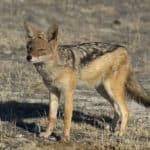
Black-backed jackal
Black-backed jackal Canis mesomelas
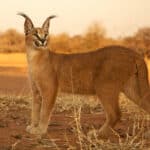
Caracal
Caracal Caracal caracal
African wildcat Felis lybica
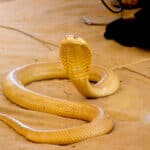
Cape cobra
Cape cobra Naja nivea
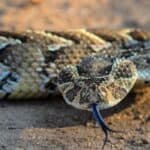
Puff adder
Puff adder Bitis arietans
Rock monitor Varanus albigularis

Related Species 5

Yellow mongoose Cynictis penicillata Shared Family
Common dwarf mongoose Helogale parvula Shared Family
Slender mongoose Galerella sanguinea Shared Family
Banded mongoose Mungos mungo Shared Family
Egyptian mongoose Herpestes ichneumon Shared Family

Ecological Equivalents 5

Animals that fill a similar ecological role in their ecosystem

Yellow mongoose Cynictis penicillata Small, diurnal, burrow-using carnivoran of open, arid habitats in southern Africa. Overlaps in prey base (invertebrates and small vertebrates) and is exposed to similar aerial and terrestrial predators. Similar body size (typically <1 kg) and ground-foraging behavior in open country.
Common dwarf mongoose Helogale parvula Ecologically convergent social mongoose: group-living with cooperative vigilance and sentinel behavior, diurnal foraging for insects and small vertebrates, and use of burrows or termite mounds for refuge — paralleling meerkat cooperative anti-predator strategies such as sentinel calling and group defense.
Banded mongoose Mungos mungo Social, group-living mongoose with cooperative breeding and coordinated foraging; occupies savanna/woodland mosaic habitats and consumes many of the same prey categories (insects, other invertebrates, and small vertebrates), filling a comparable small-mesocarnivore niche despite a general tendency to occur in wetter habitats.
Cape ground squirrel Xerus inauris Arid-zone, burrow-dwelling, diurnal, group-living mammal that relies heavily on vigilance in open habitats. Shares the same landscape-level constraints (predation risk in open terrain) and a similar refuge strategy (complex burrow systems), although it is primarily herbivorous/omnivorous rather than carnivorous.
Bat-eared fox
Bat-eared fox Otocyon megalotis A dryland canid that primarily eats insects, forages on the ground, and is active day and night. It occupies a similar insectivorous predator role in southern African savannas but is larger and does not form cooperative groups like meerkats.

Classification

The meerkat (Suricata suricatta) is a small species of foraging mammal that is found inhabiting the harsh conditions of the open and arid, semi-desert plains in southern Africa. Meerkats differ from the other mongoose species by being unusually sociable animals. Most mongooses are more solitary while meerkats are one of only 3 other species known to live in groups larger than pairs. There are three different sub-species of meerkats that are found in varying geographic locations and although they are very similar in appearance, they differ slightly in their fur colouration and markings. In addition to the suricates, (Suricata suricatta) there is the slender-tailed meerkat and the grey meerkat. All however, live in highly organised communities known as gangs or bands, that rely on one another for their survival in such hostile conditions as whilst the majority of the group is out foraging for food, others stand on guard to keep a watchful eye out for approaching predators.
Anatomy and Appearance

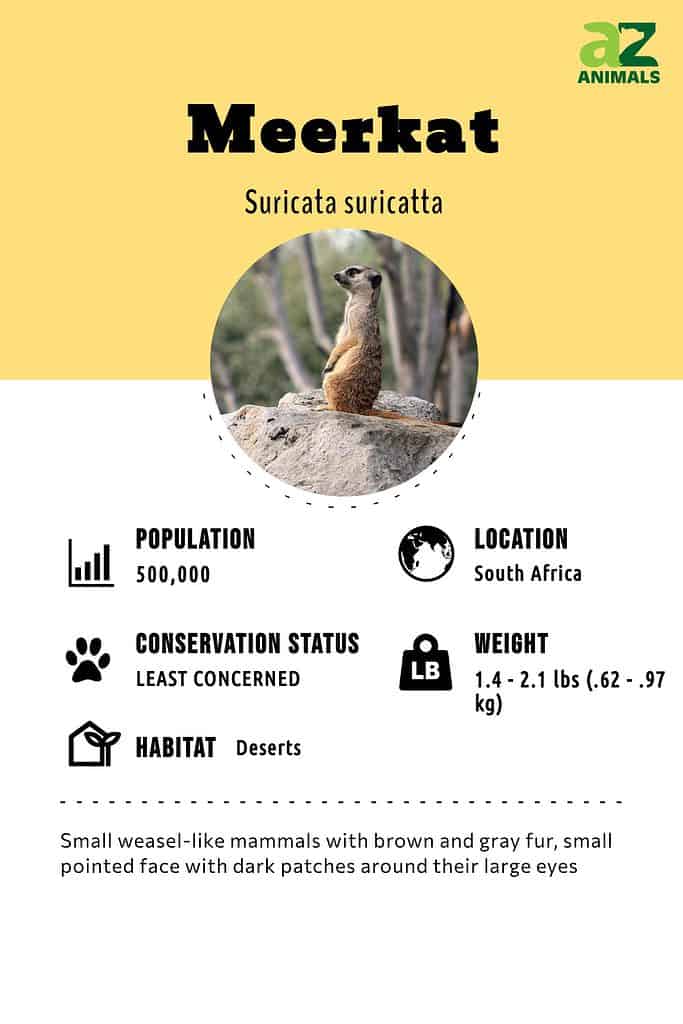
The meerkat is a small-sized animal that has a long and slender body with a long and light but black-tipped tail that can almost double the animal’s total length. Meerkats are sandy to light brown in colour with eight darker stripes on their back, markings on their sides (which are unique to the individual) and a lighter face and underside. They have elongated muzzles with black noses and dark-coloured bands around their eyes. Meerkats are animals with long, sharp claws on their front paws that are curved and can grow up to 2cm long and help them to both dig their burrows and to find small animals that are buried beneath the soft sand. The fur of the meerkat has actually adapted remarkably to the differing desert conditions, not only helping to keep the animal cool during the boiling hot days but also acting as a layer of insulation to keep it warm during the freezing-cold winter nights.
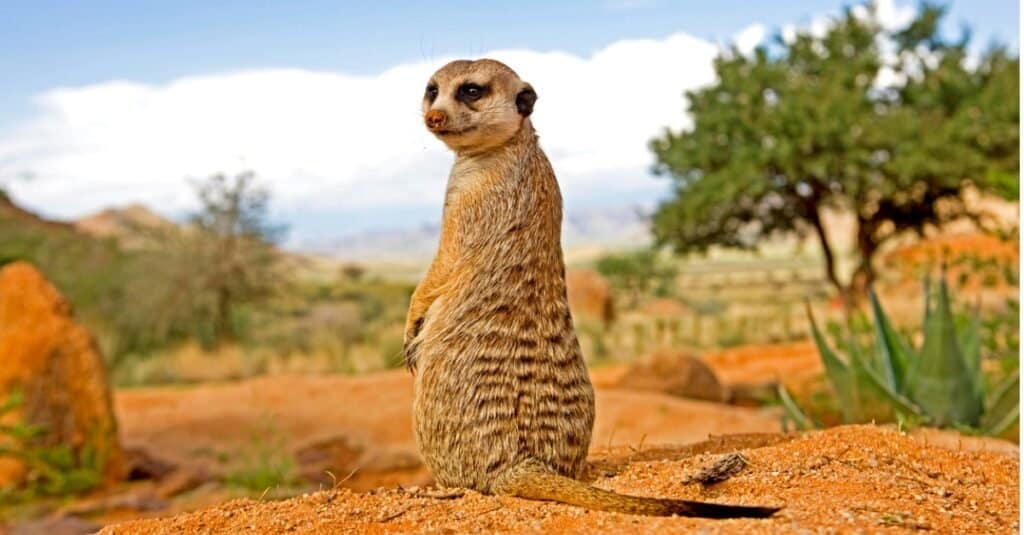
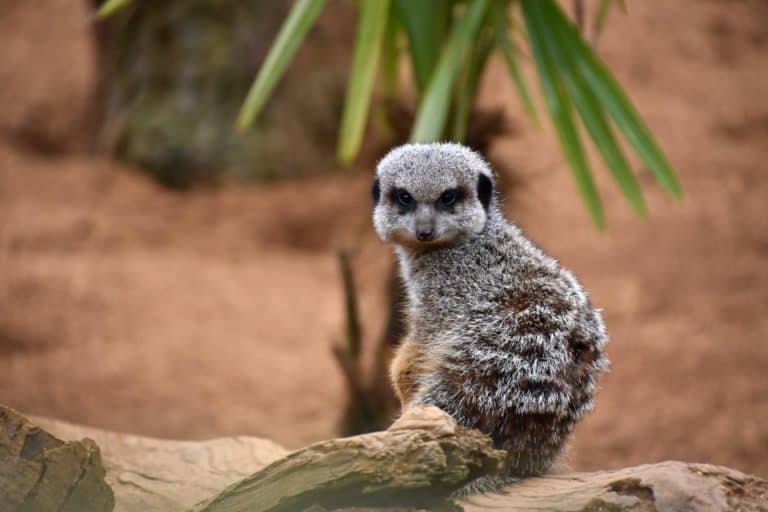
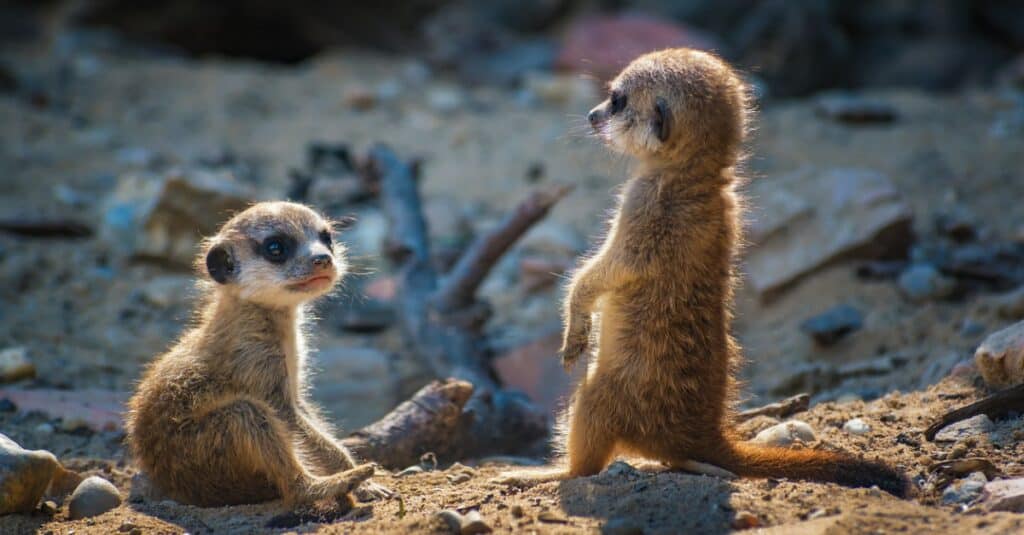
meerkat looking back towards camera

Meerkats appoint guards to be on the watch for predators.

Evolution

Meerkats belong to the mongoose family (Herpestidae) which is a branch of Feliformia – the cat-like carnivores. This includes all species of cats, hyenas, civits and mongooses. Mongooses evolved from cats nearly 45 million years ago – with the first modern mongoose appearing over 11.5 million years ago.

Suricata Suricatta major, an extinct meerkat whose fossilized remains have been found in the southern tip of Africa, is the direct ancestor of modern meerkats. This extinct meerkat was quite similar to the banded mongoose from which it evolved. As the climate changed and warmed, meerkats made adjustments to adapt successfully to their new environment.
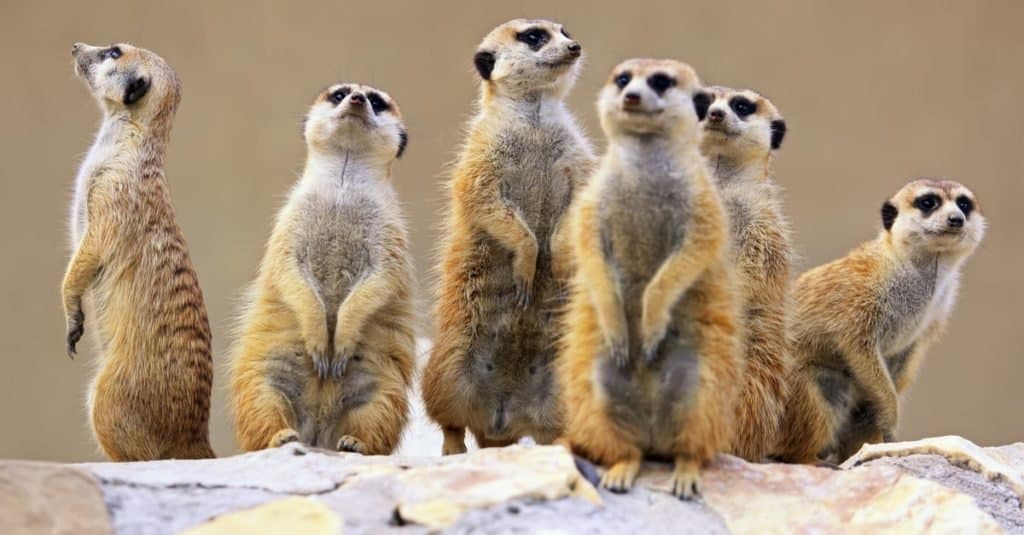
Cutest Animals_ Meerkat

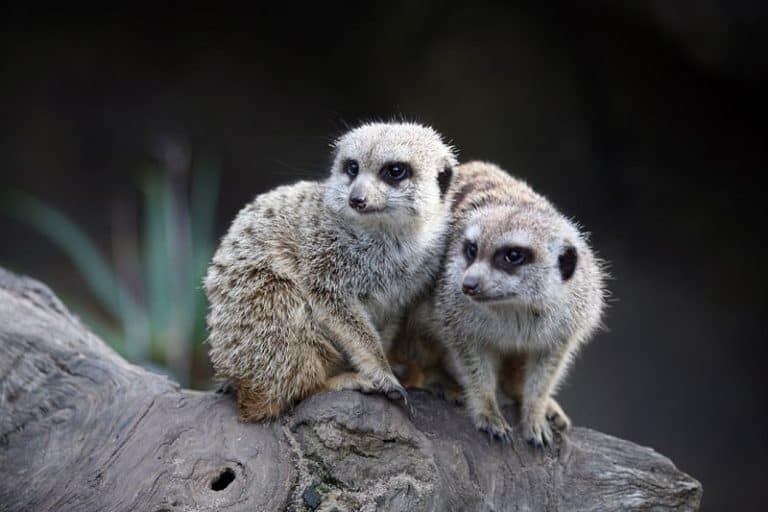
Meerkats are highly sociable animals that inhabit territories in the desert in groups that usually contain between 10 and 30 individuals

Distribution and Habitat

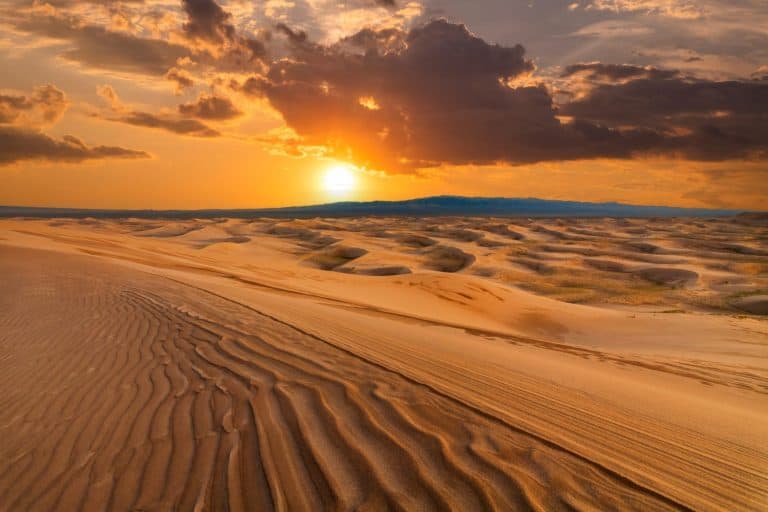
The meerkat is an animal found in southern and western Africa inhabiting the dry and hostile scrublands of the Kalahari Desert. Spanning five different countries in southern Africa from Angola to South Africa, meerkats are found throughout this vast, arid region foraging for food on the ground during the day and retiring into their immense burrows in the sand at night. Conditions in the Kalahari Desert are incredibly extreme with temperatures reaching up to 40 degrees Centigrade in the summer (with a sand temperature of 70 degrees), and falling well below zero down to -10 degrees during the bitter, winter nights. This area of Africa has an incredibly low level of annual rainfall with only a rare, small amount falling generally between January and April and after which, the Kalahari briefly transforms into a well-vegetated and life-filled region before the cooler winter months set in.

Behaviour and Lifestyle

Unlike all but three other Mongoose species, the meerkat is a highly sociable animal that inhabits territories in the desert in groups that usually contain between 10 and 30 individuals (although much larger bands are not uncommon in areas where there is an ample supply of food), and consist of three or four family units of a male and female pair, with their young. After emerging from their burrow to sunbathe in the early morning sun, the majority of the band goes off to forage for food while others either babysit the young, or act as guards. By standing upright on their hind legs and tails on the top of mounds and in bushes, meerkat guards are able to have a good vantage point to watch out for approaching predators, particularly from the sky. One of a series of different alarm calls will then be sounded to alert the rest of the group what the danger is, often causing the whole band to dive into their underground burrow to hide.

You can check out some incredible facts about meerkats.
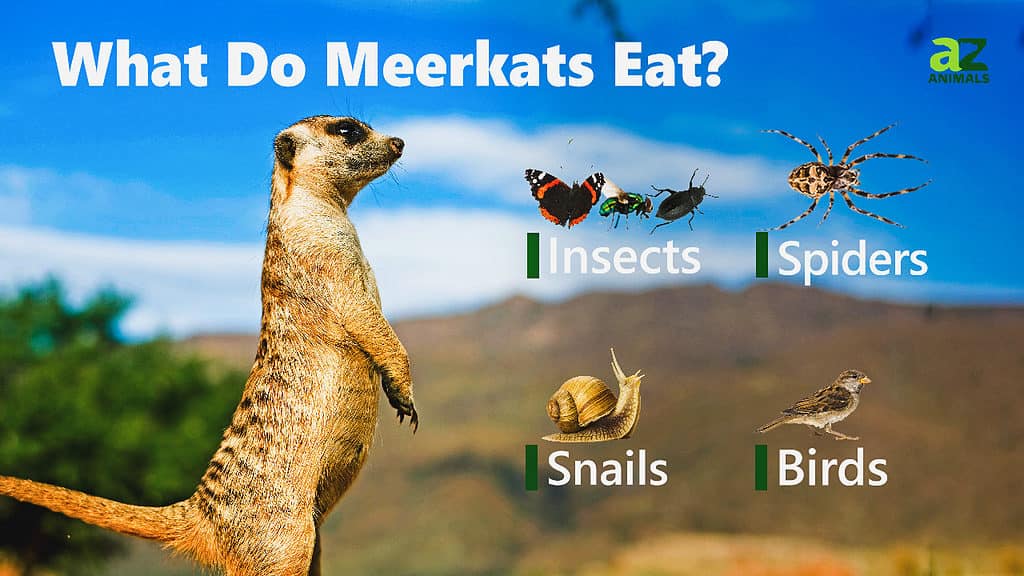
What Do Meerkats Eat?

Meerkat pups eat solid food, like insects, as young as three weeks old, subsisting on mother’s milk for the first few weeks of life.

Reproduction and Life Cycles

Although there may be a number of breeding pairs in one band, meerkat society is generally dominated by one male and female pair. Young meerkats are usually born in November after a gestation period that lasts for around 11 weeks. Having mated with her partner at the start of the summer, the female meerkat gives birth to between 2 and 5 small kits in a grass-lined chamber in the burrow, that are born blind and without their full coat of fur. Unlike with the rearing of numerous other small mammal species, both females and males tend to their young with males and siblings known to help to teach the young meerkats the skills of surviving in the surrounding desert. Whilst the majority of the band is out foraging for food, the young meerkats never stray far from the den and whilst playing in the hot sand, are kept a watchful eye on by an appointed babysitter. Meerkats can live for up to 10 years in the wild but have been known to live for longer in captivity.
Diet and Prey

The meerkat is a carnivorous animal which means that despite its small size, it only forages for and eats small animals in order to gain all of the nutrition (and most of the moisture) that it needs to survive. Like other mongoose species, meerkats have an excellent sense of smell which is used to sniff out potential prey that is lurking just under the surface of the sand. Once detected, meerkats then used their long and sharp front claws to dig out their prey, with the majority of their diet being made up of insects and other small invertebrates, along with also eating larger animals such as lizards and rodents. Due to the fact that meerkats are small in size and have adapted to living in such a harsh environment, they must spend a lot of their waking hours foraging for food as they are known to lose around 5% of their body weight during the night and must therefore ensure that they have enough to eat every day.
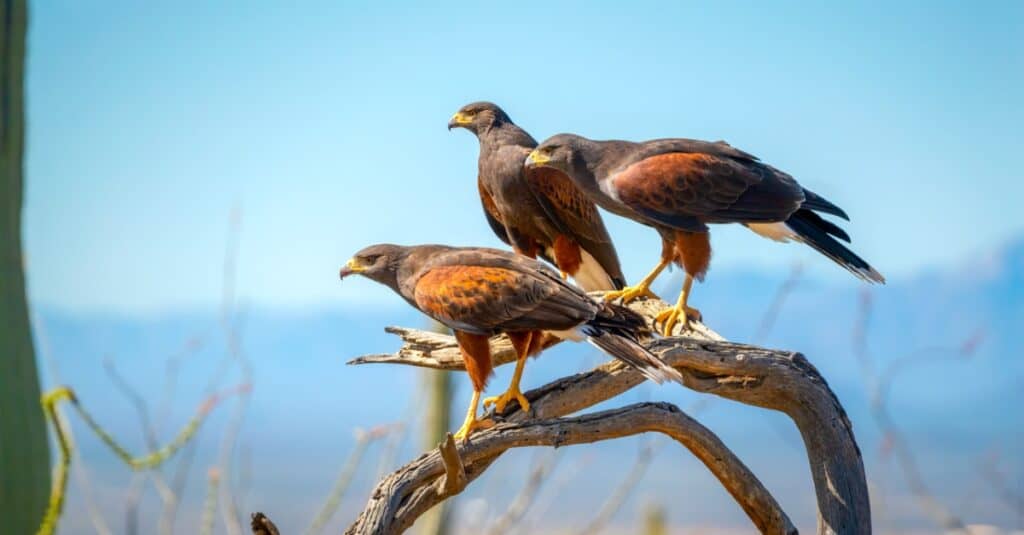
harris hawks perched in tree

Hawks and other birds of prey are the main predators of meerkats.

Predators and Threats

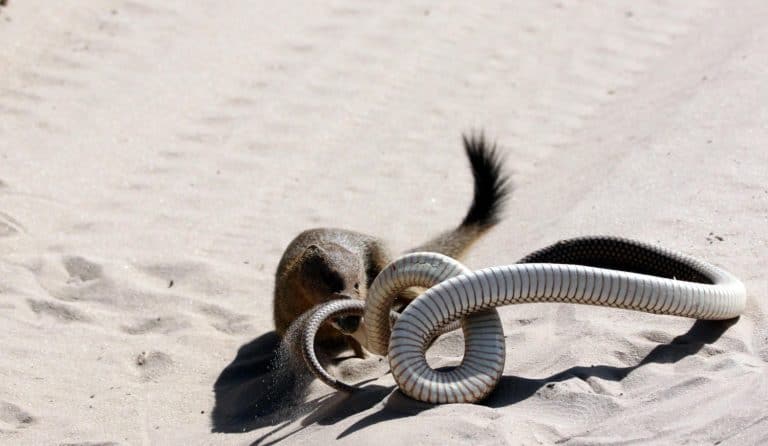
Due to the small size of the meerkats, they are natural prey to numerous animal species that are both on the ground and in the air. The biggest threat to meerkats are birds of prey such as hawks and eagles that can spot these animals from high above their heads, along with ground-dwelling predators such as snakes that hunt them on the ground. In order to try and protect themselves from being so vulnerable in their open and arid surroundings, meerkats adopt the safety-in-numbers tactic and ensure that there is always an individual on guard to warn the rest of the group of any approaching danger. In places that are closer to growing human settlements and near areas where domestic animals are grazed, meerkats have been known to contract both bovine diseases and rabies that can affect whole populations of these adaptable and otherwise resilient animals.
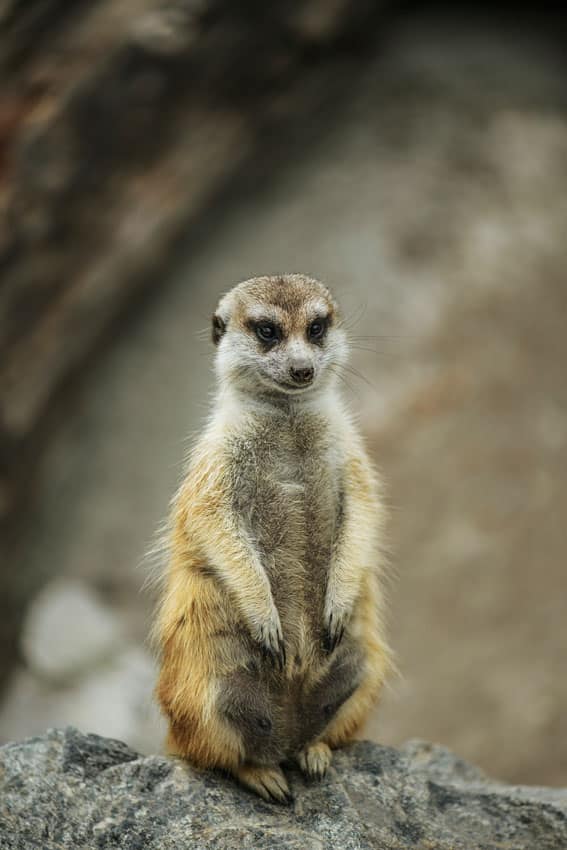
Meerkat guards will sound the alarm with howls and barks to warn the group of approaching danger.

Interesting Facts and Features

If the individual meerkat on guard spots approaching danger they will sound the alarm to the rest of the group. Meerkats are known to use a wide range of vocal calls to communicate with one another sounding long howls to warn the rest of the band of an approaching bird of prey and using short double-barks to alert them of a predator nearing the group on the ground. The individual territory of a meerkat group covers a large enough area to ensure that the band has everything they need to be most successfully survive. This includes areas of both hard and soft sand as although the hard sand provides the perfect ground for building their tunnels in, it requires more energy for meerkats to forage for food in it too. Digging in the softer sand requires less effort and therefore means that they can conserve more energy for other activities.
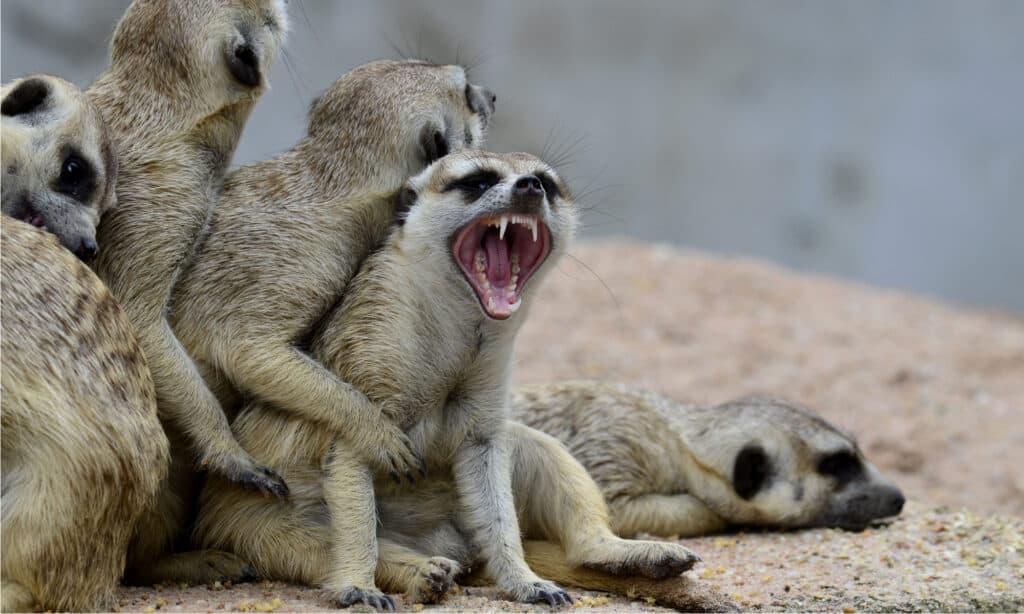
Meerkat Family

The real delights into meerkat life were displayed in the BBC series Meerkat Manor.

Relationship with Humans

The meerkat is one of those species that has always fascinated people with their characteristic behaviours have made them one of Africa’s most iconic small mammal species. The real delights into meerkat life were displayed in the BBC series Meerkat Manor which involved the following and filming of one band of meerkats in the Kalahari Desert. Although they are not threatened by human activity as drastically as a number of Africa’s other unique species, meerkats have been susceptible to contracting diseases from other animals which can have devastating implications on local populations.

Conservation Status and Life Today

Today, the meerkat is an animal listed by the IUCN as being of Least Concern from being extinct in its natural environment in the near future. Although they are widespread and common throughout much of their natural range, populations in certain areas can be affected by the lack of rainfall or increasing numbers of their natural predators. Populations across southern Africa however, appear to be generally stable with large numbers of meerkats also found in a few of the big national parks.

Similar Animals…

  • 10 Incredible Prairie Dog Facts
  • Mongoose vs Meerkat: 5 Key Differences
  • 10 Incredible Mongoose Facts
View all 330 animals that start with M
How to say Meerkat in ...
Bulgarian
Сурикат
Catalan
Suricata
Czech
Surikata
Danish
Surikat
German
Erdmännchen
English
Meerkat
Esperanto
Surikato
Spanish
Suricata suricatta
Finnish
Nelisormimangusti
French
Suricate
Hebrew
סוריקטה
Croatian
Merkat
Hungarian
Szurikáta
Italian
Suricata suricatta
Japanese
ミーアキャット
Latin
Suricata suricatta
Dutch
Stokstaartje
English
Surikat
Polish
Surykatka
Portuguese
Suricata
English
Suricată
Swedish
Surikat
Turkish
Mirket
Chinese
狐獴

Sources

  1. David Burnie, Dorling Kindersley (2011) Animal, The Definitive Visual Guide To The World's Wildlife / Accessed December 5, 2008
  2. Tom Jackson, Lorenz Books (2007) The World Encyclopedia Of Animals / Accessed December 5, 2008
  3. David Burnie, Kingfisher (2011) The Kingfisher Animal Encyclopedia / Accessed December 5, 2008
  4. Richard Mackay, University of California Press (2009) The Atlas Of Endangered Species / Accessed December 5, 2008
  5. David Burnie, Dorling Kindersley (2008) Illustrated Encyclopedia Of Animals / Accessed December 5, 2008
  6. Dorling Kindersley (2006) Dorling Kindersley Encyclopedia Of Animals / Accessed December 5, 2008
  7. David W. Macdonald, Oxford University Press (2010) The Encyclopedia Of Mammals / Accessed December 5, 2008
  8. Meerkat Information / Accessed December 5, 2008
  9. About Meerkats / Accessed December 5, 2008
  10. Meerkat Conservation / Accessed December 5, 2008
A-Z Animals Staff

About the Author

A-Z Animals Staff

AZ Animals is a growing team of animals experts, researchers, farmers, conservationists, writers, editors, and -- of course -- pet owners who have come together to help you better understand the animal kingdom and how we interact.
Connect:

Thank you for reading! Have some feedback for us?


Meerkat FAQs (Frequently Asked Questions)

Meerkats are Carnivores, meaning they eat other animals.