
Quick Take
- Over 1,000 US species must grow wings to successfully complete their annual reproduction cycle.
- Crazy ants form super colonies with 20 queens, creating an extreme infestation risk for electrical equipment.
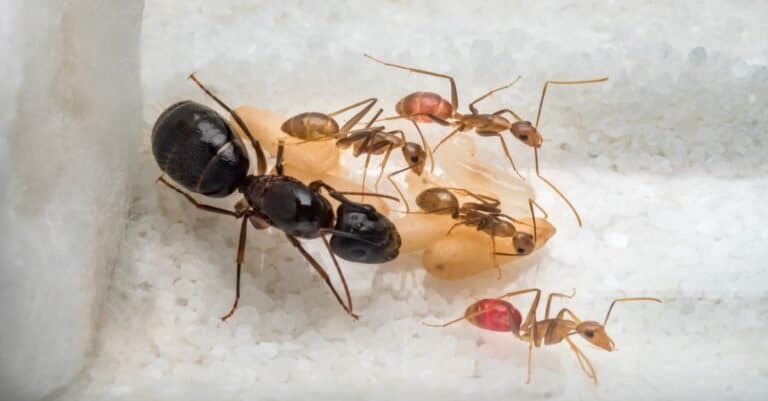
- White-footed ants ignore crumbs and feed on sterile worker eggs.
- Targeting the breeding colony is a mandatory step to permanently stop the winged ant life cycle.
Ants with wings are capable of starting new colonies and causing a nuisance for homeowners and businesses. Imagine swarms of these winged ants congregating around windows, doors, and lights during certain seasons. It’s not a pretty sight. But do not fret; with the right knowledge and tools, you can effectively identify, prevent, and remove these winged pests from your property. In this article, we delve into the mysterious world of winged ants, uncovering fascinating facts and providing you with practical solutions to keep them at bay.
It’s a common misconception that only a specific type of ant can grow wings and fly. In reality, a wide variety of ants, including fire ants, carpenter ants, sugar ants, and protein ants, among others, have the ability to take flight during certain stages of their life cycle for a certain period of time.
Annually, many of the 1,000 known species of ants found in the United States grow wings and are ready to embark on a journey of mating and reproduction. But it’s not all fun and games: for the males, their duty ends with mating, while for the females, the post-mating flight is a solo journey to find a suitable nesting site.
Once a location is found, the new queen tears off her wings and begins the arduous task of starting a new colony. It’s a brutal process, but it’s the circle of life for these winged ants. Let’s explore some of the most common ant species with wings found in the US.
Carpenter Ants
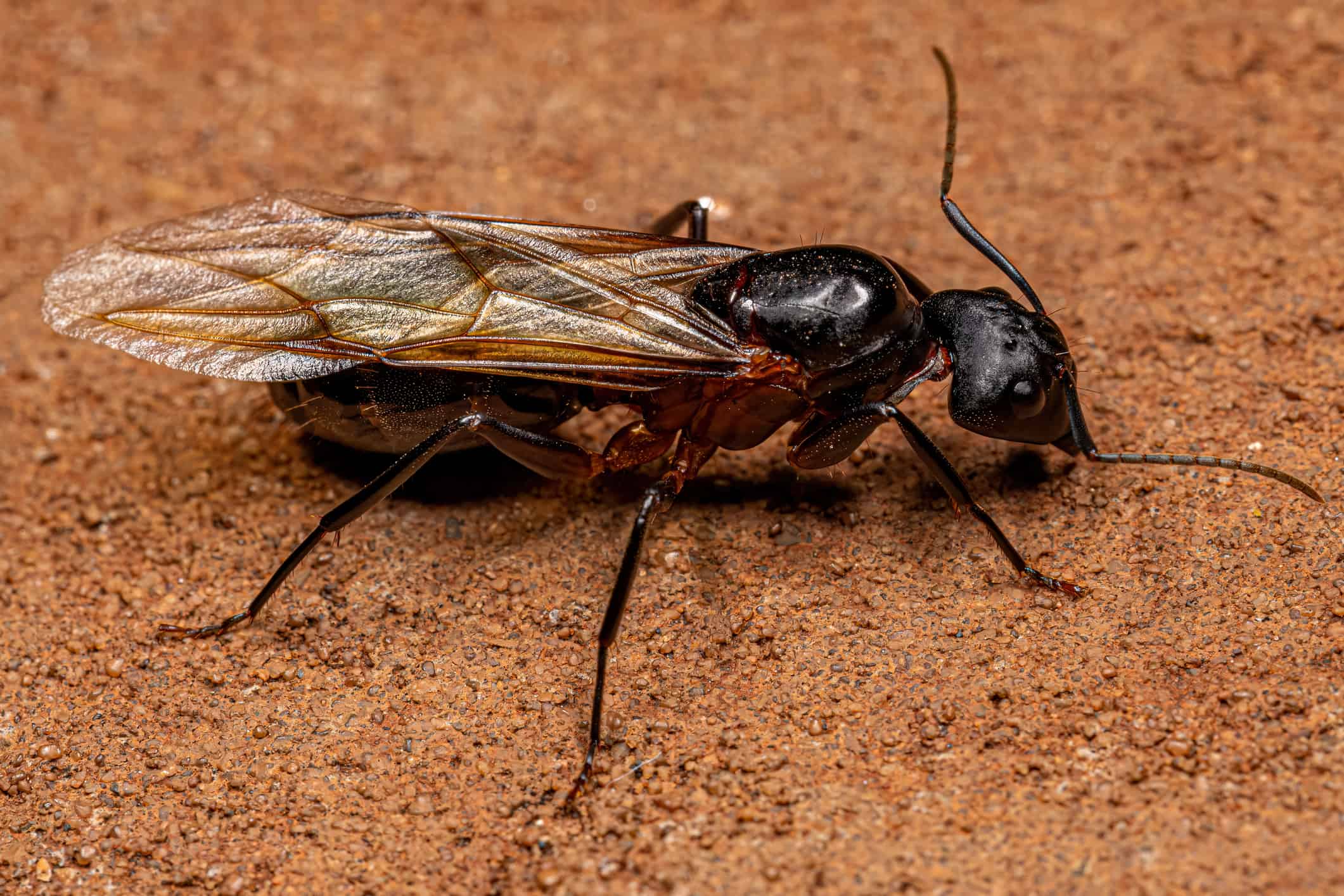
Carpenter ants are a force to be reckoned with, not just because of their size – measuring up to 5/8 of an inch – but also because of their destructive potential, which is second only to termites. On top of that, imagine them with wings. These winged ants have the ability to chew and tunnel through moist wood to create their nests, causing significant damage to the structure of a building.
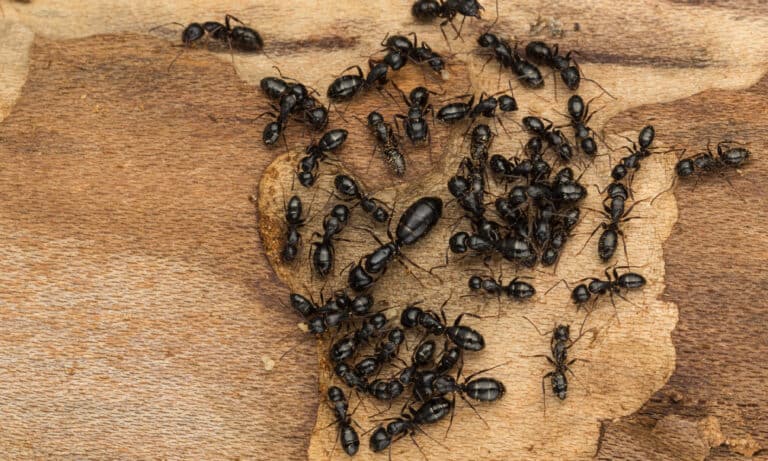
Carpenter ants with wings come in various colors, including red, black, brown, and even a combination of these shades, making them easy to spot. However, identifying an infestation can be a bit trickier.
Keep an eye out for telltale signs such as pieces of insulation scattered or sawdust-like shavings inside your home or business. These signs indicate that winged ants have been busy tunneling and may be living within your walls.
Fun Facts
- Some carpenter-winged ants have a unique defense mechanism where they will blow themselves up.
- They can bite in defense if they feel threatened.
- While carpenter ants with wings are known to chew through wood, they do not consume it.
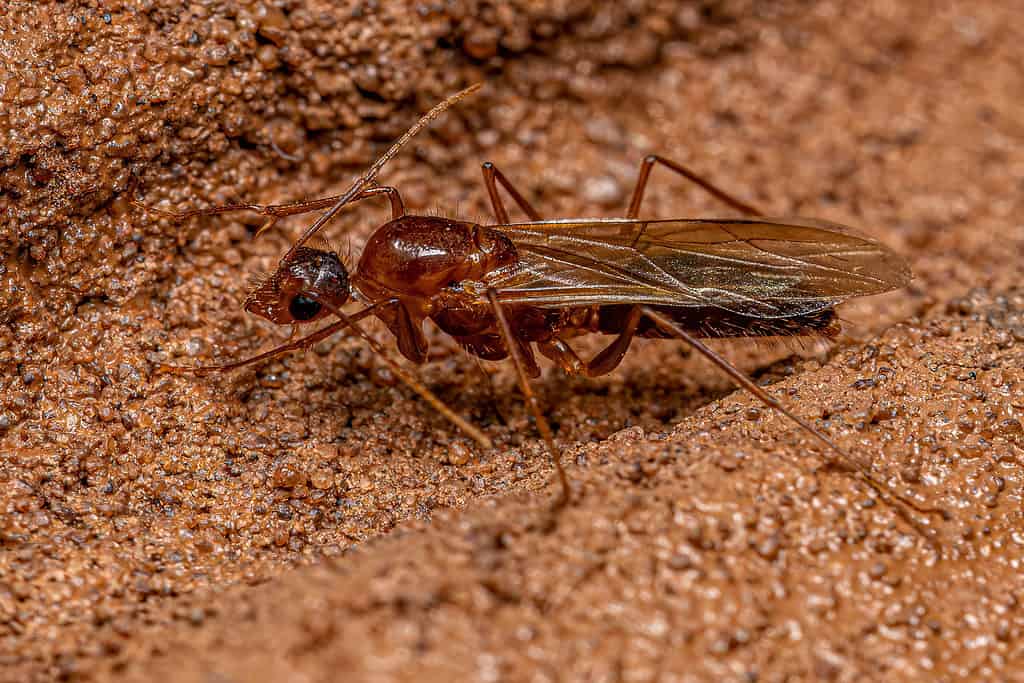
Winged carpenter ants have the ability to tunnel through moist wood to create their nests, causing significant damage to buildings.
©iStock.com/ViniSouza128
Fire Ants
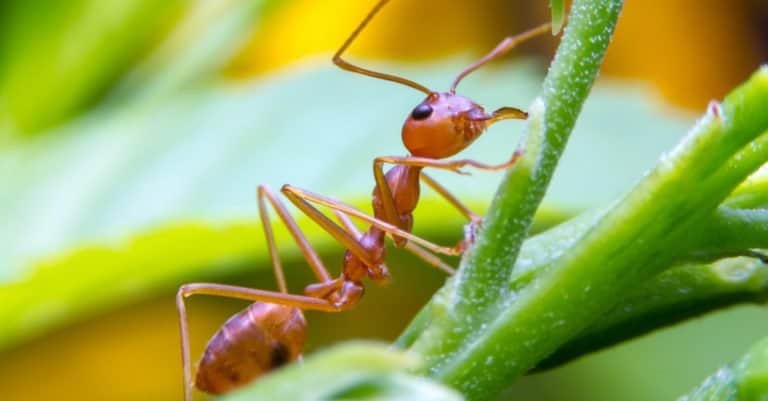
Fire ants, known for their vibrant crimson color, are a species native to South America. These ants can grow wings and have become a common sight in the southern and southwestern regions of the United States, where they are famous for their painful sting that can cause allergic reactions. They are easily recognizable by their fiery appearance.
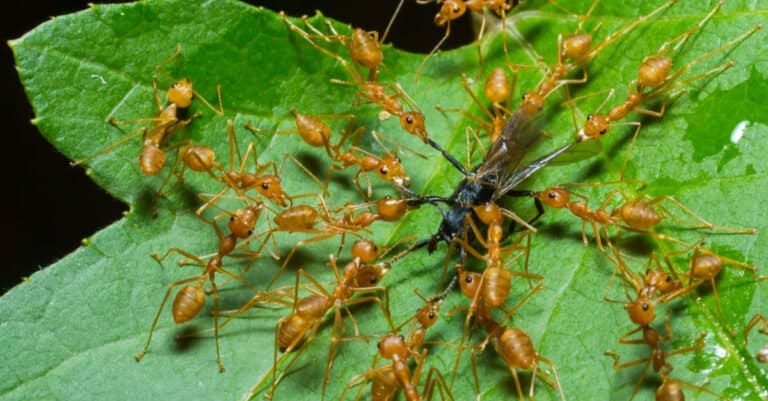
During floods, these ants have an intriguing survival strategy: they congregate to create a floating mass and survive on water surfaces. However, this can be dangerous for humans, as if the raft is bumped into, the ants will swarm and sting.
Fun Facts
- Over 280 different species of fire ants exist, and almost all of them grow wings during a certain time of their life.
- These winged ants are known for their aggressive behavior and ability to kill small animals.
- Fire ants have impressive strength, able to lift 20 times their own body weight.
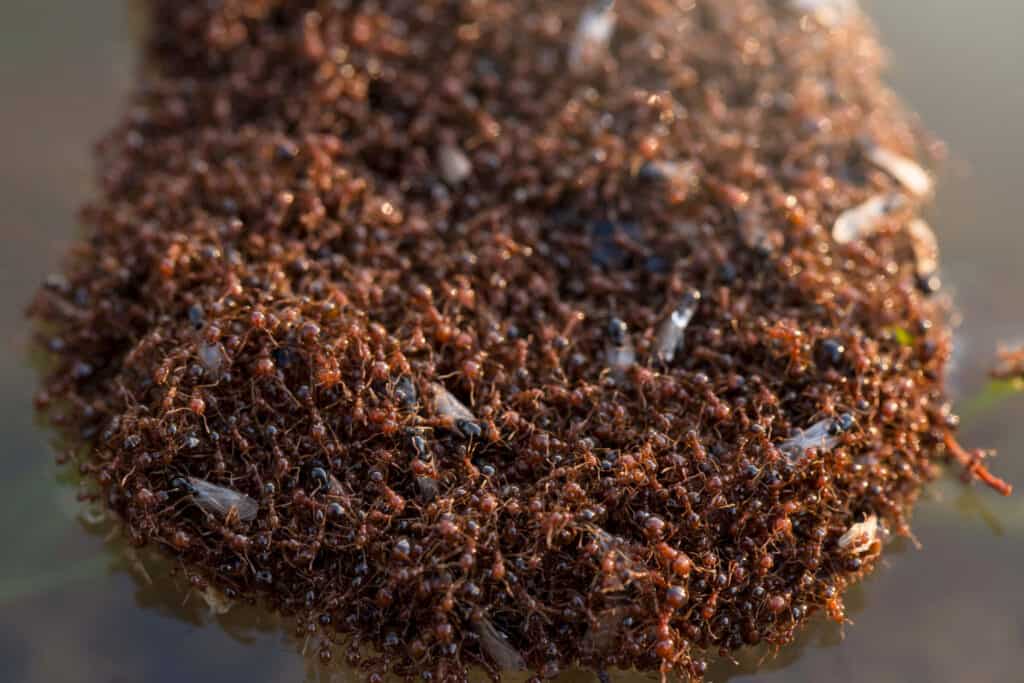
During floods, fire ants will congregate to create a floating mass to remain alive on water surfaces.
©Jennifer White Maxwell/Shutterstock.com
Crazy Ants
The frenetic movement of crazy ants may seem chaotic, but there’s a method to their madness. Their zigzag pattern makes them easy to identify, and they work together in unison to transport food pieces that a single ant couldn’t manage on its own. They use a division of labor, with navigators and carriers working together to transport the food.
Winged crazy ants are considered to be smarter than the average ant. They create super colonies, which can comprise up to 15 to 20 queens, each having the potential to establish colonies. This makes them particularly difficult to control. If you spot a single crazy ant with wings in your home, there is likely a nearby super colony that needs to be addressed.
Another thing to keep in mind is that crazy ants are strangely attracted to electrical equipment. As a result, they can damage wiring, so it is essential to act quickly if you suspect an infestation.
Fun Facts
- These winged ants have a unique colony structure, with multiple queens in each nest.
- Crazy ants can cause significant damage to other species.
- They can also be a nuisance to humans, as they can invade homes and spread very quickly.
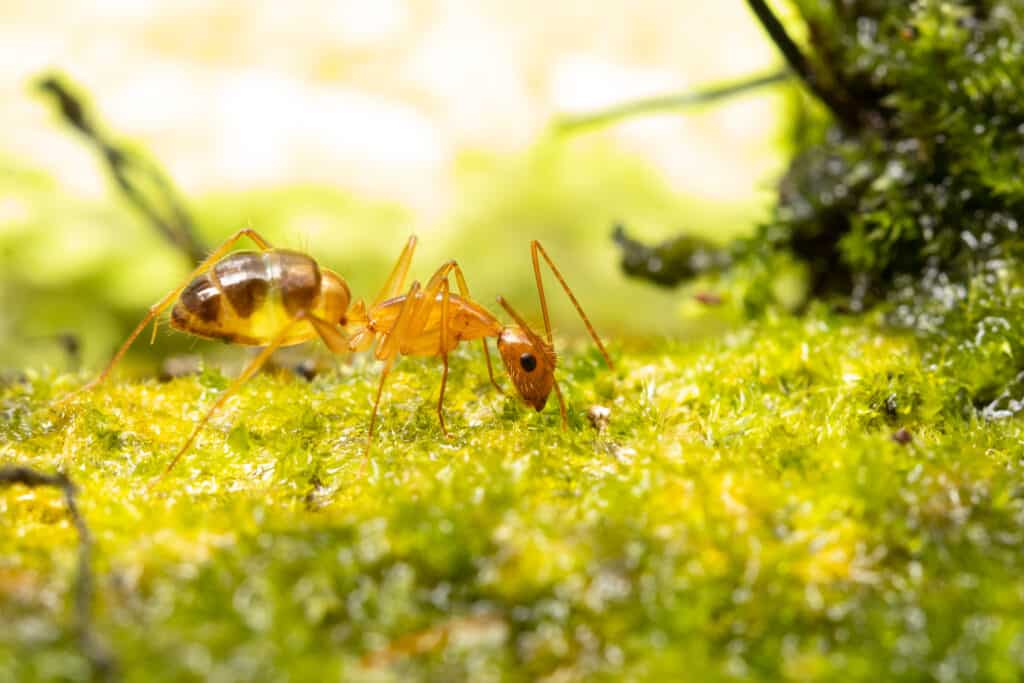
Crazy ants can invade homes and spread very quickly.
©frank60/Shutterstock.com
Pharaoh Ants
Pharaoh ants are small and unique, featuring a translucent brown-to-yellow thorax that distinguishes them from other winged ants. These scavengers are known to thrive in environments where food is readily available, such as hotels, restaurants, hospitals, and grocery stores.
Unfortunately, pharaoh ants are not only a nuisance but also pose a significant health risk. They have been known to carry diseases such as Salmonella, which can cause serious problems in infested hospitals.
Due to their tenacity and the potential health hazards they pose, it is often necessary to seek professional help to effectively eliminate pharaoh ant infestations.
Fun Facts
- Pharaoh ants are tiny, measuring only about 1/12 to 1/16 inch long.
- Pharaoh ants with wings are known for being difficult to control and eliminate due to their ability to split into multiple colonies when threatened.
- Pharaoh winged ants are native to Africa but have been introduced to many other parts of the world, including Europe, Asia, and North America.
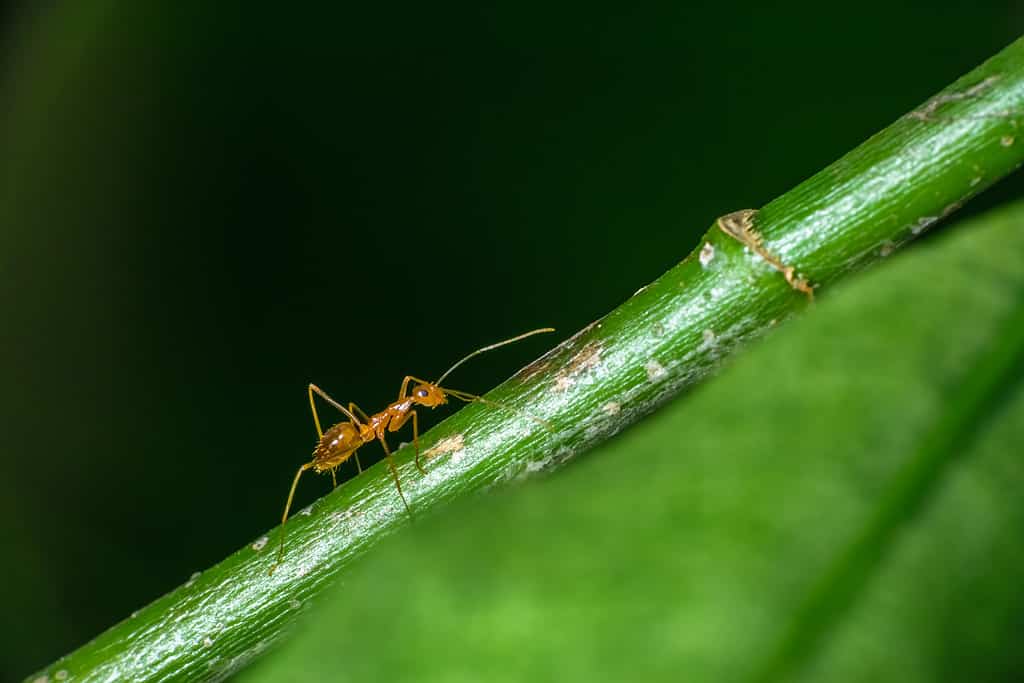
Pharaoh ants are not only a nuisance, but they also pose a significant health risk.
©iStock.com/Suman Ghosh
White-Footed Ants
White-footed ants are easily recognizable by their distinctive pale-colored feet and wings. These winged ants are known for their preference for honeydew nectar excreted by aphids rather than human food. They can be found in both rural and urban areas and are unique in a way that they do not share their food with other ants.
Instead, sterile workers lay eggs that serve as a food source for the colony’s larvae and non-foraging adults. Unlike some other ant species, white-footed ants do not sting or cause damage to property, making them a relatively harmless presence in the ecosystem.
Fun Facts
- White-footed ants leave very heavy trails that can be seen as black lines on the sides of buildings.
- This species may be difficult to control and may not be attracted to traditional ant baits.
- White-footed ants with wings are considered a pest on the Hawaiian Island of Oahu and in southern Florida.
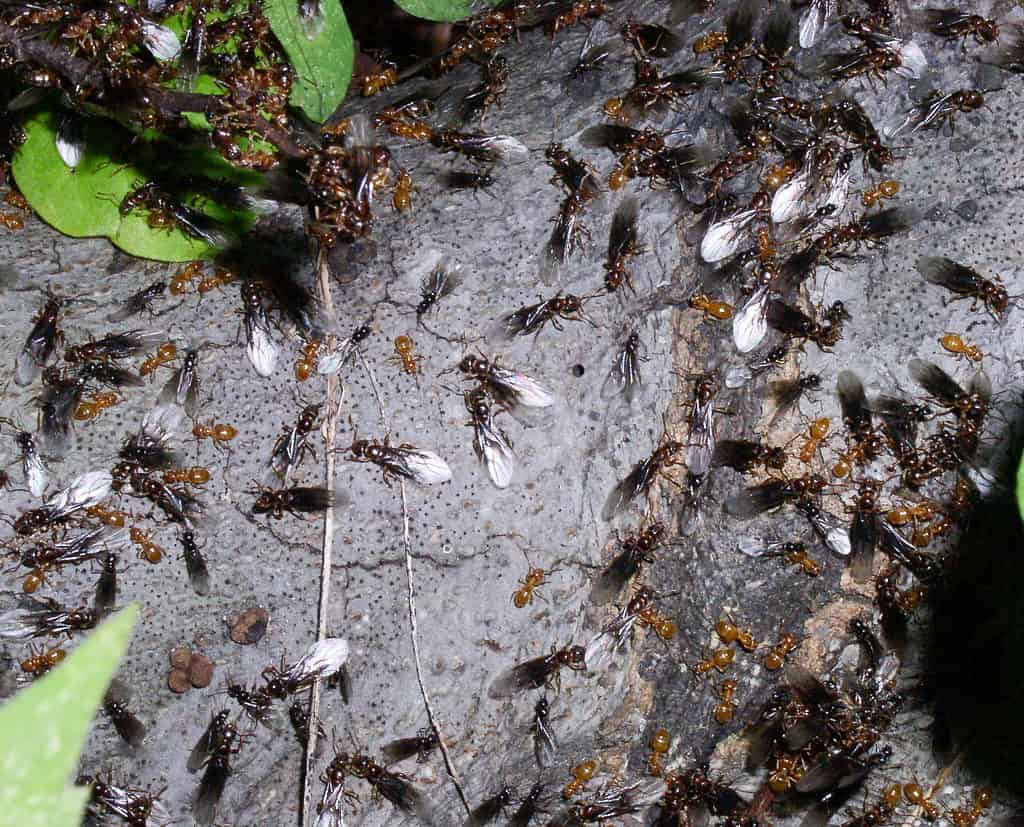
Citronella ants do not sting or cause damage to property, making them a relatively harmless presence in the ecosystem.
Harvester Ants
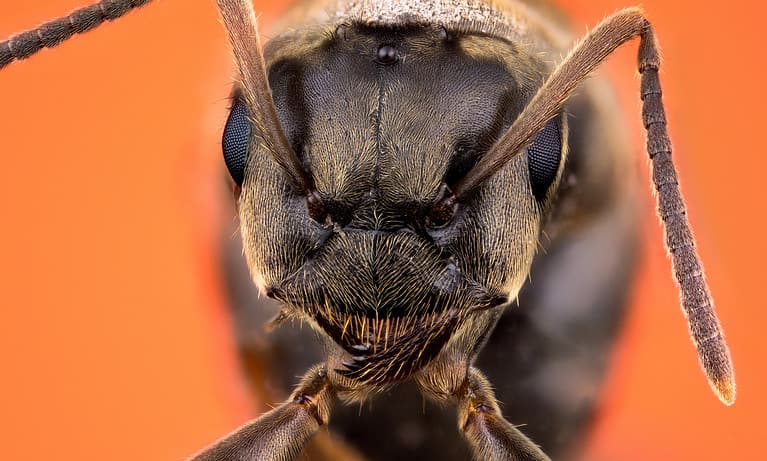
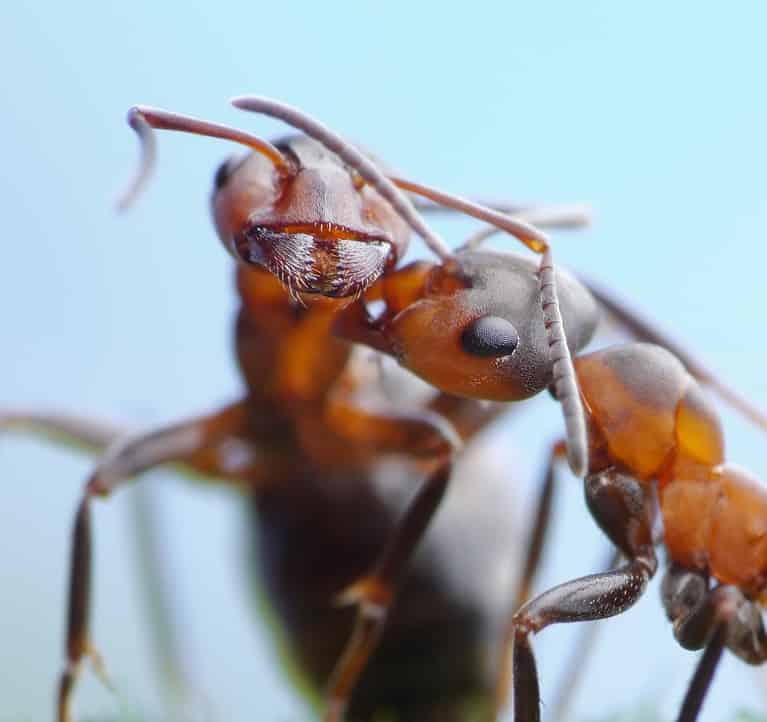
With their striking orange-red hue and size of up to half an inch, harvester ants are a distinct species found across the western United States and in Florida. One of their most distinctive features is the long, hairy “beard” on their chin.
With their unique appearance, these winged ants possess a venomous sting that has been known to kill small animals. If you suspect a harvester ant infestation or notice several winged red-orange ants in your area, it is best to contact a licensed pest control specialist for safe and effective removal.
Fun Facts
- The harvester ant is a widespread species, with hundreds of different types found all over the world.
- These winged ants live in colonies that can contain as many as 10,000 individuals.
- The queen harvester ant is larger than the worker winged ants, which are approximately half the size of the queen.
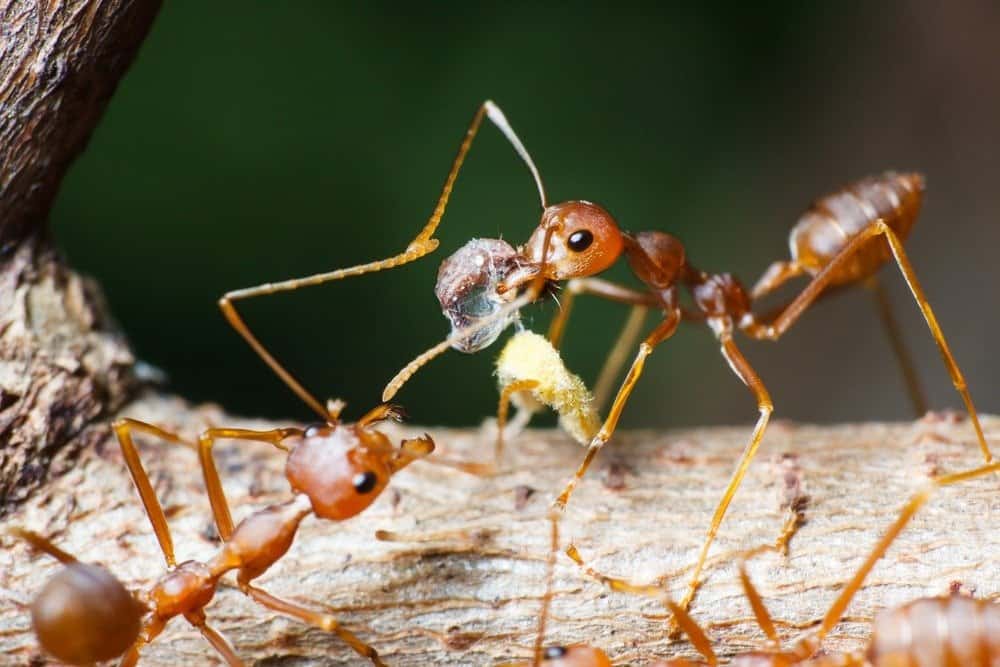
Harvester ants have a unique hairy “beard” on their chin and have a dangerous, venomous sting.
©Deer worawut/Shutterstock.com
3 Ways To Get Rid Of Flying Ants
Here are the top 3 ways to get rid of winged ants.
Vacuum Cleaner
An efficient way to get rid of an ant infestation is by using a vacuum, whether it is a handheld device or a traditional vacuum with a hose attachment. It is important to act quickly by removing the vacuum bag and disposing of it outside the residence to prevent the winged ants from finding their way back inside.
Homemade Spray
Are you concerned about the safety of traditional commercial pest treatments? Consider using a natural alternative by creating a homemade spray using dish soap and peppermint oil. To make the spray, simply mix one part liquid soap with two parts water and add a few drops of peppermint oil in a spray bottle. Not only is this method safe for your family and pets, but it also utilizes natural ingredients to get rid of pesky bugs. Give it a try and see the results for yourself!
Attack The Colony
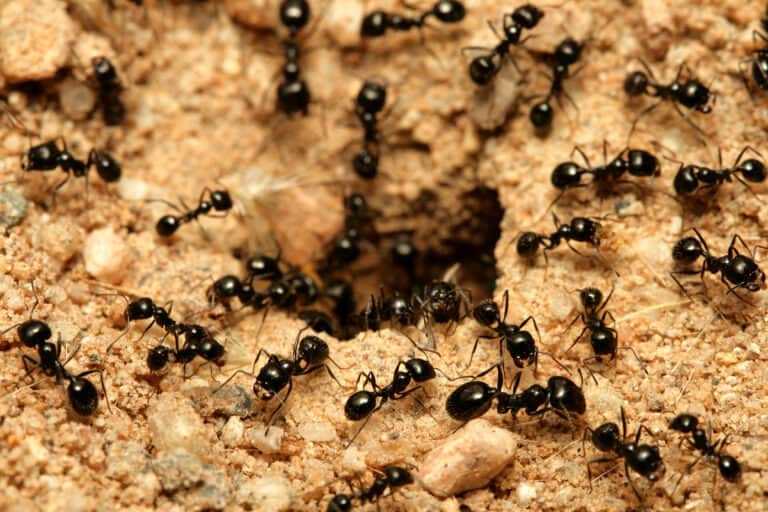
If you are dealing with an ant infestation in your home, it is important to remember that simply eliminating the visible winged ants will not solve the problem. The key to effectively getting rid of ants is to target their breeding colony. This is where the flying ants are coming from and is the root of the infestation.
One of the most effective ways to eliminate a colony is by using ant bait. Ant bait is a sweet-smelling substance mixed with an ingredient such as borax, which interferes with the ants’ reproductive cycle. The winged ants are attracted to the bait and will carry it back to their nest, where it will ultimately eradicate the entire colony.
It is important to keep in mind that eliminating the colony will not happen overnight, so patience and persistence are key.
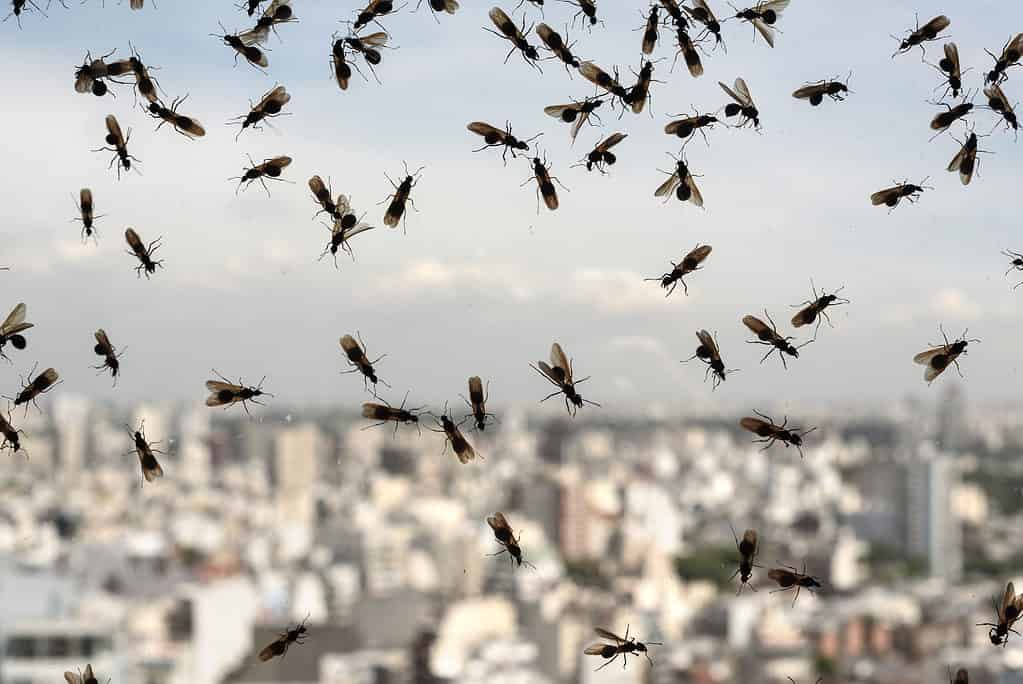
The key to effectively getting rid of an infestation is to target the breeding colony where the flying ants are coming from.
©iStock.com/dit:nickalbi
3 Ways To Prevent Flying Ants
Keep your home safe from winged ants by applying these top three tips.
Eliminate Food Sources
Eliminating food sources is one of the most effective ways to prevent flying ants from infesting your home. These winged pests are always on the lookout for a meal, and if they find a steady source of food inside your home, they’ll waste no time in setting up camp. By removing their food supply, you make it much harder for them to survive or thrive.
Ensure all food is stored in airtight containers and regularly wipe down counters and floors to remove any crumbs or spills. Think of it like a game of chess: by taking away the pawns (food sources), you are making it much harder for the queen (the colony) to function. Without food, the colony will struggle to survive and eventually have to move on in search of sustenance.
Seal Cracks
While you may have successfully eliminated a winged ant infestation in your home, it is always wise to take preventative measures to ensure they do not return. One of the most effective ways to do this is to identify and seal any potential entry points in your home.
Winged ants are incredibly small and can squeeze through the tiniest of cracks and crevices. Inspect your home carefully and ensure there are no gaps or holes in the walls, baseboards, or around windows and doors. By sealing these areas, you will significantly reduce the chances of another swarm invading your home in the future. It is a little bit of extra work now, but it will save you a lot of headaches down the road.
Replace Damaged Wood
Replacing damaged wood around your home may seem like a small step, but it can significantly help prevent flying ants from entering your home. Ants are opportunistic creatures, taking advantage of any weakness they find to make their way into your home. Damaged wood, with its cracks, holes, and rotting areas, is a prime target for them.
By replacing damaged wood, you will be fortifying your home’s defenses against these winged invaders. Think of it as a medieval castle with strong walls and a moat to keep the enemy at bay. The same principle applies here: eliminating any weak points in your home’s exterior will make it much harder for winged ants to gain entry.
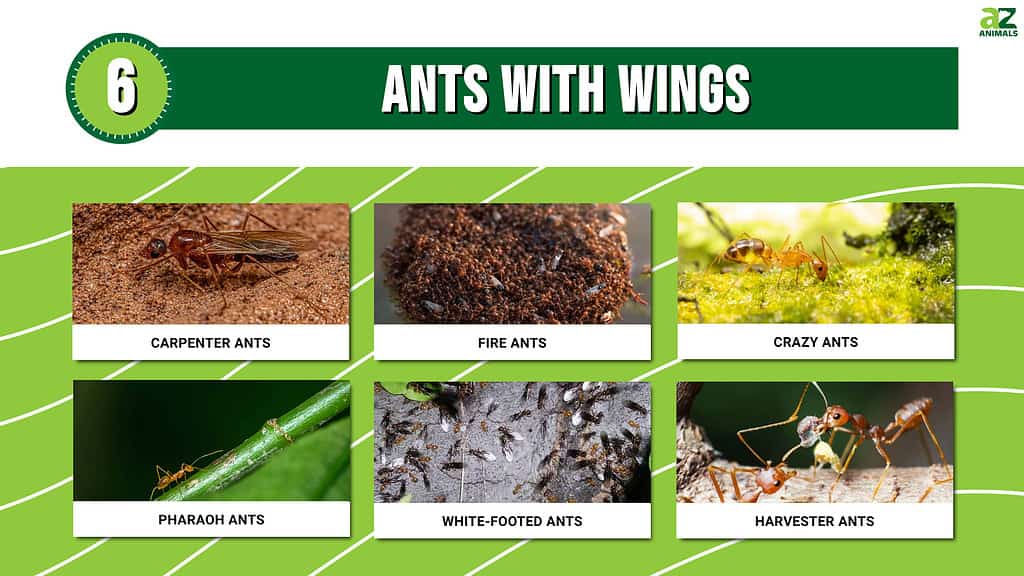
| Number | Winged Ants | Noticeable Feature |
|---|---|---|
| 1 | Carpenter Ants | Come in various colors, including red, black, brown, and even a combination of all 3 |
| 2 | Fire Ants | Vibrant crimson color |
| 3 | Crazy Ants | Zig-zag patterns |
| 4 | Pharaoh Ants | Translucent brown-to-yellow thorax |
| 5 | White-Footed Ants | Distinctive pale-colored feet and wings |
| 6 | Harvester Ants | Long, hairy “beard” on their chin |