
Quick Take
- Cheetahs can hit ~70 mph in short bursts, so a “charge” looks terrifying even when it isn’t an attack.
- Namibia is a major global stronghold for cheetahs, but population estimates vary; global totals are commonly placed around 6,500-7,100.
- There are no documented records of a wild cheetah killing a human, but that’s not a permission slip. Wild animals still deserve distance and caution.
Have you ever stepped out of your car, started walking toward your front door, and suddenly realized an animal was heading straight for you? Maybe it was a snake sliding across the driveway, a squirrel sprinting like it owned the place, or a raccoon quietly trailing behind you. Even if the animal isn’t trying to hurt you, anything charging at full speed can be genuinely unsettling.
Now imagine that feeling, except it’s TWO cheetahs running directly at you.
That’s exactly what happens in the wild footage featured in the video below.
View this post on Instagram
Booming Cheetah Population in Namibia
The Instagram clip is filmed in Namibia, a country in southwestern Africa along the Atlantic coast. The account sharing the video says the footage involves a cheetah named Quasa, and it also claims Namibia holds the world’s largest cheetah population.
That part is broadly true—Namibia is widely considered a major stronghold for cheetahs—but the exact numbers you’ll see online can vary depending on whether estimates count total cheetahs or only breeding adults, and how recent the data is. Globally, conservation groups commonly place the wild cheetah population in the rough neighborhood of 6,500–7,100 individuals.
Cheetahs Charge Straight At Humans
At the start of the video, the camera appears to be on a protected property or conservation-focused landscape. The page sharing the clip says Quasa was orphaned after his mother was shot when he was a cub. It also notes that he lives on a large enclosed area where he can roam, is closely cared for, and eats several pounds of food a day—an amount that matches typical cheetah intake in managed care (often a few to around six pounds of meat daily, depending on the source and the animal).
In the footage, Quasa is visible in the distance with another cheetah. Then, without much warning, both cats break into a sprint—accelerating so fast it barely looks real.
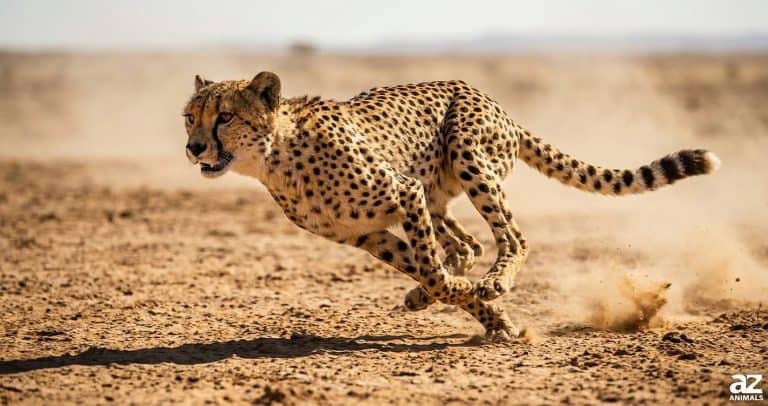
Cheetahs are the fastest land mammals, capable of reaching top speeds around 70 mph in short bursts. When an animal built for explosive speed runs toward a person, the dust, the noise, and the sheer momentum make it feel like a close call—even if it isn’t an attack.
And at the last moment, Quasa slams on the brakes (and you can literally see the dirt fly). The key detail here is that the person filming appears to be someone Quasa recognizes. In other words, this is a dramatic moment, but it’s not the same thing as a wild cheetah treating a human as prey.
Do Cheetahs Kill People?
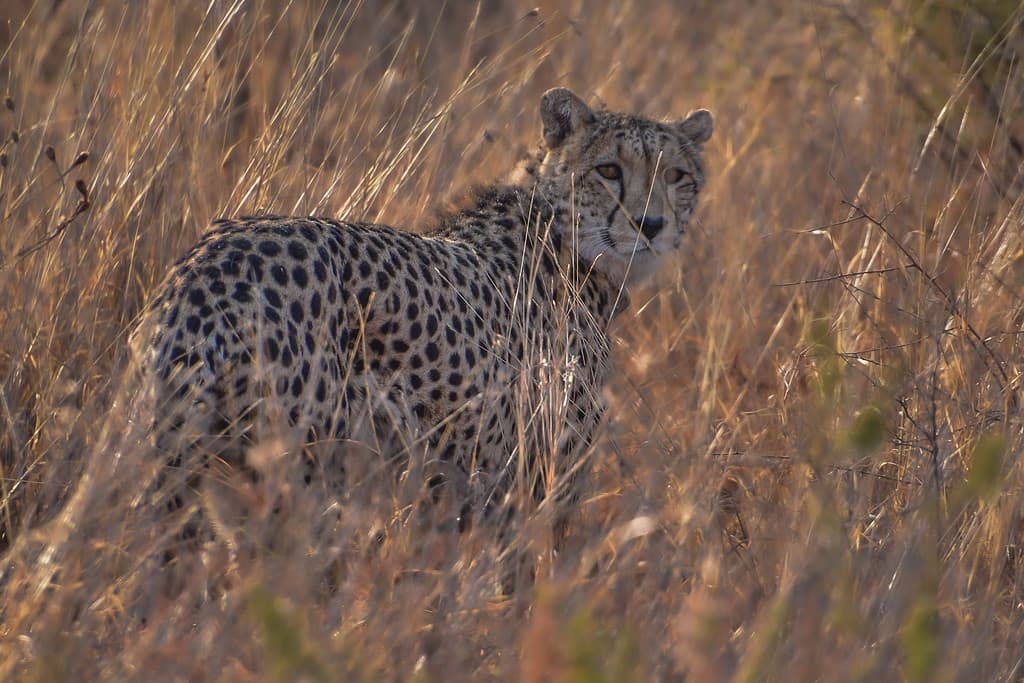
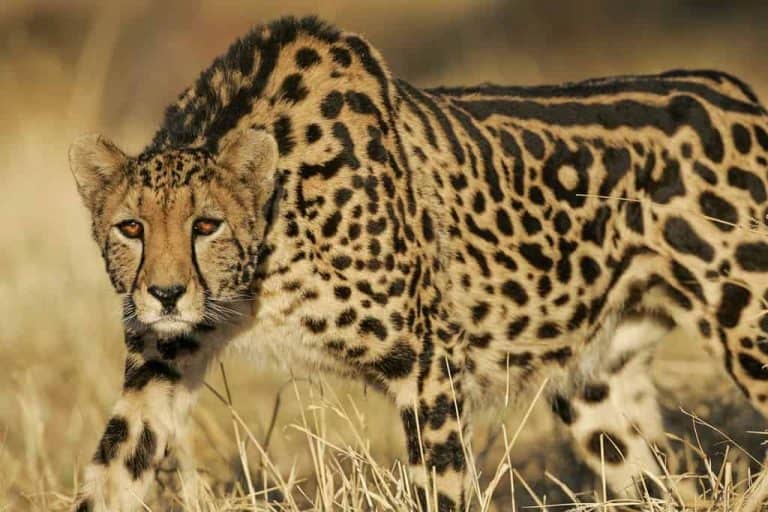
Cheetahs can weigh up to 140 pounds.
©Wirestock/iStock via Getty Images
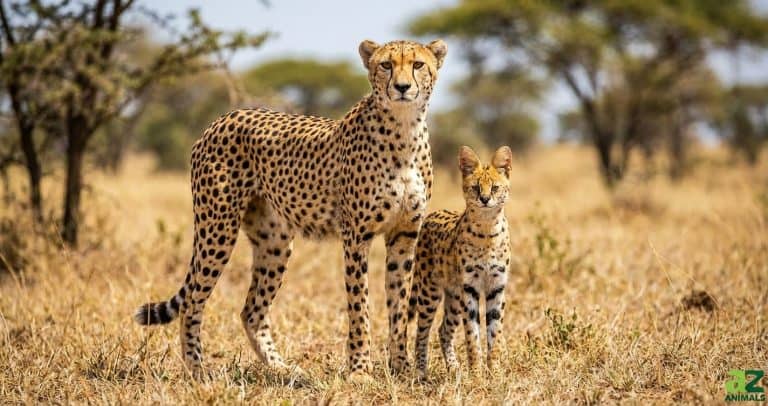
Cheetahs (Acinonyx jubatus) are athletic, lightly built predators. Adult cheetahs typically weigh about 75–140 pounds, and they’re specialized for speed—not brute-force fighting.
They also tend to be more cautious around people than other big cats. In regions where cheetahs live, they may regularly see humans through tourism, local communities, and conservation work—so “human presence” isn’t always automatically interpreted as a threat.
SeaWorld’s animal reference materials note that there are no documented records of a wild cheetah killing a human. That doesn’t mean a cheetah is harmless, or that close contact is ever a good idea. Any wild predator can bite, scratch, or react aggressively if cornered, stressed, or defending space.
The smartest takeaway is the simplest one: don’t test wild animals—even the ones with a reputation for being less confrontational. Give them space, treat them with respect, and you dramatically lower the odds of something going wrong.
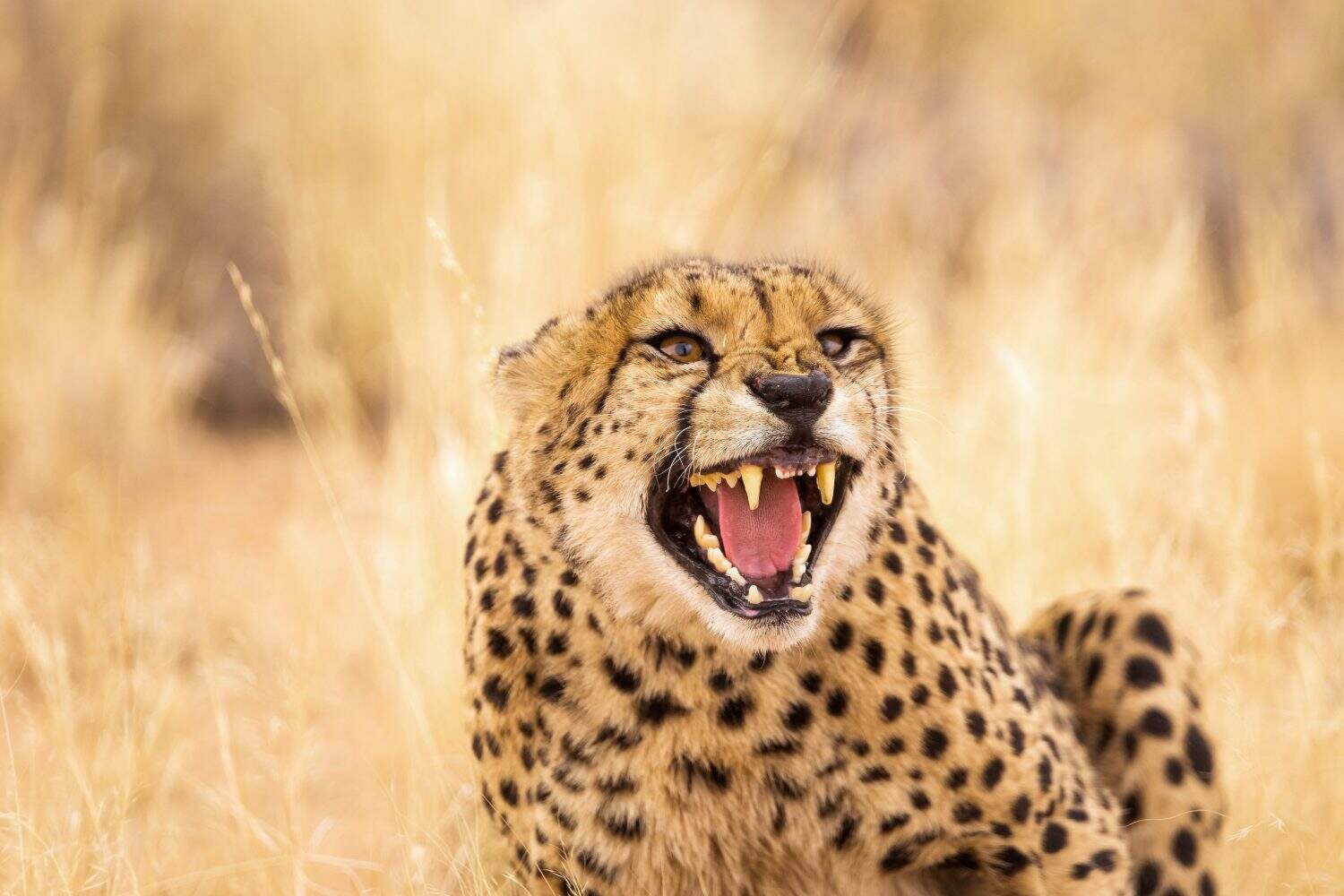
CORRECTION: This article was updated on March 21, 2026, to correct the featured image. A previous version of this article used an image of a leopard.