
Almost wherever you go on Earth, you will find ants! The only places that do not have any are Antarctica, Greenland, Iceland, and some island nations. Not only are they widespread, but there are also loads of them. Scientists have calculated that there are 20 quadrillion ants on the planet – and that is a conservative estimate. They play a crucial role in terrestrial ecosystems. We know of at least 14,000 ant species that vary in color and size. Here we will take a closer look at some of the biggest.
Giant Amazonian Ant (Dinoponera gigantea)
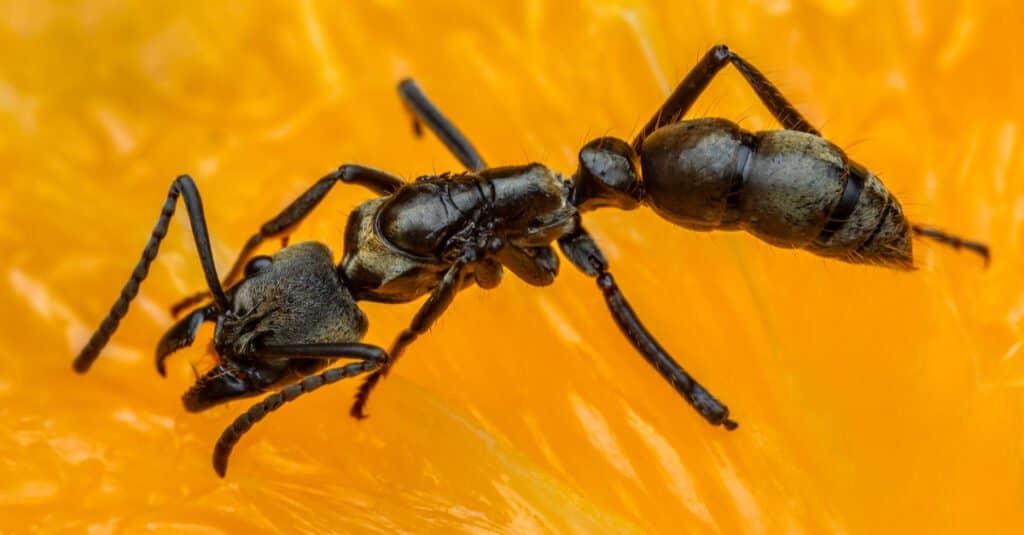
There is no queen in a giant Amazonian ant colony.
©Javier Chiavone/Shutterstock.com
As both their scientific name and common name indicate, the giant Amazonian ant, Dinoponera gigantea, is the largest ant in the world. The females are larger than the males and can reach 1 – 1.5 inches in length. They are found only in South America, where they live in a range of habitats from arid savannas to rainforests and nest on the ground. These nests consist of large chambers and tunnels and have up to eight entrances. A colony may occupy more than one nest (polydomy). There are several species in the Dinoponera genus, and they are all very large ants.
In contrast to many other ant species, the Dinoponera do not have a queen. Instead, they have specialized workers capable of mating called gamergates. There is a hierarchy and intense competition for dominance, with the alpha female gamergate having the highest ranking. She mates with males from other nests at night at the entrance to her nest. Colonies are also smaller than in many other species and only consist of between 30 and 90 workers, with an average of 41. Providing food for the colony is a team effort, with tasks designated depending on a worker’s position in the hierarchy. Lower-positioned workers scavenge for invertebrates, seeds, and fruits on the forest floor and bring them back to the nest. Workers can also use their venomous sting to subdue prey and for defense against vertebrate and invertebrate predators.
Bullet Ant (Paraponera clavate)
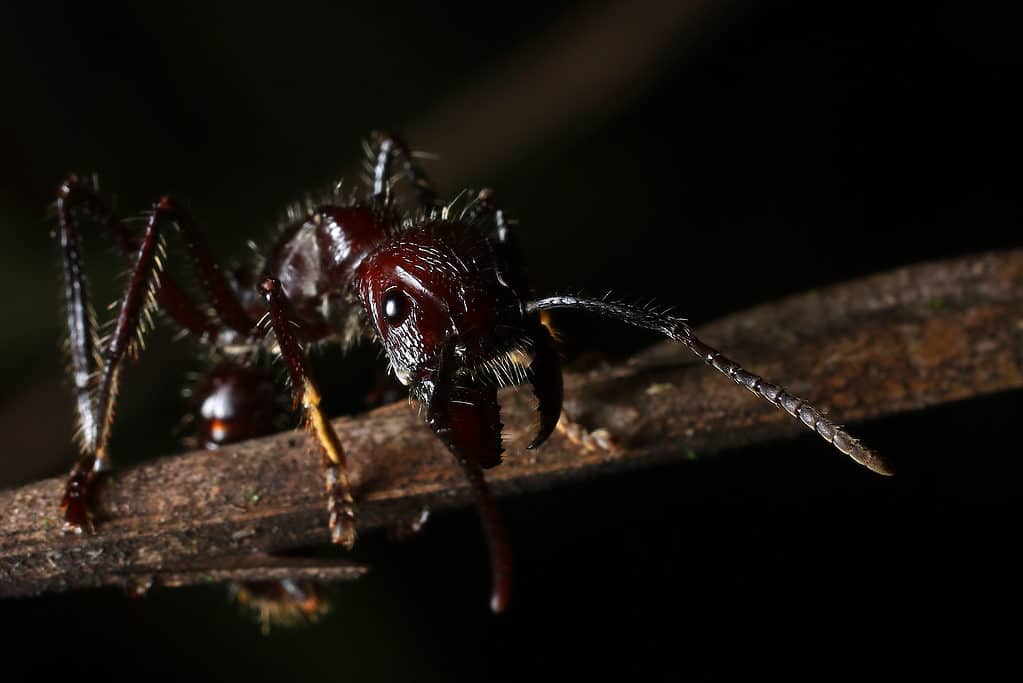
The sting of bullet ants is excruciating.
©Dan Olsen/Shutterstock.com
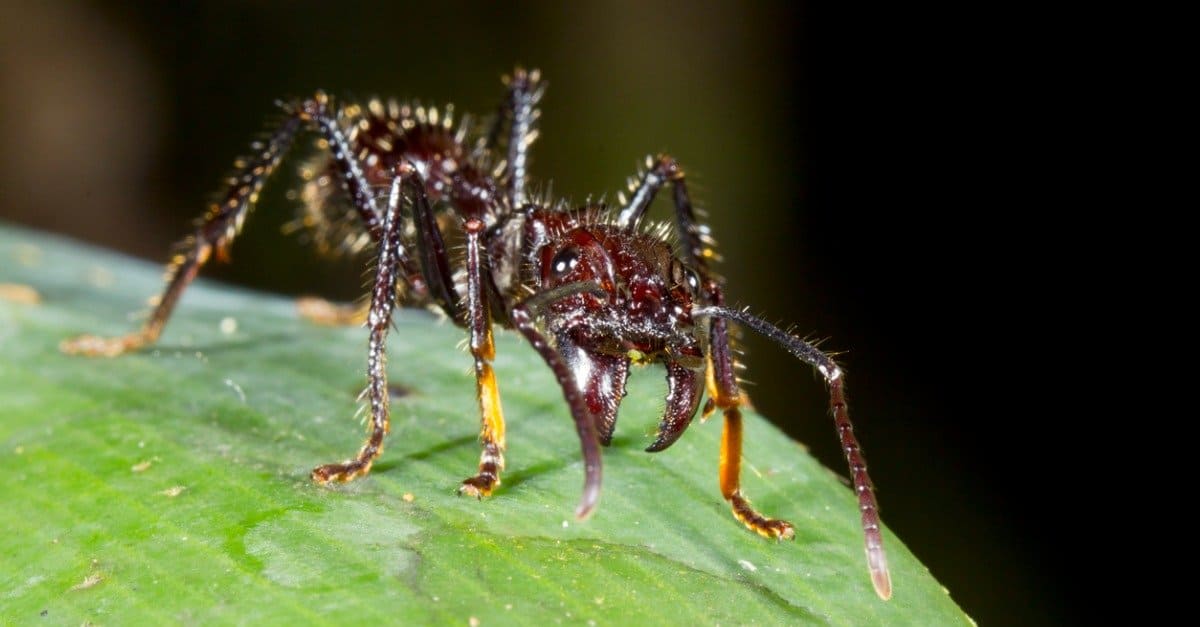
Bullet ants can reach 1.2 inches in length with a robust, elongated body that makes them look a bit like a reddish-black wasp with no wings! Their pincer-like mandibles look disproportionately large for their body. They live in tropical rainforests from Nicaragua and Costa Rica in Central America to countries like Brazil, Peru, and Venezuela in South America. In this warmth and high humidity, mature colonies typically contain between 200 and 3,000 individuals. The nests are constructed at the base of trees, although arboreal nests have been rarely recorded. There are several entrances, and the nests are often covered in soil and vegetation.
Within the colony, there is a queen and many workers who perform different tasks according to their size and age, but this is flexible. Some workers complete tasks within the nest, but others forage in the trees for food. As omnivores, they feed on small invertebrates like insects and spiders. They also grab nectar, honeydew, and plant sap, which they carry back to the nest in their mandibles.
The larger ‘soldier ants’ patrol the perimeter of the nest, keeping their venom fresh so that they can repel an attack. Every hour or so, these security patrols swap shifts. Bullet ant stings are excruciatingly painful. Their venom contains a neurotoxin called poneratoxin, which blocks sodium ion channels in the nervous system. Unfortunately, it can also cause temporary paralysis and uncontrollable trembling, among other unpleasant symptoms.
Pachycondyla crassinoda
These are some of the largest ants of the New World tropics, with a worker body length of about 0.7 inches. The queens are not much larger. They are most commonly found in the Amazon forest, but have been seen from French Guiana to Brazil. Their habitat is rainforests where they nest in soil under rotten logs or damaged trees. The size of the colonies is smaller than in some ant species and has been recorded at between 52 and 86 known workers with a simple social structure.
A 2016 study of their foraging habits found that they foraged at ground level only and that the ants were more active when the weather was drier; they avoided wet ground. In terms of prey, they had a preference for live or freshly killed arthropods but would also forage on carrion and vegetation. The target prey were mostly a little smaller than they were, and they did not use their sting on them. This is probably because it takes a lot of energy to produce the venom, and so they save it for defense. The foraging workers carry prey back to the nest in their mandibles.
Black Carpenter Ant (Camponotus pennsylvanicus)
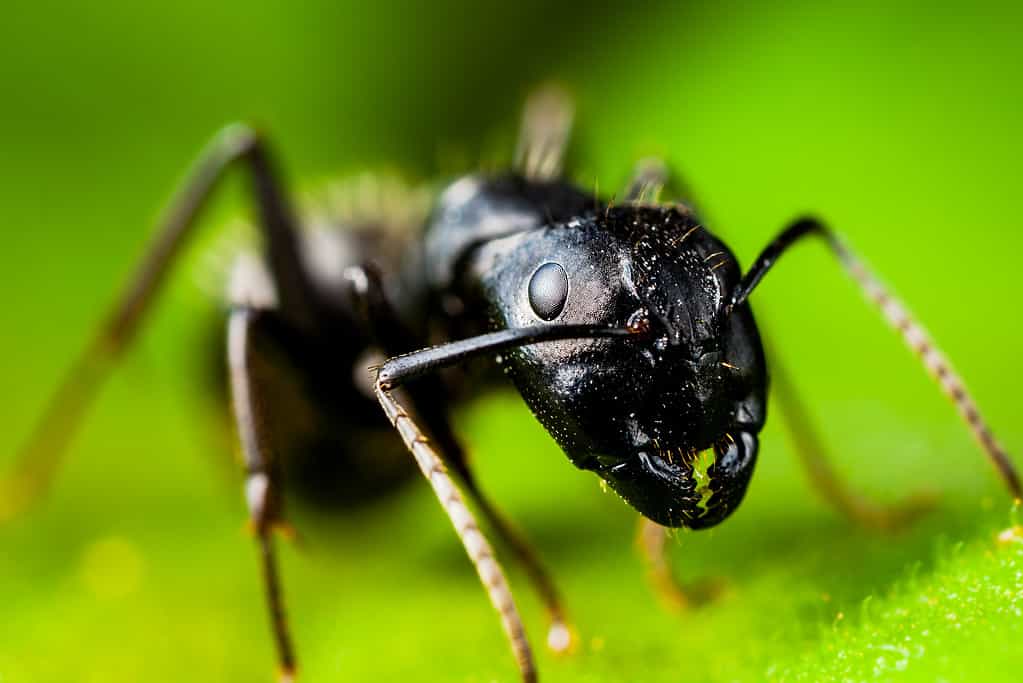
Fights between colonies of black carpenter ants can break out.
©Denis Vesely/Shutterstock.com
The black carpenter ant is one of the largest carpenter ant species. The largest workers are around 0.74 inches long. They are a native species of the Nearctic region, and their range covers the eastern half of the US. Large colonies (up to 10,000 members) live in nests in deciduous trees and decaying logs, but they have also been found in wooden buildings. Within the colony, each individual has a defined role. One role is the farming of aphids!
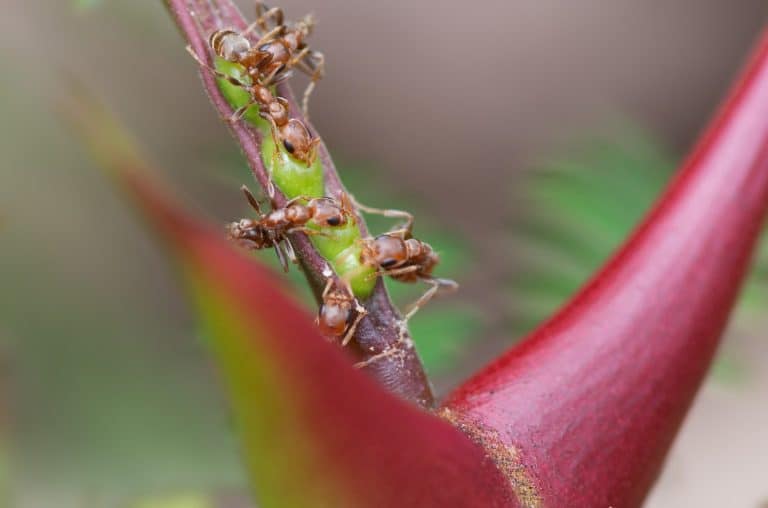
This is an omnivorous species; they prey on insects, including aphids and larvae. They also ‘farm’ aphids in the nest, feeding them and then eating the honeydew that they produce. These ants manage to avoid their key predators, insectivorous birds, by mainly foraging at night. When they are attacked, they defend themselves by lunging forward with their mandibles open. Fights between different colonies have broken out, with many workers getting injured and killed. Humans consider them to be a structural pest, and their presence in a home indicates that there is a damp problem. Even though these ants have no sting, they can inflict a painful bite and then inject formic acid into the wound!
Sugar Ant (Camponotus consobrinus)
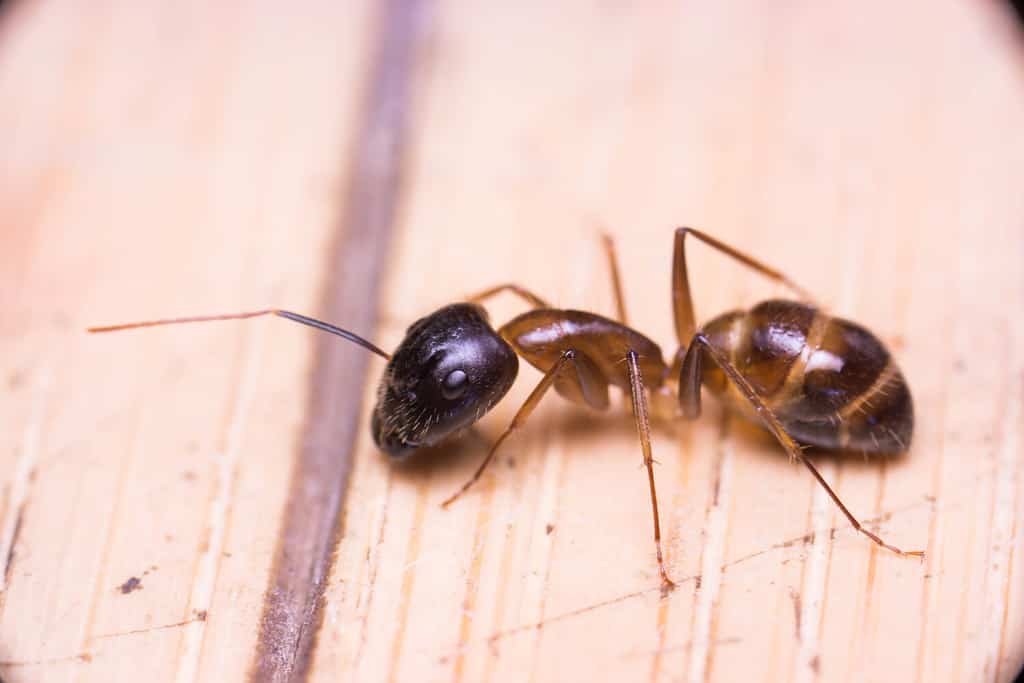
Banded sugar ants seek out sweet food.
©Muhammad Naaim/Shutterstock.com
For the next giant ant species, we move to Australia. The sugar ant, also known as the banded sugar ant, is a common sight in woodlands, open forests, and backyards ranging from Atherton Tablelands in Queensland down to Tasmania. They can reach 0.59 inches in length, but some workers are smaller, and the queen is a little larger. Their heads are black with an orange thorax and legs, and an orange band across their abdomen. Colonies are very large, and they nest underground in open areas under stones or tufts of grass. They use their large mandibles for nest construction, collecting food, and defense.
Their name comes from their love of sweet substances. These ants are omnivores and feed on the honeydew, which they collect from ‘farmed’ aphids. They also collect nectar from eucalyptus plants and other plant-eating invertebrates such as caterpillars. Foraging takes place in groups of 8-10 workers and at night. Sugar ants are not especially aggressive, but will defend themselves using their mandibles. Then they spray formic acid at the echidnas, birds, and other ants that prey on them.
Blood Red Ant (Formica sanguinea)
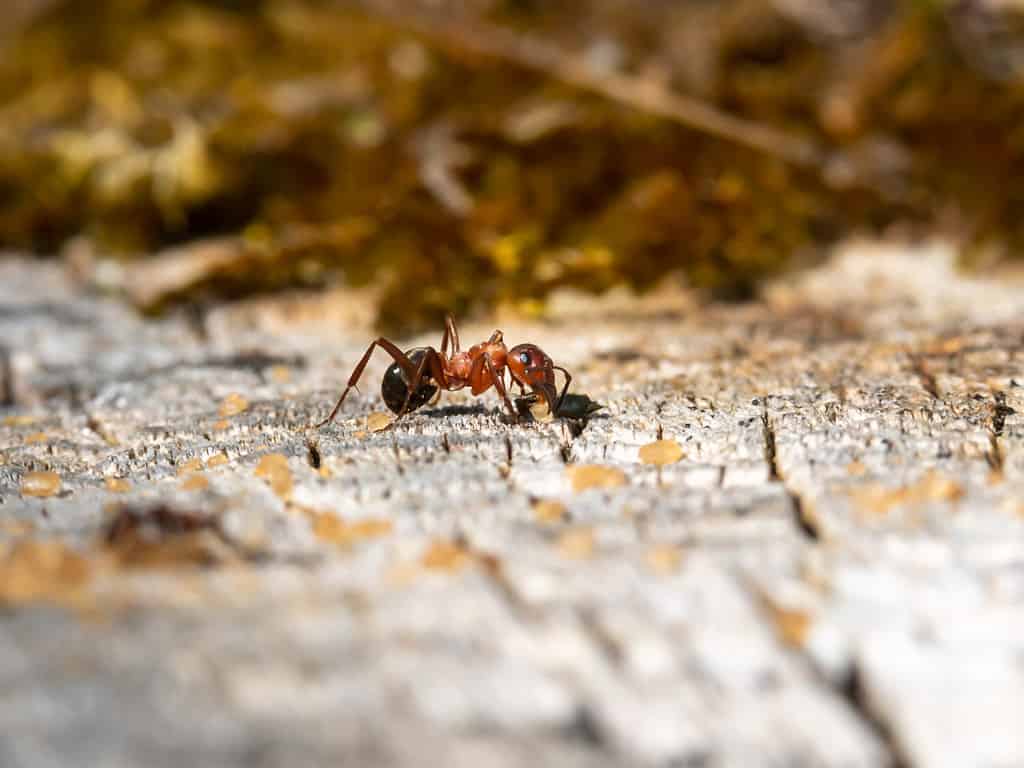
Blood red ants take over nests.
©Silvia Dubois/Shutterstock.com
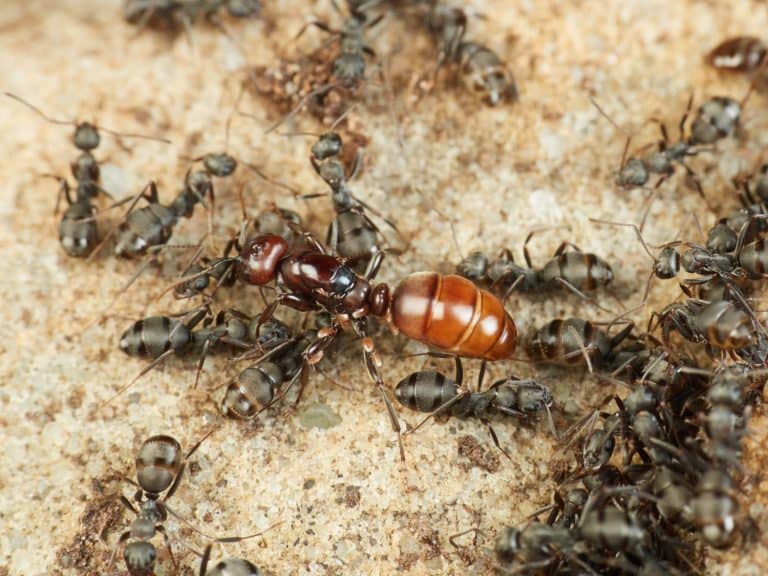
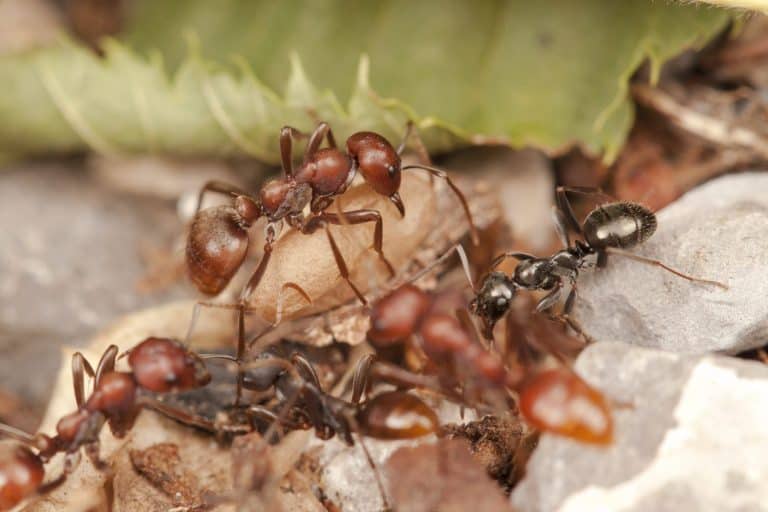
Blood red ants are a type of slave maker ant found from central and northern Europe through Russia and Japan, China, the Korean Peninsula, Africa, and the US. They are red/black in color, and the workers can reach 0.27 inches. Slave maker ants can live alone or can be parasitic. A Formica sanguinea queen carrying fertilized eggs will enter the nest of another species, kill the queen, and get the workers to tend her offspring! Blood red ants also raid the nests of other ants and steal the larvae, which will then grow up and become workers serving them.
These ants prefer to nest in sandy soils, usually under a stump, log, or stones. As well as eating the larvae of other ants, they also feed on honeydew. Foraging is usually carried out individually, but several workers may group together to deal with a large food source. They use formic acid as a chemical defense if they are attacked.
Southern Wood Ant (Formica rufa)
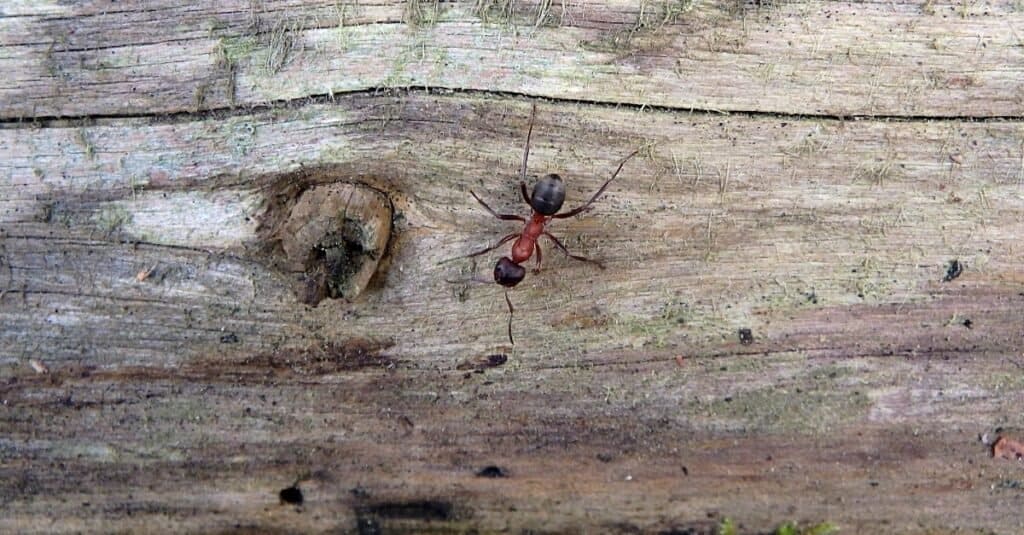
The Southern wood ant can reach 0.59 inches in length.
©iStock.com/Danler
This common ant species is found in Eurasia. The workers can grow up to 0.59 inches in length and are characterized by a red and brownish-black coloration, accompanied by large mandibles. They live in large colonies that can be made up of tens of thousands of workers in dome-shaped nests of grass, twigs, and conifer needles. These nests can be several feet in diameter and height and are found in forests.
Southern wood ants feed primarily on aphid honeydew (which they farm) but also prey on invertebrates, including insects and spiders. Foraging takes place hundreds of feet from the nest and can be in the trees or on the forest floor. They also raid other ant colonies. Birds and badgers prey on their eggs and larvae. These ants are highly territorial and use their huge mandibles and formic acid spray in defense.
Green-Head Ant (Rhytidoponera metallica)
Green-head ants are a native species of Australia and are found in every state except Tasmania. They measure up to 0.28 inches with a metallic green coloration, sometimes showing a purplish sheen. Their colonies can be found in a range of habitats, including deserts, woodlands, forests, and even urban areas. Nesting takes place under logs and stones or even in termite mounds!
Foraging takes place during the day when the workers leave the nest to look for arthropods and small insects. Workers from larger colonies travel further to find food. They also feed on honeydew. Importantly, these ants can sting! They use their stingers to hunt beetles, moths, and termites, which they overcome by injecting them with venom. If you happen to get stung by one, it is likely to be painful but short-lived. An icepack or sting spray should soon relieve the pain.