
Quick Take
- None of Wisconsin's blue birds actually have blue pigment. The color comes from something far stranger happening inside each feather.
- One bird on this list looks completely black from a distance, yet it technically qualifies as a blue bird, and most Wisconsinites see it every single day. See the grackle's blue sheen →
- One of these species is so rare and threatened that it's restricted to just a handful of specific forests in the entire state. Explore this rare warbler →
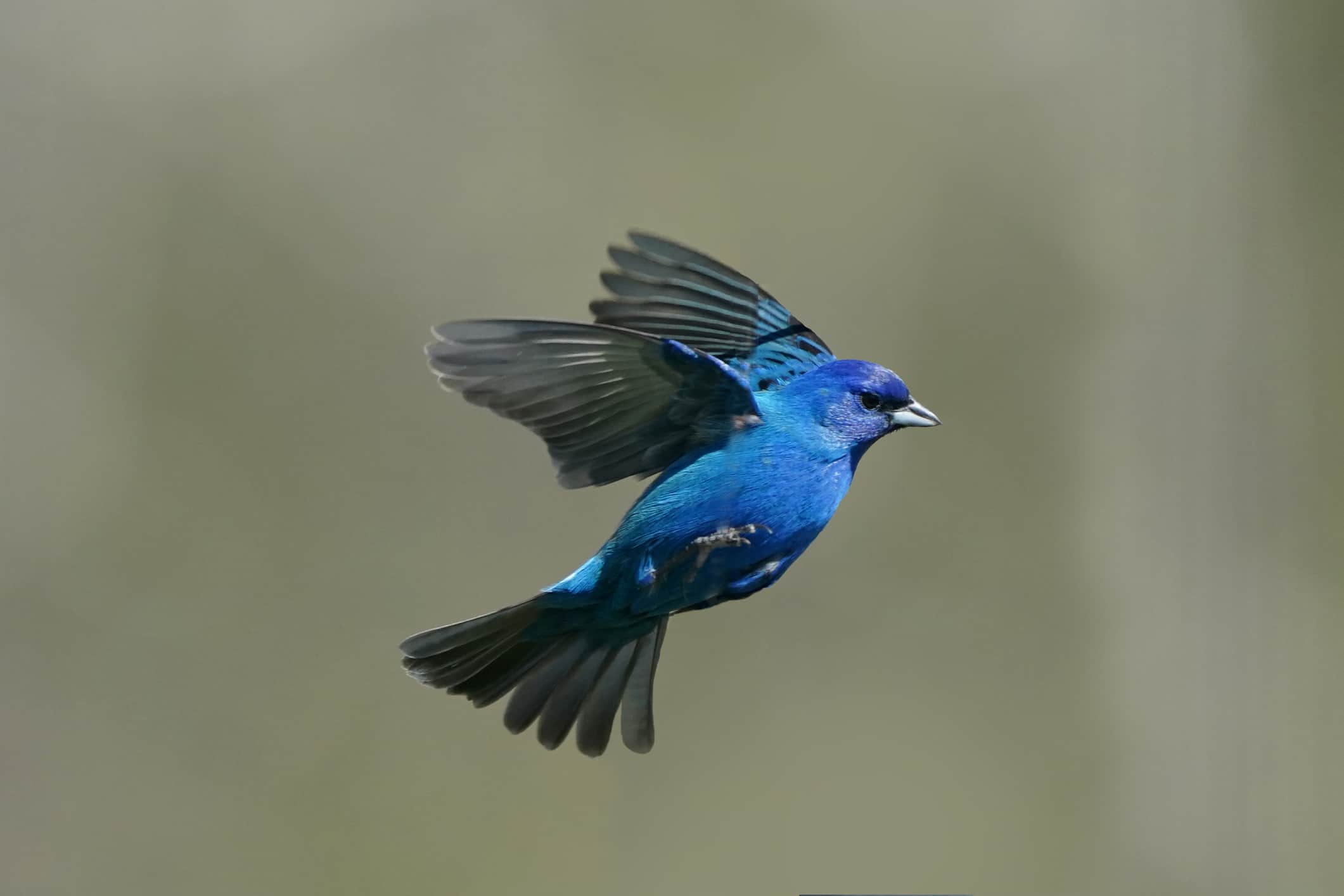
- The most vividly blue male on this list pairs with a mate so dull and brown that most birders don't even recognize her as the same species. Meet the indigo bunting →
Birds do not have true blue pigment in their feathers. Instead, the blue color you see is due to a phenomenon called structural coloration. Bird feathers contain layers of keratin and air pockets above a dark layer of melanin. When light strikes the feather, these microscopic structures scatter and refract shorter wavelengths of light, specifically blue, while absorbing the longer wavelengths. Wisconsin is home to over 400 documented bird species, but only a few regular residents and migrants display prominent blue plumage. Continue reading to learn about some of these blue birds.
Barn Swallow
Barn swallows (Hirundo rustica) have shiny dark blue upperparts and warm tan-to-orange underparts, with reddish-brown coloring on the throat and forehead. They have slender, wedge-shaped bodies with very long, forked tails. Barn swallows hunt for insects in the air using fast, agile movements and often feed in large groups.
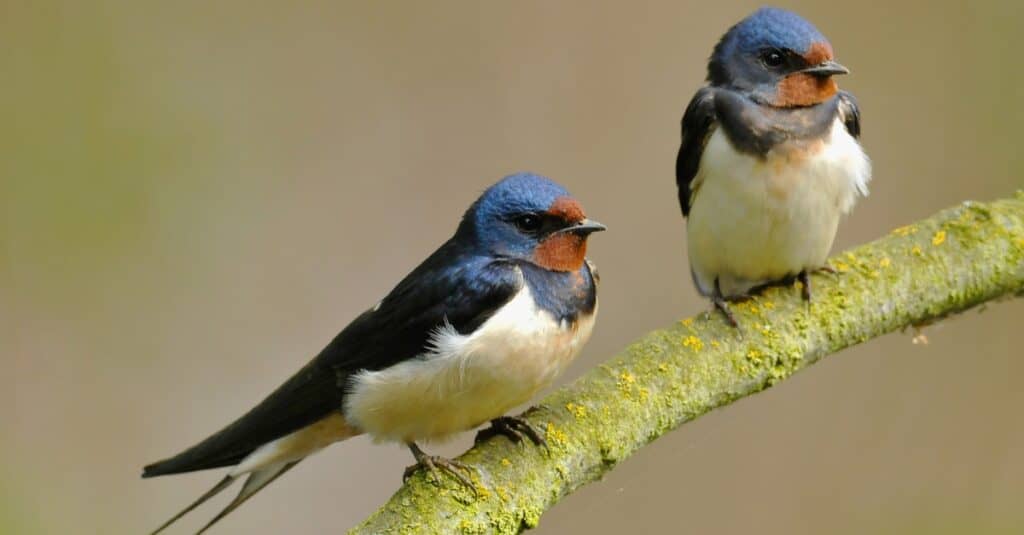
Two barn swallows are shown sitting on a branch.
©CezaryKorkosz/Shutterstock.com
Barn swallows are migratory breeding residents in Wisconsin, arriving in the state from mid-April to mid-May. They spend the summer nesting and raising their young before departing for their South American wintering grounds between early August and early October. They are common across the entire state of Wisconsin and can be found in open, insect-rich environments.
Belted Kingfisher
The belted kingfisher (Megaceryle alcyon) measures about 11 to 14 inches long and features a 19-to-33-inch wingspan. This bird sports a crested head, back, and wings in shades of slate or powder blue, accented by a matching blue band across its white chest. In Wisconsin, it is a frequent summer resident from spring to autumn, living near clear, open waters like Lake Superior’s coastal wetlands.
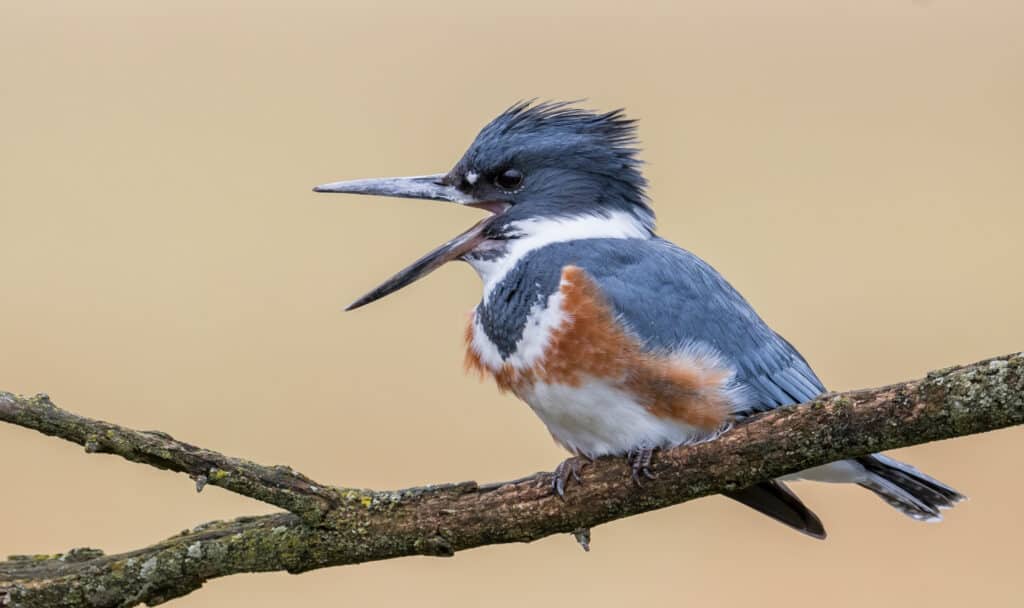
This dagger-billed bird is typically seen near a lake or stream, or hovering over the water before diving headfirst to capture a fish.
©Harry Collins Photography/Shutterstock.com
Blue Jay
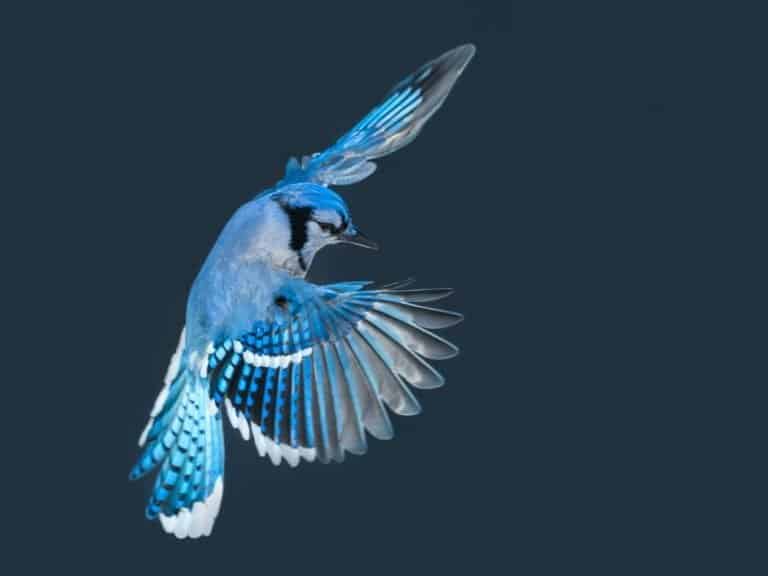
The blue jay (Cyanocitta cristata) is a big songbird that grows 9 to 12 inches long with a 13 to 17-inch wingspan, featuring bright blue feathers on its crest, back, wings, and tail, plus white-to-gray belly feathers and a dark black U-shaped collar on its throat
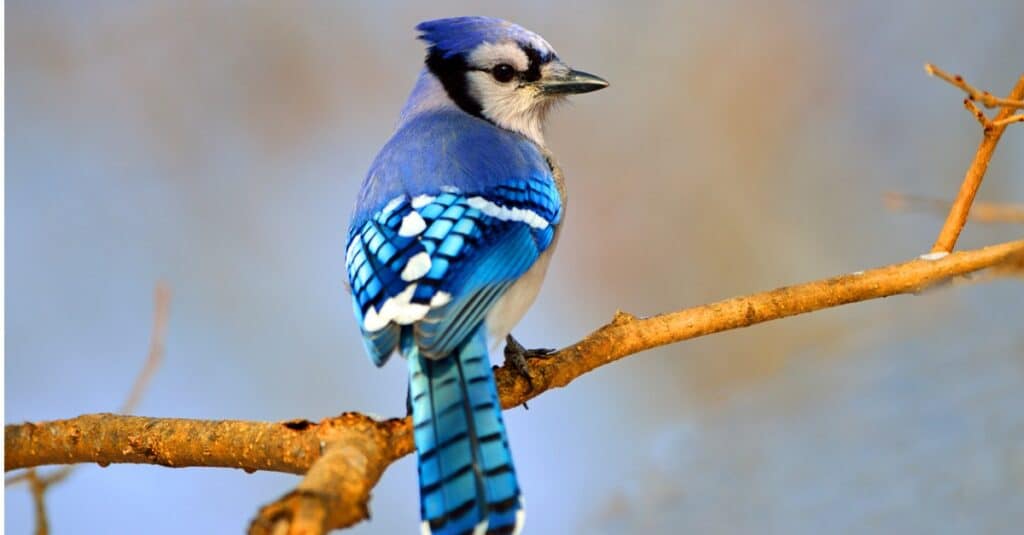
Beech and oak trees are the most common places where blue jays forage.
©iStock.com/BrianEKushner
The blue jay is a year-round resident of Wisconsin and is found throughout the state. Blue jays inhabit deciduous and coniferous woodlands (especially those with oak trees), suburban neighborhoods, and backyard bird feeders.
Blue-Gray Gnatcatcher
The blue-gray gnatcatcher is a tiny, active songbird that is 3.9 to 4.5 inches long with a 6.3-inch wingspan, featuring pale blue-gray upper parts, crisp white underparts, and a thin white ring around its eye.
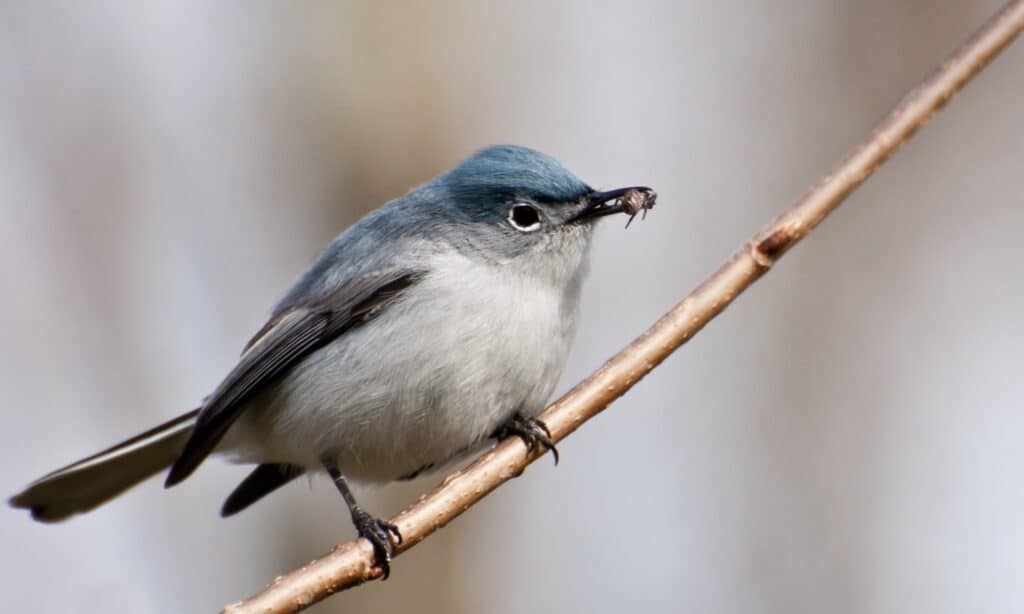
The blue-gray gnatcatcher’s tail contains both black and white feathers.
©iStock.com/JasonOndreicka
Blue-gray gnatcatchers spend summers in Wisconsin, breeding from late April or May until early autumn. They actively hunt for food in open deciduous or mixed hardwood canopies, particularly near water and forest edges.
Cerulean Warbler
The cerulean warbler (Setophaga cerulea) is a small songbird, about 4.3 inches in length with a wingspan of approximately 7.9 inches. Adult males have a striking sky-blue head and upperparts with a thin blue or blackish band across the white chest. Females have a more subdued bluish-green hue on their upperparts.
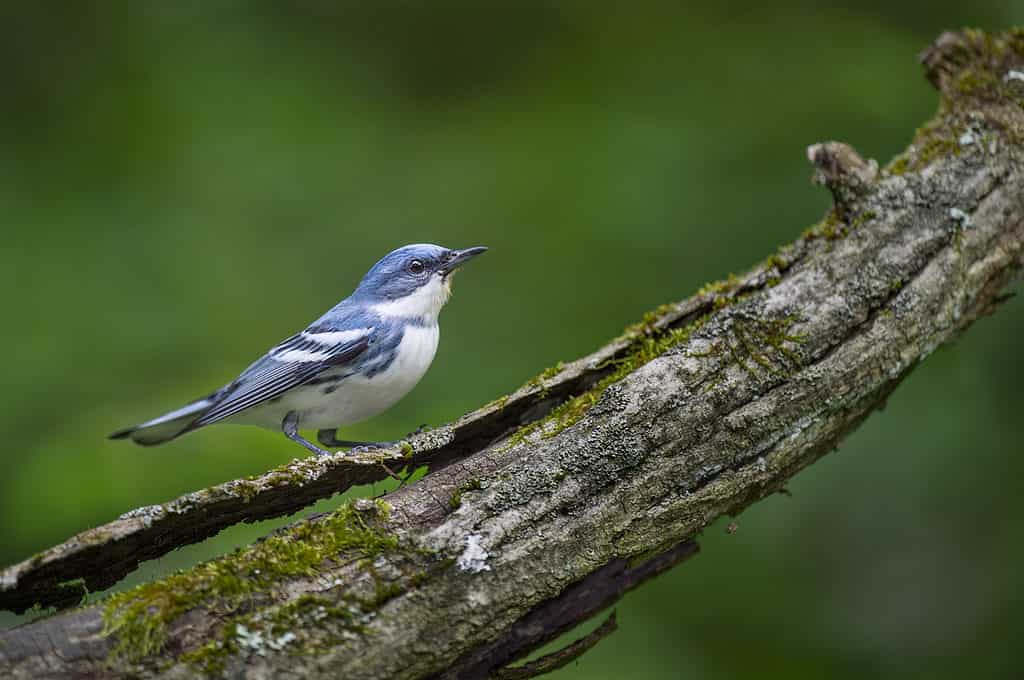
A bright blue and white Cerulean Warbler perched on a textured log.
©iStock.com/ps50ace
A threatened species, the cerulean warbler is a rare summer resident in Wisconsin during the breeding season from late April through August. It most notably inhabits the upper canopies of mature deciduous and hardwood forests in localized areas, including the Southern Unit of Kettle Moraine State Forest and the bluffside forests along the Lower Wisconsin and Mississippi rivers.
Common Grackle
The common grackle (Quiscalus quiscula) is a large blackbird measuring 11 to 13.4 inches in length with a wingspan of 14.2 to 18.1 inches. Although the common grackle appears mostly black from a distance, close-up sunlight reveals a glossy, iridescent blue or purplish-blue sheen on its head, neck, and breast, contrasting with its bronzy-iridescent body.
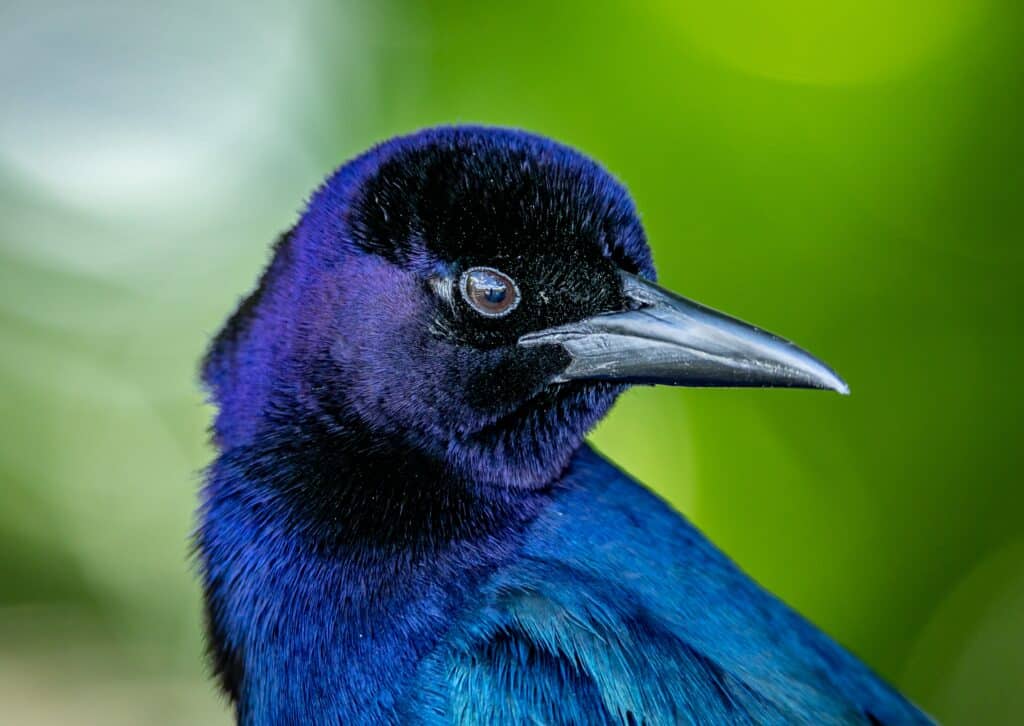
The common grackle forages on the ground, in shallow water, or in shrubs and trees.
©Holly S. Cannon/Shutterstock.com
The common grackle is a widespread summer resident that is found statewide from spring through fall, arriving as early as March and lingering into October or November. They inhabit open woodlands, agricultural fields, parks, and suburban lawns.
Eastern Bluebird
The Eastern bluebird is a small bird measuring 6.3 to 8.3 inches long with a 9.8 to 12.6-inch wingspan. Adult males have bright blue backs and heads with a rusty chest and white belly, while females show soft grayish-brown feathers with a hint of blue.
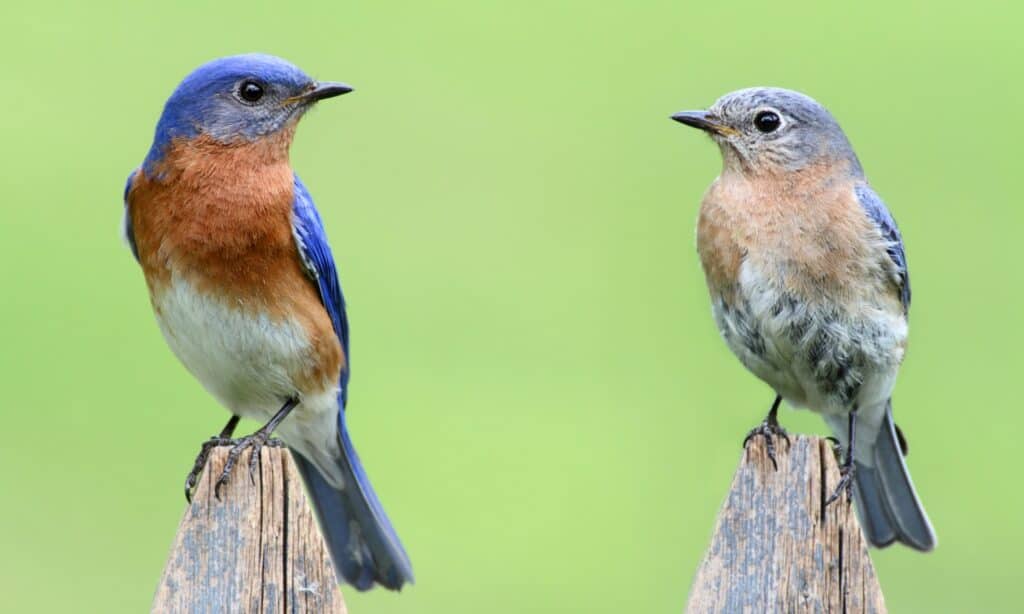
Eastern Bluebirds can be found in semi-open areas with sporadic trees, farmland, and other habitat types.
©iStock.com/SteveByland
Eastern bluebirds are migratory birds that typically begin returning to Wisconsin in March. They frequent open country habitats with patchy vegetation where they nest and breed through the spring and summer. Although most bluebirds return to the Southeastern U.S. and Mexico to overwinter, some may remain in Wisconsin through the winter if conditions are favorable.
Indigo Bunting
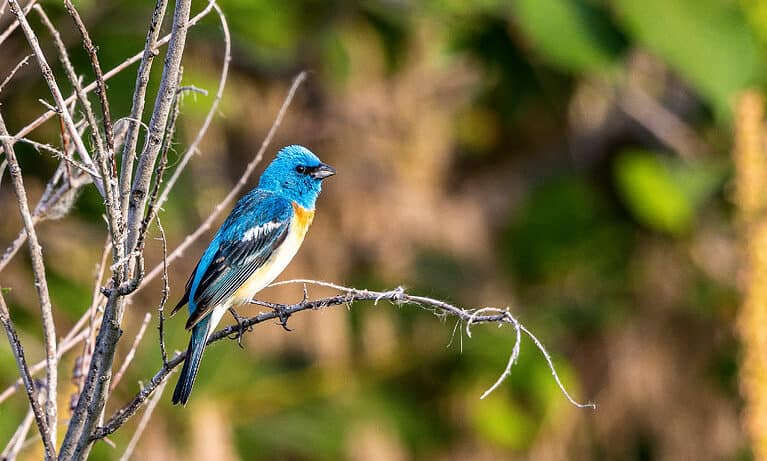
The indigo bunting (Passerina cyanea) is a small, sparrow-sized songbird measuring between 4.7 and 5.5 inches in length with a wingspan of 7.5 to 8.7 inches. During the spring and summer breeding season, the adult male has a vibrant indigo-blue head and a slightly brighter azure blue body, with darker, blackish-blue wings and tail.
Although there may be a subtle touch of blue on her shoulder or tail feathers, the female indigo bunting is a plain light brown color, which helps camouflage her while nesting.
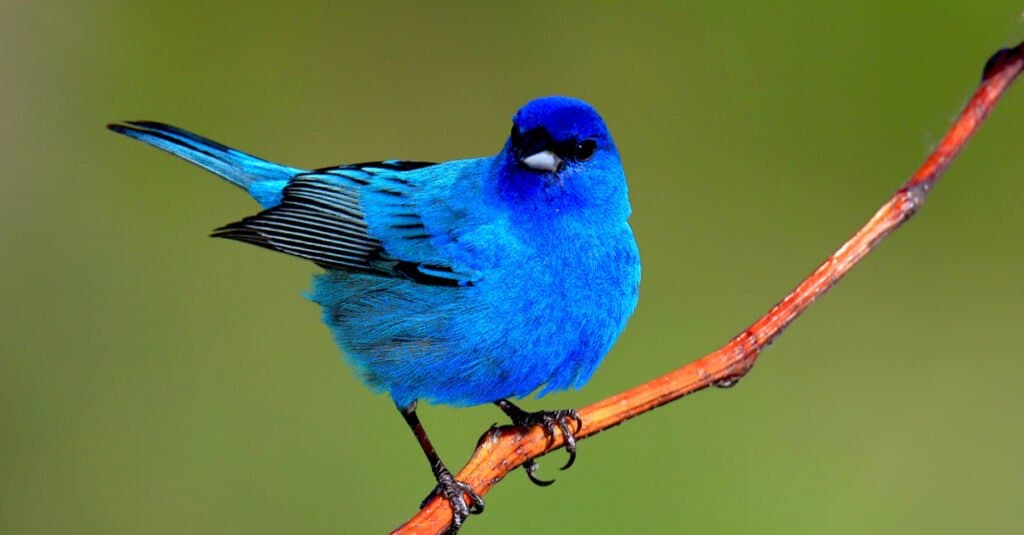
Male indigo buntings have much more vivid plumage than females.
©John L. Absher/Shutterstock.com
Indigo buntings are migratory birds that spend the late spring and summer months (typically from May through September) in Wisconsin. They can be found statewide in brushy, early-successional habitats such as weedy fields, overgrown fence rows, and forest edges where open areas meet wooded cover.
Northern Parula
The Northern parula (Setophaga americana) is a wood-warbler measuring approximately 4.3 to 4.7 inches in length with a wingspan of 6.3 to 7.1 inches. It features blue-gray coloring on its head and upperparts, with a darker shade on its wings and tail, which are accented by white wing bars. The Northern parula can be found statewide during the spring migration (typically in May), although summer breeding populations nest in the mature coniferous and mixed forests of Northern Wisconsin.
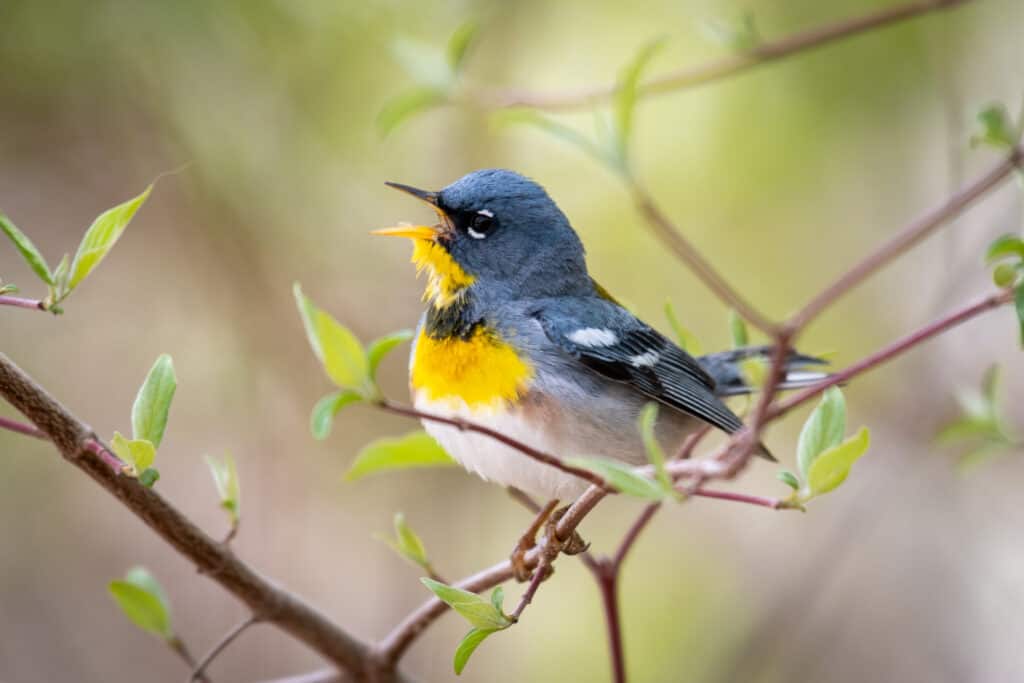
The Northern parula is a small warbler that lives in forest canopies during summer and tropical plantations in the winter.
©Nattapong Assalee/Shutterstock.com