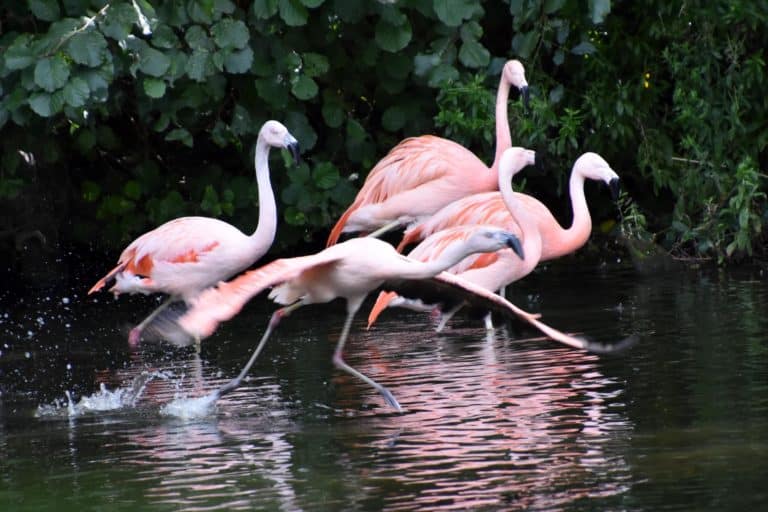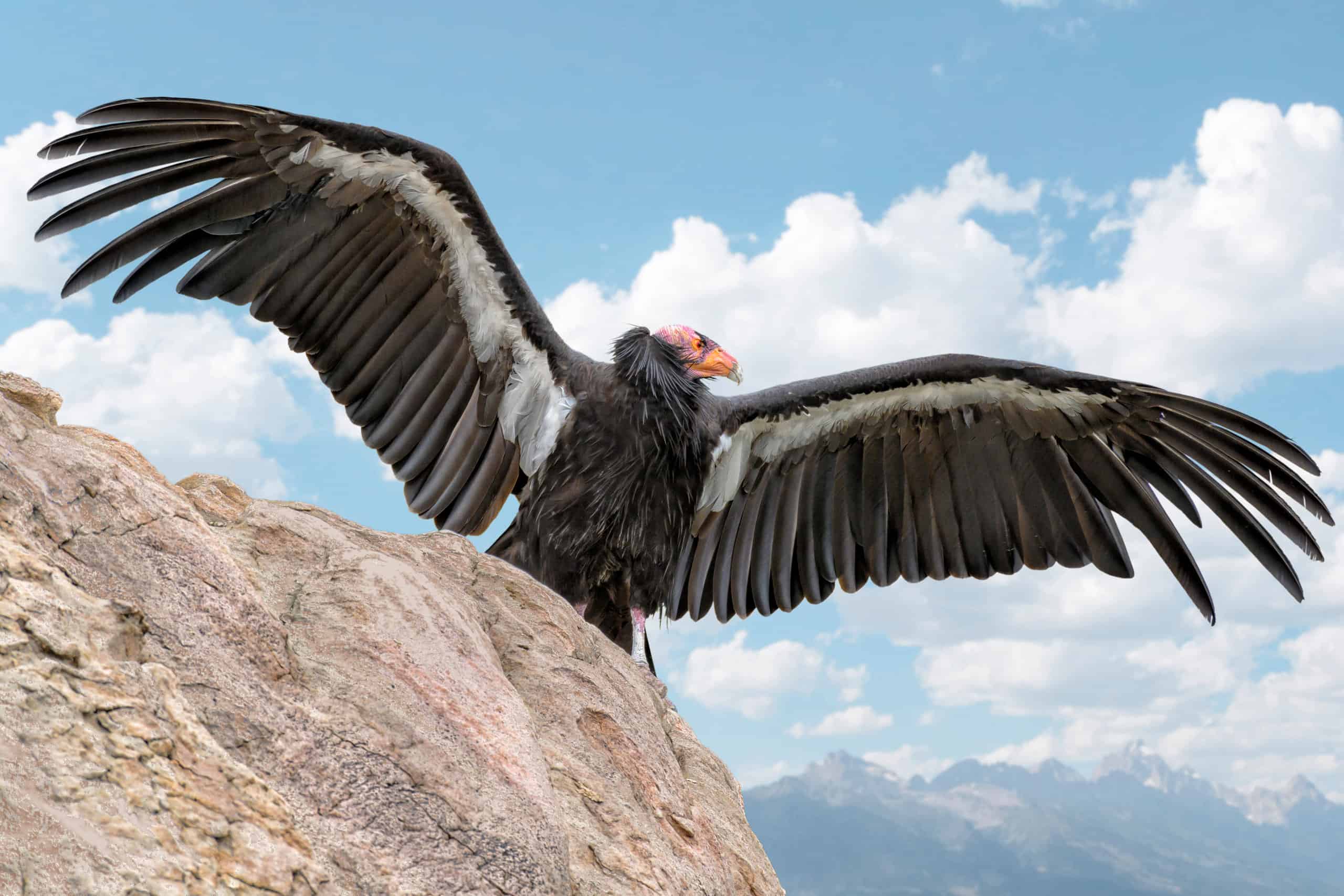

Some of the largest birds in the U.S. have the most impressive wingspans. With wingspans ranging from nearly 6 feet up to 10 feet across, seeing these powerful birds flying overhead is a magnificent sight. From raptors to swans to cranes, we’ve rounded up the top 10 birds largely found in the U.S. with the biggest wingspans.
However, the U.S. is not home to the bird with the largest wingspan in the world. That would be the wandering albatross, which is almost exclusively found in the Southern Hemisphere and has a wingspan of up to 12 feet.
10. Osprey (5-Foot-11-Inch Wingspan)
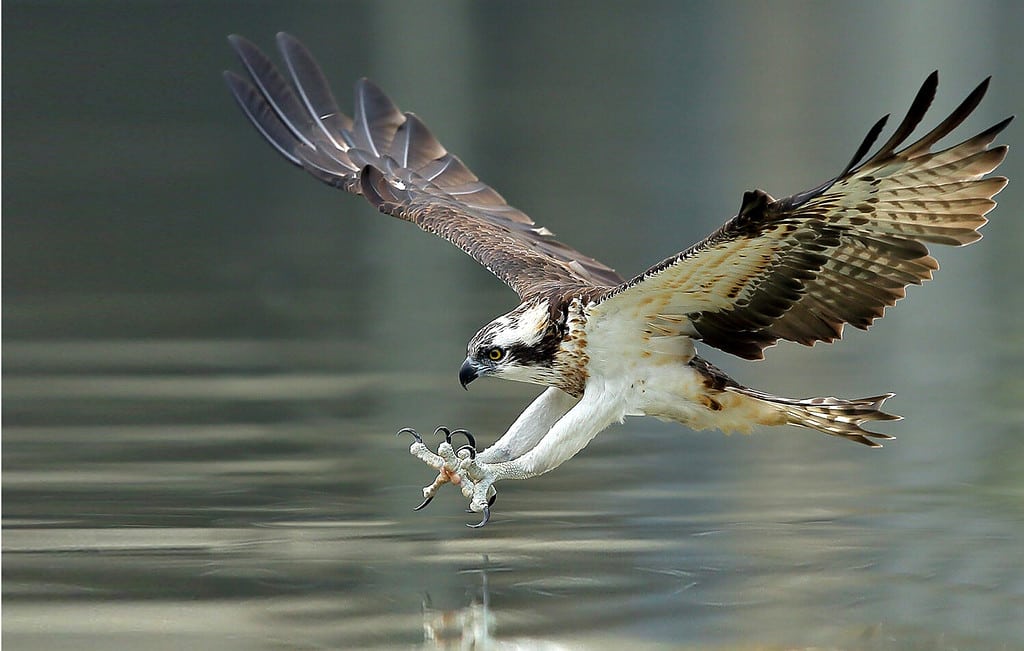
Fish hawks, or ospreys, can close their nostrils underwater as they dive for fish.
©Wang LiQiang/Shutterstock.com
Ospreys (Pandion haliaetus) are hawks that live along coastlines and near large bodies of water across the U.S. These migratory birds are found in most states, but year-round, they live along the Gulf Coast and in Florida. Their wingspan is impressive, measuring nearly 6 feet.
Ospreys migrate for long distances and can fly at speeds of 30 to 40 miles per hour. They have a reversible outer toe, which means they can grasp prey with their four toes (two in front and two behind). They eat primarily fish, diving in the water to catch their prey. As adults, these large and powerful birds have few predators. However, their eggs and chicks are vulnerable to great horned owls and bald eagles.
9. Turkey Vulture (6-Foot Wingspan)
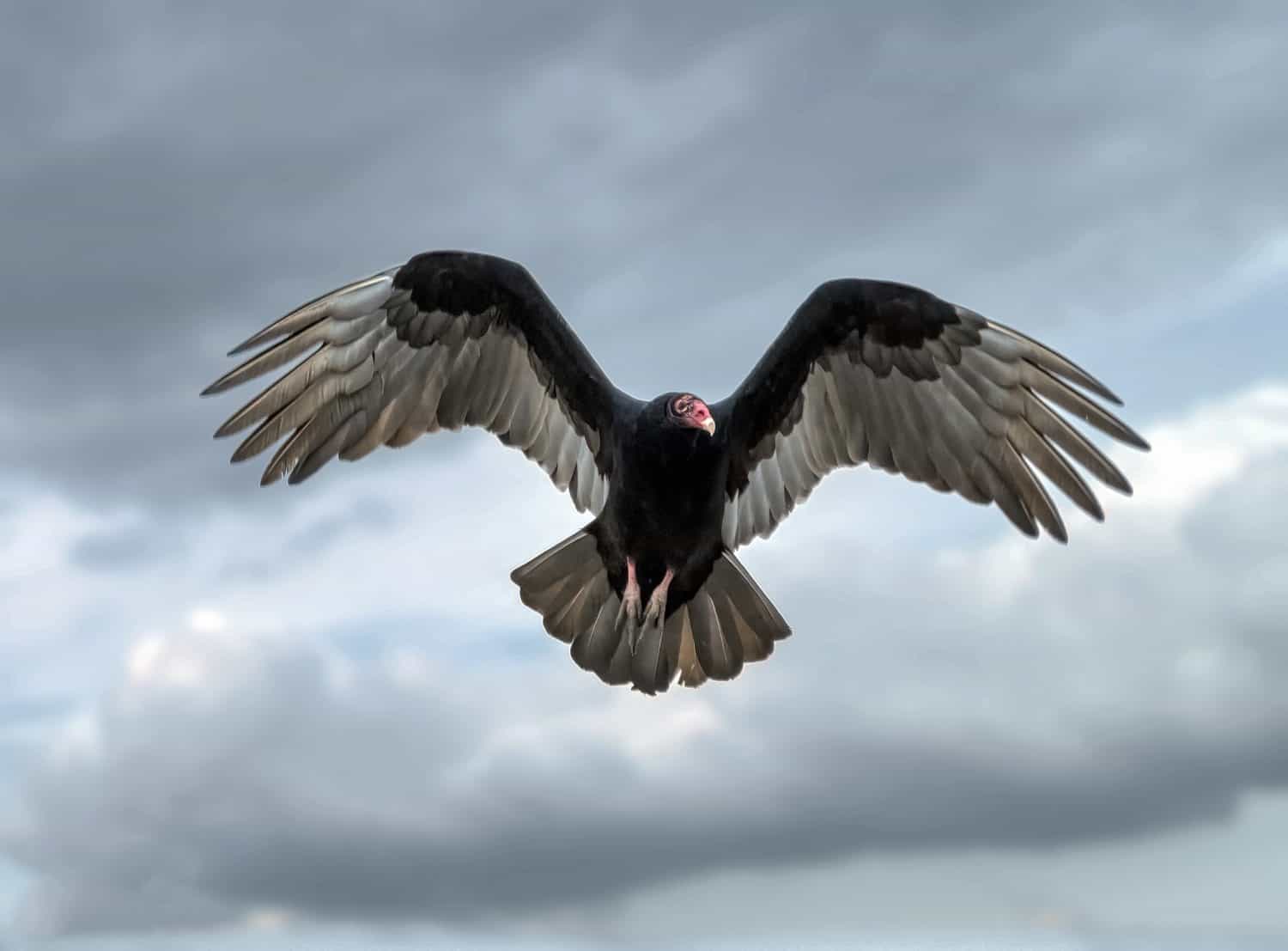
Turkey vultures have weaker feet than other birds of prey because they are designed to sit on dead carcasses rather than holding prey in their claws.
©Fiona M. Donnelly/Shutterstock.com
Sometimes also known as buzzards, Turkey vultures (Cathartes Aura) are scavengers that feed on carrion. With their excellent sense of smell, they can detect a dead animal from 8 miles away, soaring at speeds of 15 to 20 miles per hour. Turkey vultures are found in every U.S. state. Some in the south stay year-round, while others migrate south for the winter. These are large birds with a 6-foot wingspan.
Vultures have a bad reputation, thanks to their diet of dead meat. However, they perform a valuable service to the environment. They have such strong acid in their stomachs that they can eat even old and diseased meat without getting sick. Turkey vultures help clear away rotting carcasses and stop the spread of disease. Turkey vultures don’t have many predators, but when they are hatchlings, they are vulnerable to attacks in the nest from raccoons, opossums, and birds of prey.
8. Sandhill Crane (6.5-Foot Wingspan)
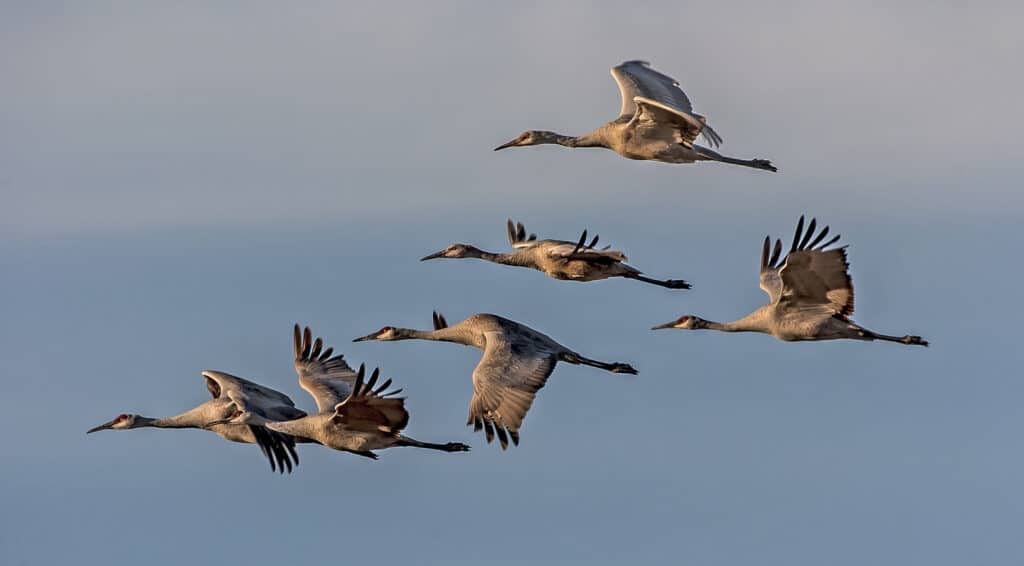
Sandhill cranes mate for life and attract partners with a courtship dance.
©Tom Zeman/Shutterstock.com
Some people think the elegant and tall sandhill crane (Grus canadensis) is responsible for the West Virginia sightings of the infamous mothman cryptid. When you see one in flight with its long legs and 6.5-foot wingspan, it does seem possible it could be mistaken for something otherworldly in the dark. Sandhill cranes live in the southern U.S. in the winter. In the spring, they migrate north across the Great Plains and Pacific Northwest. They can cover large distances each day and travel around 25 to 35 miles per hour.
Sandhill cranes are omnivores and eat a diet of plants, grains, insects, snails, frogs, and small reptiles. Because they are ground-dwelling birds, sandhill cranes are vulnerable to predation from mammals, including foxes and bobcats. Large owls and falcons also sometimes hunt sandhill cranes.
7. Great Blue Heron (6-Foot-7-Inch Wingspan)

Great blue herons are solitary hunters but tend to migrate in groups.
©Michael Munster/Shutterstock.com
There are around 12 species of herons living in the U.S., and the great blue heron (Ardea herodias) is the largest of these. This majestic wading bird is nearly 5 feet tall with a 6-foot-7-inch wingspan. You can distinguish a great blue heron from a sandhill crane in flight by the S-shape of the heron’s neck, while cranes tend to fly with their necks held straight. Great blue herons eat a diet of fish, insects, and small birds. They hunt by waiting quietly in shallow water and then striking their prey quickly. Herons use their sharp bills to stab the fish and swallow it whole. Adult herons have few predators to worry about, but raccoons and hawks may raid nests for hatchlings and eggs.
6. Golden Eagle (7-Foot-3-Inch Wingspan)
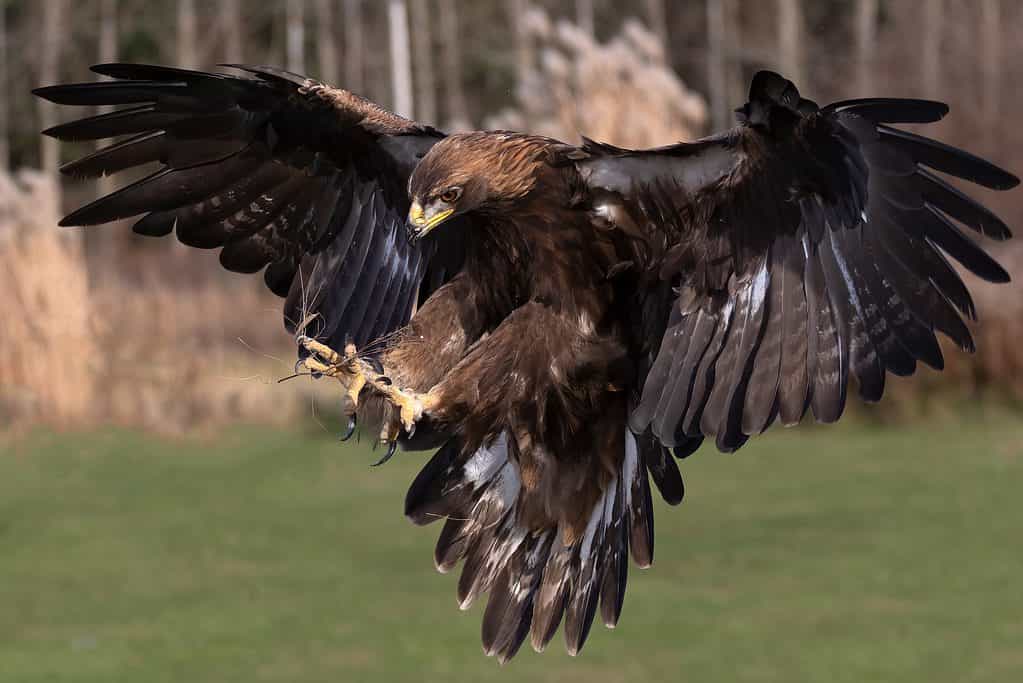
Golden eagles can dive at speeds of nearly 200 miles per hour.
©Touched by light images/Shutterstock.com
These incredibly fast and majestic raptors are one of the largest birds in the U.S., with 7-foot-3-inch wingspans. Golden eagles (Aquila chrysaetos) soar at speeds of around 30 miles per hour. However, when they dive for their prey, they can reach unbelievable speeds of up to 200 miles per hour. Golden eagles live in sparsely populated areas with high cliffs or tall trees. They are found in a variety of habitats from the Alaskan tundra to the deserts of Death Valley in California. Though they are mainly spotted in the western U.S., they are sometimes seen migrating through the East.
Though their population in the U.S. is stable at around 40,000 individuals, scientists are concerned about ongoing threats from humans. Ranchers and farmers may illegally shoot or poison golden eagles in an attempt to protect their livestock, although they are protected under the Bald and Golden Eagle Protection Act. Golden eagles are capable of killing larger prey, such as livestock, but they mainly eat smaller mammals, such as prairie dogs, ground squirrels, rodents, and rabbits. Since golden eagles are at the top of the food chain, they don’t face many predators, other than humans. However, their chicks are hunted by bears, foxes, and wolverines.
5. Bald Eagle (7.5-Foot Wingspan)
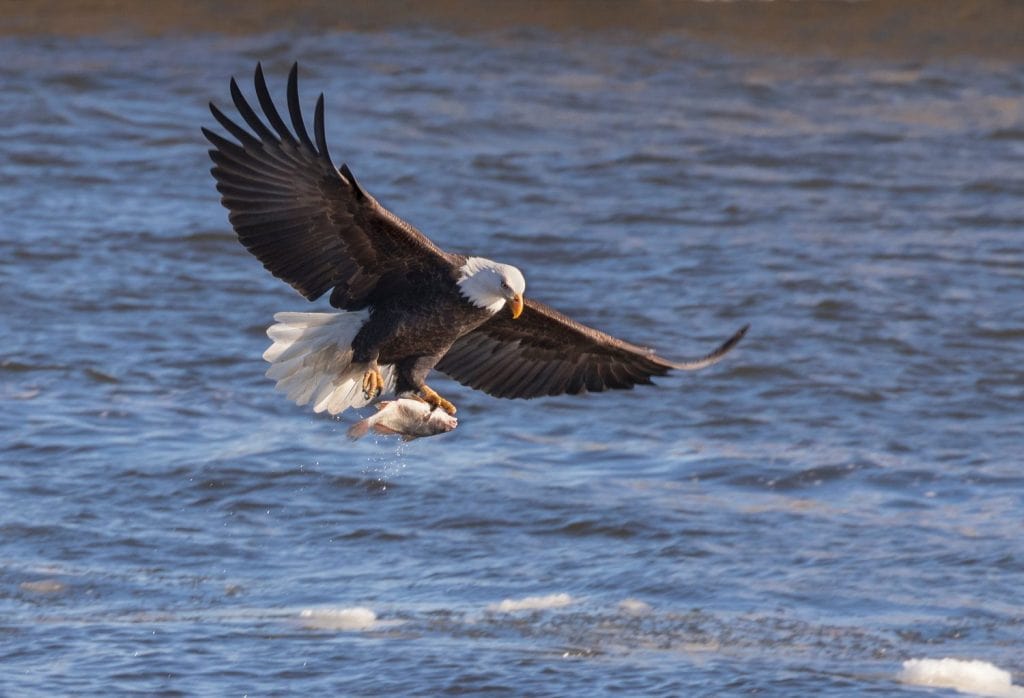
Bald eagles will steal other birds’ food, harassing raptors in the air until they drop their catch.
©Natalia Kuzmina/Shutterstock.com
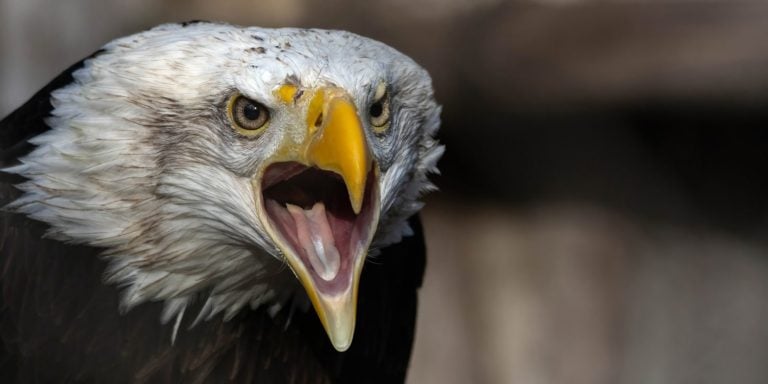
At 7-feet-6-inches, bald eagles (Haliaeetus leucocephalus) have even a slightly larger wingspan than golden eagles. This iconic bird of prey has been a national emblem of the U.S. since 1782. Far longer than that, bald eagles were an important cultural and spiritual symbol for Native Americans. Despite being a national symbol, bald eagles were nearly extinct by the mid-1900s. Their populations dwindled due to habitat loss, illegal shooting, and contamination of their food source by the insecticide DDT.
Fortunately, banning DDT and conservation efforts for the eagles have led to a comeback. In 2009, the latest count by the U.S. Fish and Wildlife Service estimated 316,700 individual bald eagles (including 71,400 nesting pairs) were living in the country.
Bald eagles fly around 30 miles per hour, but can dive at 100 miles per hour when chasing their food. They eat a varied diet of fish, small mammals, other birds, rodents, and rabbits. They are also known to scavenge for carrion. At the top of the food chain, bald eagles have few predators. However, owls and other birds of prey may eat young hatchlings.
4. Whooping Crane (7.5-Foot Wingspan)
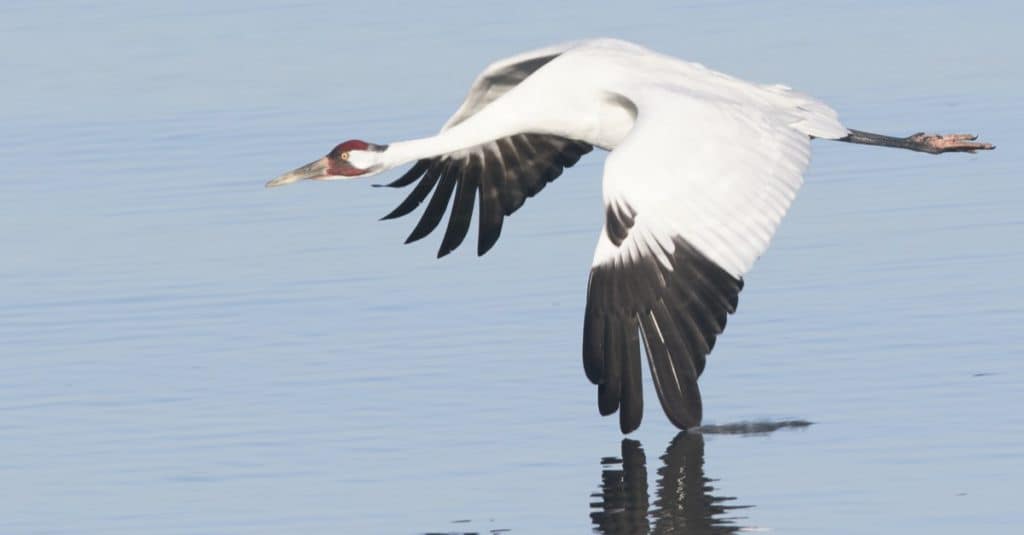
Whooping cranes are named after their loud call, which can be heard from miles away.
©Kent Ellington/Shutterstock.com
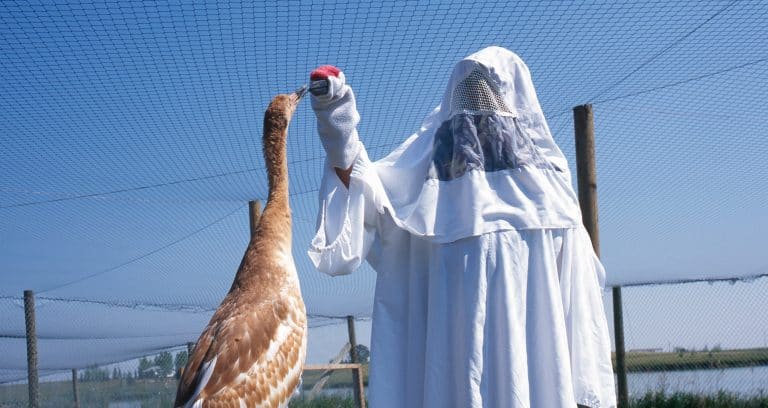
At around 5 feet tall with 7.5-foot wingspans, whooping cranes (Grus americana) are the tallest birds in North America. They are named after their loud call, a distinctive and loud whooping sound which can be heard from miles away. Although whooping cranes are classified as endangered, conservation methods have helped populations recover. In 1938, there were only 15 individual whooping cranes left in the U.S. Today, conservation methods such as breeding programs and habitat protection have helped save the whooping crane from extinction.
One population of whooping cranes migrates across the middle of the country from Canada to Texas. Another population, which was reintroduced by conservationists, migrates from Wisconsin to Florida. And finally, whooping cranes living in Florida and Louisiana stay year-round. They can cover long distances when migrating, and fly at speeds of up to 50 miles per hour.
Whooping cranes are omnivores, eating a varied diet of berries, seeds, small fish, frogs, insects, and crustaceans. Predators include eagles, bears, foxes, coyotes, and wolves.
3. American White Pelican (9-Foot Wingspan)
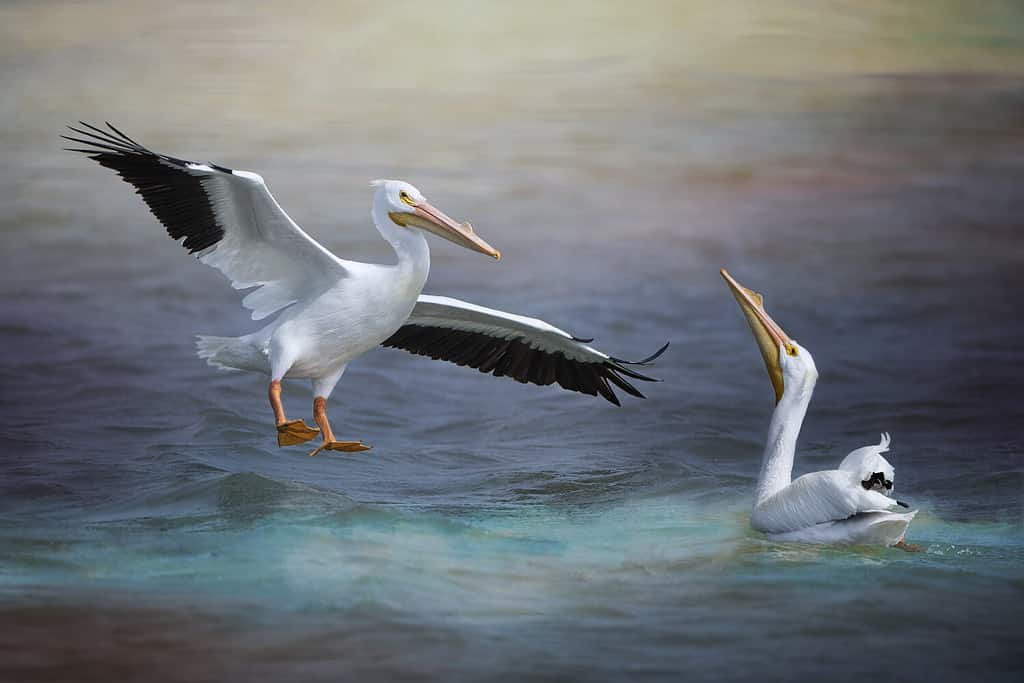
The majestic American white pelican can be identified by its large orange bill, white feathers, and black flight feathers.
©Bonnie Taylor Barry/Shutterstock.com
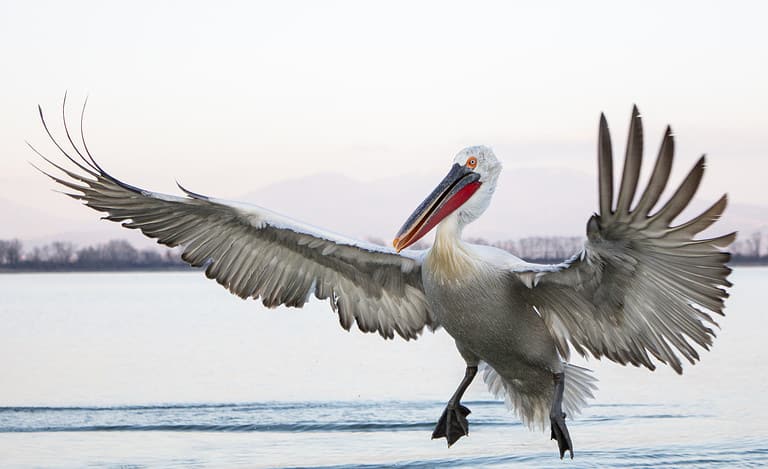
You can find the American white pelican (Pelecanus erythrorhynchos) living near lakes, marshes, salt bays, and coastal islands in scattered areas across the U.S. In the winter, they can be spotted along the West Coast. American white pelicans that live in Texas stay there year-round, while other populations migrate. These large birds are all white with black flight feathers and a 9-foot wingspan. When migrating, they fly high in the air in flocks at speeds of around 30 miles per hour.
American white pelicans eat fish, crustaceans, and frogs. They are very social birds and have been observed hunting together, herding fish into shallow waters for an easy meal. They also steal fish from other pelicans and cormorants. These large birds don’t have many predators, but their eggs and chicks may be eaten by gulls, coyotes, and other mammals.
2. California Condor (9.5-Foot Wingspan)
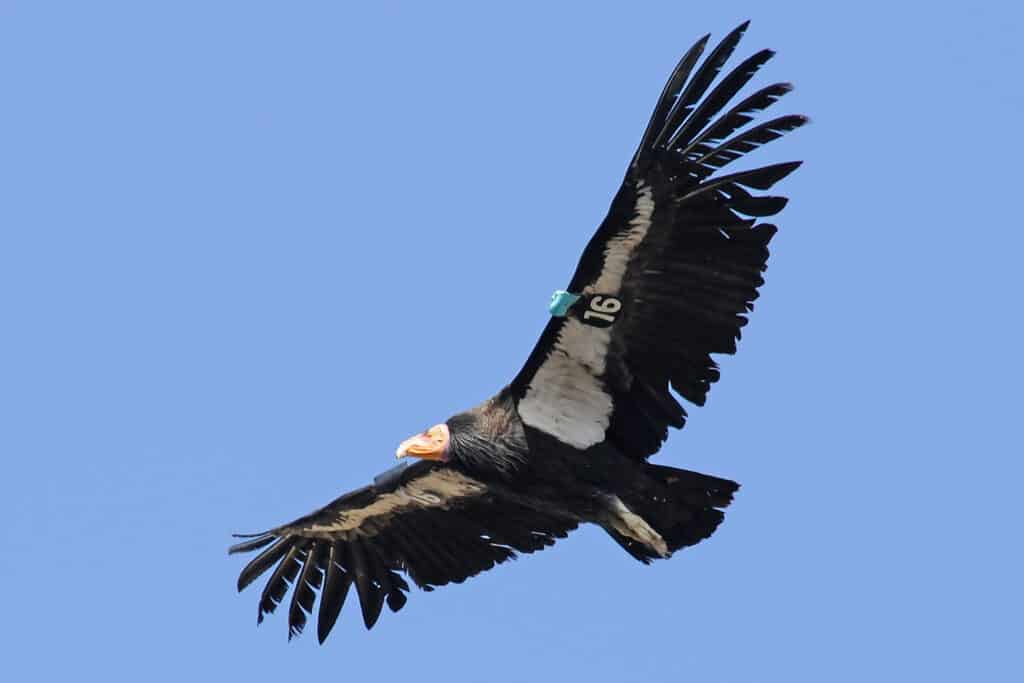
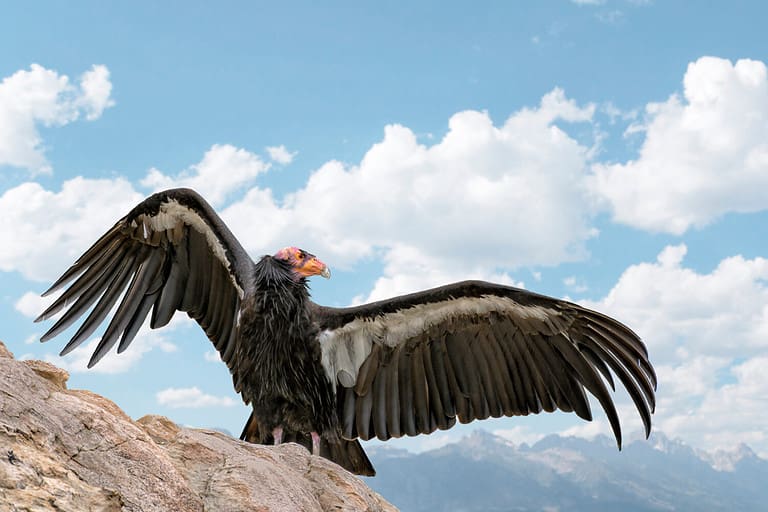
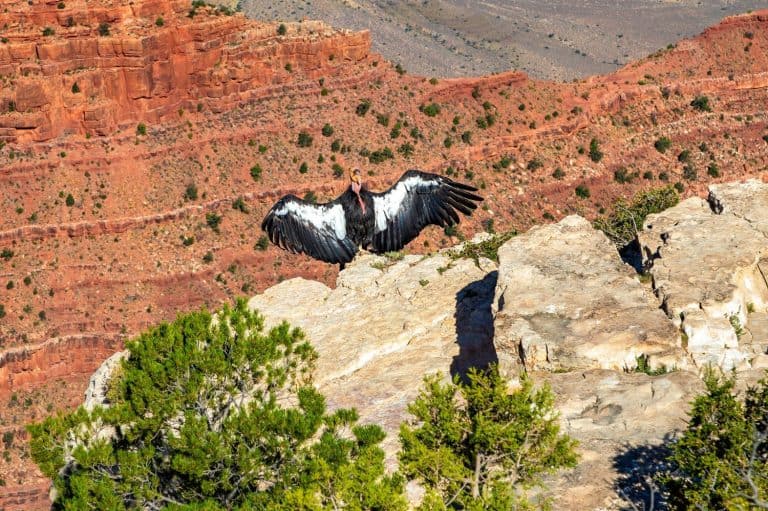
California condors are one of the fastest animals in California, flying at speeds of over 55 miles per hour.
©Brian A Wolf/Shutterstock.com
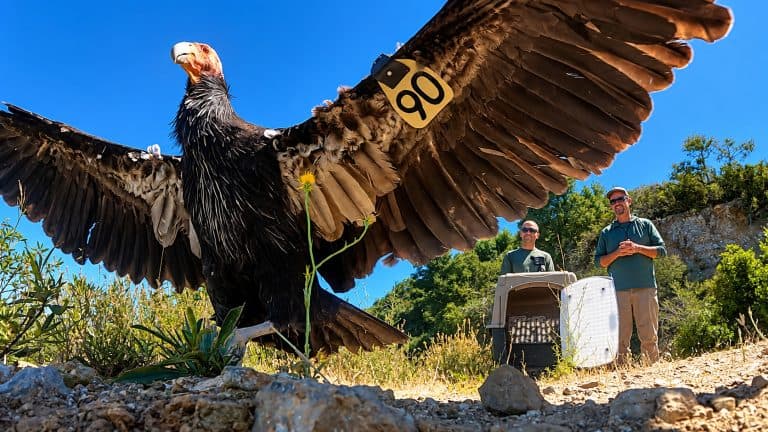
Due to extensive conservation efforts, the California condor’s (Gymnogyps californianus) population is increasing, but they are still classified as critically endangered. In the 1980s, there were just over 20 California condors left. Today, scientists estimate there are 275 wild California condors. They can be found living on remote cliffs in California, Utah, Arizona, and Baja California. Another 160 are living in captivity.
California condors are one of the world’s largest birds of prey and have the second largest wingspan of any bird in the U.S. With a 9.5-foot wingspan and a weight of 25 pounds, these large vultures are the largest land bird in the country. They can soar thousands of feet in the air at speeds over 55 miles per hour.
They can live for up to two weeks without food. Their diet consists of large dead mammals such as deer, marine mammals, and cattle. As adults, the California condor doesn’t have many predators, but their eggs and chicks may be preyed upon by golden eagles, mountain lions, ravens, and coyotes.
1. Trumpeter Swan (10-Foot Wingspan)

Trumpeter swans mate for life and return to the same area each year to nest.
©Danita Delimont/Shutterstock.com
Finally, we come to the U.S. bird with the largest wingspan in the country. The trumpeter swan (Cygnus buccinator) on average has an 8-foot wingspan, but some of the males can stretch their wings to 10 feet across. Weighing 25 pounds and standing nearly 6 feet tall, trumpeter swans are the largest native waterfowl in the country. Despite their size, they are strong fliers, although they need to run for about 100 yards before they can take off. Once in the air, they can reach speeds of up to 45 miles per hour.
Trumpeter swan breeding grounds are in remote locations in Alaska, Canada, and the northwestern U.S. They live near slow-moving rivers, lakes, and ponds, and mainly eat aquatic plants. However, they will sometimes eat fish eggs or small fish. As adults, trumpeter swans have few predators, although they may be hunted by coyotes, foxes, and golden eagles. Their eggs and chicks are more vulnerable and may be eaten by predators such as raccoons, coyotes, and birds of prey.
These graceful swans are making a comeback after nearly facing extinction in the late 1800s and early 1900s. Hunters killed the swans to take their feathers, which were used as writing quills and in fashion. Today, conservationists are reintroducing trumpeter swans to areas where they were previously abundant, such as in the Great Lakes region.