Quick Take
- One California blue bird can live at 12,000 feet in summer, then vanish to a completely different landscape by winter. Can you guess which one? Mountain Bluebird migration →
- Some of these blue birds will ignore your feeder entirely, though there is a specific trick to attract each one. Lazuli Bunting feeder tips →
- Not all of California's blue birds actually migrate, and the ones that stay year-round might surprise you. Year-round scrub jay residents →
- One species looks nothing like a typical 'blue bird' yet still makes the list, and its plumage is a striking combination most people wouldn't expect. Steller's Jay black and blue →
California is more than just a home to celebrities; it is also home to a diverse ecosystem filled with abundant plant and animal life. California is home to some of the best bird-watching spots in the world. Discover nine common blue birds in California and learn about their habitats, migration, appearance, and diet.
Mountain Bluebird
Mountain bluebirds (Sialia currucoides) inhabit most of California except for the coastline. The state is unique for this species because breeding populations can be found in the northern regions, and they migrate to southern California for winter. In summer, they live between 7,000 and 12,500 feet above sea level in prairies, meadows, and pastures. They winter in lower elevations in grasslands, woodlands, and agricultural areas.
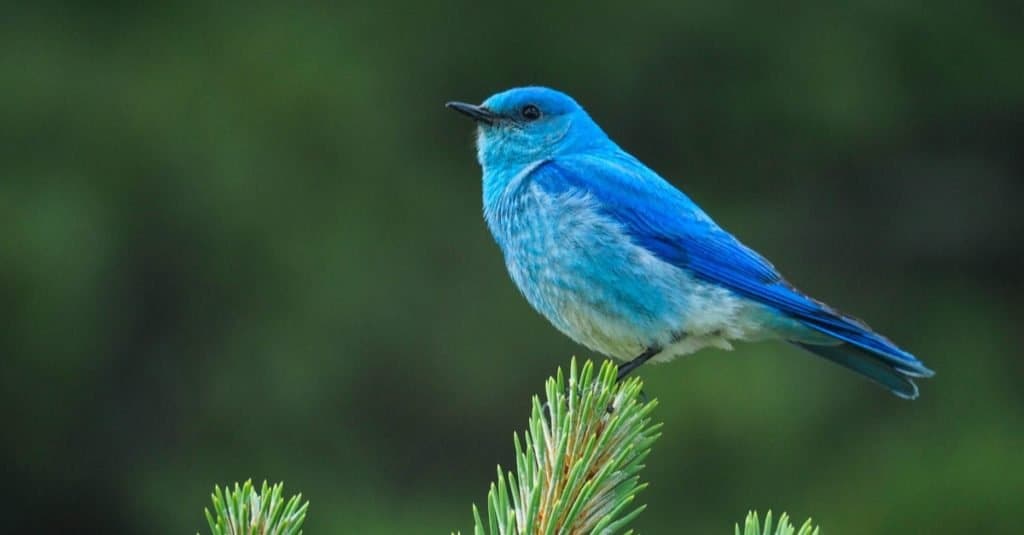
The mountain bluebird is a medium-sized bird weighing about one ounce with a length of 6-8 inches.
©MTKhaled mahmud/Shutterstock.com
Mountain bluebirds breed in western Canada and the United States, and winter in the southwestern United States and Mexico. They measure 6.3 to 7.9 inches long, weigh a little over one ounce, and have an 11- to 14-inch wingspan. Males are a vivid sky-blue overall, with a white belly and pale blue wings and tail.
Mountain bluebirds eat caterpillars, beetles, grasshoppers, small fruits, and seeds. Mountain bluebirds do not typically eat at feeders but may visit a nest box for shelter.
Pinyon Jay
Pinyon jays (Gymnorhinus cyanocephalus) are typically found in the far eastern regions of California or wherever pinyon pines exist. Some populations may migrate closer to the coast in winter. They do not stray far from pinyon-juniper woods but may occasionally inhabit groves and oak woods.

Pinyon jays live in the far eastern regions of California, and they do not stray far from pinyon-juniper woods.
©Agami Photo Agency/Shutterstock.com
Pinyon jays are permanent residents in the interior portions of the West. However, they may move to find food when pinyon trees fail to produce enough seeds.
Pinyon jays weigh three to four ounces, measure 10 to 11 inches long, and have an 18-inch wingspan. They have a dusty-looking blue body with a brighter cerulean face.
The pinyon jay diet consists of pinyon pine seeds, nuts, berries, grains, and insects.
Fill your feeder with peanuts, sunflower seeds, suet, and cracked corn to attract pinyon jays to your yard.
Western Bluebird
California has a large resident population of western bluebirds (Sialia mexicana), especially along the coast. They inhabit open woodland edges, preferring evergreen and deciduous forests.
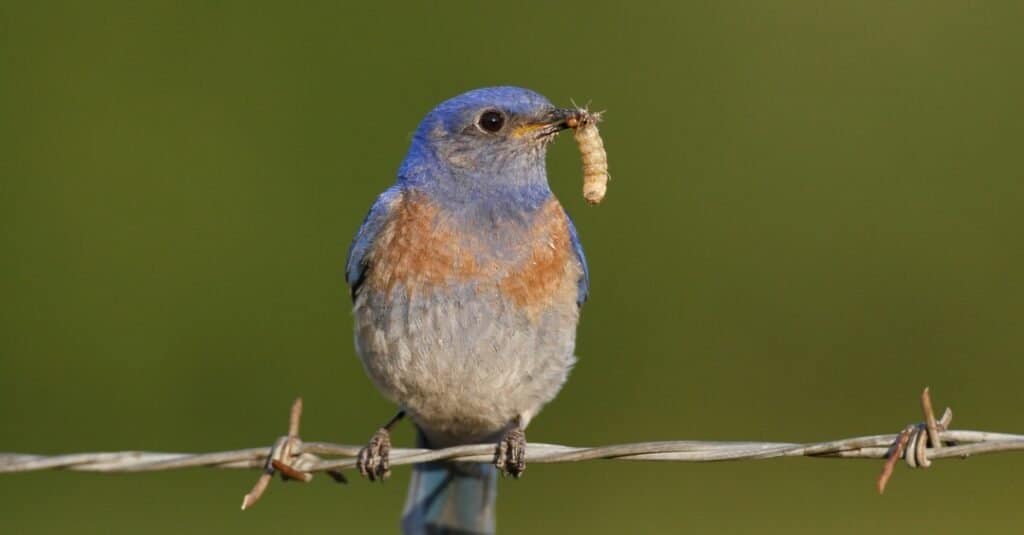
Western bluebirds like to eat a variety of foods, including grasshoppers, caterpillars, beetles, ants, fruits, and seeds.
©iStock.com/mooninwell
The western bluebird weighs between 0.8 and 1 ounce and measures 6 to 7 inches long, with an 11- to 13-inch wingspan. Males are vibrant blue above and rusty orange below. Western bluebirds that breed in the northeastern part of the state migrate to central California in winter.
Western bluebirds eat a variety of foods, including grasshoppers, caterpillars, beetles, ants, wasps, fruits, and seeds. Scatter mealworms around your yard to attract western bluebirds.
California Scrub Jay
The California scrub jay (Aphelocoma californica) lives year-round in California, except in deserts and at higher elevations. They live in oak woodlands and scrub, but you can also spot them in foothill forests, suburbs, and parks.

California scrub jays closely resemble blue jays. They live year-round in California in oak woodlands and scrub.
©Pierre Leclerc/Shutterstock.com
These birds are permanent, nonmigratory residents along the West Coast, including Washington, Oregon, California, and Baja California, Mexico.
California scrub jays measure 11.5 inches long and weigh two to three ounces, with a 15.5-inch wingspan. These birds are azure and gray above and white below.
The California scrub jay’s diet consists of insects, fruits, nuts, seeds, lizards, and nestlings.
Fill your feeder with sunflower seeds and peanuts to attract California scrub jays.
Barn Swallow
Barn swallows (Hirundo rustica) breed in Northern California and along most of the coastline. They migrate through the southern portion of the state. Barn swallows live in many semi-open habitats, such as farms, fields, parks, and marshes. They breed throughout much of the Northern Hemisphere and winter in the Southern Hemisphere.
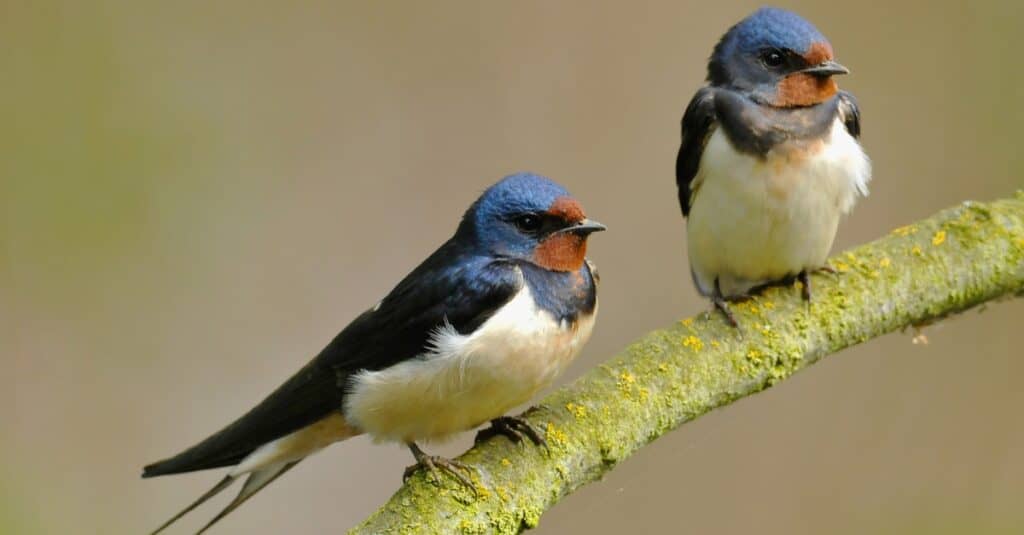
Barn swallows breed in Northern California and migrate through Southern California.
©CezaryKorkosz/Shutterstock.com
Barn swallows measure six to seven inches long and weigh less than an ounce, with an 11- to 12-inch wingspan. They are dark blue above and tawny below with cinnamon-colored faces.
Barn swallows eat flies, beetles, bees, wasps, ants, and moths. At backyard feeders, they are drawn to crushed eggshells or oyster shells for grit.
Blue Grosbeak
Blue grosbeaks (Passerina caerulea) are found in the far southern regions of California during spring and summer. These birds can be found in old fields, forest edges, desert scrub, and southern pine forests.

The blue grosbeak breeds in Southern California in old fields, forest edges, and southern pine forests.
©Bonnie Taylor Barry/Shutterstock.com
Blue grosbeaks breed across the southern United States, migrate along the coasts, and winter in Mexico and Central America. They weigh around one ounce and measure 6 inches long, with an 11-inch wingspan. They are deep, rich blue overall, with chestnut wing bars and a silver bill.
Blue grosbeaks eat grasshoppers, crickets, snails, seeds, and grains.
Fill your feeder with grains and millet seeds to attract blue grosbeaks.
Lazuli Bunting
Lazuli buntings (Passerina amoena) breed throughout California, except for the southeastern corner. They inhabit scrub oaks, thickets, sagebrush, and pinyon-juniper woods.

Lazuli buntings breed in most of California in scrub oaks, thickets, sagebrush, and pinyon-juniper woods.
©iStock.com/Jeff Edwards
Lazuli buntings breed in the northwest, migrate through the southwest, and winter along Mexico’s Pacific coast. They measure 5 inches long, weigh approximately half an ounce, and have an 8-inch wingspan. They are brilliant blue above and white below, with light orange breasts.
Lazuli buntings consume caterpillars, grasshoppers, spiders, beetles, ants, berries, and seeds. White proso millet, nyjer seed, and sunflower seeds are their favorite feeder foods.
Steller’s Jay
The Steller’s jay (Cyanocitta stelleri) lives year-round in much of California, but it is absent from the Central Valley. They inhabit pine, spruce, and fir forests and many other woodland habitats, including suburban parks.
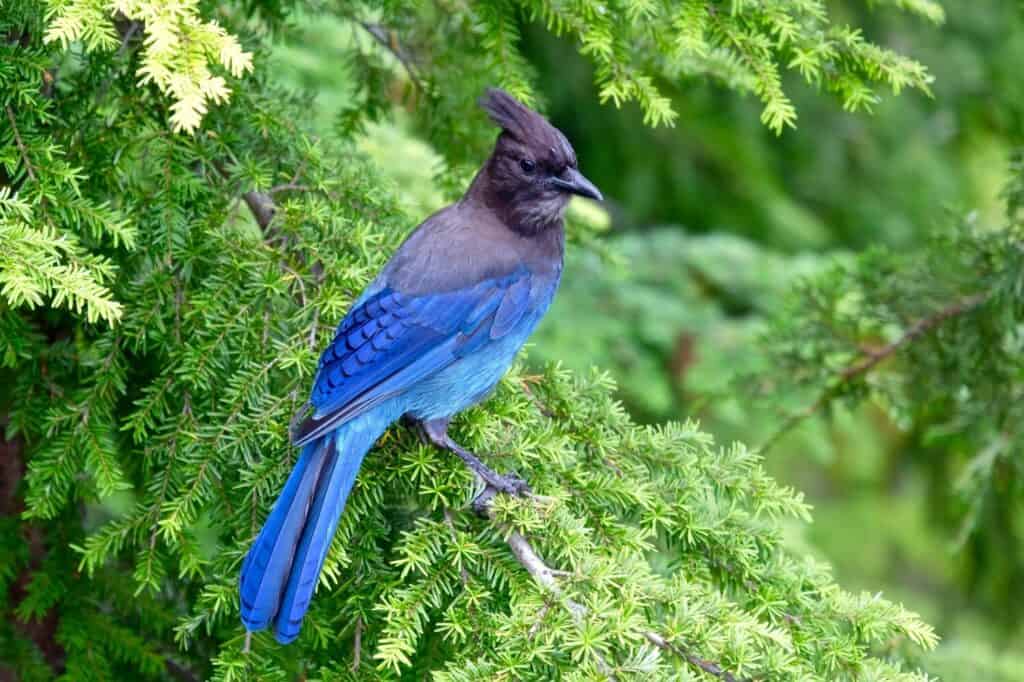
Year-round residents in California, Steller’s jays are found in forests, parks, and other woodland habitats.
©Marina Poushkina/Shutterstock.com
Steller’s jays are permanent residents in the western United States, southwestern Canada, and western Mexico. They measure between 11 and 13 inches long, weigh three to five ounces, and have a 17-inch wingspan. Their plumage is charcoal black and deep blue.
Steller’s jays eat seeds, berries, nuts, insects, small mammals, and eggs.
Fill your backyard feeder with suet, peanuts, and large seeds to attract Steller’s jays.