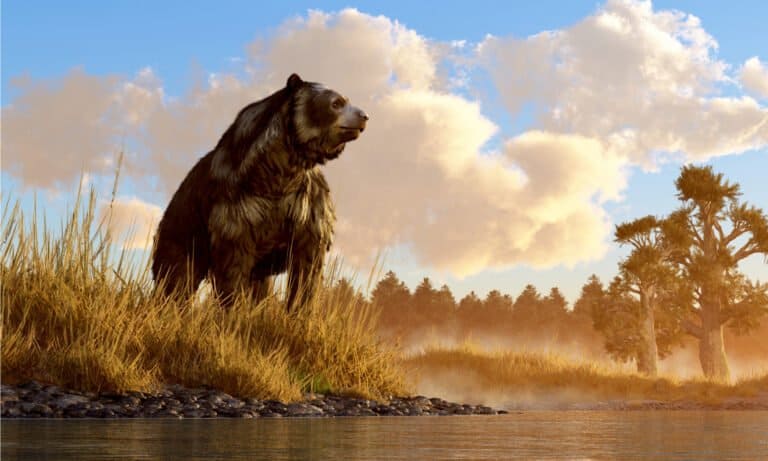

Known by many names, including the Eurasian Cave Lion and the European Cave Lion, Panthera spelaea is a species of large cat that roamed Eurasia and North America 370,000 to 10,000 years ago. Fossil evidence and drawings of the cave lion in multiple prehistoric artworks depict it as a giant cat with rounded, protruding ears and a tufted tail. Its common name comes from the numerous depictions in cave drawings. However, despite its name, it most likely never lived in caves. Keep reading to learn more about this ice age lion from the Pleistocene epoch.
Just How Big Was a Cave Lion?
The term “cave lion” may refer to Panthera spelaea or any of its subspecies, such as P. spelaea fossilis, P. spelaea intermedia, and P. spelaea spelaea. Some scientists also include P. spelaea vereshchagini and P. spelaea cloueti as subspecies. The fossil record shows that cave lions decreased in size throughout the Pleistocene. While the earliest cave lions, P. spelaea fossilis, were among the largest cats ever to exist, late Pleistocene cave lions, P. spelaea spelaea, were considerably smaller.
The most recent estimates based on the fossil record indicate that P. spelaea fossilis reached 5 feet in height and measured 9.5 feet in length. Some researchers suggest these lions could have weighed from 880 to 1,100 pounds. Based on the average size of various fossil specimens of cave lions that have been unearthed, P. spelaea is believed to have weighed 160–180% of the body mass of a modern lion of similar length.
What Did a Cave Lion Look Like?
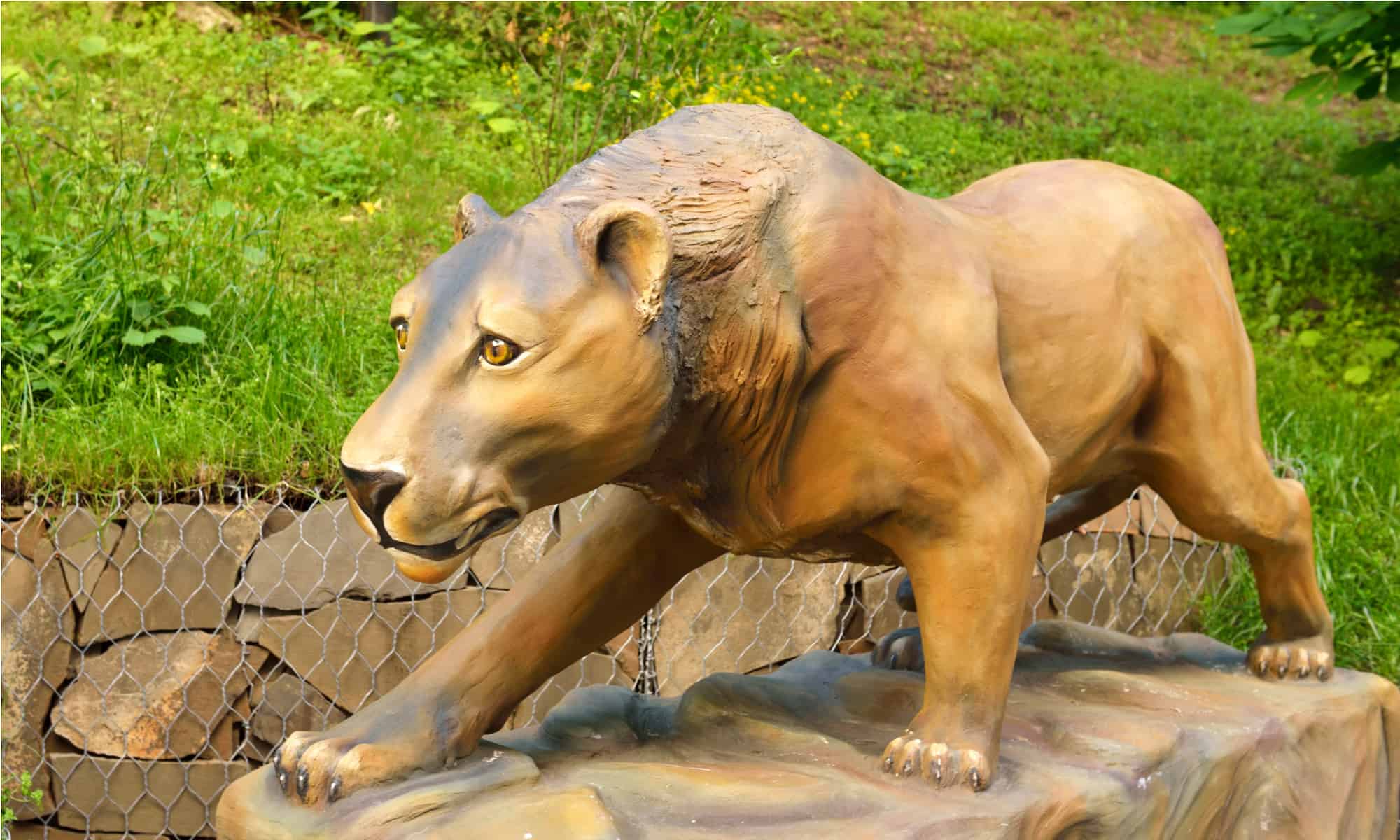
Unlike modern lions, cave lions did not have a mane.
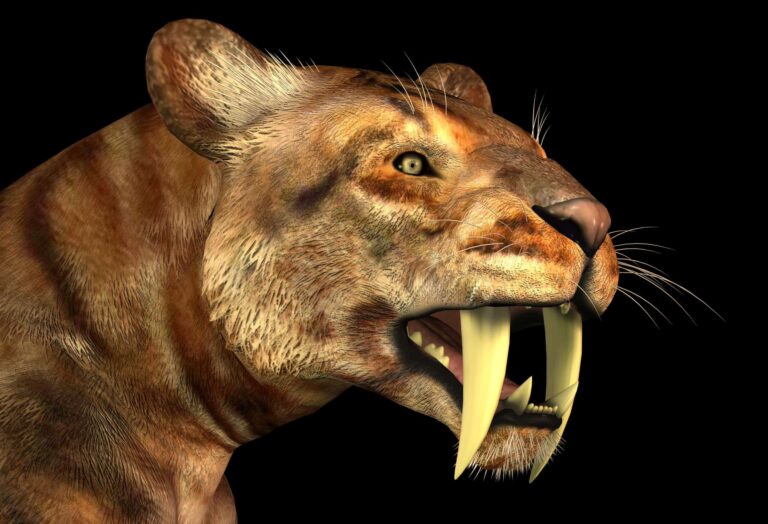
In addition to discovered fossils, there are also many depictions of cave lions in prehistoric cave paintings, giving researchers a fairly good idea of their appearance. As mentioned above, cave lions might have had rounded, protruding ears with long, tufted tails. Unlike modern lions, cave lions did not have a mane. However, they had thick fur similar to that of the modern Siberian tiger. They may have also had faint, tiger-like stripes, and fur on their upper body varying from ochre-tinted gray to dark ochre brown. The rest of their body was most likely a light brownish color.
Like the formidable predators they were, cave lions had a total of 20 sharp, retractable claws. The fossil of a canine tooth from this species, which was unearthed in Alaska, measured about 5 inches in length. The cave lion had bone-crushing teeth with a bite force greater than that of a modern lion, which is estimated to be around 650 PSI. Reconstructions of their build also indicate that cave lions had a powerful physique and were likely relatively quick in short bursts.
The Cave Lion Diet and Hunting Strategy
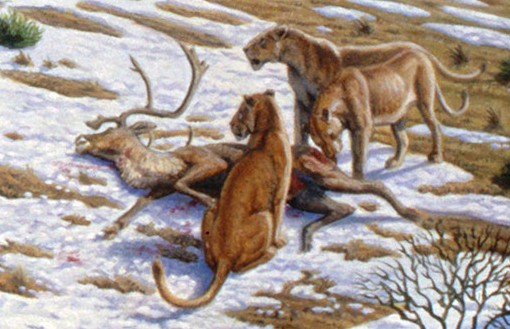
Scientists believe that, like their modern relatives, cave lions were active hunters and carnivores. They are believed to have preyed on large herbivores that existed alongside them, such as young cave bears, deer, bison, and even mammoths. In fact, researchers recently extracted the oldest RNA ever found from a young woolly mammoth known as Yuka, which is believed to have been killed by cave lions.
In many cave paintings, cave lions are depicted as group hunters, similar to the cooperative hunting strategy of modern lionesses. Like modern lions, cave lions most likely killed their prey with a powerful, suffocating bite to the neck. Although they are believed to have been able to accelerate quickly, these lions were also extremely heavy, and their bodies were unlikely to be adapted for long chases. Their prey could probably often outrun them, which means cave lions presumably hunted using stealth and ambush tactics, just as lions do today.
Discoveries and Fossils
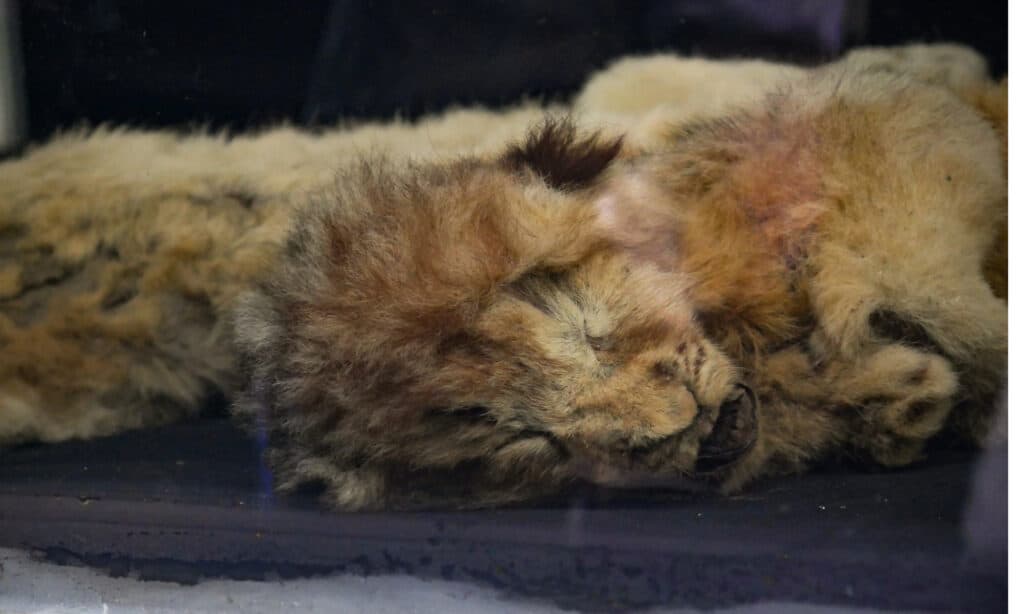
Paleontologists found well-preserved cave lion cubs in Siberia.
©Tarakanbix/Shutterstock.com
The earliest description of this species was made by Georg August Goldfuss, a German paleontologist, in 1810. He described the species under the scientific name Felis spelaea. The first fossil ever excavated was found in a cave in southern Germany. This fossil was dated to the Würm glaciation, approximately 115,000 to 11,700 years ago.
There have been numerous full and partial fossil discoveries since then. Among the most impressive was the discovery of two frozen cubs in Siberia in 2015. The cubs, which were determined to have been preserved for up to 55,000 years, had most of their bodies intact.
A similar discovery in 2017 was of another perfectly preserved cub believed to have been about 8 weeks old when it died. A more recent discovery in 2021 found two mummified cave lion cubs, estimated to be 27,962 years old and 43,448 years old. One of the cubs is so well-preserved that it still has its whiskers intact.
The Extinction of the Cave Lion
It is difficult to know the exact cause of the cave lion’s extinction, which is believed to have occurred about 14,000 years ago. However, experts believe that the population of the species might have decreased due to a reduction in the population of prey species.
Reduced habitat is another theory commonly put forward. It is believed that the spread of trees and shrubs reduced open habitats as the climate warmed, putting significant pressure on the species. Another theory points to human migration into Europe; with both species competing for the same prey, it became difficult for the lions to survive.