
Quick Take
- Irish elk are actually an extinct type of deer that used to roam Europe and northern Asia.
- They finally went extinct after the Ice Age with the expansion of forests.
- Their antlers and skeletons are found in Ireland because the conditions are good here for preservation – hence their name.
Two fishermen got a shock when casting their nets in Lough Neagh in Northern Ireland in 2018. The largest lough (lake) on the island of Ireland had been hiding a secret for thousands of years. The two astonished men hauled out the remains of an Irish elk. Take a look for yourself in this Instagram post. Whilst finding an Elk skeleton in many parts of the USA is no big deal, it was a fascinating event in Northern Ireland, where these creatures went extinct 7,000 years ago. So, what exactly are Irish elk, and where were they found?
How Did Fishermen Find an Elk Skeleton in Ireland?
According to news reports from September 2018, fishermen Raymond McElroy and Charlie Coyle were having a bad night fishing when something suddenly strained their net. Two of them had to use all their strength to haul the object up from the lough floor. What they initially thought was part of a dead tree turned out to be the perfectly preserved antlers of a giant Irish elk.
Speaking to the Irish Times in this report just after the event, Mr Coyle said, “I thought it was the devil himself. I was going to throw it back in. I didn’t know what to do with it.” The antlers measured around 6 or 7 feet in width. The jawbone from a similar animal had been found in the same lake in 2014.
What Do We Know About Irish Elk?
Firstly, they are not actually elk! These creatures are called Megaloceros giganteus and are a type of huge deer. They got the name because most of the preserved antler remains have been from Ireland. Examples of these enormous antlers can be found on the walls of hunting lodges and castles throughout Ireland. This is because the local conditions were most favorable for preserving their fossils. At the end of the last Ice Age, the melting glaciers formed lakes across the area, and some of the giant deer fell in. Their bodies sank to the bottom, got covered in sediment, followed by peat, so they were preserved until now.
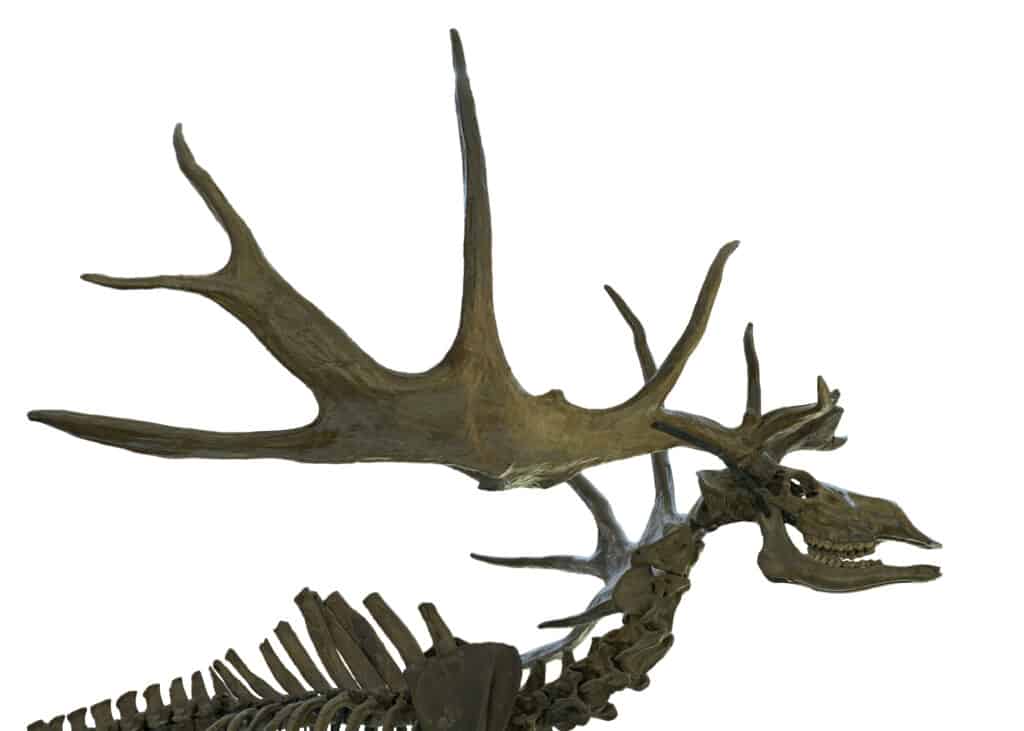
The genus name “Megaloceros” means” great antler,” a reference to the deer’s massive antlers.
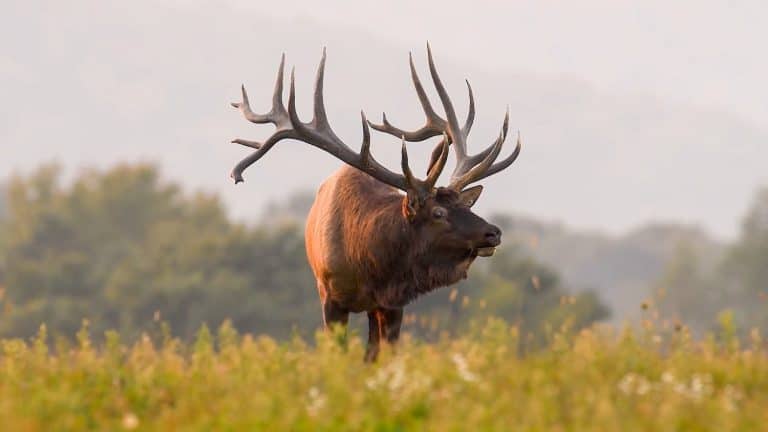
©Dima Moroz/Shutterstock.com
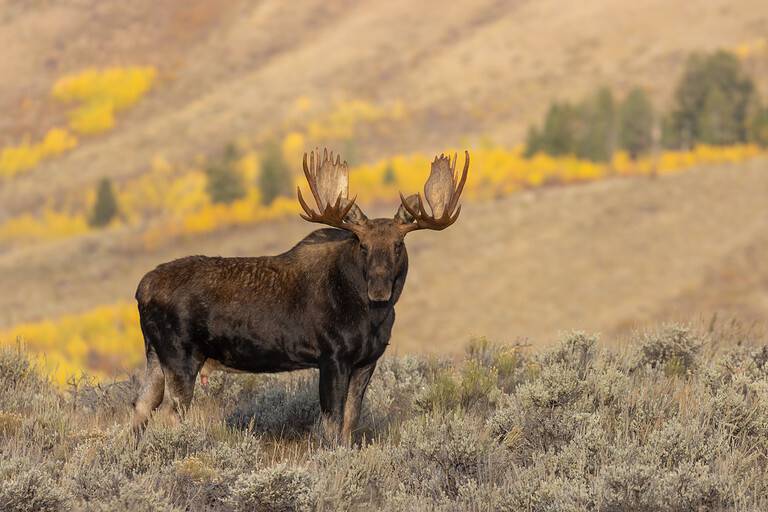
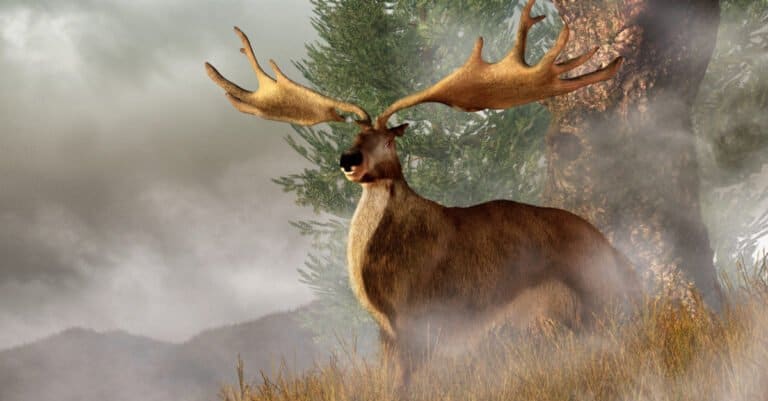
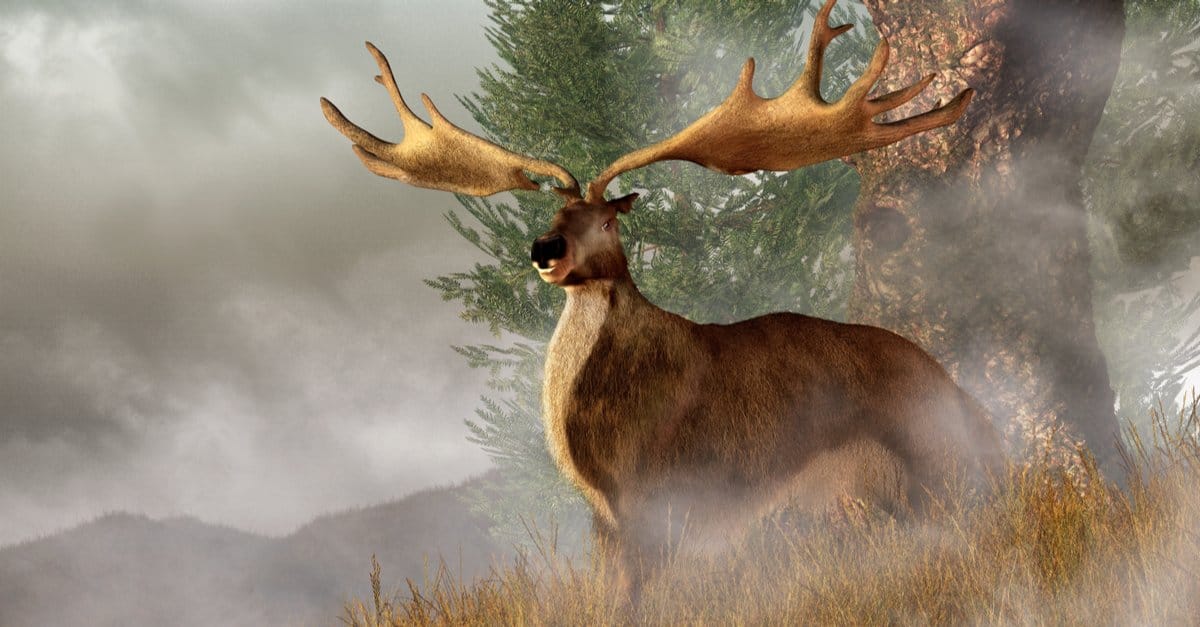
The earliest fossil record of their existence dates back 400,000 years. There are also cave drawings in Southern France depicting giant deer. They stood at least 6.5 feet to the shoulder, which is at least a foot taller than modern elk (Cervus canadensis). Their antlers spanned up to 12 feet.
Experts believe that they roamed what we now call Europe and northern Asia, feeding on a mixed diet of grass and tree leaves, which left tiny pits and scratches on their fossilized teeth. Cave art indicates that they had dark rings around their neck and stripes going from their belly to their neck. Marks on their fossilized bones suggest that they were hunted by hyenas.
What Were the Giant Antlers For?
Irish elk evolved during the glacial periods of the Pleistocene Epoch. Some experts feel that they evolved with giant antlers to fend off predators and rivals during the mating period. However, it is also possible that they were used as a sexual display, as is the case with modern extant deer species. For example, some use antlers for ritual combat displays to impress potential mates, but others are just for show.
How Did the Irish Elk Go Extinct?
Obviously, no giant Irish elk are roaming Ireland or the rest of Europe today, so what happened to them? It’s likely that it was a combination of factors. The first extinction wave took place around 12,000 years ago. At this time, the Irish elk disappeared from Ireland, Britain, and most of Europe. This was likely caused by a severe cooling of the climate, which would have removed their food sources. These were large animals with large antlers, and it takes a lot of food to support an animal of that size. This is likely why a shortage of food affected them so badly.
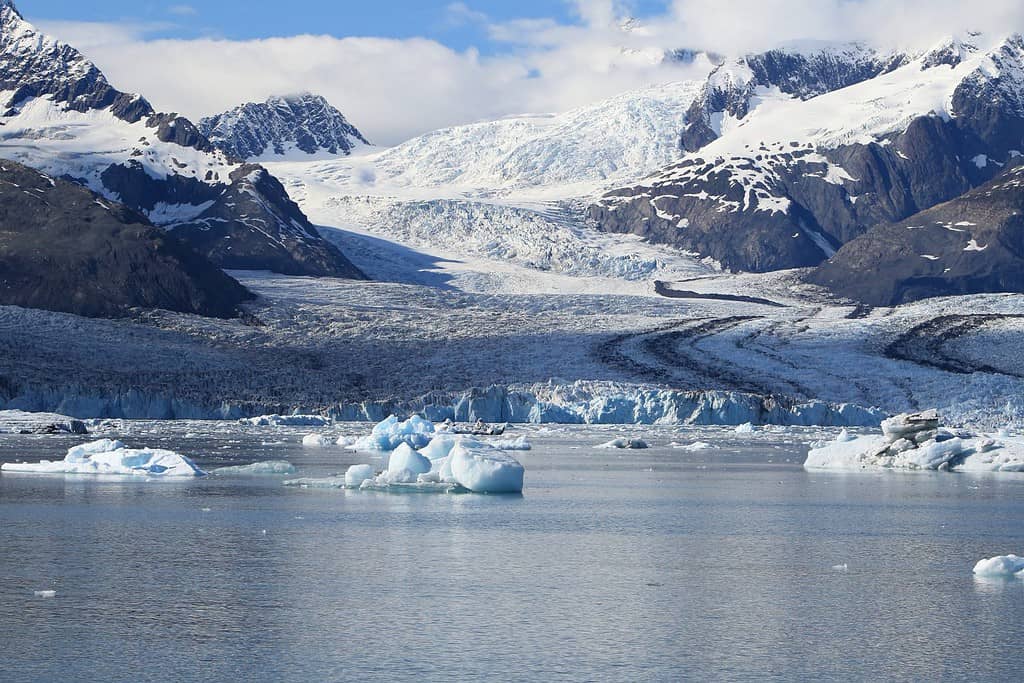
A cooling climate reduced the Irish elk’s food supply.
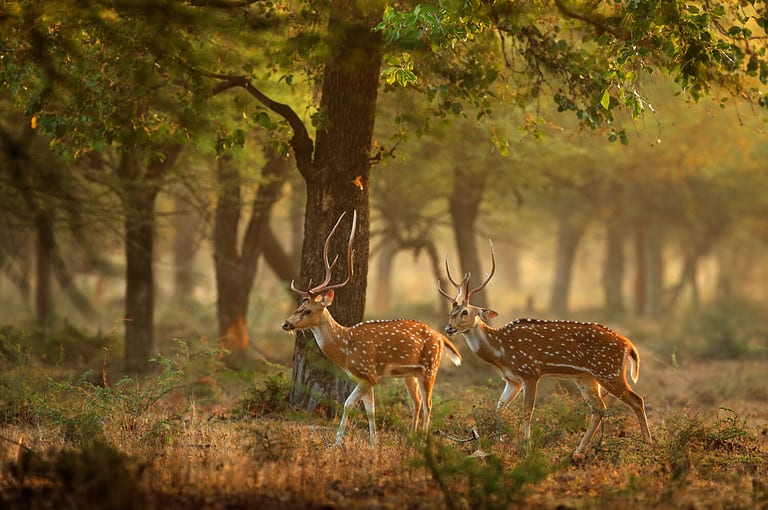
©Frank Fichtmueller/Shutterstock.com
However, it was not all bad news for the Irish elk because a small population survived in central Russia until 8,000 years ago. Partial skeletons have been found here, preserved in peat bogs. This suggests that they were there after the end of the Ice Age.
The Final Extinction Event
It may have been the warming climate that eventually caused the demise of the Irish elk. As the world heated up after the Ice Age, forest habitats spread, covering grassland and parkland where the deer used to graze. Once again, they would have struggled to find enough food and gradually died off.
Sadly, humans may have also played a role in their disappearance. Neolithic settlements were expanding at this time and removing large areas of natural vegetation. With insufficient food, the giant Irish elk could no longer survive.