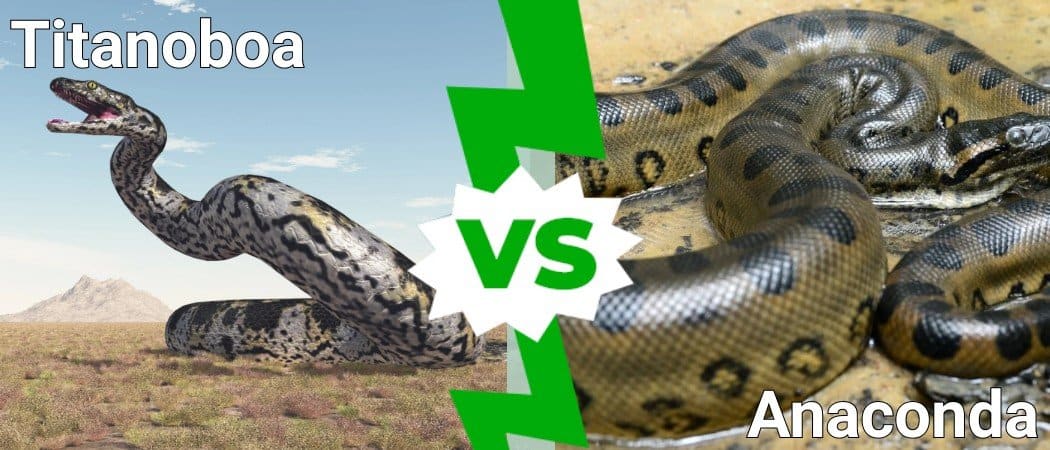

Titanoboa (Titanoboa cerrejonensis) and the green anaconda (Boa murina) are members of the Boidae family of non-venomous snakes, which includes boa constrictors and anacondas. Titanoboa was the largest snake to ever live. This colossal serpent slithered through the tropical rainforests of South America about 60 to 58 million years ago, during the Paleocene Epoch, after the extinction of the dinosaurs. The green anaconda is the heaviest extant (living) snake species. Continue reading to discover more about what sets these two enormous serpents apart.
Size and Weight
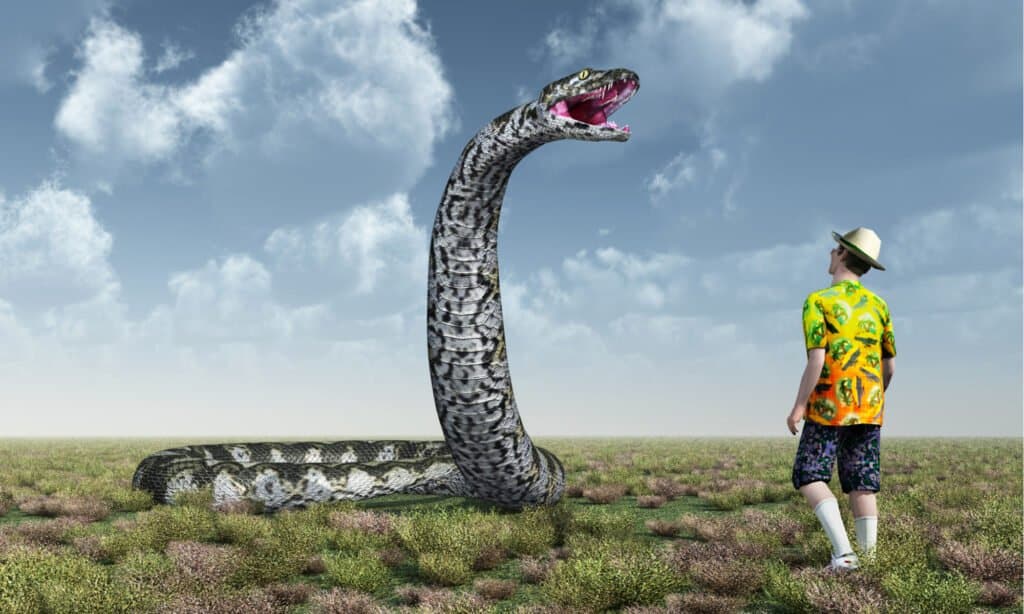
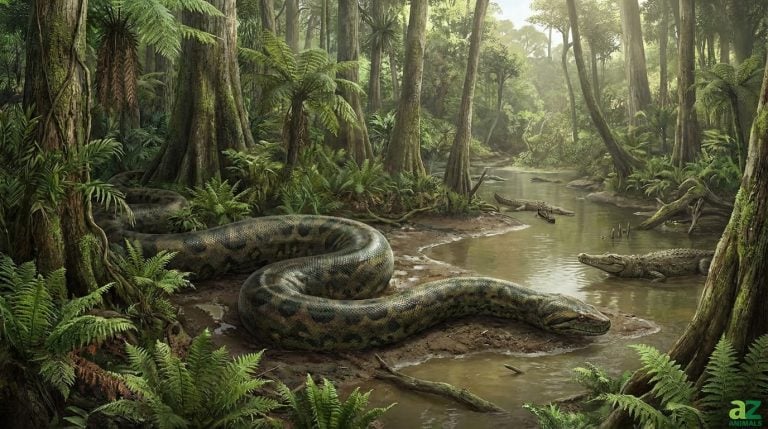
This illustration depicts the massive size of the long-extinct Titanoboa.
©Michael Rosskothen/Shutterstock.com
The primary difference between the Titanoboa and the green anaconda is in length and weight. The Titanoboa is estimated to have been between 40 and 50 feet long, weighing over 2,500 pounds.
The green anaconda typically grows to between 16 and 18 feet, but some individuals can reach lengths of 26 to 30 feet and weigh up to 550 pounds. Female anacondas are significantly larger than males, a size difference that is among the most extreme examples of sexual dimorphism found in any land vertebrate. This size disparity is primarily due to reproductive reasons, as a larger body size directly increases a female’s reproductive success.
Distribution and Habitat
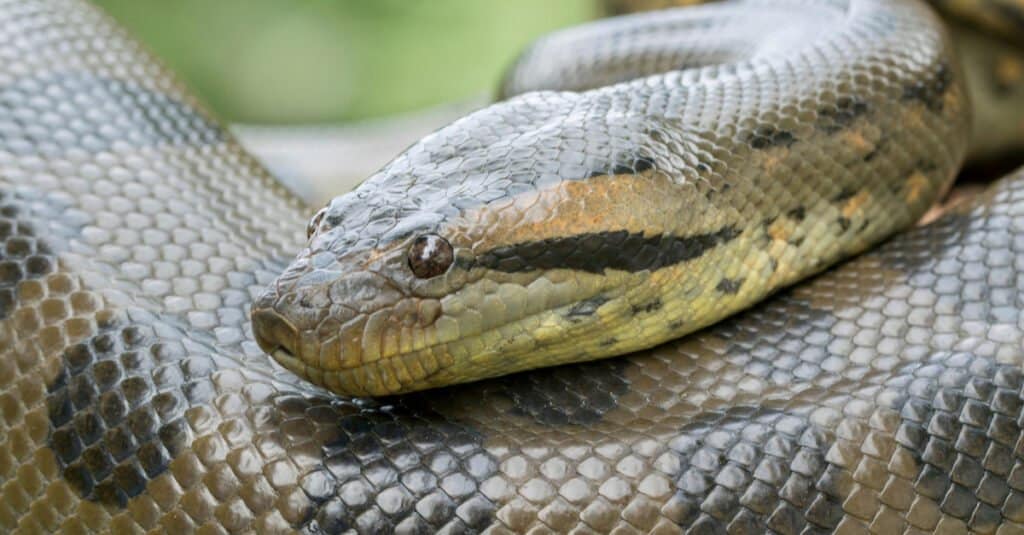
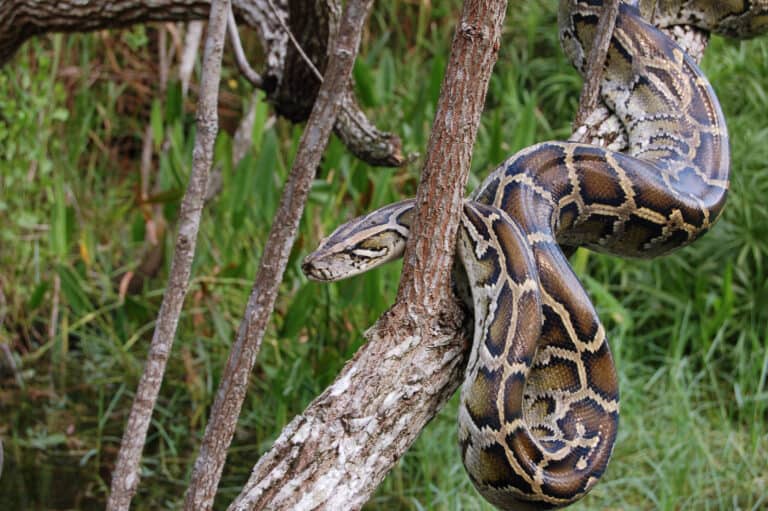
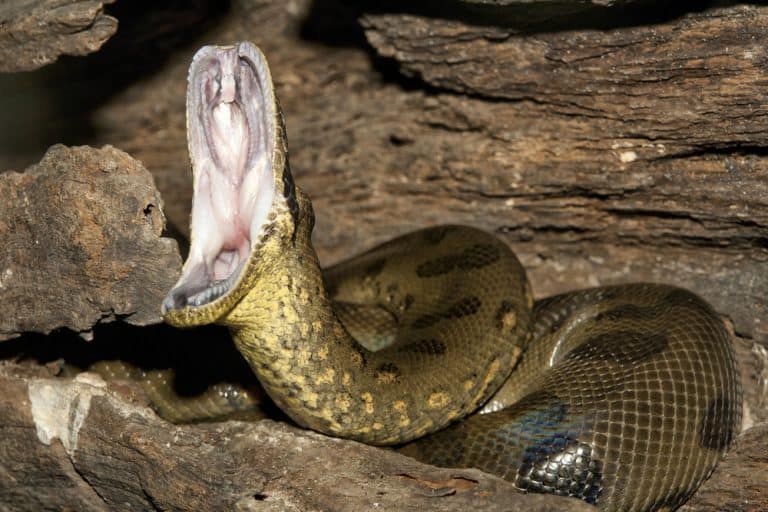
The average green anaconda grows anywhere from 15-20 feet long and the titanoboa grows 40-50 feet in length.
©Mark_Kostich/Shutterstock.com
Titanoboa had a very similar habitat to the green anaconda: warm, aquatic, tropical regions of South America. However, they are separated by a vast expanse of time and were not found in the same precise locations.
All known fossils of Titanoboa have been discovered in the Cerrejón coal mine in Northern Colombia, in rock layers dating back to the Middle to Late Paleocene epoch, approximately 58 to 60 million years ago. This discovery site represents the earliest known evidence of a Neotropical rainforest ecosystem.
Due to its immense size and weight, the Titanoboa is believed to have been a semi-aquatic ambush predator, much like modern anacondas. These ancient serpents spent most of their time in the water, where the buoyancy supported their bulk. Titanoboa shared this ecosystem with other giant reptiles, including large fish, turtles, and various crocodile-like creatures, which likely formed a significant portion of its diet.
Green anacondas are found in the tropical rainforests and seasonally flooded grasslands of Northern South America, particularly in the Amazon and Orinoco basins. They are semi-aquatic, preferring shallow, slow-moving waters like swamps, marshes, and streams, but also spend time on land in thick vegetation. Their large size makes them less agile on land, so they stay near water for hunting and concealment, using their eyes and nostrils, which are located on top of their heads, to remain submerged while waiting for prey.
Appearance
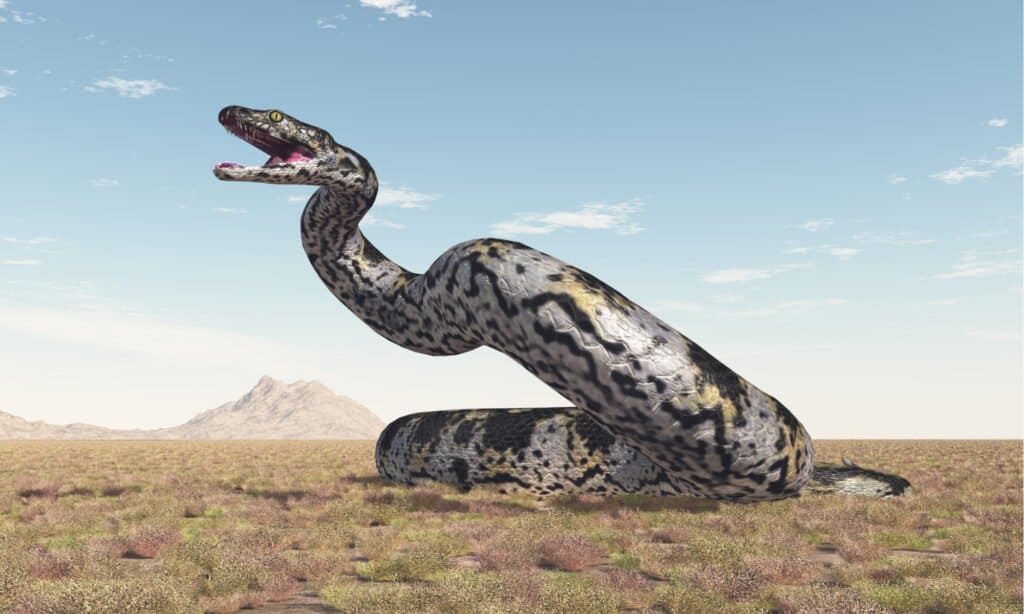
The titanoboa likely spent all of its life in the water, given its size.
©Michael Rosskothen/Shutterstock.com
While some aspects (like precise color) remain unknown, scientists have a solid understanding of many physical characteristics of the Titanoboa based on substantial fossil evidence. The discovery of skull fragments indicated unusual palate and jaw structures, with more numerous, hooked teeth compared to those of present-day boas. This evidence suggests a diet primarily of large fish, a departure from the modern anaconda that constricts large terrestrial prey. Although its coloration remains speculative, Titanoboas were possibly brownish or grayish, which would have provided camouflage in muddy water.
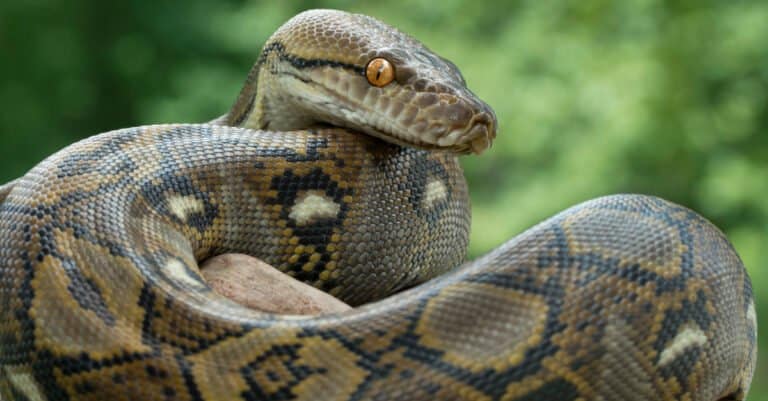
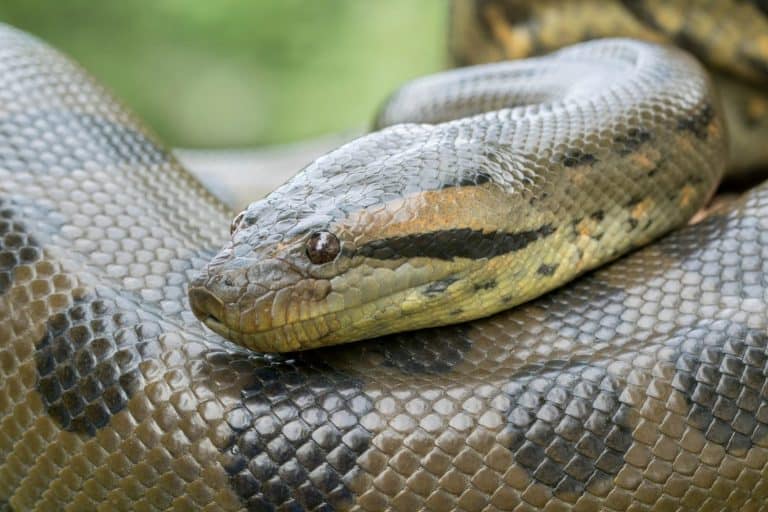
The green anaconda is a heavy-bodied, semi-aquatic snake with smooth scales and an olive-green to brown coloration patterned with dark, circular spots on its back and yellow-centered spots on its sides. Other key physical characteristics include a blunt head with eyes and nostrils on top for submerged vision and breathing.
Diet and Predatory Behavior
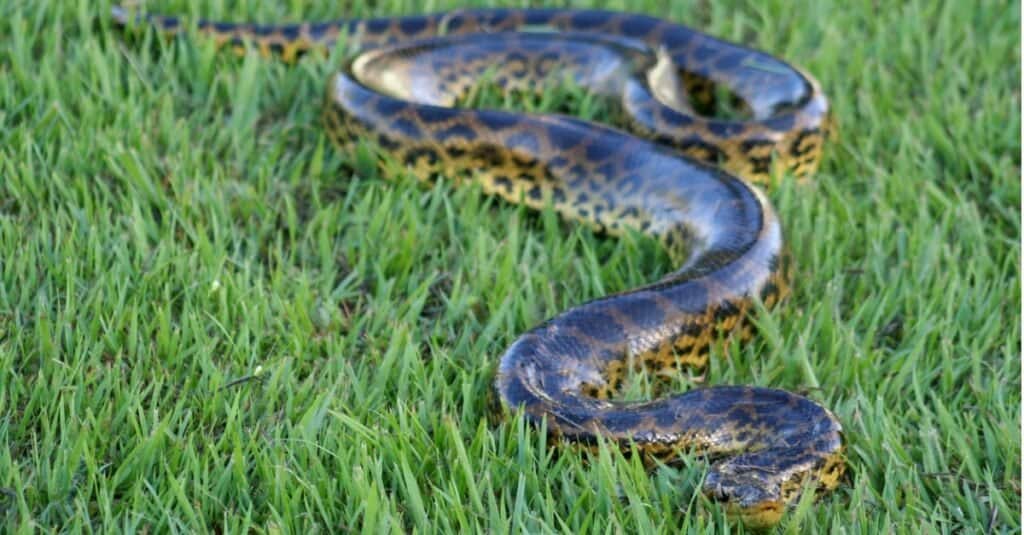
The anaconda eats a wide variety of things compared to the titanoboa.
©iStock.com/Schumaher
A final difference between the Titanoboa and the green anaconda is in their diet and predatory behavior.
The Titanoboa was a constrictor that is thought to have preyed on large fish, combining striking, biting, and suffocating its prey. Its diet likely included other snakes and large mammals that lived in its tropical rainforest habitat.
Green anacondas are ambush predators that use stealth and constriction to kill prey, which includes a wide range of animals from fish and birds to large mammals like capybaras, deer, and tapirs. They lie in wait in their aquatic habitats, using their eyes and nostrils on top of their heads to remain submerged, then quickly strike, wrap their muscular bodies around the victim, and constrict it to death before swallowing it whole. Their specialized anatomy, including flexible jaws and a forward-positioned windpipe, allows them to consume prey that can be larger than their own heads.