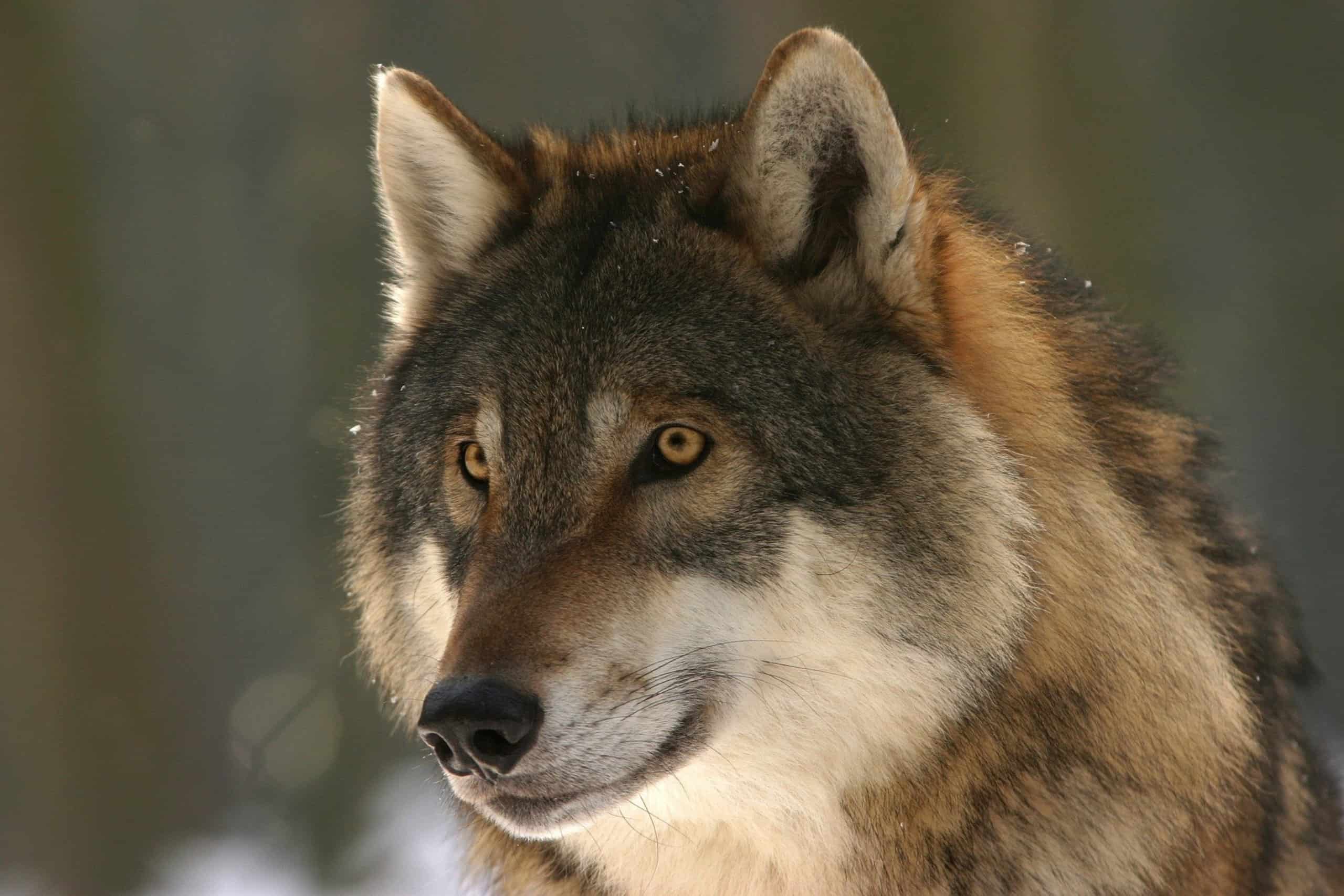

When you think of dire wolves, you might think of the huge, fierce beasts in Game of Thrones. However, dire wolves were actually real animals and roamed North and South America thousands of years ago. Although they weren’t quite as large as they are depicted on screen, they were still powerful predators, and their scientific name literally means “terrible dog.” With this in mind, let’s learn exactly what made them such terrifying beasts.
What Are Dire Wolves?
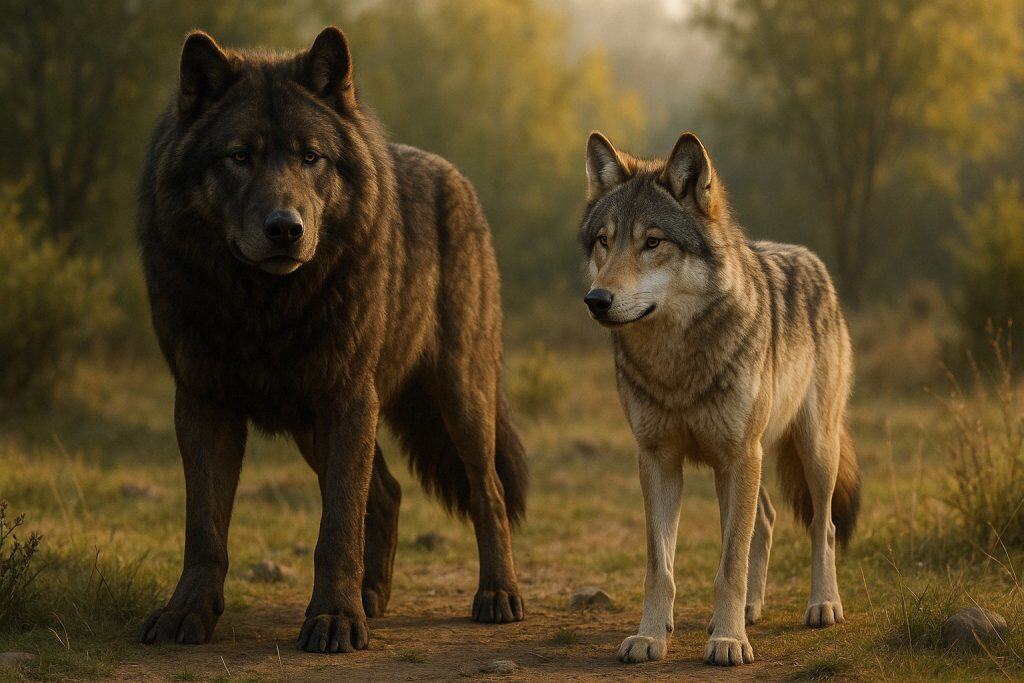
Dire wolves are large canines that inhabited North and South America approximately 125,000 to 10,000 years ago during the Pleistocene and Holocene epochs. The remains of dire wolves have been found in forests, grasslands, and savannahs across vast parts of both continents. However, it’s thought that they didn’t inhabit areas farther north than the southernmost region of Canada.
Dire wolves were similar in size to the largest subspecies of gray wolves today, standing about 38 inches at the shoulder and measuring five to six feet from nose to tail. However, they were somewhat heavier, with an estimated average weight between 125 and 175 pounds, and some individuals possibly exceeding 200 pounds. There are two recognized subspecies of dire wolves: Aenocyon dirus guildayi and Aenocyon dirus dirus, with the latter being the larger of the two.
What truly made dire wolves terrifying was the size and shape of their heads. Their heads were much larger than those of gray wolves, reaching up to 12 inches in length. They also had more powerful jaws, a stronger bite force, and larger, stronger teeth. Additionally, their bodies were especially stocky and powerful, making them well adapted for hunting large prey.
Why Dire Wolves Were Not Really Wolves
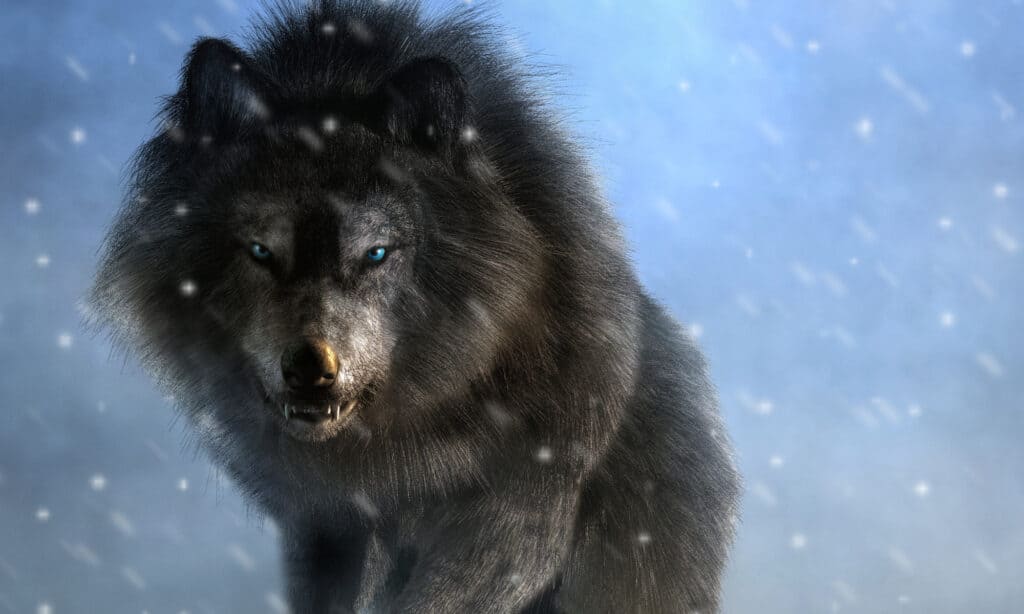
Despite their name, dire wolves are not actually wolves.
©Daniel Eskridge/Shutterstock.com
Although their name suggests that dire wolves were true wolves, this is actually a misconception. In reality, dire wolves are not true wolves. The first fossilized remains of dire wolves were found in the 1850s. They were initially classified as members of the Canis genus, which includes wolves, dogs, and coyotes. However, further examination revealed that they were quite different and represented a separate lineage. As a result, it was proposed in 1918 that they be placed in a separate genus: Aenocyon.
DNA evidence published in 2021 revealed that dire wolves evolved in North America, separately from other canids. Although dire wolves and gray wolves share a close resemblance, the two last shared a common ancestor approximately 5.7 million years ago.
Predators and Prey
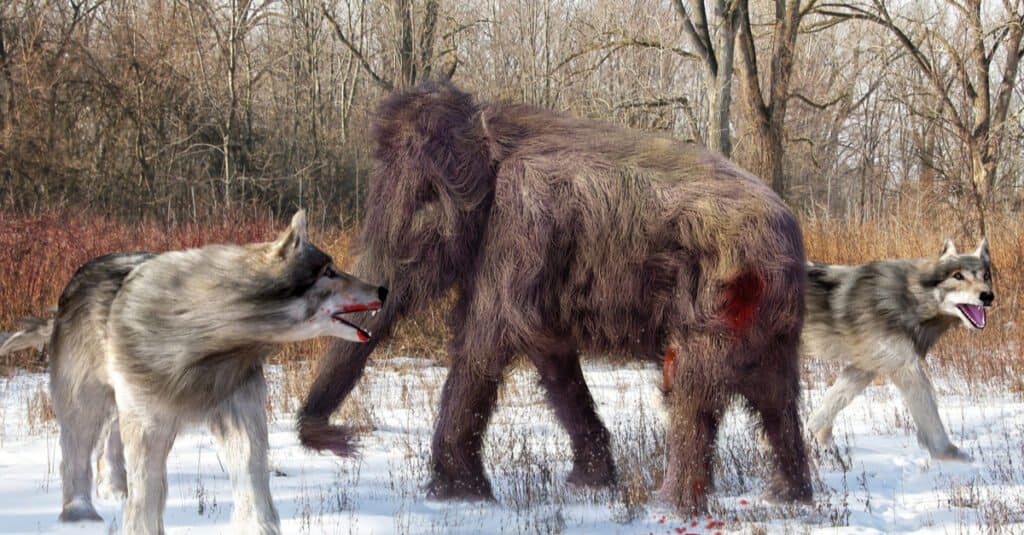
Dire wolves preyed on large, herbivorous animals.
©Aunt Spray/Shutterstock.com
Given their large size and powerful build, it’s not surprising that dire wolves were apex predators. They preyed on a variety of large mammals that lived during their era, including bison, horses, camels, pronghorns, and ground sloths. It’s also likely that they scavenged on the carcasses of mammoths and mastodons. Similar to modern wolves, dire wolves were likely pack hunters that chased down their prey.
As they were such large, powerful predators themselves, dire wolves didn’t have any natural predators. However, it’s possible that there may have been some competition for prey with other large predators, such as the saber-toothed cat.
A large number of dire wolf fossils were found in the Rancho La Brea Tar Pits in Los Angeles. As well as offering scientists the perfect opportunity to study the size of the remains, it also offered an insight into their diet and behavior. Many prey animals became trapped in the tar pits, and predators such as dire wolves, attracted by the struggling animals, also became trapped while trying to reach them. This phenomenon is known as a “predator trap.”
However, many of the large herbivores that dire wolves preyed upon went extinct during the Quaternary extinction event at the end of the Pleistocene era. The resulting lack of prey caused greater competition among the predators. Unfortunately, dire wolves were unable to compete with smaller, more adaptable animals, and this ultimately led to their extinction.
Could Dire Wolves Be Brought Back?
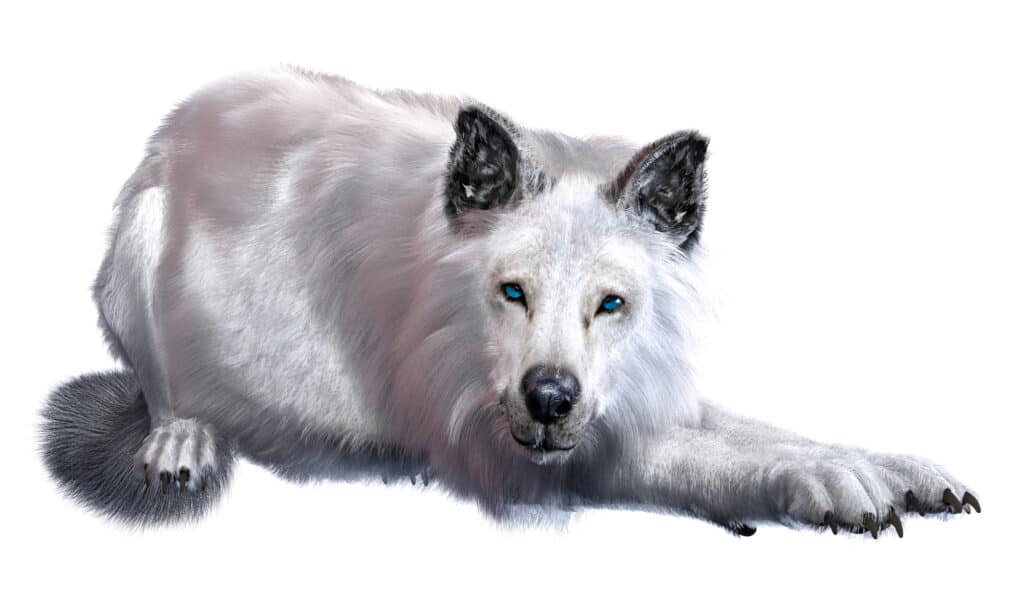
Despite attempts to do so, it is not possible to bring dire wolves back from extinction.
©Seeker Stock Art/Shutterstock.com
Although dire wolves have been extinct for thousands of years, there have been attempts to bring them back. The first such attempt occurred in 1988, when a project aimed to crossbreed dogs like German Shepherds and Akitas to create wolf-like traits. However, the resulting animals were still dogs, not wolves.
However, there has been a more recent, scientific attempt to resurrect the dire wolf species. In 2024, scientists from Colossal Biosciences used gene editing to modify the DNA of gray wolves (Canis lupus). The aim of the changes was to create dire wolf traits, such as the stocky body and the broader head. The modifications resulted in the birth of three wolf cubs. Two males named Romulus and Remus were born in October 2024, and a female named Khaleesi was born in January 2025. The cubs were carried by surrogate mothers, which were dogs chosen specifically for their large size. This was so they could safely carry the larger pups.
Colossal Biosciences initially claimed that these three cubs were dire wolves, but other experts disagreed. In reality, no dire wolf DNA was used in the project; the genetic modifications only altered the genes of gray wolves. Therefore, although the cubs exhibit dire wolf traits, they are actually genetically engineered gray wolves—not dire wolves. The IUCN Species Survival Commission’s Canid Specialist Group made an official declaration stating that the cubs were not dire wolves and their birth did not change the official extinct status of the species. Today, the three cubs live on a 2,000-acre reserve in the United States.