
Quick Take
- Chipmunk droppings look almost identical to rat and mouse poop, though one specific detail sets them apart instantly. See how to tell them apart →
- Chipmunks have a surprisingly organized bathroom habit that means finding droppings scattered everywhere is actually a red flag something else is going on. Learn their bathroom habits →
- Vacuuming up chipmunk droppings seems like the obvious move, but the CDC says it's one of the worst things you can do. See the safe cleanup method →
- There's a deceptively simple trick to removing a chipmunk from your house that doesn't involve a trap at all. Try this removal trick →
Is there a rodent leaving droppings in your home or yard? Is it a rat, a mouse, or could it be a chipmunk creating all that poop? Keep reading to learn more about chipmunk droppings, including how to identify them, where you might find them, and how to clean up after a chipmunk has invaded your home.
How to Identify Chipmunk Poop
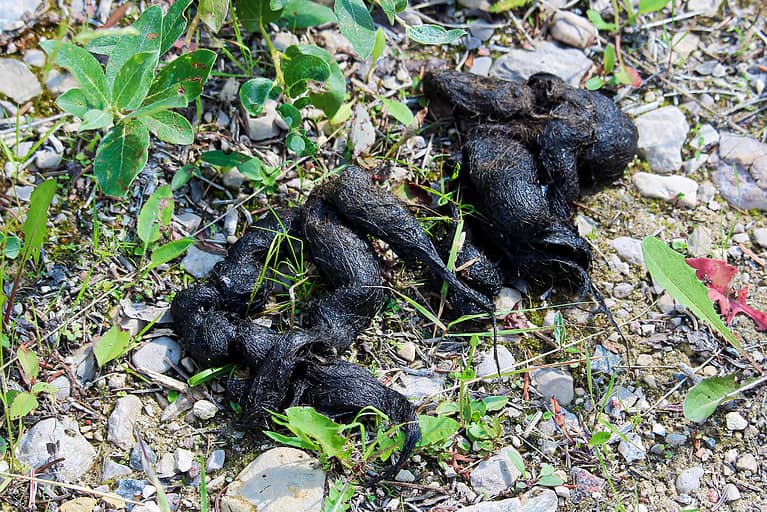
Chipmunk droppings look similar to rat or mouse droppings. If a chipmunk is nearby, you might see oblong pellets that taper on either end. Chipmunk droppings typically measure between 0.25 and 0.5 inches in length. They are generally smaller than rat poop but larger than mouse droppings. Narrow, rice-sized pellets 0.125-0.25 inches long may indicate mice, while fatter, 0.5 to 0.75-inch long pellets could mean you have rats in the area. Chipmunk poop is brown to black, mouse poop is dark brown to black when fresh and turns grey as it ages, and rat poop also looks dark brown to black. Finding chipmunk droppings is much rarer than finding mice or rat droppings, though it’s not impossible!
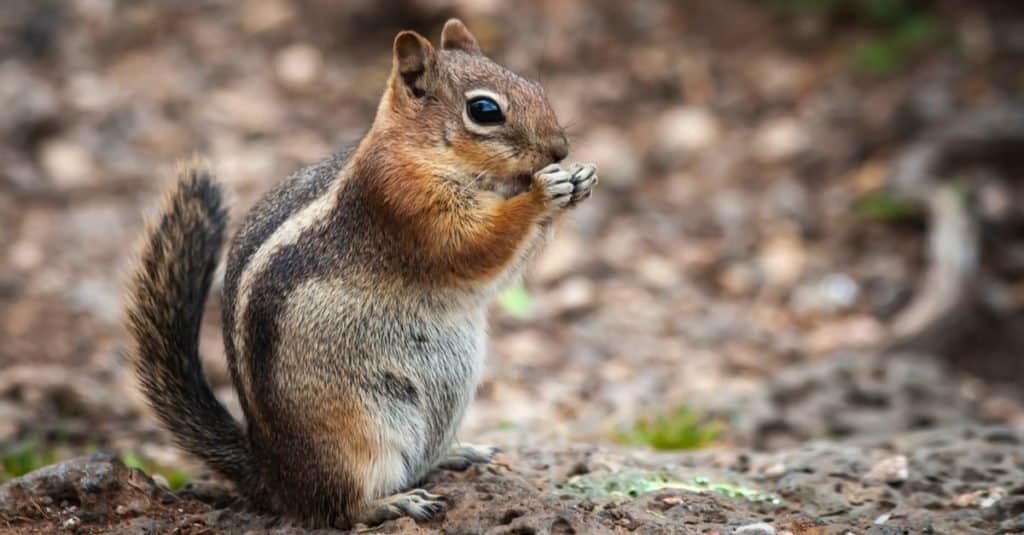
Chipmunk poop is small and oblong.
©Cindy Larson/Shutterstock.com
Where Do Chipmunks Poop?
Chipmunks live in burrows, but they can be challenging to detect. The openings aren’t mounded like ant or gopher holes, but instead, lie flat and measure around 2 inches across. Since chipmunks are a prey species, their poop can attract predators. So they hide their droppings and cover the odor as best they can.
For the most part, chipmunks only poop in a special section of their burrows. However, you may find chipmunk poop outside of a burrow if they’ve chosen your basement, for instance, as their toileting site. In this case, you wouldn’t find feces everywhere — it would only be in concentrated areas.
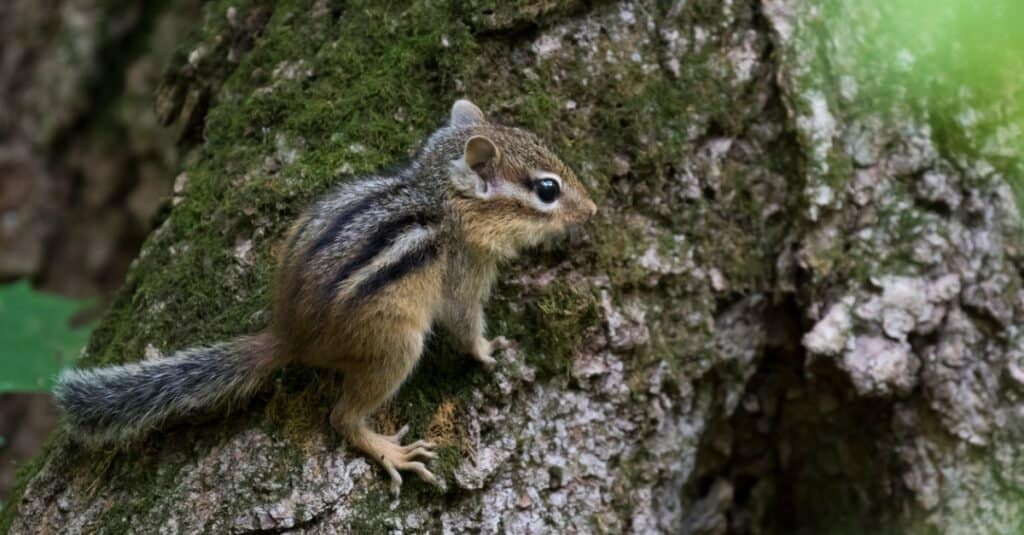
Chipmunk burrows typically have areas for sleeping, giving birth, food storage, and pooping.
©iStock.com/mirceax
How to Clean Chipmunk Poop
The CDC recommends that you do not vacuum or sweep rodent urine, droppings, or their nesting materials. This can cause microscopic droplets containing viruses to get into the air. Ventilate the area for at least 30 minutes before cleaning.
Follow the steps below to clean up after chipmunks:
- Mix a solution of one part bleach to nine parts water.
- Spray this solution onto the feces and urine and wait five minutes.
- Wearing gloves, pick up the chipmunk droppings using paper towels and throw them in the trash.
- Disinfect the surrounding area with your bleach and water solution.
- Disinfect the floor by mopping, counters or tabletops by wiping them, and any furniture the chipmunks may have climbed on using a steam cleaner.
- Wash any bedding, clothes, or other objects that came into contact with the chipmunk using hot water and regular laundry detergent.
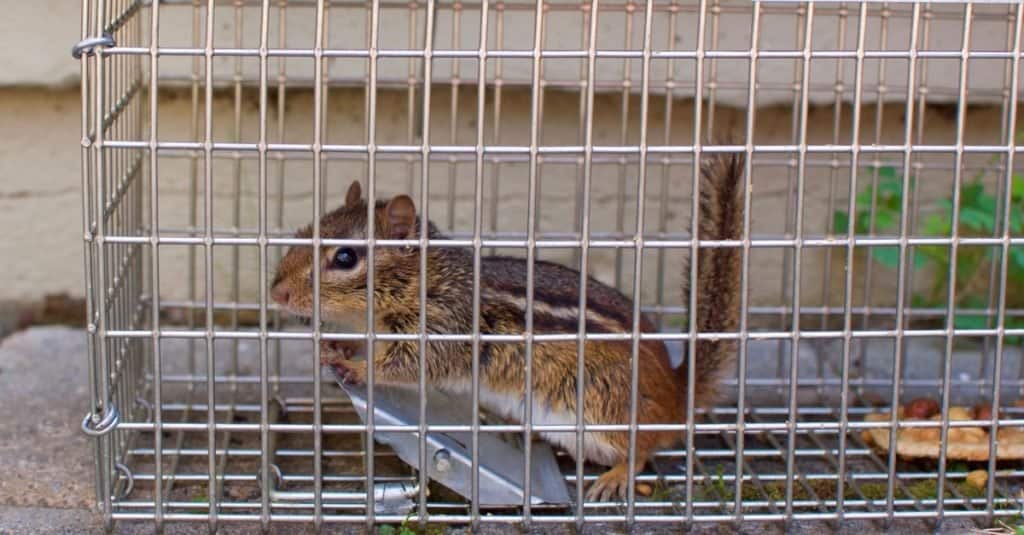
If a chipmunk gets into your house, use a humane trap to catch it and release it outside.
©Holly Vegter/Shutterstock.com
How Do I Know if I Have a Chipmunk in My House?
You might notice a chipmunk by its droppings, as described above, through its sounds, or if you see one. It’s much more common to have mice or rats in your home than chipmunks, but sometimes they do get lost. If this happens, they will likely be hiding in the crevices of your home, attempting to go unnoticed. These prey animals don’t want to interact with humans and rarely present any danger to us. They typically bite only when provoked.
To remove a chipmunk from your home humanely, the Humane Society suggests first trying to let it wander out on its own.
- Lock away any household pets so they cannot hurt the chipmunk or get out of the house themselves.
- Shut the chipmunk in a single room.
- Open any doors or windows in the room and leave the chipmunk alone.
Alternatively, try a humane live trap using peanut butter as bait or catch the chipmunk in a towel. If trying the latter method, be sure to wear thick gloves. Walk slowly to the chipmunk, using the towel to conceal yourself, and drop the towel onto the chipmunk. Quickly wrap the towel around the animal, keeping its size in mind — be gentle enough not to hurt it, but firm enough to prevent escape.
Take the chipmunk outside and release it. Chipmunks are typically solitary and territorial animals that do not live in colonies, though even a handful of them can cause havoc in the yard. Most chipmunks will dig some tiny holes, look cute, and possibly get into your garden.