Feces are a valuable tool in the world of animal identification. It might sound gross, but it’s one of the best ways to determine an animal’s behavior. An animal’s poop, known as scat, tells you where an animal has been, where it might be going, what it eats, and how long it’s been in the area. Hunters use this for tracking, hikers use this for awareness, and experts use scat to learn more about a species. If you can’t observe the animal itself, finding its outdoor toilet is the next best thing! Whether you’re just curious or need to identify the animal that keeps leaving a mess in your yard, here’s the ultimate guide to identifying American animal scat.
How to Identify Scat (Animal Poop)
Knowing how to identify scat is handy in more ways than one. From an animal’s excretions, experts can learn significant details about an animal’s diet and survival habits. The beautiful thing is that you don’t need to be an expert to learn the same identification methods. Scat is an easy study if you look for these things:
- Location: Since animals aren’t trained to use the toilet like humans, their scat indicates where they’ve been. This provides clues about where they shelter, hunt, and how often they pass through.
- Size: Scat size is an indicator of the animal that made it. Large scat could belong to a bear or big cat, while small scat might indicate a rodent or fox.
- Shape: The shape and texture of the scat are unique to the animal that made it. Some scat is long and tubular, while other animals make scat the size and shape of round pellets. Large animals, such as dogs and wolves, make mounds or piles.
- Contents: Poking in scat isn’t recommended, but sometimes you can see remnents of an animal’s diet just by looking. For example, depending on the season, bear scat can contain seeds from berries. This can tell you where the bear was feeding, what it was eating, and where it’s likely to be.
The latter is significant as it indicates whether an animal is a carnivore, herbivore, or omnivore. The appearance of scat changes based on what the animal eats. Just like a doctor can determine the diet of a patient based on their bathroom habits, we can also determine the habits of an animal based on their poop. Significant amounts of meat and protein result in scat that’s soft, tube-shaped, and has tapered ends. Fruit results in scat that’s pebble-like, textured, and falls apart easily. Scat with a mixture of protein and fiber is often oval-shaped, tapered, and may contain pieces of an animal’s last meal.
Ungulate Scat
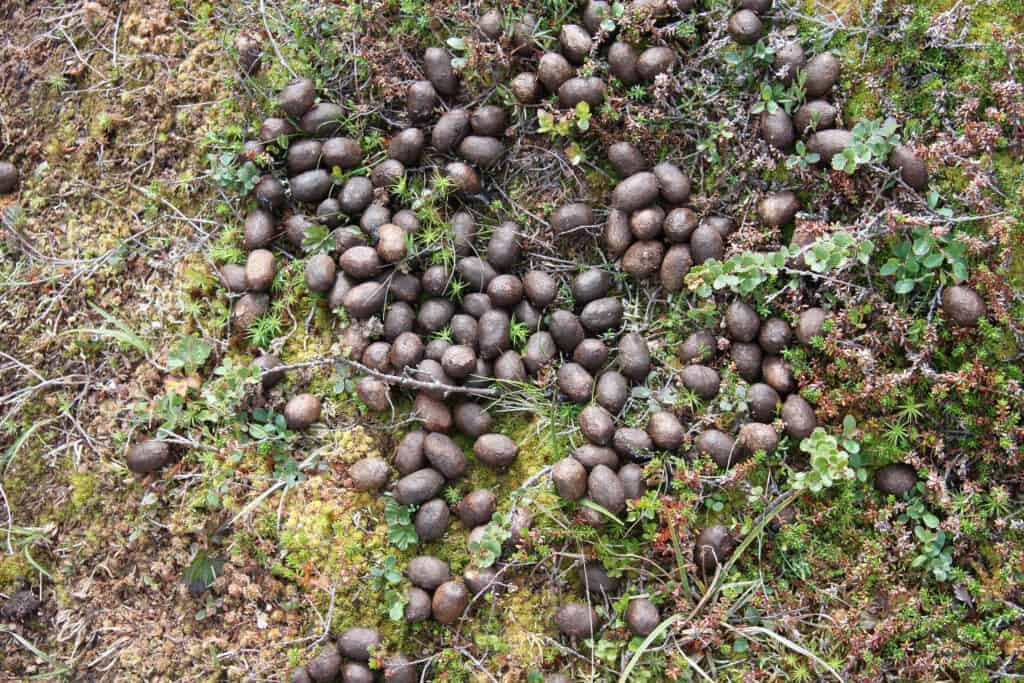
Ungulates include animals like deer, moose, and elk. To the untrained eye, all the scat from these animals can look similar. Deer make the smallest scat, consisting of tiny pebble-shaped pieces. The more hydrated the deer, the more clumpy its scat will be. You can sometimes see pieces of grass, leaves, or berries in the scat. This is an easy one to identify, as it resembles chocolate-covered raisins.
©Jody./Shutterstock.com
Moose and elk have larger scat than deer. An elk’s scat still retains a pebble-like appearance, but is larger, resembling an almond rather than a raisin. Just like deer, it will clump if the animal is well-hydrated. Moose have the largest scat of the three. It can resemble large pebbles, but can also be soft and found in “plop” piles. Since moose consume aquatic vegetation during the summer, this addition to their diet provides moisture. The result is scat that’s loose and falls to the ground in piles rather than pellets.
Fox Scat
©iStock.com/lauraag
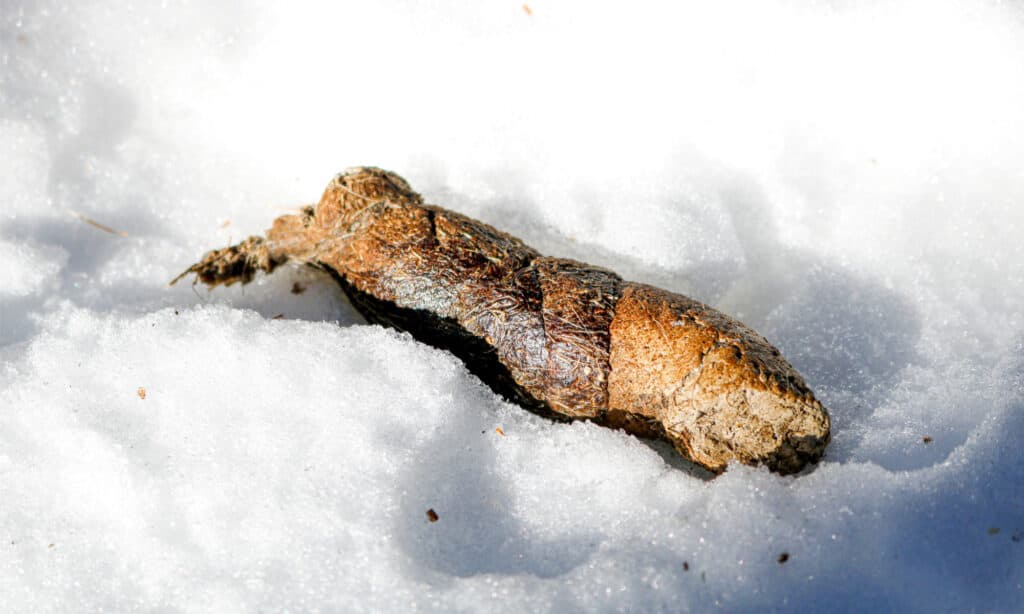
Fox scat is often mistaken for dog scat due to similarities in its size and shape. You can tell the difference by examining it up close. Foxes are carnivores, which means their scat typically has plenty of hair, sometimes bones, and animal fragments. If any of these are present, it’s a good indication that it came from a fox, not a domesticated dog. Scent is another indicator of fox scat, as it has a distinct odor that’s not present with dog poop. Occasionally, berries are also present, depending on what the fox has eaten recently.
Bear Scat
©Viktor Loki/Shutterstock.com
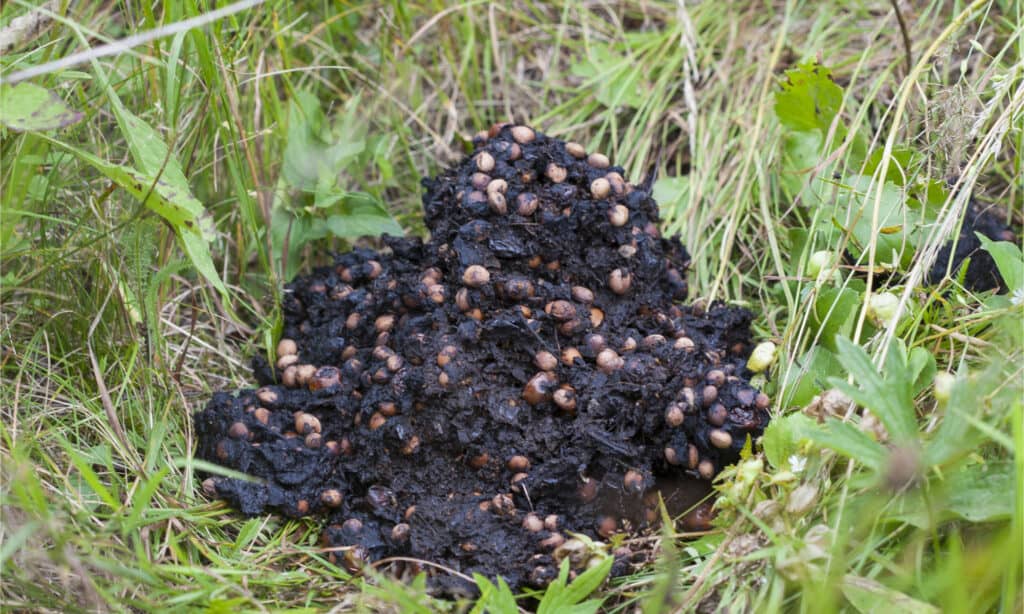
Identifying bear scat can be a life-saving measure if you live in a region with grizzlies. Treading carefully and staying out of high-activity bear areas are key when hiking, hunting, or camping. Bear scat is some of the largest you can find in America, and is distinctly human-like in its appearance. It typically consists of cylindrical tubes containing pieces of hair, berries, or bones. If a bear has eaten berries, scat can appear as a loosely shaped pile that falls apart easily. For a bear, the amount of scat will give you the most significant clue, rather than the shape and size.
Rodent Scat
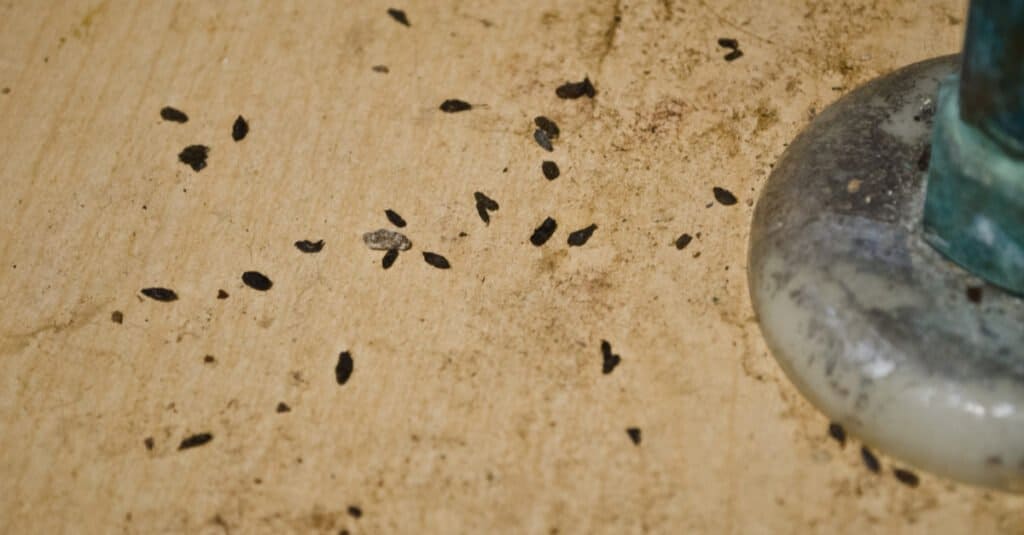
Rodent scat includes feces from chipmunks, voles, and squirrels. For the most part, this scat is rarely noticed due to its small size. If you’re actively looking, you can differentiate between the pellets by examining their shape. Chipmunks have the smallest scat pellets, and they resemble a dark brown grain of rice. Squirrels have slightly larger scat that’s more visible to the naked eye, but still barely noticeable.
©Pegasene/Shutterstock.com
Their scat is somewhat lighter in color and similar to milk chocolate. Vole scat is easy to spot because it’s distinctly purple, green, or brown. These are oval-shaped with tapered ends, identical to the shape of rat scat. If you find rat scat in your yard, it will be dark brown or black with a very unpleasant smell. Mice’s scat is similar to this, often without the scent.
Rabbit Scat
©KanphotoSS/Shutterstock.com
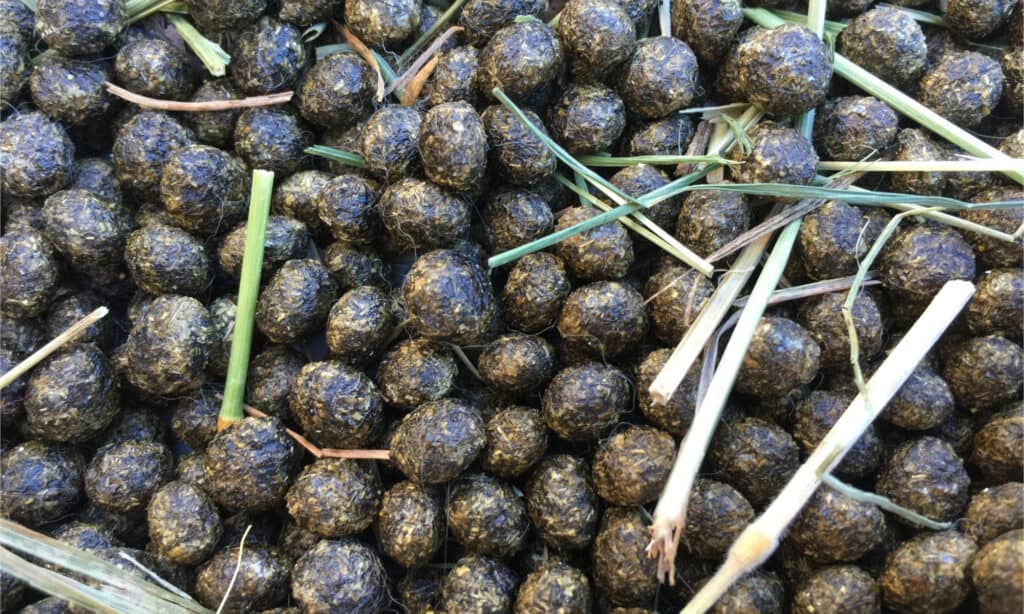
Rabbits have pellet-like scat, similar to that of rodents, but much larger. Their scat can be found in piles and ranges in color from dark brown to very light brown. The pellets themselves are hard and round, and it’s unlikely that any contents will be visible. Hare droppings are typically larger than those of a rabbit; both are commonly found near fence openings, around gardens, or near burrows.
Bat Scat
©iStock.com/sbonk
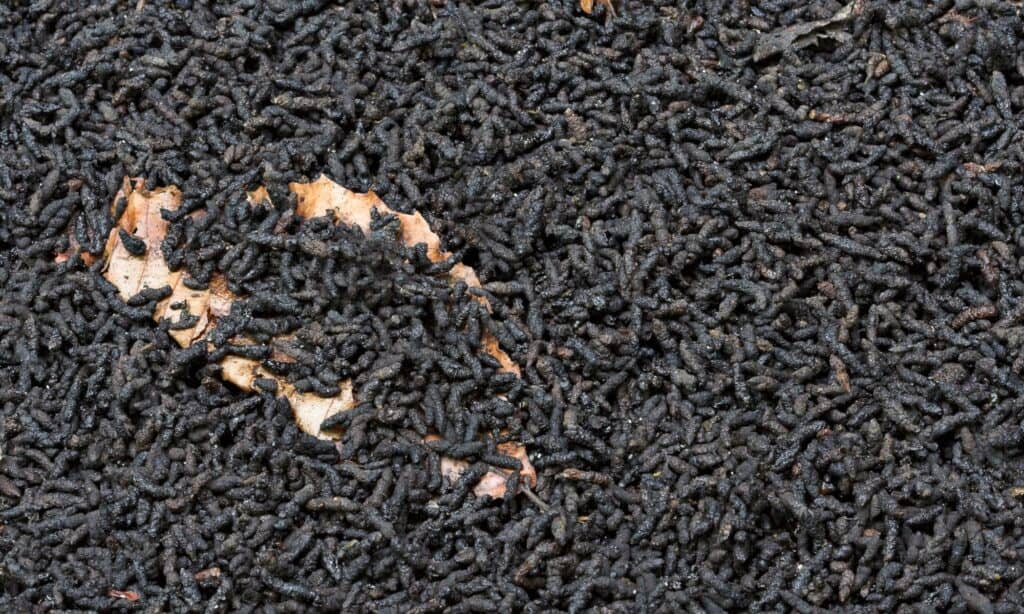
It’s unlikely to find bat scat on the ground since they typically poop where they roost. However, if you’re exploring a cave or other habitat they frequent, it’s good to recognize the signs. Bat scat is similar to mice droppings, but darker in color. These can be stuck to the walls of a cave or building, and if you look closely enough, you can sometimes see bits of insects.
Big Cat Scat
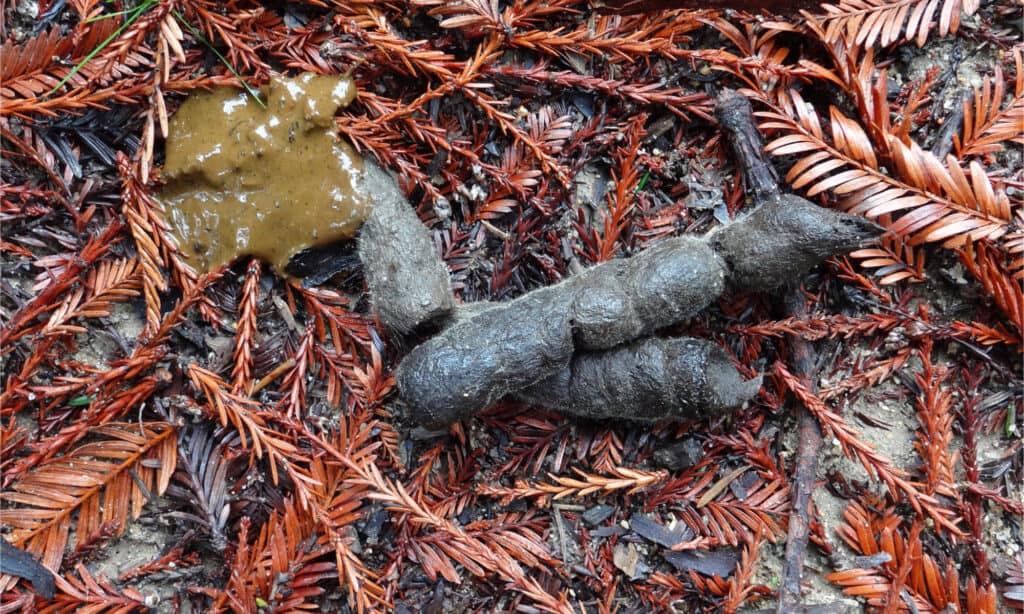
If you have an indoor cat, you probably already know what cat poop looks like. This differs slightly in the wild, with bigger feces from cats like cougars, panthers, lynx, and bobcats. Big cats produce scat that’s slightly mushy but cylindrical or tube-shaped. The contents of big cat scat often include hair, bones, feathers, or sometimes a strong odor, depending on its freshness.
©Max Allen/Shutterstock.com
However, the one defining feature of big cat scat is the surrounding ground. Cats often paw at the dirt after relieving themselves, a behavior also observed in indoor cats. Scat from a bobcat may differ in appearance and look more uniform than that of a cougar. This is due to their fast-acting digestive systems, which break down animal parts more efficiently than those of other cats.
Hedgehog and Porcupine Scat
©iStock.com/eastriverstudio
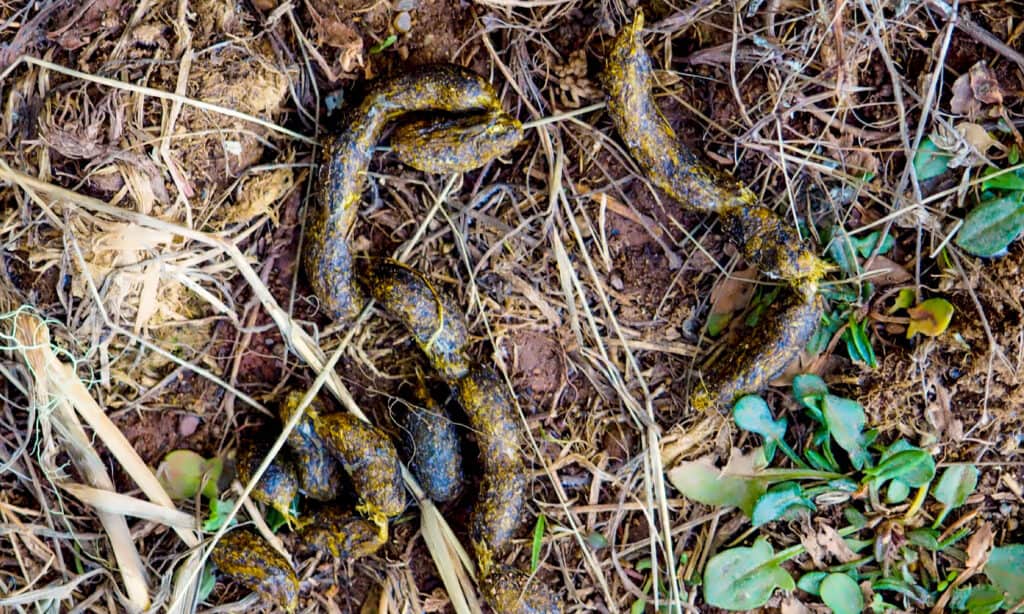
Hedgehog and porcupine scat are very different from one another. Porcupines have scat shaped like pellets, and it’s typically found at the base of a tree. It’s light brown and contains no visible contents. Hedgehogs have scat with a higher moisture content, which shows up as tube-shaped feces with a tapered end. It’s very dark brown and may contain pieces of fruit and insects.
Raccoon Scat
©iStock.com/eddtoro
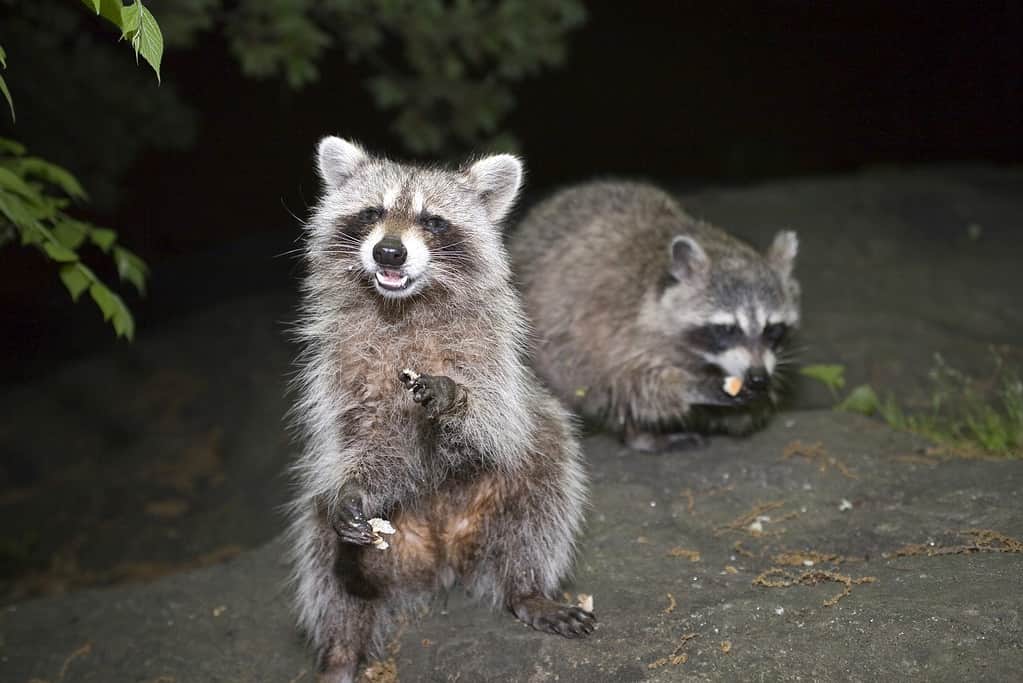
Raccoons have variations in their feces, depending on their native location. This tube-shaped feces is often soft and segmented, and it can contain bits of berries or seeds in the wild. In an urban environment, a raccoon’s scat contents depend on what it scavenges from garbage cans. While it can be found on trails and near trees in less-populated locations, you might find it at entrance or exit points in your yard. A word of caution: You should never touch or attempt to remove raccoon scat with your bare hands, as it contains harmful parasites, such as Baylisascaris procyonis.
Dog Scat
Dog scat includes the feces of domesticated dogs, wolves, and coyotes. Coyote scat can be challenging to identify because it’s so similar to the scat of a fox. The best way to determine its origin is to listen for signs after sundown. If you hear howls, it’s likely from coyotes if they are active in your area. If the sounds are screeches or screams, they are likely from a fox.
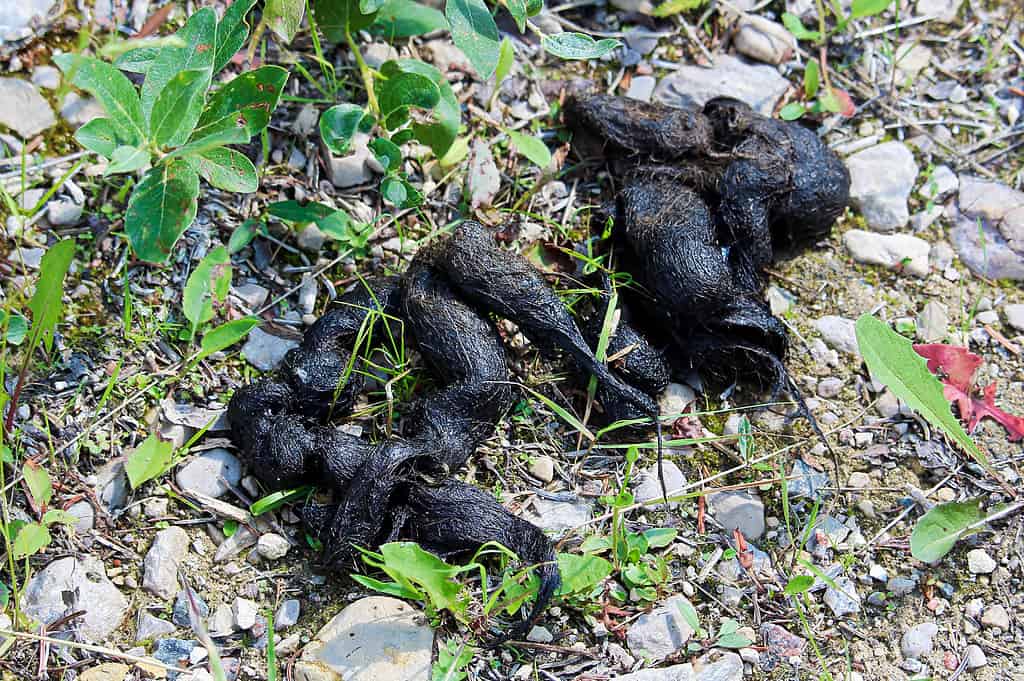
©iStock.com/Akchamczuk
Wolves have scat nearly identical to that of a domesticated dog. The difference can be found in its contents—wolf scat often contains pieces of fur or bones. Domesticated dogs typically eat a more uniform diet, either in the form of pellets or raw food, which means their feces lack identifiable contents.
Skunk Scat
©Frank Fichtmüller/iStock via Getty Images
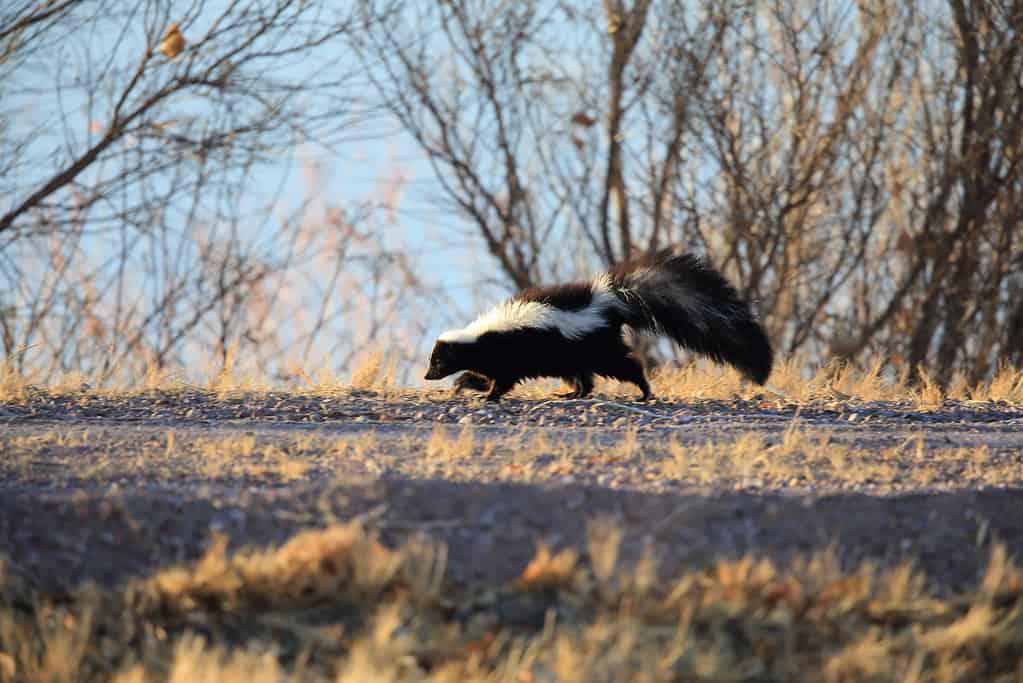
Skunk scat is long, tube-shaped, and has a tapered end. It’s easily identifiable because of its smell, which is unmistakable if you’ve ever (unfortunately) had a whiff of a skunk. It sometimes has insects or seeds, but can also be uniform with no identifiable contents. The size of the scat is another good indicator, as it’s smaller than most other scat but larger than pellets.