
Quick Take
- Hantavirus has been described as an emerging disease with pandemic potential.
- It causes Hantavirus Pulmonary Syndrome (HPS), which has a mortality rate of 38 percent
- The disease is transmitted to people by rodents
- Wet cleaning areas frequented by rodents reduces the risks
- Only 28% of Americans were aware that rodents can carry diseases
Just 16 days into 2026, there was a report of the first hantavirus detection of the year in California. Whilst it is not uncommon to isolate hantavirus from wild rodents in some parts of the US, it has recently been described as an emerging disease with pandemic potential. This is clearly an infection that we need to keep an eye on. So, we examined the epidemiology of hantavirus, the reservoirs of infection, and what you can do to keep yourself safe. We also report on survey data revealing an “awareness gap” amongst Americans when it comes to the 35 rodent-borne diseases.
What Are Hantaviruses?
Hantaviruses are single-stranded RNA (-ssRNA) viruses of the order Bunyavirales and family Hantaviridae. They are found globally, but different types of hantaviruses cause different illnesses in different regions. The viruses are divided into Old World and New World viruses. In Asia, the Hantaan virus causes hemorrhagic fever with renal syndrome. Another, called Dobrava-Belgrade virus, causes a similar syndrome in Europe.

Hantaviruses cause a number of diseases.
©EzumeImages/iStock via Getty Images
In North and South America, predominantly the Sin Nombre virus but also the Andes virus cause Hantavirus Pulmonary Syndrome (HVPS). Seoul virus, a type of hantavirus that causes Hemorrhagic Fever with Renal Syndrome (HFRS), is found worldwide, including in the United States. Both are contracted from rodents.
Symptoms Caused by Hantavirus
The two conditions caused by hantavirus in the US (HVPS and HFRS) are both contracted from rodents. Currently, there are no vaccines for hantavirus infections available in the United States or for Hantavirus Pulmonary Syndrome (HPS).
The symptoms of HVPS start between one and eight weeks after infection (i.e., after contact with an infected rodent). To begin with, you feel fatigued and feverish with muscle aches and pains, especially in larger muscles such as those on your thighs and back. Around half of all HPS patients also have headaches, dizziness, chills, and abdominal pain with vomiting or diarrhea. Between four and ten days later, the symptoms develop into coughing, shortness of breath, and chest tightness as the lungs fill with fluid. These are termed ‘late symptoms,’ and 38 percent of the people who develop them will die.
HFRS usually develops within 1 to 2 weeks after exposure, but can take longer. It starts with intense headaches, fever and chills, nausea, blurred vision, and back/ abdominal pain. Patients may also have noticeable facial flushing and red eyes. The later symptoms of HFRS are low blood pressure, acute shock, internal bleeding, and acute kidney failure. HFRS caused by the Seoul virus has a mortality rate of less than 1 percent, but complete recovery can take weeks or even months.
Which Rodents Carry Hantavirus?
The western deer mouse, Peromyscus sonoriensis, is the primary reservoir for Sin Nombre virus. This means that the deer mouse is most frequently found to be carrying the virus. The mouse does not get sick. Mouse-to-mouse transmission occurs through bodily fluids when the mice are either fighting with or grooming each other.
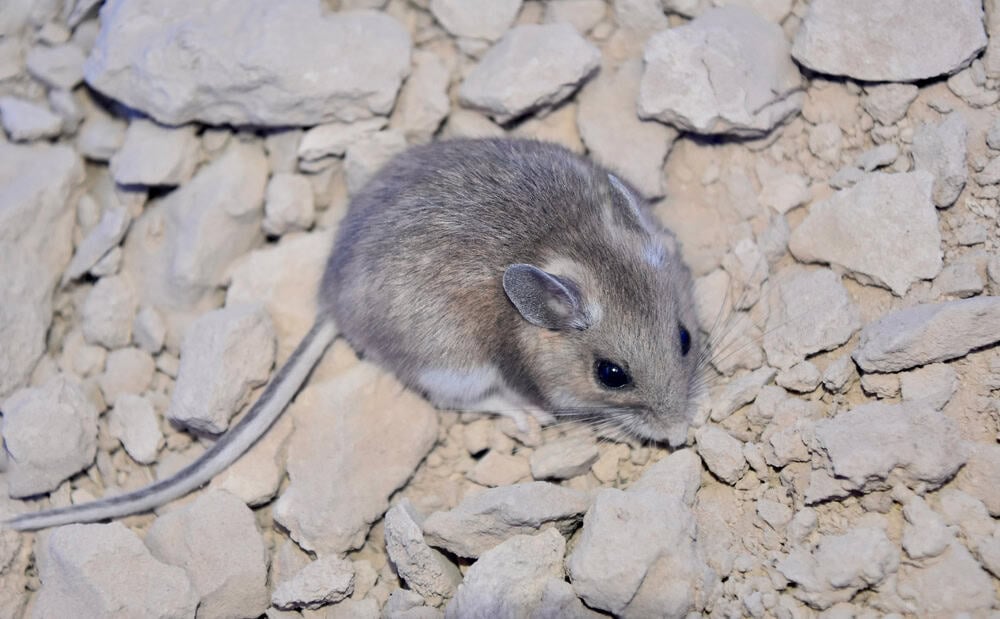
Hantavirus is carried by Western deer mice.
©B. Kao/Shutterstock.com
Western deer mice can be found throughout most of North America, with the exception of parts of the southeastern United States, Alaska, and the northernmost parts of Canada. The virus can spread anywhere that the mouse is found. However, the rodent is mainly found in rural areas, which is also where most human cases are reported. Very few human cases have been reported from suburban areas.
New studies, however, have revealed that other rodents carry the virus. When examining small mammals captured in New Mexico, researchers found that 26 percent were positive for viral RNA from the Sin Nombre virus. The majority (40 percent) of the positive samples were from western deer mice. However, the virus was also found in several other rodents, including the northern grasshopper mouse, the pinyon mouse, the white-footed mouse, the white-toothed woodrat, and the Northern pocket gopher. There is currently no evidence that the house mouse and Norway rat (which are more frequently encountered in urban communities) are carriers of the Sin Nombre virus.
How Do Humans Catch Hantavirus From Rodents?
Hantaviruses are transmitted to humans via exposure to infected rodent saliva, urine, or feces. As these substances become aerosolized or turn to dust, they can be breathed in and enter the lungs, where they affect the cells lining tiny blood vessels. This makes the vessels ‘leaky,’ and fluid fills the lungs, making it hard to breathe. At the same time, the virus enters the bloodstream. When it reaches the heart, it can affect the organ’s ability to pump blood, resulting in low blood pressure and death. You can also get infected if you are bitten by a rodent.
Most people get infected after working in or cleaning areas with rodent droppings, or through contact with contaminated food. However, you don’t have to see a rodent to inhale contaminated air. You could also become infected by touching something contaminated by the virus and then touching your mouth.
Who Gets Hantavirus?
Epidemiology is the science of describing when, where, and to whom diseases are transmitted. Hantavirus disease surveillance in the United States began in 1993 after an outbreak of what we now call HVPS in the Four Corners region – the area where Arizona, Colorado, New Mexico, and Utah meet. This was the first time that the Sin Nombre virus was isolated. It was found in a deer mouse specimen taken from the home of an initial case in the outbreak. Since then, there have been around 10 to 50 cases reported per year. It is likely that more people are getting infected, but are never identified because they do not develop symptoms.

Rodent poop can transmit hantavirus.
©Photo – TMD/Shutterstock.com
Epidemiological data indicate that 62 percent of cases are male and 74 percent are white. The average age of patients is 39 years, and 95 percent of cases occur west of the Mississippi River. New Mexico has had a total of 142 reported cases as of early 2026. This is more than any other state in the country. Within New Mexico, most human cases occur in the northwestern counties. The geographical distribution of human illness matches the geographic range of the rodent that transmits.
More Common in Drier Areas
Research has also shown that the risk of disease from hantavirus is higher in drier regions. We know that the virus can survive in rodent excrement for up to 15 days, so in drier areas it will accumulate. In wetter climates, it will be washed away and is less likely to end up as airborne dust particles that can be breathed in. Risks are also higher where land use is encroaching on wildlife habitats, which can be explained by increased contact with rural rodents. People living in homes where there are rodent holes and where rodents live are also more at risk. Unsurprisingly, people living in locations where there were more rodents were at a higher risk of contracting the infection.
These findings are important because if climate change causes drier conditions, it may facilitate the spread of hantavirus. Also, it may cause rodent population increases or may cause them to increase their geographic range, putting more humans at risk.
How to Protect Yourself From Hantavirus
To protect yourself from hantavirus, you should limit your exposure to rodents and their droppings, urine, nests, etc. Seal up all holes in your home and outbuildings that are larger than a dime. Call in professionals to deal with significant rodent infestations and to clean up after them. If you have to go into areas where rodents have been, do not stir up any dust or materials that could be contaminated. If you must clean, use a wet-cleaning method that will not allow dust and aerosols to become airborne.
Wet Cleaning Method
When wet cleaning, you must not sweep, dust, vacuum, or high-pressure spray the area. It is vital that you do not create aerosols or airborne dust that you could breathe in. Then, follow the methods recommended by the Centers for Disease Control.

Wear gloves when wet cleaning rodent-contaminated areas.
©Sergio Rojo/Shutterstock.com
Always wear rubber/plastic gloves and, when finished, wash your gloved hands with soap and water or a disinfectant before removing them. In homes and outbuildings, start by opening all doors and windows for 30 minutes to ventilate the space. Leave the area during this time.
Clearing up Rodent Urine and Droppings
Spray the surfaces contaminated by rodents with a bleach solution (1 part bleach to 9 parts water) or an EPA-registered disinfectant until they are very wet. Then use paper towels to wipe it away and dispose of it in the garbage. Mop or sponge the area with a disinfectant.
Clearing up Dead Rodents and Nests
To protect yourself from fleas, you may want to use insect repellent on clothing, shoes, and gloves. Use disinfectant to spray the dead rodent and nesting material, and let it soak for five minutes. Place the rodent/nesting material in a bag and knot it securely. Place inside a second bag and also seal that before disposing of it in a covered garbage container.
The Dangers of Rodent-Borne Disease
Hantavirus is not the only disease that you can catch from rodents. Some diseases are spread by direct contact, for example, through breathing in contaminated air or touching contaminated materials and then touching your eyes, nose, or mouth. Direct contact also includes rodent bites and scratches, or eating food contaminated by rodents. Bacterial diseases transmitted in this way include leptospirosis, rat-bite fever, salmonellosis, sylvatic typhus, and tularemia. In addition to hantavirus, the viral diseases spread by direct contact include Lassa fever, Lujo hemorrhagic fever, lymphocytic choriomeningitis, monkeypox, Omsk hemorrhagic fever, and South American arenaviruses.
Rodents also spread disease indirectly when ticks, mites, fleas, or mosquitoes that feed on their blood go on to bite humans and carry the pathogens with them. The bacterial diseases spread in this way are anaplasmosis, borreliosis, flea-borne (murine) typhus, Lyme disease, plague, rickettsial pox, scrub typhus, tick-borne relapsing fever, and tularemia. Parasitic diseases spread in this way from rodents to humans are angiostrongylus, babesiosis, cutaneous leishmaniasis, hymenolepis diminuta, and moniliformis moniliformis. The viral diseases are Colorado tick fever, La Crosse virus, and Powassan virus. That’s at least 30 good reasons to take care around rodents!
The Rodent Risk Awareness Gap
Despite a wealth of scientific data proving the risks to public health presented by rodents, many people seem to be oblivious to the dangers. An online survey conducted on behalf of the National Pest Management Association by The Harris Poll found that only 28% of Americans were aware that rodents can carry diseases. The survey was conducted between April 18 and 22, 2025, among 2,087 U.S. adults ages 18 and over.
A similar poll conducted in 2017 found that 37 percent of American homeowners have seen a rodent in their home in the last 12 months. Whilst diseases such as hantavirus are still thankfully very rare, the public health messaging around the dangers of rodent-transmitted diseases still has some way to go.