Copperhead
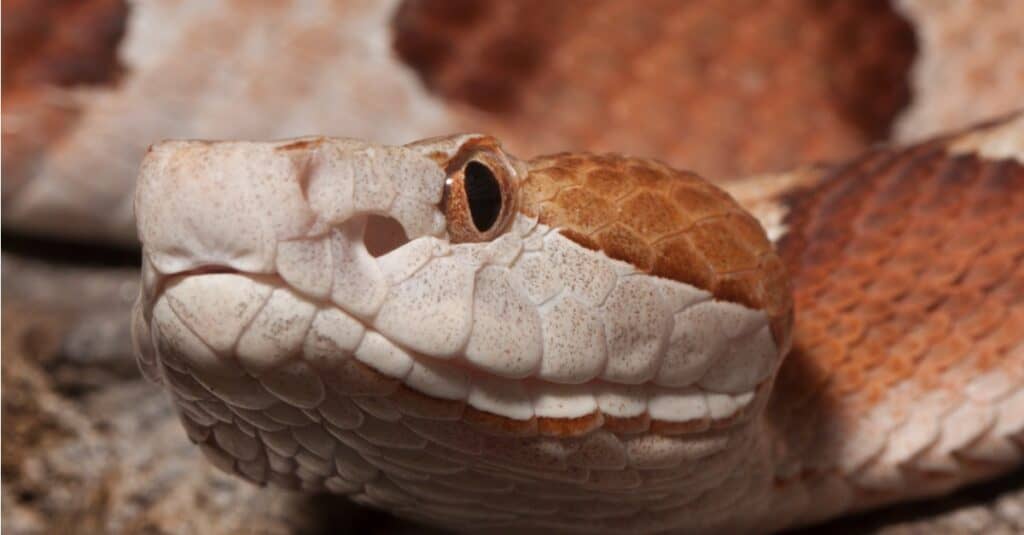
Close-up of venomous Copperhead Snake. Its head, whose color gives the snake its common name, is broad and wedge-shaped.
iStock.com/Mark Kostich

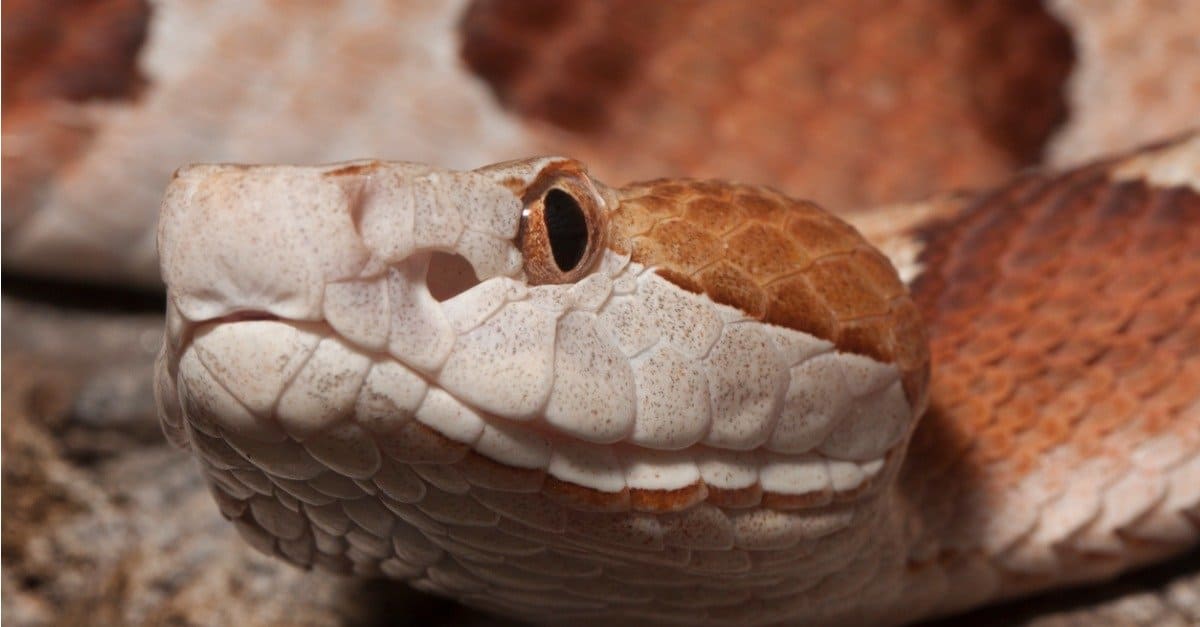
Agkistrodon contortrix contortrix
Close-up of venomous Copperhead Snake. Its head, whose color gives the snake its common name, is broad and wedge-shaped.
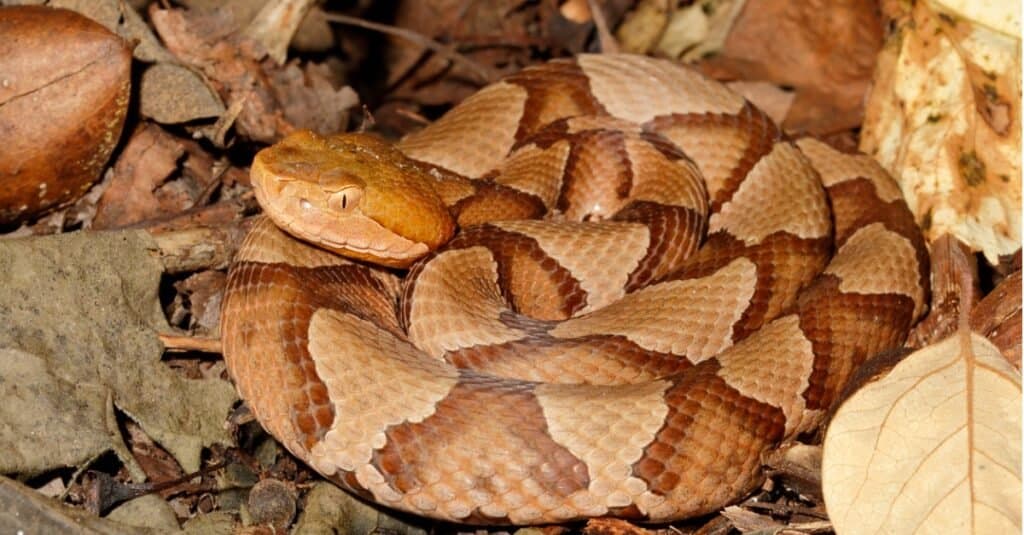
Northern Copperhead (agkistrodon contortrix mokasen) on leaf litter - taken in New Jersey. Its ground color is pale brown to pinkish-brown, and it has darker, hour-glass shaped bands down its body.
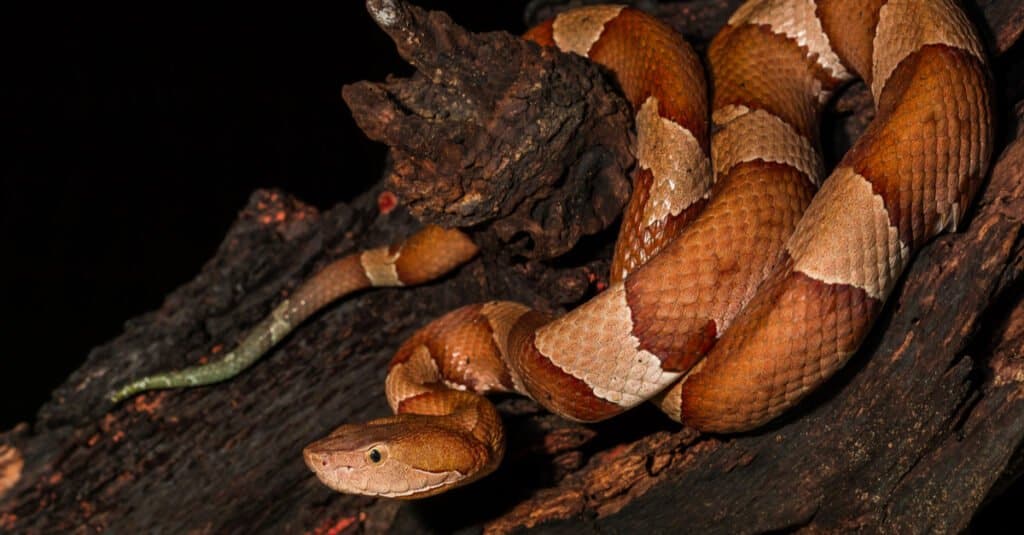
The body of the Copperhead ranges from 2 to usually less than 4 feet, but it is robust.
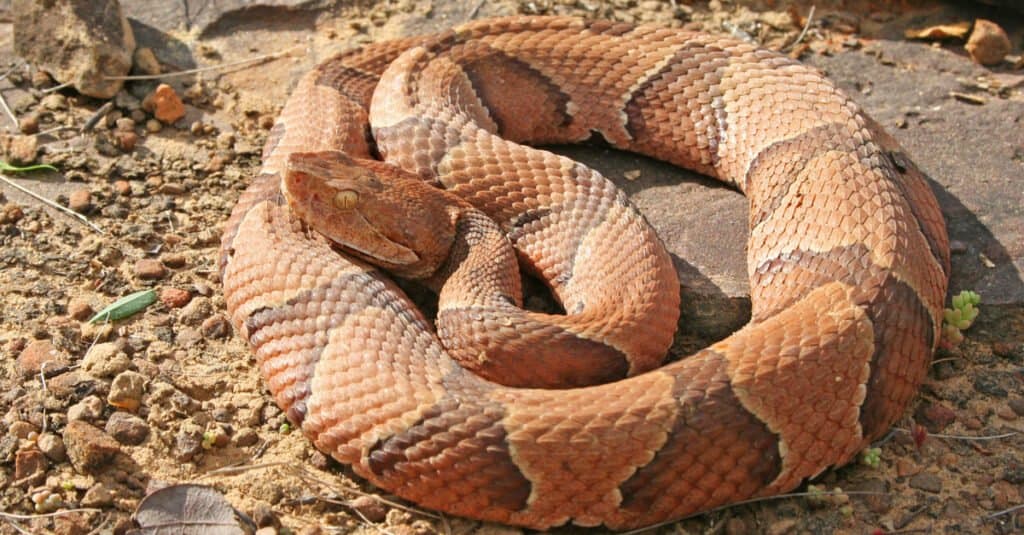
The Copperhead’s scales are keeled, and their eyes have vertical pupils that make them resemble cat’s eyes.
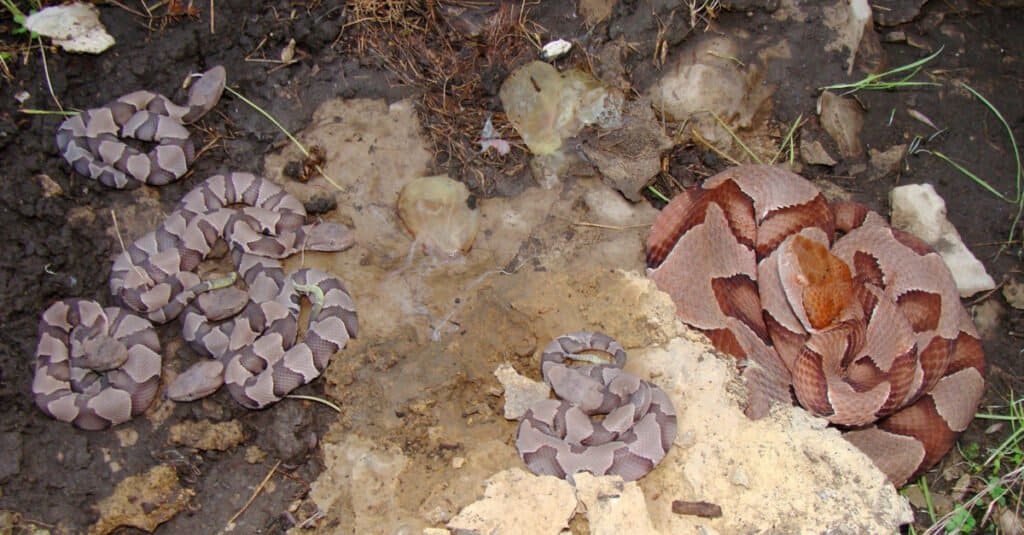
Female Osage Copperhead, Agkistrodon contortrix phaeogaster, and neonate baby copperheads shortly after live birth.
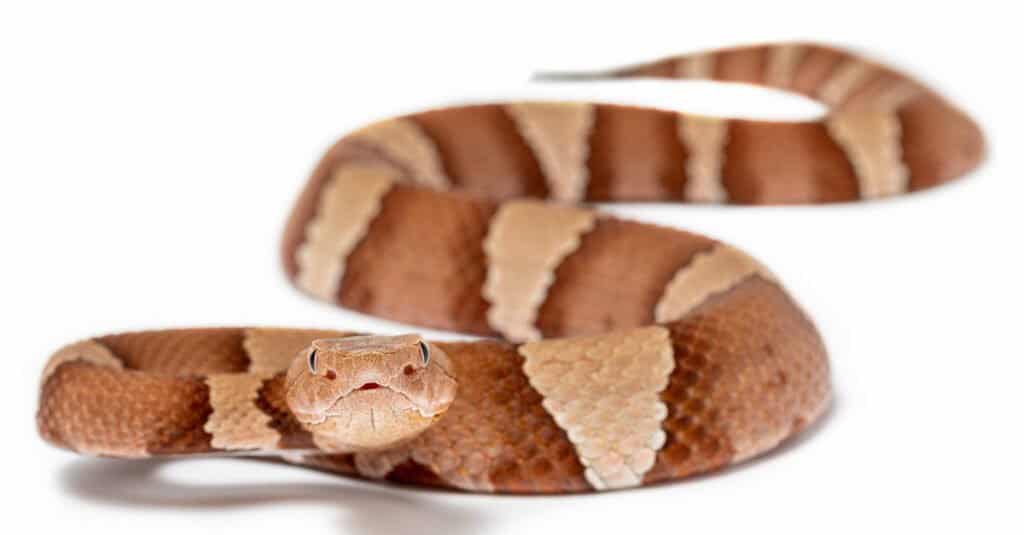
Broad-Banded Copperhead, Agkistrodon laticinctus isolated on a white background.
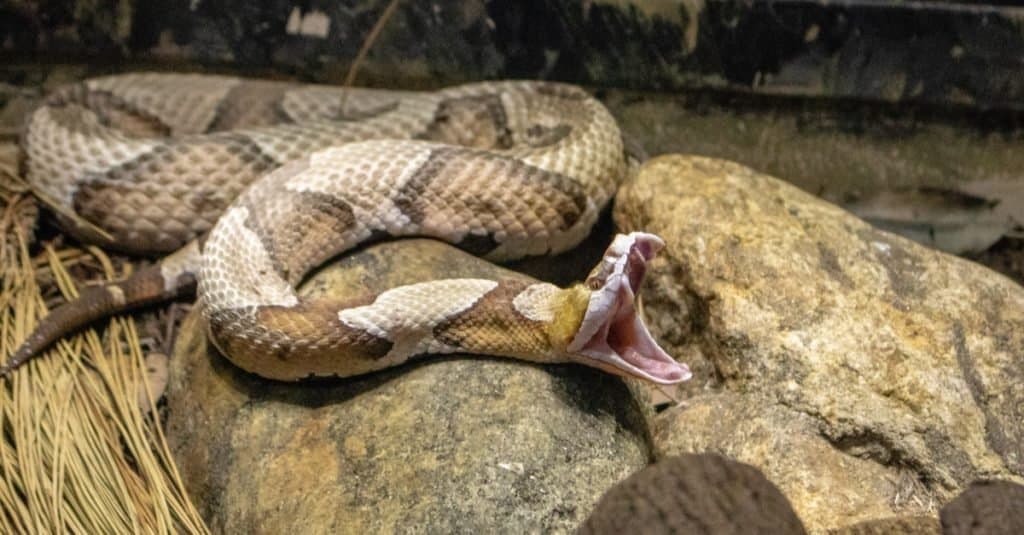
Large copperhead snake, a snake native to the United States, will readily eat Cicadas.
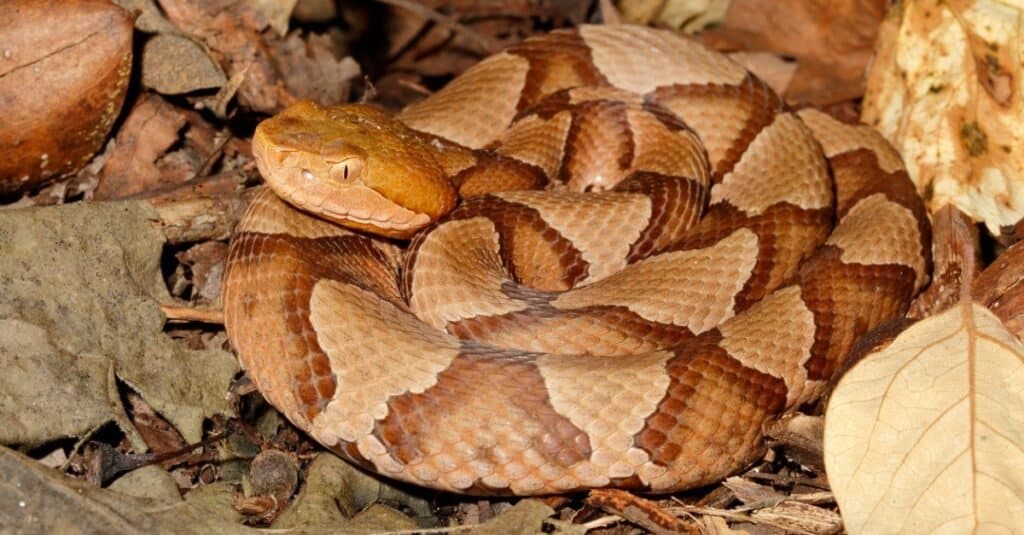
A Northern Copperhead (Agkistrodon contortrix mokasen) lying on leaf litter.
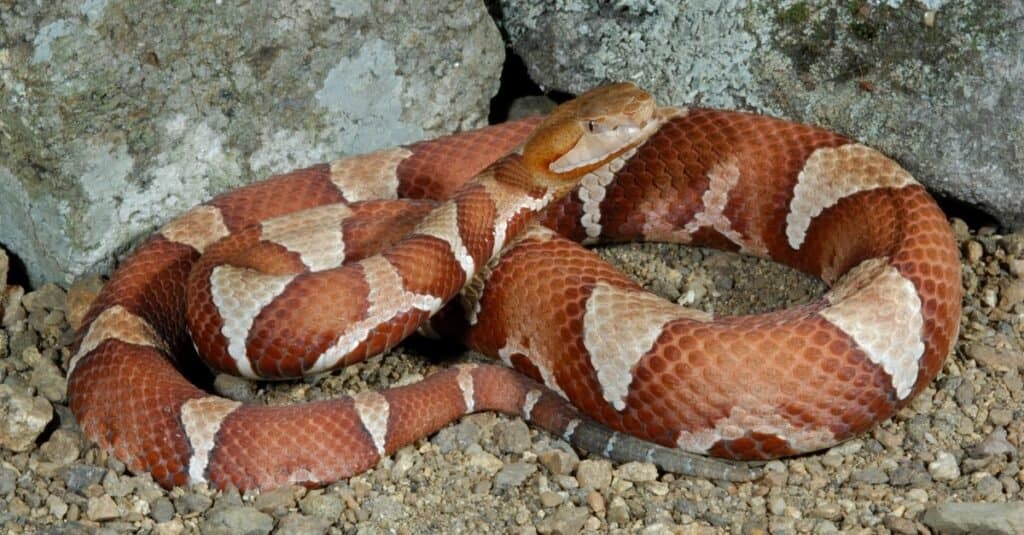
Trans-Pecos Copperhead, Agkistrodon laticinctus pictigaster, lying on gravel.
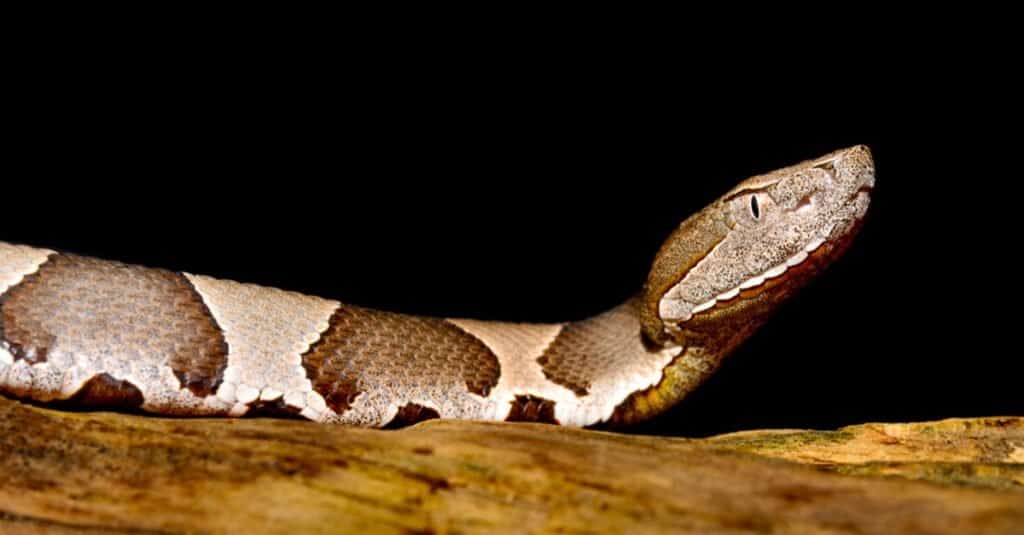
Broad-Band Copperhead snake (Agkistrodon laticinctus) on black background
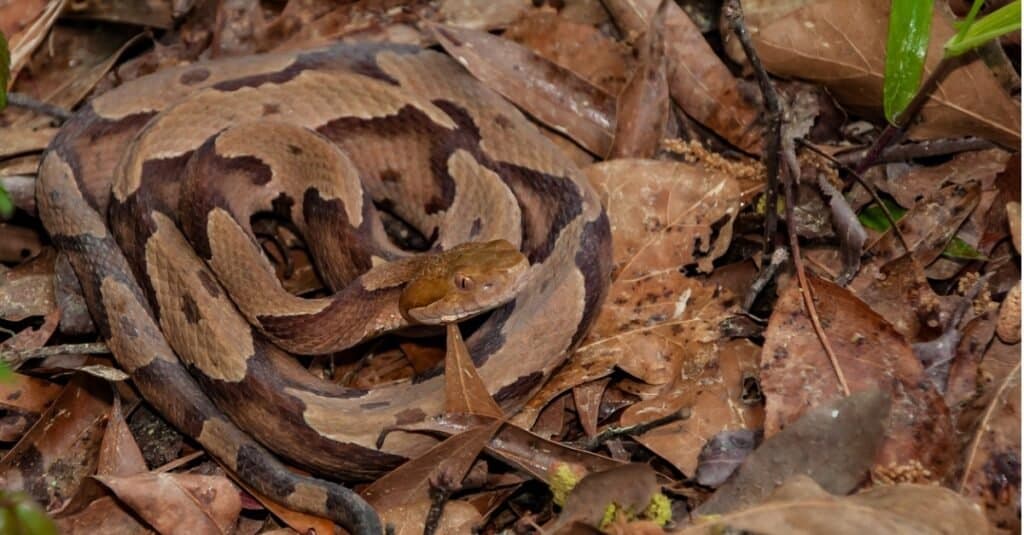
Copperheads are easily hidden on the ground because of their color.
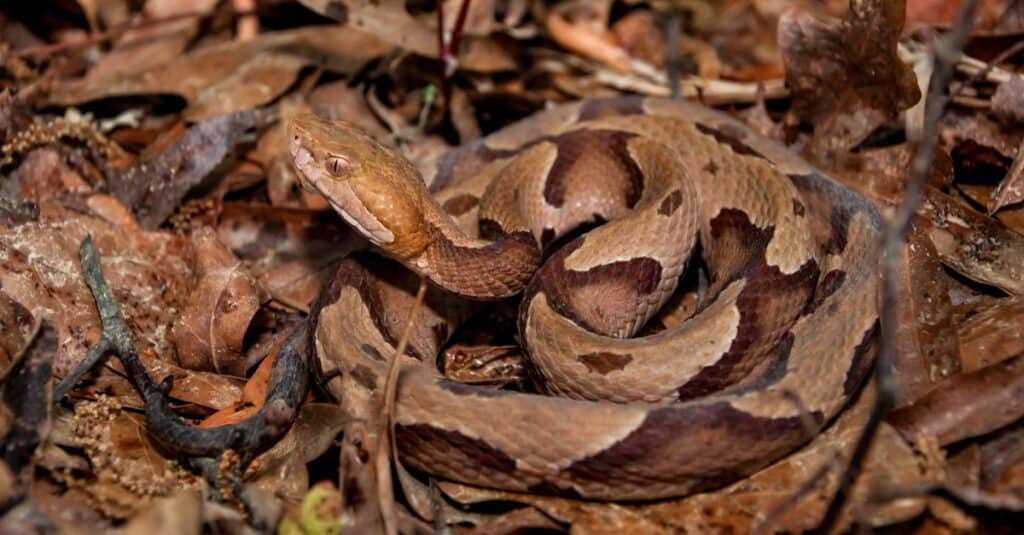
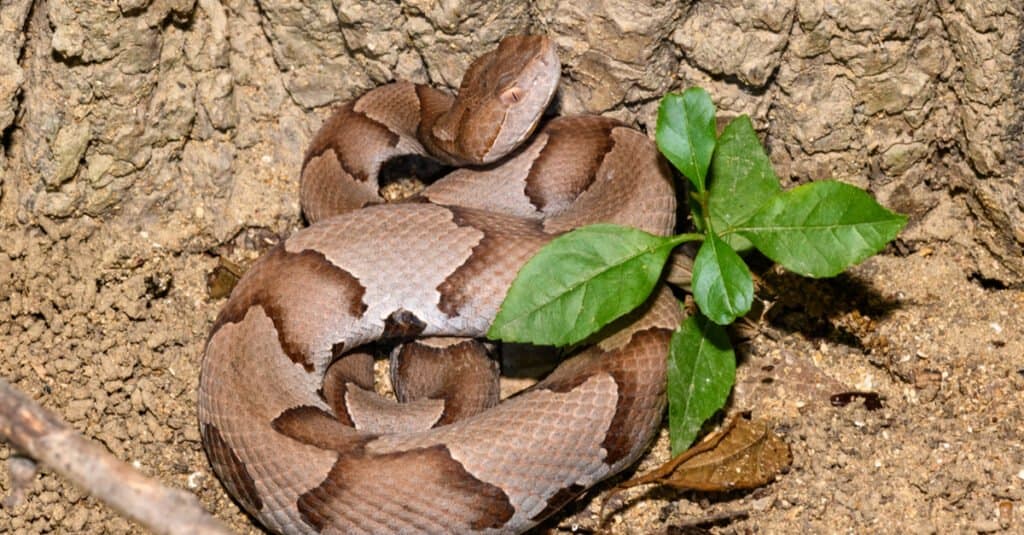
Eastern copperhead snakes (Agkistrodon contortrix) are not aggressive, but bite more people than any other snake. Why? Because they get stepped on.
Thank you for reading! Have some feedback for us?
We appreciate your help in improving our content.
Our editorial team will review your suggestions and make any necessary updates.
There was an error submitting your feedback. Please try again.