
Quick Take
- A landmark study on primate brain evolution went unchallenged for nearly 25 years, yet one Oxford professor always knew something was wrong with it. See the revisited findings →
- The real trigger for explosive brain growth in primates had nothing to do with diet or body size, and the actual culprit is something we still experience every day. Discover the real driver →
- Your number of close friendships predicts something far more consequential than your happiness, and evolutionary biology may explain why. Explore group size science →
- Primates that got physically bigger first didn't get the brains to match, and that pattern held until one specific pressure forced the equation to flip. See how the equation flipped →
For years, Professor Robin Dunbar questioned the findings of a study published nearly three decades earlier on the “brain lag” hypothesis, the theory that as body size grows, the brain develops more slowly, lagging behind to catch up. Published in 1999 by evolutionary biologists Robert O. Deaner and Charles L. Nunn, the “brain lag” study suggested that the bodies of humans and other large-brained primates grew before the brains.
“I knew about the study before it was published since I knew one of the authors,” says Dunbar, Emeritus Professor of Evolutionary Psychology at the Department of Experimental Psychology at the University of Oxford. “When they told me about it, I was slightly puzzled, and it’s been sitting in the back of my mind for the last 10 years.”
Dunbar thought there was something “not quite right” with their analysis. He started studying the behavioral ecology of feral goats in Scotland, along with monkeys and antelope in Africa, before transitioning his research focus to humans during the 1990s, when he introduced the concept of Dunbar’s number in 1992, a theoretical understanding around the limit of individuals with whom one person can maintain stable relationships. He continued collaborating with archaeologists, historians, literature scholars, mathematicians, computer scientists, and neuroscientists to further explore the evolutionary traits and interrelatedness of humans. He also published several books on the subject, including Friends: Understanding the Power of Our Most Important Relationships in 2021.
While Deaner and Nunn had a “clever analysis” of the rates of growth of the body and brain, Dunbar believed something was missing. More updated data on group sizes and the timings of evolutionary histories—including genetic-based timings, which he says are much more accurate—had become available since 1999.
Deaner and Nunn’s research was based primarily on timelines and anatomical traits, including body mass, sourcing data from the 1981 Stephan et al. dataset. Published by Heinz Stephan, Heiko Frahm, and Georg Baron, it detailed various brain structures across 48 primate species and was one of the most comprehensive and cited resources in evolutionary neurobiology. Since then, there have been newer and revised data on brain structure volumes.
In an attempt to answer some of the unexplained questions he had around the “brain lag” hypothesis, Dunbar started revisiting the ’99 study. “I’ve been tinkering with it,” he says, “trying to figure out where the problem lay in the best Popperian tradition of ‘If your results don’t make sense, you’ve got to fiddle with them like a terrier at a bone until nirvana opens up before you.’”
Group Settings
Something the Deaner and Nunn papers didn’t take into account was that the complexities of brain and group size relationships were not as simple as once theorized.
“We’ve since discovered in the last couple of years that the brain-group size relationships and other cognition relationships to brain size in primates are not a simple relationship,” says Dunbar. “What we needed to do is go back to their analysis and redo it in light of what we know now, and that’s when a more complicated but interesting picture emerges. Essentially that picture says ‘They try and change body size first, but it doesn’t have much effect on brain size,’ which isn’t too surprising since body size and brain size aren’t all that well correlated in primates.”
The original study also pointed to a dramatic and “fast” increase in brain size, which he says jumped out from the graphs.
“You’ve got a series of phase shifts going on in the course of primate evolution, where there’s primarily a higher predation risk, which they’re trying to solve by living in groups,” says Dunbar. “When Deaner and Nunn did their original analysis, they looked at whether brain size correlated with group size, and it didn’t in their data, but that’s probably one of the most robust effects anywhere in evolutionary biology.”
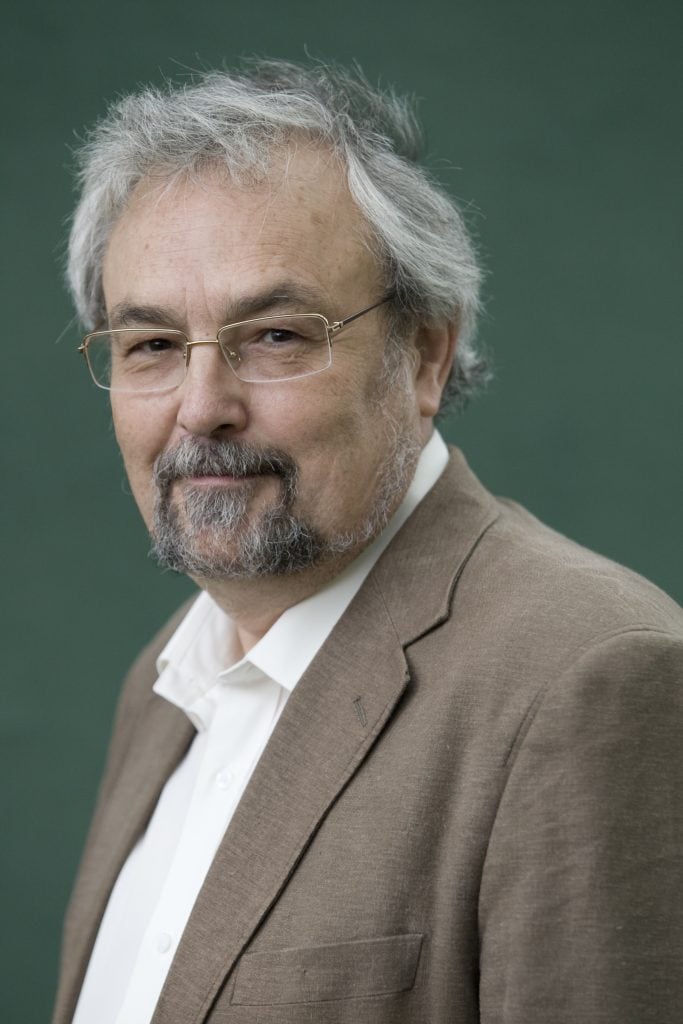
Professor Robin Dunbar, from the Department of Experimental Psychology at the University of Oxford, challenged a study published nearly three decades earlier on the “brain lag” hypothesis.
©Colin McPherson/Corbis via Getty Images – Original / License
He adds, “It’s been tested to death, and there are social cognitive grades in these relationships, which are extremely tight, so it was puzzling that they’re one of the few analyses that didn’t get a signature for the social brain relationship.”
New Genetic Data
Any gaps in their analysis were likely due to outdated data available to Deaner and Nunn at the time. Since then, there have been advancements in genetic data that weren’t available then, including phylogeny, documenting the genetic relationships and evolutionary history among groups of organisms.
“In very broad terms, they got the picture of primate evolution fairly accurate, but there are lots of peculiarities where species have undergone very fast physical changes without necessarily changing their genetics very much,” says Dunbar.
“In terms of primates, particularly ape time scales, they’ve genetically undergone quite a lot of separate evolution and changed at the molecular level, but don’t look very different at all,” adds Dunbar. “The problem with the older phylogenies that are based on physical characteristics is they’re not 100 percent reliable.”
In his 2026 paper, Evolutionary Lags in the Primate Brain Size/ Body Size Revisited, Dunbar builds on the original notion that the brain was not developing at a similar pace as the body. He proposes that body size had, in fact, preceded the evolution of the brain in some primates.
We have completely underestimated how difficult it actually is for animals to live in groups, and I’m always puzzled why, because we live in a social world.
Professor Robin Dunbar, Department of Experimental Psychology, University of Oxford
New statistics showed a “lag effect,” but it wasn’t as straightforward as originally presented. Using a collection of updated data and more modern statistical technology, which can detect more accurate evolutionary timelines, Dunbar suggests that some brain sizes continued to grow beyond an expected baseline.
“In the 20-odd years since the original analysis was done, there’s been a huge increase in the number of field studies,” says Dunbar, “so the amount of data we have on the distribution of group sizes across nearly every species of primate is greater.”
In later human evolution, brains underwent more drastic increases in size relative to the body. Dunbar argues that primate brains may have caught up to larger bodies, but they continued to grow and may have entered a higher cognitive level with the introduction of groups. Triggers in brain-size growth, which potentially became more complex, Dunbar found, were likely linked to the development of social circles as a means of survival.
“Monkeys, apes, and of course humans switched from brawn to brain over time as their main way of protecting themselves against predators,” Dunbar has previously stated.
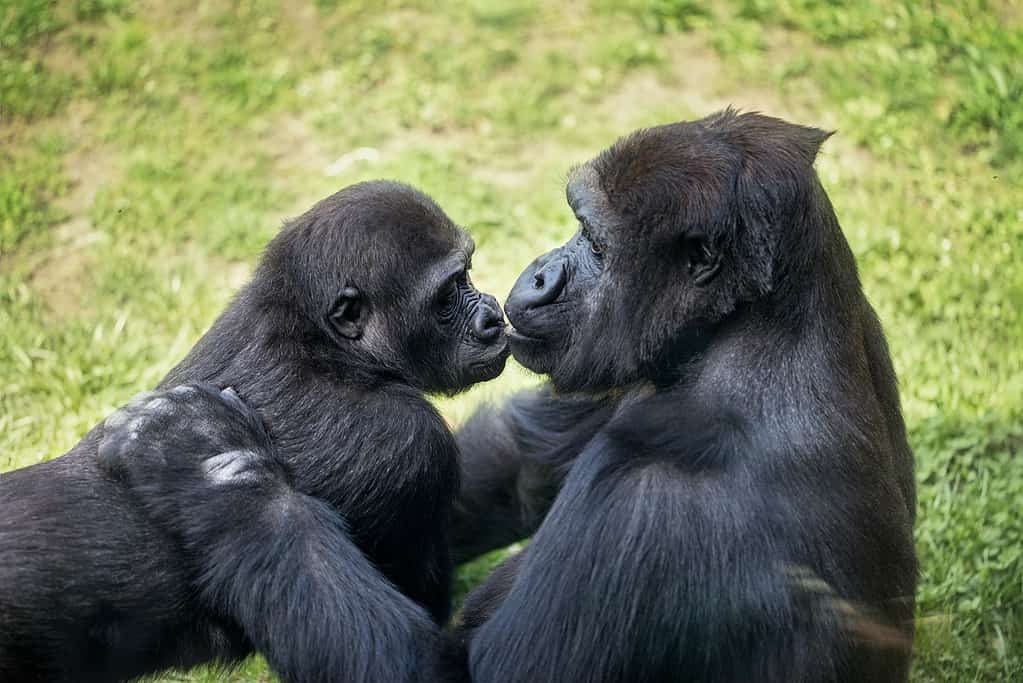
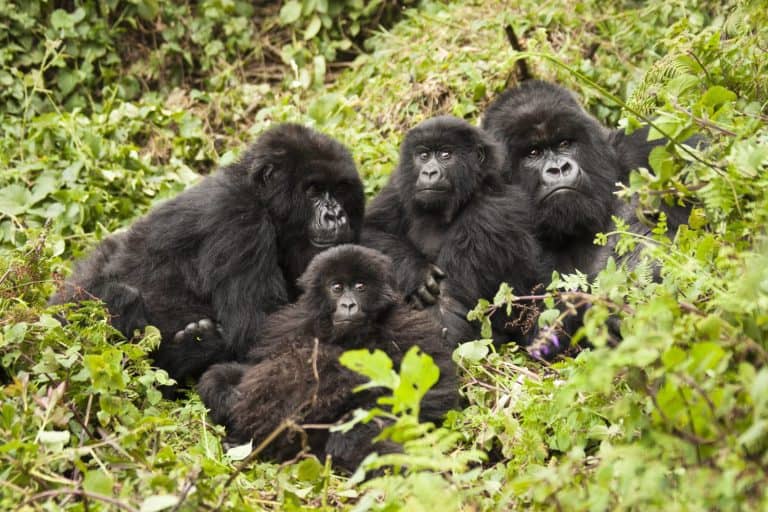
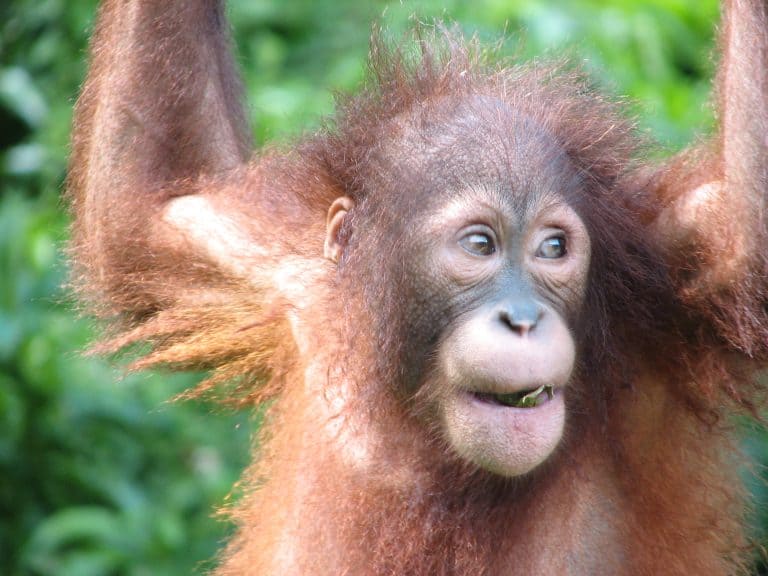
The potential brain-size growth in early primates is likely linked to the development of social circles as a means of survival.
©LuckyBusiness/iStock via Getty Images
Larger social networks were necessary for protection against predators and required more cognitive development — a trend that continues in human social circles today.
“They’ve done big national studies, and the single best predictor of your psychological health and wellbeing, and your physical health and wellbeing — how fast you recover from surgery, how resistant you are to kind of everyday diseases, and even how long you’re going to live — is the number and quality of close friendships you have,” says Dunbar. “The decisions we have to deal with living in social groups, especially humans, are hugely complicated, and yet we are very good at it. I think we’re so good at it that people don’t notice how complicated it is.”
Means of Survival
Numerous brain imaging studies have also shown that solving social dilemmas is computationally much more demanding, requiring the recruitment of more brain neurons. “In the course of 65 million years of primate evolution, things change quite radically,” says Dunbar. “New lineages arise, but it’s never been clear what these were associated with, or why they necessarily evolved. I think what these data show is that they are a consequence of species invading more predator-risky habitats, and then switching their anti-predator strategy from just being physically big, to group sizes.”
In his analysis, Dunbar also suggests that the increase in brain size may have been facilitated through a shift in diet of more nuts, seeds, and energy-dense fruits over foliage.
“There’s been the argument that brains evolve to manage diets, but there’s no evidence that brain-size evolution was driven by changes in diet or patterns of diet,” says Dunbar. “People are misinterpreting correlations for causation, a classic error, because if you look at the whole network of relationships, diet emerges as a constraint on brain size quite clearly, so you can’t get a big brain if you don’t change your diet.”
To live in larger groups, he adds, a bigger brain was necessary. “In order to have a big brain, you’ve got to change your diet to something that’s more frugivorous,” adds Dunbar, “or in the case of humans, more meat-based.”
Though Dunbar’s “social brain” hypothesis — that primate (and human) brains evolved to better manage the complexities of living in social groups — has been challenged by some researchers, it still requires deeper evolutionary analysis to explain the more advanced brain growth in primates over other mammal lineages, a gap he plans to address in a book.
“We have completely underestimated how difficult it actually is for animals to live in groups, and I’m always puzzled why, because we live in a social world,” says Dunbar. “The pressures to disband groups and live on your own are enormous, and everybody who lives in the social world knows that relationships are difficult things.”
Dunbar adds, “Why this is ignored when it comes to understanding, particularly primate evolution, given how social primates are, I find incomprehensible. Perhaps it’s too much time spent in ivory towers, and not enough time spent out on the dance floor.”