Quick Take
- The viral elephant is almost certainly AI, but the real animal it's based on is stranger and cuter than the fake. See the AI image story →
- There's a biological reason these elephants look like permanent babies, even as full-grown adults. Discover the baby-faced adults →
One look at this elephant and the growing AI detector in your brain sets off alarm bells. It looks almost too cute to be real, too adorable, and optimized for preciousness. Just look at its perfectly bubbly proportions and squat little legs, as if it were designed in a lab to go viral. As seen in this Instagram post, this baby elephant is as short and squat as it is delightful.
The truth of the matter is that this image is almost certainly AI-generated. But Borneo pygmy elephants are very real. Baby Borneo pygmy elephants are just as cute as this image suggests; they just have slightly thinner legs. In our duty to separate fact from fiction, let’s learn more about how this image went viral and what makes Borneo pygmy elephants so photogenic.
A Viral Sensation

A photo that went viral last month is likely AI-generated or enhanced.
©Instagram/thetinderblog – Original
Last month, an image appeared on social media featuring an elephant that looked like a real-life Dumbo, except, somehow, even cuter. It has an incredibly round body and short, stumpy legs. Its overall appearance can only be described as debilitatingly adorable. As seen in this Instagram post, the elephant seemed designed to get clicks. People called it the most “elephanty elephant” ever.
Unsurprisingly, the image quickly went viral, spreading across social media like wildfire. It was even used by the Delhi Police in a post promoting road safety. The tiny, squat elephant in the series of photos was so cute, however, that people became suspicious. As best as can be determined, the elephant in the photos is at the very least AI-enhanced. This is somewhat of a shame because real Borneo pygmy elephants are cute in their own right.
Borneo Pygmy Elephants
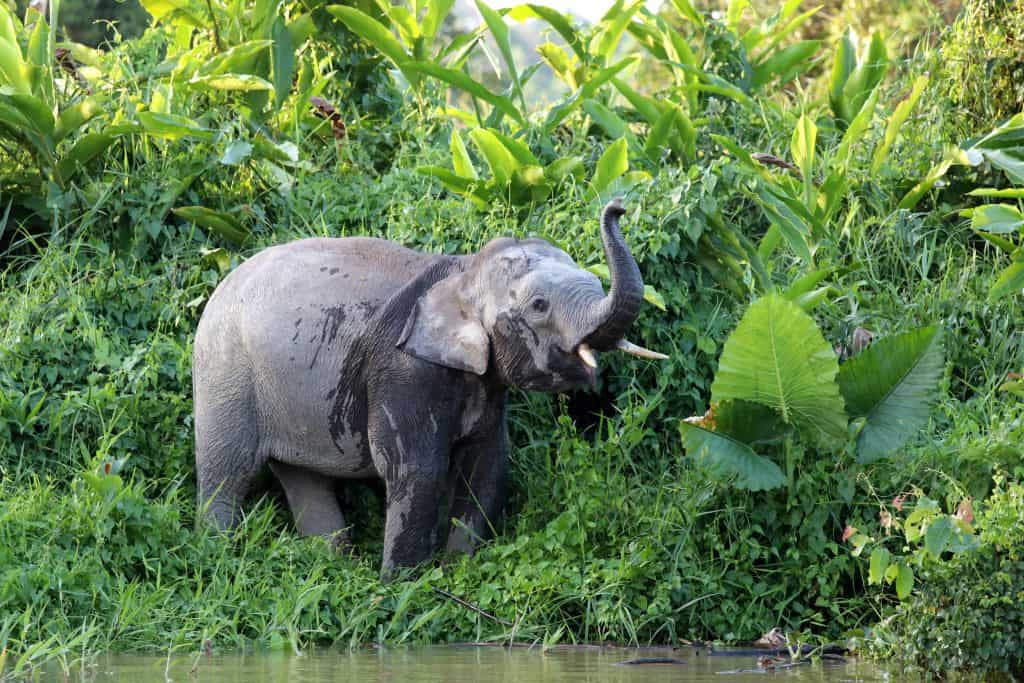
These elephants retain a youthful appearance well into adulthood.
©Christian Edelmann/Shutterstock.com
Borneo elephants, also called Borneo pygmy elephants (Elephas maximus borneensis), are the smallest subspecies of Asian elephant. Isolated on the island of Borneo for around 300,000 years, these elephants became genetically distinct from other Asian elephants. As such, they grow to mere ‘pygmy’ dimensions, topping at around eight to nearly ten feet in height but with comparatively massive ears, straight tusks, and extended tails. Due to skulls with round shapes, they retain a youthful appearance well into adulthood.
These days, Borneo pygmy elephants are confined to small pockets of lowland rainforests, with a total population of less than 1,500. Habitat loss and human encroachment have put them in a vulnerable position. They are also vulnerable to diseases, having been genetically bottlenecked for hundreds of thousands of years. As such, groups like the World Wildlife Fund have stepped in to protect them. This includes strategies like creating green corridors to bridge gaps between the Borneo elephants’ increasingly fragmented habitats.
While the viral picture of a Borneo pygmy elephant is almost certainly fake, it helps bring exposure to a naturally adorable creature that deserves more coverage.