
Quick Take
- One pufferfish species is so lethally toxic that other fish have evolved to impersonate its appearance just to survive.
- Most pufferfish are aggressive loners, but one species on this list breaks that rule entirely and actually needs companions to thrive.
- Not all pufferfish carry enough of the infamous tetrodotoxin to be deadly, and one species is even considered safe enough to eat.
- The largest pufferfish on this list demands a tank so massive that even experienced keepers struggle to manage it, leaving many to wonder just how big is too big.
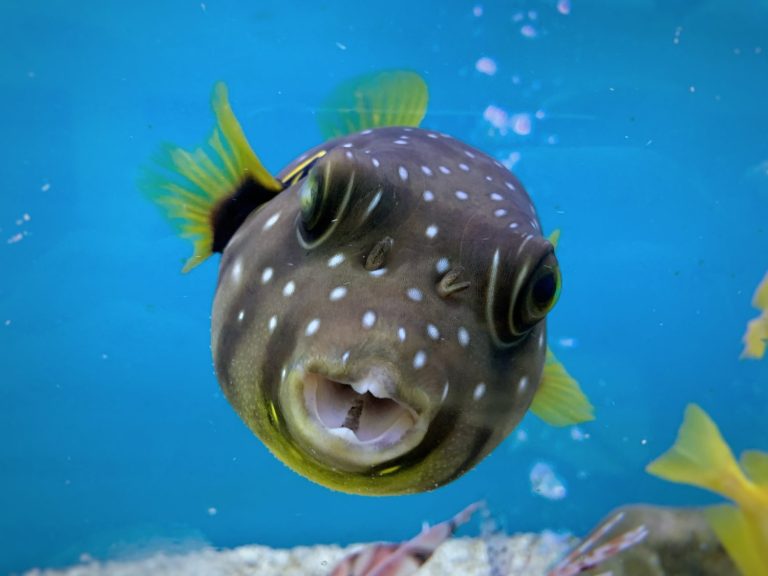
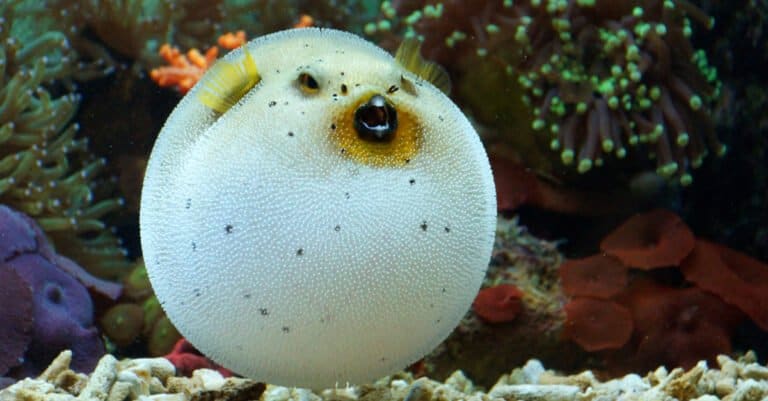
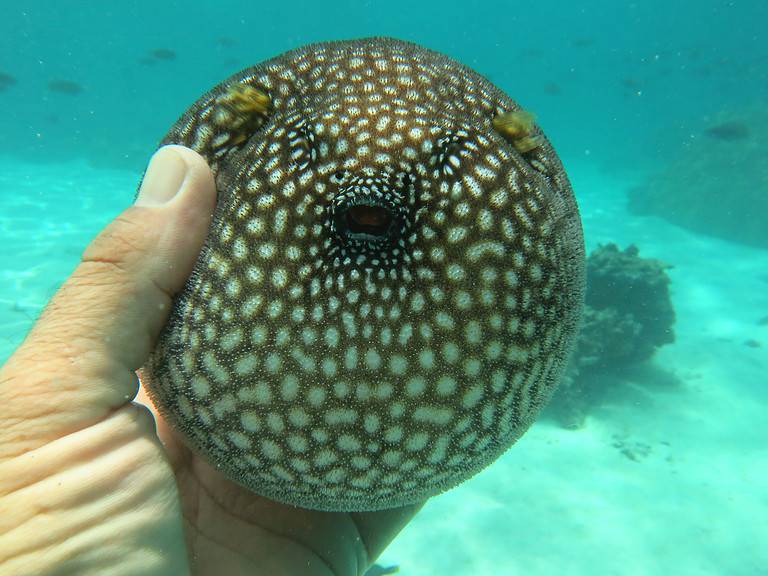
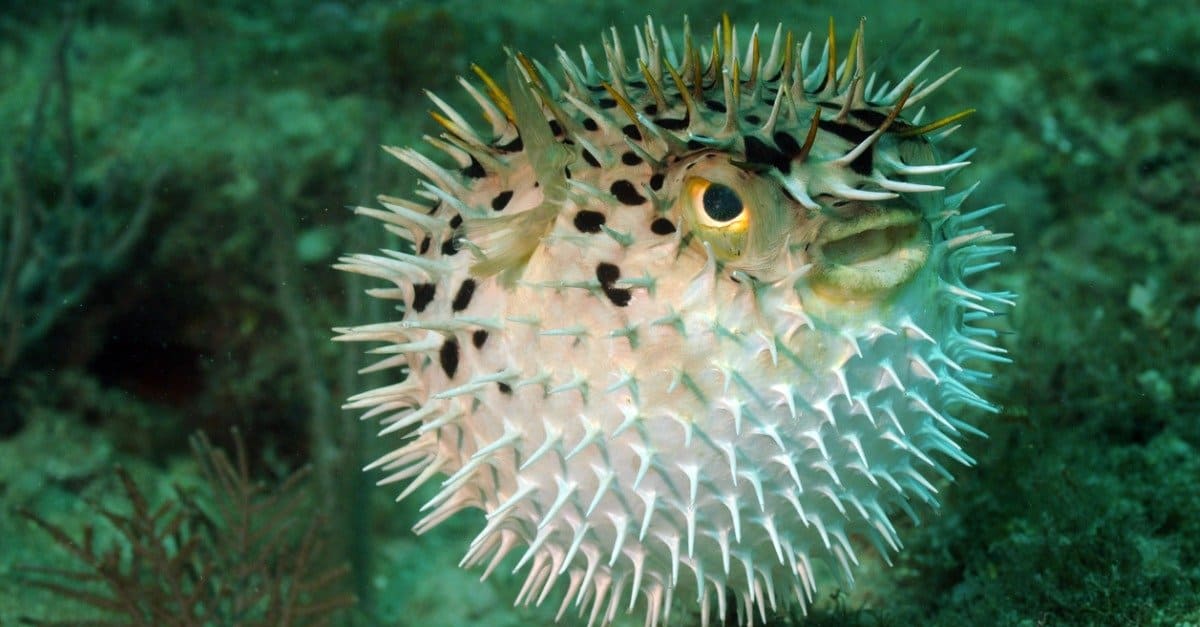
Pufferfish include both freshwater and marine fish in the family Tetraodontidae. As their name implies, these fish can puff up two or three times their normal size when they feel threatened. The many varieties of pufferfish range in size from scarcely over an inch to several feet in length. Like rodents, pufferfish have teeth that grow continuously throughout their lives, so a diet that includes hard-shelled foods is necessary to wear them down. Today, we’re covering 15 incredible types of pufferfish.
1. Congo Pufferfish (Tetraodon miurus)
The Congo puffer, also known as the potato puffer, is native to the Congo River in Africa. They grow to around 5.9 inches in length. They tend to be spotted and have several color patterns. In the wild, their populations are considered healthy. Congo pufferfish aren’t particularly active, but they will need a sand substrate at the bottom of aquariums. Puffers also require plenty of space, with experts recommending a minimum tank size of 20-30 gallons.
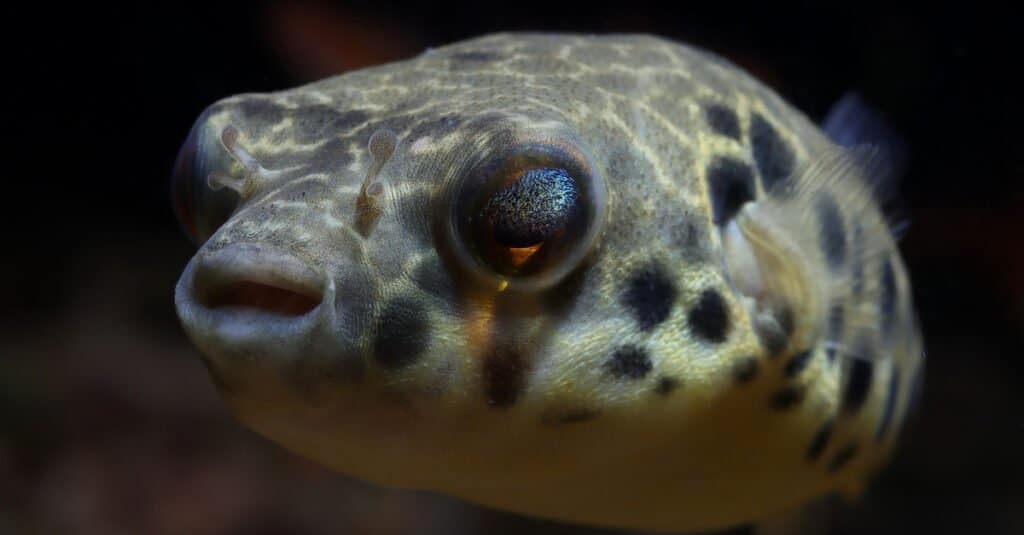
Congo pufferfish are a freshwater pufferfish from the Congo River in Africa.
©Dan Olsen/Shutterstock.com
2. Mbu Pufferfish (Tetraodon Mbu)
Mbu puffers are native to the Congo River in Africa, as well as the east coast of Lake Tanganyika near the Malagarasi River mouth. They are the largest freshwater pufferfish, capable of growing to over 2 feet long. They tend to be yellow and white with black markings. These giant pufferfish require at least a 500 gallon tank, but many experienced keepers recommend even larger tanks. Keeping one in a private aquarium can be challenging, especially since they produce a large amount of waste, and water filtration can be difficult to manage.
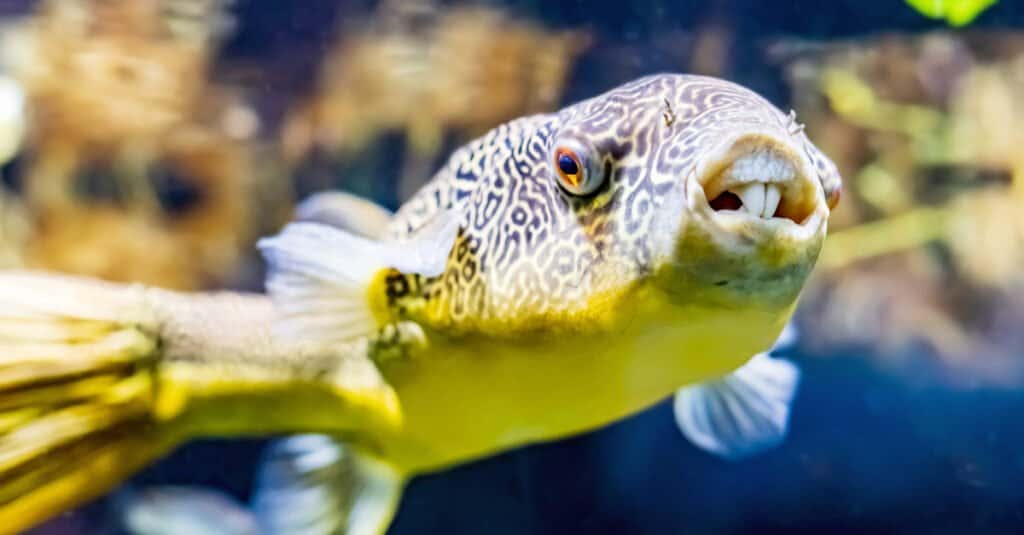
The Mbu pufferfish is the largest freshwater puffer.
©yuliya ivanenko/Shutterstock.com
3. Red-Eyed Pufferfish (Carinotetraodon lorteti)
Red-eyed puffers are black and silver fish with red eyes. Males have red tails and females appear more mottled. These small fish measure around 2 to 3 inches in length. They are freshwater puffers native to Southeast Asia. Experts recommend 10–15 gallons for a single fish, but 20 or more gallons is recommended to allow space for small groups or breeding. These fish can be aggressive, and they are sensitive to water quality.
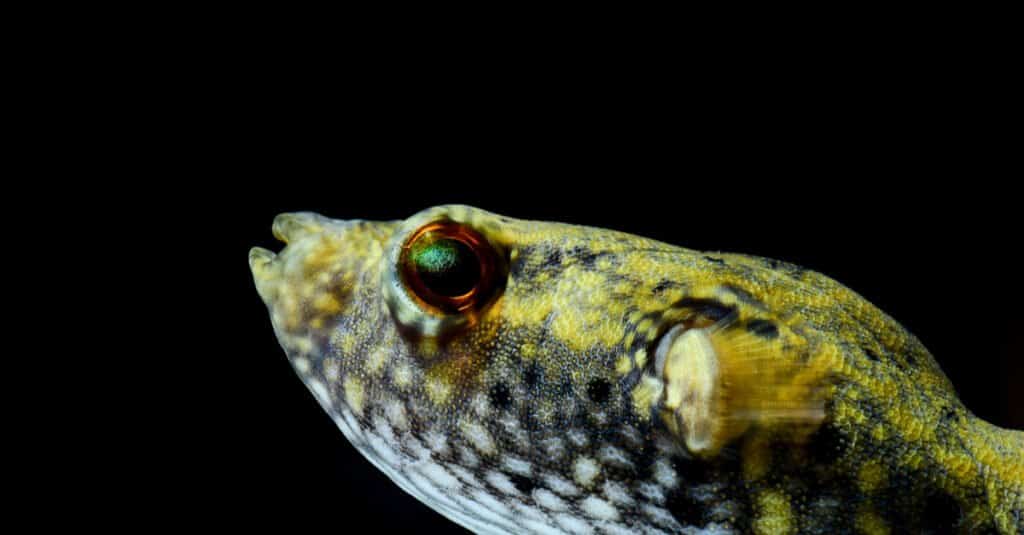
Red-eyed puffers are considered dwarf puffers, only reaching a maximum of 3 inches.
©SURACHET KRIENGNARONGDECH/Shutterstock.com
4. Dwarf Pea Pufferfish (Carinotetraodon travancoricus)
Dwarf pea puffers are also known as dwarf pufferfish, pygmy puffers, and Malabar puffers. That is a lot of names for a 1-inch fish. They originated in southwestern India and are yellow with black spots. Dwarf pea pufferfish are known to have big personalities. They are ideal if you have a smaller tank and want a single-species aquarium, as they can be aggressive when kept with other fish.
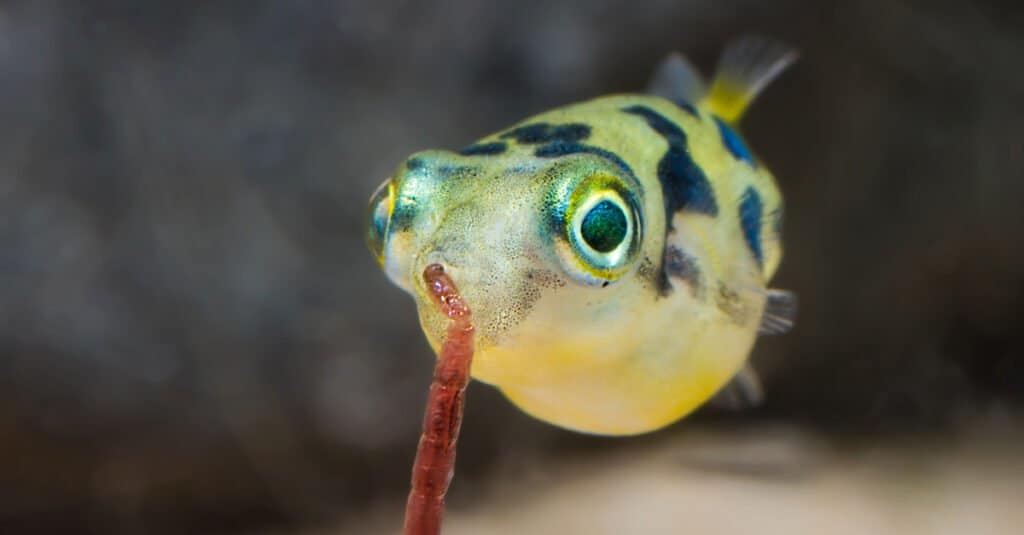
Dwarf pea pufferfish are endemic to southwestern India.
©Dwarf pufferfish (Carinotetraodon travancoricus) feeding close-up shots/Shutterstock.com
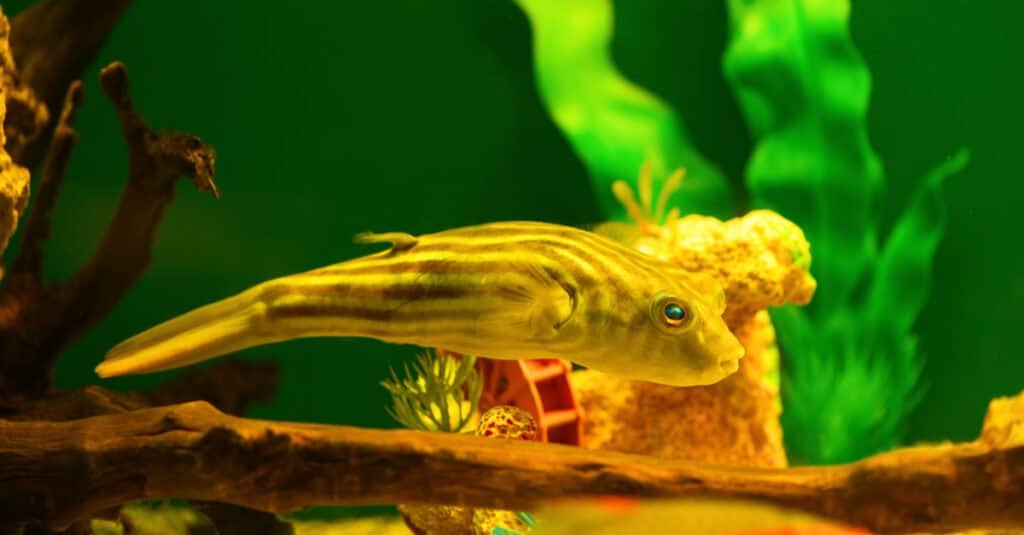
5. Fahaka Pufferfish (Tetraodon lineatus)
Fahaka pufferfish originate in major river basins in West, Northeast, and East Africa. They have striped or patterned bodies in red, grey, yellow, white, and black. These fish grow up to 1.4 feet in length. Due to their size, Fahaka pufferfish require large enclosures. Experts recommend providing a minimum tank size of 125 gallons for one fish. Like other large pufferfish on this list, Fahakas are for very experienced aquarium keepers only. Fahakas are extremely aggressive and territorial fish.
©Bk87/Shutterstock.com
6. Amazon Puffer (Colomesus asellus)
As the name indicates, these fish are native to the Amazon, Essequibo, and Orinoco river basins in South America. They have yellow bellies, and the rest of their bodies are covered in yellow and black stripes. These fish grow to just 3 inches in length on average but can reach up to about 5 inches. In contrast to other freshwater pufferfish, like the Congo pufferfish, which can be more sedentary, Amazon puffers are extremely active. They are also social, shoaling fish, unlike most puffers. Amazon pufferfish require tanks of 55 gallons or larger for groups of 4-6.
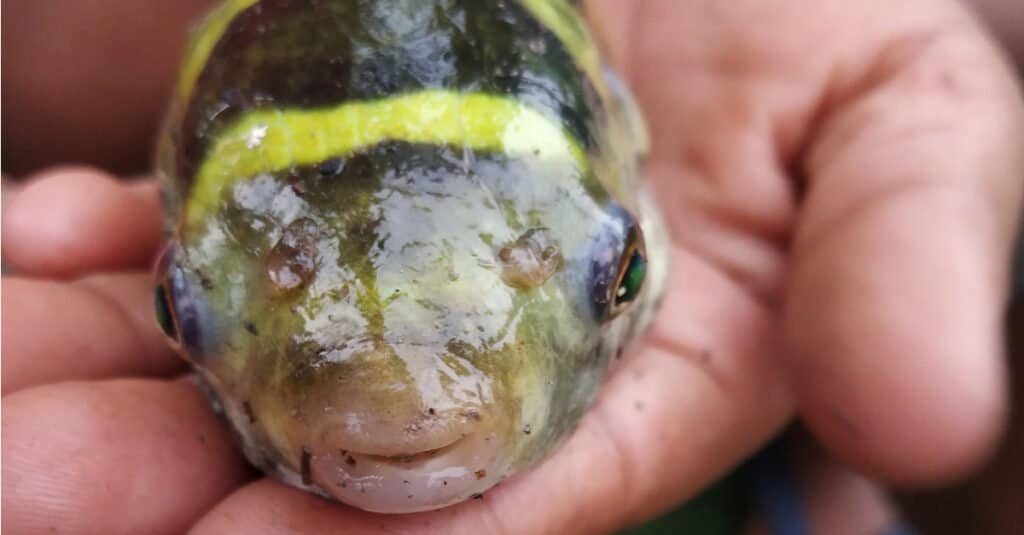
Amazon pufferfish are social, shoaling fish that prefer to live in groups.
©RainyTam/Shutterstock.com
7. Figure Eight Pufferfish (Tetraodon biocellatus)
The figure eight, or eyespot, pufferfish is named after the markings on its body, which can sometimes resemble the number “8.” They are a smaller pufferfish, rarely measuring over 3 inches in length when fully grown. Figure eight pufferfish are aggressive and are not ideal for a community tank setup. The minimum recommended tank size is 15-20 gallons. These fish are native to freshwater habitats in Southeast Asia.
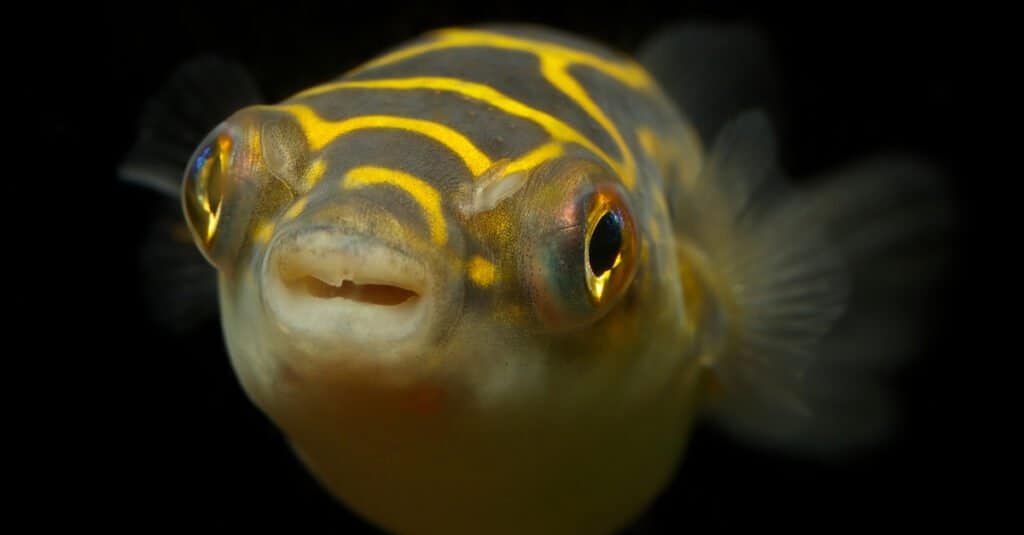
Figure eight pufferfish can sometimes be found in brackish water
©Dan Olsen/Shutterstock.com
8. Imitator Puffer (Carinotetraodon imitator)
Imitator puffers are found in the Western Ghats of India. They appear very similar to dwarf pea puffers, but they have a smaller number of larger spots. These fish grow to just 1 to 1.25 inches in length and are one of the smallest pufferfish species. Like dwarf pea pufferfish, imitator pufferfish can be easier to keep because they require less water. Experts recommend these territorial fish be kept in same species groups, with a minimum of 5 gallons per fish.
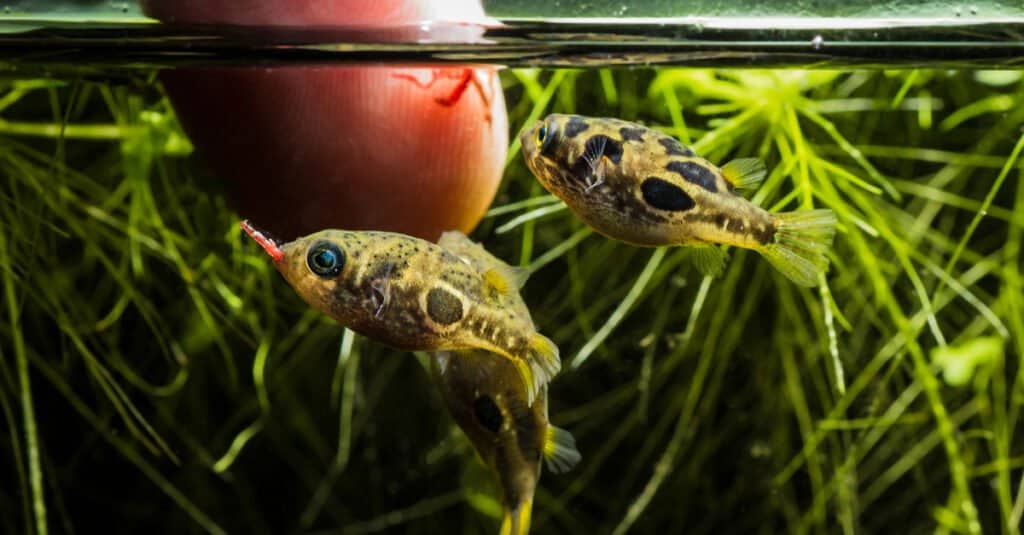
Dwarf pufferfish are a more manageable aquarium species than larger puffers.
©Toxotes Hun-Gabor Horvath/Shutterstock.com
9. Green Pufferfish (Dichotomyctere nigroviridis)
Green pufferfish are found in rivers, lakes, and flood plains of southeast Asia. They are a medium-sized species of freshwater pufferfish that grow to approximately 7 inches in length. These fish are bright yellowish-green with dark black spots and lighter underbellies. Like many other pufferfish, they can be quite aggressive, which becomes problematic in communal tanks. They should be kept in tanks of at least 30 gallons for a single fish.
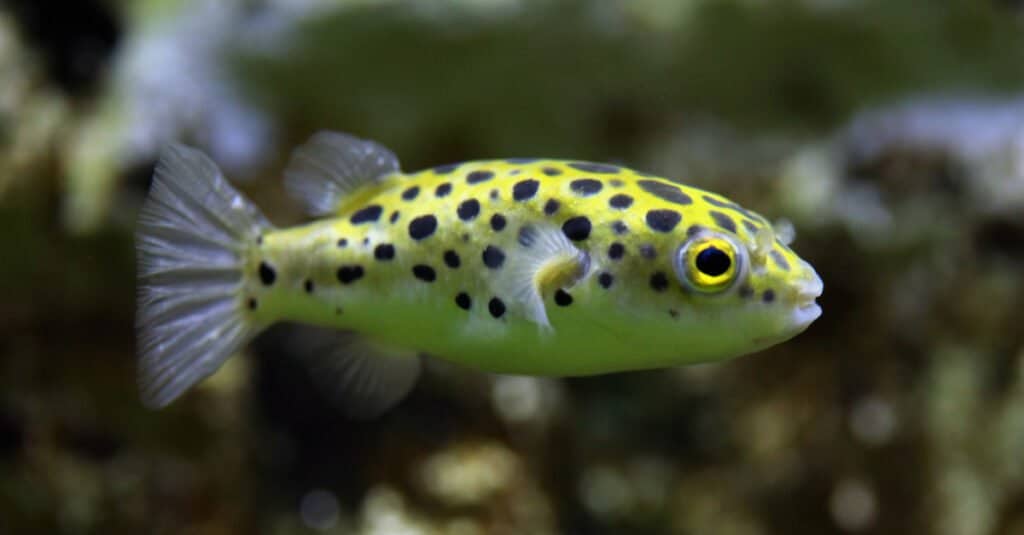
Green pufferfish are medium-sized puffers that can reach approximately 7 inches in length.
©Vladimir Wrangel/Shutterstock.com
10. Blue-Spotted Pufferfish (Arothron caeruleopunctatus)
Blue-spotted pufferfish are marine pufferfish, with light brown-to-yellow bodies covered in blue spots and stripes around their eyes. They grow up to 6 inches long and are native to both the Indian and Pacific Oceans. Experts recommend 50+ gallon reef tanks with live rock for both hiding and grazing. They are known to be curious and intelligent, but they can also be territorial.
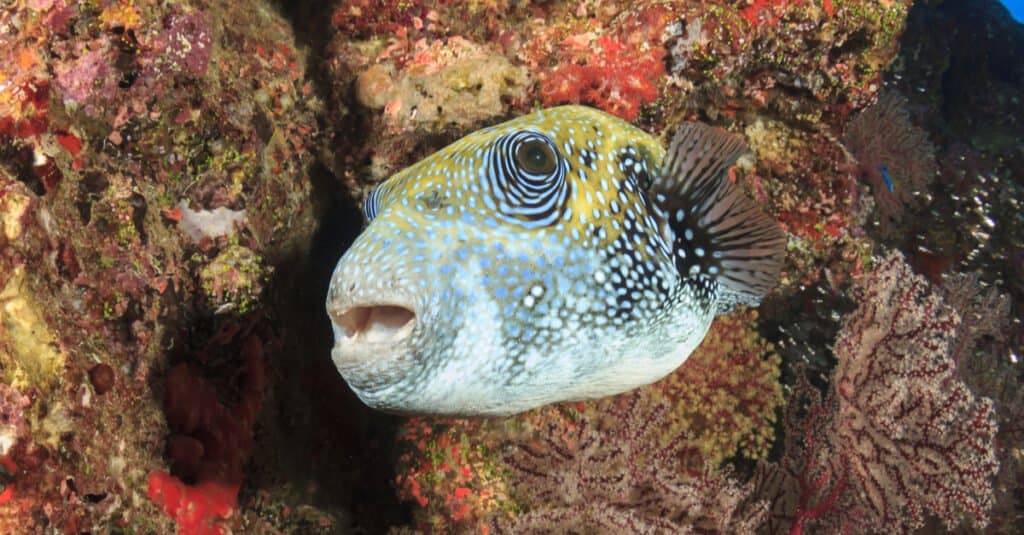
Blue-spotted puffers are native to both the Indian and Pacific Oceans.
©Rich Carey/Shutterstock.com
11. Valentin’s Sharpnose Pufferfish (Canthigaster valentini)
Valentin’s sharpnose pufferfish, also known as the saddled puffer, is a smaller pufferfish that measures up to 4 inches long. These fish have long, pointed “noses” and beautiful patterns. They have blue-grey heads and white, speckled bodies with dark stripes that have yellow dots in between. Their tails and fins are also yellow. This fish is native to the Indian and Pacific oceans. While pufferfish are known for their toxicity, Valentin’s sharpnose pufferfish is especially notable since it has one of the most potent neurotoxins, tetrodotoxin, in its skin and tissues. In fact, it’s so toxic, other fish mimic its appearance to avoid predation.
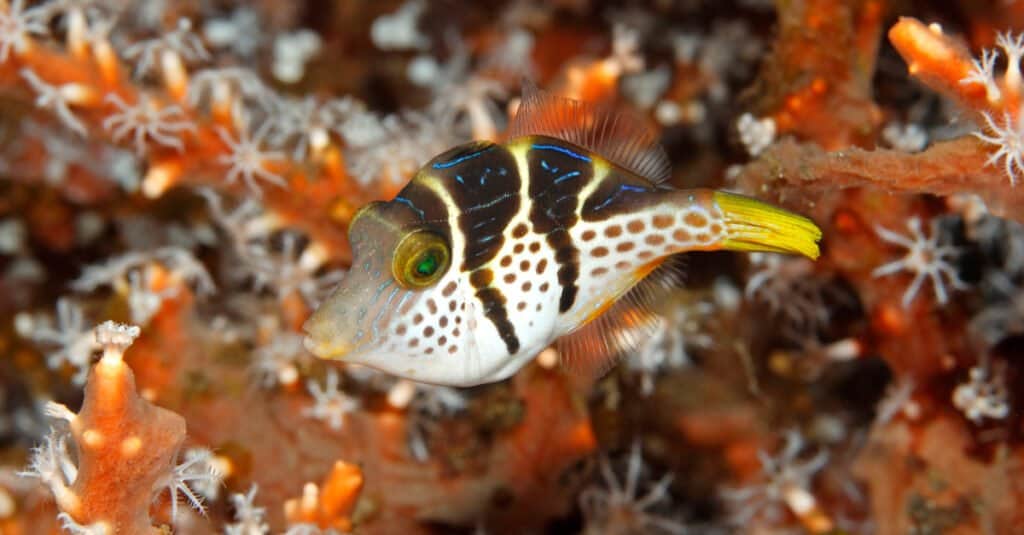
Valentin’s sharpnose pufferfish contain a powerful neurotoxin called tetrodotoxin in its skin and tissues.
©cbpix/Shutterstock.com
12. Golden Pufferfish (Arothron meleagris)
Also known as the guineafowl puffer, golden pufferfish are bright yellow puffers with small black spots and black and white spotted fins. These marine pufferfish are typically found in the Indo-Pacific and eastern Pacific oceans. They are often sold as small sub-adults, but they can grow up to 20 inches in the wild. The minimum recommended tank size is 125 gallons. They are also generally solitary and can be aggressive with other fish. These fish are also not reef-safe.
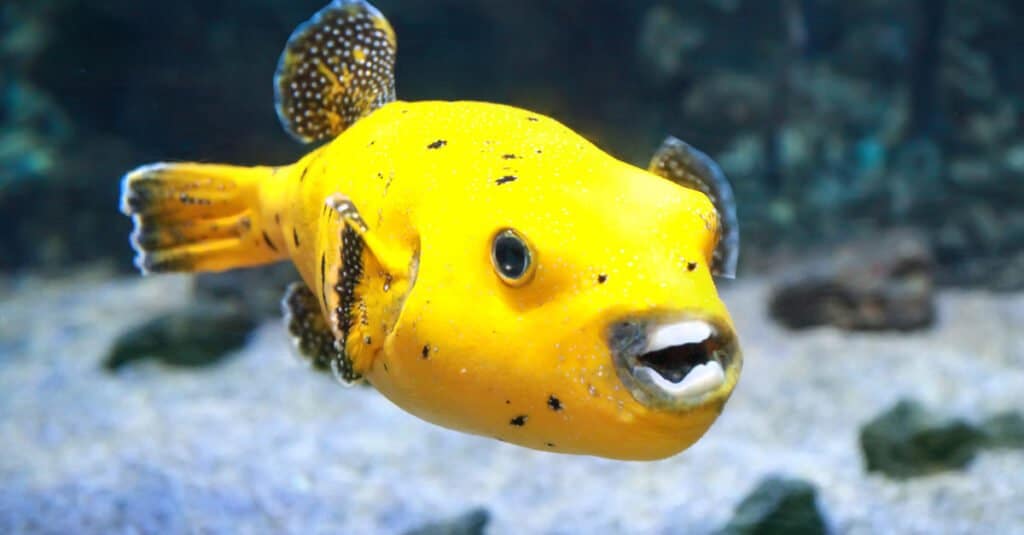
Golden pufferfish can reach up to 20 inches in length in the wild.
©Tatiana Belova/Shutterstock.com
13. Northern Pufferfish (Sphoeroides maculatus)
Northern Puffers are native to the waters of the Atlantic coast from Florida all the way to Newfoundland. These puffers are also called “sugar toads” in the Chesapeake Bay region. They are yellow, olive, or brown with black and white patterns, and typically grow 8 to 10 inches in length. The northern puffer is safe to be eaten, as it is not poisonous like many other puffers.
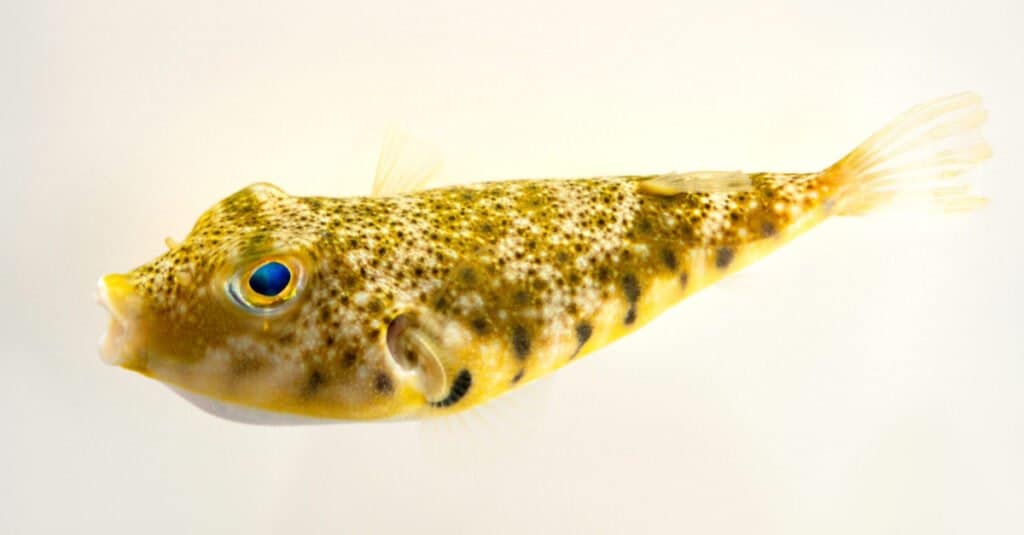
Northern puffers are among the most common species across the east coast of the United States.
©Animal Search/Shutterstock.com
14. Blackspotted Pufferfish (Arothron nigropunctatus)
Blackspotted puffers are also known as dog-faced puffers. These large marine pufferfish grow to about 10 inches in length and are typically found on coral reefs in the Indo-Pacific region. These fish are grey to brown on the top and sides and white to yellow on their undersides. They also have random black spots on their bodies and a pale band across the snout. Blackspotted puffers are generally solitary and peaceful, except during feeding. They are not reef-safe and will eat corals, sponges, and crustaceans. These fish need a tank of at least 125-150 gallons.
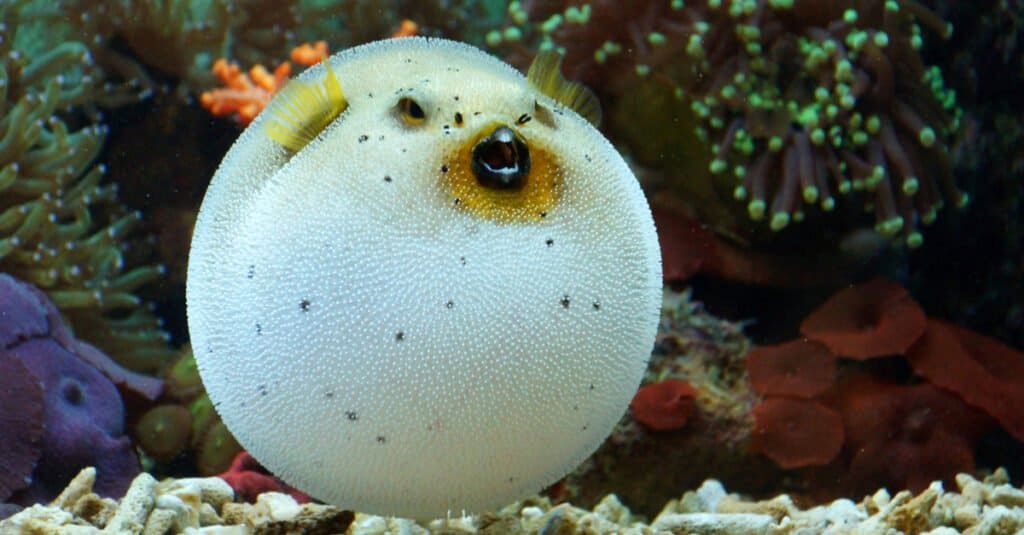
Blockspotted pufferfish are typically found on coral reefs in the Indo-Pacific region.
©Anastasia Mangindaan/Shutterstock.com
15. Porcupine Pufferfish (Diodon hystrix)
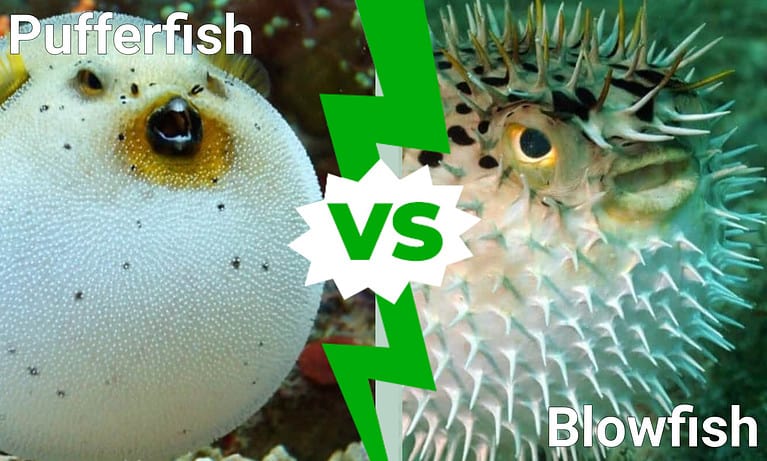
Porcupinefish are often called porcupine pufferfish, or blowfish. They belong to a different family than pufferfish, but they are part of the same order, Tetraodontiformes. They can also inflate their bodies as a defense mechanism and have tetrodotoxin in their organs. Additionally, these fish have extremely sharp spines that serve as a further defense. They are a greyish-tan color with black spots and white undersides. Porcupinefish can reach up to 3 feet in length in the wild.
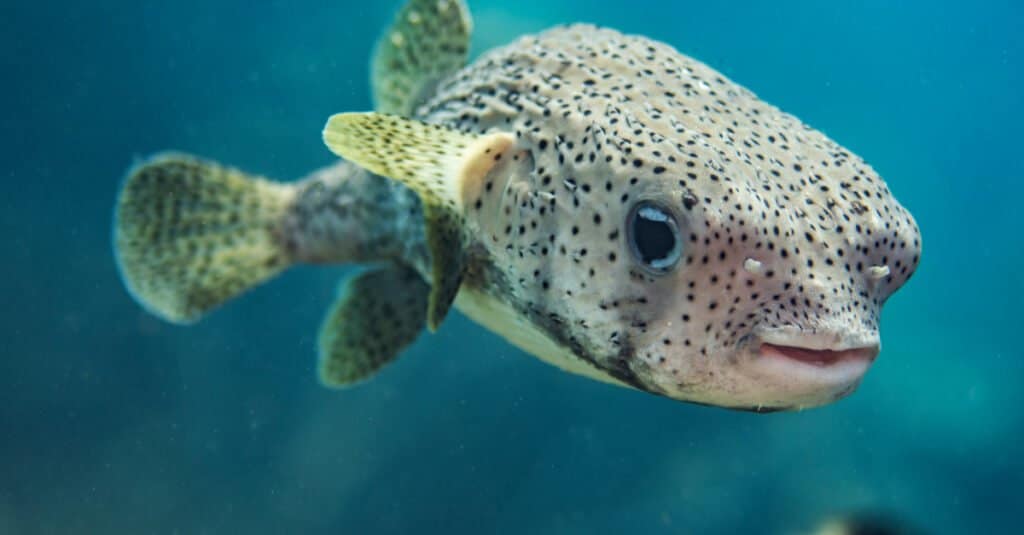
The porcupine pufferfish is also called the blowfish.
©J.T. Lewis/Shutterstock.com