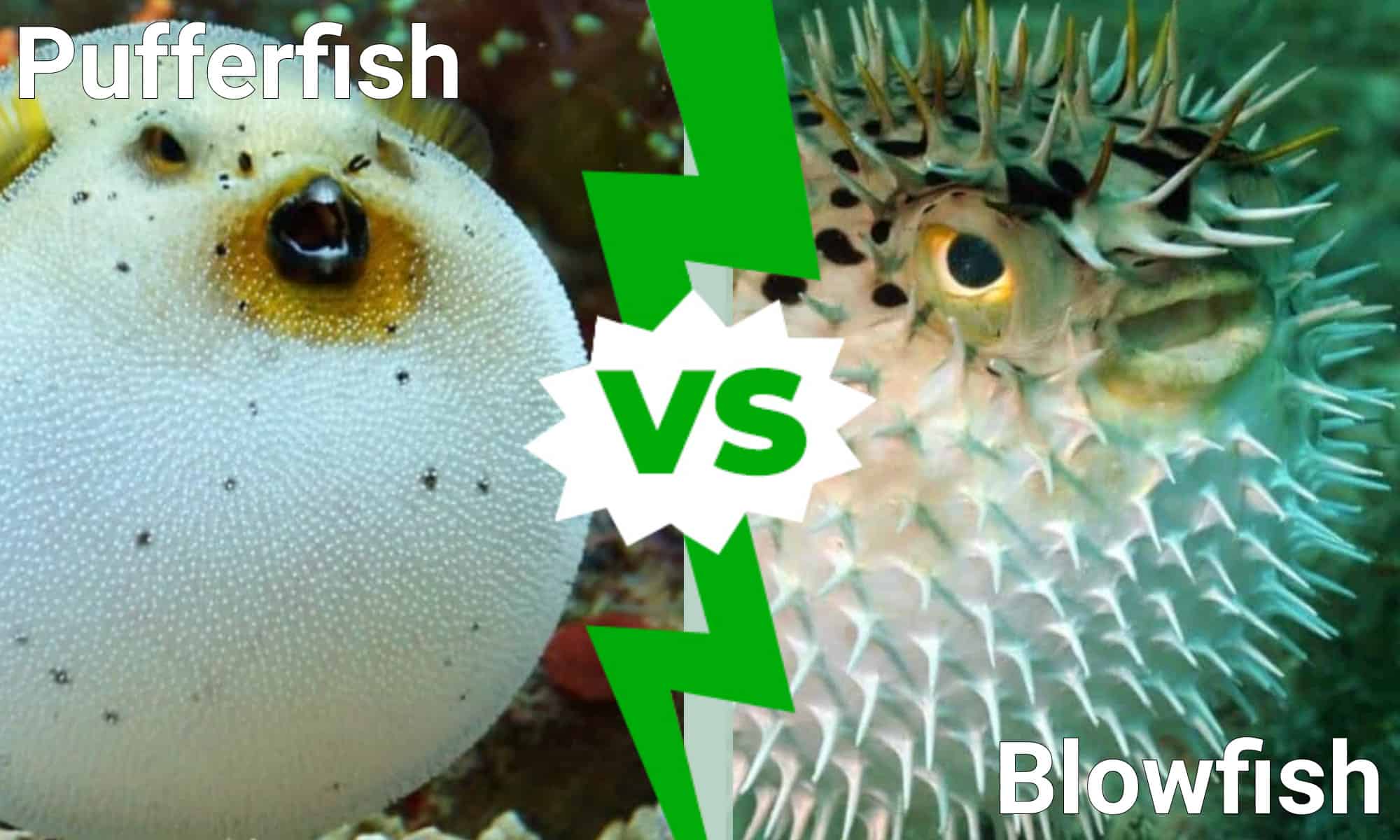

Experts estimate the total number of living fish species on the planet is between 32,000-34,000. That’s more than mammals, birds, reptiles, and amphibians added together, so it’s no wonder some species look similar and we get confused. For example, pufferfish vs. blowfish: are they the same thing? If not, why not? Read on to discover the similarities and differences between these fish.
Are Pufferfish and Blowfish the Same Fish?
Pufferfish and blowfish generally refer to the same fish. Pufferfish is the most commonly used scientific term, while blowfish is a more general, informal term for fish in the order Tetraodontiformes. Fish that belong to this order are characterized by the ability to inflate their bodies when threatened.
However, there are differences between different families in this order. There are 196 species of pufferfish in the family Tetraodontidae. There are 18 species of spiny blowfish, or porcupinefish, in the family Diodontidae. These families primarily differ in skin type, but we’ll discuss several other differences that set these fish apart.
Pufferfish vs. Blowfish: Quick Comparison
| Characteristic | Pufferfish | Spiny Blowfish |
|---|---|---|
| Classification | Tetraodontidae; 196 species | Diodontidae; 18 species |
| Appearance | Smooth or bumpy skin with hidden spines; no pelvic fin; Bony beak formed from fused teeth | Large spines when inflated; no pelvic fin; Hardened plates on the upper and lower jaws |
| Habitat | May inhabit marine, brackish, or freshwater habitats | Exclusively marine environments |
| Diet | Hard-shelled invertebrates, algae, sponges, and corals | Primarily hard-shelled invertebrates such as crabs and mollusks |
| Poison | Many species contain tetrodotoxin | Many species contain tetrodotoxin |
How Do Pufferfish and Blowfish Differ?
While pufferfish and blowfish may be similar in many regards, there are differences in appearance, habitat, diet, and the poison that they contain. Keep reading to take a closer look at how these fish differ.
Appearance
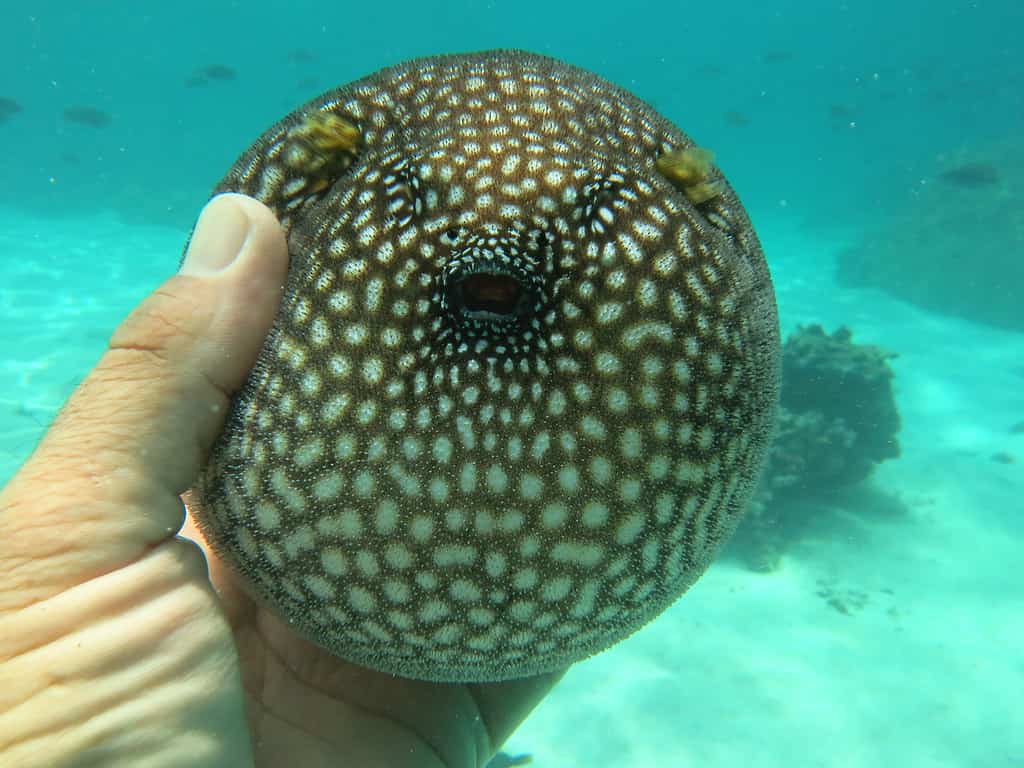
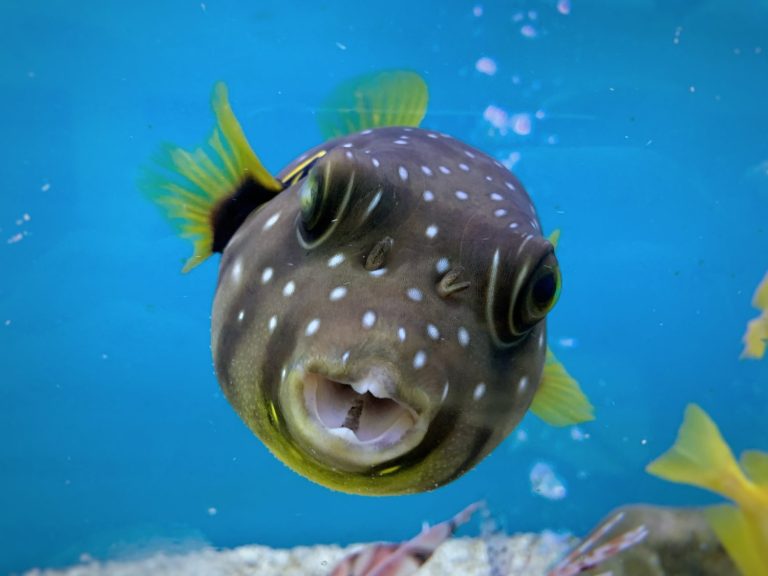
The stomach of a pufferfish can inflate up to three times its normal size.
©Moize nicolas/Shutterstock.com
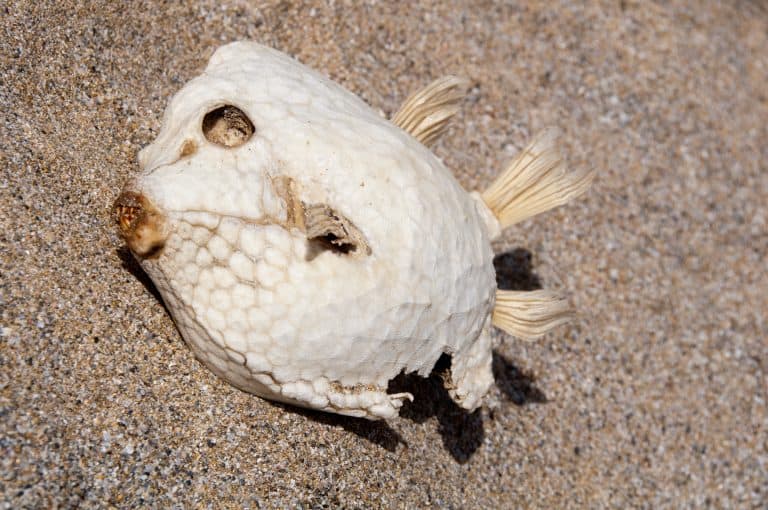
Pufferfish in the Tetraodontidae-family have thin bodies with round eyes set in a large bulbous head. Small fins protrude from their smooth sides, and they do not have a pelvic fin. These fish eat with a sharp beak made from fused teeth. When danger approaches, a pufferfish draws in water to inflate its body into an inedible ball. Pufferfish have rough, bumpy skin. They may have small, hidden spines that become visible when they puff up.
Blowfish in the Diodontidae family have wide bodies and round eyes in large, blunt heads. They also puff themselves up with water to deter predators. The main difference between them and pufferfish is their spiny skin, which gives them the name porcupinefish. Their spines are made of modified scales and are non-venomous. In some species, these spines can reach over 2 inches long. Spiny blowfish species are generally larger than pufferfish. Some spiny blowfish can reach up to 36 inches, while the largest pufferfish, the Mbu puffer, grows to about 2 feet in length.
Habitat
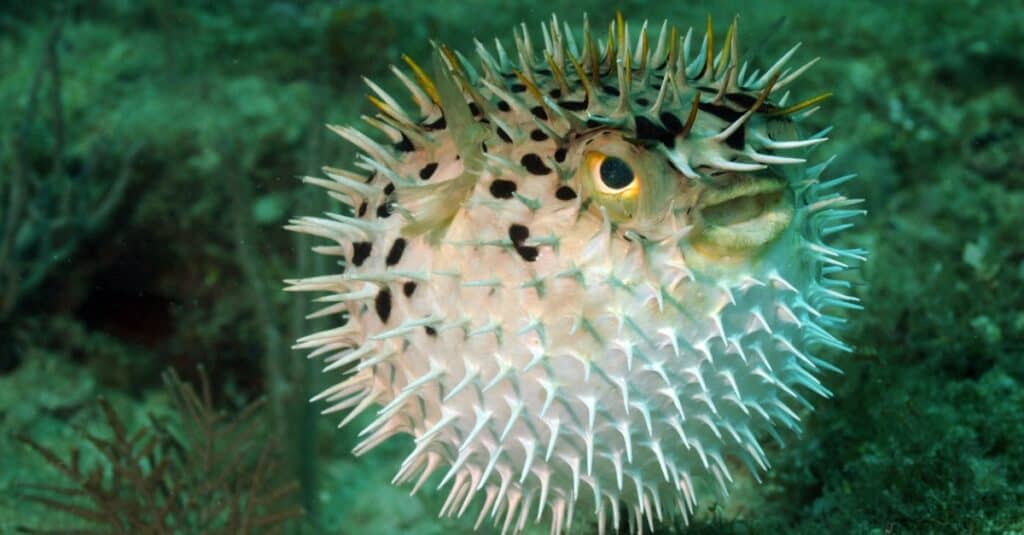
Spiny blowfish live exclusively marine habitats.
©iStock.com/FtLaudGirl
Pufferfish and spiny blowfish live in very similar habitats. They are located in tropical or subtropical waters, including the Caribbean, Indo-Pacific region, Australia, Japan, southern California, Colombia, Canada, and Brazil. Both fish prefer sheltered areas such as coral reefs, ledges, caves, and underwater seaweed or grass beds. Although juveniles and the majority of adults prefer shallow, coastal water, they have also been observed at depths of over 600 feet.
Both pufferfish and spiny blowfish live in marine environments. However, some pufferfish species can also live in brackish and freshwater habitats, especially in tropical regions of Southeast Asia, Africa, and South America. Spiny blowfish, on the other hand, are found only in marine habitats.
Diet
Both pufferfish and spiny blowfish species are nocturnal hunters. Their diet is very similar, as species in both families hunt for hard-shelled invertebrates such as crabs and mollusks. However, pufferfish tend to be more omnivorous, with a diet that includes more vegetation, such as algae, sponges, and coral. They also live in more diverse environments, which is reflected in the diets of different species.
Spiny blowfish have a more specialized diet than pufferfish, consuming primarily hard-shelled invertebrates such as crabs, snails, and clams. They also have more powerful jaws than pufferfish, with plates in the roofs of their mouths that allow them to crush hard-shelled organisms.
Are Pufferfish and Blowfish Poisonous?
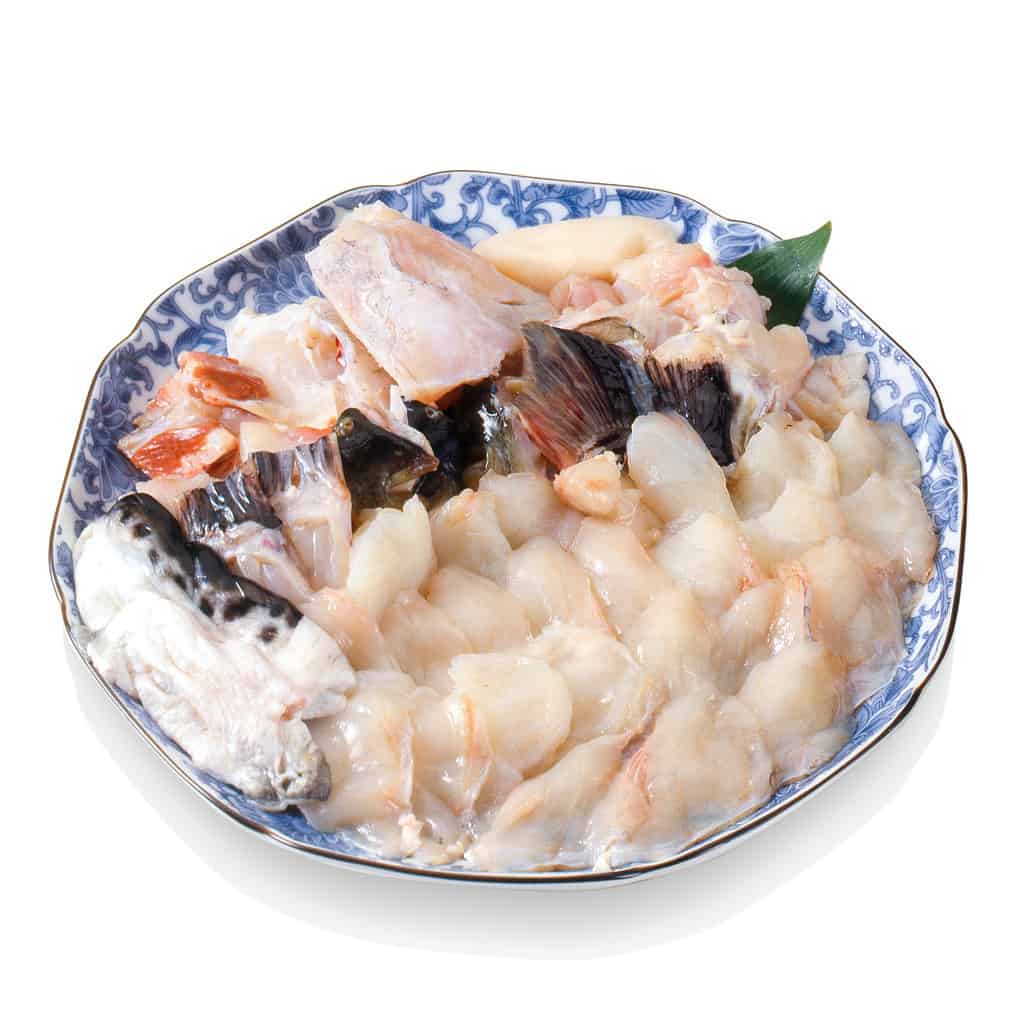
In Japan, pufferfish meat is called fugu. Chefs undergo a 2-3 year apprenticeship to avoid poisoning customers.
©funny face/Shutterstock.com
Pufferfish and spiny blowfish both contain a neurotoxin called tetrodotoxin (TTX). The fish accumulate toxins from bacteria in their prey, which are then converted into TTX. The highest concentrations are in the organs of marine species, including the liver and ovaries. Smaller amounts are found in the intestines and skin. In pufferfish, the skin is often the most toxic part for brackish and freshwater species.
In some parts of the world, such as Japan, Tahiti, and Hawaii, pufferfish and spiny blowfish are a delicacy. For example, in Japan, pufferfish meat is called fugu. Chefs undergo a 2-3 year apprenticeship and must be licensed to avoid poisoning customers. There is currently no known antidote for TTX, which is said to be over 1,200 times stronger than cyanide. The Japanese Ministry of Health, Labour, and Welfare reports that there are over 30 cases of pufferfish poisoning each year, which account for over half of food poisoning deaths.