Quick Take
- One fish on this list actually helps keep your tank clean just by doing what it naturally does, which is probably not what most people would guess. See the clean-up crew →
- Pairing two fish from the same region doesn't guarantee compatibility, and yet for the electric blue acara, geography turns out to be a surprisingly reliable guide. Explore the South American match →
- Some of the best tank mates for electric blue acaras work precisely because they never compete for the same space, and this holds true even in a crowded tank. See the space-sharing strategy →
- The most visually stunning pairings on this list aren't the obvious choices, and one tank mate looks almost nothing like a tropical fish. Meet the distinctive silver dollar →
The electric blue acara (Andinoacara pulcher, formerly Aequidens pulcher) is a freshwater fish from the slow-moving rivers and streams of Venezuela, Trinidad, and Northern South America. These fish have become popular aquarium fish because of their stunning electric blue color and docile nature. Electric blue acaras are friendly with other peaceful fish, making them an excellent choice for community tanks. Continue reading to discover 10 fish that make good tank mates for electric blue acaras.

Electric blue Acaras are docile, peaceful fish that can be seven inches long.
©tetiana_u/Shutterstock.com
Discus

Discus fish are very flat and round, giving them their common name.
©Nitr/Shutterstock.com
Native to the Amazon River basin in South America, discus fish (Symphysodon) are a popular aquarium fish that make great tank mates for electric blue acara. These fish possess a distinctive, round, and compressed body shape that resembles a disc, which gives them their name. They come in a variety of colors, such as red, blue, green, and brown, and can grow to 6–8 inches in length.
Discus fish are shy and peaceful and tend to socialize only with their own species. A tank of at least 55–75 gallons is recommended for a small group, as they require a spacious aquarium with ample horizontal swimming space. You should also keep the water temperature between 82 and 86°F for adult discus, or 86 to 88°F if raising juveniles.
Discus fish make great tank mates for the electric blue acara because both are peaceful species from the same region of the world, meaning both require similar water temperatures and water chemistry. The discus fish also comes in various colors, so they provide a beautiful contrast to the electric blue acara’s coloring.
Angelfish
Angelfish (Pterophyllum) are another fish species from the tropical areas of South America that fish enthusiasts often keep in their freshwater aquariums. With a triangular body and elongated fins, angelfish can grow to about 6 inches in body length and up to 10 inches in total height including fins.
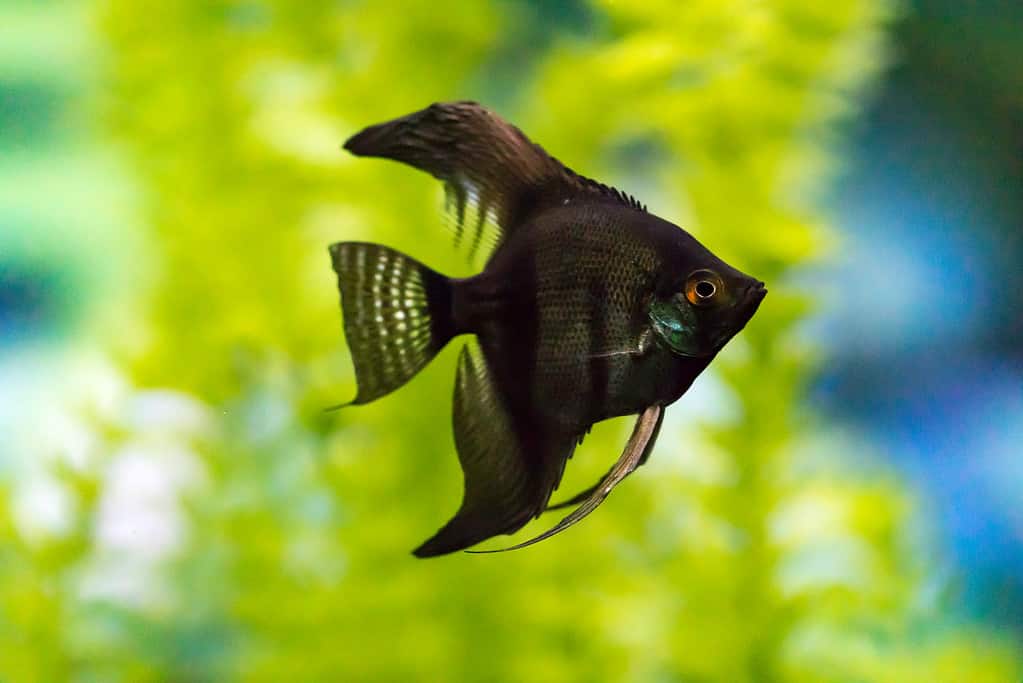
There are many types of angelfish, both saltwater and freshwater. Only freshwater varieties should be paired with electric blue acara.
©Saad315/Shutterstock.com
Angelfish are best kept in pairs and require a tank size of at least 29 gallons for a single fish or 55 gallons for a pair or group, with a water temperature between 75 and 84°F. Angelfish come in a variety of vibrant colors that complement the electric blue acara. Electric blue acaras and angelfish are suitable tank mates because they occupy different levels of the aquarium. Angelfish prefer higher levels of the aquarium, while electric blue acaras typically occupy the middle and lower zones.
Bristlenose Pleco
The bristlenose pleco (Ancistrus sp.) is a small, unique-looking freshwater fish. These fish typically grow to around 4–5 inches, with males reaching up to 6 inches, and have a distinctive appearance: armored body plates and a body covered in spots. Male bristlenose plecos have spiky growths on their snouts.
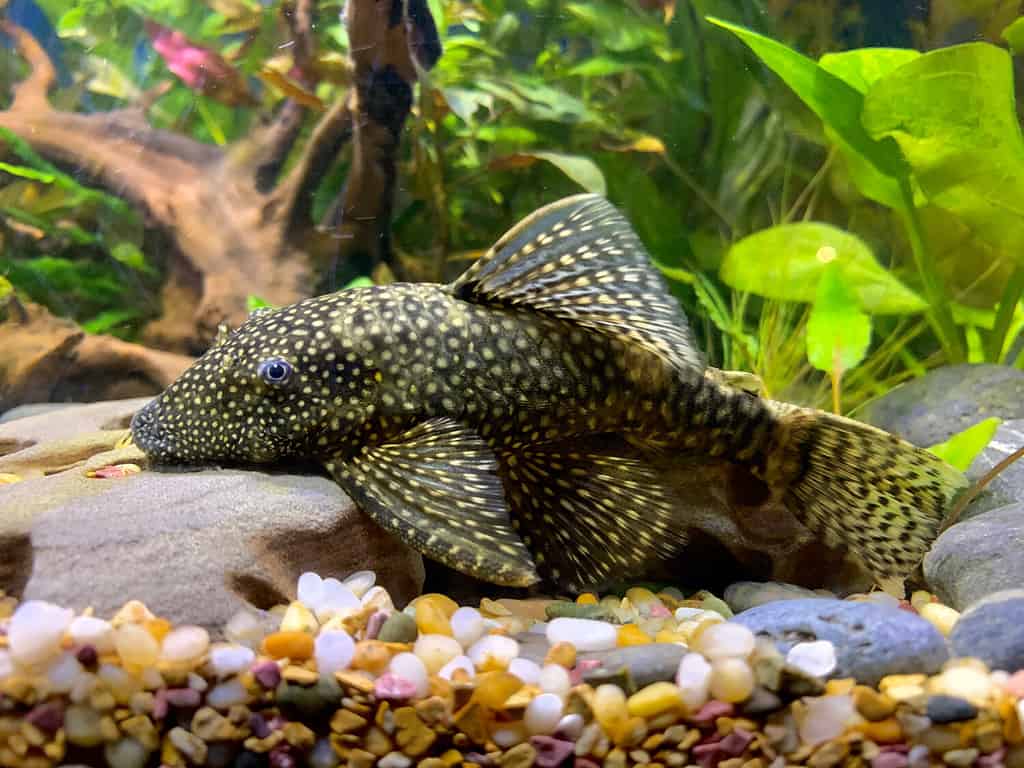
Only male bristlenose plecos grow long, spiky bristles on their noses.
©TTONN/Shutterstock.com
Bristlenose plecos coexist harmoniously with various other fish species. To create a suitable habitat for these fish, a tank of at least 30 gallons with a water temperature of 70–79°F is required.
Bristlenose plecos pair well with electric blue acaras because both species are calm and require similar water parameters.
Rainbowfish
As their name suggests, rainbowfish (family Melanotaeniidae) are brightly colored, adding vivid color to your aquarium. These colorful fish are calm-natured and pair well with many other tropical freshwater species.

Rainbowfish colors are brightest first thing in the morning.
Rainbowfish are native to the tropical and subtropical freshwaters of Australia, New Guinea, and Indonesia. They tend to be fairly small, with most species growing to around 4 inches, though some species can exceed this size. Rainbowfish are perfect tank mates for electric blue acara and tend to get along well with many non-aggressive species.
Both rainbowfish and electric blue acaras require similar water conditions. What makes rainbowfish special is the way their colors seem to dance in the water, giving your tank a vibrant and lively feel. Fish enthusiasts describe them as tiny, living rainbows that make any aquarium even more enchanting.
Severum Cichlid (Heros severus)
With a distinctive disk-like shape, striking patterns, and friendly nature, the severum cichlid (Heros severus) is a popular choice for freshwater aquariums. Like many other potential tank mates for electric blue acara, the severum cichlid originates from South America in the Amazon River basin.

Severum cichlids are tropical freshwater fish that can be found in the wild in South America.
©iStock.com/Denja1
Severum cichlids can grow to about 6 to 8 inches in size, making them a medium-sized addition to your tank. When setting up a tank for them, you will need at least 40 gallons, with a water temperature between 72 and 82°F.
Pairing severum cichlids with electric blue acaras creates a harmonious combination of colors and behaviors in your tank. Severum cichlids are curious and playful, often exploring their environment and exhibiting lively behaviors that keep your aquarium dynamic.
Silver Dollar
The silver dollar fish (Metynnis argenteus) is another fish from South America’s rivers and lakes. Silver dollar fish are not as colorful as the other species on this list, but their distinct round shape and silvery color make them an interesting addition to any aquarium. Silver dollar fish can grow to about 5 or 6 inches and require at least 30 gallons to thrive in a tank.
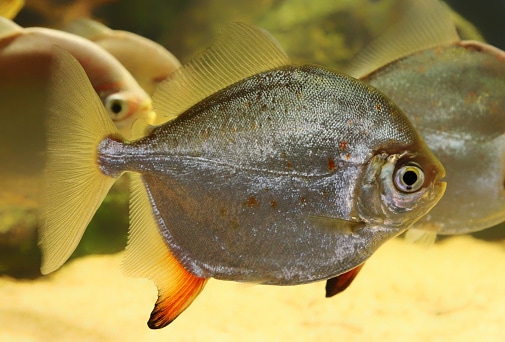
With a completely flat and silvery body, it is easy to see why the silver dollar fish is called a silver dollar.
©tane-mahuta/ via Getty Images
They are also known for their calm and friendly temperament, often getting along well with other peaceful fish, including electric blue acara.
What makes silver dollar fish special is their unique shape and the way they glide gracefully through the water. They often move in schools, which adds life and dynamism to your aquarium.
Pictus Catfish
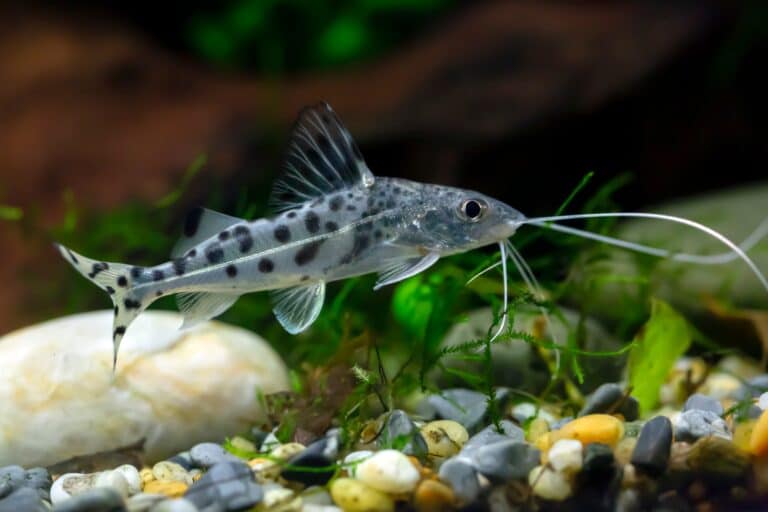
The pictus catfish (Pimelodus pictus) is one of the smallest catfish species, growing to a maximum of 5 inches. Thanks to its small size and interesting appearance, it is one of the most popular aquarium catfish. The pictus catfish has long whiskers and an elongated body adorned with distinctive spots. They have a white belly and range in color from pale silver to yellowish-gray.

The pictus catfish is one of the smaller catfish in the world.
©boban_nz/Shutterstock.com
The pictus catfish is a fine addition to any freshwater aquarium. These fish have a lively and inquisitive nature and are relatively easy to care for. While they can be kept alone, it is best to keep a few pictus catfish together in a group.
Giant Danio
Giant danios (Devario aequipinnatus) are social fish that come from South Asia, particularly countries like India, Nepal, and Bangladesh. They can grow to about 4 to 6 inches, and their silvery bodies and distinctive blue stripes make them a striking sight. They often swim around and explore their surroundings.
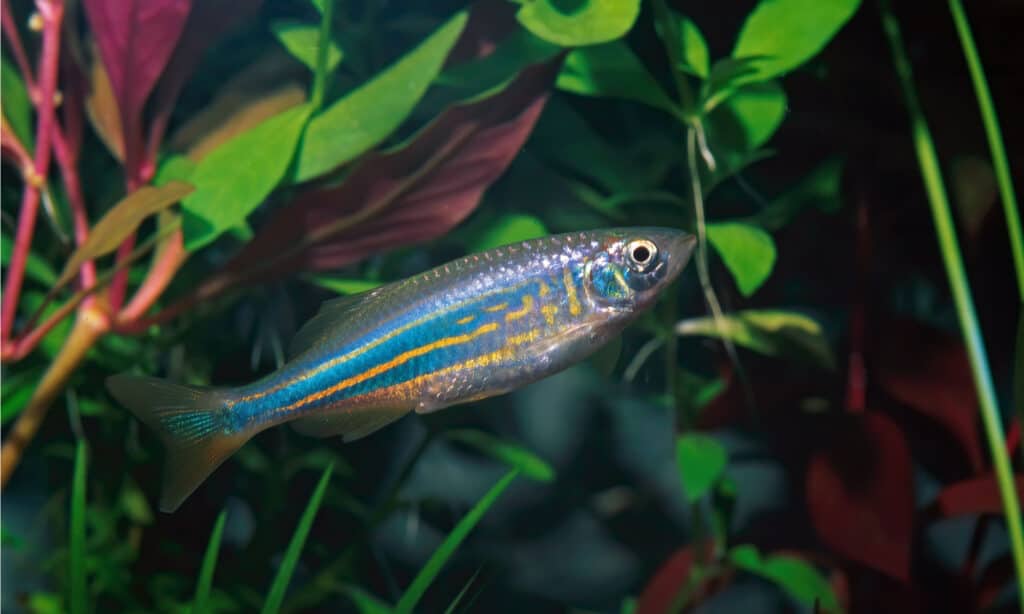
Danios are medium-sized tropical fish that belong to the minnow family.
©Karel Zahradka/Shutterstock.com
Despite their small size, giant danios require a tank of at least 30 gallons. These fish thrive in water with a temperature of around 72-75°F.
Pairing giant danios with electric blue acaras creates an interesting mix of colors in your tank. These fish often swim in a group, creating a dynamic display that is exciting to watch.
Cory Catfish
Cory catfish (Corydora) are small, charming fish from South America. They only grow to about 2-3 inches long and and make endearing, wiggly movements.

Another teeny tiny freshwater catfish species is the Cory catfish, which barely tops 3 inches in length.
©Kristiana Berzina/Shutterstock.com
Corys have a peaceful and social nature and are often seen swimming in groups. For their comfort, provide a tank of at least 30 gallons and maintain water temperatures between 72–78°F.
Corydoras come in several shades, such as bronze, green, brown, and sometimes even black. Some species also have spots, stripes, or other intricate markings on their bodies, adding to their charming appearance.
The Cory catfish is a bottom feeder that scavenges along the bottom of the tank, helping to keep it clean. Corydoras and electric blue acaras can get along quite well and make excellent tank mates.
Harlequin Rasbora
Harlequin rasboras (Trigonostigma heteromorpha) are tiny fish, growing only to about 1.5 to 2 inches in size. These charming fish originate from Southeast Asia, particularly Malaysia and Thailand. With their striking triangular body shape and distinctive black and orange coloration, they add a vibrant touch to the aquarium. They are known for their peaceful and social temperament, often seen swimming together in schools.
Pairing harlequin rasboras with electric blue acaras creates an appealing mix of behaviors and colors in your tank. Harlequin rasboras display lively schooling behavior, including synchronized swimming and playful interactions.
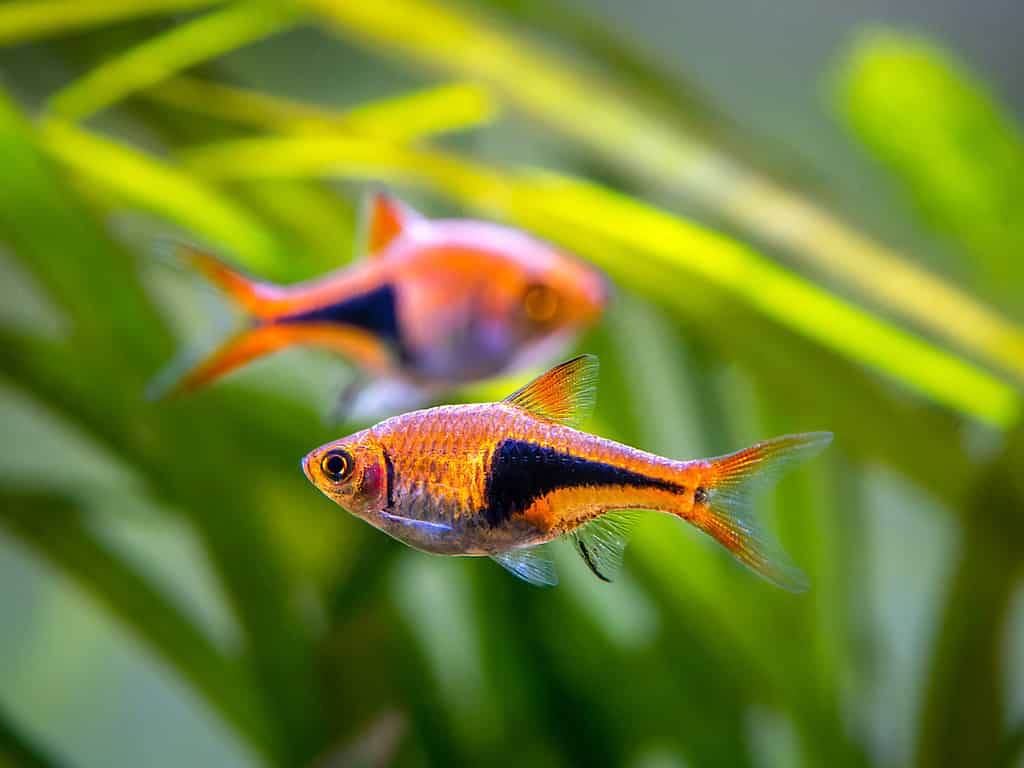
This small colorful fish is a wonderful companion for electric blue acara.
©Joan Carles Juarez/Shutterstock.com