Quick Take
- Two aggressive species in the same tank sounds like a disaster, yet one pairing on this list actually works because of a quirk researchers still can't fully explain. See the surprising pairing →
- Red tail sharks will chase fish five times their size, yet some of the safest tank mates are surprisingly small ones that do one specific thing. See schooling fish that work →
- The color and shape of a tank mate can silently trigger aggression, something most aquarium owners are unaware of when picking fish. See how color affects aggression →
- Some fish need a specific male-to-female ratio in your tank, or they'll turn a peaceful setup into a problem. Do you know which ones? See the ratio that matters →
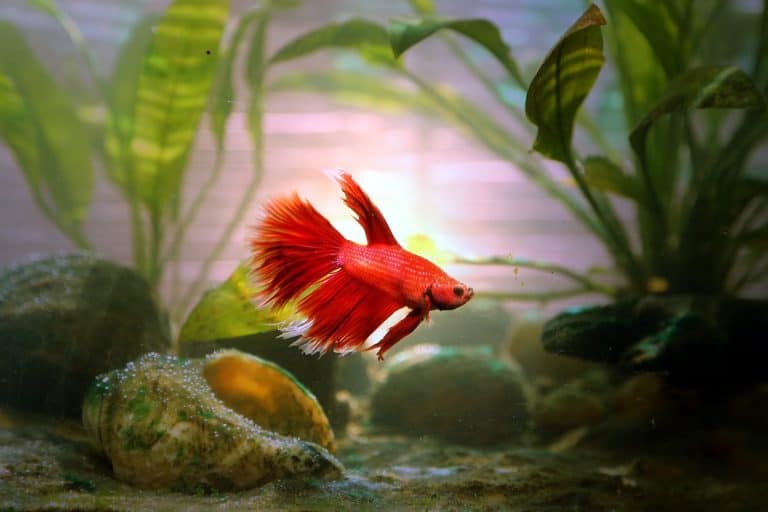
Red tail sharks (Epalzeorhynchos bicolor) have beautiful charcoal-black bodies with bright red tails that are fun and mesmerizing to watch in an aquarium. However, you need to know a thing or two if you want to keep these fiery fish in your tank. These little sharks have salty personalities and will chase fish five or six times their size. While red tail sharks may be entertaining to watch, due to their aggressive nature, care must be taken when selecting their tank mates. If you are considering adding more fish to your tank, this article is for you. Continue reading to learn about the 15 best tank mates for your red tail sharks.
1. Tiger Barb
Tiger barbs (Puntigrus tetrazona) have a similar temperament to red tail sharks. Although it might seem counterintuitive to keep two aggressive species as tank mates, each of these fish can stand its own ground and is not likely to hurt the other, so they can be kept together in the same tank. Plus, tiger barbs are easy to care for.

Tiger barbs can also be aggressive, but they make great tank mates for red tail sharks.
©Faucon, CC BY-SA 2.5, via Wikimedia Commons – Original / License
Tiger barbs can grow up to 3 to 4 inches long. While they are still smaller than red tail sharks, they are big enough not to get eaten. The minimum tank size for a red tail shark is around 20 to 30 gallons, but since the fish are relatively small, you can keep many together in the same tank. The ideal water temperature for them is approximately 75 to 82°F. Similarly, the water temperature needs of a red tail shark are between 72 and 79°F.
2. Molly
You can add all kinds of mollies to a tank with red tail sharks, but black mollies are the best variety to house with red tail sharks because their bodies lack the bright red colors or shark-like shapes that trigger a red tail shark’s territorial aggression. Mollies are mid-tank dwellers, while red tail sharks tend to be bottom dwellers; thus, they rarely cross paths.
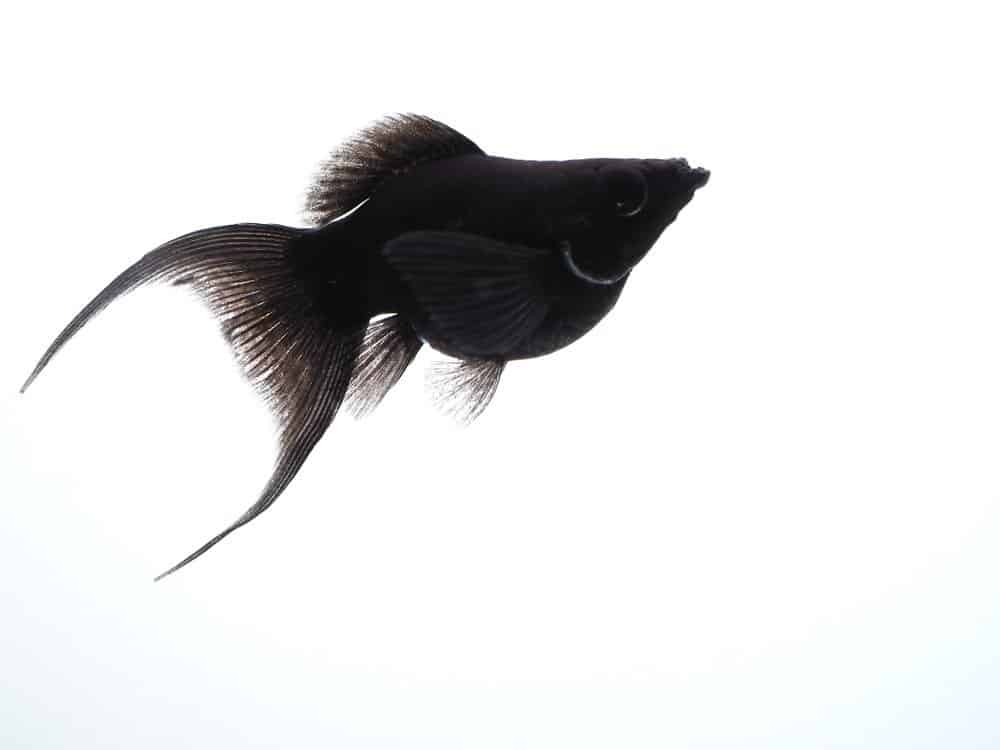
Mollies, in particular, black mollies, make great tank mates for red tail sharks.
©Palomasius/Shutterstock.com
Mollies grow to around 3 to 4 inches long, which is big enough not to be targeted by the red tail shark, especially in schools. Their water temperature needs are similar to those of the red tail shark: around 75 to 80°F. In terms of minimum tank size, they require a tank of at least 10 to 20 gallons.
3. Bala Shark
Bala sharks (Balantiocheilos melanopterus) are around two times larger than red tail sharks, so they can easily hold their ground against their feisty tank mates. Bala sharks are peaceful despite their larger size, so they’ll easily get along with other fish as well. These sharks have a shimmery gray body with short, dark fins.

As they are larger than red tail sharks, bala sharks are not likely targets of the red tail sharks.
©Arunee Rodloy/Shutterstock.com
Bala sharks like to spend most of their time in the middle section of the tank, so they’ll generally stay out of the red tail shark’s way.
The ideal water temperature range for bala sharks is 72 to 82°F, so they are easily compatible with the water temperature needs of red tail sharks as well, making them ideal tank mates. And, of course, due to their larger size of around 14 inches, these sharks need a larger tank to move around freely. They require a minimum of 125 gallons for a small group or pair, which is more than enough space for your red tail shark as well.
4. Zebra Danio
Zebra danios (Danio rerio) are about 1.5 to 2.5 inches long and have zebra-like horizontal stripes on their bodies. They come in a wide range of colors, so you can pick one based on what kind of aquarium look you are going for.
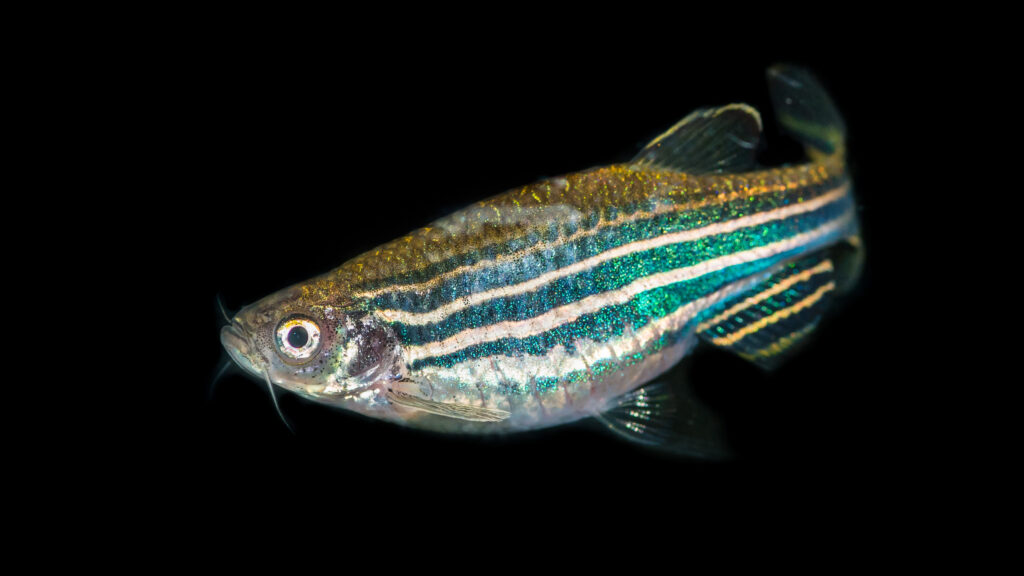
Known for their zebra-like stripes, zebra danios are fast swimmers.
©Ian Grainger/Shutterstock.com
Colorful and hardy fish, zebra danios are compatible with a wide range of tank mates, including red tail sharks. Since these danios are peaceful and playful, they are not likely to cause any trouble in the tank. And as they are active and swim in shoals, red tail sharks are not likely to attack them. Zebra danios are fast swimmers; if a red tail shark were to bully them, they could easily swim away.
Their ideal water temperature should be 64 to 77°F, and they require a tank size of at least 10 gallons.
5. Swordtail
Swordtails (Xiphophorus) get their name from the swordlike shape of their tail. These fish are native to Central America and are generally playful and peaceful. They are fast enough to avoid getting hurt by aggressive or larger tank mates.

As these fish tend to keep to themselves, swordtails won’t generally bother red tail sharks.
©topimages/Shutterstock.com
Swordtails are active and curious and tend to stay in groups, making them less of a target. They also keep to themselves and avoid interacting with other fish, which means they won’t bother your red tail sharks.
Swordtails are approximately 5 inches long, with females being larger than their male counterparts. One adult swordtail requires around 15 gallons worth of aquarium space with each additional swordtail requiring another 5 gallons. So, for a pair, you’ll need a 20 gallon tank. Their tank water temperature should be kept at 64 to 82°F, which is perfect for red tail sharks.
6. Angelfish
Like red tail sharks, angelfish (Pterophyllum) have a reputation for aggression, but these two species make surprisingly good tank mates.
Although there’s not much research concerning this phenomenon, researchers believe the reason is that angelfish and red tail sharks are simply wired similarly and instinctively know to leave each other alone.

Although both angelfish and red tail sharks are aggressive in nature, they tend to stay out of each other’s way.
©Joan Carles Juarez/Shutterstock.com
Angelfish require a minimum tank size of 55 gallons and a water temperature of 78 to 84°F. They require moderate care and can grow up to 6 inches long.
7. Neon Tetra
Neon tetras (Paracheirodon innesi) are non-aggressive fish that stay in the middle of the tank, so they don’t generally interact with red tail sharks, who usually inhabit the lower part of the tank.
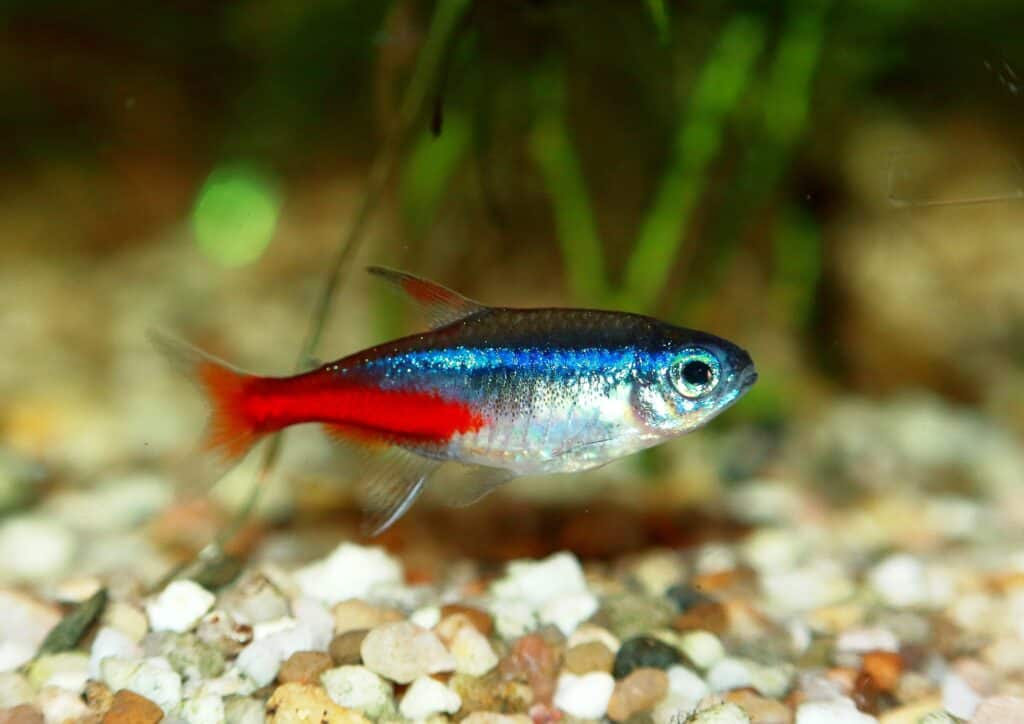
Non-aggressive and adaptable fish, neon tetras are a great pick for a tank mate for red tail sharks.
©Kristiana Berzina/Shutterstock.com
Neon tetras are quite small, approximately 1.5 inches long, but this won’t make them a target, as neon tetras tend to stay in groups. Their minimum tank size should be 10 gallons, and they require a water temperature of 75 to 80°F.
8. Pearl Gourami
Pearl gouramis (Trichopodus leerii) are usually peaceful and docile. However, you should keep them in a ratio of one male to three or four females. This is to eliminate competition with red tail sharks and so that the pearl gouramis stay protected by staying in groups.

It’s best to put more female pearl gouramis in a tank with red tail sharks than males.
©iStock.com/NERYX
Another reason pearl gouramis make good tank mates for red tail sharks is that these fish like to stay in the upper section of the tank, so they’ll be out of the shark’s way.
Pearl gouramis are around 4 to 5 inches long and require a minimum tank size of 30 gallons with an ideal water temperature of 77-82°F.
9. Dwarf Gourami
Another ideal tank mate for red tail sharks is the dwarf gourami (Trichogaster lalius). Dwarf gouramis swim mostly in the middle and top levels of the aquarium, making them excellent tank mates for bottom-dwelling fish, like red tail sharks.
Similar to pearl gouramis, be careful when adding male dwarf gouramis to the tank as they may see other fish, like red tail sharks, as competition. So, ideally, add more female dwarf gouramis than males.

Male dwarf gouramis can see red tail sharks as competition, so add more females than males.
©Yuriy Chertok/Shutterstock.com
These fish grow to roughly 3 to 5 inches long, and you can easily keep up to 3 gouramis in one 10-gallon tank, though, ideally, they will have at least 5 gallons of space each. Keep the water temperature at around 72 to 82°F.
10. Platy
Platies (Xiphophorus maculatus) occupy the middle or upper sections of the tank, so they will rarely enter the red tail shark’s territory, making them an ideal tank mate. Not to mention that they are extremely cheap and beginner-friendly as well.

Coming in a wide range of colors, platies are a beautiful addition to a red tail shark tank.
©chrisbrignell/Shutterstock.com
Platies are generally peaceful and keep to themselves, spending most of their time in groups. However, male platies can show aggressive competitive behavior, so make sure the female platies always outnumber the males for a peaceful tank.
Platies come in a wide variety of colors and patterns and grow up to 3 inches long. They don’t require much in terms of space, needing just 2 gallons of tank per fish. Their water temperature needs are similar to red tail sharks, at around 70 to 77°F.
11. Rasbora
Rasboras (Trigonostigma heteromorpha) are shimmery fish with beautiful colors and come in a variety of sizes as well, ranging from less than an inch to 6 inches long. Rasboras are peaceful and friendly in nature and prefer swimming in groups. They are middle-level swimmers, so they will stay out of your red tail shark’s way, making them ideal tank mates.
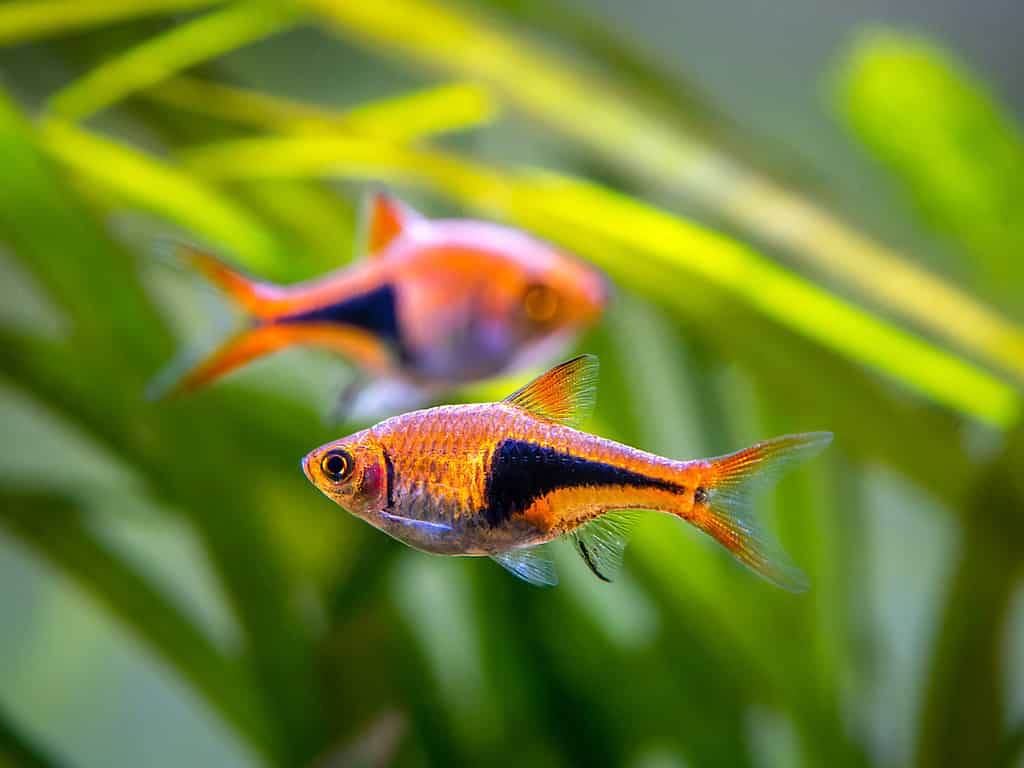
Shimmery and beautiful, rasboras are friendly in nature, making them ideal tank mates for red tail sharks and other fish.
©Joan Carles Juarez/Shutterstock.com
Unfortunately, due to their friendly nature, rasboras may become targets of bullying, so make sure there are plenty of hiding spaces in the tank.
The water temperature needs of rasboras depend on the particular species, but generally, they require a temperature between 72 and 81°F to thrive.
12. Clown Loach
Another great tank mate for red tail sharks is the clown loach (Chromobotia macracanthus). These fish are not aggressive and get along with pretty much any fish in the tank. They do best in groups of four or more, so they are not likely to become targets of bullying by the aggressive red tail shark. Plus, they are large enough that the shark is likely to steer clear of them.

Clown loaches are non-aggressive and tend to stay in groups.
©Joan Carles Juarez/Shutterstock.com
Growing up to 6 to 8 inches long, clown loaches require more space than your average aquarium fish. Generally, they require a minimum tank size of 75 gallons and an ideal water temperature of 70 to 82°F. Since red tail sharks will have plenty of space in a minimum 75-gallon tank, there’ll be plenty of space for both types of fish.
13. Silver Dollars
Silver dollars (Metynnis argenteus) are beautiful fish that grow to around 6 inches long. Due to their size, they need a lot of space to swim. Thus, you need a bigger tank with a minimum of 100 gallons of water at around 75 to 82°F.

Due to their size, silver dollars require a minimum of 100 gallons in a tank.
©Lysenko Andrii/Shutterstock.com
These fish like to stay on top of the tank, away from red tail sharks, making them ideal tank mates. Plus, in a 100-gallon tank, your red tail sharks are not likely to bother the silver dollars at all. Both fish should be able to coexist peacefully.
14. White Cloud Mountain Minnow
White cloud mountain minnows (Tanichthys albonubes) are beautiful neon-colored fish that make excellent tank mates for red tail sharks.
These omnivorous fish like to roam around in the top half of the tank and will be out of the way and not bother the sharks, so the two fish will be able to coexist without any issues. Plus, white cloud mountain minnows tend to stay in groups, outnumbering the red tail shark and making them less likely targets of bullying.
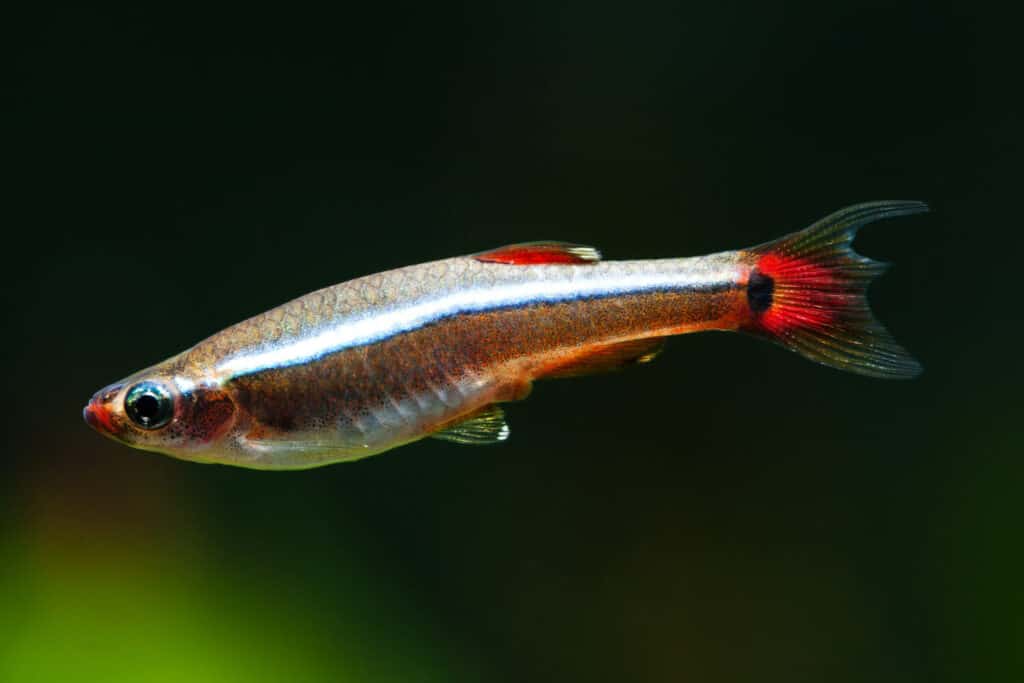
The white cloud mountain minnows will stay in the top half of the tank.
©Besjunior/Shutterstock.com
White cloud mountain minnows grow to around 1.5 inches long and require a tank of at least 10 gallons and a water temperature of 65 to 77°F, similar to the red tail shark’s temperature needs of 72 to 79°F.
15. Congo Tetra
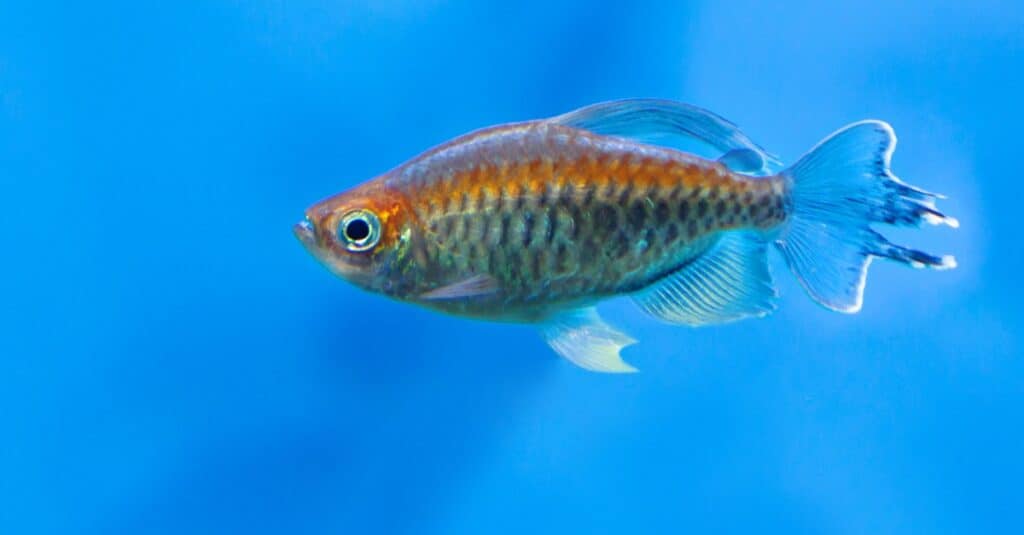
Congo tetras are happiest swimming in groups of 6 to 10, making them less likely targets of the red tail shark.
©iStock.com/User10095428_393
Congo tetras (Phenacogrammus interruptus) are found in the Congo River in Africa. They are considered peaceful in nature and prefer to be left alone. In fact, it’s likely that your red tail sharks won’t even notice them or be bothered by their presence. It’s best to keep a group of around 6 to 10 Congo tetras with red tail sharks, as long as you have space for it. These fish are happiest in groups.
Congo tetras grow to 3 inches long. They require a minimum tank size of 40 gallons, with an ideal water temperature of 73 to 82°F.
Summary of Ideal Tank Mates to Pair With Red Tail Sharks
| Number | Tank mate | Scientific Name |
|---|---|---|
| 1 | Tiger Barb | Puntigrus tetrazona |
| 2 | Molly Fish | Poecilia sphenops |
| 3 | Bala Shark | Balantiocheilos melanopterus |
| 4 | Zebra Danio | Danio rerio |
| 5 | Swordtail | Xiphophorus |
| 6 | Angelfish | Pterophyllum |
| 7 | Neon Tetra | Paracheirodon innesi |
| 8 | Pearl Gourami | Trichopodus leerii |
| 9 | Dwarf Gourami | Trichogaster lalius |
| 10 | Platies | Xiphophorus maculatus |
| 11 | Rasbora | Trigonostigma heteromorpha |
| 12 | Clown Loach | Chromobotia macracanthus |
| 13 | Silver Dollar | Metynnis argenteus |
| 14 | White Cloud Mountain Minnow | Tanichthys albonubes |
| 15 | Congo Tetra | Phenacogrammus interruptus |