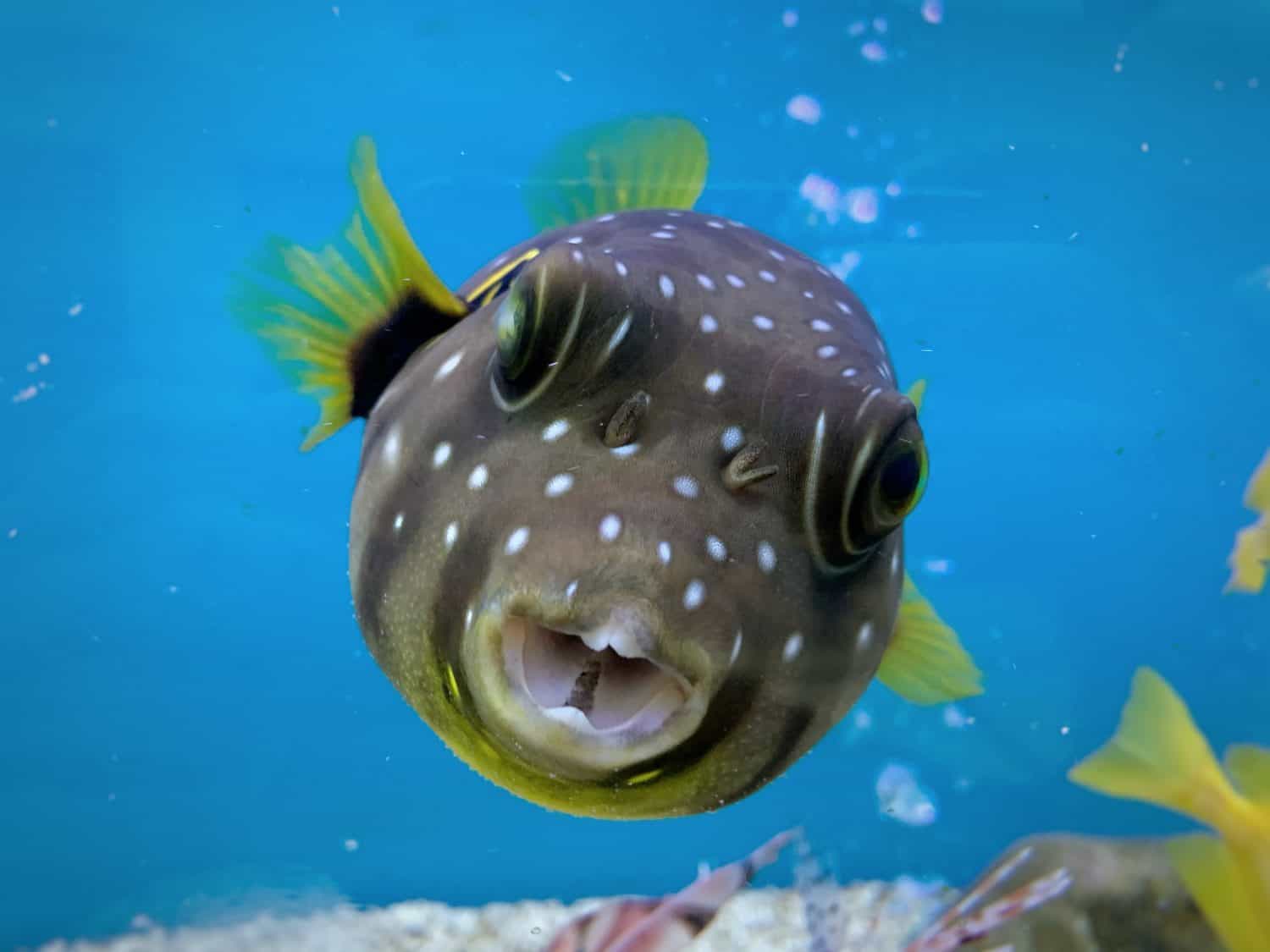

Quick Take
- Pufferfish can inflate up to three times their normal size by rapidly swallowing water to appear larger and deter predators.
- Although dramatic, inflation is often a last-resort defense because it requires large amounts of oxygen and energy.
- Many pufferfish also rely on toxic chemicals and powerful beak-like teeth to protect themselves from predators.
Pufferfish are among the most unique fish in the sea—and sometimes in freshwater too! As their name suggests, pufferfish can inflate like a balloon, transforming from a seemingly ordinary fish into a round, spiky creature. One video captures a pufferfish inflating in real time, which is fascinating to watch.
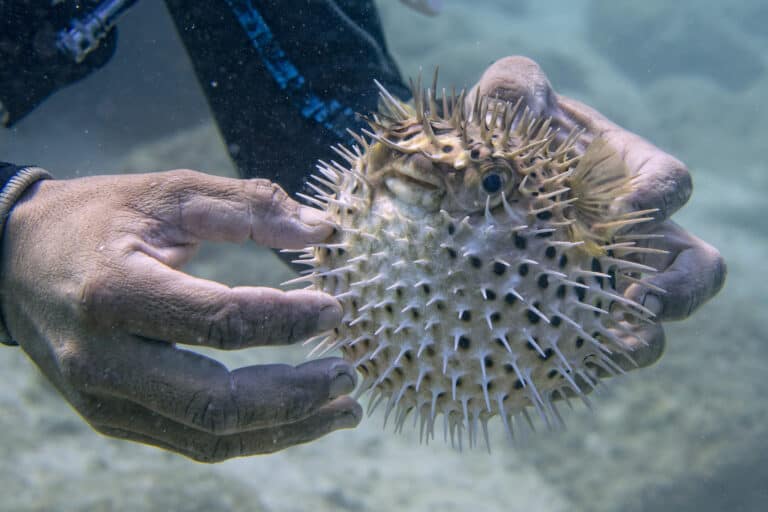
Instagram account @rarefolio shared a video of a pufferfish inflating into what looks like a spiky ball. In the clip, a hand reaches out to pick up a pufferfish out of the water. Immediately, the small fish starts inflating by rapidly opening and closing its mouth, growing bigger, and pushing its spikes out. By the end of the clip, the pufferfish has grown to twice its original size—an incredible transformation to witness!
“Listen, this lil dude went from a cute little fishy to a cute squishy 😂” one person commented. Another person quipped, “Mrs. Puff after Spongebob failed the boating exam for the 978th time.”
How Does a Pufferfish Inflate?
Pufferfish (family Tetraodontidae) are also known as blowfish, puffer, fugu, swellfish, globefish, balloonfish, and sea squab. They all have the ability to inflate their bodies, which they do by rapidly taking in water (and sometimes air) to increase their size.
Because of their elastic stomachs, pufferfish can expand quickly and dramatically when needed. They are able to inflate up to three times their regular size, pushing their spikes out at the same time.

There are more than 100 species of pufferfish.
©Sakis Lazarides/Shutterstock.com
According to a 2014 study, although the pufferfish can breathe through its gills while puffed with water, inflating is exhausting and quickly drains its energy, making it unable to puff up again immediately. After all, they use up to five times as much oxygen while inflated as they do while resting!
Why Does a Pufferfish Inflate?
By inflating its body, a pufferfish becomes larger and harder for predators to swallow. If a predator does swallow a pufferfish, it could be poisoned or choked, since the pufferfish is full of water. Therefore, inflation serves as a defense mechanism.
As seen in the video above, pufferfish might quickly expand their bodies when grabbed or startled, or they may sense a nearby predator and inflate to scare it away. Interestingly, inflation isn’t always the first response when pufferfish feel threatened. They may choose to camouflage themselves or remain very still when they sense danger, only puffing up as a last resort. This is likely because puffing up is so taxing on their energy.
Other Defense Mechanisms
When pufferfish inflate, they do it to scare predators. Although the inflation itself is not dangerous to humans, pufferfish have other defense mechanisms that could harm humans if they aren’t careful.
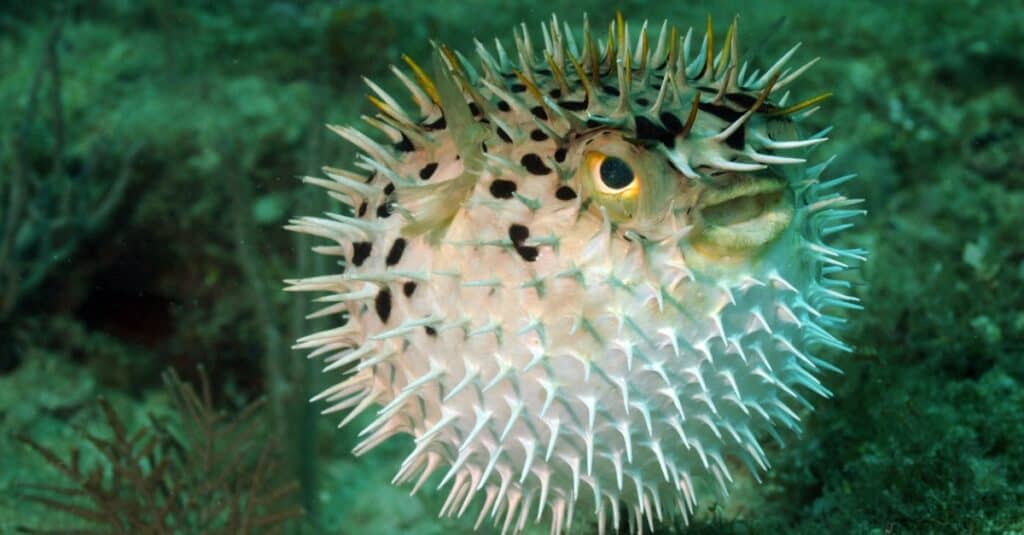
The stomach of a pufferfish can inflate up to three times its normal size.
©iStock.com/FtLaudGirl
Pufferfish can secrete toxins that harm both aquatic predators and humans, or use their beak-like teeth to bite. These toxins, known as tetrodotoxin, are highly dangerous and can be harmful even through contact. Most pufferfish contain these toxins in their skin, ovaries, liver, and intestines, making them especially hazardous if consumed. Pufferfish can also release chemicals into the water when they inflate, which smell awful and help deter predators.
As for their teeth, you don’t want your finger to be on the receiving end of those sharp beak-like teeth. Pufferfish teeth are fused together to create a strong, beak-like structure. This is especially advantageous for the pufferfish, as they aren’t the best swimmers. So, when they find something to eat, their strong jaws and sharp teeth help them quickly devour their meal.
More Facts About Pufferfish
There are between 120 and 150 recognized species of pufferfish, depending on classification and whether freshwater species are included. These species vary in size and color. Some of the most notable are the tiny Dwarf puffers (Carinotetraodon travancoricus), which are small freshwater pufferfish popular in aquariums; Nile puffers (Tetraodon lineatus), a yellow-striped fish found in the Nile River; and Takifugu, which were originally eaten as “fugu” but are considered toxic.
Pufferfish are omnivorous and can eat both animal and plant materials. Their sharp beak-like teeth allow them to break apart mussels, clams, shellfish, and other prey. These fish are definitely unique!