
Quick Take
- A flimsy loop of plastic can doom a seal. The anatomy behind it is oddly cruel.
- Spotting one trapped pup in a colony of thousands sounds impossible. The rescuers have tricks.
- The rescue is over in seconds, yet the team rushes for a reason that might surprise you.
- Hundreds of thousands of seals live there, so does one rescue even matter? The answer goes beyond the pup.
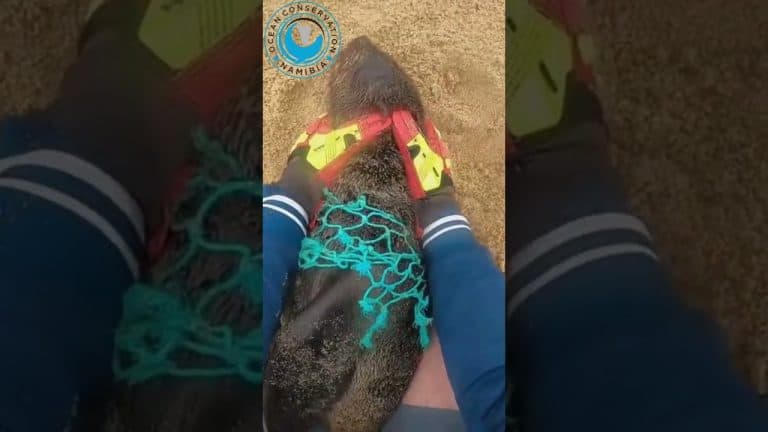
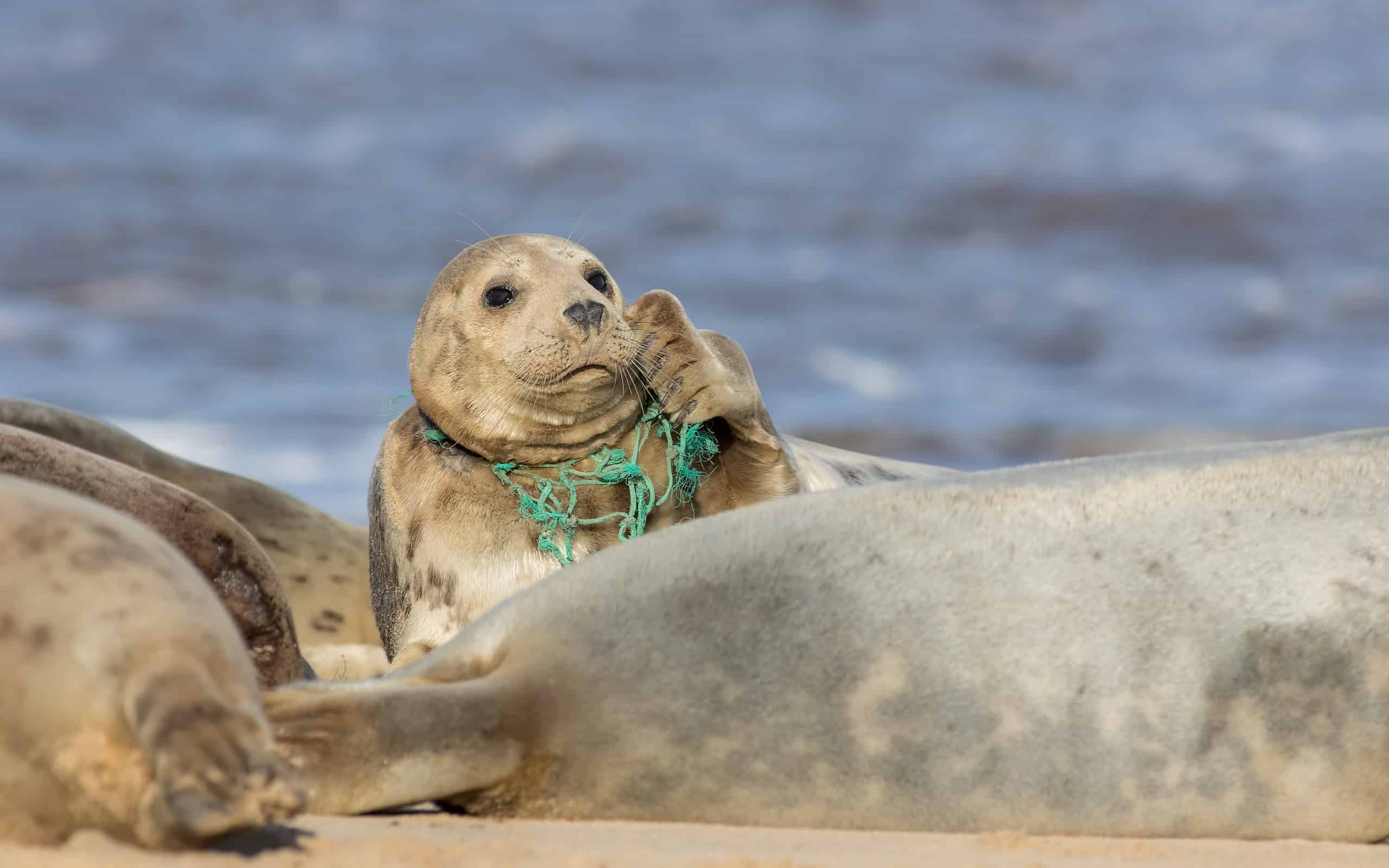
A young rescuer spots a Cape fur seal in trouble and takes off running. Within seconds, he is weaving through a crowded colony with a net while hundreds of seals rush toward the water. It looks chaotic, but every move has a purpose: A loop of plastic is tightening around the pup’s neck, and leaving it there could lead to a serious wound, infection, difficulty feeding, or death.
The rescue was carried out in Namibia by a team associated with Ocean Conservation Namibia (OCN), which patrols the country’s coast for Cape fur seals entangled in fishing line, nets, packing straps, and other marine debris.
Watch the Seal Rescue Unfold
The rescuers first identify the animal and agree on their approach. Then the young team member charges forward with the net. Most of the colony scatters, but he stays focused on the pup and catches it before it reaches the water. A second rescuer wearing gloves steadies the animal while the plastic is cut away.
The frightened pup struggles and cries out, but the process lasts only a short time. Once the obstruction is removed, the rescuers let it go and it races back toward the colony. OCN explains that its teams work quickly because capture is stressful for a wild seal, even when that brief intervention may save its life.
Why a Small Loop Can Be Deadly
A piece of plastic does not have to be large or heavy to endanger a seal. OCN says even a thin loop of fishing line can become trapped behind the animal’s head. Because a seal’s body widens toward the shoulders and its dense fur points backward, the material may not slide off again.
The problem becomes worse as a young seal grows. The line or strap can tighten, cut into the skin, and become buried in tissue. Entanglement may also restrict movement or interfere with the animal’s ability to feed and stay warm. OCN’s research indicates that fishing gear is responsible for most of the entanglements its team records.
How Ocean Conservation Namibia Rescues Seals
Finding one injured animal in a colony of thousands is difficult. According to the group’s rescue FAQ, team members scan the seals with binoculars and look for visible line, unusual body language, or sunlight catching a loose thread. Once they identify the animal, one person keeps watching it while the others prepare the net and cutting tools.
Conservationist Naude Dreyer began rescuing seals at Pelican Point in 2013. He and Katja Dreyer founded the Ocean Conservation Namibia Trust in 2020, and the organization says its team freed more than 5,000 Cape fur seals from dangerous entanglements between 2020 and 2025. That includes 1,018 rescues in 2025 alone, according to OCN’s annual report.
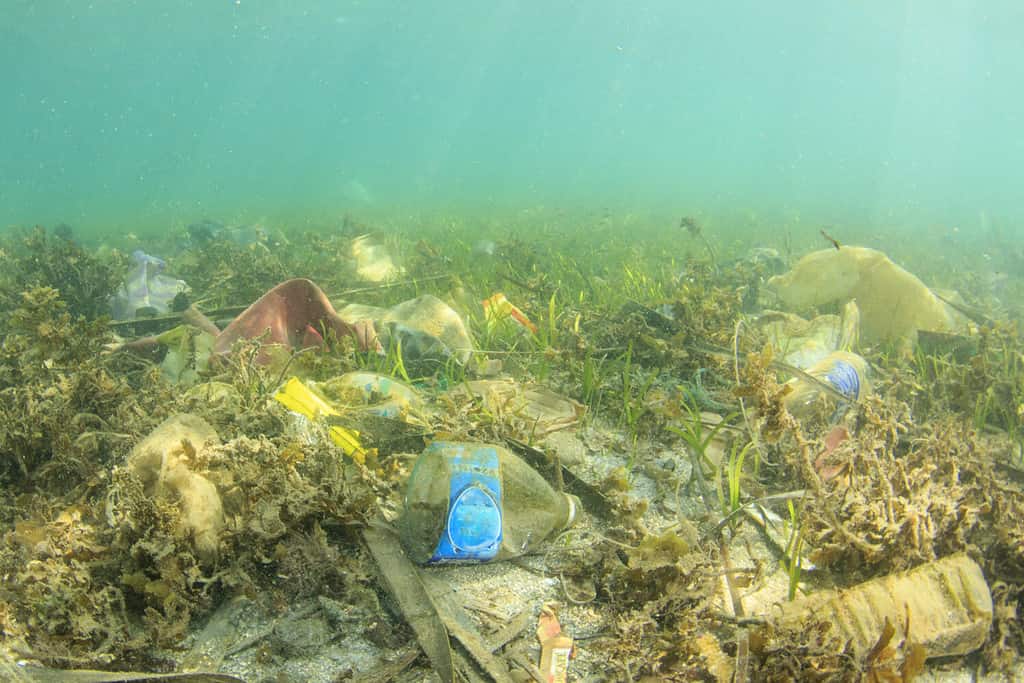
Marine debris can remain in the environment long enough to threaten generations of wildlife.
©Rich Carey/Shutterstock.com
How Many Cape Fur Seals Live in Namibia?
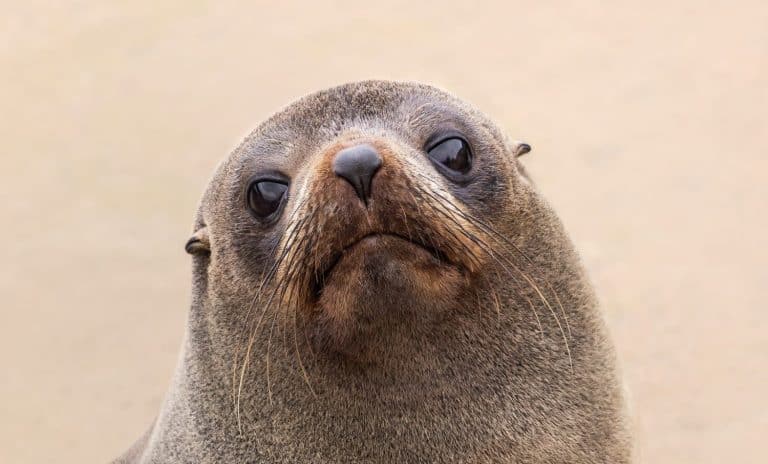
Namibia supports one of the world’s largest Cape fur seal populations. A government assessment completed in 2020 estimated about 1.365 million seals across 26 colonies along the country’s coast. OCN more broadly describes the current population as roughly one million.
That large population does not make an individual animal’s suffering unimportant. Entanglement is a human-caused danger, and freeing a trapped seal also gives researchers information about the types of debris entering the marine environment.
What to Do if You See an Entangled Seal
This video is not a rescue tutorial. Cape fur seals are powerful wild animals with sharp teeth, and people should not chase, restrain, or attempt to cut one free without training. Keep your distance and report an injured or entangled animal to local wildlife authorities or an experienced marine-rescue organization.
People can also help before an emergency happens by disposing of fishing line properly, reducing unnecessary single-use plastic, joining a beach cleanup, or supporting groups that remove marine debris. The dramatic sprint may last only a few seconds, but it shows why keeping plastic out of the ocean matters long after a rescue video ends.