
Quick Take
- Exposed that 97 percent of historical African penguin populations have vanished, according to recent environmental reporting.
- Navigated an 80 percent population collapse linked to the diminishing supply of Antarctic krill.
- Uncovered that Adélie penguins are retreating despite previous theories labeling the species as resilient.
- Confronted a near-total breeding failure across 4 separate emperor penguin colonies in the Bellingshausen Sea.
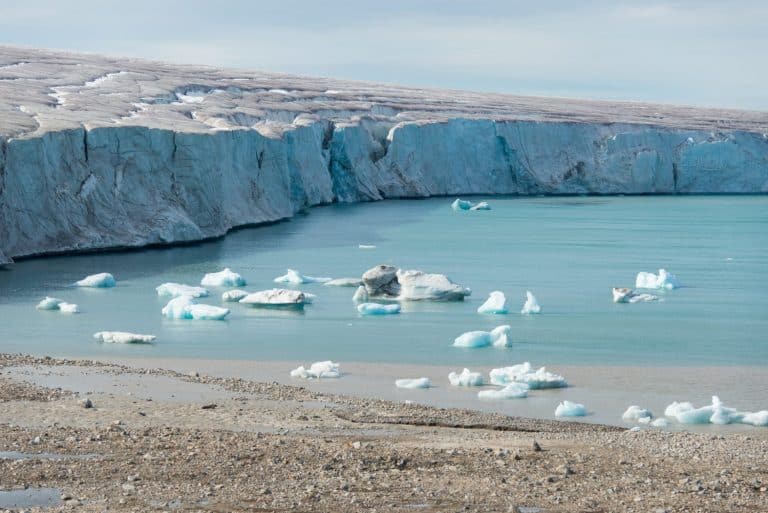
Every January 20, Penguin Awareness Day encourages people far from the Southern Ocean to reflect on birds they may never encounter in the wild. From Antarctica’s frozen coastlines to rocky shores in southern Africa, penguin colonies are shrinking or failing altogether. As sea ice thins, oceans warm, and food webs shift, these flightless seabirds are among the earliest animals to show how quickly climate change is reshaping marine systems. Their struggles do not exist in isolation. Penguins depend on the same oceans, currents, and biological productivity that support fisheries and coastal communities worldwide. As their numbers fall, they offer an unmistakable signal that fundamental parts of Earth’s climate system are under strain.

Species Under Pressure
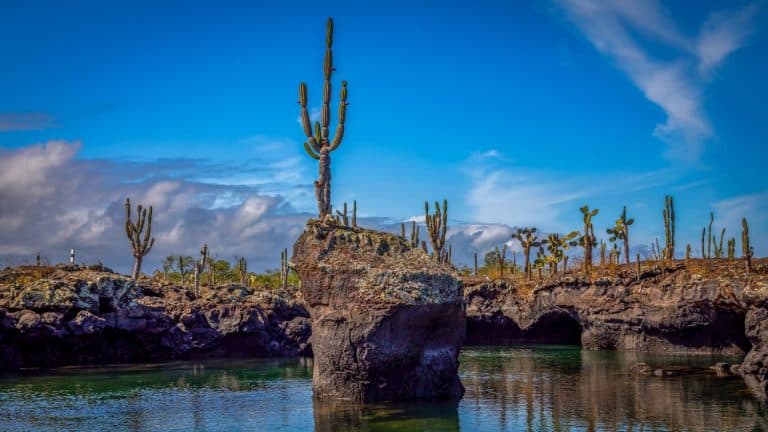
There are eighteen recognized penguin species, all native to the Southern Hemisphere. They range from the towering emperor penguin of Antarctica to the knee-high little penguin found along temperate coasts. Penguins inhabit environments as different as Antarctic sea ice, South American shores, African beaches, and the Galápagos Islands near the equator. Despite this range, many species now face similar threats. 10 out of 18 penguin species are classified as threatened or near threatened, reflecting population declines linked to climate change, fishing pressure, habitat loss, and pollution. They tend to reproduce slowly and depend on predictable food supplies during breeding seasons, making them especially vulnerable when ocean conditions change rapidly.
Emperor Penguins
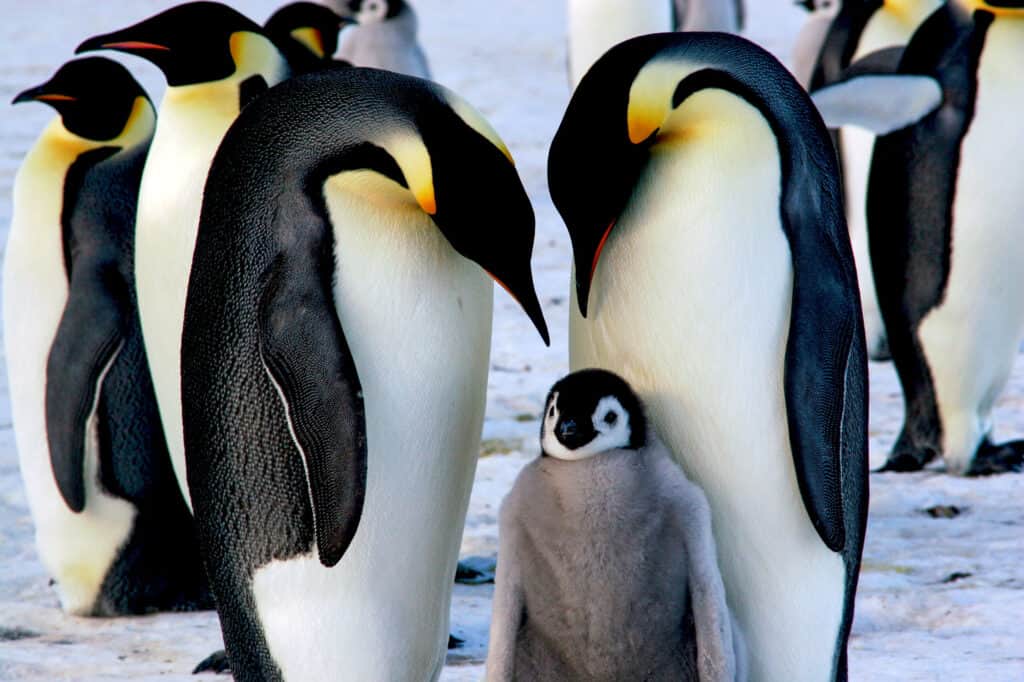
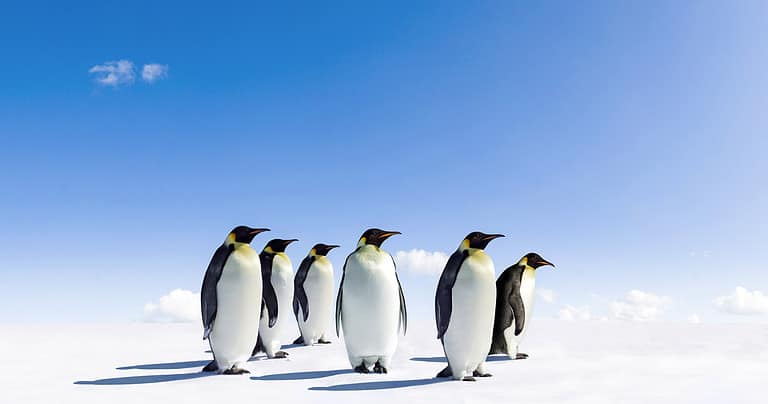
Emperor penguins are the largest of the penguins.
©iStock.com/BernardBreton
Emperor penguins are the largest of all penguin species, standing over one meter tall. They breed during the Antarctic winter, relying on stable ice that remains attached to the coast for many months. This ice platform allows adults to incubate eggs, shelter chicks, and travel between the colony and open water to hunt fish and krill. In recent years, record-low sea ice has disrupted this cycle. In 2022, four out of five known emperor penguin colonies in the Bellingshausen Sea suffered near-total breeding failure after ice broke up before chicks developed waterproof feathers. Climate projections indicate that if greenhouse gas emissions continue at current rates, most emperor penguin colonies could become functionally extinct by the end of the century.
Adélie Penguins
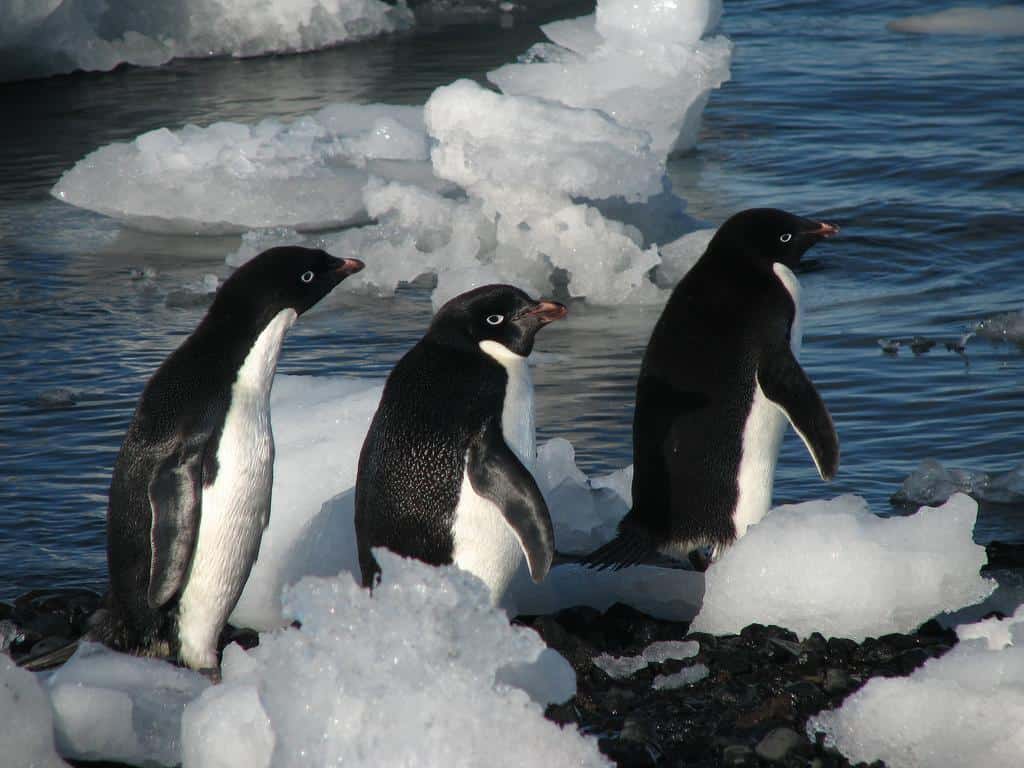
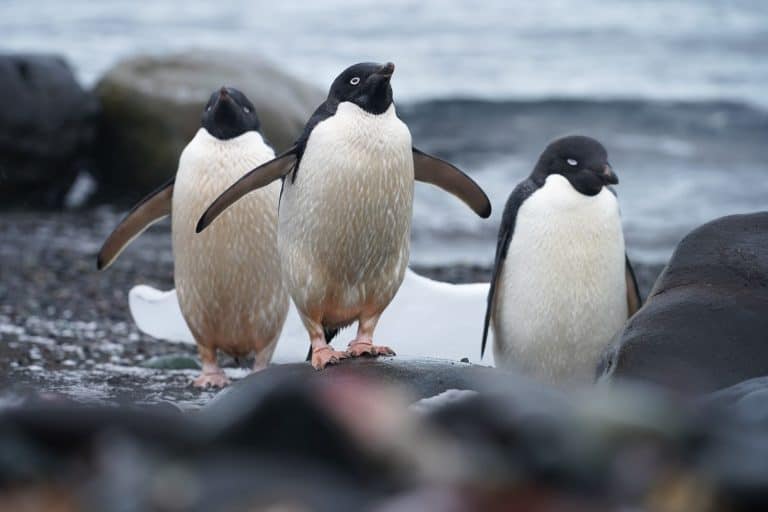
Adelie penguins are dying out in areas where krill habitat is shrinking.
©lin padgham / Flickr – Original
Adélie penguins were once viewed as a species that could tolerate environmental change, but their recent history tells a more complex story. Along the western Antarctic Peninsula, one of the fastest-warming regions on Earth, Adélie populations have declined by more than 80 percent in some areas over recent decades. Reduced winter sea ice has limited krill habitat, cutting off a critical food source. Further south, where seasonal ice remains more stable, some Adélie colonies continue to persist. As warming progresses, suitable habitat for ice-dependent penguins continues to shrink.
African Penguins on the Brink
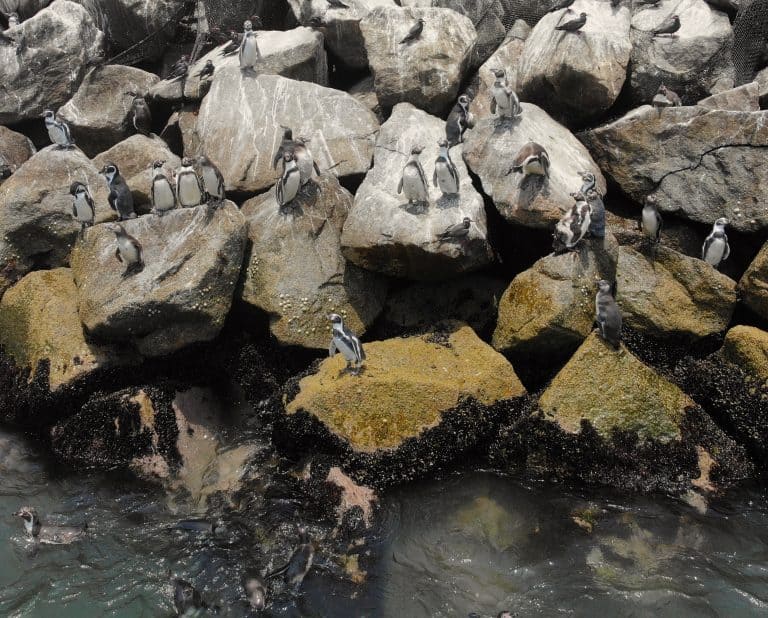
African penguins live along the coasts of South Africa and Namibia, far from polar ice. Despite their location, climate change and human activity have pushed them toward extinction. More than 97 percent of their historical population has disappeared, and the species is now classified as Critically Endangered. Industrial fishing has depleted sardines and anchovies near breeding colonies, forcing adults to travel farther to feed their chicks. Heat waves increase chick mortality, while oil spills and changing ocean currents compound the damage. Conservation groups rescue oiled birds and hand-rear abandoned chicks, but without large-scale recovery of fish stocks and climate stability, these efforts can only slow the decline.
Little Penguins and Coastal Change
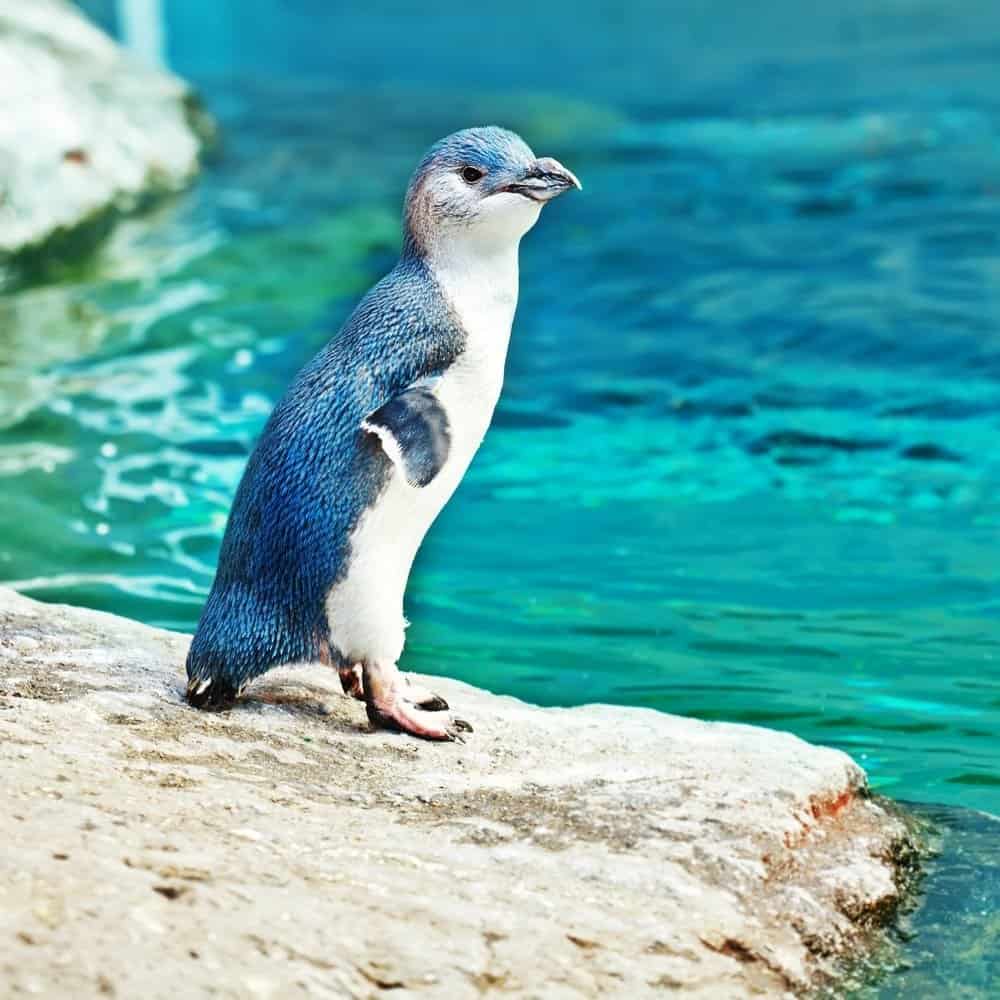
Little penguins are threatened by shifts in the East Australian Current.
©Khoroshunova Olga/Shutterstock.com
Little penguins are the smallest penguin species and live along the southern coasts of Australia and New Zealand. They nest in burrows, under vegetation, or in artificial shelters near shore. Each day, they forage at sea before returning to land after sunset in large groups. In parts of New Zealand, warming linked to changes in the East Australian Current has altered local marine conditions, reducing prey availability. Coastal development, introduced predators, dogs, and nighttime lighting further threaten colonies. Community-led conservation, including fencing, habitat protection, and restrictions on beach access, has helped some populations, showing how local action can reduce non-climate pressures.
Built for the Cold, Not for Speedy Change
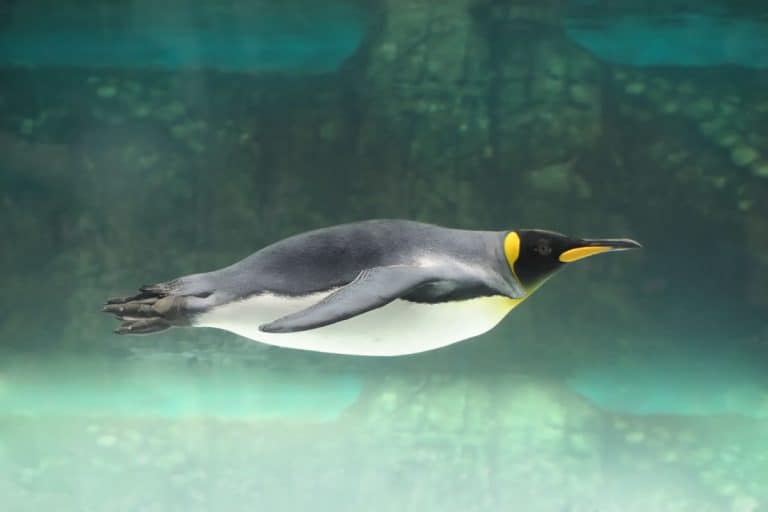
Penguins are highly specialized for life in cold oceans. Their wings evolved into rigid flippers that allow them to swim efficiently at speeds exceeding 20 kilometers per hour. Streamlined bodies reduce drag, while dense, waterproof feathers and thick layers of blubber provide insulation. A specialized blood flow system helps conserve heat in icy water. Some species, including emperor penguins, can dive hundreds of meters and remain underwater for more than twenty minutes. These traits evolved over millions of years under relatively stable climate conditions. Rapid warming, however, is occurring far faster than penguins can adapt, leaving their finely tuned biology mismatched to new environmental realities.
Sea Ice, Krill, and Food Chain Disruption
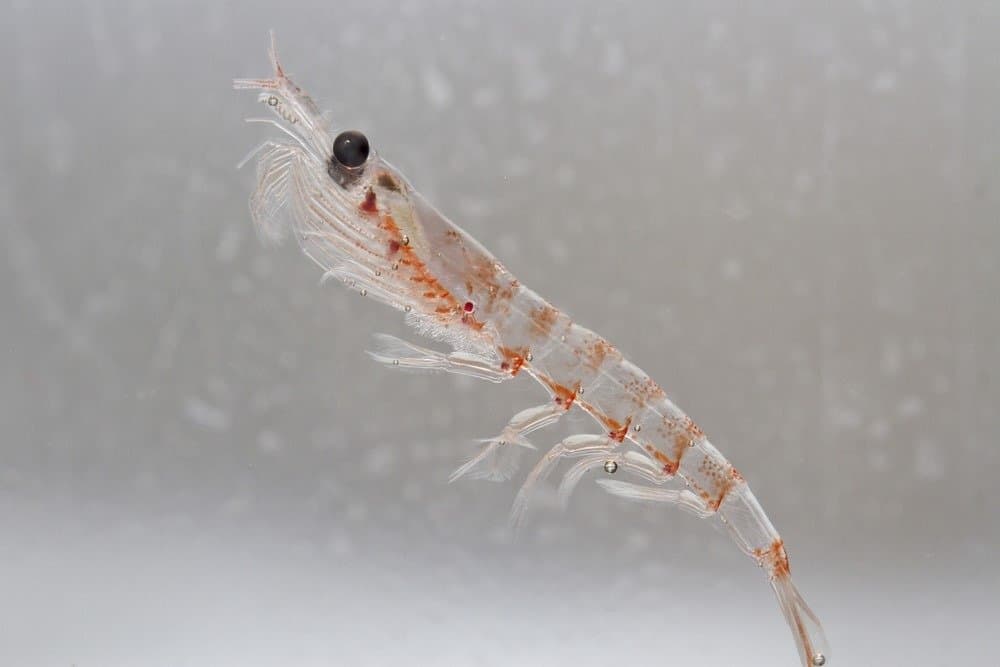
Antarctic krill off the coast of the Antarctic Peninsula are a major penguin food source.
©Tarpan/Shutterstock.com
Many Antarctic penguins depend on a food web that begins with algae growing on and beneath sea ice. These algae feed krill, small shrimp-like crustaceans that form the backbone of the Southern Ocean ecosystem. When sea ice forms late or melts early, krill breeding success declines. With fewer krill available, penguins must travel farther and expend more energy to feed themselves and their chicks. Around the Antarctic Peninsula, shifts in penguin species composition have already been observed, with open-water species expanding while ice-dependent species retreat. These changes also affect seals, whales, and fisheries that rely on the same prey.
Penguins as Climate Indicators
Scientists often describe penguins as indicator species because changes in their populations reflect broader environmental shifts. Emperor penguin declines closely track the loss of stable sea ice. African and little penguin populations mirror changes in ocean currents and fish distribution. Penguins also evolve relatively slowly compared with many seabirds, limiting their ability to adapt genetically to rapid climate change. When penguin breeding fails or colonies collapse, it often signals that ocean productivity and climate patterns are shifting faster than marine life can adjust. These same shifts eventually affect human food systems and coastal economies.
Conservation Efforts and Their Limits
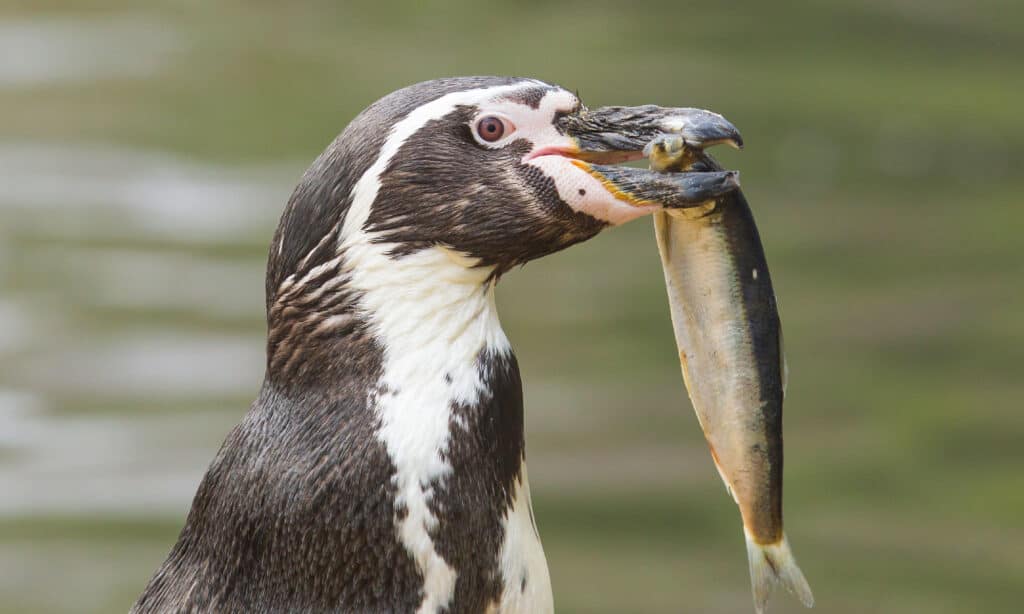
Protecting penguin feeding grounds is a crucial part of helping save and restore these friendly, funny birds.
©MyImages – Micha/Shutterstock.com
Targeted conservation has helped some penguin populations by addressing immediate threats. Marine protected areas and fishery restrictions can reduce competition for prey during breeding seasons. Rehabilitation centers in southern Africa rescue and release thousands of African penguins each year, buying time for the species. In Antarctica, scientists advocate for large no-take marine reserves to protect feeding grounds. While these measures matter, they cannot fully counteract climate-driven habitat loss. Long-term penguin survival depends on stabilizing global temperatures and preserving the physical systems that sustain marine life.
A Warning Waddling Toward the Future
Penguins often appear humorous as they shuffle across ice or gather along beaches, but their rapid declines carry a serious message. When colonies vanish within decades or fail to produce young for multiple years, it reflects deep instability in Earth’s climate and oceans. Protecting penguins ultimately means protecting sea ice, ocean currents, and food webs that also support people. As visible and well-studied seabirds, penguins serve as clear messengers from a warming world, warning that the systems sustaining life are changing faster than many species can endure.