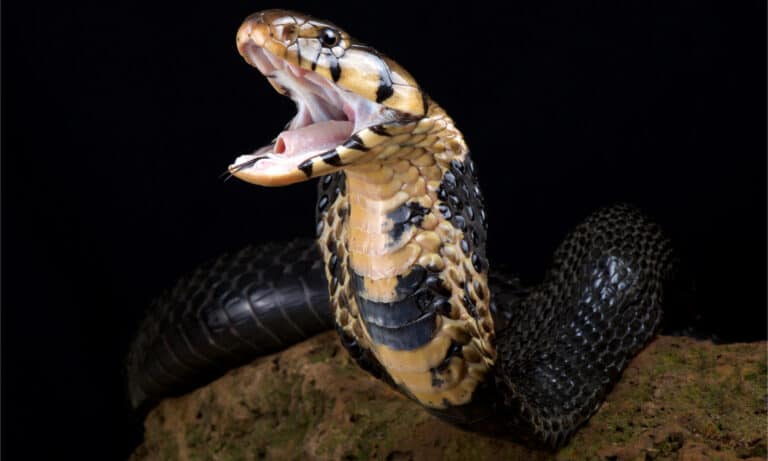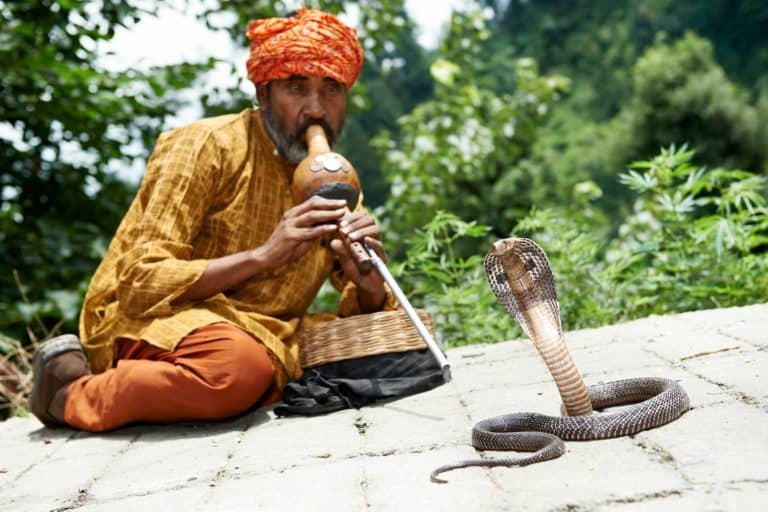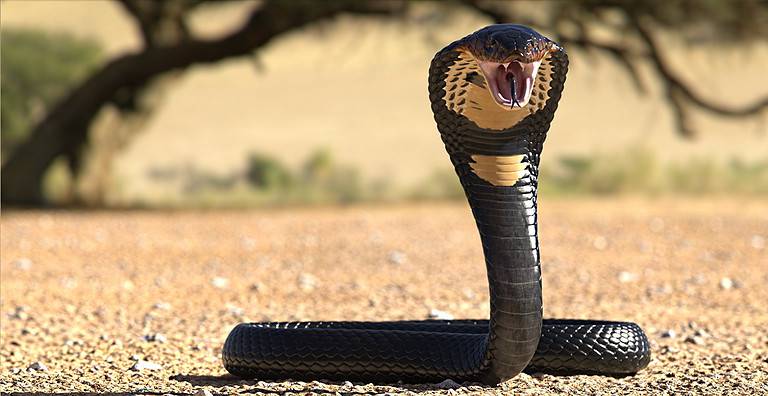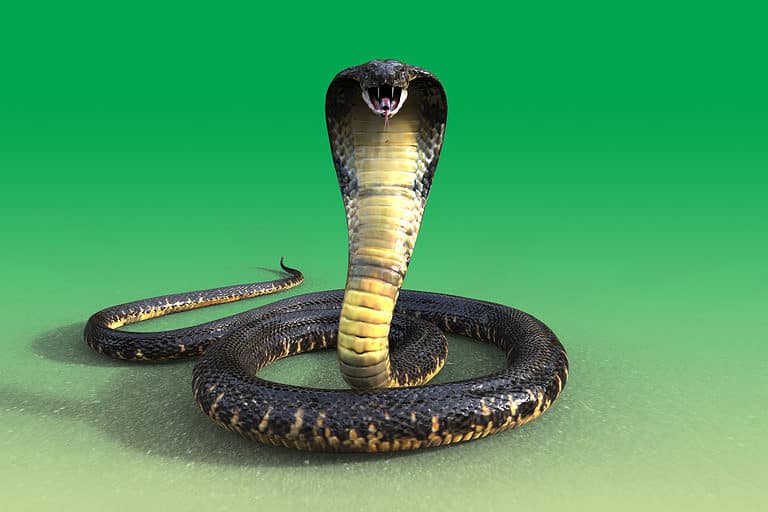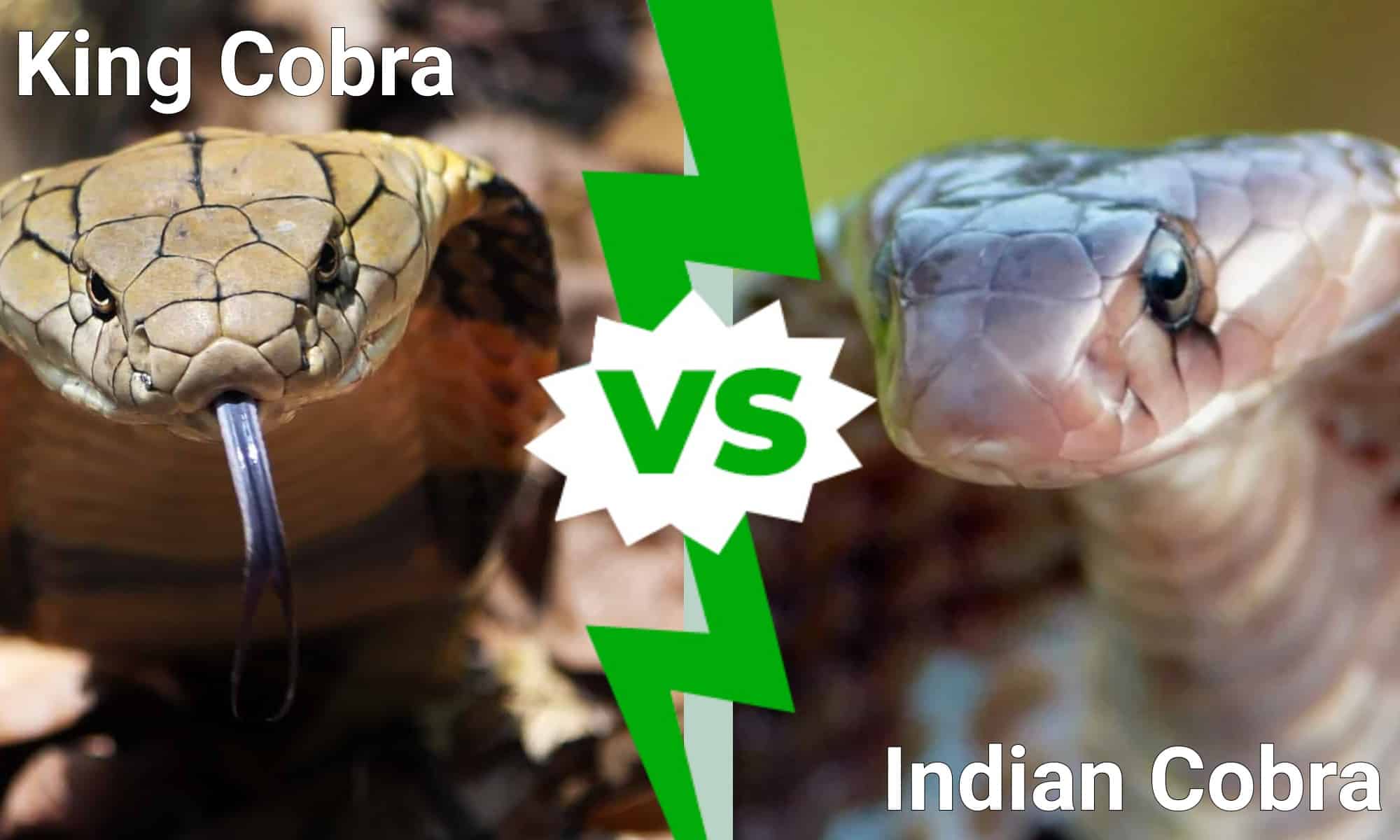

The king cobra (Ophiophagus hannah) is the world’s longest venomous snake. Found in the dense forests, open woodlands, bamboo thickets, and mangrove swamps of Southeast Asia and the Indian subcontinent, the king cobra is known for its powerful neurotoxic venom. These highly venomous snakes are generally reclusive and only attack when provoked or to defend their young. The Indian cobra (Naja naja) is a large, highly venomous snake found across the Indian subcontinent, including India, Pakistan, Sri Lanka, Bangladesh, Bhutan, and Nepal. This species is known for its impressive, expandable hood and the spectacles or circular pattern on its back, which gives it the name spectacled cobra. How are these snakes different? Continue reading to discover the key differences between the king cobra and the Indian cobra.
5 Key Differences Between a King Cobra and an Indian Cobra
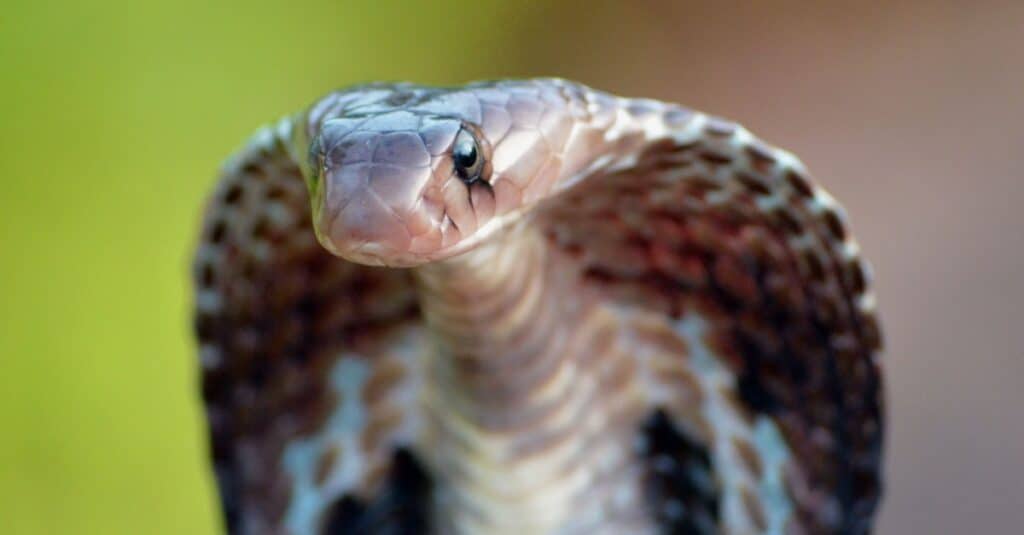
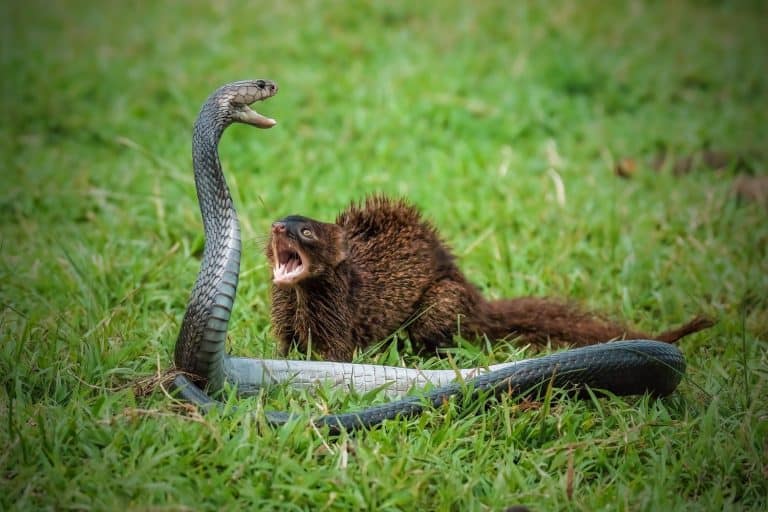
Indian cobras are responsible for thousands of deaths every year
©iStock.com/insaneDynamix
There are five key differences between the king cobra and the Indian cobra: size, venom, fangs, habitat, and family.
Size
One of the most noticeable differences between the king cobra and the Indian cobra is their size. The king cobra is the longest venomous snake in the world, and can grow to lengths of 10 to 12 feet and weigh 13-15 pounds. Indian cobras average seven feet long and weigh between two and six pounds.
Venom
Although the king cobra is larger than the Indian cobra, its venom is weaker. Nevertheless, both king cobras and Indian cobras are highly venomous. The Indian cobra has more potent venom for its size, but the king cobra delivers a larger total volume of venom per bite. The Indian cobra’s venom can cause significant neurotoxic and cardiotoxic effects, while the king cobra’s venom also primarily targets the nervous system, leading to paralysis and respiratory failure.
The king cobra rarely kills humans. Instead, it will try to scare them away by spreading its hood and will only bite if it feels truly threatened. Indian cobras are smaller, more skittish, and more prone to biting. Indian cobras, as one of the big four venomous snakes in India, are a major contributor to the estimated 46,000 to 60,000 snakebite deaths that occur annually in India.
Fangs
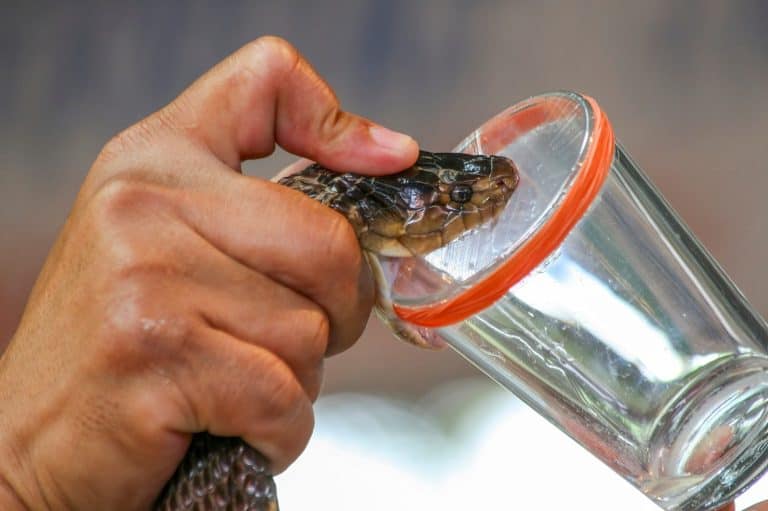
The king cobra and the Indian cobra have fixed fangs, a defining characteristic of the elapid family of venomous snakes. Their fangs do not retract or hinge like those of some other snakes. However, the king cobra’s 0.5-inch fangs are nearly twice as long as the Indian cobra’s 0.3-inch fangs.
Cobras use their fangs to inject venom into their prey. The venom immobilizes the prey, making it easier for the cobra to swallow. Fangs also assist in securing prey during a strike.
Habitat
King cobras are found in the dense forests, open woodlands, bamboo thickets, and mangrove swamps of Southeast Asia and the Indian subcontinent. Their range extends from Northern India to the Malay Peninsula, and east to parts of Indonesia, the Philippines, and Southern China. They prefer habitats near streams and lakes where humidity and temperature are stable.
The Indian cobra inhabits a wide range of habitats across the Indian subcontinent, including forests, plains, agricultural lands, rocky terrain, and wetlands, often near water. They also inhabit urban areas and human dwellings, like villages and city outskirts, where they hunt for rodents. Indian cobras are found across the Indian subcontinent, including India, Pakistan, Sri Lanka, Bangladesh, Bhutan, and Nepal.
Family
The Indian cobra’s scientific name is Naja naja. This snake is a true cobra as a member of the Naja genus. The king cobra, despite its name, is not a true cobra. This snake’s scientific name is Ophiophagus hannah. However, the king cobra has many things in common with the true cobras including its fangs, venom, threat display, and ability to produce a hood by spreading its ribs and muscles.
King Cobra vs Indian Cobra: Who Would Win in a Fight?
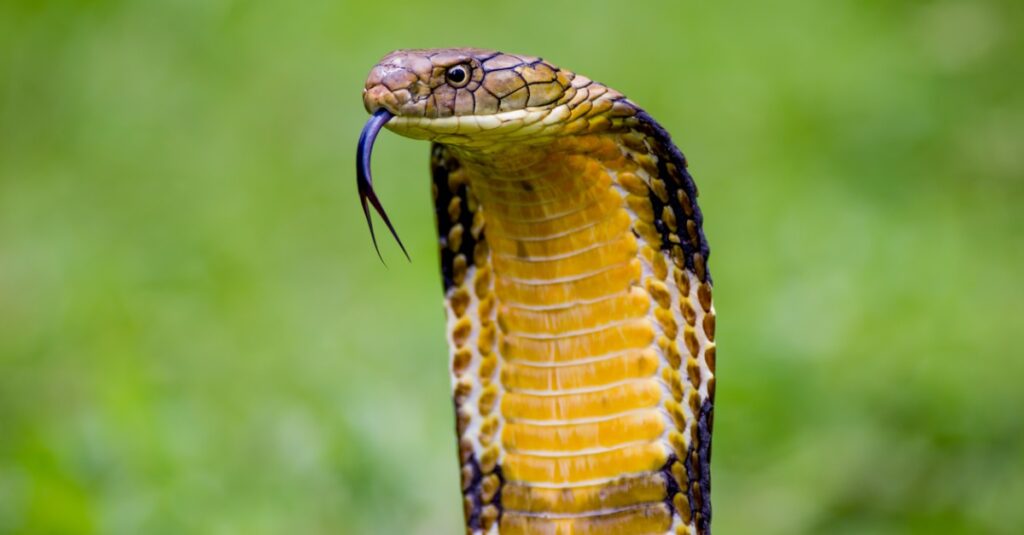
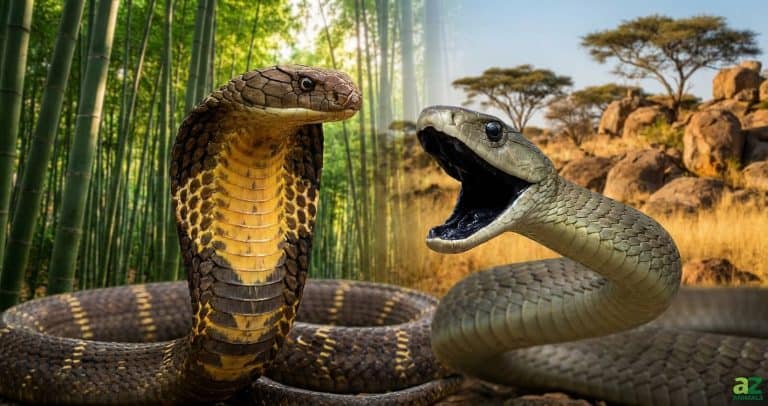
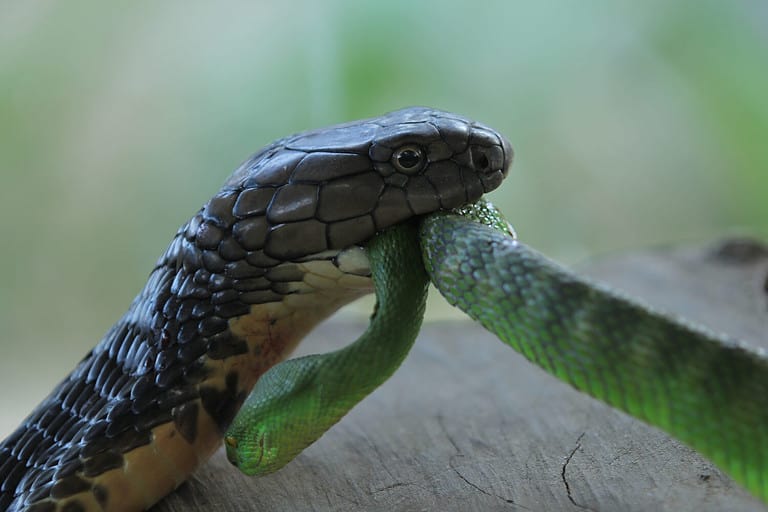
The king cobra is the longest venomous snake and specializes in eating other snakes
©iStock.com/takeo1775
A king cobra would win a fight against an Indian cobra. The king cobra and the Indian cobra have some resistance to each other’s venom because they are both elapids. As a result, factors such as size, the amount of venom injected per bite, and fang size would play a larger role in a fight between them. The king cobra is far larger, more powerful, and has bigger fangs than the Indian cobra.