
Quick Take
- The snake isn't listening to the music, given that it physically can't, and what's actually happening is far stranger. How snakes detect sound →
- That 'trance' tourists pay to witness is really the snake doing something completely opposite to relaxing. See the defensive response →
- Snake charmers take extreme precautions that reveal just how unmagical and genuinely dangerous this ancient art really is. Explore the dangers involved →
What seems like magic may be a well-manufactured illusion. A sleight of hand. A trick. It may involve the appearance of the supernatural, or a performance meant to provoke emotion through the use of dangerous processes. Perhaps the oldest form of magic is snake charming. You’ve probably seen it or read depictions of it: someone sits cross-legged playing a type of flute as a snake winds up in the air, out of a basket. Remarkably, some of the most dangerous snakes on Earth seems to become utterly entranced, even docile, all because of a well-played flute.
The ancient tradition of snake charming may be a parlor trick now, but it once held deep symbolic and ritual significance. Snake charming was first documented in ancient Egypt, with the practice later spreading to South Asia and other regions. It honored gods, heightened rituals, and symbolized human’s dominance over nature. Even today, tourists become just as bewitched as the snakes they watch emerging from a basket to the tune of a large flute. The reality behind this performance, and how snake charmers manage their feats, however, is more science than magic. Let’s learn more about this ancient practice and how simple processes are used to turn the deadliest snakes into apparent slaves to the music.
Deaf and Deadly

Snakes don’t actually hear the songs played by pungi flutes. Instead, they sense the vibrational waves that travel through the ground from flute to basket.
©Crok Photography/Shutterstock.com
The wandering, itinerant lifestyle of a snake charmer gives the profession a certain mystical gravitas. How else could these magic men put snakes under a spell, all with a haunting song played on a pungi flute? It turns out that snake charming is easier than it appears, and it has to do with the limitations of a snake’s biology.
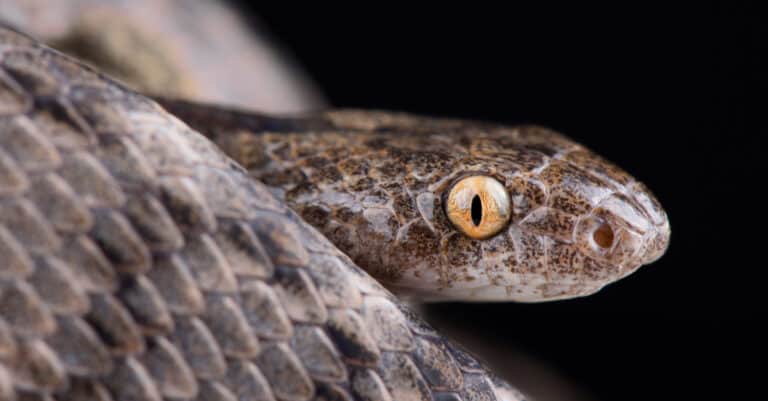
While mammals have intricate auditory systems, including ears and tympanic membranes, snakes lack such attributes. They don’t have ears or tympanic membranes, and their isolated inner ear structure is sealed inside their skulls. All the high-pitched, haunting notes produced by a pungi flute do nothing for the snake. They simply can’t hear them. For all intents and purposes, snakes are deaf.
Snakes, however, can sense sound. With their quadrate bones in their lower jaws, snakes can feel sound vibrations passing through the ground. They use this vibration-sensing feature to detect prey or approaching predators. That means any mellifluous flute music goes unnoticed, except for the vibrations it produces through the ground.
Threat Sensing
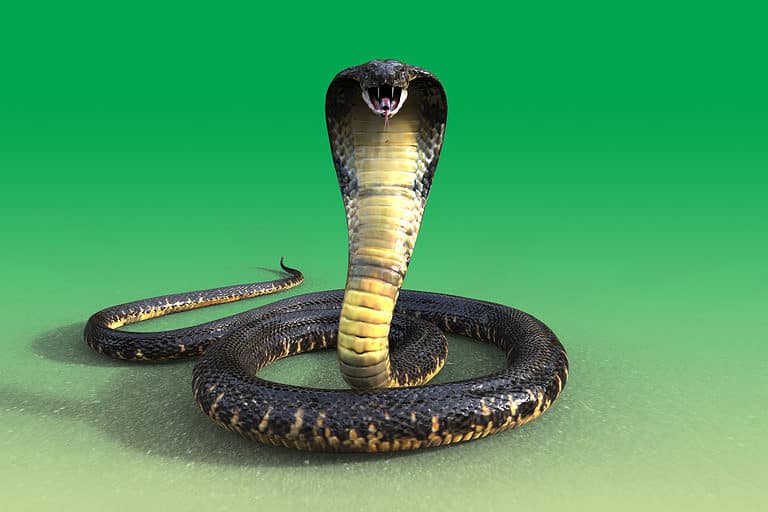
Notice what happens during a snake-charming performance. The charmer throws off the lid of their basket. Light violently invades the basket, and the snake (usually a cobra) sees a large, looming figure. In response, it goes into defense mode, attempting to look as large as possible. It rears up and expands its ribs to produce a hood.
From there, the performer starts waving their flute from side to side. The cobra matches its movements, not because it is entranced, but to keep the threat in its field of vision. There’s a reason that the pungi flute has a large gourd at the top. Though it serves as an air reservoir for the reed pipes attached below it, it also effectively locks the snake’s eyes onto it. It’s not magic, so much as a pure survival instinct.
Any sense of fluidity or mesmerism comes from the snake charmer’s ability to slowly sway and glide. The charmers will even tap their feet to add an extra, bewildering effect. Since the snake is mirroring the charmer’s movements, the reptile looks fluid and entranced. The tourist watching the performance from the sidelines thinks it’s a special, mystical skill. The snake thinks it is a standoff.
Ethical Implications

To safeguard against being bitten, snake charmers will remove snake fangs and venom glands.
©kagemusha/Shutterstock.com
Snake charming is an ancient business, and it does not meet the ethical standards of the modern world. It doesn’t always work out for the charmer, either. Though they usually sit out of biting range, attacks do happen. The snake charmer knows the performance isn’t magic, so they turn to safeguards to prevent possible attacks. Sometimes, charmers take drastic measures like removing fangs or venom glands from the animal, drugging the snakes, or keeping them on the verge of starvation so they lack adequate strength to attack. Many of these methods put the snakes at risk of serious injury or death.
These concerning ethical implications have led to the practice of snake charming becoming an increasingly rare sight on the street. It experienced something of a golden age in the 20th century, but various factors have made it less common. Namely, the Wildlife Protection Act of 1972, which banned the ownership of snakes in India. Though snake charmers organized in response, it likely won’t be enough to ensure this ancient practice’s survival.