
Quick Take
- The male black widow looks so different from the female that most people don't even recognize it as the same species. See how males look →
- Only one sex can actually bite you, and it may not be the one you would assume matters least. Find out who bites →
- The female black widow's notorious habit of eating her mate is far less true than pop culture suggests, though the reality comes with an important catch. Explore the cannibalism reality →
- The size gap between male and female black widows is more extreme than you'd expect, and the reason behind it is rooted in a surprising biological function. Compare the size difference →
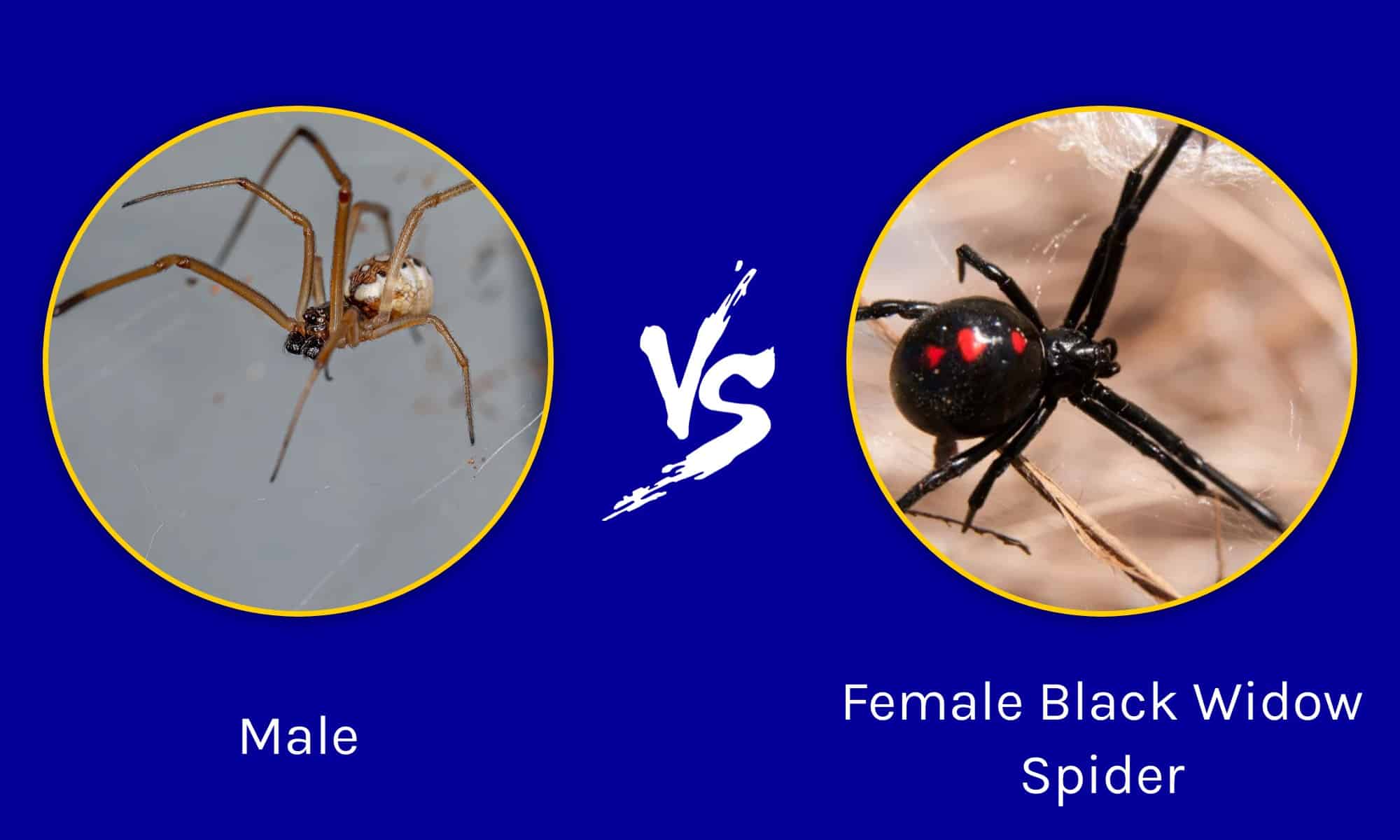
There are more than 30 recognized species of widow spiders contained in the genus Latrodectus. Three distinct species of true black widow spiders are native to the United States: the Northern black widow (Latrodectus variolus), the Southern black widow (L. mactans), and the Western black widow (L. hesperus). Two additional species from the genus, the brown widow (L. geometricus) and the red widow (L. bishopi), are also present in the United States, but are not considered black widows. Interestingly, spiders within this genus display pronounced sexual dimorphism, meaning that females and males look exceptionally different. Continue reading to discover the key differences between female and male black widow spiders.
Male vs. Female Black Widow Spider: Size
The female black widow spider is far larger than the male black widow spider. An adult male black widow spider has an average body size of 0.25 inches and a leg span of less than one inch. An adult female black widow spider has a body length of approximately 0.5 inches and a total leg span of 1 to 1.5 inches. Female black widows are significantly larger than their male counterparts due to their maternal responsibilities, which require a larger body size to produce and carry egg sacs.
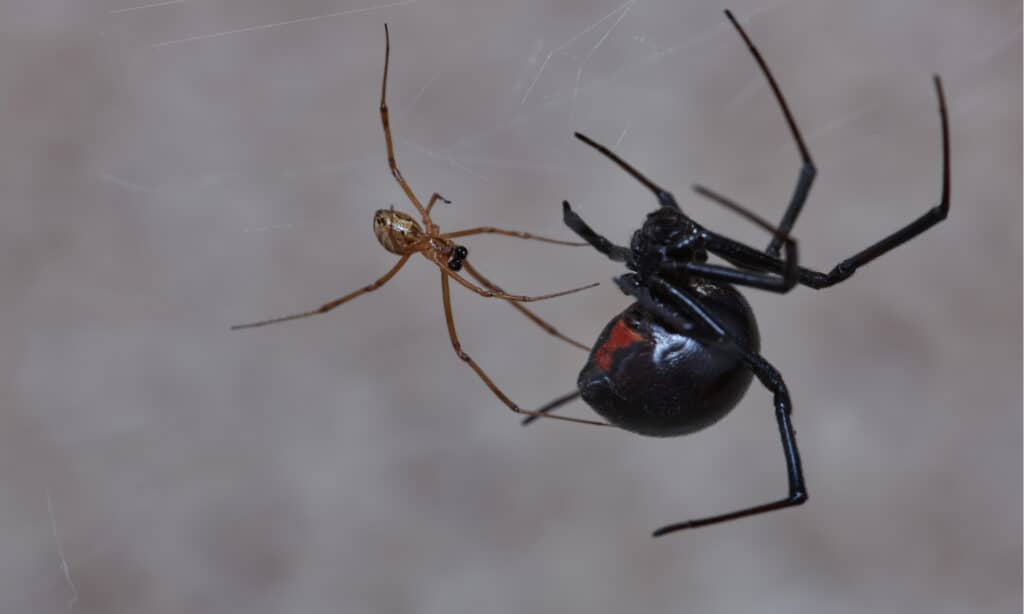
Female black widow spiders are often 2–3 times longer and up to 10× heavier than male black widow spiders.
©lighTTrace Studio/Shutterstock.com
Male vs. Female Black Widow Spider: Color
Female black widow spiders are glossy jet-black with a bright red or orange hourglass-shaped mark on the underside of their bulbous abdomen. Male black widow spiders are gray, tan, or light brown, with white, yellow, or red markings. The male’s abdomen is also much less bulbous, and its legs are often banded.
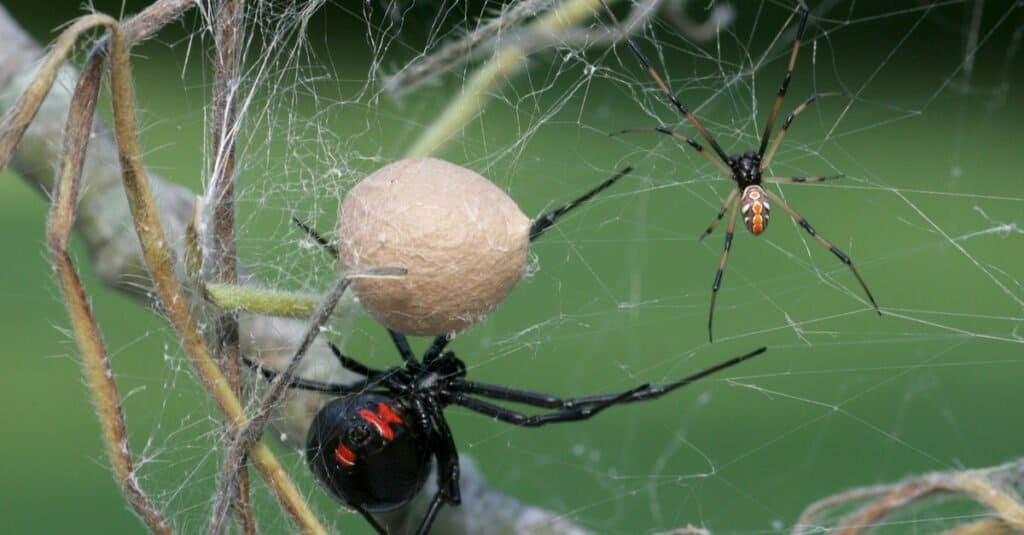
Male black widow spiders are brown or gray, while female black widow spiders are jet black and shiny.
©Mark_Kostich/Shutterstock.com
Not all female black widow species in the U.S. have a classic, unbroken red hourglass on their underside. The Southern black widow is the model for the iconic jet-black spider with the red hourglass. The Western black widow typically has a complete hourglass marking on the ventral (under) side of her abdomen. However, the hourglass is often orange or yellow and, in rare cases, missing completely. The
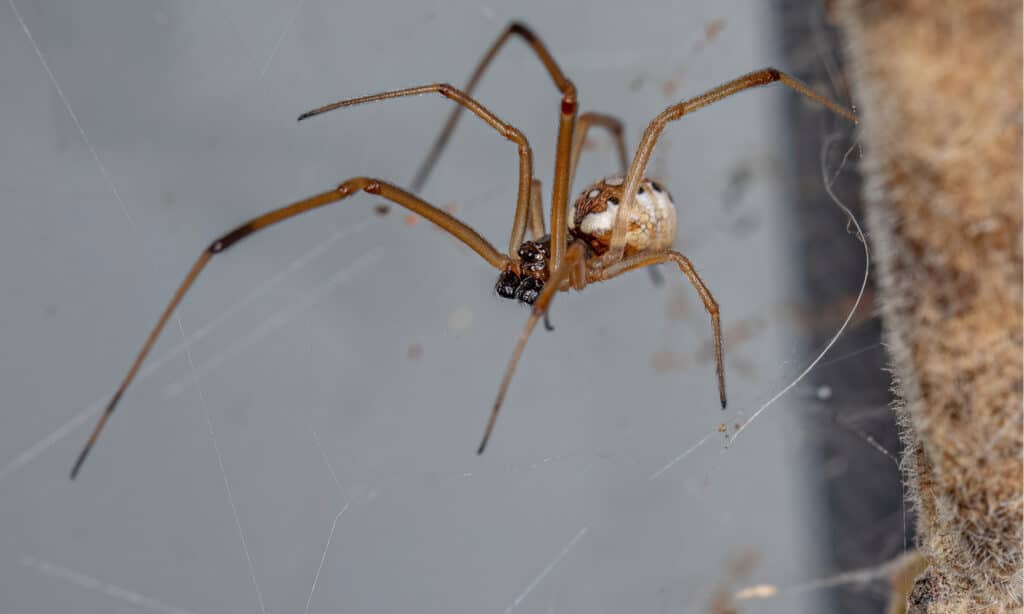
Male black widows may also have white stripes on their abdomen and legs, while black widow spiders remain completely black throughout their body.
©Vinicius R. Souza/Shutterstock.com
Northern black widow female typically has red markings on the ventral side of her abdomen. However, the marks are typically broken into a pair of unconnected triangles or dots. The adult female Northern black widow typically features a row of red spots along the top (dorsal) side of her abdomen, often paired with white diagonal stripes.
Male vs Female Black Widow Spider: Behavior
The behavior and temperament of a female black widow are markedly different from those of a male. Their roles, defense mechanisms, and daily routines contrast sharply due to their physical differences.
A female black widow is naturally shy, but she will become highly defensive and aggressive if she is trapped, squeezed, or guarding an egg sac. Because she possesses large, powerful fangs and highly potent neurotoxic venom, her defense can result in a dangerous bite.
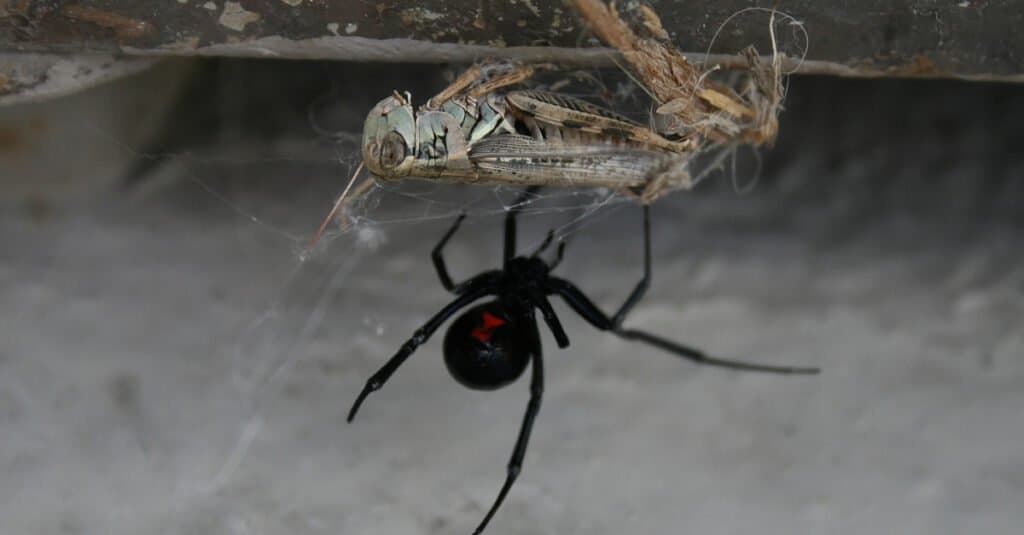
Female black widow spiders live for a year or longer, while male black widow spiders live for an average of three to five months.
©Crystal Kirk/Shutterstock.com
Males lack any aggressive tendencies toward humans. Their fangs are too small and weak to pierce human skin, and their venom is far less potent. Male black widows do not guard territory and will always choose to run away or play dead when disturbed.
A female builds a permanent web and stays there her entire adult life to hunt and raise egg sacs. Once a male reaches maturity, he leaves his mother’s web and spends his short life wandering and tracking the chemical pheromones of female black widows.
Although female black widows have a reputation for eating males after mating, this behavior is rare to nonexistent in North American species. In these species, males assess whether a female is well-fed before approaching and make a quick getaway as soon as mating is complete.
Male vs Female Black Widow Spider: Lifespan
A final difference between male and female black widow spiders is their lifespan. Female black widow spiders generally live for 1 to 3 years in favorable conditions, while male black widow spiders typically live for several months. The lifespan of the male black widow spider can be significantly shorter if he happens to get eaten by the female black widow spider during mating. However, sexual cannibalism, in which the female eats the male after mating, is rare in North American black widow species