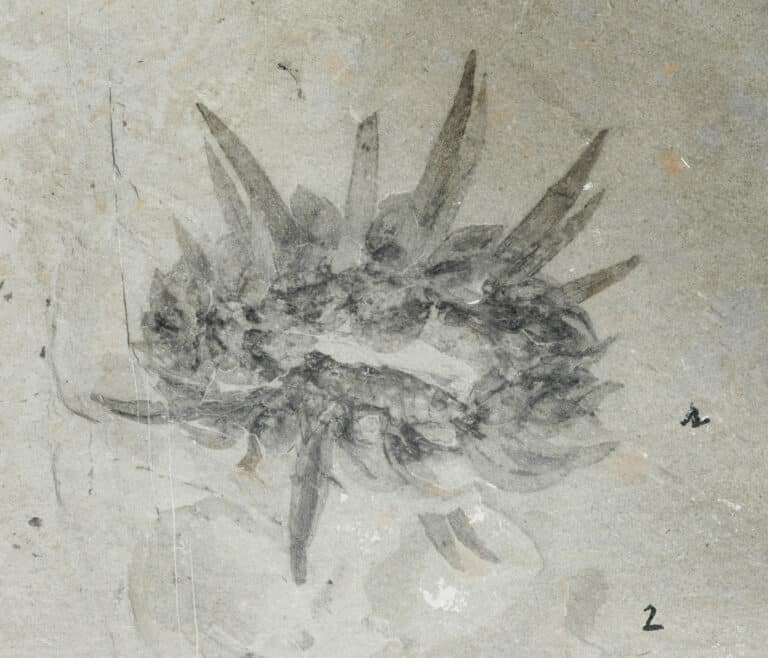

The Grand Canyon is one of the most remarkable landforms in America, attracting millions of tourists each year. The geological marvel reveals the power of erosion over long periods of time. It is also a sort of time capsule, preserving ancient animal life forms. In 2023, a University of Cambridge research team discovered strange fossils of Cambrian creatures. The fossils, tucked into rocks within the canyon, included one especially bizarre organism. The animal, which is a type of priapulid worm, highlights the complexity of life 500 million years ago. Findings were recently published in the July 2025 issue of Science Advances.
The extinct species of priapulid worm ((Kraytdraco spectatus) is highly unusual and differs from anything previously discovered. It featured a retractable pharynx filled with spiraling, feathery-textured teeth. These characteristics imply both predatory behavior and filtering of sediment. The alien-like creature is a wonderful and intriguing reminder of how foreign ancient ecosystems could be.
In this slideshow, you’ll explore the discovery, anatomy, and evolutionary significance of this peculiar fossil. You’ll learn how the researchers found and identified the worm, what its anatomy reveals about Cambrian predators, and why its survival story is so fascinating.
A Surprising Fossil Discovery in the Grand Canyon

©Jim Mallouk/Shutterstock.com
- In 2023, scientists uncovered a treasure trove of Cambrian fossils in the Grand Canyon
- Among them was a bizarre predator: a priapulid worm with alien-like features.
- This worm was namedKraytdraco spectatus after a Star Wars creature.
What Is a Priapulid Worm?
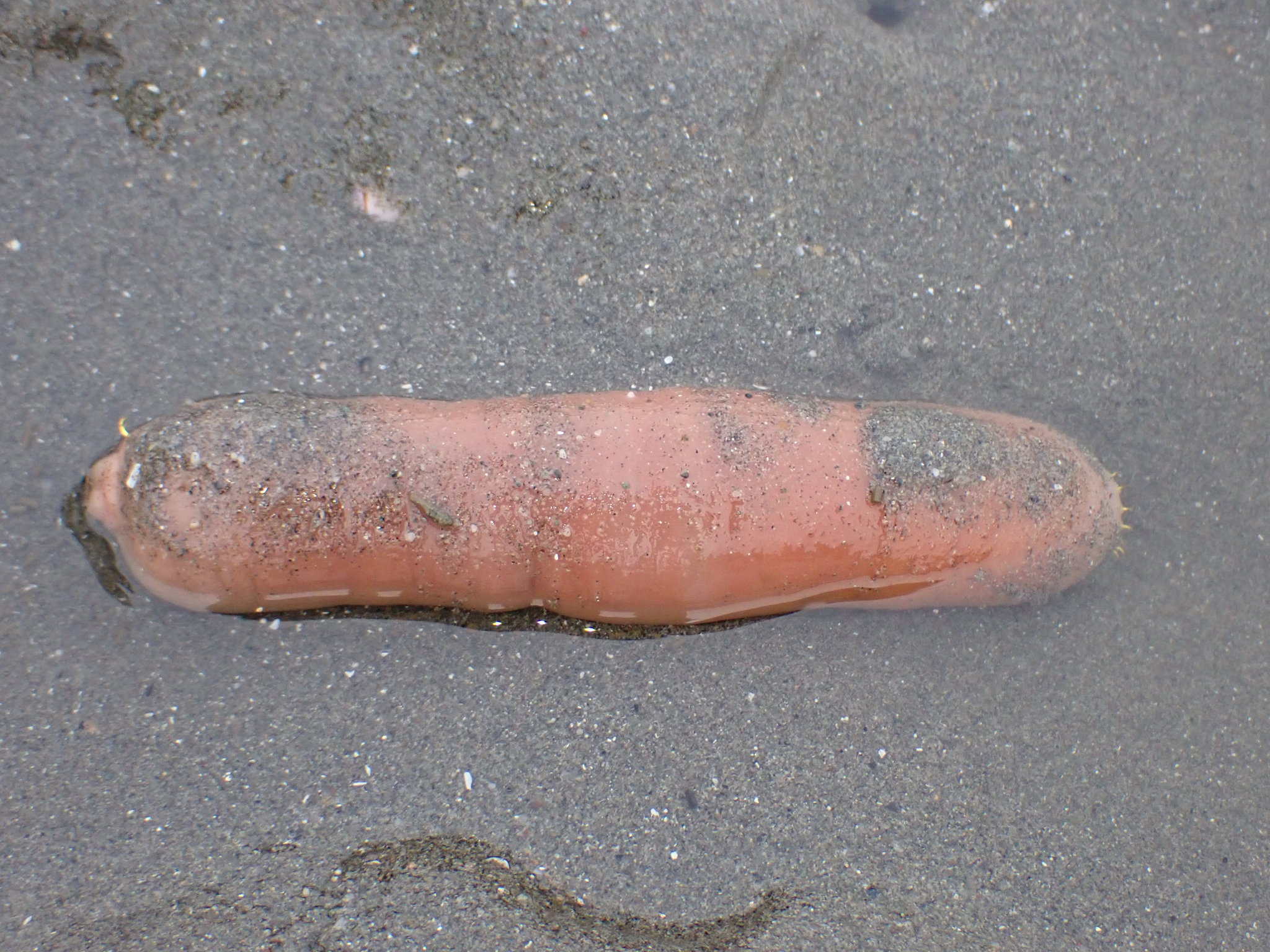
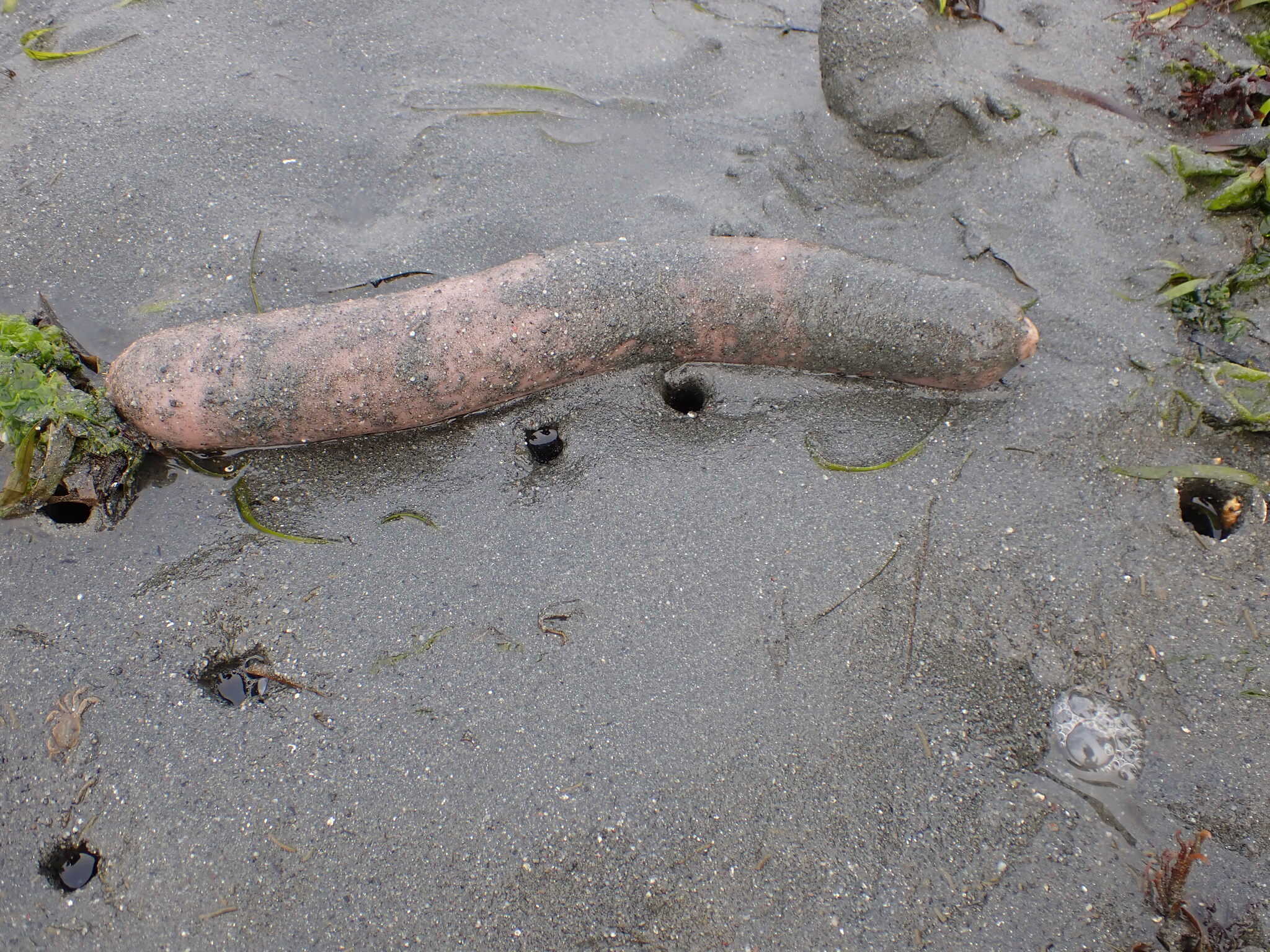
©"innkeeper worm, kalifornischer igelwurm, 'penis fish' or 'penis worm'" by Rebecca Johnson is licensed under BY 4.0. - Original / License
- Priapulid worms are ancient , marine invertebrates known for their phallic shape.
- They date back over 500 million years and were among Earth’s earliest predators.
- Today, only about 20 miniature species still exist.
A Worm with a Retractable Throat
©Krikkiat/Shutterstock.com
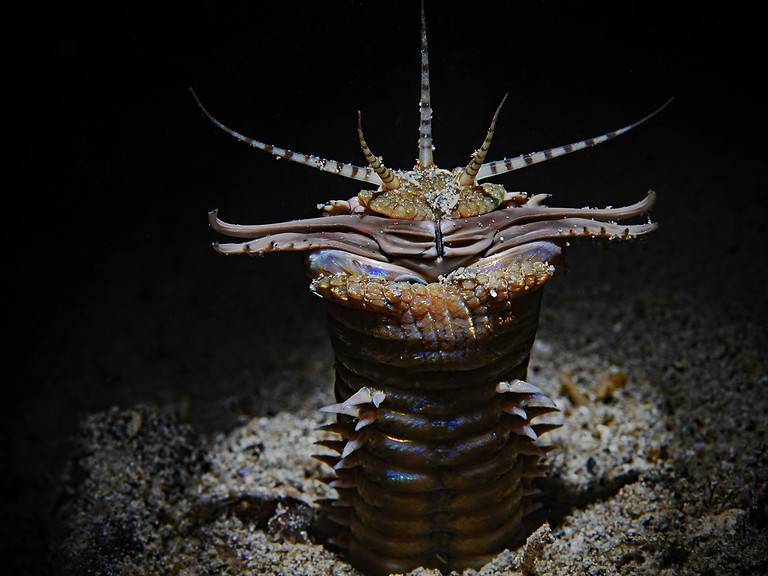
- The worm had a unique feeding organ: a retractable pharynx filled with teeth!
- Its outer teeth could scrape sediment , while inner feathery teeth filtered fine particles.
- This mechanism resembles the ‘xenomorph’ in Alien.
Naming the Worm After Science Fiction

©Yukhym Turkin/Shutterstock.com
- The worm was named Kraytdraco spectatus after the krayt dragon inStar Wars.
- Scientists also considered naming the organism after Dune’s sandworms, but that name was already taken.
- Its anatomy made it an ideal candidate for a science-fiction-inspired name.
Feathery Teeth Never Seen Before
©ROV KIEL 6000, GEOMAR / CC BY 4.0 Deed - Original / License
- Inside its throat were concentric rows of delicate , feather-like teeth.
- These structures are unlike anything seen in other fossil records.
- Scientists believe these fine teeth helped the worm filter food from sediment.
From Giants to Miniatures
©"innkeeper worm, kalifornischer igelwurm, 'penis fish' or 'penis worm'" by Rebecca Johnson is licensed under BY 4.0. - Original / License
- Ancient priapulids grew several inches long , but modern ones are only millimeters long.
- Over half a billion years , they’ve survived through evolutionary miniaturization.
- This endurance shows how adaptable even the strangest creatures can be.