Far below the ocean’s surface, where sunlight disappears and pressure reaches crushing levels, some of the planet’s strangest life forms thrive. These deep-sea creatures have evolved in total darkness, developing eerie shapes, glowing organs, and fascinating survival strategies that seem more like science fiction than real-life biology. Rarely seen by human eyes, these creatures inhabit a world that remains one of Earth’s least explored realms.
Their odd appearance isn’t the only factor that makes these animals so haunting. How little we still know about them adds greatly to their mystery. Many have only been observed a handful of times, captured on deep-sea cameras or discovered accidentally during research expeditions. This article explores some of the rarest deep-sea creatures ever discovered. We’ll detail the alien features and strange behaviors that truly make them the stuff of nightmares.
1. Barreleye Fish
©iStock.com/3dsam79
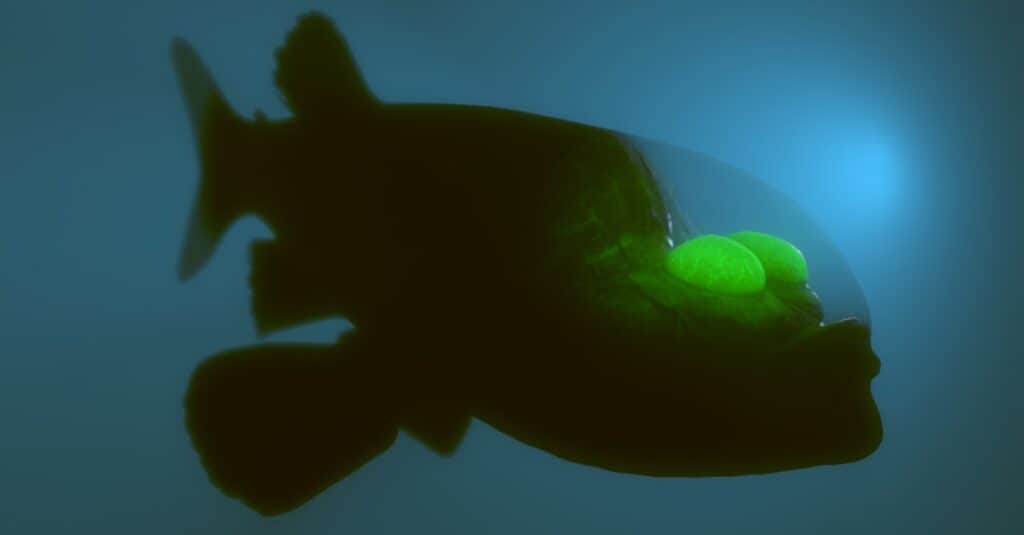
The barreleye fish, also known as the spook fish, is a remarkable deep-sea species adapted to life in near-total darkness. Its most striking feature is the completely transparent dome that forms the top of its head, with two luminous green eyes housed inside. These eyes are typically facing upward, allowing the fish to spot the outlines of prey drifting above in the ocean depths.
Barreleye fish are usually found between 2,000 and 2,600 feet below the surface, where they feed on small crustaceans and other organisms that are caught in the tentacles of siphonophores. For many years, scientists believed the fish’s eyes were fixed in place, but research published in 2019 confirmed that the barreleye can rotate their eyes forward when feeding. The transparent head covering is thought to act as a protective aid, shielding the fish’s delicate eyes from the stinging cells of the siphonophores it steals food from.
2. Tardigrade
©iStock.com/fruttipics
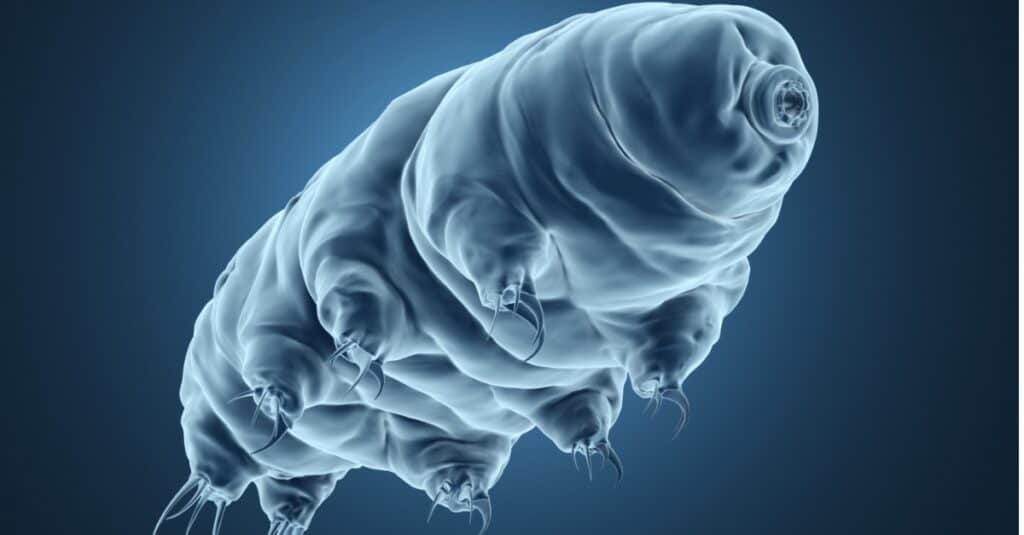
Tardigrades, often called water bears or moss piglets, are nearly microscopic animals known for their stubby legs and plump, cartoonish appearance. Though they’re more commonly found in moss, soil, and freshwater, tardigrades have also been discovered in the deepest parts of the ocean, including deep-sea sediments, though not at the very deepest ocean trenches. Their unusual shape and slow, lumbering movement led to scientists likening them to tiny living teddy bears.
What truly sets tardigrades apart is their extraordinary ability to survive extreme conditions. When faced with dehydration, freezing temperatures, or other environmental stressors, they can enter a dormant state called a tun. During this state, they curl into a dried, ball-like form that dramatically slows their metabolism. In laboratory settings, tardigrades in this state have survived temperatures ranging from extreme heat to near absolute zero, as well as intense pressure far beyond that of the ocean floor. It’s important to note, however, that these abilities have only been observed in controlled laboratory tests rather than naturally occurring conditions.
Unlike vertebrates, tardigrades lack bones and rigid skeletons. Instead, their tiny bodies are supported by a flexible structure filled with a fluid called hemolymph. This nutrient-rich substance flows through internal cavities and helps sustain their organs. This effective process is part of what has allowed tardigrades to thrive in some of the harshest environments on Earth.
3. Sea Spider
©iStock.com/Velvetfish
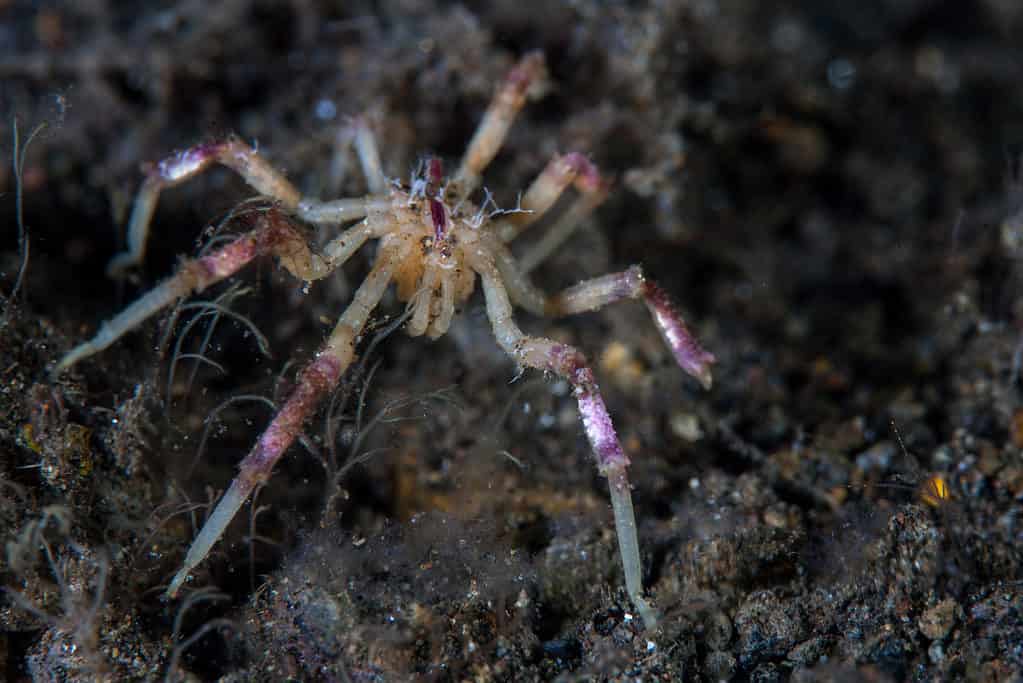
If an ordinary garden spider is enough to make your skin crawl, encountering a sea spider would be even more unsettling. These strange marine creatures crawl slowly and hauntingly across the ocean floor. Some species can reach leg spans of up to three feet. Their spindly legs and alien proportions make them some of the most eerie inhabitants of the deep.
Despite their resemblance to land spiders, sea spiders are a completely different group of animals. Terrestrial spiders belong to the class Arachnida, while sea spiders are classified under Pycnogonida. However, they do share a distant relationship: both are arthropods and members of the subphylum Chelicerata, which explains their similar body structures.
Sea spiders have been recorded at depths of more than 2,300 feet and are found in every ocean on Earth, including polar waters and tropical regions alike. Using specialized mouthparts, they feed on slow-moving or stationary animals like sponges and sea nettles. This is how they extract nutrients from their prey.
4. Pacific Footballfish
©Jules_88/Shutterstock.com
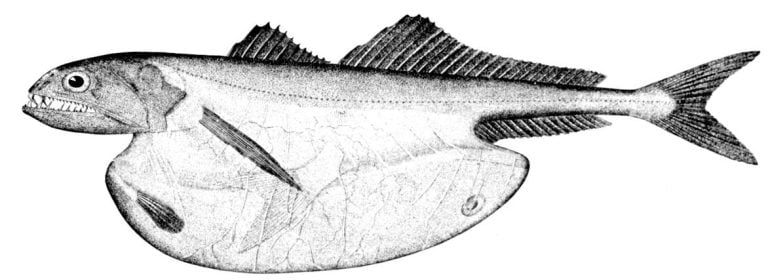
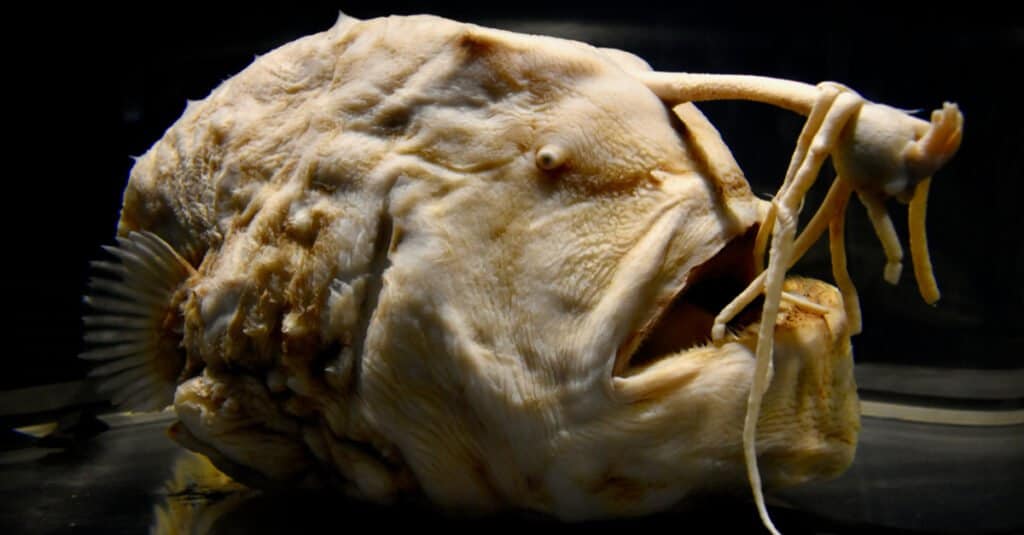
The Pacific footballfish is a rare deep-sea species that belongs to the anglerfish family, a group that includes hundreds of bizarre predators adapted to life in darkness. First encountered during deep-sea fishing operations, the species quickly attracted attention for its unusual look and eerie hunting strategy. Today, anglerfish are some of the most recognizable inhabitants of the deep.
One of the Pacific footballfish’s most distinctive features is its bioluminescent lure. This unique body part is a modified dorsal fin extending forward from its head, which glows faintly. The subtle light attracts unsuspecting prey in the pitch-black. This natural light source is a crucial adaptation in an environment where sunlight cannot reach.
Pacific footballfish typically live between 2,000 and 3,300 feet below the ocean’s surface, where food is scarce and competition is intense. As opportunistic predators, they will consume nearly anything they come across, including crustaceans and squid. Despite their intimidating appearance, however, Pacific footballfish pose no danger to humans and are rarely ever seen outside their deep-sea home.
5. Frilled Shark
©iStock.com/3dsam79
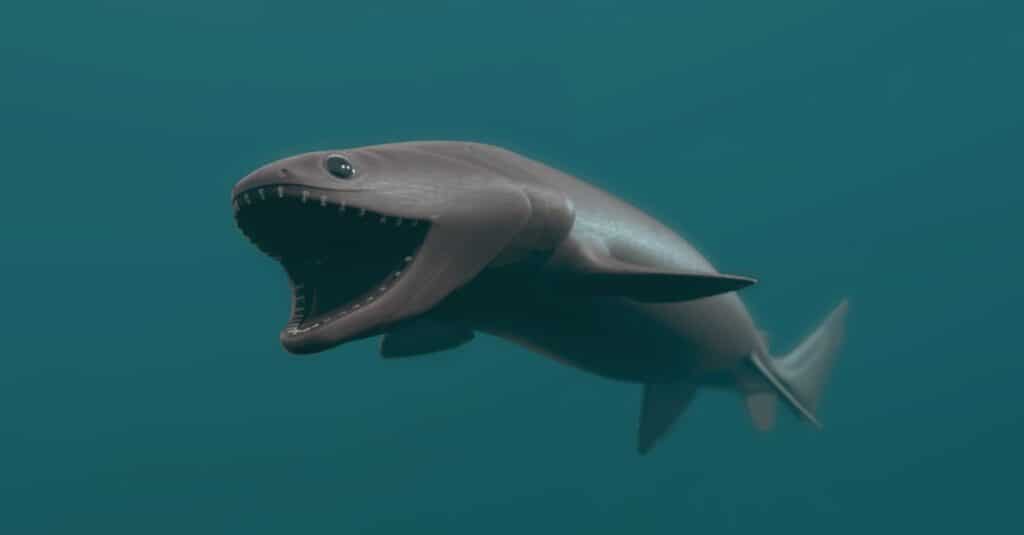
With its eel-like body and snake-shaped head, the frilled shark looks like something pulled straight from a prehistoric nightmare. Its long jaws are lined with needle-sharp, three-cusped teeth that curve inward. This design is perfect for trapping slippery prey. This elusive predator swims through deep waters, with sightings recorded at depths of nearly 5,000 feet.
Frilled sharks are often observed moving with their mouths slightly open, a behavior that may help lure curious prey closer. Their diet consists mainly of squid, though they will occasionally feed on smaller sharks and fish, given the opportunity. This feeding strategy is due to their harsh environment where meals can be few and far between.
Considered one of the most primitive living sharks, the frilled shark has existed for millions of years with hardly any evolutionary change. Its ancient anatomy gives us a look into the early history of sharks, making it one of the most fascinating deep ocean animals.
6. Viperfish
©superjoseph/Shutterstock.com
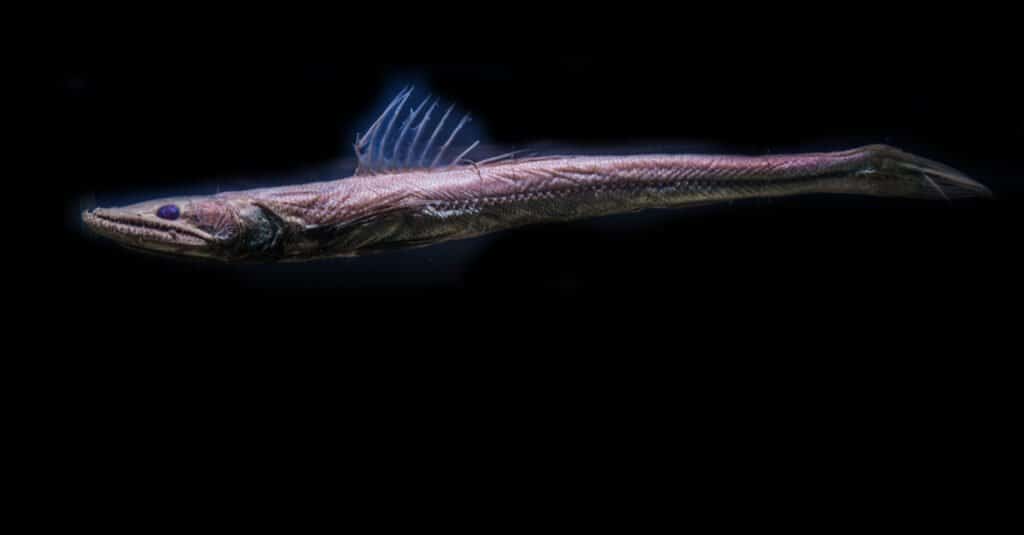
One of the most recognizable predators of the deep sea is the viperfish, a fearsome carnivore perfectly adapted to life in total darkness. Its thin, elongated body and oversized, needle-sharp teeth make it an efficient hunter. When illuminated by submersible lights, few deep-sea animals look as menacing as the viperfish.
Viperfish follow a daily vertical migration pattern. During daylight hours, they stay in deeper waters, sometimes reaching depths of around 5,000 feet. At these depths, food is hard to come by, but safety from predators is greater. At night, they move to shallower waters of roughly 2,000 feet to take advantage of more prey, while shielded from predators under the cover of darkness.
Because viperfish live so far below the surface, their life cycle remains a mystery. Scientists believe they reproduce through external spawning, releasing eggs into the open water to be fertilized. Most of what researchers know about these elusive fish comes from rare encounters, often when individuals are accidentally caught during deep-sea fishing operations.
7. Fangtooth Fish
©iStock.com/demarfa
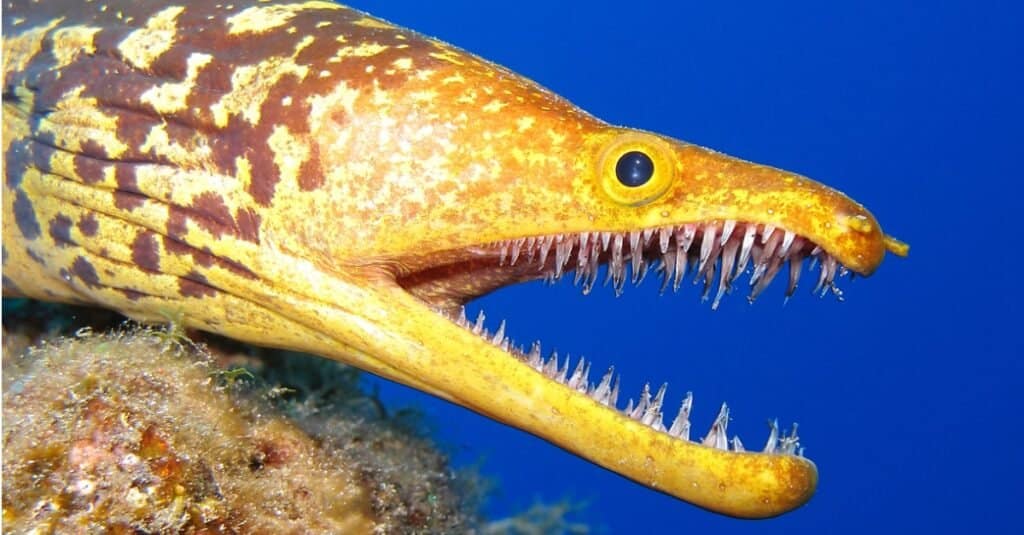
As their name suggests, fangtooth fish have a mouthful of sharp, fang-like teeth. These terrifying animals are carnivorous creatures, most commonly found at depths between 650 and 6,600 feet, though they have been recorded deeper. They rarely, if ever, approach the surface. However, they have been known to swim near the surface to attack prey.
While many deep-sea creatures conserve energy by waiting for prey to come to them, fangtooth fish are active predators, seeking out their meals. Their huge, sharp teeth help them capture whatever meal comes their way.
Fangtooth fish prefer a diet consisting of squid, fish, and crustaceans. They don’t have any glowing organs or other eye-catching features; instead, they must rely on their sense of smell and sound to hunt.
Despite the fangtooth’s creepy appearance, scientists say they are completely harmless to humans, as they only measure around 7 inches long when fully grown.
8. Giant Isopod
©kikujungboy CC/Shutterstock.com
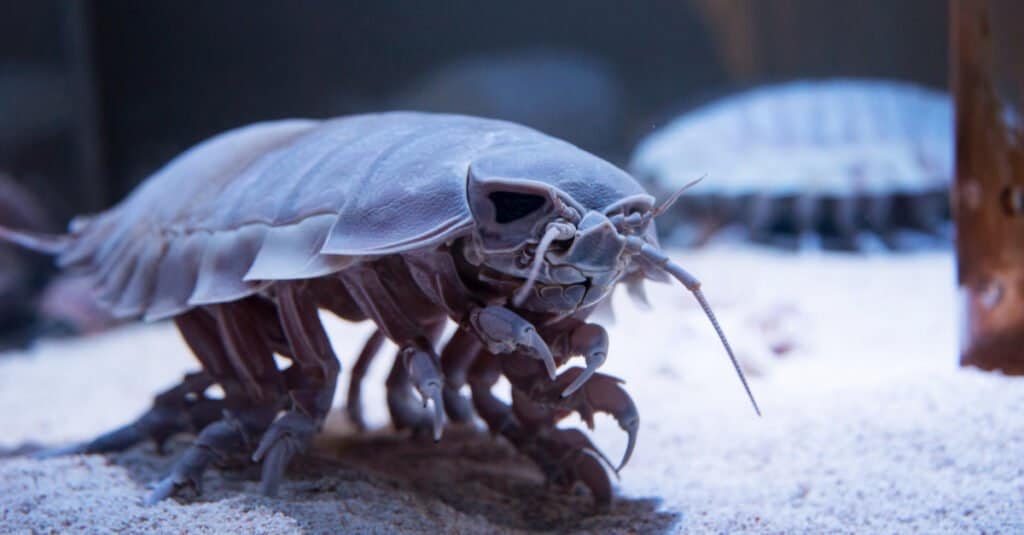
Have you ever captured a roly-poly or pillbug in the summertime? Imagine a giant version of that tiny critter, except it lives at extreme depths on the ocean floor. Believe it or not, these creatures are real, and they’re called giant isopods, which are closely related to the land critters.
Giant isopods are deep-sea creatures that scavenge the ocean floor for food. They are carnivorous animals with a diet that includes squid, fish, crabs, sea sponges, and more. Since food is scarce at the bottom of the ocean, giant isopods have evolved to go long periods without food. In some cases, they have survived over five years in captivity, though such lifespans are rare in the wild.
When they’re frightened, giant isopods can roll up into a ball. This protects their inner organs and is made possible by their lack of a spine. Their tough exterior shell also protects them from outside threats. When they’re not hunting, they can be found buried beneath ocean sediment on the ocean floor, which allows them to preserve their energy.
9. Japanese Spider Crab
©LELACHANOK/Shutterstock.com
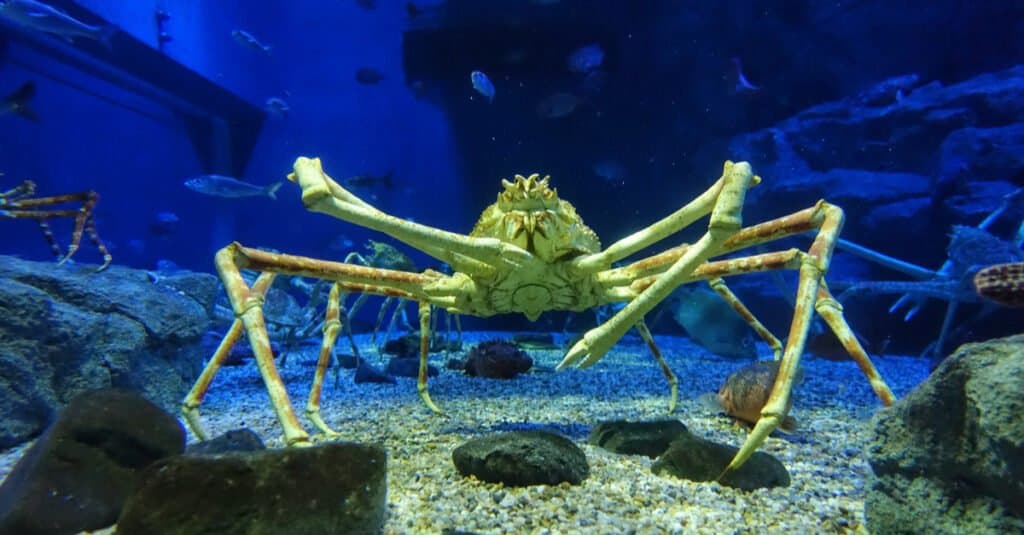
It probably doesn’t come as much of a surprise that Japanese spider crabs are crustaceans found in the waters surrounding Japan. Researchers say that this species has the largest leg span of any known arthropod.
Japanese spider crabs are creatures of opportunity, meaning they will feed on almost any animal that comes their way. They are also omnivorous, meaning they eat plants. They capture prey by camouflaging themselves with algae and other sea debris, allowing them to catch unsuspecting animals easily.
10. Chimaera
©Vladimir Wrangel/Shutterstock.com
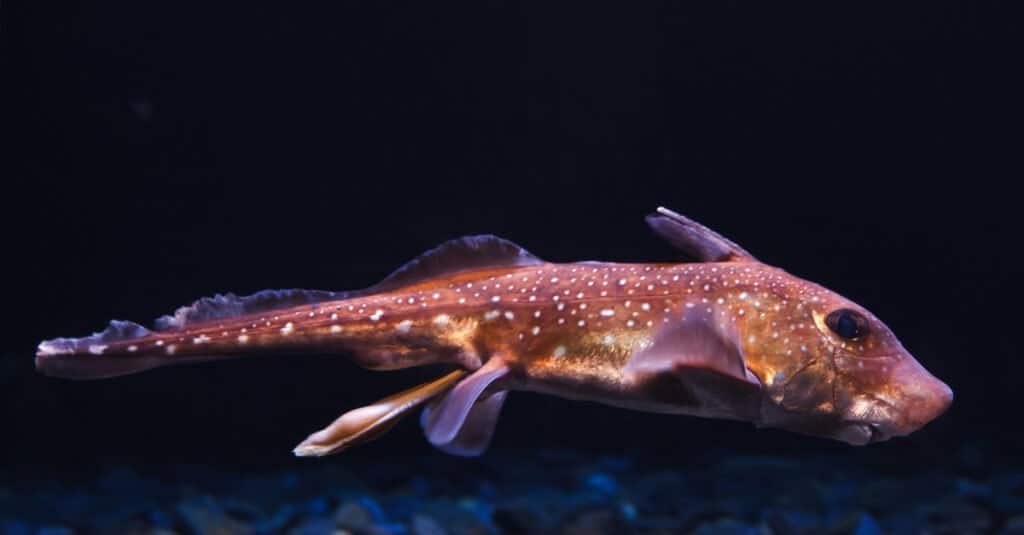
At depths of around 4,200 feet in the ocean lives the chimaera. These deep-sea creatures don’t have any bones in their body. Instead, their inner structures are made of soft, spongy cartilage.
On each side of their head, chimaeras have what appear to be eye sockets. However, these are sensory pads that detect electrical fields in the water, allowing the creatures to detect objects in the dark, murky depths they call home. However, this ability does not replace vision.
Chimaeras are also known as ghost sharks, ratfish, and even rabbit fish!