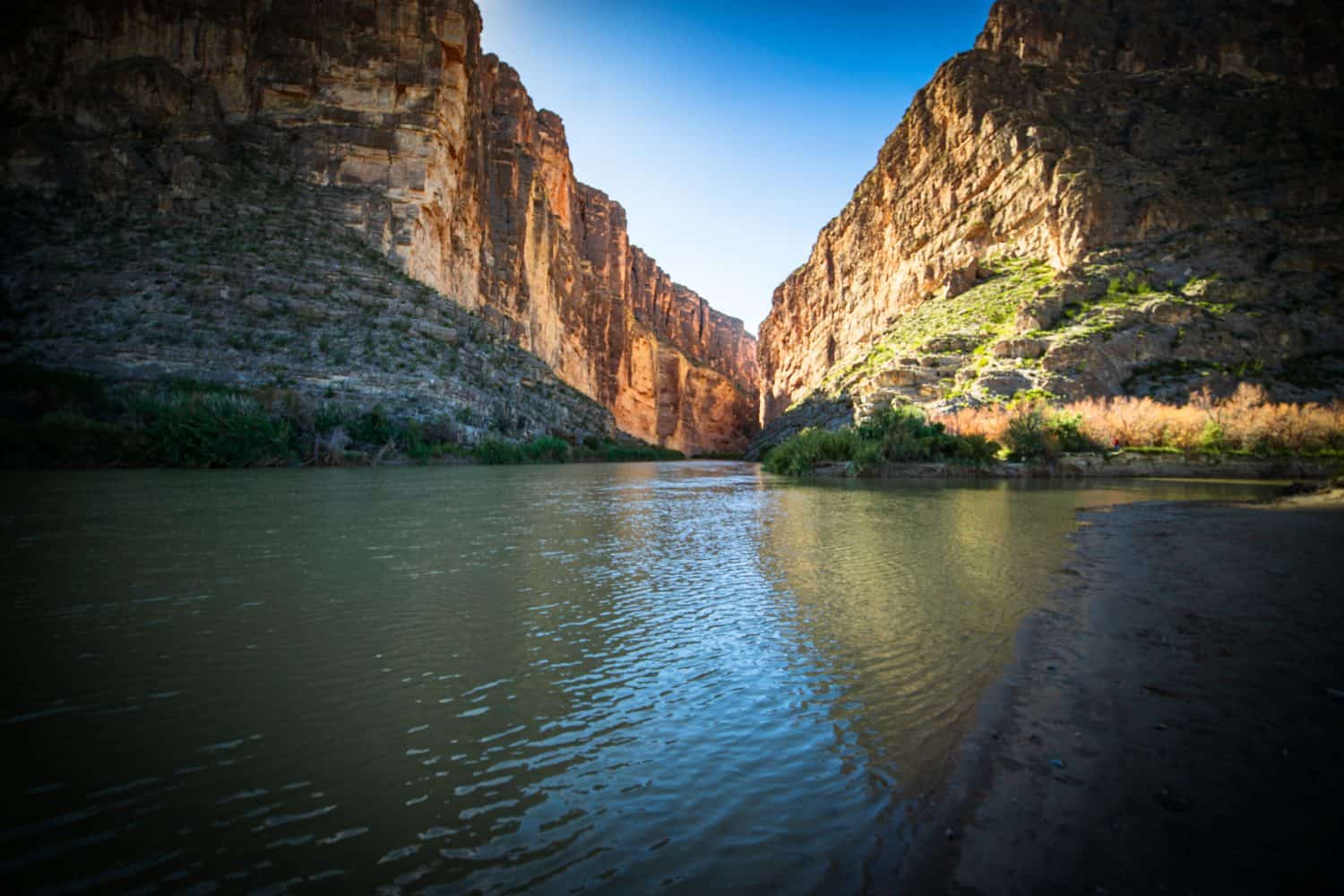

The Rio Grande winds more than 1,800 miles through the American Southwest and northern Mexico, carving its way through snowy mountain canyons and dusty desert valleys to the Gulf of Mexico. Beneath the surface, native fish sweep along the current; on its banks, turtles and snakes patrol the shallows; and among the reeds, mammals and amphibians chase their daily meals. Together, they form one of North America’s most distinctive freshwater communities.
Longnose dace (Rhinichthys cataractae)
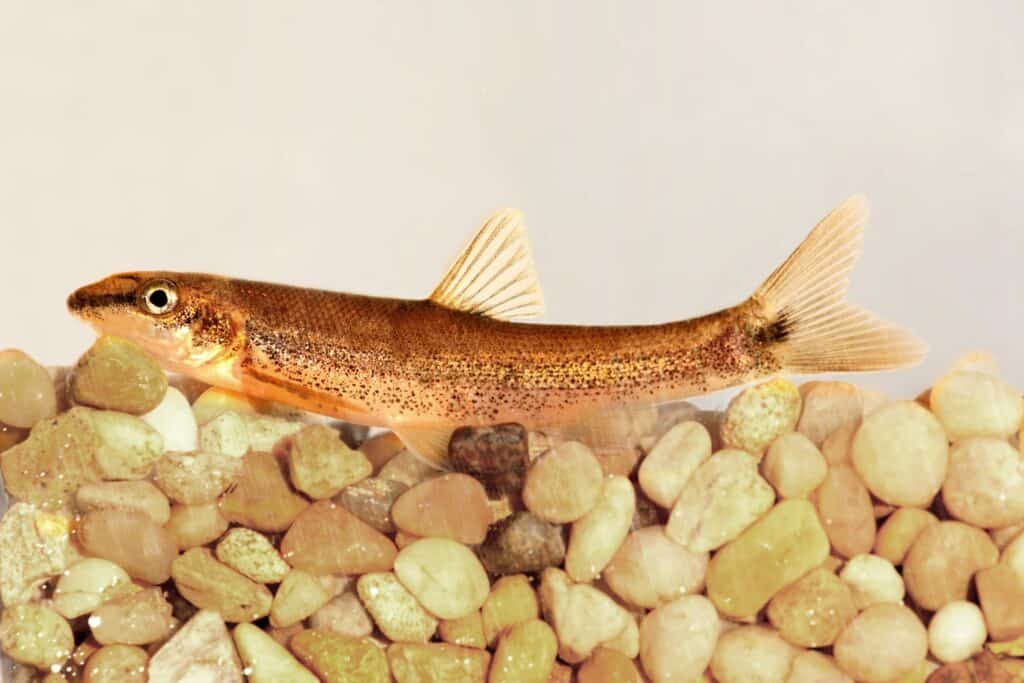
Longnose dace (Rhinichthys cataractae)
©Steve Byland/Shutterstock.com
The longnose dace is one of the Rio Grande’s smallest and toughest native fish, built for life in moving water. You’ll find it in the colder, higher stretches of the river in Colorado and northern New Mexico, darting between rocks and feeding on tiny insects and algae. Though rarely longer than four inches, it plays an outsized role in the food web—both as a grazer that keeps stream beds clean and as prey for larger fish like trout.
American eel (Anguilla rostrata)
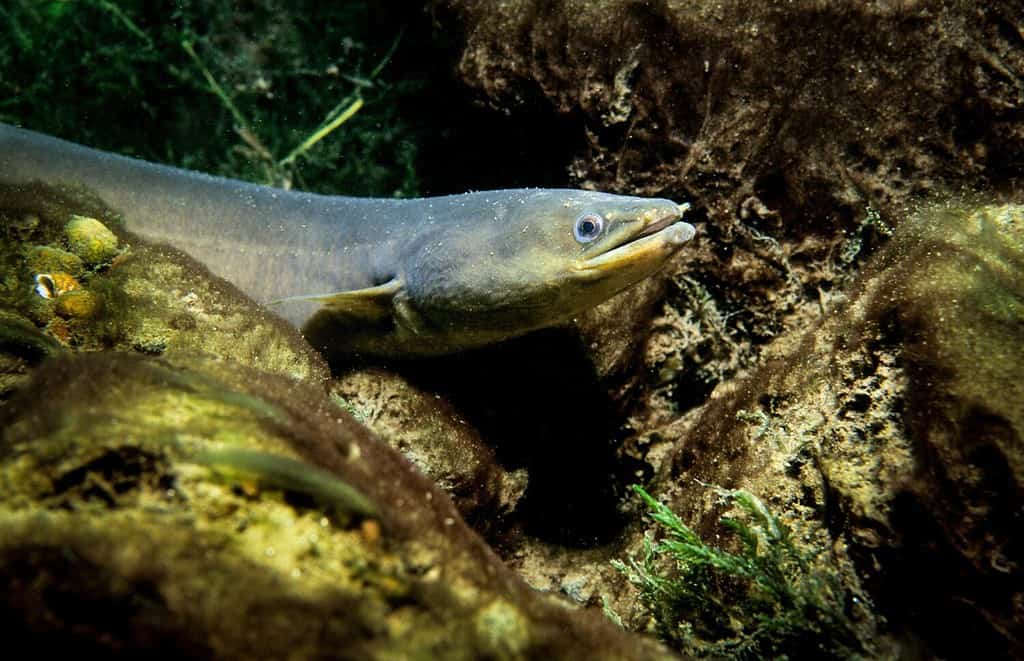
American eel (Anguilla rostrata)
©RLS Photo/Shutterstock.com
The American eel starts life in the Sargasso Sea of the Atlantic Ocean, then drifts thousands of miles as a tiny larva before entering rivers like the Rio Grande to grow and mature. It adapts easily to fresh, brackish, or salt water, feeding on insects, small fish, and crustaceans along the way. In the Rio Grande’s warmer, slower stretches near the Gulf, it hides under rocks or burrows in mud during the day, emerging at night to hunt. After many years—sometimes more than a decade—the eel makes the long migration back to the sea to spawn and complete its remarkable life cycle.
Channel Catfish (Ictalurus punctatus)
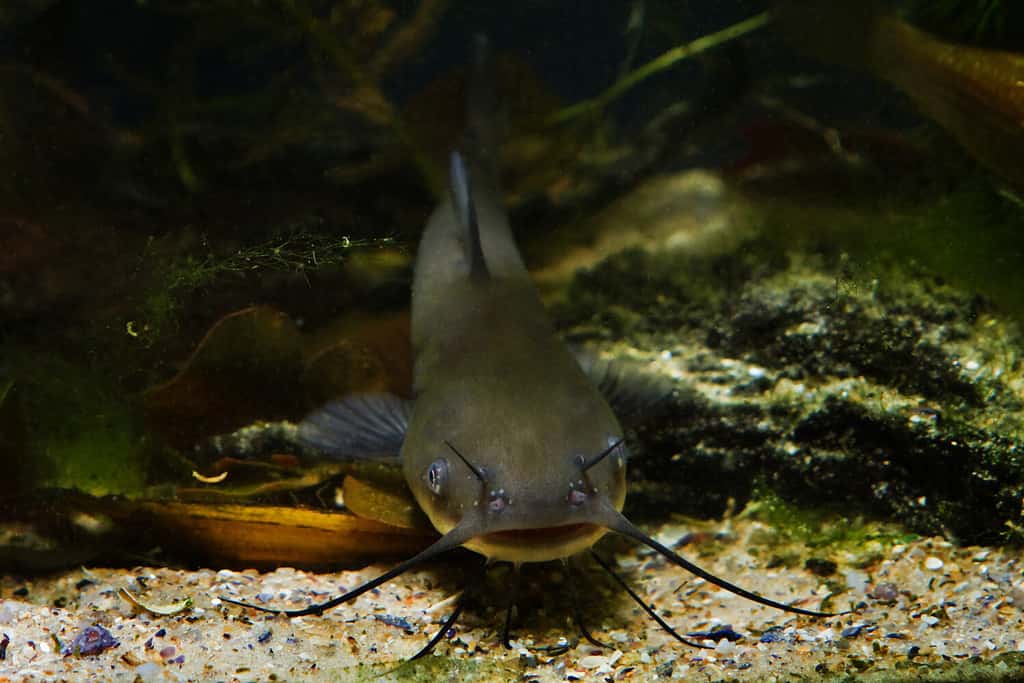
Channel Catfish (Ictalurus punctatus)
©Aleron Val/Shutterstock.com
The catfish, whiskered and patient, has no trouble finding dinner in muddy water. Its sensitive “whiskers,” called barbels, can taste and smell, guiding it through the murky depths where sight is useless. After dark, it cruises the river bottom, snapping up insects, worms, crayfish, and even carrion. In the Rio Grande, channel catfish often weigh up to ten pounds, though a few in deeper water can reach 30 pounds. Their strong fight makes them a favorite among local anglers.
Diamond-backed water snake (Nerodia rhombifer)
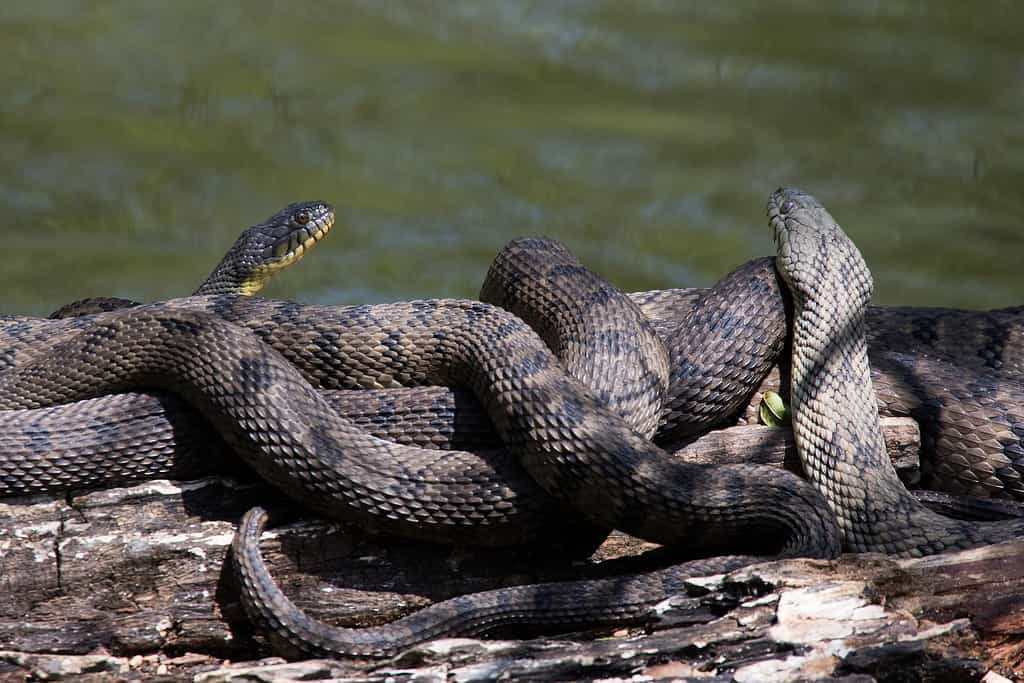
Diamond-backed water snake (Nerodia rhombifer)
©Laurie L. Snidow/Shutterstock.com
The diamond-backed water snake is one of the most common and recognizable snakes along the Rio Grande, especially in Texas and northern Mexico. Thick-bodied and olive to brown in color, it’s patterned with a network of dark diamond-shaped markings that help it blend perfectly into muddy banks and shaded water. Nonvenomous but quick to defend itself, it often hisses or strikes when startled, which leads people to mistake it for a cottonmouth. In reality, it’s a shy, efficient hunter that feeds on fish, frogs, and tadpoles, often lurking near the surface or under overhanging vegetation.
North American River Otter (Lontra canadensis)
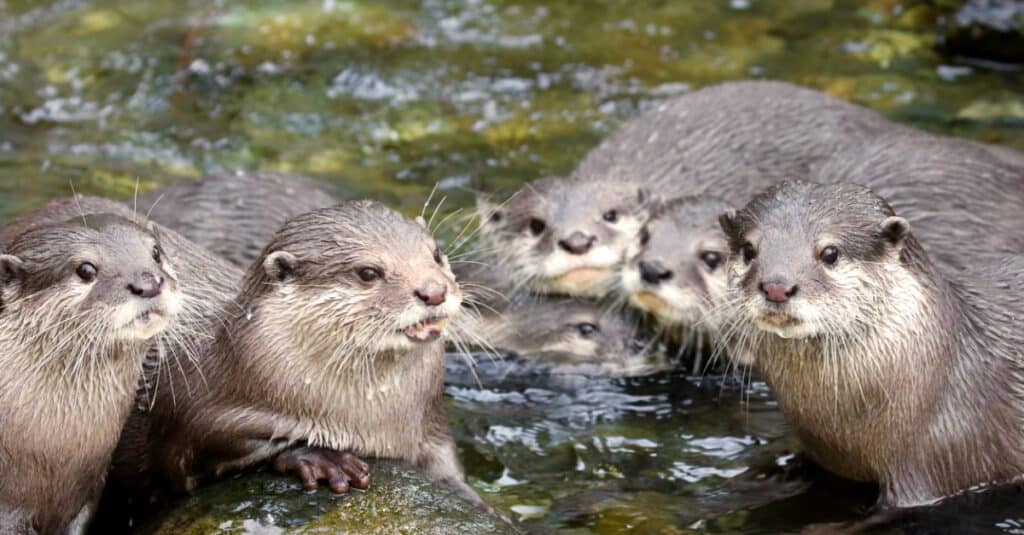
North American River Otter (Lontra canadensis)
©iStock.com/Mirko_Rosenau
For decades, the Rio Grande lacked one of its most playful residents. River otters were trapped out and disappeared from most of the watershed by the early 1900s. But reintroduction projects have brought them back to parts of northern New Mexico and southern Colorado. Now, if you’re lucky at dawn, you might glimpse an otter slicing through the water or hear the splash as it dives after a fish. Otters demand clean water and abundant prey; their return signals that some stretches of the river are healing.
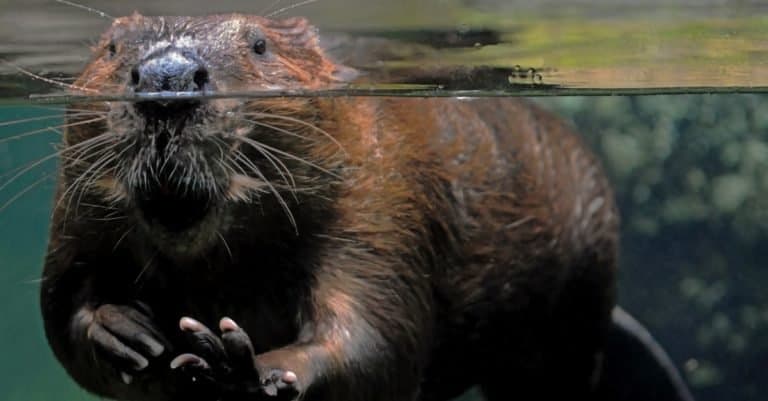
American Beaver (Castor canadensis)
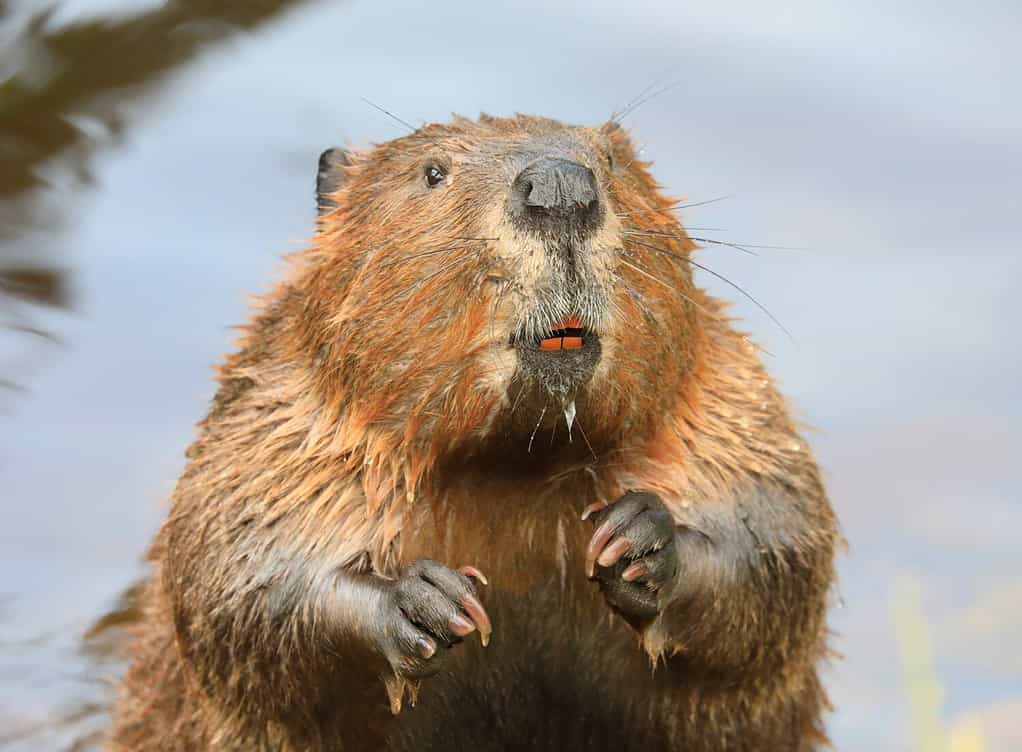
American Beaver (Castor canadensis)
©Vlad G/Shutterstock.com
Few animals reshape a landscape like the beaver. Along quieter tributaries and backwaters of the Rio Grande, these tireless engineers fell willows and cottonwoods to build dams that slow the current. The resulting ponds catch sediment, store water, and provide refuge for fish, frogs, and nesting birds. In a desert climate where drought is constant, a beaver pond is a miniature miracle—an oasis built one stick at a time. Their work even cools the surrounding air and recharges groundwater, which is a huge gift in dry climates.
Nutria (Myocastor coypus)
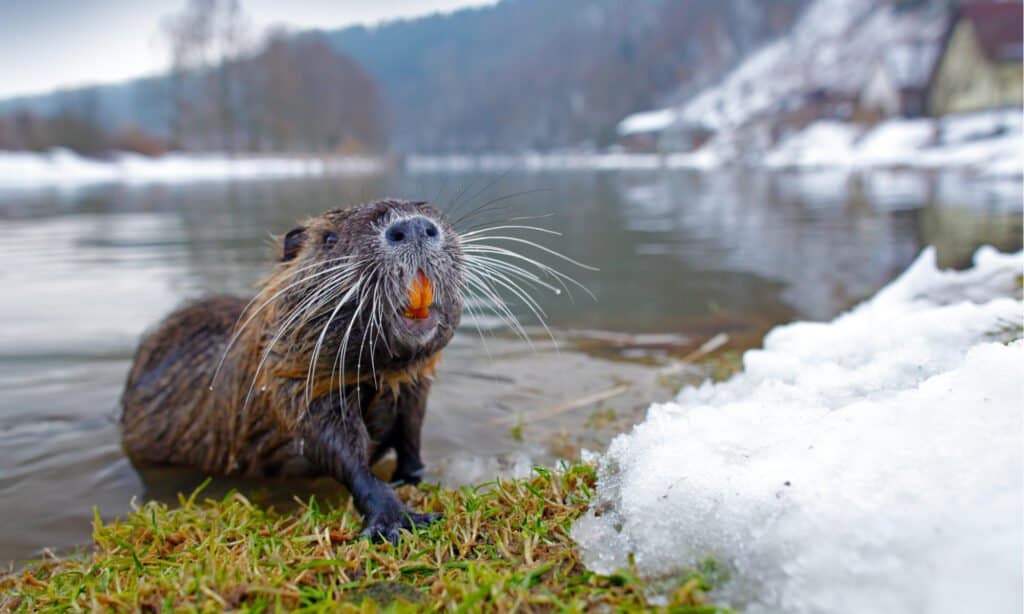
Nutria (Myocastor coypus)
©Ondrej Prosicky/Shutterstock.com
The nutria, also known as the coypu, is a large, semi-aquatic rodent native to South America but now common in parts of the lower Rio Grande. Originally introduced to the United States for the fur trade in the early 1900s, it escaped captivity and quickly spread through wetlands and river systems. With webbed hind feet and long orange incisors, the nutria looks a bit like a cross between a beaver and a giant rat. It feeds mostly on aquatic plants, pulling up roots and stems with its strong front paws. However, this feeding habit causes major problems—nutria can strip away vegetation, weaken riverbanks, compete with beavers and muskrats, and destroy habitats for fish and birds.
Yellow Mud Turtle (Kinosternon flavescens)
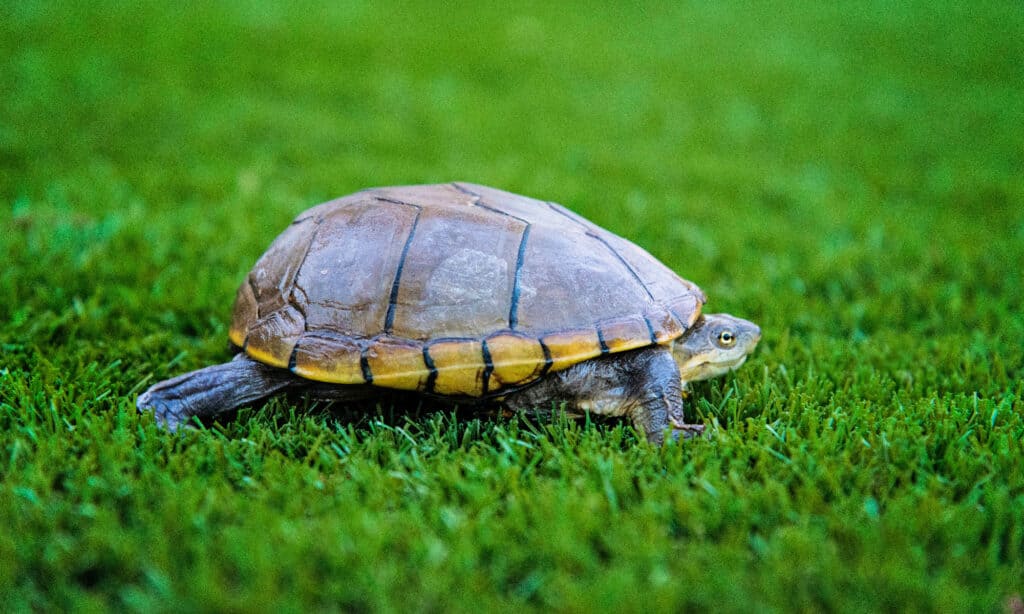
Yellow Mud Turtle (Kinosternon flavescens)
©Kayla Blundell/Shutterstock.com
The yellow mud turtle is one of the most resourceful creatures to survive in the unpredictable waters of the Rio Grande. During dry spells, the turtle burrows deep into the damp soil, sealing itself off from the heat. There it waits for months—sometimes the better part of a year—its heartbeat slowing, its body conserving every drop of moisture until the rains come again. When the river finally rises, refilling its backwaters, the yellow mud turtle digs its way to the surface, coated in clay but very much alive. It slips back into the shallows to forage for snails, worms, and insects, restoring its strength before the next drought.
Water-Boatman (family Corixidae)
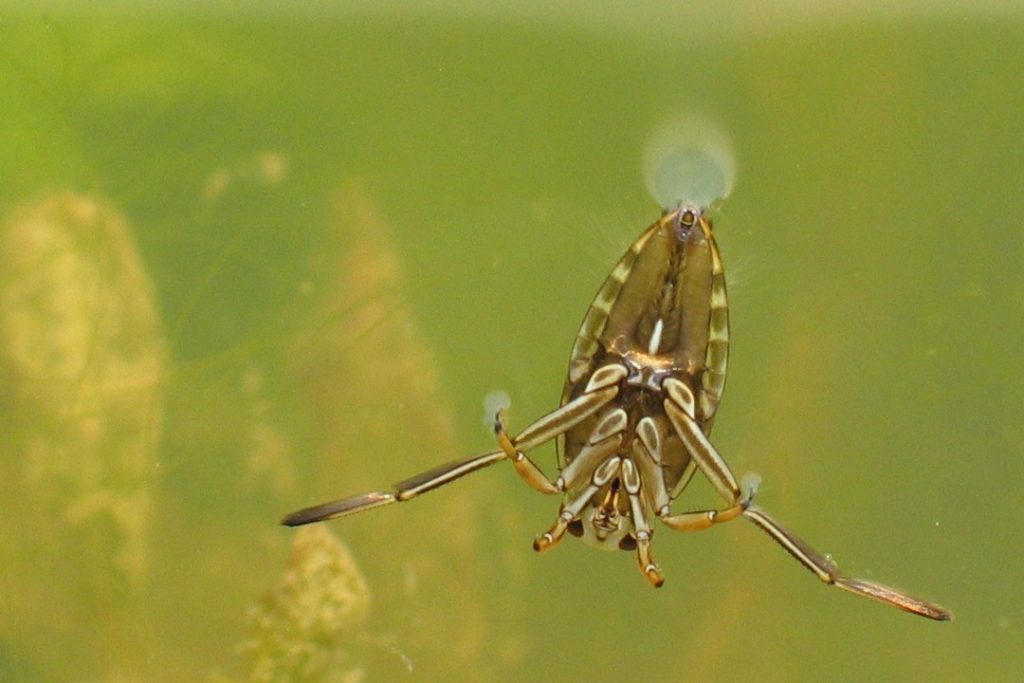
Water-Boatman (family Corixidae)
The water boatman (family Corixidae) is one of the most common insects gliding through the quiet shallows of the Rio Grande. Shaped like a tiny oval raft, it swims using long, oar-like legs that flash silver in the light. Unlike many aquatic insects, it’s not a predator—it feeds mostly on algae and decaying plants, scraping the riverbed with a short beak. When it surfaces, it traps a thin layer of air on its body, carrying this bubble like a diving tank as it returns underwater. Fish, amphibians, and birds rely on water boatmen as a steady food source, and their presence signals a healthy mix of oxygen and vegetation in the river.
Black-Necked Garter Snake (Thamnophis cyrtopsis)
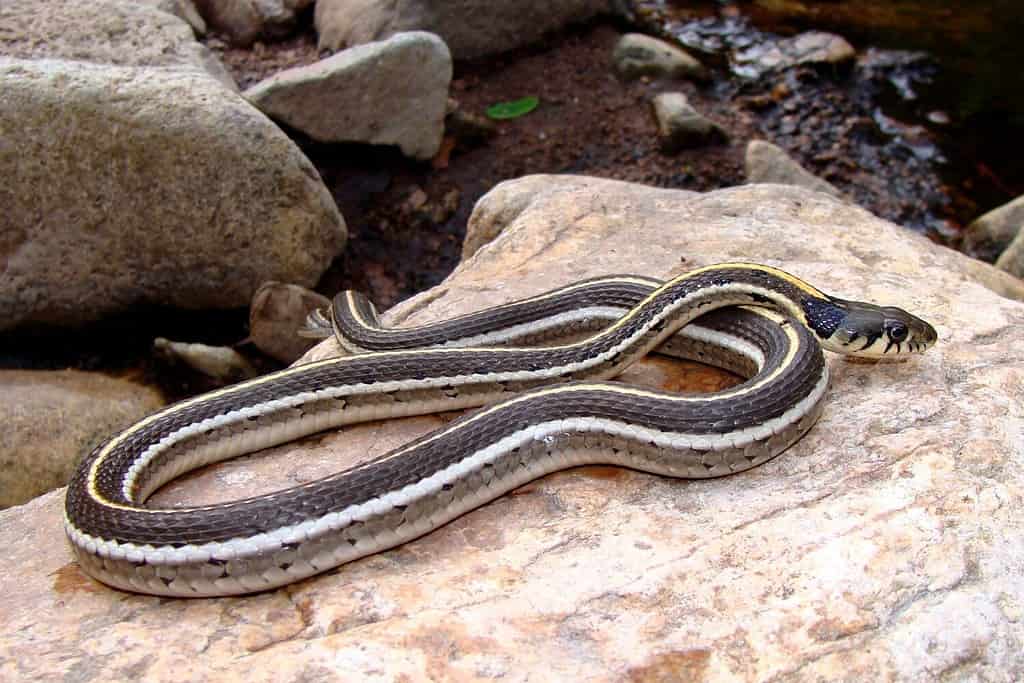
Black-Necked Garter Snake (Thamnophis cyrtopsis)
©Matt Jeppson/Shutterstock.com
The black-necked garter snake is a slender nonvenomous reptile with a bright yellow or orange stripe running down its back. It swims as easily as it slithers. You’ll find it prowling reed beds for fish and frogs, diving to avoid hawks, or basking on rocks after a cool night.
American Mink (Neogale vison)
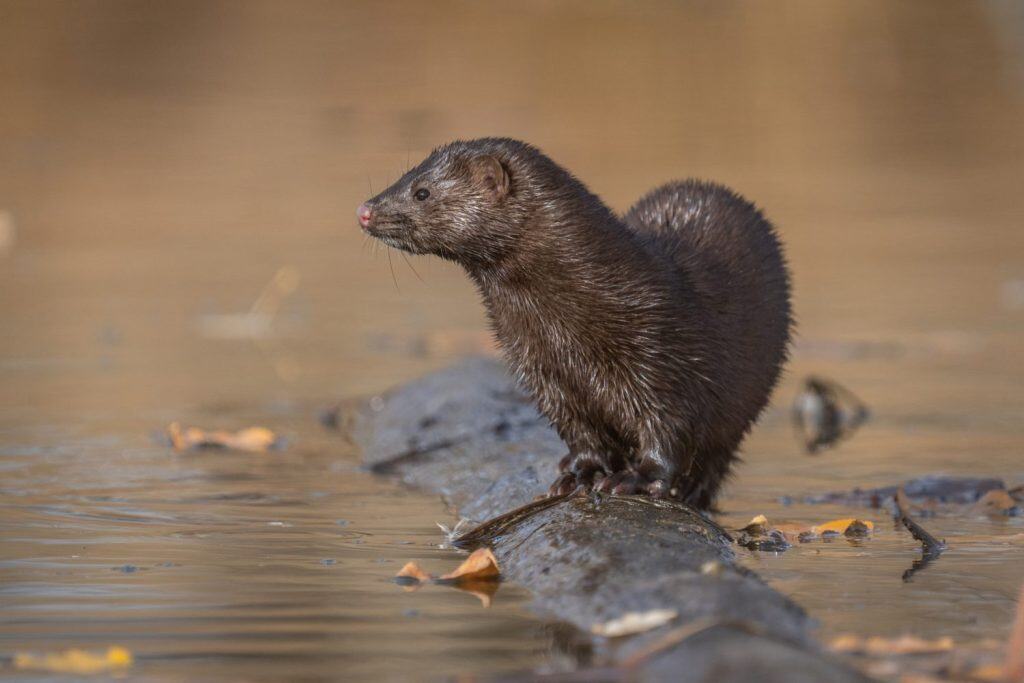
American Mink (Neogale vison)
©Tony LePrieur Photography/Shutterstock.com
Elusive and restless, the mink is rarely seen by day, but moves through cattails and driftwood piles at night. It prefers to prey on crayfish and small fish. Its dark, waterproof fur and partially webbed feet suit a life split between shore and stream. Though smaller than an otter, it fills a similar niche, keeping populations of smaller animals in check. When a mink leaves tracks in the mud, biologists take it as a sign that the riverbank is still wild enough to feed a predator.
Largemouth bass (Micropterus salmoides)
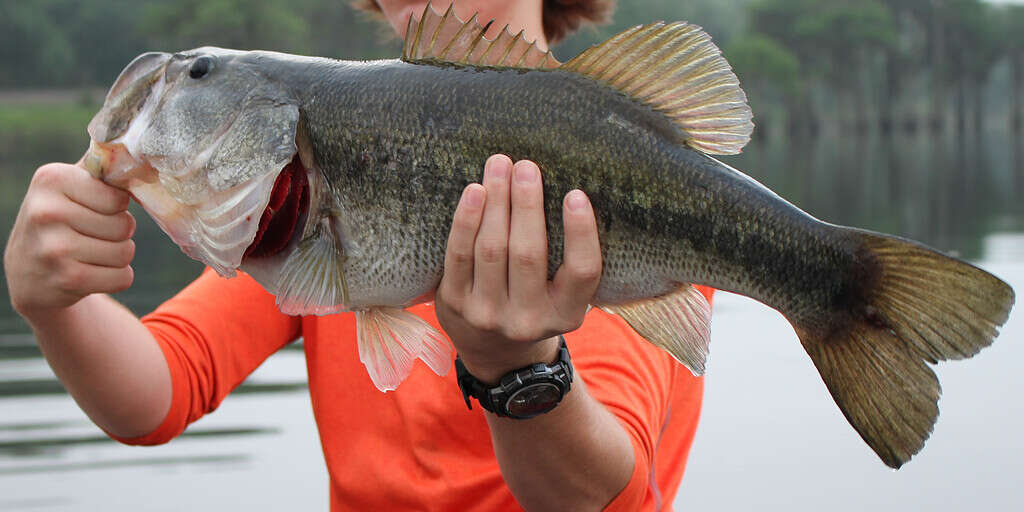
Largemouth bass (Micropterus salmoides)
©Connor Howe/Shutterstock.com
Though not native to the Rio Grande, largemouth bass have become a well-established part of the river’s modern ecosystem. Introduced for sport fishing, they thrive in the river’s warmer, slower stretches and in reservoirs along its course, especially through Texas and southern New Mexico. These adaptable predators feed on smaller fish, frogs, and insects, often dominating the food chain where they take hold. While prized by anglers for their size and strength, their presence has complicated efforts to protect native species that compete for the same food and habitat.
A River of Connections
The Rio Grande’s future, like its flow, is uncertain. Dams, diversions, and a warming climate are shrinking its reach. Yet the creatures that remain are a testament to endurance, and those that have been reintroduced show that the environment can be restored—though it is a long process requiring commitment and patience.