
Quick Take
- A routine dredging trip in a shallow strait turned up creatures that didn't fit any known family, and the unusual conditions of the Korean Strait explain why they were hiding there. Read about the discovery →
- These two new copepods abandoned the defining feature of their entire group, and that sacrifice is exactly what forced scientists to create a brand-new genus. See their shared traits →
- Scientists can't identify what host these parasites actually live on, though the body parts they're missing offer a surprisingly specific set of clues. Investigate the host clues →
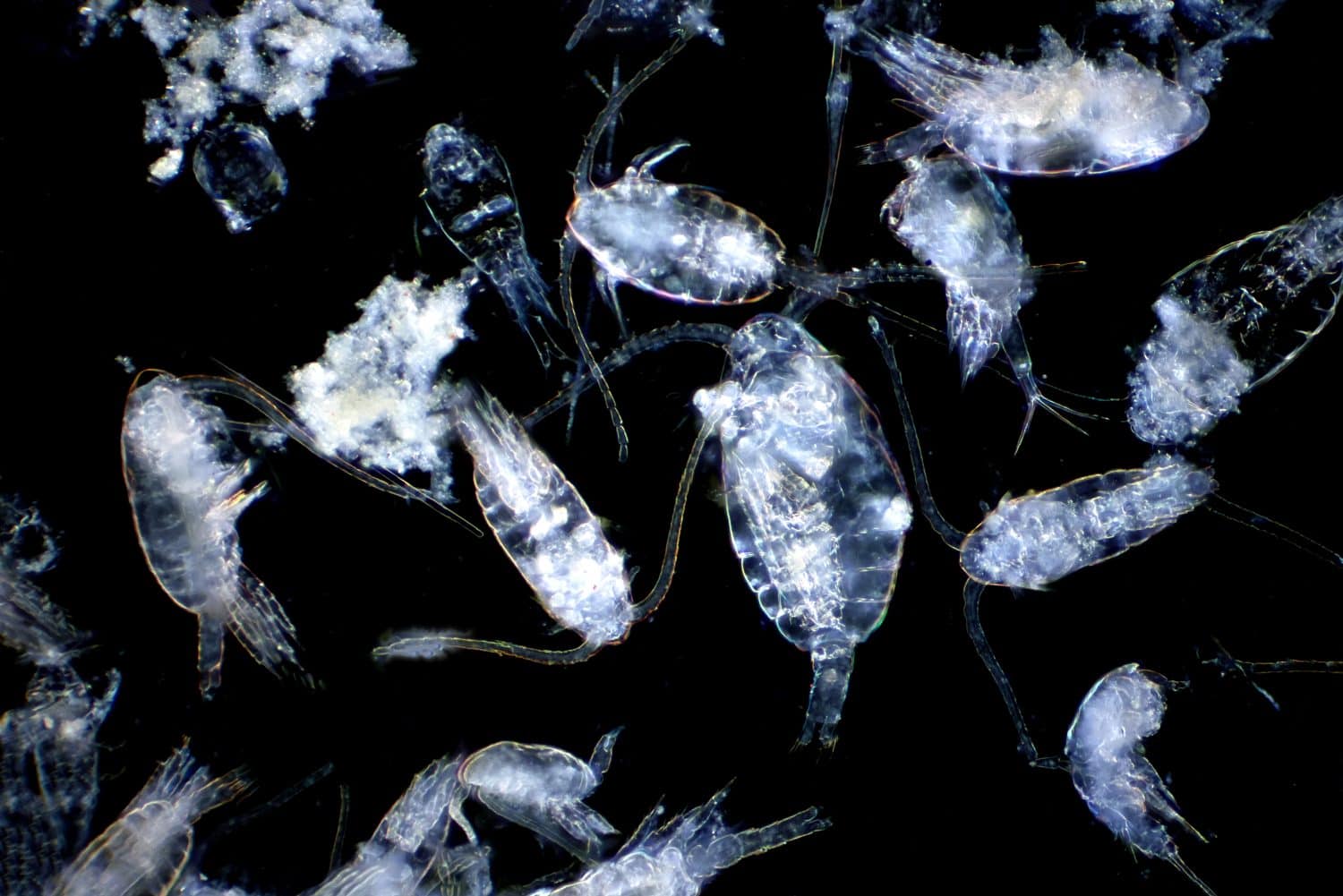
In both freshwater and seawater, copepods, a type of small crustacean, exhibit incredible variety. Some copepods are planktonic, while others live on sediments. A few copepods even live on land, surviving in leaf litter in wet forests or amidst damp moss. Their incredible variety has made copepods indicators of biodiversity. Scientists know of about 13,000 copepod species. Recently, a research field trip resulted in the discovery of two species of the Pupiformus genus, P. apodus and P. rugosus.
Usually, when a new species is discovered, it fits nicely into a pre-established order or genus. This was not the case with P. apodus and P. rugosus. These copepods are so unusual that scientists created an entirely new family to classify them. Microscopic in size, these two newly discovered copepod species feature chrysalis-like bodies and unique mouthparts. Whereas other copepods have appendages for swimming, P. apodus and P. rugosus lack swimming legs, a second pair of jaws, and mandibular stylets. They are also parasitic. Let’s learn more about these two new microscopic crustacean species and how researchers discovered them while dredging parts of the Korean Strait.
A Chance Discovery

The Kuroshio Current hits the Korean Strait, allowing for a warm ecosystem capable of supporting a variety of subtropical life forms.
©Tsuguliev/Shutterstock.com
Recently, Korean researchers took a trip to the Korean Strait to search for benthic invertebrates and fish. The Korean Strait, a passage between the Korean Peninsula and Japan, is shallow compared to the open ocean but unique in its conditions. It is hit by the warm Kuroshio Current, which brings heat, nutrients, and marine larvae along with it. This makes the Korean Strait a surprisingly warm ecosystem, capable of supporting a wide variety of subtropical life forms.
After dredging the benthic layer of the strait, researchers from the Korea Institute of Ocean Science and Technology examined their catch more closely. To their surprise, the washings contained several species of symbiotic copepods, some of which did not belong to any existing families. Identifying them required fixing the specimens in formalin, immersing them in lactic acid, and then dissecting them.
Copepods make up the largest and most diverse group within the subphylum Crustacea. At least 14,485 species are known, all of which exhibit a variety of morphological and behavioral characteristics. However, the two newly described species of copepod, P. apodus and P. rugosus, are even stranger. They appear to have made evolutionary trade-offs, eschewing swimming adaptations for strictly parasitic or symbiotic body structures.
P. apodus
This copepod is the type species, meaning it defines the new genus Pupiformus. It is the larger of the two, ranging between 850 and 970 micrometers in length. P. apodus features smooth bumps across its back plates, a four-segmented antennule, and a jaw with three distal bristles. It also has three-segmented grasping limbs and rudimentary tail processes known as caudal rami.
P. rugosus
Pupiformus rugosus is like a streamlined version of its relative P. apodus. It reaches only 500 micrometers in length and has a body covered in rough, wrinkled bumps. It features a five-segmented antennule and a reduced jaw structure with just two long bristles. Its grasping limbs are four-segmented, and it completely lacks a tail structure.
What They Share
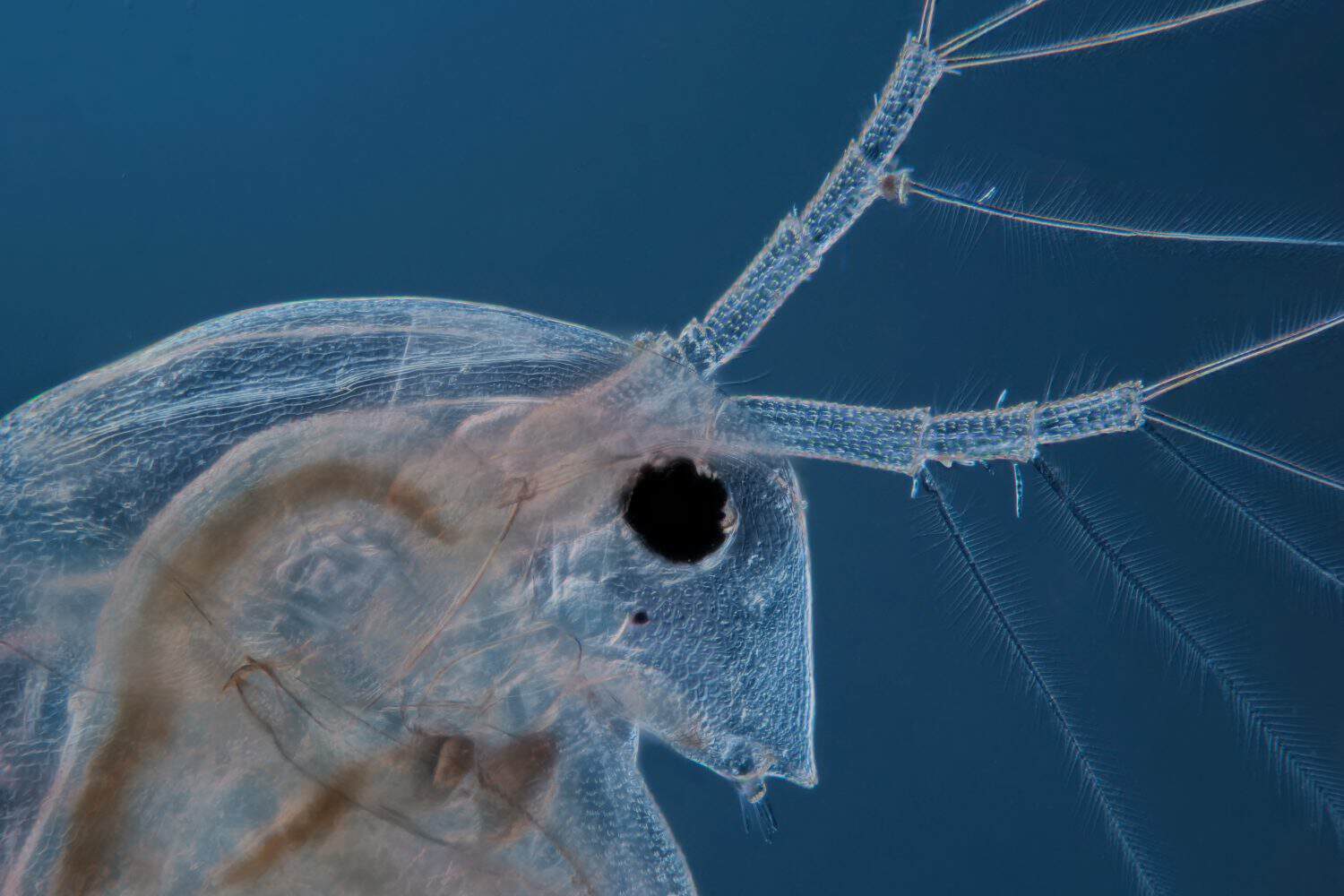
The two newly discovered species lack many of the features and appendages of other copepods, including swimming legs, secondary jaws, and mandibular stylets.
©Holger Kirk/Shutterstock.com
Both P. apodus and P. rugosus have unique chrysalis body structures. Whereas most copepods have continuous head shields, these newly discovered species have cephalothoracic shields split into three distinct plates. Furthermore, most copepods have a variety of features and appendages to help them filter food and latch onto hosts. The Pupiformus genus, it seems, made an evolutionary trade-off instead. They lack legs entirely, with their swimming appendages reduced to hardened pads. They also lack secondary jaws and the needle-like structures that many copepods use to pierce tissue.
While this lack of typical features surprised researchers, it was the lack of swimming legs that shocked them. The presence of mere leg stumps was so rare among copepods that the researchers had to create an entirely new genus to account for them. The only other creatures known to have these pad-like leg stumps are species in the genus Peniculus, a primitive group of fish parasites.
Potential Hosts
As the researchers explained in their paper, the host species for these two newly identified copepods remains unknown. They could, however, make some inferences due to their unique characteristics. The select few other copepods lacking mandibular stylets are associated with invertebrate hosts. Since both P. apodus and P. rugosus lack functional legs, they are incapable of swimming freely. Additionally, they lack the features necessary to firmly attach to any host. This suggests that “species of Pupiformus gen. nov. inhabit some cavity on the host, such as a gall.” Further research and sampling will be needed to determine which creatures these two new copepod species use as hosts.