
Quick Take
- Most isopods, including pill bugs, have 7 pairs of legs.
- Utilizing pleopodal lungs creates a permanent respiratory constraint on land.
- Scientists discovered crustaceans successfully adapted to dry environments through a counterintuitive biological shift.
- Isopods, including pill bugs, undergo biphasic molting, where they shed the back and front halves of their exoskeleton at different times.
Most people first notice pill bugs while lifting a flowerpot or turning over a log, then watching small gray roly polies curl into tight balls. Because they share space with ants and beetles, many people assume they are insects. That assumption feels natural, but it is incorrect.
Pill bugs belong to a different branch of the animal family tree. They are land-dwelling crustaceans, closely related to shrimp, crabs, and lobsters. Learning why pill bugs are classified this way changes how we understand a familiar backyard animal and highlights how life adapts old body plans for new environments.
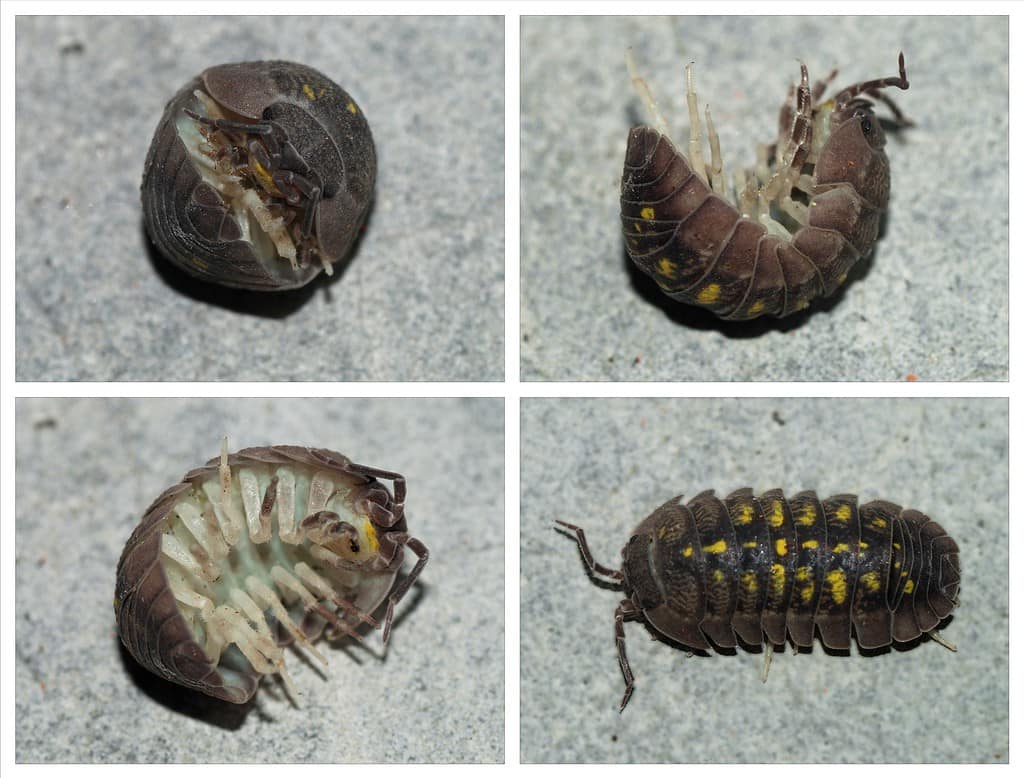
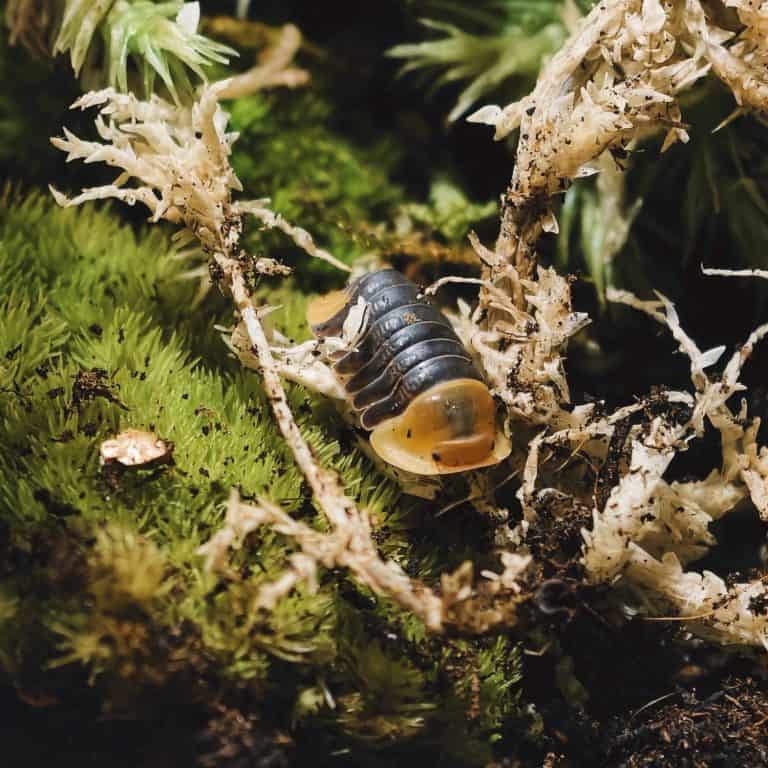
In the U.S., pill bugs are colloquially called “roly polies” because of their habit of curling into a tight ball when disturbed.
Pill bugs belong to the order Isopoda and are more closely related to shrimp and crabs than to beetles or ants. Their scientific name is Armadillidium vulgare, and they are one of the few crustaceans that have successfully adapted to life on land. Because they still breathe through gill-like structures, pill bugs must live in damp environments such as under rocks, logs, or leaf litter, where moisture helps prevent them from drying out.
Ecologically, pill bugs play a quiet but useful role. They feed primarily on decaying plant material, helping break down organic matter and recycle nutrients back into the soil. While they sometimes get blamed for damaging garden plants, healthy pill bugs almost always prefer dead or rotting vegetation to living tissue. Their well-known ability to roll into a tight ball when threatened is a defensive behavior that protects their softer underside and helps them conserve moisture.
Horrors! They Were Actually Used as Pills.
Now, gather ’round and brace yourselves, children. This part is, unfortunately, true. For centuries, people really did swallow pill bugs as medicine. Not as a trick or a placebo, but thinking of them as actual pills they believed could cure disease. Known as woodlice in much of Europe, these bugs show up in medical writings from the Roman period through the 18th century.
Physicians and apothecaries recommended them for ailments ranging from kidney stones and urinary problems to jaundice, asthma, and vague “obstructions” of the body. They were taken whole, dried, and ground into powder, or mixed into syrups and tonics. These treatments were rooted in humoral medicine, the idea that health depended on balancing bodily fluids, not on testing or evidence. As medical science advanced in the 18th and 19th centuries, pill bugs quietly disappeared from pharmacology.
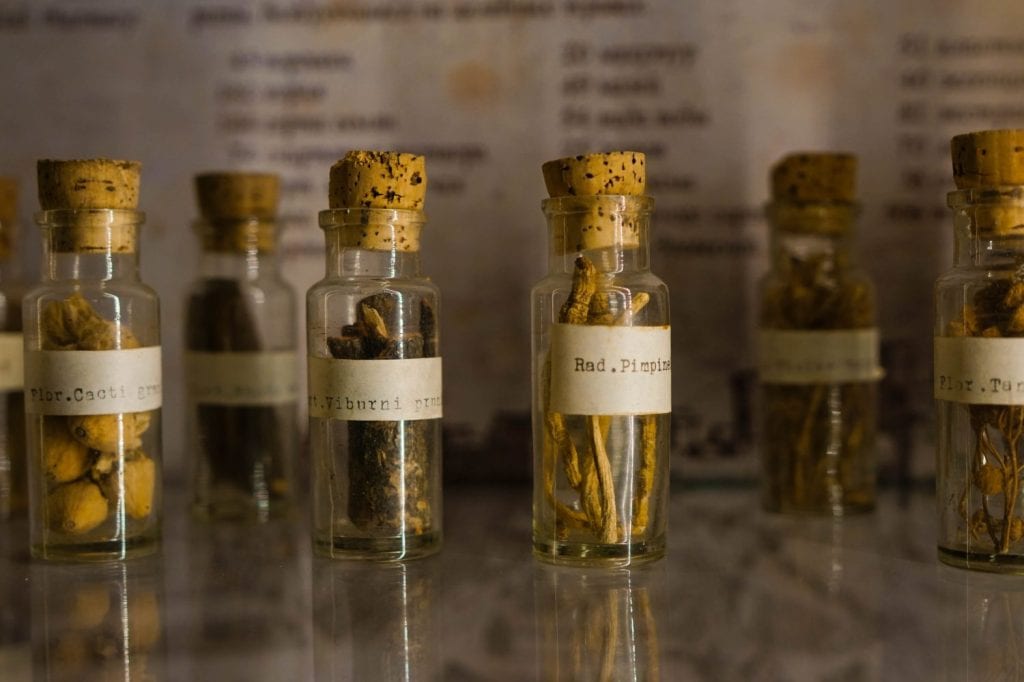
“Take two pill bugs and call me in the morning.”
©olga che/Shutterstock.com
Eating pill bugs was usually not very dangerous in small amounts, which helped the practice persist. Pill bugs are not venomous, do not sting or bite, and are not inherently toxic. However, swallowing them raw carried real risks, including exposure to bacteria or parasites from soil and decaying plant matter.
There is no reliable evidence that they helped with upset stomachs, and ingesting insects likely caused nausea more often than relief. While pill bugs do contain calcium in their exoskeleton, the amount is minimal and not easily absorbed by humans, so they are not a significant source of dietary calcium. In short, they were not especially harmful, not medically effective, and offered no real benefits. A strange chapter in medical history, now blessedly obsolete.
Pill Bugs Are Not Insects
At first glance, pill bugs look like insects, but their anatomy tells a different story. Insects always have six legs arranged in three pairs, while pill bugs have fourteen legs organized in seven pairs along the length of the body. They also lack wings and do not have the waxy outer coating that insects use to limit water loss. Instead, pill bugs are covered by overlapping body plates that form a flexible, armored shell. These traits immediately place them outside the insect group.
Scientifically, pill bugs are crustaceans, the same broad group that includes shrimp, crabs, and lobsters. The common pill bug, Armadillidium vulgare, belongs to the order Isopoda and shares key features with its aquatic relatives, including segmented bodies, jointed limbs, and similar antennae and mouthparts. Like other crustaceans, pill bugs follow a body plan built around multiple paired limbs rather than the insect standard of six legs. Their insect-like appearance comes from adapting to life on land, not from close evolutionary ancestry.
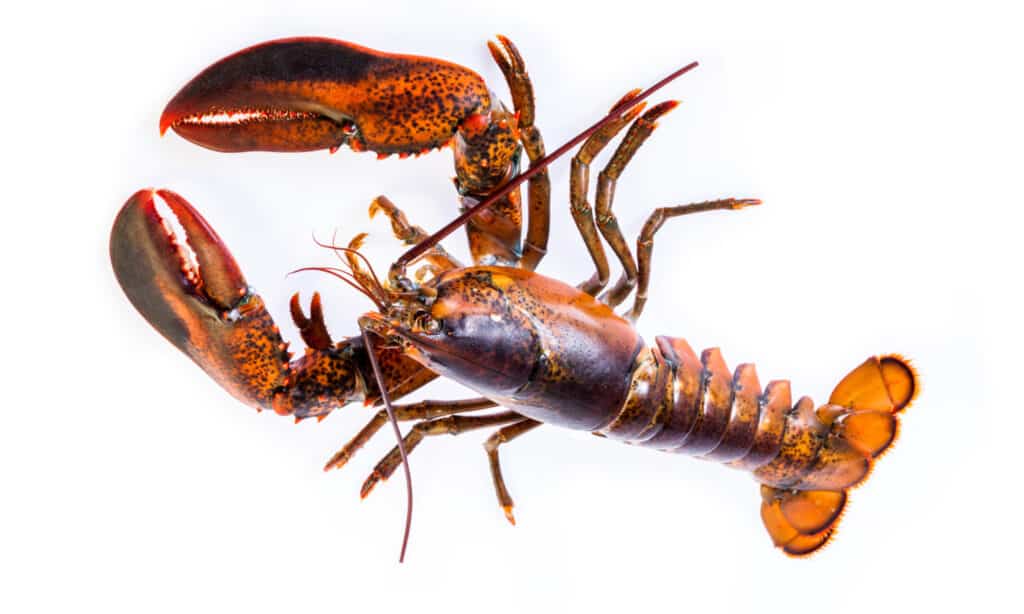
Pill bugs are related to lobsters and other crustaceans.
©LittlePerfectStock/Shutterstock.com
Pill bugs move differently from their aquatic relatives. Instead of swimming, they walk using legs adapted for crawling through soil, leaf litter, and decaying wood. Their movements appear slow and deliberate, which helps conserve moisture and energy. They are most active at night or during damp conditions.
Breathing Through Gills on Land
One of the strongest clues to the pill bug’s crustacean identity is how it breathes. On the underside of the abdomen, pill bugs carry gill-like structures used for gas exchange. These organs function much like the gills of aquatic crustaceans and must stay moist to work properly. Oxygen enters the body through these surfaces while carbon dioxide leaves.
This breathing method explains why pill bugs remain in damp places. Dry air can cause their gills to stop functioning, which leads to suffocation. Some species have developed partially enclosed chambers that help hold moisture around the gills. This adaptation allows them to survive on land while still relying on a system designed for water. Their need for moisture limits where they can live and when they can be active.
Segmented Armor and Rolling Behavior
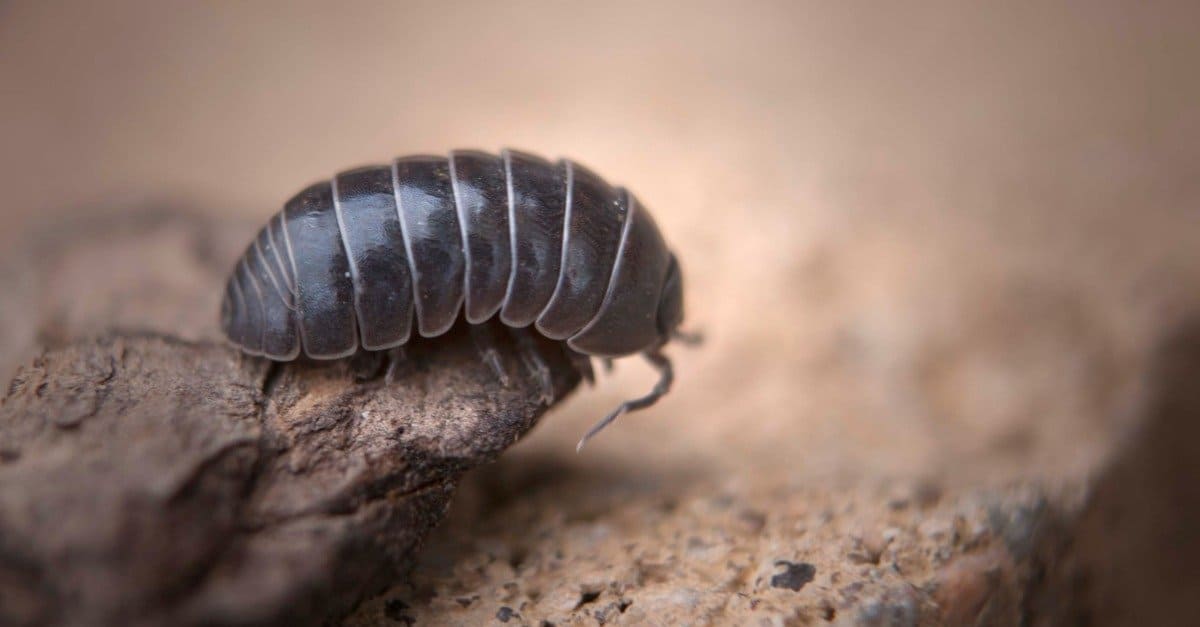
The pill bug’s hard shell consists of overlapping plates that protect its body. These plates are arranged in segments called tergites, which allow the body to bend and curl. When threatened, a pill bug pulls its legs inward and rolls into a tight ball. This behavior is known as conglobation.
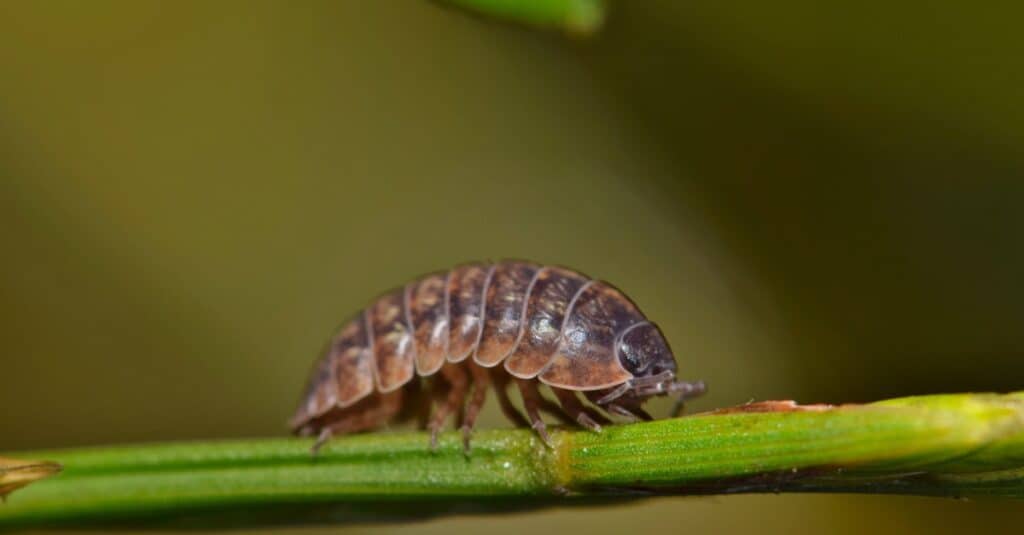
Pill bugs have fourteen legs and a segmented body.
©iStock.com/Brett_Hondow
Rolling protects soft body parts, such as legs and gills, while exposing only the hardened outer shell. Birds, spiders, and small mammals often find the rolled shape difficult to bite or break. Not all isopods can perform this trick. Sowbugs, which are close relatives, have flatter bodies and cannot form a complete sphere. The ability to roll sets pill bugs apart within their own group.
Reproduction and Development on Land
Many terrestrial isopods protect their developing young in a brood pouch called a marsupium. This pouch holds fluid and keeps embryos moist during early development. Young pill bugs emerge as miniature versions of adults rather than as free-swimming larvae.
This reproductive strategy increases survival in dry environments. It also limits how far young can disperse, which helps explain why pill bugs often form dense local populations. The marsupium is another trait shared with certain aquatic crustaceans, reinforcing the group’s shared ancestry.
Do They Help or Hurt My Garden?
During dry or hot weather, pill bugs retreat under stones, logs, mulch, or other shelter. These behaviors reduce water loss and protect delicate gill surfaces. Although they live on land, their daily routines still reflect their dependence on moisture.
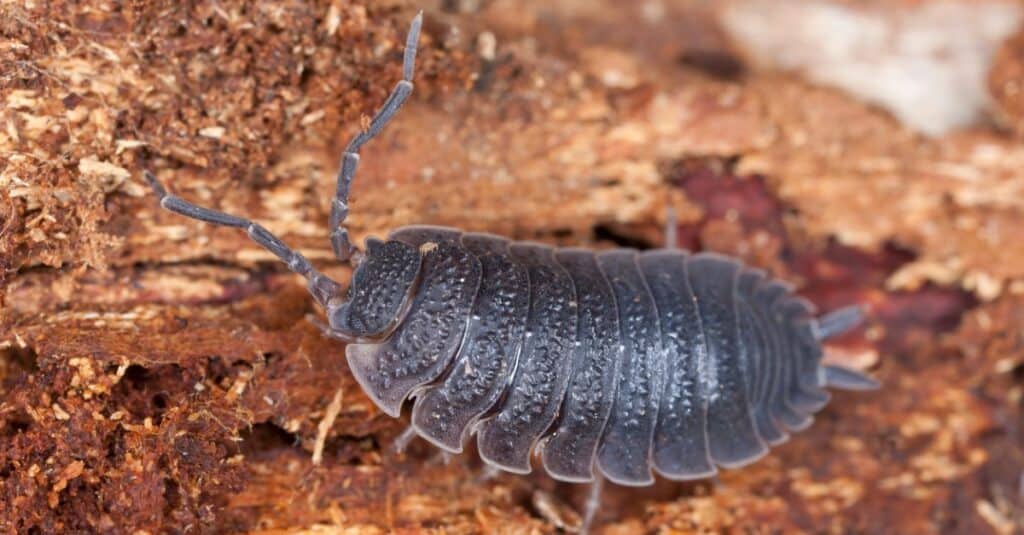
Pill bugs move slowly across soil and decaying wood and are most active when the ground is moist.
©iStock.com/Henrik_L
Pill bugs are usually helpful in gardens, not harmful, and most gardeners do not need to remove them. Their primary role is that of decomposers. They feed on dead leaves, rotting wood, and other decaying plant matter, breaking it down so nutrients can return to the soil. This process improves soil structure and supports the microorganisms that plants depend on. In a healthy garden with plenty of organic debris, pill bugs spend most of their time cleaning up, not attacking living plants.
Problems arise only in specific situations. If a garden has very moist soil and little decaying material, pill bugs may nibble on tender seedlings, low-growing vegetables, or fruit resting directly on the ground. Even then, the damage is usually minor and limited to small areas.
How to Discourage Pill Bugs
Because they are responding to conditions rather than acting as aggressive pests, widespread removal is rarely necessary. If you want to reduce their numbers, the best approach is environmental management rather than chemicals. Remove excess mulch, boards, or stones where they hide during the day, avoid overwatering, and lift fruits off the soil using straw or supports. These steps make the garden less attractive to pill bugs while preserving their beneficial role in the soil ecosystem.
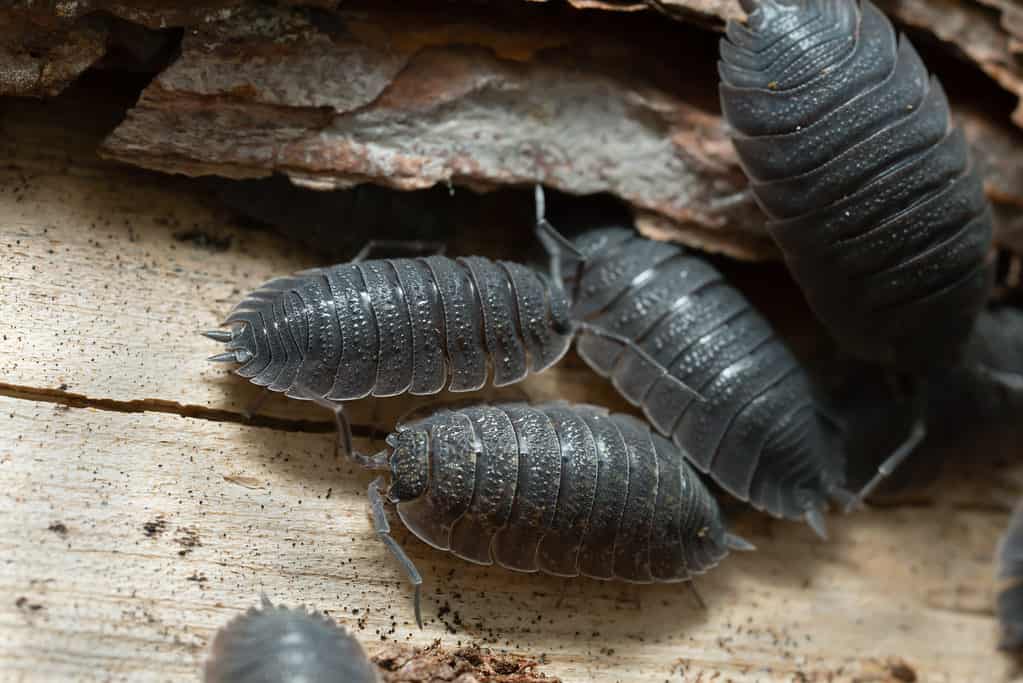
Pill bugs often hide under logs and decaying wood, where moisture and plant debris create the damp conditions they need.
©Henrik Larsson/Shutterstock.com
Observing a Backyard Crustacean
Watching pill bugs offers a glimpse into a deep evolutionary story. Each small animal carries traits shaped by ancient marine ancestors, even while living in modern backyards. Their gills, segmented shells, and rolling defense reflect a long history of adaptation.
Recognizing pill bugs as crustaceans makes it easier to understand their behavior and habitat needs. These quiet soil dwellers show how life can bridge environments and carry old designs into new roles. A common roly poly under a log is not just a backyard bug. It is a reminder of the ocean’s lasting influence on life on land.