Quick Take
- One of the new sea spiders is so unhygienic it's been called an ecosystem within an ecosystem. But why does it refuse to groom itself? Meet the grimy sea spider →
- Researchers set out to study climate change and accidentally discovered two species no one had found in nearly a century. See the accidental discovery →
- Sea spiders look just like land spiders, but a landmark study proved they're something far stranger. The differences go deeper than you'd expect. Explore their strange biology →
- Some sea spiders may be quietly preventing a climate catastrophe from the ocean floor, and scientists are only beginning to understand how they do it. Discover their climate role →
Over 1,500 sea spiders are known worldwide. However, scientists believe the known species are only the tip of the iceberg, with plenty of sea spiders yet to be discovered. Just recently, two bizarre sea spiders were discovered off the Pacific Northwest coast. The odd specimens have left researchers stunned.
Two Strange Sea Spiders Discovered in the Pacific Northwest
The Salish Sea is a treasure trove of species just waiting to be discovered. The two new species of sea spiders are unlike any other described species.
A new study published in Organisms Diversity & Evolution reports the discovery of new species of sea spiders in the Salish Sea. These two sea spiders are the first new species to be found in the sea in nearly a century.
According to Cormac Toler-Scott, lead author of the study, the initial goal of the study was not to find new species. It was to study the impact of climate change on sea spiders.
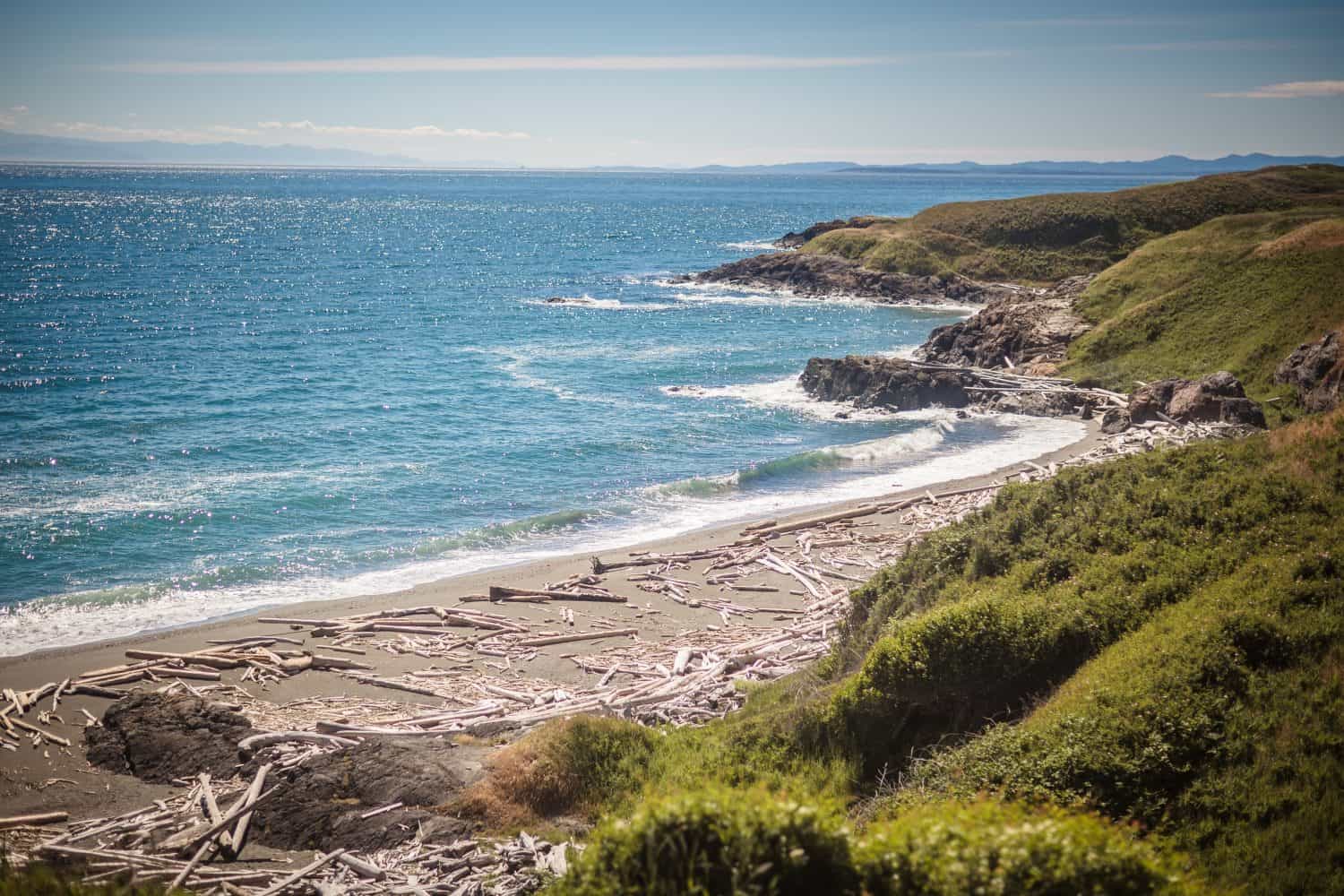
Two species of sea spiders were recently discovered in the Salish Sea.
©schristinephoto/Shutterstock.com
“I was interested in how sea spiders are impacted by climate change and human disturbance, because marine invertebrates in the Salish Sea are particularly at-risk, and I couldn’t find anything,” Toler-Scott stated in a press release. “That’s largely because people don’t know much about what species exist here and what their lifestyle is.”
Although that question remained unanswered, two very interesting species were found. They are Callipallene pilosuspedes and Tanystylum kiixin.
Callipallene pilosuspedes‘ name, according to the press release, means “hairy feet.” The sea spider got this name because spines cover the lower part of its legs. Armed with a short proboscis with claws for grabbing food before biting, the sea spider pulls prey into its triangular mouth, which is divided into three separate lip regions.
The sea spider’s eyes are bright red.
Even more interesting, Callipallene pilosuspedes does not use ovigers solely to carry its eggs. When egg-free, it uses the ovigers to comb and clean its body.
Tanystylum kiixin could not be any different from Callipallene pilosuspedes. Named for the sound of the crashing waves near the village where it was discovered, this sea spider has shorter legs and does not groom as meticulously as Callipallene pilosuspedes. As a result, Tanystylum kiixin tends to be covered in debris and parasites. Consequently, the sea spider has been described as having “an ecosystem within an ecosystem within an ecosystem.”
Sea Spiders Look Like Land-Dwelling Spiders
Since the discovery of sea spiders, scientists have believed these marine-dwelling creatures were directly related to land-dwelling spiders. It was not until a 2005 study that scientists definitively proved that, while related, sea spiders and land spiders are very different creatures.
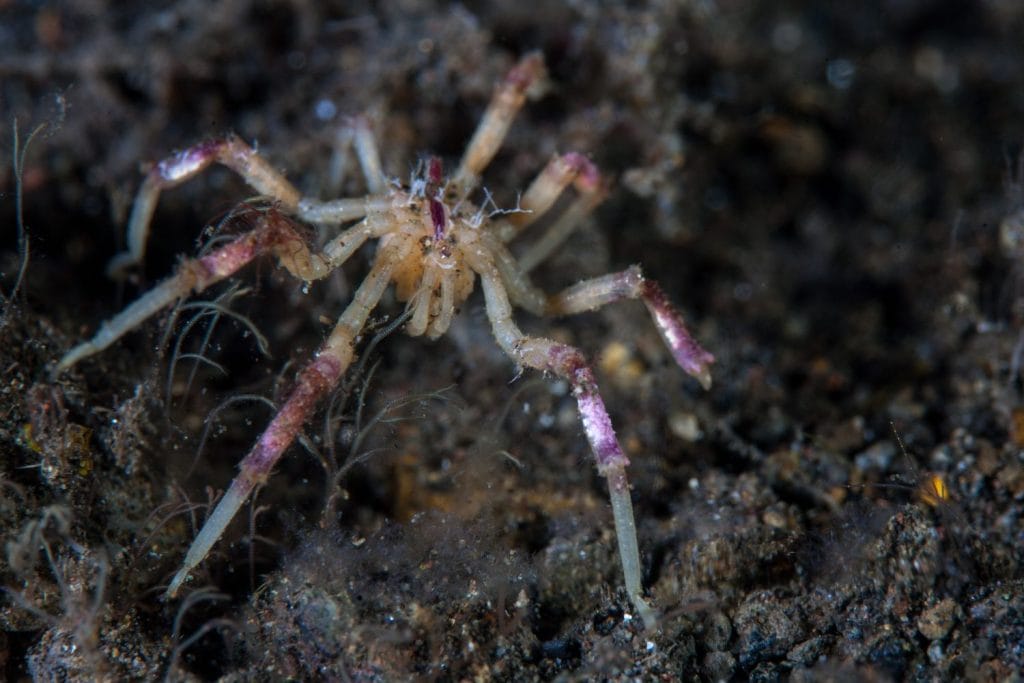
Sea spiders and land-dwelling spiders may look alike, but they are different species.
©Ethan Daniels/Shutterstock.com
There are some marked differences between sea spiders and land-dwelling spiders. Those differences include:
- Sea spiders diffuse oxygen through their exoskeleton, while land spiders use book lungs to breathe
- Sea spiders live in an aquatic environment, from shallow tidepools to the deepest parts of the ocean, while land spiders are terrestrial and spin webs to hunt
- Sea spiders use a proboscis to suck fluids out of prey, while land spiders inject venom into prey with chelicerae
- Sea spiders tend to be larger than land spiders
- Sea spiders have three to four pairs of long legs, while land spiders have eight legs
- Sea spiders’ bodies are one main structure, while land spiders have an abdomen and cephalothorax
Given how they look, it makes sense that these two creatures were initially lumped together as being more genetically similar than they are. However, while both are arthropods, sea spiders and land spiders evolved into very different creatures hundreds of millions of years ago.
Odd Traits Sea Spiders Have Retained for Generations
Sea spiders in the Salish Sea have lived there for millions of years. Over that time, they have changed little, retaining some odd traits generation after generation.
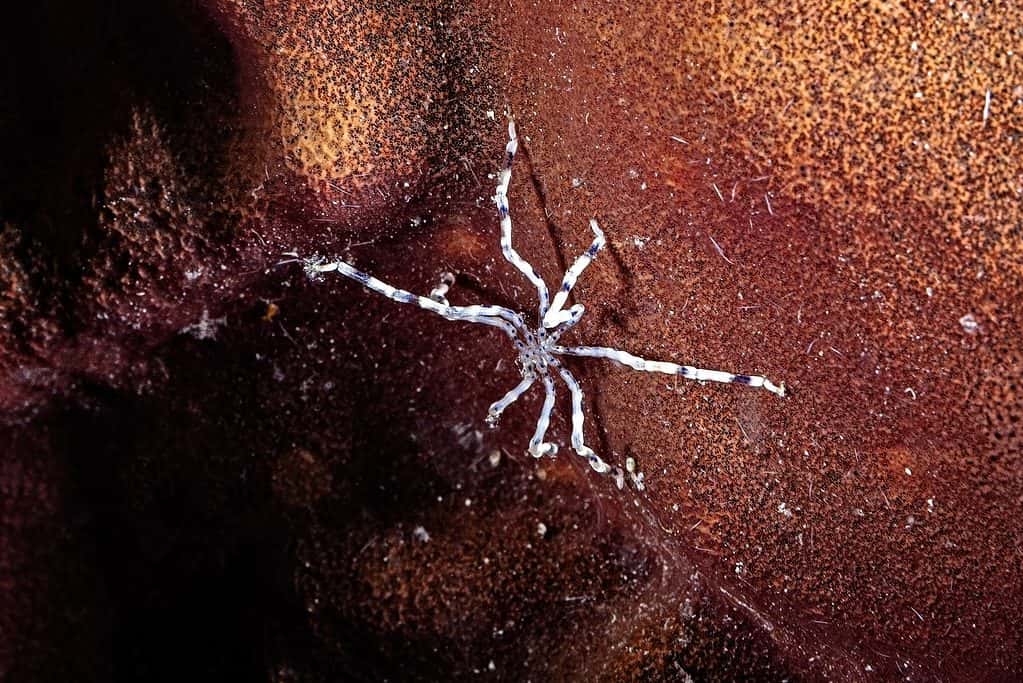
Sea spiders have changed little in appearance over millions of years.
©Harald Schottner/Shutterstock.com
The smaller spiders that live in the Salish Sea will have the following characteristics:
- Up to 12 legs
- Sucking proboscis for feeding
- Breathable skin
Additionally, they may live as parasites on other creatures. Females will push eggs through pores in the skin, and males will collect the eggs during mating, transferring them to his own body.
Sea spiders have had no need to undergo physical changes for millions of years because their habitats have changed so little up to this point. But now, as climate change affects ocean temperatures, their lack of adaptation could lead to the sea spiders’ demise.
What Are Sea Spiders Telling Researchers About the Effects of Climate Change?
The study began because Toler-Scott wanted to learn more about how climate change was affecting sea spiders. He chose the Salish Sea because marine invertebrates face risks from physical disturbance, pollution, and sedimentation. These risks are causing massive population declines. However, because marine invertebrates are so understudied, Toler-Scott had limited data to access.
“In order to understand how marine invertebrates are being impacted by things like climate change and how we can better protect these key elements of the ecosystem,” Toler-Scott explained in a press release, “we have to be able to identify them.”
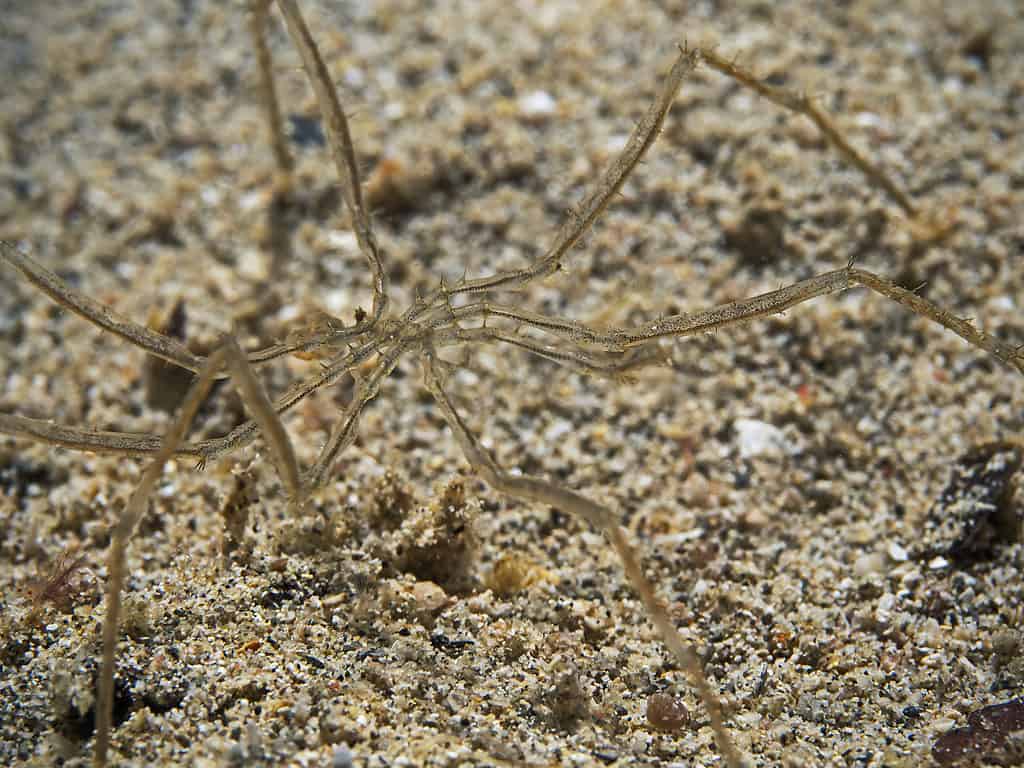
Sea spiders are an indicator species and should be monitored to assess how marine life is affected by climate change.
©iStock.com/scubaluna
In the Antarctic, sea spiders an indicator species, meaning they reveal how other marine species will respond to climate change in the region. A 2025 study found that even slight changes in water temperature could be cataclysmic for these animals, since they have adapted to a “narrow range of temperatures.” If their populations begin to decline with even slight changes in water temperature, other species will likely be negatively impacted as well. Entire species could be lost, creating a void in what was once a biodiverse region.
While the impacts of climate change on these spiders and other marine invertebrates are not yet clear, future studies may offer interesting insights into how these animals respond to and help prevent the negative impacts of climate change. A 2023 study noted that Sericosura sea spiders are hosts for bacteria that consume methane from the seafloor. The bacteria keep the methane from escaping and further exacerbating climate change problems in the ocean along the Pacific Coast.
As marine life continues to be discovered, it becomes clear how little we know about the ocean and the creatures that call it home. Unfortunately, if climate change continues at its current pace, marine animals will likely go extinct before we ever get a chance to discover them.