
Quick Take
- The goldfish memory myth didn't come from bad science, and its real origin is stranger than you'd expect. Trace the myth's origins →
- Believing goldfish have short has influenced how many people care for them. See the real harm →
- What researchers found when they actually tested goldfish memory in the lab contradicts almost everything the public believes. See what research found →
Have you ever heard the adage that goldfish have short-term memory loss? According to experts and recent research, that idea is far from accurate. In fact, it’s actually harmful to perpetuate this myth, as it often normalizes keeping goldfish in tiny, unstimulating bowls.
Contrary to popular belief, fish are quite intelligent with much longer-term memory than we give them credit for. They can learn associations, remember feeding locations, navigate environments, and respond to training over much longer periods.
How, then, did the three-second claim come to be—and what do laboratory learning studies actually reveal about fish cognition? Let’s dive in.
Do Goldfish Really Have Short-Term Memories?
No, goldfish do not have only short-term memories, as the popular myth claims. In fact, they are capable of forming long-term memories.
“The goldfish memory myth, also known as ‘goldfish have short-term memories,’ seems to be an example of a science myth,” says Iryna Smyrnova, Zoologist and Veterinarian (DVM) at Meowoff. “This has become so widespread due to its repetition in media (i.e., television shows), advertising, stories told repeatedly to others and through generations, and other informal means that now it is widely regarded as true.”
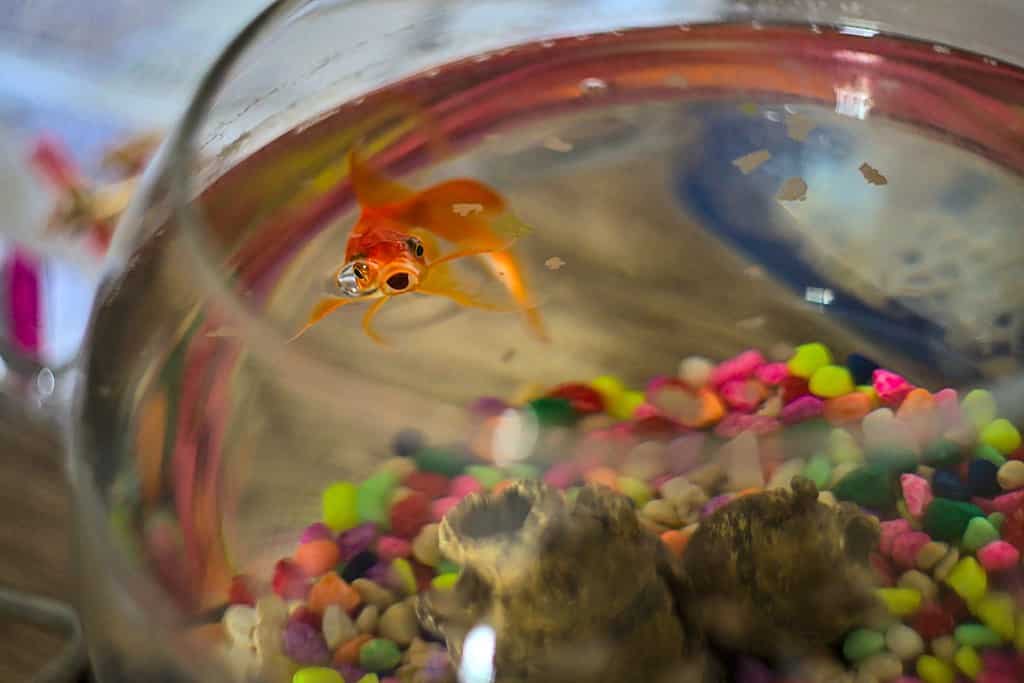
Contrary to popular belief, goldfish are intelligent animals.
©takopa/Shutterstock.com
Think of the myth like a longstanding case of “telephone,” where one person’s misinterpretation or distortion gets repeated and passed along, until it feels like a universally known truth. However, research has since disproved this myth.
“The overwhelming amount of research conducted to date does not support the notion that a goldfish will ‘forget’ everything in a matter of seconds,” Smyrnova says. “A number of studies have demonstrated that goldfish can create long-term memories; some lasting weeks or months. These include learning where food comes from, navigating their environments, and remembering previously encountered situations.”
Origin of the Goldfish Memory Myth
You might be wondering: where, exactly, did the goldfish memory myth stem from? While the exact origin is uncertain, it seems it was a result of early 20th-century pop culture references. Many people incorrectly assumed that a small goldfish couldn’t possibly possess intelligence. This idea was further pushed in cartoons and other media.
However, the belief was not backed by science—and researchers have since discredited the myth with countless studies.
The Truth About Goldfish Cognition
Goldfish, and many fish in general, are surprisingly smart animals, able to recognize faces and remember visual cues. In fact, their memory is one of their strongest features. Goldfish have been known to retain information for weeks or even months.
“Goldfish are but one example of how intelligent fish can be,” says Smyrnova. “Other fish species are able to solve problems, learn by observing what happens when another animal performs an action, and can differentiate among individual animals as well as humans who may interact with them. Additionally, there are numerous accounts of fish adjusting their own actions based upon prior experiences.”
The Royal Society published research that found that “goldfish use the spatial frequency of their visual environment to estimate distance.” Additionally, they “can accurately estimate distance and show that they use local optic flow to do so.” In other words, they have sophisticated spatial cognition and memory.
“Goldfish, specifically, can be taught to perform specific simple tasks and, as such, can be instructed to follow certain cues and retain knowledge of what they have been trained to do for an extended period of time,” says Smyrnova. “Thus, the intelligence of goldfish clearly demonstrates that they possess much greater cognitive capabilities than most people give credit for.”
The overwhelming amount of research conducted to date does not support the notion that a goldfish will ‘forget’ everything in a matter of seconds.
Iryna Smyrnova, Zoologist and Veterinarian (DVM) at Meowoff
Negative Impact of the Goldfish Myth
While the goldfish memory myth might seem harmless, it can actually downplay the dire needs of this complex species.
“In my opinion, this myth regarding goldfish memory has directly impacted the treatment of goldfish due to the belief that they will not recall their living conditions,” says Smyrnova. “As a result of this common misconception, many people feel justified in placing their goldfish in very small bowls with dirty water that is poorly filtered and providing little to no enrichment activities for their goldfish.”
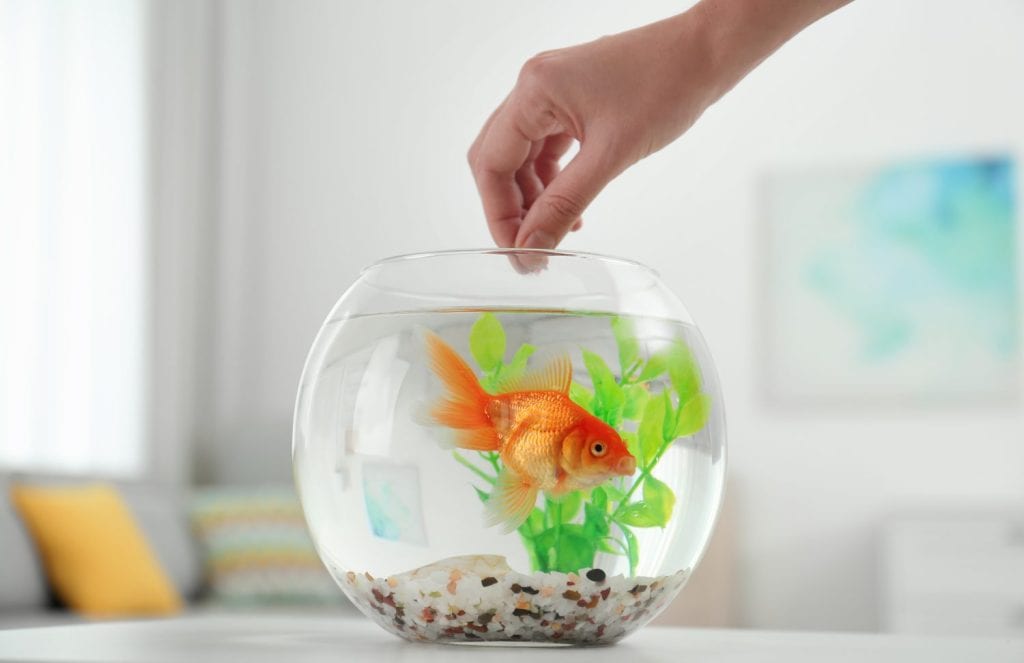
Goldfish are not meant to be kept alone in small bowls.
©New Africa/Shutterstock.com
Goldfish have more complex behavioral and cognitive needs than many people realize. They are highly social fish that prefer living in groups and can become stressed if kept alone for extended periods. This is especially true when they are kept in small bowls with dirty water and little to no enrichment.
“On the contrary, goldfish will greatly benefit if provided with adequate housing (aquarium or pond), proper maintenance (cleaning) of their tank/pond, and sufficient enrichment activities to allow them to naturally exhibit normal behaviors,” Smyrnova says.
In other words, forget everything you’ve been taught about goldfish—especially when it comes to the short-term memory myth.