
Quick Take
- A missing pigeon sparked an invention that would define aerial photography, though the idea almost never left the ground. See the invention's origin →
- Before pigeons carried cameras, they were already doing something far more unusual across German towns. Explore the pigeon deliveries →
- The military dismissed his invention as obsolete, yet someone else revived it decades later in a far darker chapter of history. Discover the darker revival →
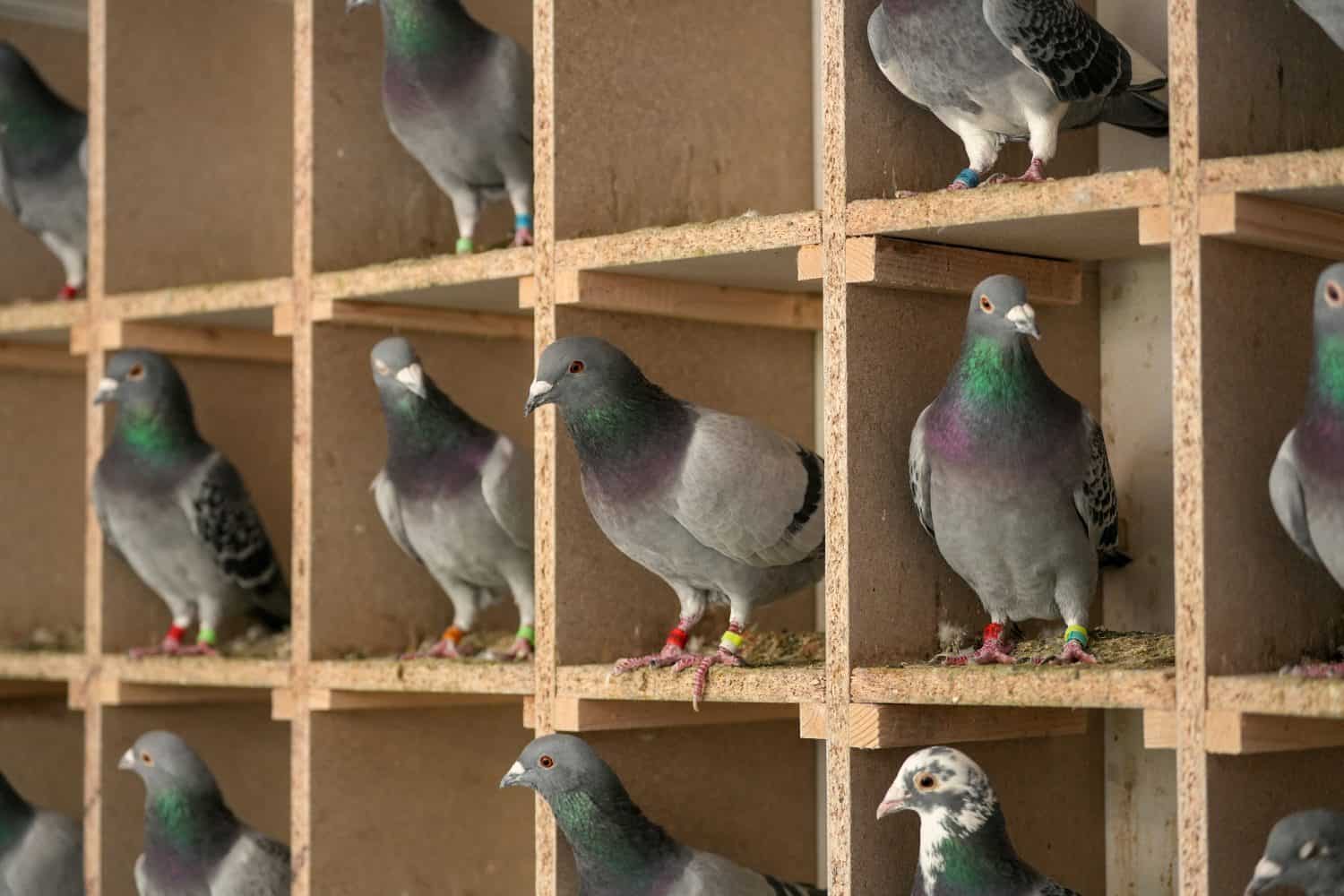
Corvids get most of the credit, but pigeons are in the same club as one of the smartest birds in the world. They can recognize all 26 letters of the alphabet and even individual human faces, making them worthy companions. During the mid-19th century, they were also important messengers. In Germany, carrier pigeons had a variety of jobs, including mail delivery. Apothecary Julius Neubronner decided to see just how capable these clever birds were.
His ingenuity and engineering led to the first-ever aerial “drones,” fully powered by pigeons. His success didn’t come easy. But by the late 19th century, his photography was taken to new heights — quite literally. Here’s how an entire species helped shape the future of aerial mapping.
A Man Of Many Inventive Hats
During the 19th century, you’d be lucky to possess a single money-making talent. Neubronner had several; he was known as an apothecary, business owner, and amateur photographer. He even hustled on the side as a magician, impressing crowds by using his very own apothecary messengers in his shows. These were none other than trained carrier pigeons. Apothecaries gave their pigeons some of the most important jobs in the medical field at the time.
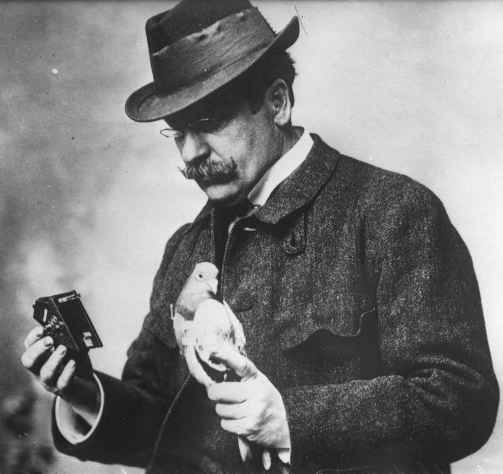
Julius Neubronner had many talents, but training carrier pigeons was what he became famous for.
Doctors attached medicine requests to the birds’ legs, which then flew back to apothecaries such as Neubronner. They were familiarized with the weights of each remedy, which were then attached to the bird and flown back to the doctor. At the time, this was the quickest way to get medicinal supplies back and forth across German towns like Kronberg.
And while Neubronner’s and his pigeon’s reputations preceded them, it was his curious brain that eventually made him famous. Neubronner had more faith in the intelligence and capability of pigeons than many others and began to consider what else they could be used for. As an experimental photographer, he was naturally drawn to seeing the world from different perspectives. One of these, he believed, could be from a bird’s eye.
The First “Drones” Were Neubronner’s Pigeons
Neubronner learned the art of pigeon carrying from his father. It was his father’s apothecary that he inherited, along with an entire brood of highly intelligent birds. He was familiar with their ability to carry tiny backpacks and adjust to various weights of medicine. He’d also witnessed how easily they memorized flight patterns and instinctively found their way home. That is, until one of his most reliable birds went missing for four weeks straight. Neubronner was quoted, saying, “As a long-time supporter of amateur photography, I was moved to half-jokingly think that the only real way to find this out would be to use a tiny camera that would automatically take pictures at certain intervals.”
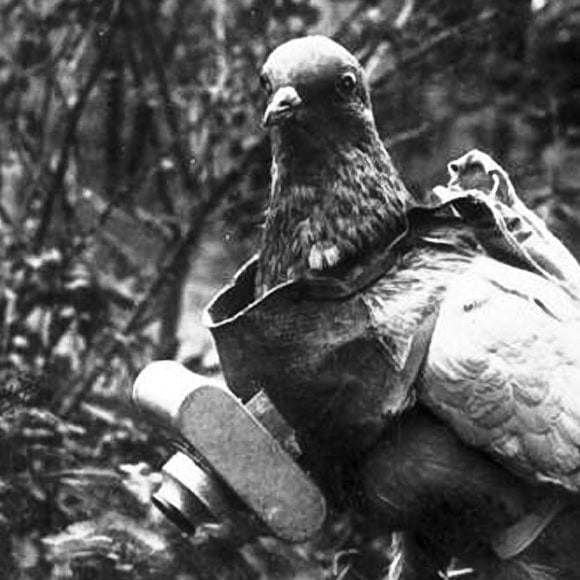
Pigeons quickly adapted to the additional weight of a camera, and some barely noticed it.
It didn’t seem like much of a stretch to imagine them carrying cameras attached to their bodies. The kicker? It actually worked. By 1908, he’d invented what became known as the “pigeon camera.” This tiny device could capture black-and-white photos from the air and was stable enough to minimize motion blur. A tiny shutter release button went off at set intervals after the pigeon took flight.
Thanks to their apothecary work experience, the pigeons didn’t seem to mind flying with the added weight of the camera. According to Neubronner’s accounts, some even went about their normal lives, eating and drinking while the camera was still harnessed to them. As a result, the pigeons could cover distances of approximately 62 miles. The camera took photos at random during this time, and Neubronner soon began planning specific routes and photo ops.
Pigeons Took Impressive Photos But Were a Tough Sell
The pigeon camera was an impressive invention in the early 1900s. It could take up to 12 photos per trip, and Neubronner refined the pneumatic shutter to produce more accurate photos. Two lenses provided stability, while the pigeon’s flight routes did the rest of the work. Unfortunately, it wasn’t enough for the proposed patent to be approved. Neubronner marketed his pigeon camera as the latest in aerial photography, but it wasn’t until he provided proof in the form of 3×6 negatives that it gained any traction.
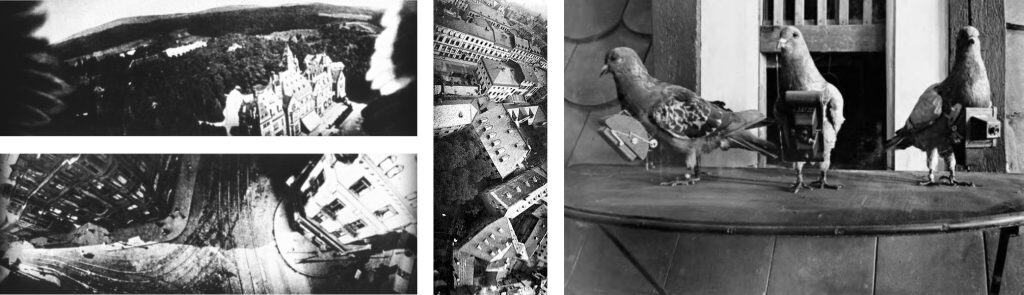
Aerial photos of Kronberg showed the city from a bird’s-eye view, with minimal motion blur thanks to dual lenses.
In December 1908, following photographic evidence that the camera worked, Neubronner’s patent was finally approved. It was posted under the heading, “Method of and Means for Taking Photographs of Landscapes from Above”. For the next eight years, he would spend much of his personal income on improving camera models before ultimately finding another, more global use for his pigeon camera.
During this time, his invention was wildly successful. He showcased his carrier pigeons at the International Photography Exhibition in Dresden, which drew a significant crowd. Neubronner then went on to sell “carrier pigeon postcards,” which featured aerial photos taken by the birds themselves. However, he kept dreaming big. His ambition eventually led him to sell the pigeon cameras, along with carrier pigeons to fly them. Sadly, his success would come to an end at the start of World War I.
A Brilliant Invention Created at the Wrong Time
Neubronner had high hopes that his pigeon camera could prove worthy to the Prussian army. As World War I picked up speed, he offered his invention as a spy operative. The military gave him one mission as a test: successfully photograph the Berlin Waterworks from 1.2 miles away. To do so, he had to train a brand-new carrier pigeon. It took him four years to complete, and by 1912, the war had progressed and so had technology.
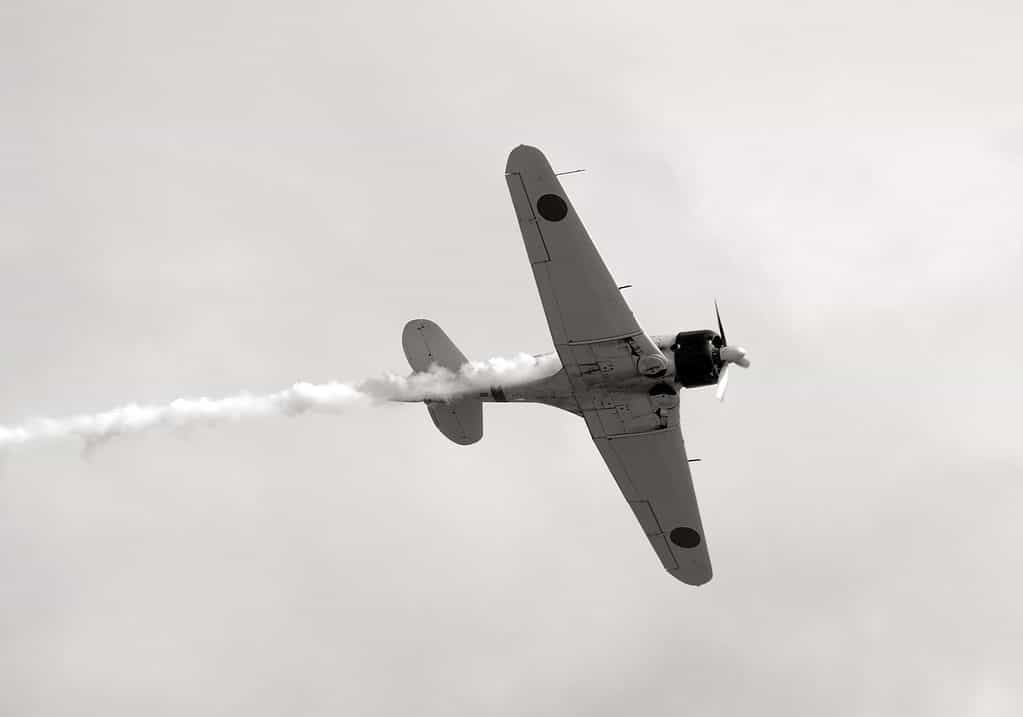
Planes took to the skies during World War I, and other technology rendered carrier pigeons nearly obsolete.
©iStock.com/icholakov
Neubronner received a military directive to streamline his equipment and ready it for use during the war, but it never materialized. The army never used it, and the carrier pigeons were used only as messengers. Adding insult to injury, the army sent Neubronner a final letter in 1918. It read, “Method for Photographing Sections of Land with the Aid of Pigeons. Relevant tests in the field have been consistently unsuccessful to date. Since the advent of aerial photography, there is no longer any justification for further testing.“
In a tragic twist of fate, Neubronner’s invention was given new life after his death. It was of particular interest to the German Army of the Third Reich, which experimented with nearly 17 times as many photos as Neubronner’s pigeon camera. According to Google Arts and Culture, his invention was simply created too early, only to be used commercially decades later.