
Quick Take
- The octopus wasn't hitching a ride, and what it was actually doing tells a very different story. See what scientists found →
- Something in British waters hasn't been seen at this scale in over 75 years, and scientists are still piecing together why. Explore the octopus surge →
- Risso's dolphins are one of Britain's least-studied species, and a single amateur photo just handed researchers a rare data point they couldn't get any other way. See the citizen-science value →
- A population boom in one species can quietly reshape the behavior of another, and this dolphin-octopus encounter serves as the evidence for that. Discover the population impact →
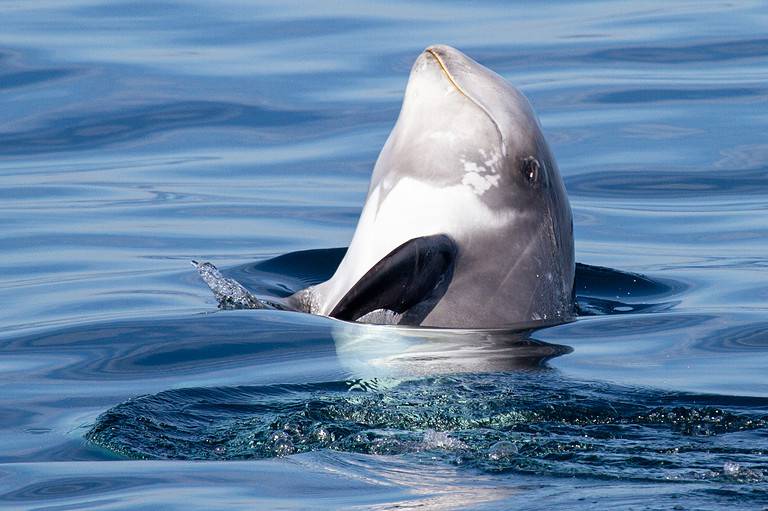
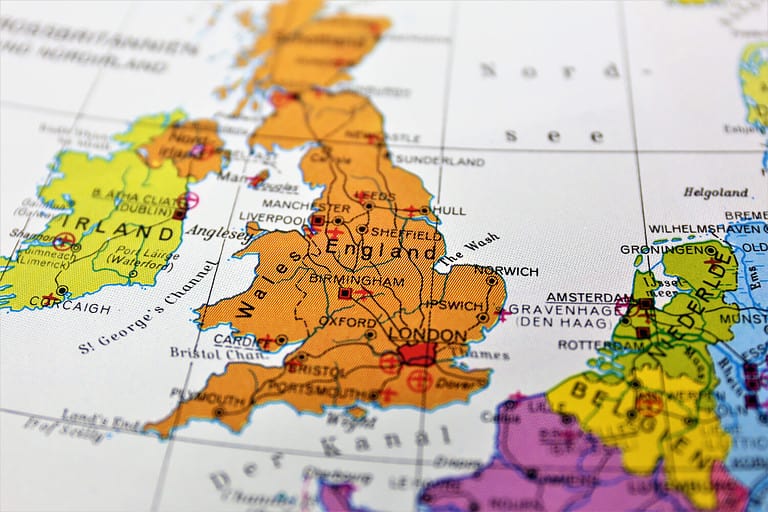
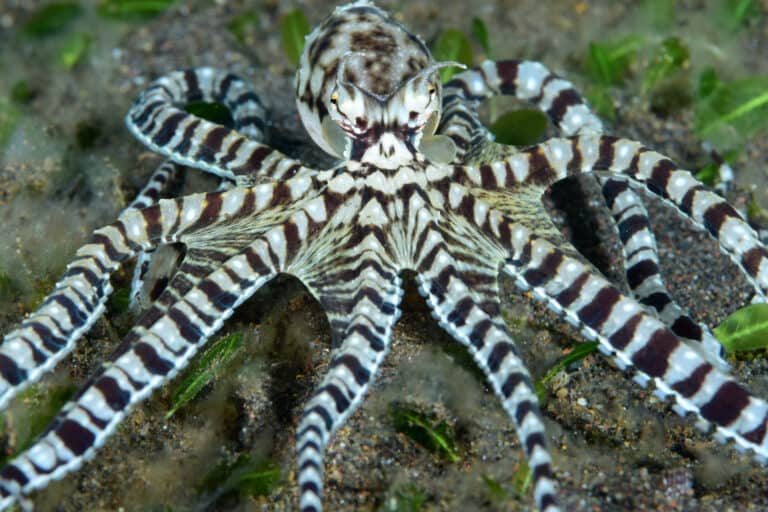
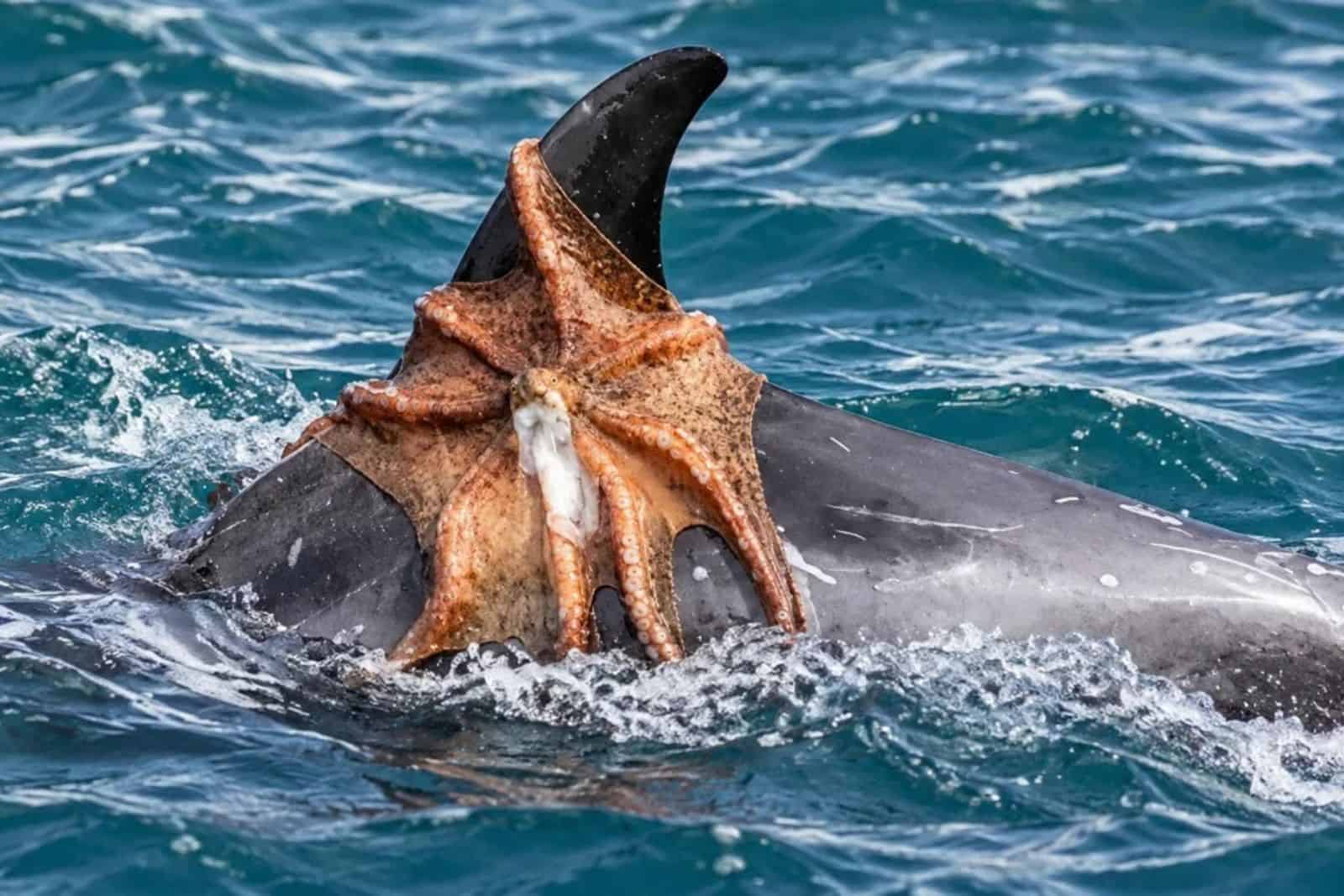
Bill Coulson was out photographing dolphins off Berry Head, Devon, when something in his viewfinder stopped him. A Risso’s dolphin surfaced with what looked like a passenger: a common octopus, arms wrapped tightly around its tall dorsal fin, as if it had hopped on for a ride.
It hadn’t. What Coulson’s camera caught was something closer to a struggle, and marine scientists say the photos are useful evidence of a much bigger shift happening in the waters off southwest England.
What the Photos Actually Show
Coulson volunteers with the Risso’s Dolphin Project South West, and the Marine Biological Association says the encounter looks like a feeding event rather than a free ride, according to a statement the organization released. Risso’s dolphins feed heavily on squid and octopus, and researchers think the octopus likely latched onto the fin while the dolphin was trying to catch and subdue it, not the other way around.
Josh Symes, a University of Exeter researcher who studies Risso’s dolphins in the region through photo identification, says sightings like this help show how the dolphins are adjusting to what’s actually available to eat. Risso’s dolphins are one of Britain’s least-studied dolphin species, so a clear photographed interaction like this one is rare on its own, aside from what it reveals about the octopus.
A Record Octopus Boom in Devon and Cornwall
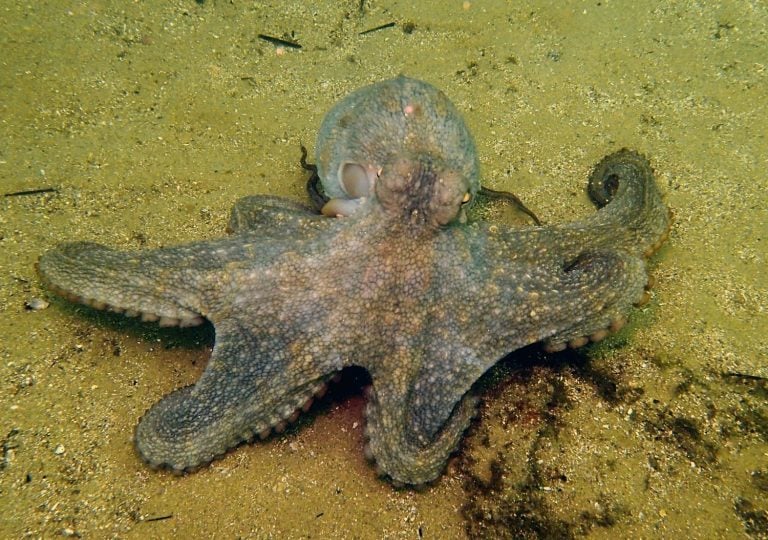
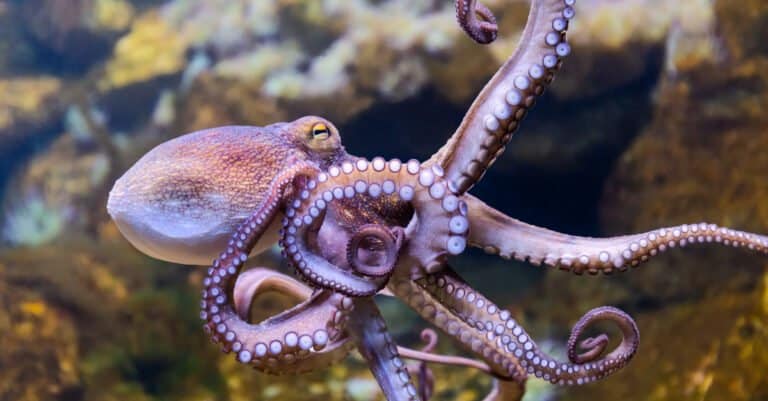
The encounter comes in the middle of an unusual surge in common octopus numbers along the Devon and Cornwall coastline, one the Marine Biological Association says is the largest recorded in at least 75 years, as the organization has documented. Octopus vulgaris is native to British waters but normally scarce there; this year it hasn’t been.
Scientists believe warming seas have played an important role in driving the boom, though the full picture is still being worked out. Bryce Stewart, a senior research fellow at the Marine Biological Association, says the organization is still receiving a steady stream of public reports of octopus sightings across the southwest, and that understanding what’s behind the shift remains an active area of research.
Why This Matters for an Understudied Dolphin
Shifts in how common one species becomes can ripple outward to affect others nearby, and this sighting gives researchers a concrete data point for how that’s playing out between two species that are each, in their own way, hard to study. Risso’s dolphins are elusive and spend much of their time offshore, recognizable mainly by their blunt heads, lack of a beak, and the pale scars that build up on their skin as they age from scraping against prey. Sudden octopus population booms, meanwhile, are difficult to track in real time without exactly this kind of citizen-collected evidence.
The Marine Biological Association and the Risso’s Dolphin Project South West are now asking anyone who spots similar interactions, or just unusual numbers of octopus, to report them through Facebook or iNaturalist. A single photograph from one volunteer turned into real data precisely because someone happened to have a camera pointed the right way at the right moment.