
Quick Take
- Identifying a mussel species often requires killing it, and that grim trade-off is central to why so many are vanishing unnoticed. See the deadly trade-off →
- Researchers waded rivers for 20 years before finding something hiding in plain sight across multiple southern states. Meet the river surveyors →
- Discovering a new species doesn't just add to a list. It could change which creatures get saved and which ones vanish forever. See the conservation stakes →
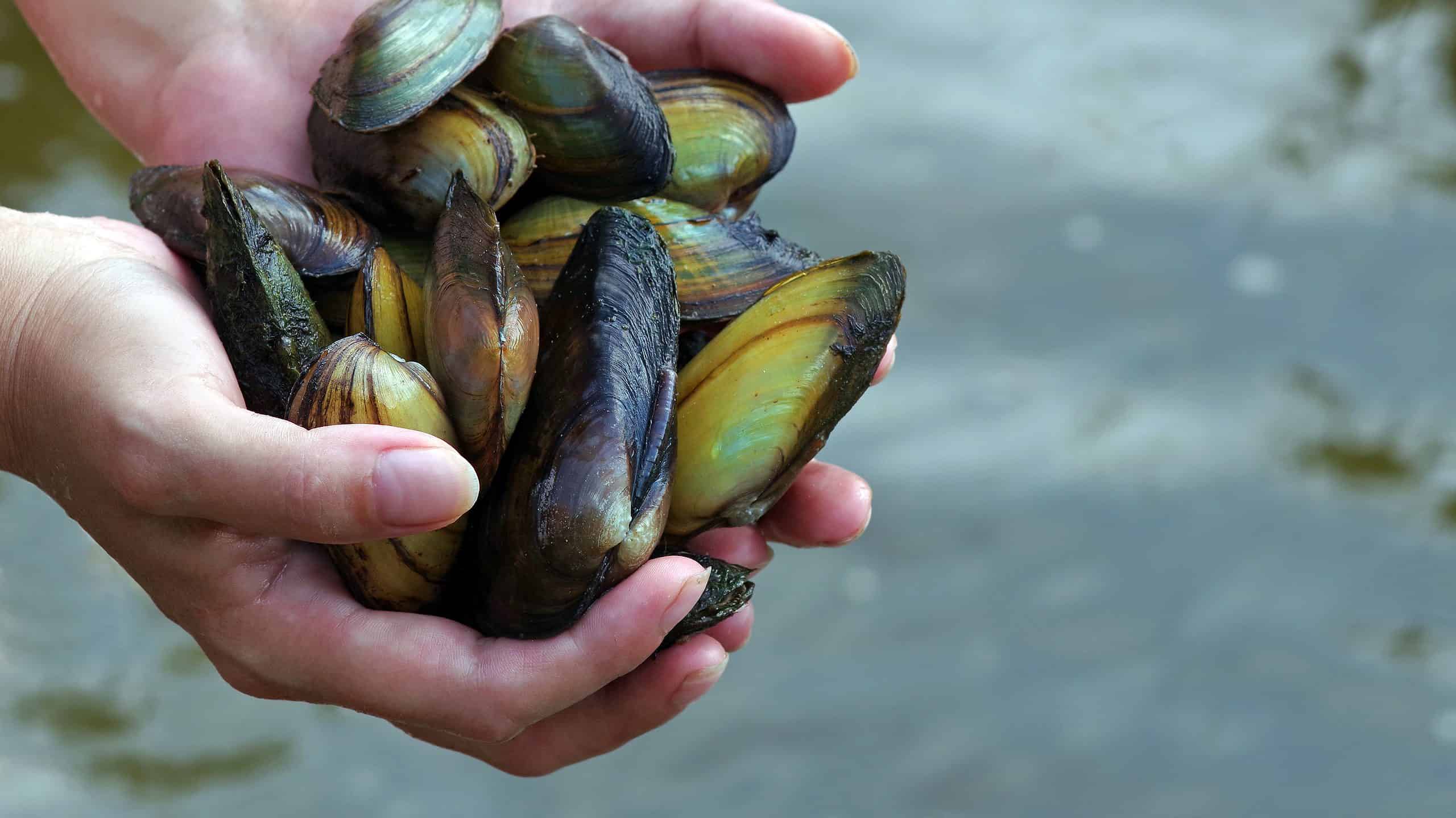
It can be hard to differentiate between mussels, clams, and other bivalve mollusks. While the term clams is used to describe mollusks with rounder, curved shells, the term mussels is used to describe those with more elongated, almost elliptical-shaped shells. There are mussels that live in the ocean and mussels that live in freshwater sources like lakes and rivers. North America features around 300 native mussel species. Due to habitat loss, river decline, and the presence of invasive species, many of these species are in serious decline. In fact, around 70% of native North American mussel species face destruction, with dozens already extinct.
However, there is still some hope for these creatures. A research paper recently published in the journal Zootaxa describes five new freshwater mussel species found in the southern United States. Freshwater mussels may be on the decline, but the discovery of five new mussel species provides an opportunity for better recovery efforts, conservation prioritization, and reassessment of overall extinction risk. Let’s learn more about this five-species discovery and what it means for a creature facing serious threats across North America.
Mussel Mistaken Identity
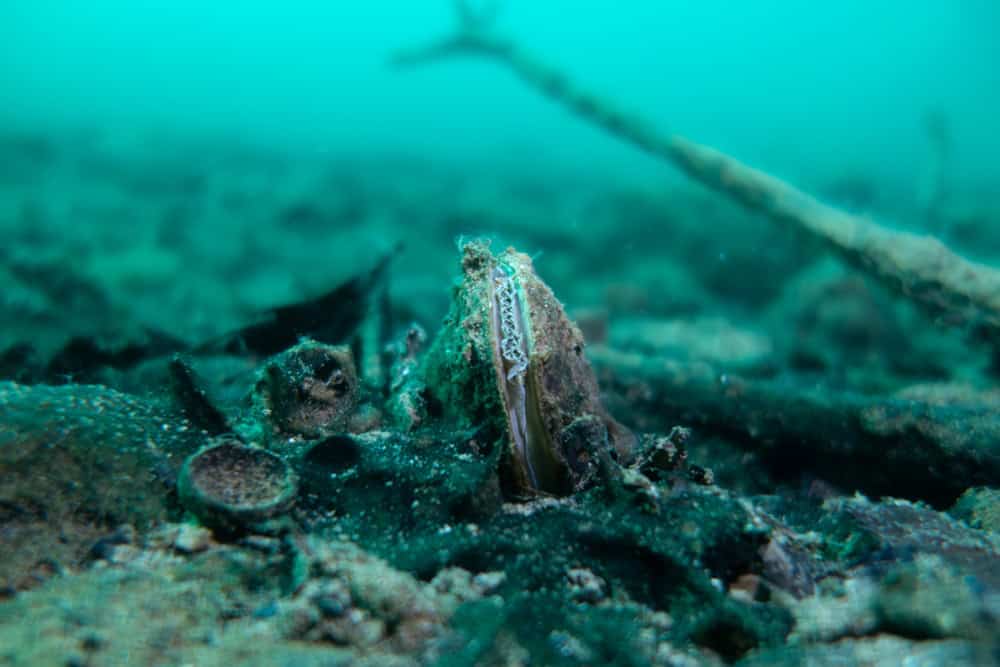
Freshwater mussels are incredibly important to marine ecosystems and food webs, yet they face increasing threats from invasive species, habitat fragmentation, and pollution.
©P. Fromentin/Shutterstock.com
Freshwater mussels that live in North America belong to the order Unionida. They are filter feeders that subsist on algae and bacteria across the continent’s many rivers, streams, and lakes. This makes them some of the most effective ecosystem engineers around, capable of supporting aquatic food webs and improving overall water quality.
This value, however, has little to no bearing on their endurance. In fact, freshwater mussels are severely threatened in North America. Whether it’s habitat fragmentation, water pollution, or the presence of invasive species like zebra mussels, endemic freshwater mussels have suffered population collapses across dozens of species. Even so, an overall assessment of these organisms eludes easy measurement.
That is because mussel shells are incredibly plastic; individuals from the same species can look wildly different depending on the environment. Further factors, including water velocity, substrate type, and age, can alter the appearance of individuals in the same mussel species considerably. Complicating assessment further is that many mussel groups contain cryptic species — lineages that are genetically distinct but share the exact same physical features. Another hindrance to properly studying mussels is shell hinges. The most reliable diagnostic measurement requires opening mussel shells to look at their hinge teeth. This process, however, typically requires killing the animal.
Stream Bed Hunters
Despite these obstacles, researchers have been working diligently to identify freshwater mussels in North America for decades. Indeed, over the last 20 years, scientists, including the study’s authors, systematically waded and snorkeled through the continent’s rivers looking for mussels. What they found, they brought back to their labs for further analysis. Such work recently produced some findings; researchers from Shedd Aquarium, Arkansas State University, and the U.S. Geological Survey discovered five new species of freshwater mussel.
These species, all in the genus Obovaria, were found in rivers in Missouri, Arkansas, Mississippi, Alabama, Louisiana, and Texas. The fact that these rare newly discovered species, confirmed by DNA analysis, are confined to very specific geographic areas emphasizes the need for more region-specific conservation strategies.
Five New Species
These discoveries also show what lies hidden in North America’s unassuming streams and how nuanced the populations and types of freshwater mussels are. In a press statement, research biologist at Shedd Aquarium, lead author Dr. Kentaro Inoue, said, “Identifying new species is the foundation of biodiversity conservation. Conservation efforts can only protect what we recognize, and without this work, we risk certain species going extinct before they’re even known to science.”
Obovaria sipseyensis is found in the Tombigbee River basin of Alabama and Mississippi, while Obovaria neeskaensis is from the White River basin of Arkansas and Missouri. Obovaria pinetorum lives in the West Gulf Coast drainages of Louisiana and Texas, and Obovaria tallahattae is in the lower Mississippi River tributaries of Mississippi. The researchers also recognized the distinction between Pseudoon olivarium and the Obovaria genus.
Rethinking Conservation
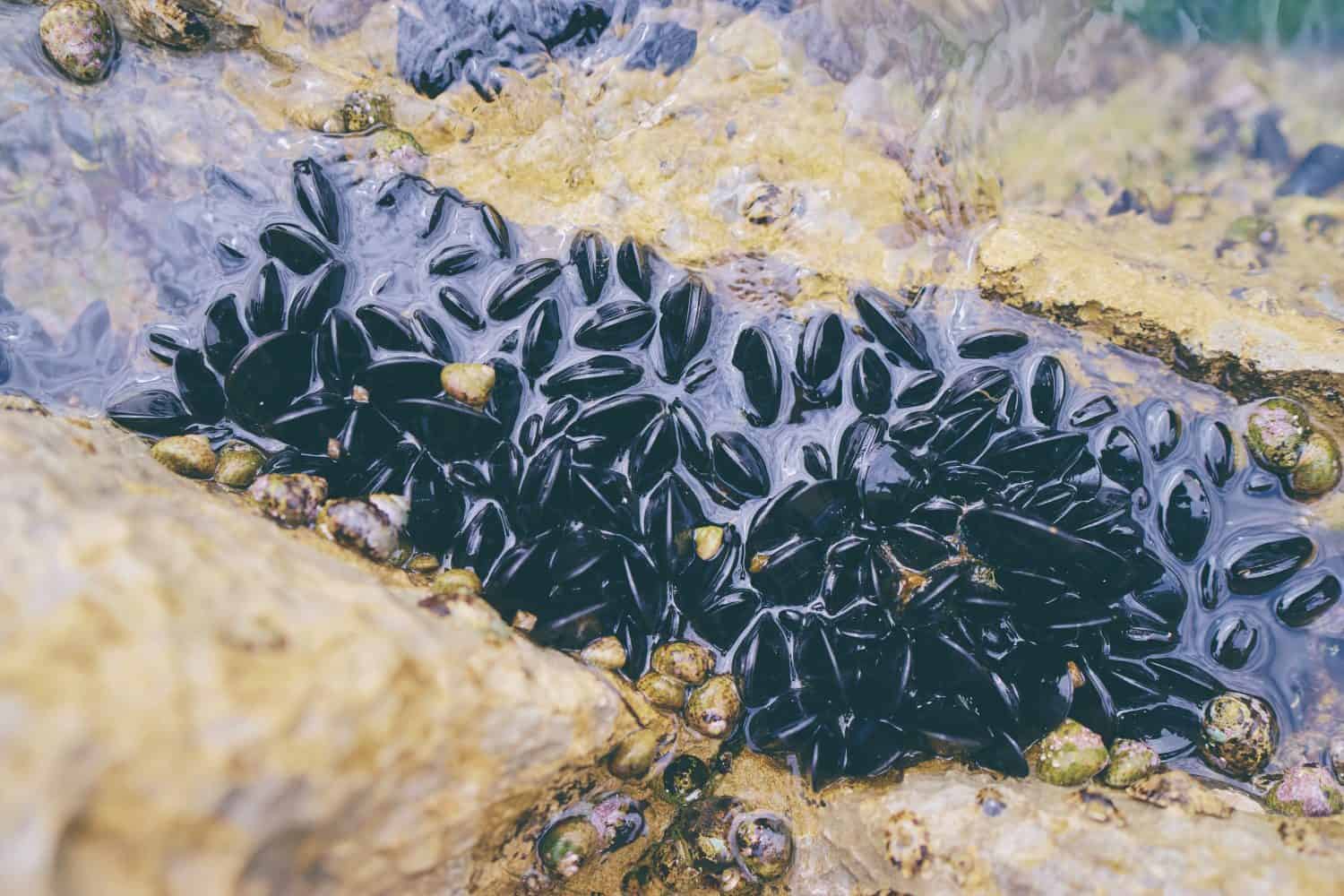
The discovery of five new freshwater mussel species in the southern United States highlights the need for region-specific conservation strategies.
©kudla/Shutterstock.com
There is probably a stream near your house that you have walked by countless times, unaware of the rich and mysterious biodiversity lying beneath the water. The fact that mussels spend most of their lives half-buried in underwater sediment makes them easily overlooked. It cannot be denied, however, that they play an integral role in maintaining healthy freshwater ecosystems. The recent discovery of five mussel species suggests that conservation strategies to protect these creatures require region-specific aims and overhauls.
Research biologist at the U.S. Geological Survey Wetland and Aquatic Research Center and study co-author Nathan Johnson affirmed this. This discovery, he said, “also underscores the value of collaborations among federal and state agencies, non-government organizations, and natural history institutions. Together, our efforts are helping inform management decisions that protect waterways and support the health of fish, wildlife, and human communities.”